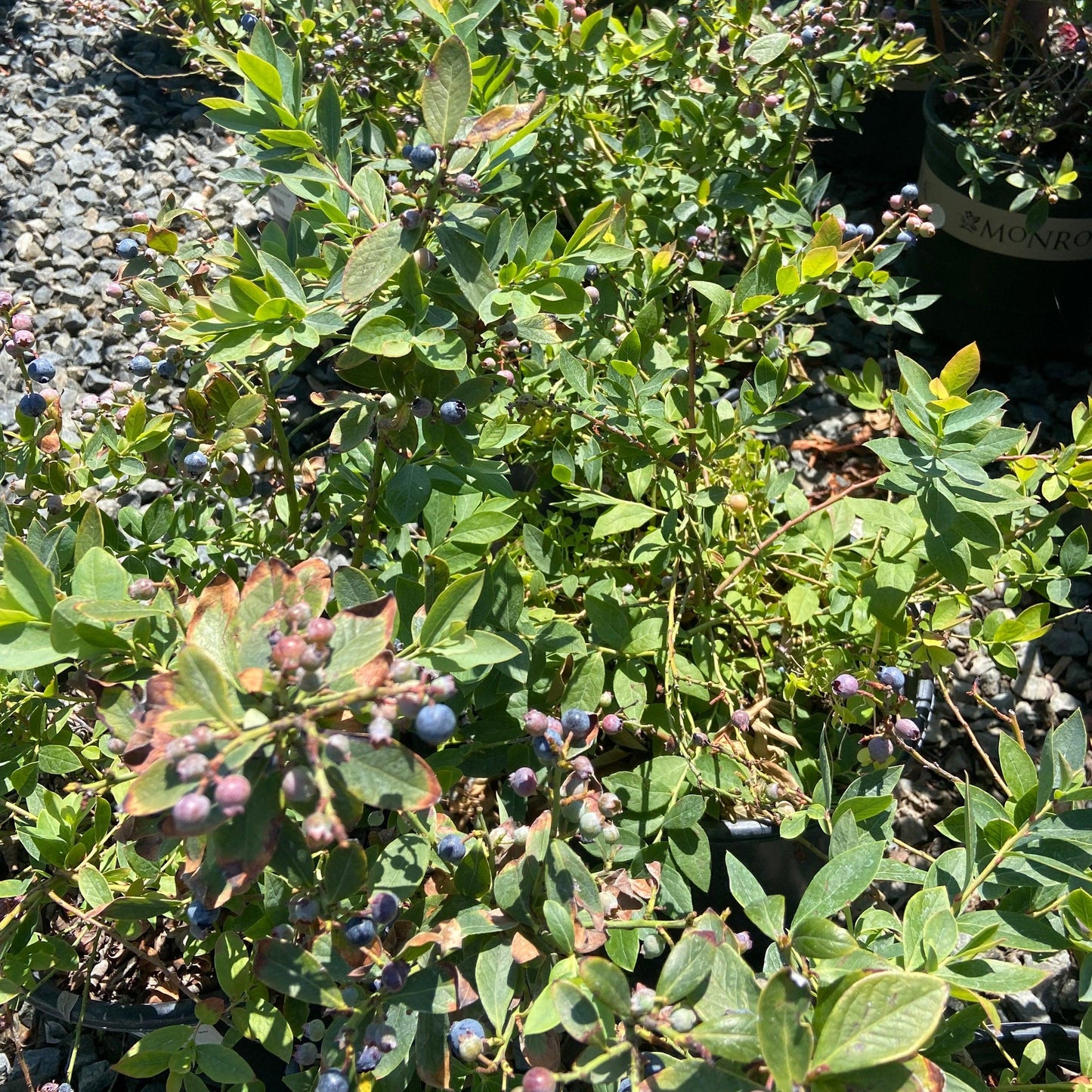
Blueberry Bushes – Grow Premium Fruit in Your California Garden
Blueberry bushes let California gardeners grow delicious blueberries at home while adding flowers, foliage, fall color and structure to the landscape. Choose the right blueberry varieties for your climate, soil and space, and a single bush can become a long-lasting source of sweet summer fruit.
Our collection includes compact blueberry plants for containers, larger bushes for hedges and premium varieties selected for California’s coastal, inland, foothill and mountain growing conditions.
Blueberry Bushes for Every Garden Need
Blueberry bushes work beautifully in home gardens because they are productive, ornamental and easier to manage than many bramble-type berries. Blueberry bushes require minimal maintenance compared to bramble-type berries, which need more pruning and management. Once established, blueberry bushes can produce fruit for decades, reaching full maturity in 6-10 years.
Blueberry bushes can vary greatly in size, with some varieties like Bountiful™ Delight Blueberry reaching only 2-3 feet, while others like Patriot Early Season Blueberry can grow up to 8 feet tall. That range makes it easy to choose a plant for patios, edible borders, privacy screens or small-space fruit gardens.
Edible Landscape Blueberry Bushes
Blueberries are ideal for edible landscaping because they deliver beauty and food from the same plant. Blueberry bushes are ornamental, providing attractive foliage and blossoms throughout the growing season. In spring, flowers appear before the summer fruit; in summer, juicy berries ripen; in fall, many varieties develop red, orange or purple foliage.
Compact varieties fit easily into mixed borders, raised beds and kitchen gardens. Blueberries are nutrient-dense fruits that are high in antioxidants, fiber, Vitamin C, Vitamin K, and manganese, making them a valuable addition to any edible landscape.
Privacy Screen & Hedge Blueberry Bushes
Larger blueberry bushes can create a productive privacy screen instead of a traditional non-fruiting hedge, and can be combined with other dense evergreen choices like Brush Cherry privacy hedges. Northern Highbush and vigorous highbush blueberry types can reach 6-8 feet in the right site, while some rabbiteye blueberry varieties can grow even taller in warm climates.
Planting multiple bushes in a row creates seasonal privacy, spring flowers and a summer harvest, similar to how evergreen privacy trees and shrubs can be used for year-round screening. For better pollination and higher yields, when planting blueberries, it’s recommended to plant 2-3 different complementary varieties to increase crop yield.
Container & Small Space Blueberry Bushes
Dwarf and compact blueberry plants are excellent for patios, balconies and smaller yards, especially when paired with vertical accents like Tiny Tower® Italian Cypress for small spaces. Varieties such as Sunshine Blue, Top Hat and other compact selections stay manageable while still producing flavorful berries.
Containers are especially useful where native soil types are alkaline or heavy clay soil makes drainage difficult. Blueberry bushes can be grown in raised beds if the natural soil is unsuitable for acidity, and containers give you even more control over soil ph, moisture and sun exposure. Use acidic soil, organic matter, peat moss and a well-draining mix to help roots thrive, just as you would when growing other container-friendly plants like the dwarf strawberry tree Arbutus unedo 'Compacta'.
Choose the Right Blueberry Bush for Your Growing Conditions
The best blueberry bush is the one matched to your climate. In California, chill hours, summer heat, coastal fog, elevation and water quality all affect how blueberry varieties perform. Blueberries require the right balance of winter chill and warm-season care to flower, ripen and produce a reliable harvest.
Blueberries require at least 6 hours of direct sunlight daily for optimal growth. For the strongest fruit production, blueberry bushes should be planted in a location that receives at least 8 hours of direct sunlight per day to ensure optimal growth and fruit production.
For Coastal California Gardens
Coastal gardens often have mild winters, foggy mornings and lower chill hours. Southern Highbush varieties are usually the best fit because they are bred for low-chill areas and can thrive where northern highbush types may not receive enough winter cold.
Choose low-chill Southern Highbush options such as Sunshine Blue, Biloxi, Sharpblue or O’Neal for coastal sites. Fog can help maintain consistent moisture, but coastal wind may dry foliage and soil, so protect the site and keep the soil consistently moist with organic mulch such as pine needles or bark.
For Inland Valley Gardens
Inland Valley gardens need blueberry varieties that tolerate heat, dry summers and wide temperature swings, much like drought-tolerant ornamentals such as the California Pepper Tree for warm landscapes. Rabbiteye blueberries are native to the American South, are generally more vigorous and heat-tolerant, and require cross-pollination with another Rabbiteye variety to set fruit.
Rabbiteye varieties such as Premier, Climax, Tifblue and Brightwell are strong candidates for warm climates. In hot summer areas, provide full sun with afternoon shade if needed, use a soaker hose or drip irrigation, and mulch deeply to protect shallow roots from heat stress, especially when integrating blueberries alongside mature trees for instant shade and structure.
For Mountain and Foothill Gardens
Mountain and foothill gardens usually receive more chill hours and colder winters, making Northern Highbush varieties a strong choice, while lower-elevation sites may be better suited to evergreen screening plants like the Japanese Blueberry Tree for hedges and shade. Northern Highbush blueberries are best suited for colder climates (Zones 3-7) and are known for their large, high-quality fruit.
Bluecrop, Duke, Patriot and other northern highbush selections perform well in cooler climates with enough winter chill. These varieties may need frost protection during bloom, especially in exposed sites, but they reward good care with larger berries and classic blueberry flavor.
For Small and Container Gardens
Small gardens need blueberry plants that stay compact, handle restricted root space and remain easy to prune. Self pollinating or partially self-fertile varieties can produce with one plant, although a second complementary variety often improves pollination and yield.
Sunshine Blue, Top Hat and compact Half-High types are excellent for containers. Keep soil acidic, moist but not waterlogged, and avoid letting container roots dry out during the growing season. A container also lets you move the bush to protect it from heat, frost or harsh wind.
Premium Varieties That Thrive
Premium blueberry bushes start with healthy, true-to-type nursery stock. Choosing proven blueberry varieties gives you better disease resistance, known chill hour requirements, predictable size and higher-quality fruit than unnamed plants.
Blueberry plants have few pest or disease issues compared to many other types of berry plants, but healthy stock still matters. Strong plants are better able to resist stress, fungal diseases and uneven growth, especially in California gardens where soil ph and summer heat can be challenging.
Northern Highbush Varieties
Northern Highbush blueberries come from Vaccinium corymbosum and are valued for large berries, high fruit quality and a classic sweet-tart blueberry taste. They are best for cooler climates, foothills and mountain areas with higher chill hours.
Bluecrop is a dependable mid-season highbush blueberry with firm berries and balanced flavor. Duke ripens early and helps extend the harvest. Legacy is often grouped with Southern Highbush in warmer regions, but it is also valued for strong flavor, adaptability and disease resistance.
Southern Highbush Varieties
Southern Highbush blueberries are bred for low-chill regions, warm climates and California-style growing conditions. Southern Highbush blueberries are bred for low-chill areas (Zones 7-10) and are known for their disease resistance and adaptability.
These blueberry bushes often flower and fruit earlier than northern types, making them ideal for coastal and many inland gardens. O’Neal, Sunshine Blue, Biloxi, Sharpblue, Star and Jewel are popular choices for low chill hours, early spring bloom and flavorful summer fruit.
Compact & Dwarf Varieties
Compact and dwarf blueberry bushes bring premium fruit into small spaces. They are ideal for containers, patios, balconies and narrow garden beds where a full-size bush would be difficult to manage.
Top Hat stays very small and is well suited to pots. Sunshine Blue is a semi-dwarf Southern Highbush that offers ornamental foliage, low chill requirements and reliable container performance, especially when paired with compact flowering trees that enhance seasonal color. Some compact bushes produce smaller berries, while others can deliver surprisingly larger berries when soil, water and pollination are well managed.
How to Care for Your Blueberry Bush
Blueberry care is straightforward when you start with the right soil, the right variety and consistent watering. These acid loving plants need acidic conditions, shallow-root protection and careful feeding, especially in California where alkaline soil and dry summers are common, just as Mediterranean herbs and shrubs like Bay Laurel and other edible landscape trees benefit from thoughtful site selection and care.
Blueberries thrive in acidic soil with a pH between 4.5 and 5.5, and it’s recommended to test your soil before planting to ensure optimal conditions.
Planting and Soil Preparation
Planting blueberries starts with soil preparation. When planting blueberry bushes, it is important to prepare a hole that is at least 24 inches in diameter and 12 inches deep, amending the soil with compost and peat moss to promote healthy growth.
If your native soil is alkaline or heavy clay soil drains poorly, use raised beds or containers filled with acidic soil. Add organic matter, peat moss, pine bark and, where appropriate, elemental sulfur to help lower soil ph. Mulch with pine needles or organic mulch to conserve moisture, control weeds and protect shallow roots.
Set the plant at the same depth it grew in the nursery container. Space compact varieties closer together and larger bushes farther apart, allowing enough airflow to reduce fungal diseases and support healthy new growth.
Seasonal Care and Maintenance
Keep blueberry soil consistently moist but never soggy. Blueberry plants require at least 1 inch of water per week during the growing season and up to 4 inches per week during fruit ripening to maintain healthy growth and fruit production. It is important to keep the soil moist to a depth of 1 inch, as blueberry plants have a shallow root system that is sensitive to fluctuating soil moisture.
Watering should be done during the day and evenly on all sides of the plant to prevent uneven moisture levels, which can lead to smaller berries or bland fruit. A soaker hose or drip system helps maintain consistent moisture through spring and summer.
Do not fertilize too early. Blueberries should not be fertilized during their first year; from the second year onward, use ammonium sulfate or a complete 10-10-10 fertilizer designed for acid-loving plants in spring, splitting the dose into two applications. Only nitrogen is required on an ongoing basis for blueberry plants, and fertilizers containing nitrate, such as ammonium nitrate or calcium nitrate, should be avoided as they can be toxic to the plants. Blueberry plants are sensitive to over-fertilizing; it is recommended to use fertilizers specifically formulated for acid-loving plants, such as those for azaleas and camellias, and to follow the instructions carefully to avoid harming the plants.
Pruning should be patient and seasonal. Pruning blueberry bushes should not be done for the first 2-3 years except to remove damaged or rubbing canes, as this allows the root system to establish properly. After the third year, mature blueberry plants should have 15-18 canes, and pruning should focus on removing older central canes and cutting back inward-pointing laterals to improve air circulation and light penetration. Pruning should be done when blueberry bushes are dormant, typically in late winter or early spring, as fall pruning is not recommended due to the risk of cold damage to new shoots. To enhance fruit quality, it is advisable to thin out dormant fruit buds during pruning, which can lead to fewer but larger berries on blueberry bushes.
Bird protection is also important. Birds are a common challenge for blueberry growers, and keeping them away from the fruit is essential for a successful harvest. Netting is the most effective solution to prevent birds from consuming blueberries, and it should be applied as the fruit starts to ripen. In addition to netting, other methods to protect blueberries from birds include using reflective tape or scare devices to deter them from the area.
Shop Blueberry Bushes
Explore Yardwork’s selection of premium blueberry bushes chosen for California gardens. Whether you need a compact bush for containers, a Southern Highbush for low chill hours, a rabbiteye blueberry for inland heat or a Northern Highbush for cooler mountain conditions, we make variety selection easier.
Our blueberry plants are selected for strong growth, proven performance and premium fruit quality. We can help you compare blueberry bushes, blueberries with different harvest windows, self pollinating options, cross pollination needs and mature sizes before you plant.
Plan your edible garden with expert support, choose the right acidic soil amendments and order confidently online through our California plant nursery and landscape services.
Browse our blueberry bushes today and start growing sweet, juicy berries at home.