



An avocado tree is a lush evergreen tree with glossy leaves, a dense canopy, and a rounded or umbrella-like shape. In a home landscape, it often looks like a medium-to-large shade tree that also happens to produce fruit. A mature avocado tree commonly reaches 15–30 feet tall in yards, while older orchard trees or unpruned specimens can reach up to 40–65 feet depending on the avocado variety.
Hass avocado trees often look darker, denser, and more compact than some Florida or West Indian types, which can be taller, lighter green, and more open. If you are choosing a type avocado for a California yard, Yardwork can help you match the look of the tree with your space, climate, and fruit goals.

Avocado Tree Size and Shape
Avocado trees can be pruned into manageable backyard trees or allowed to grow into full-size shade trees. Their natural shape is usually rounded, vase-shaped, or slightly irregular, depending on pruning, sunlight, and the avocado varieties present in the planting.
Here is what you can expect by age:
|
Tree stage |
Typical appearance |
Common size |
|---|---|---|
|
young tree, 1–3 years |
Slender trunk, small leafy canopy, often staked |
3–6 feet tall |
|
Semi-mature, 4–7 years |
Trunk thickens, canopy fills out, first flowers may appear |
10–18 feet tall |
|
Mature landscape tree, 8+ years |
Dense shade canopy, broad spread, visible fruit in season |
20–35+ feet tall |
|
Avocado trees can grow up to 65 feet tall and have a canopy that can spread 30 feet wide. In everyday California yards, however, many homeowners keep mature trees closer to 20–25 feet for easier pruning, easier picking fruit, and better access to the canopy. |
|
|
Commercial Hass avocado orchards in the avocado industry often maintain trees around 15–20 feet tall with regular pruning. This keeps harvest practical and encourages light to reach the inner canopy. In a residential setting, a single avocado tree can work as a focal point, while two trees or more should usually be spaced at least 30 feet apart to allow airflow and future growth.
When planting multiple avocado trees, they should be spaced at least 30 feet apart to accommodate their canopies, which can reach up to 65 feet high and 30 feet wide. At Yardwork, we usually recommend placing one or two trees thoughtfully rather than crowding a small yard with a dense grove.
Trunk, Bark, and Branch Structure
A nursery-grown avocado tree is usually single-trunked, though some trees become multi-stemmed if they are allowed to branch low. The tree trunk is relatively smooth when young and becomes more textured as the tree ages.
The bark is gray to brown, thin, and fairly smooth on young avocado trees. On mature trees, the bark becomes slightly rougher, more furrowed, and more protective. Most grafted nursery trees also show a graft union, which looks like a slight bulge or change in bark texture about 6–12 inches above the soil line.
Main scaffold branches rise from the trunk at moderate angles, creating a layered canopy with smaller branches and twigs that hold leaves, flowers, and avocado fruit. A healthy trunk should look firm, evenly colored, and free from major wounds. Warning signs include sunburn patches, oozing sap, cankers, or discolored bark near the base, especially if the root system is stressed.
Yardwork’s grafted trees are selected and trained with strong branch structure in mind, because a mature avocado tree needs sturdy limbs to support future heavy fruit set and fruit retention.
Leaves: Color, Shape, and Seasonal Look
Avocado trees are evergreen, so they hold leaves year-round while constantly shedding and replacing older foliage. That means some leaf drop is normal, especially when new growth flushes in spring or after a change in weather.
Avocado trees have glossy, dark green leaves that can grow up to 12 inches long, giving them a lush appearance. Most leaves are elongated oval to lance-shaped, with smooth edges, a pointed tip, and a leathery texture. Mature leaves are usually deep green on top and paler beneath, while new growth may appear light green, bronze, red, or slightly purple before hardening off.
A hass avocado often has darker green foliage and a denser visual texture than some Florida or West Indian types, which may have brighter green leaves and a more open canopy. Mexican avocados often have slightly narrower leaves, and some Mexican types have foliage that releases a faint anise scent when crushed.
On the ground, expect a light layer of leaves under the canopy. This is normal for a shallow rooted tree that renews foliage continuously. But yellow leaves, brown tips, or heavy leaf drop can point to overwatering, salt buildup, nutrient deficiency, poor drainage, or diseased roots.
Flowers and Fruit: How an Avocado Tree Bears and Produces
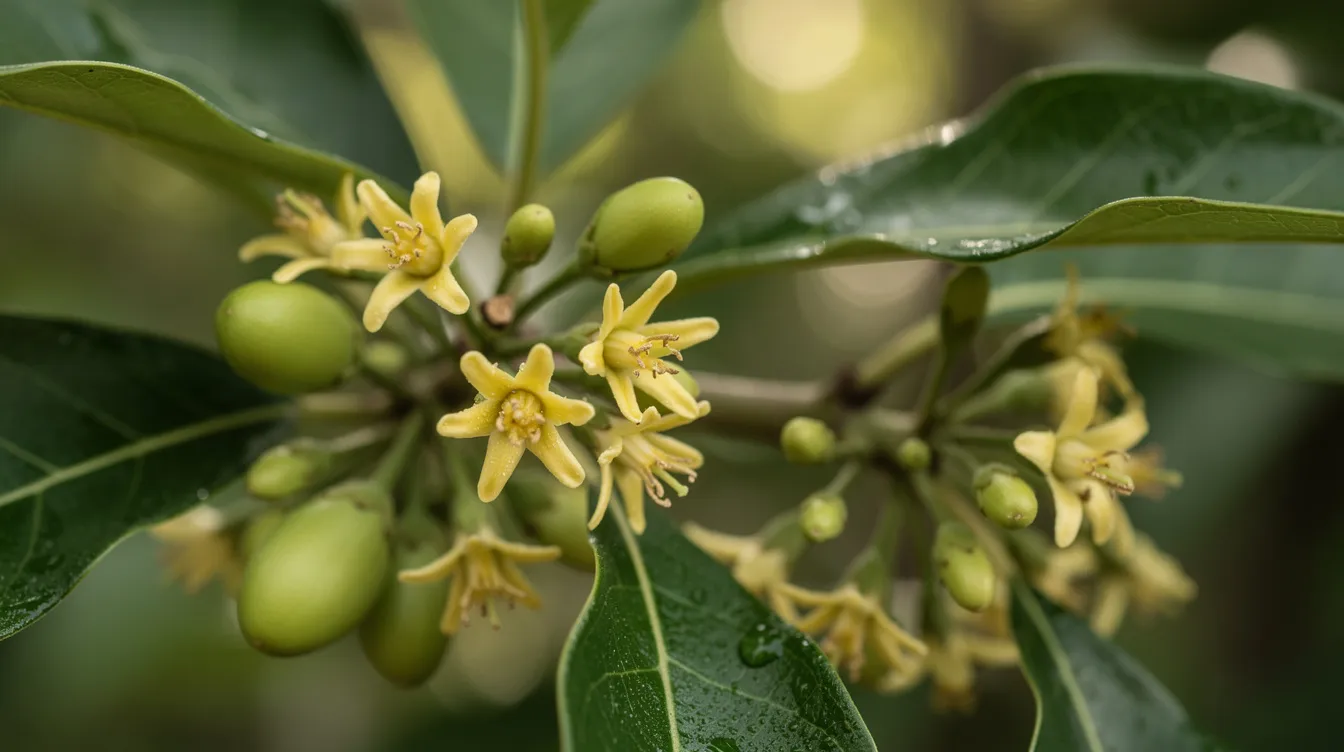
Avocado trees bloom heavily in late winter through spring in much of California. Avocado flowers are small, inconspicuous, and yellowish-green, measuring approximately 3/8 to 1/2 inch in diameter. During bloom, the canopy may look lightly dusty, frothy, or speckled at the branch tips.
A large tree can produce about one million flowers in a season, but only a tiny percentage will set fruit. That is normal. The tree naturally sheds many blossoms and fruitlets through fruit drop, especially in the early fruit stages.
Avocado flowering patterns are unusual. Each flower opens twice: once in a female phase and once in a male phase. Type A varieties, such as Hass, usually open female in the morning and male the next afternoon. Type B varieties, such as Fuerte, Bacon, or Zutano, follow the opposite timing. If avocado flowering patterns fall out of sync because of cool weather, the tree may not pollinate properly.
Optimum fruit set occurs when bloom overlaps during moderately warm temperatures and when bees or other pollinators are active. Optimum fruit set is often better when two trees are planted nearby, especially one Type A and one Type B, to provide cross pollination. That said, only one tree can still bear fruit in many warm California microclimates if conditions are favorable.
After pollination, tiny pea-sized fruitlets appear, then slowly enlarge over several months. Avocado fruit ranges from pear-shaped to oval and depending on the cultivar, can have smooth, bright green skin or dark purple, pebbled skin. Hass fruit turns dark purple to nearly black when mature, while Fuerte stays green and often has smoother skin.
Grafted Hass avocado trees usually begin to bear fruit about 3–4 years after planting. Seed-grown trees from an avocado pit may take 5–13 years or longer to produce fruit, and the first fruit may not taste like the parent avocado. Hass trees can also show biennial bearing, meaning fruit production may be heavy one year and lighter the next.
Avocados ripen after harvest, not while hanging soft on the tree. Once picked, ripe fruit may develop a creamy texture and nutty flavor; storing avocados near other ripe fruit can speed ripening because of ethylene gas. Like other fruits, avocados are also valued for health benefits, though some people are surprised by how rich they taste and assume they contain too much oil.
What Different Types of Avocado Trees Look Like
Not every avocado tree looks the same. Shape, leaf color, fruit size, and cold tolerance vary by avocado variety and by genetic race: Mexican, Guatemalan, West Indian, or hybrids between them. The California Rare Fruit Growers avocado guide is a useful reference for understanding these differences.
Here are common visual differences:
|
Type or variety |
Tree look |
Fruit look |
|---|---|---|
|
Medium height, dense rounded canopy, dark foliage |
Pebbled skin, turns dark purple-black |
|
|
More open canopy, spreading habit |
Pear-shaped, smooth green skin |
|
|
Upright to rounded, often vigorous |
Larger fruit, rounder shape |
|
|
Pinkerton |
Narrower habit than some types |
Elongated fruit with green skin |
|
Mexican types |
Often smaller, more cold hardy |
Smaller thin-skinned fruit |
Cold-hardy Mexican types may tolerate temperatures around the mid-20s°F for short periods, though young avocado trees are still vulnerable to cold weather. West Indian types generally need warmer conditions and are less suited to many California frost pockets.
Yardwork helps customers choose avocado varieties not only by harvest season and flavor, but also by appearance: compact vs. sprawling, darker foliage vs. brighter foliage, and ornamental form vs. maximum fruit production.
Young Avocado Trees vs. Mature Trees: What You’ll Actually See in Your Yard
A new nursery tree does not look like the lush, full avocado tree most people imagine. A young avocado tree is usually 3–6 feet tall, with a single slender trunk, a small leafy canopy, and a stake for support. Many arrive in 5–15 gallon containers, sized for practical planting.
Over the first 3–5 years, the trunk thickens, side branches develop, and the canopy begins to fill out. A grafted tree may bloom early and occasionally set fruit, though it is normal for a young tree to drop small fruit while it builds strength.
Pit-grown indoor avocado plants are different. A plant grown from an avocado pit often looks like a tall, thin houseplant with sparse leaves. It may never bear fruit outdoors in cooler regions, and if it does, the fruit quality is unpredictable.
In California yards, practical visuals are common: white trunk paint or wraps to reduce sunburn, a mulch ring around the base, and drip irrigation lines for the irrigation season. Yardwork ships young, grafted Hass avocado trees that are easier to plant and more reliable than seedlings if you want to grow your own avocados.
How Avocado Trees Fit Into California Landscapes
An established avocado tree works as both an edible tree and an ornamental evergreen shade tree. Near a patio, it can become a soft green focal point. In a backyard orchard, it pairs well with citrus, guava, olive trees, privacy trees, and evergreen shrubs used in California yard makeovers.
Scale matters. A typical suburban yard is usually better suited to one or two carefully placed avocado trees than a tight grove. In very hot, arid regions, pairing avocados with hardy shade trees such as thornless South American mesquitecan help structure the landscape. Place trees where the canopy can expand without pressing into roofs, fences, sidewalks, or neighboring plants.
Climate also affects appearance. Coastal areas near san francisco, san diego, and santa cruz counties often provide mild conditions that help trees stay lush. Inland areas, including fresno and tulare counties, may require more attention to heat, frost, and irrigation. Near foothill zones or cold-air drainage areas toward the sierra nevada mountains, frost damage can show up as browned leaves, twig dieback, or a thinner canopy.

To ensure proper growth, avocado trees should be planted in a location that receives full sun and is protected from wind and frost, ideally in a non-lawn area away from sidewalks. Lawns often receive shallow, frequent irrigation that does not match avocado needs, and sidewalks can reflect heat while limiting root space.
If you are planning a yard makeover, explore Yardwork’s avocado tree selection or request a consultation through Yardwork to match the right variety with your microclimate and design goals.
Key Care Details That Affect How Your Avocado Tree Looks
An avocado tree’s appearance reflects its care. Choosing healthy, mature trees for sale and managing watering, drainage, mulch, soil depth, and pruning all influence leaf color, canopy density, fruit set, and long-term vigor.
Avocado trees prefer well-drained, organically rich sandy or loamy soil with a pH around 6 to 6.5, and they do not tolerate heavy clay. Heavy clay soil holds water around the roots, which can cause root rot, weak growth, yellow leaves, dieback, and diseased roots. If your site drains poorly, planting on a mound can help.
The avocado tree has a shallow root system, with most of its feeder roots located in the top 6 inches of soil. When planting avocado trees, it is recommended to dig a hole as deep as the root ball and just as wide, allowing for good aeration since their feeder roots are mostly in the top 6 inches of soil. Avoid burying the current root ball too deeply, and do not pack dense planting media around it.
Avocado trees prefer slow, deep watering and should be watered weekly unless the weather is unusually dry, in which case watering may need to increase to twice a week. Overwatering is one of the fastest ways to make a tree look stressed. Avocado trees are susceptible to root rot, which is often caused by overwatering; therefore, it is crucial to ensure proper watering practices to maintain healthy roots.
A six-inch layer of organic mulch around the base of avocado trees helps retain moisture and provides nutrients as it decays, but it should be kept about a foot away from the trunk to prevent rot. Good mulch options include shredded tree bark, redwood bark, coarse yard mulch, and other chunky organic materials. Cocoa bean husks may also be sold at some garden supply centers, but pet owners should use caution because cocoa products can be risky for dogs.
Avoid smothering the base with compacted bulk soil or lightweight fluffy stuff that blows away and fails to protect feeder roots. A gypsum spread may help certain soil structure issues in some clay soils, but gypsum is not a cure for poor drainage or root rot.
To protect avocado trees from frost, it is recommended to build a mound of soil around the base of the trunk for insulation and to cover young trees with a blanket or tarp during cold nights. Young avocado trees are more sensitive than mature trees, so frost protection is especially important during the first few winters.
Pruning should be selective. Homeowners usually prune to:
-
Keep the tree under 20–25 feet tall
-
Remove dead, crossing, or crowded branches
-
Open the canopy for light and airflow
-
Shape the tree for easier harvest
-
Encourage balanced growth without causing less vigorous regrowth
If leaves are yellow, branches are thinning, or fruit retention is poor, start with the basics: drainage, irrigation, mulch, and soil nutrition. A soil test can clarify pH, salinity, and nutrient issues before you fertilize. Yardwork can help with soil testing, plant selection, and consultations so your avocado tree stays attractive, healthy, and productive.
With the right site and care, an avocado tree becomes more than a fruit tree. It becomes a year-round evergreen feature, a shade source, and a long-term part of your outdoor living space. If you are ready to plant, choose a grafted variety suited to your California microclimate and let Yardwork help you start with the right tree.