



A healthy harvest starts at planting. This guide walks through meyer lemon tree planting first, then covers watering, feeding, pruning, pests, pollination, and winter care so your tree can settle in and produce fruit reliably.
Overview: Why Plant a Meyer Lemon Tree?
A Meyer lemon tree, botanically known as citrus x meyeri, is a compact citrus hybrid linked to citron and mandarin orange ancestry. Its fruit is sweeter than other lemons, with floral juice, a fragrant thin skin, and a rounded yellow to orange color when ripe.
Home gardeners love that Meyer lemon trees grow well in the ground or in a pot. They are also more cold-tolerant than true lemon trees like eureka lemon, though cold snaps can still damage flowers and fruit.
You can buy a Meyer lemon or improved Meyer lemon tree from most garden centers and online nurseries. This guide focuses on how to plant it correctly, then how to help it bear fruit with good watering, fertilizer, light, frost protection, and pest control.

Choosing Meyer Lemon vs. Improved Meyer Lemon
The improved Meyer lemon was released after the original Meyer was found to carry citrus tristeza virus in some stock. For most home growers, improved Meyer lemon trees are the better choice because they are more disease-resistant while keeping the same sweet-tart flavor.
Most nursery tags that say “Meyer lemon” now refer to improved Meyer, even if the label is not specific. If you’re just getting started, you can also explore different lemon trees for sale suited to patios, small yards, or in-ground planting. Both types are self fertile citrus trees, so one tree can bear fruit without another pollinizer.
Typical mature size is 5–10 feet tall and 3–4 feet wide if unpruned, smaller on dwarf rootstock or in containers. A mature Meyer lemon tree may still stay patio-sized if roots are confined.
When and Where to Plant a Meyer Lemon Tree
Location and timing are the two biggest factors in meyer lemon tree planting. The best time to plant a Meyer lemon tree in the ground is early to late spring after the last frost; in Zone 9, that is often March–April, while Zone 8 may be April–May. In warm Zones 9–11, fall planting can also work.
Meyer lemon trees prefer USDA hardiness zones 8b through 11 for in-ground planting. In a colder hardiness zone, especially Zones 6–7 and below, grow the tree in a container and move it indoors for winter, or consider other citrus fruit trees suited to your climate.
Choose a sunny location with full sun and at least 6 to 8 hours of direct sunlight per day. Meyer lemon trees thrive in full sun, requiring at least 6 to 8 hours of direct sunlight each day for optimal growth. A south-facing wall, courtyard, or patio helps trap warmth and shield wind.
Soil Preparation and Site Requirements
Citrus roots need oxygen. Soggy soil is one of the fastest ways to kill a lemon tree because wet feet can cause root rot.
Meyer lemon trees should be planted in well-draining soil with an acidic pH between 5.5 and 6.5. Aim for well drained soil such as loam or sandy loam, and test soil pH before amending. Add compost or a small amount of well-rotted manure, but avoid planting Meyer lemon trees in heavy clay soils, as they can trap water and cause root rot.
If clay is unavoidable, mound the site 8–12 inches high and 3–4 feet wide. When planting Meyer lemons, ensure they are spaced at least 5 feet away from other trees or structures to allow for proper growth; spacing of at least 10 feet from other trees and structures is recommended for Meyer lemon trees to ensure proper air circulation. Clear weeds and turf in a 3-foot circle first.
How to Plant a Meyer Lemon Tree in the Ground
Start with a 1–5 gallon nursery tree. Water the pot a few hours before planting so the root ball slides out intact.
To plant:
-
Dig a hole twice to three times wider than the root ball, but no deeper.
-
Set the tree so the top of the root ball is level with or slightly above the soil.
-
The graft union of a Meyer lemon tree should be positioned slightly above the soil line to prevent crown rot.
-
Tease or slice circling roots to redirect root growth outward.
-
Backfill with native soil, firm gently, and create a shallow watering basin.
Water deeply until the basin fills and drains twice. Mulch with 2–3 inches of bark, wood chips, or pine straw, keeping mulch 3–4 inches away from the trunk.
How to Plant a Meyer Lemon Tree in a Container
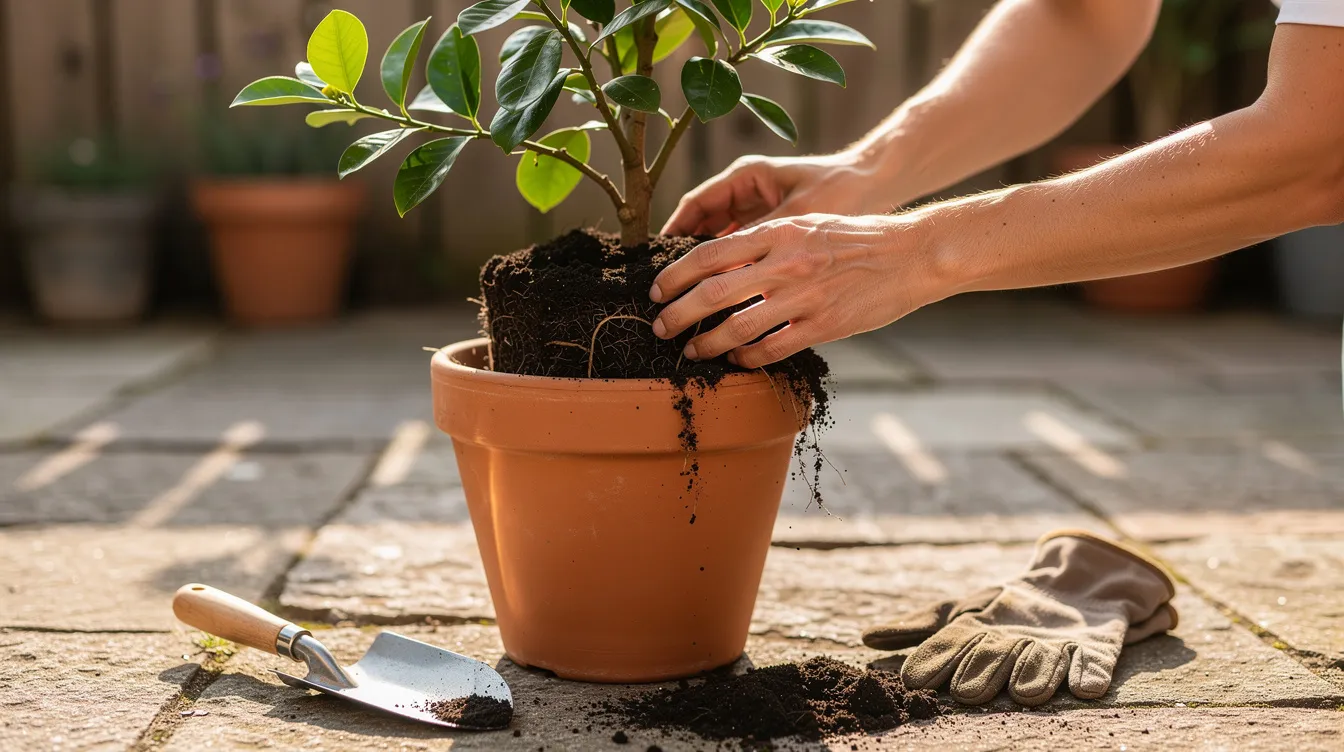
Meyer lemon trees can be grown successfully in the ground or in large containers, and containers are best for colder climates. Start with a 5-gallon pot with drainage holes, then move up to 10–15 gallons as the tree grows.
Use lightweight resin or plastic rather than heavy clay if you need to move the pot. Fill it with citrus potting soil or a well draining mix with bark or perlite, never dense yard soil.
Cover drainage holes with mesh, add mix, center the root ball, keep the graft above the soil, and backfill. Leave 1–2 inches below the rim for watering. Water until it drains from the bottom, then place the tree in bright shelter before moving it into full sun over 7–10 days; a little partial shade during the transition prevents leaf scorch from intense afternoon sun.
Watering Meyer Lemon Trees
Meyer lemon trees prefer to be watered when the soil is on the dry side of moist, as they dislike having wet feet which can lead to root rot. This is where many otherwise healthy trees fail.
For new in-ground trees, water 2–3 times per week for the first month, then taper to about once weekly depending on heat and rain. Container trees need more frequent watering: check when the top 1–2 inches of mix feel dry, which may mean every 2–3 days in summer and much less in winter.
Use the finger test or lift the pot to judge weight. Deep, slow watering is better than frequent watering in tiny amounts. Never let a container sit in soapy water, runoff, or a saucer full of water; standing water often leads to yellowing leaves.
Fertilizing and Feeding Schedule
Meyer lemons are heavy feeders and require specific fertilization during the active growing season. This is especially true in containers, where nutrients wash out faster.
Feeding Meyer lemon trees should begin in the spring when new growth starts, and it is recommended to use a fertilizer that includes micronutrients. Choose a citrus specific fertilizer high in nitrogen, such as 6-3-3, with iron, zinc, and manganese.
Feed in-ground trees 2–3 times per year. Feed container trees every 4–6 weeks with granular fertilizer or monthly with liquid feed, and follow label directions; label directions matter because overfeeding burns roots. Do not fertilize stressed or newly planted trees for the first 4–6 weeks.
Light, Temperature, and Seasonal Care
Meyer lemon trees require full sun, needing at least 6 to 8 hours of direct sunlight each day for optimal growth. Indoors, use a south facing window, sunroom, or grow light.
Meyer lemon trees thrive in temperatures between 70-90°F (21-32°C) and should not be exposed to temperatures below 50°F (10°C). They are hardy to about -6°C (21°F), but the fruit is at risk of freezing at around -3°C (27°F).
Move container trees indoors before nights routinely drop below 40°F. Some buds may look like purple flowers before opening white, and light is what keeps those blooms productive.
Frost Protection and Overwintering
Frost damage is a common reason young citrus trees fail. For in-ground trees, wrap the trunk, cover the canopy with frost cloth on a frame, and use old-style Christmas lights under the cover for gentle warmth.
Mulch the root zone with 3–4 inches of pine straw or chips in late fall, keeping mulch off the trunk. For container trees, move the pot into a garage, shed, or unheated sunroom during freezes, or work with a local plant nursery and landscaping service if you need help planning more permanent cold protection.
When moving indoors, acclimate over several days, reduce watering slightly, and avoid heater vents. Some winter leaf drop is normal, but heavy loss usually means low light, overwatering, dry air, or pests.
Pollination, Flowering, and Fruit Set
Meyer lemon trees are self-pollinating and can bear fruit with just one tree. Meyer lemon trees are self-fertile, meaning they have both male and female parts and do not require pollen from another tree to produce fruit.
Outdoors, bees, insects, and wind usually do the work. If a Meyer lemon tree is not attracting natural pollinators like bees, it may struggle to produce fruit, especially when kept indoors.
When grown indoors, hand pollination can be done using a small paintbrush or cotton swab to transfer pollen between flowers. To hand pollinate, brush from flower to flower during bloom. Expect spring flushes and sometimes late-summer flowers; tiny pea-sized lemons often drop naturally.
Pruning and Shaping Meyer Lemon Trees
Pruning Meyer lemon trees is not required for fruiting, but it can help maintain the tree’s shape and promote healthy growth by removing damaged or crossing branches.
Prune after the main fruiting period or in late winter before new growth. Remove dead, damaged, crossing, or diseased branches first to improve light and air circulation.
Tip back long shoots on container trees for a compact shape. Keep the graft union visible and remove suckers from below it. Patio trees can have the lowest weak branches removed, but keep enough foliage to shade the trunk.
Common Problems: Leaf, Flower, and Fruit Drop
Some leaf and fruit drop is normal. Sudden heavy loss means the tree is stressed.
Common causes include overwatering, poor drainage, sudden temperature changes, low indoor humidity, severe pest infestations, inadequate light, heat, cold, and poor indoor pollination. Stabilize care before changing everything at once.
Remove damaged or shriveled fruit so the tree can support healthy lemons. If you expect instant crops, remember young lemon trees grow roots and canopy first; you may wait years for a heavy harvest, but good planting shortens the delay.
Common Pests and Diseases on Meyer Lemon Trees
Common pests that affect Meyer lemon trees include scale insects, spider mites, mealybugs, and whiteflies. Aphids and citrus leafminer can also appear, especially indoors or in greenhouses.
Spider mites thrive in the dry air of centrally heated homes, making them a common issue for indoor Meyer lemon trees during winter. They cause stippled leaves and fine webbing. Scale insects look like small bumps on stems and leaves.
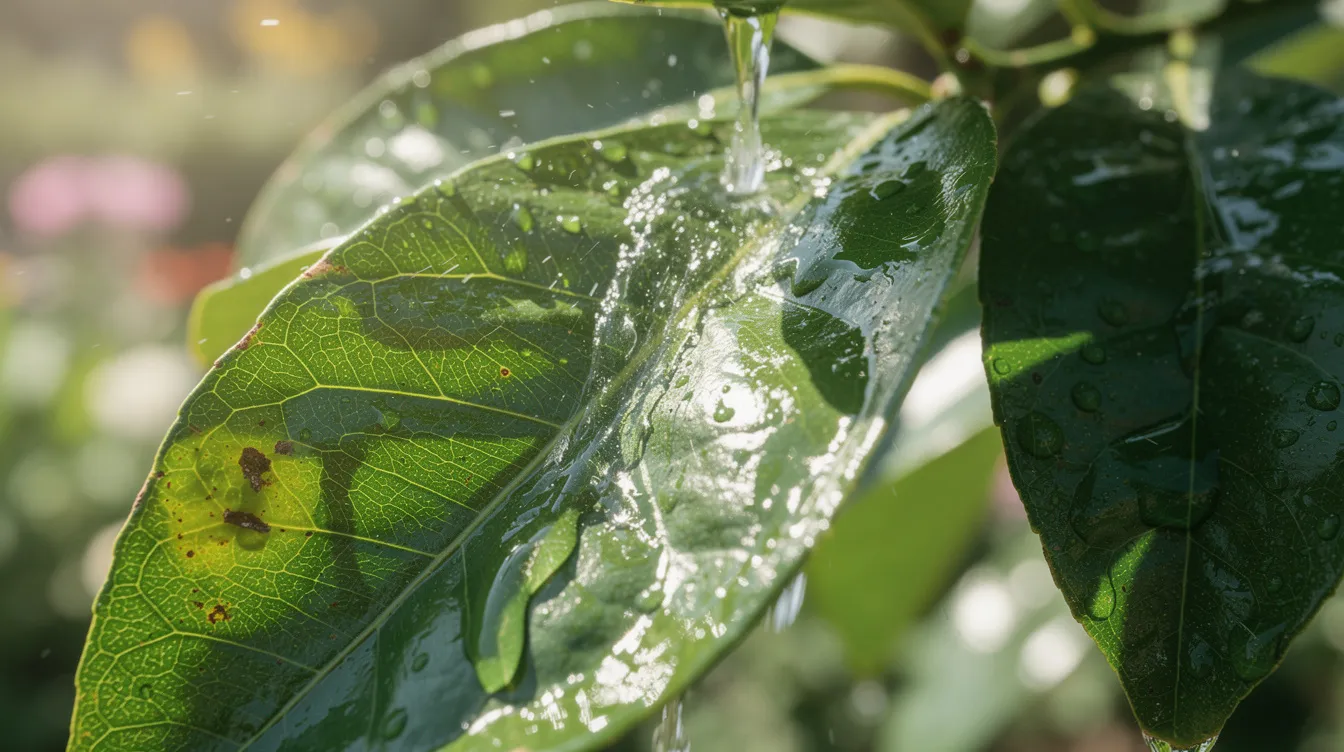
To manage pests on Meyer lemon trees, treatments such as horticultural oil or insecticidal soap should be applied as soon as pests are spotted. Spray aphids off with water, rinse foliage, prune badly infested twigs, and repeat horticultural oil treatments as needed. Watch for root rot in poorly drained soil and check regional citrus disease guidance, especially where citrus greening is present.
Harvesting and Using Meyer Lemons
Meyer lemons ripen deep yellow to orange-yellow and soften slightly. In warm climates, harvest often runs from late fall through winter; indoors, trees may produce over a longer season.
Taste fruit at different stages to learn your preferred balance of sweetness and acidity. Meyer lemons grow sweeter than many other lemons, closer in fragrance to sweet orange than sharp commercial lemons.
Use hand pruners or gently twist fruit with a small stem attached to avoid tearing the rind. Refrigerate ripe lemons for several weeks, or freeze juice and zest. The thin skin is excellent for marmalade, desserts, and savory citrus recipes.