Ginkgo Tree For Sale
Explore our collection of gingko trees for sale and add one of the most visually striking shade trees you can plant in your landscape.
This store requires javascript to be enabled for some features to work correctly.
Explore our collection of gingko trees for sale and add one of the most visually striking shade trees you can plant in your landscape.
Ginkgo trees are among the most resilient and visually striking shade trees you can plant in a California landscape. As the only surviving species in the ancient ginkgo family, Ginkgo biloba has endured for over 200 million years - earning its reputation as a living fossil. With distinctive fan-shaped leaves that turn a brilliant golden yellow in fall, exceptional tolerance to urban conditions, and a lifespan stretching centuries, the maidenhair tree delivers year-round character. The most important decision when shopping for a ginkgo? Choosing between male and female trees.
All ginkgo trees belong to a single species - Ginkgo biloba - so the meaningful differences come down to gender and cultivar growth habit.
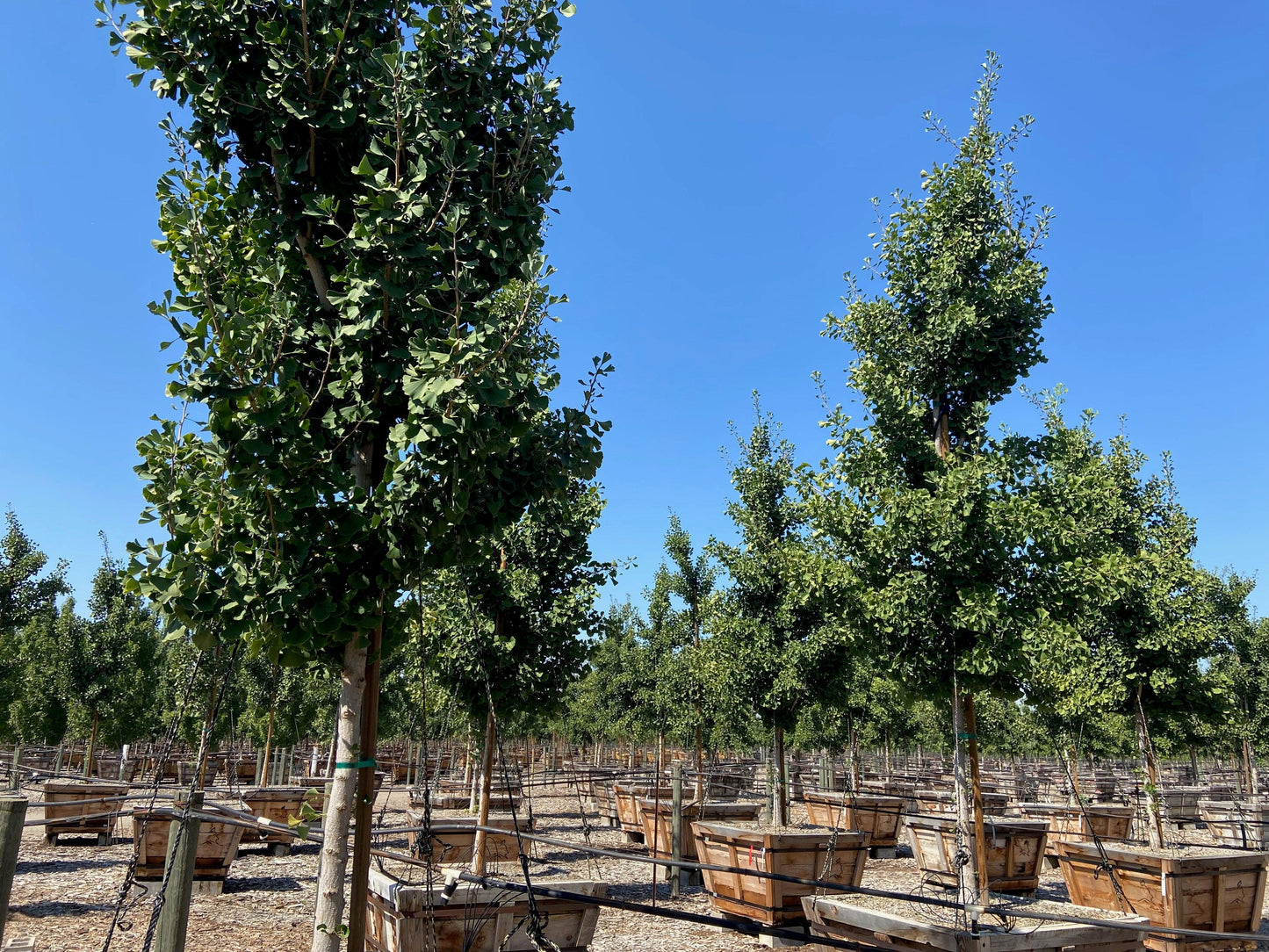
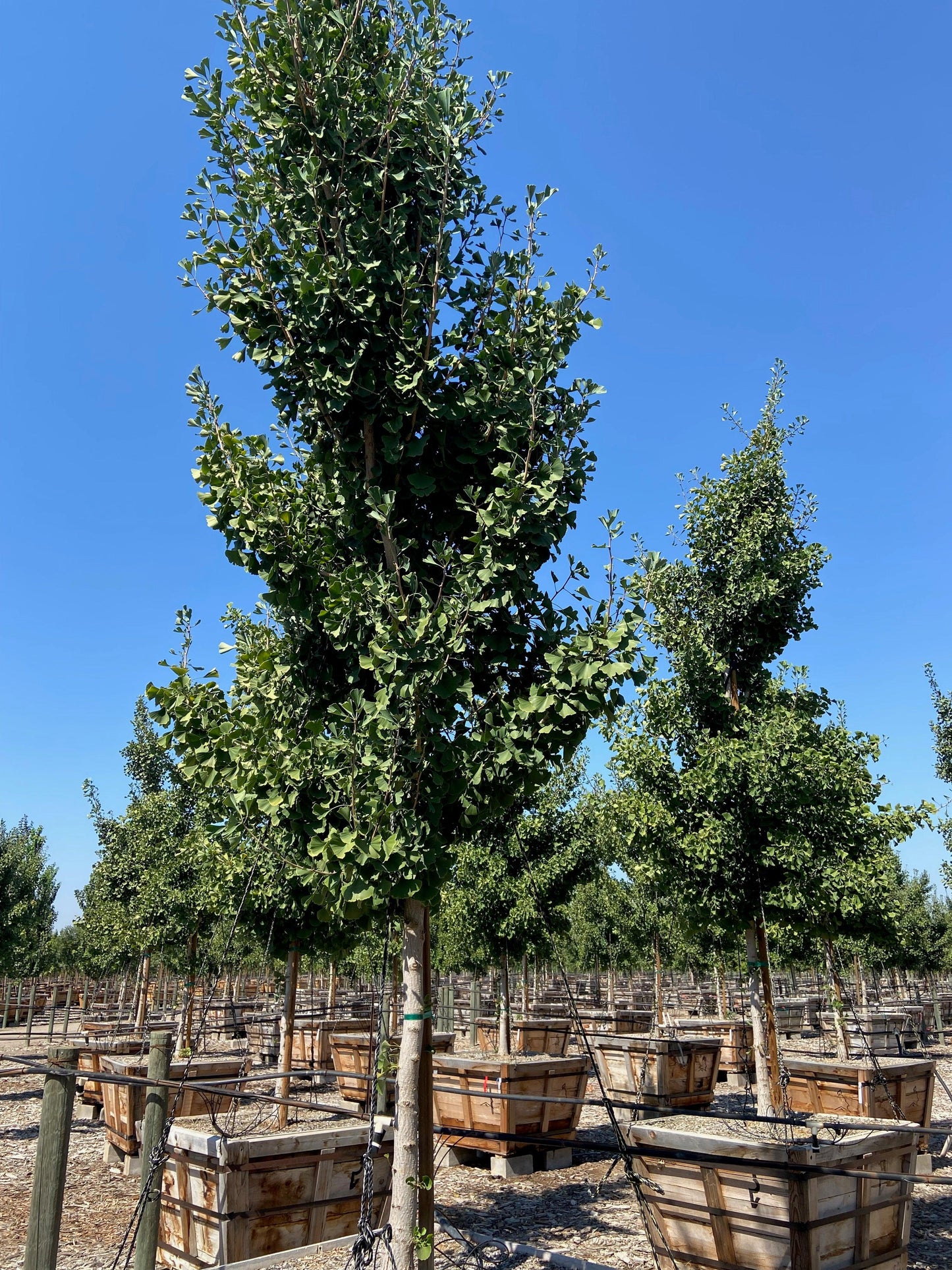
Male ginkgo trees are the standard choice for residential and commercial sites. They produce pollen in spring but no fruit, which means no mess and no odor on sidewalks and patios. Male trees are preferred for urban planting due to odorless fruits, and most named cultivars sold by nurseries are verified male selections. Popular options include Autumn Gold - a broad-canopy male reaching roughly 45–50 feet tall and 25–35 feet wide - and Princeton Sentry®, a columnar variety ideal for use as a street tree or along narrow spaces.
Female ginkgo trees produce large seeds encased in a fleshy outer layer called a sarcotesta. When ripe, female Ginkgo trees produce a fruit that emits a strong odor - often compared to rancid butter - and the fallen seeds can stain hardscaping. For these reasons, female plants are generally avoided near walkways and structures. However, female trees may be appropriate for large properties, botanical collections, or settings where seed production is valued. Keep in mind that fruiting typically doesn't begin until a tree is 20–30 years old, so gender is indistinguishable on young trees unless they are grafted cultivars. Ginkgo seeds contain a neurotoxin called ginkgotoxin and can cause poisoning if consumed in large quantities, so placement away from children's play areas is wise.
For confined spaces, containers, and tight city lots, dwarf and columnar ginkgo cultivars offer the same ancient character at a manageable scale. Skinny Fit® GoGo™ (Ginkgo biloba 'Menhir') grows just 12–15 feet tall and 3–5 feet wide, making it excellent for privacy screening and narrow planting strips. The dwarf 'Jade Butterflies' reaches only 6–12 feet tall in a vase-shaped form, perfect for accent planting or mixed borders with other plants. These compact selections open ginkgo up to gardeners who previously lacked the square footage for a full-size specimen.
Several concrete attributes determine which ginkgo is the right fit for your California garden.
Because ginkgo trees are dioecious, with male and female reproductive structures on separate trees, gender is the single most consequential trait. Only female trees produce the notoriously messy and odorous fruit. Purchasing grafted male clones of Ginkgo is recommended to avoid odor issues - look for labels specifying "male cultivar" or "non-fruiting." Seedling-grown or unsexed plants carry a risk of turning out female, with the unpleasant surprise arriving decades later. Note that ginkgo pollen can produce allergic reactions in sensitive individuals, though this is generally a minor concern outdoors.
Ginkgo trees can grow 50 to 80 feet tall - some sources cite 20–35 meters - with a spread of 30–40 feet for standard cultivars. This makes them a substantial shade tree comparable to oaks or elms. Young trees are often sparsely branched with an irregular silhouette, but the canopy fills out with age. If your available space is limited, dwarf selections stay well under 15 feet, while columnar forms like Princeton Sentry® reach full height but stay narrow at 15–20 feet wide. Growth rate is slow growing in the early years - first year growth can feel modest - then accelerates under favorable conditions once the root ball is well established.
Ginkgo trees thrive in hardiness zones 3 to 9, preferring well-drained soil and full sun. This range covers virtually all of California, from cooler mountainous regions to warm inland valleys. Once established, ginkgo trees are nearly indestructible and thrive in various soil conditions - they tolerate air pollution, compacted soils, heat, and drought. They handle pH levels from 5.0 to 8.0, meaning they adapt to both acidic and alkaline surrounding soil. The Ginkgo tree roots are deep and can tolerate city sidewalks without cracking pavement, a major advantage in urban areas and along commercial sites.
Narrowing down the right ginkgo comes to four practical criteria:
Choose a male tree for nearly all residential and urban settings. Female trees produce seeds with a fleshy coating that smells like rancid butter when it decays, stains walkways, and requires regular cleanup. Ginkgo leaves also contain ginkgolic acids, which are highly allergenic - but it is the female fruit that causes the most practical headaches. Purchasing a named male cultivar (grafted, not seedling-grown) is the most reliable way to avoid these issues.
Standard ginkgo cultivars reach 50–80 feet tall with a 30–40 foot spread under good California growing conditions. In Sacramento, for example, Autumn Gold is expected to reach about 45–50 feet tall and 25–35 feet wide. Ginkgo trees can survive for hundreds or even thousands of years - the kakure-ichō ginkgo tree in Japan is over 500 years old - so plan for a long-term presence. Reaching full canopy and sexual maturity may take 20–40 years; these are slow growing but extraordinarily long-lived ancient trees.
Absolutely. Ginkgo trees are highly tolerant to pollution and urban conditions, handle drought once established, and suffer from very few disease problems or pest issues. They accept a wide range of soil pH (5.0–8.0) and perform well in compacted soils found across urban environments. Ginkgo has been cultivated in China for over 1,500 years and planted in temple gardens for centuries - a testament to its adaptability. Young ginkgo trees benefit from spring fertilization and regular supplemental water, but established specimens need minimal care. Ginkgo trees require minimal pruning for maintenance, making them one of the lowest-effort shade trees available. For guidance on the best trees to plant in California this spring, ginkgo consistently ranks among the top recommendations.
In California, ginkgo foliage typically turns golden yellow from mid-October through November. New leaves emerge green in spring, deepen through summer, then shift to a pure, uniform yellow in early autumn as nighttime temperatures drop. The display is famously dramatic - leaves often drop within several weeks or even days, carpeting the ground in gold. Full sun exposure intensifies the color. Coastal areas with milder temperature swings may see slightly less vivid or later fall color compared to inland and foothill regions.
As the only surviving member of a lineage stretching back over 200 million years - Ginkgo biloba is over 200 million years old, the ginkgo leaf is the symbol of Tokyo University since 1948, ginkgo is the official tree of Seoul since 1971, and ginkgo trees survived the Hiroshima atomic bomb in 1945 - few trees carry as much history or resilience. Browse our selection of professionally grown ginkgo trees, including verified male cultivars and columnar forms, with expert consultation and delivery available throughout California. Explore our full tree collection or learn more about buying trees online to get started.