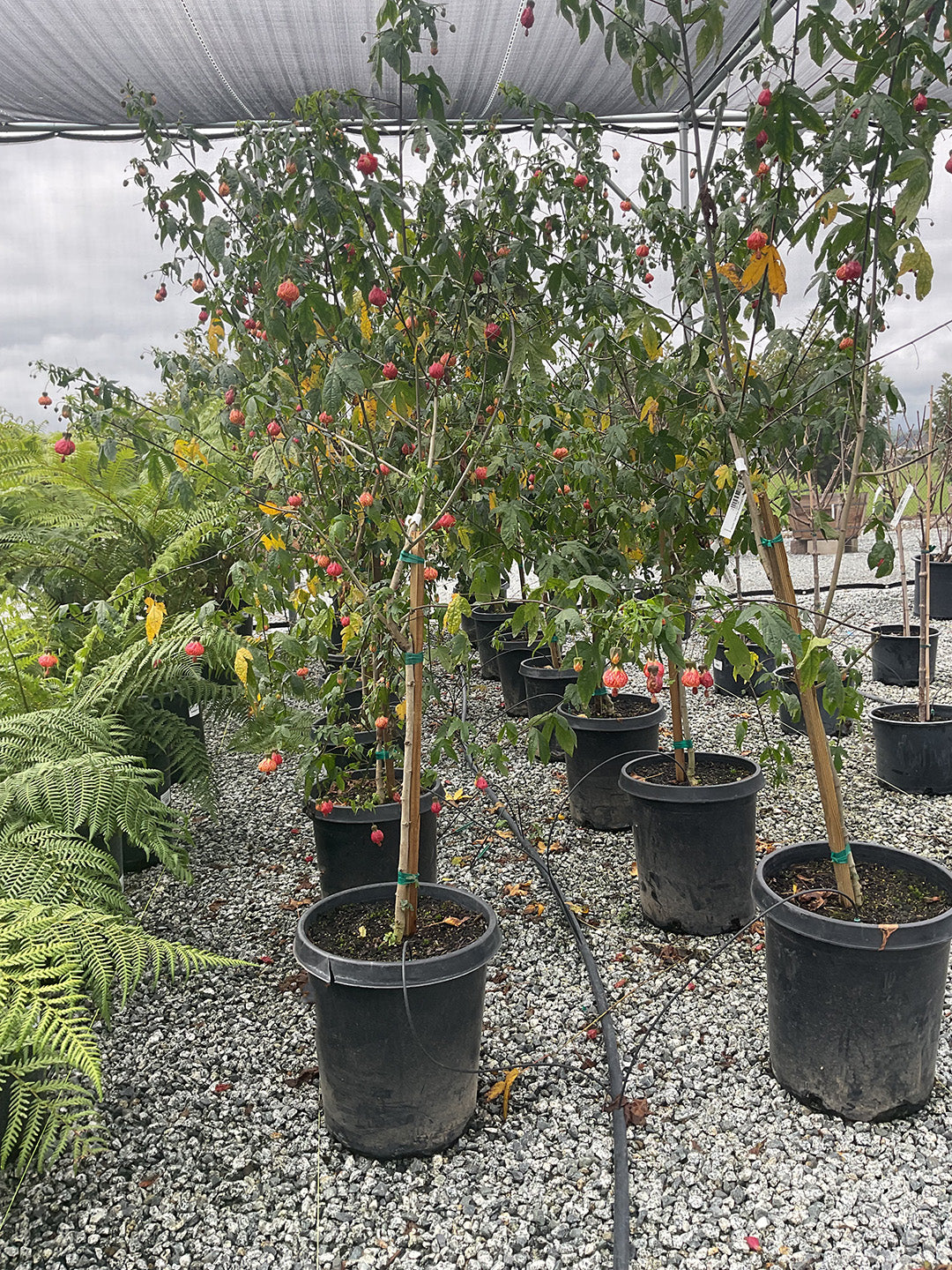
Transform Your Garden with Year-Round Color and Pollinator Appeal
Flowering maple delivers what few shrubs can: continuous, colorful bell shaped flowers from spring through frost, paired with striking foliage that resembles maple leaves. Despite its common name, abutilon flowering maple isn't related to true maples at all-it belongs to the mallow family (Malvaceae), making it a relative of hibiscus. For California gardeners seeking vibrant, year round garden color that doubles as a pollinator magnet for hummingbirds, butterflies, and bees, flowering maples are fast-growing evergreen shrubs that reward minimal effort with maximum visual impact.
Why You'll Love Flowering Maple
- Continuous Blooms – Abutilon blooms from late spring to frost, producing pendulous, downward facing flowers for five to seven months of nonstop color. Individual blossoms last several days, and the plant continuously pushes new flowers from the leaf axils and branch tips throughout the growing season.
- Pollinator Magnet – Flowering maples attract pollinators with their bell-shaped flowers, drawing hummingbirds, butterflies, and beneficial bees to your garden. A 2026 study on Abutilon grandifolium confirmed that several species of native bees effectively transfer pollen within Abutilon flowers, underscoring their real value in supporting urban pollinator ecosystems.
- Versatile Growing – They can be trained as tree-like specimens or used in hanging baskets, planted in mixed beds alongside other plants, or grown indoors as container plants. Flowering maples can be grown indoors as container plants in colder climates where frost threatens.
- Low Maintenance – Once established, abutilon plants are surprisingly drought tolerant with minimal pest problems outdoors. Regular pruning of flowering maples promotes bushier growth and more blooms-that's about the extent of the upkeep.
- Multiple Varieties – Abutilon flowers range from yellow to deep red, with flower colors including yellow, orange, pink, and red, plus soft pink flowers, whites, and striking bicolors. Hybrid abutilon cultivars often have fruity names like 'Apricot', and the genus abutilon encompasses several species and dozens of cultivars for every taste.
What Makes It Different
Most flowering shrubs deliver a burst of color for a few weeks, then fade to green for the rest of the year.
Flowering maple on the other hand offers:
- Extended Flowering Season – While azaleas and camellias bloom for weeks, abutilon flowering maple produces large flowers continuously from spring through fall-roughly five to seven months of colorful blooms in warm zones. Flowering maples can grow up to 8–10 feet tall in tropical climates, creating a dramatic, ever-blooming focal point.
- Maple-Like Foliage with Tropical Flowers – The palmate leaves with serrated edges look like familiar maple leaves, but the downward facing, bell shaped flowers give it an exotic, almost chinese lantern-like appearance. Varieties of flowering maples can exhibit variegated foliage-some variegated forms feature white or yellow mottling that adds interest even between blooms. Abutilon pictum 'Souvenir de Bonn' is a variegated form particularly prized for its cream-edged foliage.
- Indoor/Outdoor Flexibility – Unlike most landscape shrubs, abutilon plants transition seamlessly between garden and home. Grow flowering maple outdoors year round in zones 9–11, or bring containers indoors when temperatures drop in fall and winter. This dual-use flexibility sets it apart from both traditional shrubs and typical houseplants.
How To Growing Flowering Maple Successfully
- Plant in the Right Spot Abutilons need 6–8 hours of direct sunlight daily. Choose a location with full sun to partial shade-in hot inland California areas, afternoon part shade prevents leaf scorch. Flowering maples thrive in rich, moist, well-drained soil with a slightly acidic pH (5.5–6.5). Maintain temperatures above 65°F year-round for abutilon to keep growth and flowering steady.
- Provide Consistent Care Water abutilon when the top ½ inch of soil is dry, keeping soil evenly moist but never waterlogged. Feed abutilon every 2 weeks with balanced fertilizer at ½ strength during the active growing season from spring through summer. Reduce watering and feeding during winter dormancy if overwintering indoors.
- Maintain for Best Results Prune abutilon to maintain a compact and bushy shape-cut back by up to two-thirds in early spring before new growth begins, since plants flower on new wood. Pinch branch tips regularly to encourage bushier growth. Deadhead spent blooms to keep flowers coming from late fall into the next season. Plants can also be trained to a single stem standard or pruned as small trees for a formal look.
Plant Details
- Plant Type: Semi-woody evergreen shrub or small tree (Abutilon spp.)
- Family: Malvaceae (mallow family)
- Mature Size: Abutilon can grow 3–6 feet tall and 2–3 feet wide; Abutilon megapotamicum can grow up to 6 feet tall; compact cultivars stay under 2 feet
- Hardiness: Zones 9–11 for year-round outdoor growing; Abutilon 'Lucky Lantern' series is hardy in zones 7b and 8a; can be grown as annual or houseplant in colder zones
- Flower Colors: Yellow, orange, red, pink, white, and bicolor varieties available-flowering maples produce pendulous flowers in shades of red, pink, orange, yellow, and white, often with a darker center
- Bloom Time: Late spring through first frost
- Light Requirements: Full sun to partial shade (6–8 hours sun daily)
- Soil Needs: Well drained, moderately fertile soil; keep evenly moist
- Propagation: Softwood cuttings root readily; seed germination in 5–21 days; a few seeds may produce variable results from hybrids
Who It's For
Ideal for:
- California homeowners looking for year-round garden color without constant replanting
- Pollinator gardeners wanting to attract hummingbirds, butterflies, and bees-pair with Autumn Sage or Sticky Monkey Flower for a complete pollinator corridor
- Container gardeners seeking versatile flowering plants for patios, balconies, or hanging baskets-move to a larger pot as plants grow
- Landscapers designing pollinator-friendly gardens or adding colorful foliage plants and long-blooming shrubs to client projects
If you want months of bloom without the fuss, flowering maple fits your garden.
Frequently Asked Questions
Is flowering maple easy to grow? Yes. Flowering maples are adaptable, fast-growing plants that perform well for gardeners in zones 9–11 with minimal intervention. Flowering maples prefer temperatures above 65°F to thrive, so California's climate is ideal. The basics: well drained soil, consistent watering, and full sun to partial shade. In colder climates, grow in containers and overwinter indoors near a bright window.
How long do the flowers last? Individual bell shaped flowers last several days, but the plant reblooms continuously throughout the growing season-from late spring through first frost. In mild California microclimates, sporadic bloom may continue through winter. The flowers are typically 2–3 inches across, appearing in vibrant shades along the stems. Abutilon is a relative of hibiscus in the mallow family, and shares that tropical generosity with blooms.
Can I grow it indoors? Absolutely. Flowering maples can be grown indoors as container plants with bright light and cool nights around 55–60°F. Place near a south-facing window, keep soil evenly moist, and feed every two weeks during the growing season. Be aware that flowering maples are susceptible to spider mites and aphids indoors-good air circulation helps prevent issues. Repot every year or two into a larger pot as the plant grows.
What varieties do you recommend? We carry several beautiful cultivars: Abutilon 'Albus' for pure white blooms, 'Golden Ruffles' for bright yellow petals, 'Talini's Pink' for soft pink flowers, and Victor Reiter for deep red, dramatic bells. The Canary Bird cultivar produces cheerful yellow trumpet flowers, while the Bellvue Mix offers a colorful blend. For trailing forms, Abutilon megapotamicum features two-tone yellow petals with red bases.
Do deer eat flowering maple? Flowering maple is not considered a major deer target. The textured, sometimes hairy foliage appears to be less palatable, though in deer-heavy areas some protection may still be prudent-especially for young plants getting established.
Ready to Add Flowering Maple to Your Garden?
Flowering maple delivers months of colorful, bell shaped flowers, striking foliage, and constant visits from hummingbirds and pollinators-all season long.
Browse our flowering maple collection and choose from cultivars in every shade from apricot to deep red. Need help selecting the right variety for your microclimate? Our expert consultations and soil testing services ensure your abutilon plants thrive from day one.