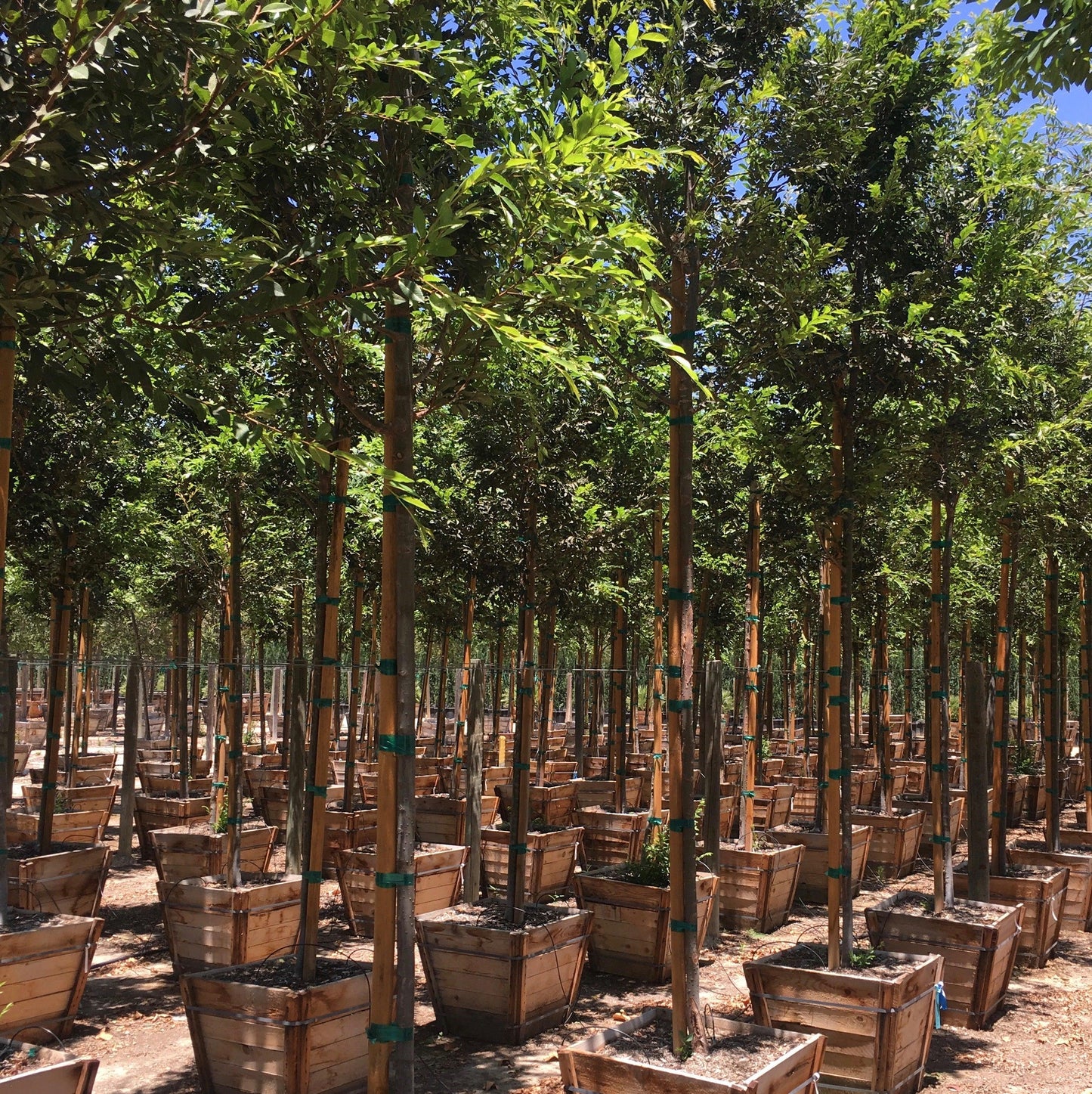
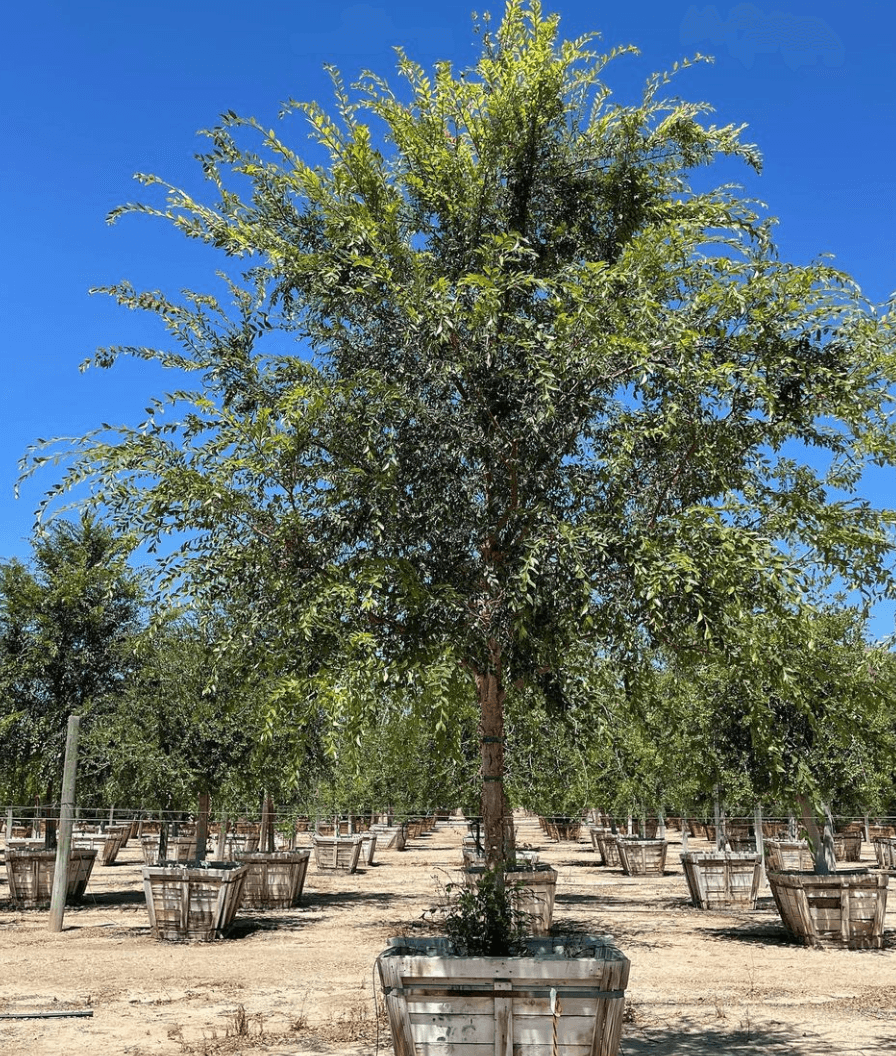
Find the Perfect Shade Tree for Your Landscape
Looking for a majestic elm tree that creates lasting impact? Discover American, Chinese and hybrid varieties designed for every landscape need. From fast-growing shade trees to disease-resistant specimens, our collection combines classic beauty, proven performance and superior genetics.
Find your perfect elm and transform your outdoor space today.
Elm Trees for Every Landscape Purpose
Elm trees belong to the genus Ulmus within the elm family Ulmaceae - a group of deciduous trees celebrated across North America and Europe for centuries. Many elm species have long-lived lifespans of 175 to 300 years, making them generational investments in any landscape. Elm trees can grow up to 100 feet tall with a 75-foot spread, delivering unmatched canopy coverage. With elm tree varieties ranging from towering American elms to compact Chinese elm selections, there's a size and shape for every property. Elms enhance property value and curb appeal through their dramatic silhouettes, seasonal interest and proven ability to anchor a landscape design.
Shade and Street Elms
The american elm tree (Ulmus americana) set the standard for large shade trees across North America. American elms have a distinctive vase-like or urn shape that arches gracefully over streets and driveways - the reason so many elm streets were once canopied from curb to curb. American elms are large deciduous shade trees that grow rapidly, and American elm can grow up to 100 feet tall under optimal conditions.
For modern plantings, disease resistant cultivars like Valley Forge and Princeton restore that classic silhouette with proven dutch elm disease resistance. Valley Forge elm is bred for resistance to Dutch elm disease and was released in 1995 by the U.S. National Arboretum. Princeton, an older cultivar selected in 1922, reaches 60–70 feet with reliable form and vigor. Height growth for American hybrids like New Harmony and Princeton averages approximately 0.60–0.63 m per year in field trials.
When spacing street trees or driveway plantings, allow at least 40–50 feet between centers for large vase-shaped forms. Elm trees provide significant shade and can lower cooling costs in summer, making them highly practical choices beyond their aesthetic appeal. American elms thrive in USDA Hardiness Zones 3 through 9, offering broad regional versatility.
Ornamental and Specimen Elms
Chinese elm (Ulmus parvifolia), also known as lacebark elm, brings multi-season ornamental value to smaller spaces. Its exfoliating mature bark reveals mottled patterns of gray, cream, tan and orange - a striking focal point even in winter. The Chinese Elm Tree typically reaches 40–50 feet at maturity, with cultivars like 'Allee' offering a refined vase form at approximately 50 feet tall and 35 feet wide. 'Burgundy' delivers rich fall foliage and vivid bark color on an even smaller frame.
Elm leaves are oval, 4 to 6 inches long, and jagged, with dark green leaves that provide a lush canopy through summer. Most elms have unequal leaf bases where one side is lower than the other - a useful detail for plant identification. Leaves of elm trees turn a soft yellow in autumn, and some cultivars like 'Burgundy' produce deeper burgundy tones. Elm trees have a broad canopy and drooping branches that create graceful, layered silhouettes as specimen plantings. Compact Chinese elm cultivars also have bonsai potential for container growing.
Privacy and Windbreak Elms
For screening and wind protection, faster-growing hybrids and dense Chinese elm clones deliver effective coverage. Siberian elm (Ulmus pumila) is known for its fast growth rate and urban adaptability, though it requires more maintenance than other elms. Dense foliage varieties can be planted in staggered rows for layered privacy - consider cultivars that maintain leaf coverage well into fall.
Height and spread considerations matter for boundary plantings. Larger American-type elms provide dramatic overhead screening, while upright cultivars like 'Bosque' (Chinese elm) offer columnar form for tighter spaces. For alternative privacy tree options, explore our curated selections. Maintenance for privacy applications includes regular pruning to encourage density and structural integrity.
Choose the Right Elm Tree for Your Growing Conditions
Selecting the right elm species starts with understanding your soil, climate and available space. Elms are remarkably adaptable - American elms are highly adaptable to various soil types and moisture levels - but matching the cultivar to your specific conditions ensures the strongest long-term performance.
For California's Mediterranean Climate
California's dry summers, mild wet winters and variable microclimates demand drought tolerant varieties with proven heat resilience. Chinese elm and several hybrids have demonstrated strong performance across California's diverse zones. Ulmus parvifolia cultivars like True Green offer semi-evergreen behavior in mild coastal areas while maintaining excellent drought tolerance once established.
The hybrid 'Frontier' (Ulmus minor × U. parvifolia) showed strong form and rapid growth in California trials, with approximately 74% survival after 10 years across varied U.S. sites in the National Elm Trial. For inland valleys with extreme heat, the Italian-bred cultivar 'Morfeo' stands out - extremely resistant to dutch elm disease and tolerant of both summer drought and winter waterlogging, making it especially promising for Mediterranean climates.
Coastal California plantings should account for humidity and salt spray effects on foliage. Inland properties need mulching and supplemental irrigation during establishment, with gradual reduction as root systems develop. Full sun exposure is ideal for most elm species, though young trees benefit from afternoon partial shade in the hottest inland valleys.
For Small to Medium Yards
Not every property can accommodate a 70-foot american elm. Compact elm cultivars provide the beauty of the genus in manageable proportions. Chinese elm 'Cork Bark' (Corticosa) reaches approximately 20 feet at 8–10 years - perfect for smaller landscapes. 'Burgundy' stays similarly contained while delivering vivid seasonal interest.
Root system considerations are critical for smaller properties. Many elms have aggressive surface root growth that requires adequate distance from structures, sidewalks and utilities. Pruning young elm trees early to develop a strong central leader helps avoid structural weaknesses and keeps the canopy proportional to available space. Early structural pruning can reduce structural problems and decay in elm trees throughout their lifetime.
For Large Properties and Estates
Large properties and estates can accommodate the full grandeur of American-type elms and large hybrids. Cultivars like Valley Forge, Princeton and 'New Harmony' reach 50–70 feet tall with comparable spreads, creating the dramatic alleé and grove plantings that defined historic landscapes. Many elm trees were widely planted in exactly this fashion before dutch elm disease reshaped the urban canopy across North America.
Spacing for alleé designs should allow 40–50 feet between centers to let vase-shaped canopies develop fully without crowding. Long-term canopy development rewards patience - these are trees that define an estate for generations. Elm trees can stabilize soil and reduce erosion on large properties with slopes or exposed terrain.
For Challenging Soil Conditions
Elms tolerate a remarkable range of soil types. American elms prefer moist, deep, and rich soils, but many cultivars handle clay, sandy or moderately alkaline conditions. Chinese elm is particularly forgiving, thriving in well drained soil as well as heavier substrates with periodic waterlogging.
For heavy clay, ensure adequate drainage and consider raised planting beds. Sandy soils benefit from organic amendments and mulches to improve water retention. Most species perform best in slightly acidic to neutral pH, though several tolerate mild alkalinity. Moist soils along streams or low-lying areas suit water elm and other flood-tolerant varieties.
Disease-Resistant Varieties That Last
Selecting disease resistant cultivars is the single most important decision when planting elms today. Dutch elm disease has devastated elms since the 20th century, killing millions of trees across North America and Europe. The fungal disease is caused by Ophiostoma ulmi and the more aggressive O. novo-ulmi, spread primarily by elm bark beetles. Decades of breeding programs - at the U.S. National Arboretum, University of Minnesota and European institutions - have produced ded resistant cultivars that restore elms to the landscape with confidence.
Dutch Elm Disease Resistant Cultivars
Valley Forge remains one of the strongest American elm selections for disease resistance, averaging approximately 66.7% survival over 10 years in the National Elm Trial. Princeton and 'New Harmony' pair classic form with reliable resistance and growth rates. 'Jefferson' and 'American Liberty' (a multi-clone variety) add further options, though no cultivar is fully immune.
Hybrid vigor from crossing American, European and Asian genetics has produced standout performers. Accolade™ combines U. davidiana var. japonica genetics with excellent DED resistance in a form reminiscent of the classic american elm. 'New Horizon' (U. japonica × U. pumila) resists not only dutch elm disease but also verticillium wilt and elm leaf beetle damage. The ten-year National Elm Trial showed many cultivars achieving 70–90% survival, with trunk diameter growth ranging from approximately 0.5 cm/year in challenging sites to over 2.0 cm/year in fertile locations.
Planting disease-resistant hybrids is recommended for American elms - this is essential guidance for any new elm planting today. Regular monitoring for Dutch elm disease is critical for survival, even with resistant cultivars.
Native American Elm Genetics
Survivor trees - American elms that withstood DED without human intervention - represent valuable natural resistance. Programs across North America have identified and propagated from these proven parent trees, capturing regional adaptations and local climate tolerance. These selections carry heritage value and landscape authenticity that appeal to homeowners restoring historic properties or planting native species.
The american elm (Ulmus americana) is the state tree of several U.S. states, underscoring its cultural importance. American elms support various wildlife by providing food and habitat, from songbirds nesting in their branches to insects that form the base of local food plants chains. Elm produce samaras - small, flat winged seeds - that disperse each early spring, providing viable seed for natural regeneration.
Asian Elm Hardiness
Chinese elm possesses natural resistance to the bark beetles that transmit DED, making Ulmus parvifolia one of the most reliable elm species for modern landscapes. The slippery elm (Ulmus rubra, also called red elm) and wych elm (Ulmus glabra) are commonly found in northern Europe and eastern North America, respectively, but lack the broad disease resistance of Asian selections.
Siberian elm (Ulmus pumila) offers extreme cold tolerance - surviving conditions that would kill most other elms - plus genuine urban adaptability. Modern elm cultivars are resilient to urban conditions and pollution, making them excellent choices along busy roads and in commercial landscapes. Beyond DED, vigilance against elm yellows (elm phloem necrosis, spread by leafhoppers and root grafts), elm leaf beetle, European elm scale and the Asian longhorned beetle - which can kill elm trees within 1–2 years - remains essential. Elm phloem necrosis is spread by leafhoppers and root grafts, requiring monitoring of the tree's vascular system for early symptoms.
How to Plant and Care for Elm Trees
Proper planting and ongoing care transform a nursery elm into a thriving landscape anchor. Elm trees should be pruned to improve structure and vigor from an early age, and consistent attention during establishment ensures decades of performance.
Planting and Establishment
The best planting seasons for California are fall and early spring - periods when cooler temperatures and natural rainfall support root development before summer heat. Dig planting holes two to three times the width of the root ball but no deeper, ensuring the root flare sits at or slightly above grade. Backfill with native soil, avoiding excessive amendments that can create drainage barriers.
Watering schedules matter most during the first two growing seasons. Water deeply and regularly - typically weekly during dry periods - tapering as roots establish. Mulching with 3–4 inches of organic material around the base (keeping mulch away from the trunk) improves moisture retention, moderates soil temperature and suppresses weed competition. Young trees may benefit from staking in windy locations, but stakes should be removed after one growing season to encourage trunk strength.
For expert guidance on buying trees online and ensuring successful delivery, consult our planting resources.
Ongoing Maintenance
Pruning timing and techniques drive long-term structural quality. Prune elms during dormancy (late fall through early spring) to reduce disease transmission risk - elm bark beetles are less active during cooler months. Focus on removing crossing branches, developing a strong central leader in young trees, and maintaining balanced canopy distribution. Pruning can reduce structural problems and decay in elm trees when performed consistently. Elm wood averages around 560 kg/m3 in density, making it strong but occasionally prone to storm breakage in poorly structured specimens.
Elm trees benefit from organic-based macro and micronutrient fertilizers applied in early spring. Monitor for pest and disease symptoms throughout the growing season: watch for wilting elm leaf clusters (possible DED), premature leaf drop (European elm scale), or skeletonized elm leaves (elm leaf beetle). The inner bark of affected branches often shows brown streaking when DED is present.
Elm trees can be infected by the elm leaf beetle, causing foliage damage - early summer applications of appropriate treatments can minimize impact. European elm scale causes premature leaf drop and tree death if left unchecked. Seasonal care adjustments include reducing irrigation in winter, increasing mulch depth before summer heat, and inspecting bark for beetle entry points each spring.
Shop Elm Trees From Yardwork with Expert Support
Browse our curated collection of disease-resistant elm varieties selected for California landscapes. Whether you need a towering shade tree for an estate or a compact chinese elm tree for a courtyard, we carry proven cultivars backed by research and field performance.
- Access professional planting and care consultations
- Request soil testing to ensure optimal growing conditions
- Schedule yard design services for large elm installations
- Contact us for custom quotes on mature specimen elms
Explore our full selection of fast growing trees and related species like the Japanese Zelkova - a close elm relative - to find the perfect tree for your property. Your ideal elm is just a few clicks away.