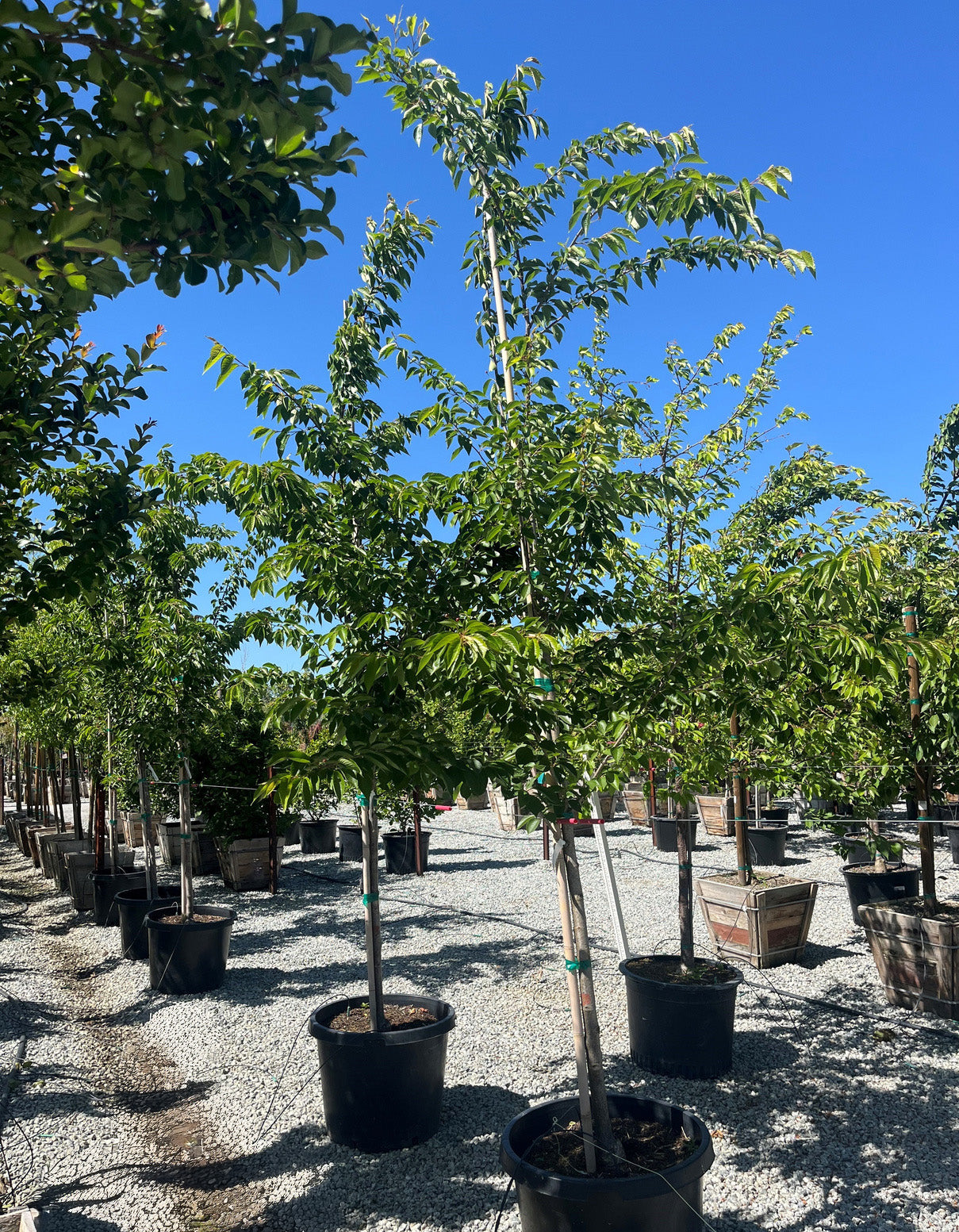
Cherry Blossom Tree For Sale
Discover our cherry blossom tree collection that will create stunning spring displays for your landscape.
This store requires javascript to be enabled for some features to work correctly.
Discover our cherry blossom tree collection that will create stunning spring displays for your landscape.
Most ornamental flowering cherries are grown for blossoms rather than fruit. Some may produce fruit for wildlife, but many popular cultivated Japanese cherry selections do not produce fruit of edible value.
Use minimal pruning to preserve the natural shape of the tree. Light shaping can be done after flowering, but major pruning of Cherry Blossom Trees should occur in winter while the tree is dormant, and only after it has been established for at least five years; this involves removing dead or diseased wood and minimal cutting for shape.
Monitor for aphids, scale insects, fungal spotting, and diseased branches during the growing season. Good airflow, careful watering, and removal of infected material help reduce problems without overworking the tree.
Apply a balanced fertilizer in early spring before bloom if soil fertility is low. Avoid excessive nitrogen, which can encourage soft growth at the expense of flowers.
For inspiration, many gardeners look to famous cherry blossom displays. Central Park in New York City features a
Looking for cherry blossom trees that create stunning spring displays? Discover Yoshino, Kwanzan, and weeping varieties designed for every California landscape. From compact courtyard specimens to dramatic focal points, our collection combines exceptional blooms, proven hardiness, and expert selection.
Transform your outdoor space with breathtaking spring beauty that returns year after year.
Whether you’re creating a focal point or adding seasonal interest, there’s a cherry blossom tree for every garden vision.
Choose standard flowering cherry trees such as Yoshino or Kwanzan when you want a standout spring feature near a patio, driveway, entryway, or open lawn. Yoshino cherry trees can reach 30-40 feet tall with a graceful spreading crown, while Kwanzan cherry trees often mature around 25-30 feet, making both strong choices for a dramatic landscape statement.
For a longer cherry blossom season, combine earlier Yoshino varieties with later-blooming Kwanzan cherry. Most cherry blossom trees reach peak bloom for only 1-2 weeks each spring, with blossoms often shifting from dark pink to pale pink and eventually white. Under some weather conditions, full bloom can be even shorter, so thoughtful planting helps extend the display.
Cherry trees can be planted in rows to create seasonal privacy, especially when their branches fill with pink blooms, white flowers, or large clusters of delicate flowers in spring. Because flowering cherries are deciduous, they work best as seasonal screening rather than year-round privacy.
For structure through fall and winter, combine Japanese cherry trees with evergreen trees for year-round privacy and structure. This gives your garden permanent form while allowing cherry blossoms to become the spring highlight. Proper spacing is important: allow for mature height and spread so each tree has enough sun, airflow, and room to develop naturally.
For compact spaces, choose dwarf or weeping cherry varieties that stay under 15 feet. A weeping cherry can serve as a living sculpture in courtyards, small front yards, patios, or intimate garden spaces, especially cultivars such as Pendula Rosea, Prunus pendula, or selections related to Prunus subhirtella.
Container planting is possible with the right variety, quality soil, full sun exposure, and consistent care. Smaller flowering trees work especially well on decks and patios where their cascading branches and light pink or deep pink flowers can be enjoyed up close, and can be complemented by compact Tiny Tower Italian cypress for vertical structure.
Cherry blossoms are ideal for celebration gardens, wedding backdrops, memorial plantings, and photo-worthy spring spaces, and they pair beautifully with other flowering trees suited to California gardens. In Japan, cherry blossoms, known as sakura, symbolize the transient nature of life, reflecting the concept of mono no aware, which emphasizes the beauty of impermanence.
During the brief blooming period, cherry blossoms embody the concept of wabi-sabi in Japanese culture, representing the beauty of transience. The practice of hanami, or flower viewing, has been a tradition in Japan for centuries, where people gather under blooming cherry trees to celebrate the beauty of the blossoms and enjoy feasts.
Cherry blossoms also carry complex historical meaning. Cherry blossoms have been used as a symbol of nationalism and militarism in Japan, particularly during World War II, where they represented the sacrifice of soldiers and the spirit of the nation. Today, many gardeners choose sakura for beauty, reflection, and renewal.
The right variety thrives in your specific microclimate and provides reliable annual blooms.
Coastal California gardens benefit from varieties that tolerate marine layer moisture, cooler spring temperatures, and occasional wind. Yoshino cherry performs well in many mild coastal climates when adequate chill hours are available, producing nearly pure white flowers tinged with pale pink before the leaves appear.
Wind protection matters near the coast because strong ocean breezes can shorten the bloom period. Plant flowering cherries in full sun where possible, with shelter from harsh prevailing winds to protect the petals during peak bloom.
Inland valleys need cherry blossom trees that can handle hotter summers and drier conditions. Kwanzan cherry adapts well to warmer inland areas when given proper irrigation, good mulch, and enough root space. Its double pink flowers create a fuller, more dramatic look than many single-flowered varieties.
In the hottest zones, afternoon shade can reduce stress, leaf scorch, and premature flower drop. Cherry blossom trees improve urban biodiversity by supporting pollinators and enhancing air quality, making them valuable additions to urban areas as well as residential landscapes.
Foothill gardens often face stronger temperature swings, colder nights, and sloped planting conditions. Select cold-hardy flowering cherries with a suitable hardiness zone for your elevation, and prioritize well-drained soil so roots do not sit in winter moisture. In mixed plantings, you can contrast their spring display with evergreen Strawberry Trees that provide year-round interest.
Weeping cherry varieties often perform well in foothill microclimates when planted on slopes or raised areas with good drainage. Their form is especially effective where cascading branches can be viewed from below or across a garden, and can be framed by dense Brush Cherry hedges for privacy and structure.
Cherry Blossom Trees require moderate watering during their first season, ideally once a week for 30 minutes to a depth of 18 inches, and once established, they need watering every two to three weeks. Young trees need steady moisture while roots develop, especially during California’s dry season.
Mulch heavily but keep mulch away from the trunk. Cherry Blossom Trees thrive best in well-drained, moist soil that is not overly wet, and they prefer acidic soils, although they can adapt to various soil types as long as drainage is adequate, especially when combined with Carolina Cherry Laurel hedges for evergreen privacy.
Climate is becoming a larger factor in variety choice. The flowering time of cherry trees is affected by global warming, with records showing that the average peak bloom day in Kyoto has shifted from around April 17 in the 1850s to April 5 in the 2020s, coinciding with a temperature increase of about 3.4 °C (6.1 °F). In 2021, the earliest full bloom date in 1200 years was recorded for Prunus jamasakura (Yamazakura) in Kyoto, indicating a significant shift in blooming patterns due to climate change.
Cherry blossoms in China have been observed to reach peak bloom weeks earlier than they did a few decades ago, reflecting the broader impacts of climate change on blooming periods. AI predictions suggest that without significant efforts to combat climate change, the Somei-Yoshino cherry tree variety could face extinction in certain regions of Japan by 2100 due to its sensitivity to temperature changes.
Beautiful cherry blossoms start with selecting proven cultivars suited to California growing conditions, often sourced from a local nursery specializing in privacy and landscape trees.
Yoshino cherry, also called Somei Yoshino, is one of the most iconic Japanese flowering cherry selections. The most popular cherry blossom cultivar in Japan is ‘Somei-yoshino’, known for its nearly pure white flowers tinged with pale pink, which bloom before the leaves appear.
Yoshino cherry trees produce clouds of single blossoms that create a soft, luminous effect across the entire canopy. These flowering trees usually have a moderate growth rate and can become excellent shade tree specimens where there is room for a broad spreading crown, especially when combined with other statement trees such as California Pepper Trees and complementary landscape specimens.
In 1912, Tokyo gifted over 3,000 cherry trees to the United States as a symbol of friendship, leading to the National Cherry Blossom Festival. Many of those Japanese cherry trees were originally planted around the Tidal Basin in Washington D.C., where the national cherry blossom festival remains one of the best-known celebrations of sakura outside Japan.
Kwanzan cherry is prized for deep pink flowers, large clusters, and a full, layered look. The flowers of cherry blossom trees feature 5 petals in wild varieties, while some cultivated varieties can have up to 28 petals, and Kwanzan is loved for its abundant double blooms.
Kwanzan cherry trees typically grow to around 25-30 feet, making them suitable for smaller properties that still need bold spring color. They usually bloom about two weeks after Yoshino, helping extend the flower season in a designed landscape.
Most ornamental cherry trees are fast-growing but short-lived, typically surviving only 30 to 40 years. Kwanzan can be especially rewarding during its prime years, but proper planting, airflow, and care help maintain its health, and you may want to balance them with long-lived, drought-tolerant choices like the California Pepper Tree for structural permanence.
Weeping cherry varieties are classified by their pendulous form, often described in Japan as shidare-zakura. Cherry trees are generally classified by species and cultivar, with notable classifications including yae-zakura, meaning double-flowered sakura, and shidare-zakura, meaning weeping cherry.
These trees may produce pink flowers, white flowers, or deeper rose tones depending on cultivar. Their branches create shape and movement even after bloom, giving them year-round ornamental value in small gardens and accent plantings.
The genus Prunus includes many ornamental cherry species and hybrids, including Prunus itosakura, Higan cherry types, Prunus pendula, and Prunus subhirtella. Some cultivars are selected for early bloom, including ‘Kawazu-zakura’, a cherry blossom cultivar that blooms earlier than most, featuring deep pink petals and is a natural hybrid between the Oshima cherry and Prunus campanulata, and they’re often combined with other specialty trees such as North Indian Rosewood offered through full-service nurseries.
The bark of cherry blossom trees is typically glossy and deep chestnut-brown, featuring prominent horizontal lines called lenticels. Many flowering cherries also add seasonal interest in fall, when foliage can turn yellow, orange, or bronze before dropping.
Proper care ensures healthy growth and abundant annual blooms for decades of spring beauty.
Plant cherry blossom trees in full sun to partial shade, with full sun providing the strongest bloom in most California landscapes. Choose well-drained soil, avoid soggy planting areas, and amend heavy clay where needed to improve drainage.
During establishment, water deeply rather than lightly. Cherry Blossom Trees require moderate watering during their first season, ideally once a week for 30 minutes to a depth of 18 inches, and once established, they need watering every two to three weeks. Mulch around the base to conserve soil moisture and suppress weeds, but leave space around the trunk.
Most ornamental flowering cherries are grown for blossoms rather than fruit. Some may produce fruit for wildlife, but many popular cultivated Japanese cherry selections do not produce fruit of edible value.
Use minimal pruning to preserve the natural shape of the tree. Light shaping can be done after flowering, but major pruning of Cherry Blossom Trees should occur in winter while the tree is dormant, and only after it has been established for at least five years; this involves removing dead or diseased wood and minimal cutting for shape.
Monitor for aphids, scale insects, fungal spotting, and diseased branches during the growing season. Good airflow, careful watering, and removal of infected material help reduce problems without overworking the tree.
Apply a balanced fertilizer in early spring before bloom if soil fertility is low. Avoid excessive nitrogen, which can encourage soft growth at the expense of flowers.
For inspiration, many gardeners look to famous cherry blossom displays. Central Park in New York City features a high concentration of cherry blossoms, particularly between 72nd Street and 96th Street, around the Jacqueline Kennedy Onassis Reservoir, Cherry Hill, and the Great Lawn. The cherry blossom season in Central Park typically begins in late March and reaches its peak in mid- to late-April, with peak bloom lasting just 5 to 7 days depending on weather conditions.
The Japan Cherry Blossom Association has published a list of Japan’s Top 100 Cherry Blossom Spots, ensuring that there is at least one location in every prefecture for viewing cherry blossoms. In the United States, places such as Brooklyn Botanic Garden celebrate Sakura Matsuri and keep the Japanese word sakura closely connected to seasonal beauty, botanic garden collections, and Japanese society.
Browse our curated selection of cherry varieties proven successful in California, including Yoshino cherry trees, Kwanzan cherry trees, weeping cherry forms, and other Japanese cherry selections chosen for beauty, hardiness, and manageable care.
Get expert plant selection advice through our consultation services, compare mature height, bloom timing, hardiness zone, flower color, and space requirements, and choose the right tree for your garden conditions.
Your perfect cherry blossom tree is ready to bring spring beauty, graceful branches, and unforgettable blossoms to your landscape.