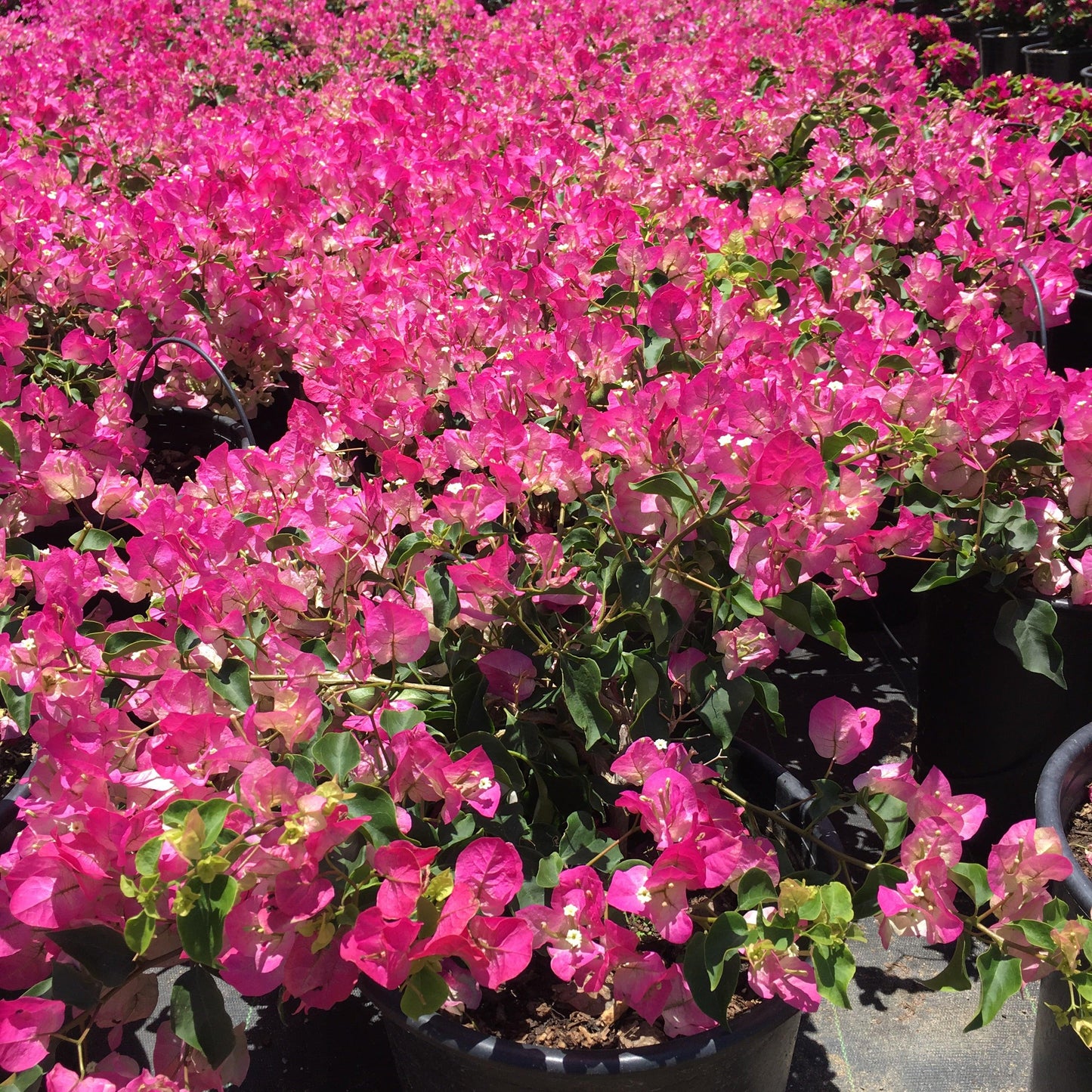
Vibrant Color for Your California Garden
Looking for a flowering vine that delivers spectacular year-round color? Bougainvillea is a genus of thorny ornamental plants native to South America, celebrated worldwide for its vibrant, papery bracts - which are actually modified leaves, not petals. The true flowers of bougainvillea are small and white, found within the bracts, typically clustered in groups of three flowers surrounded by those brightly colored bracts. With over 300 varieties of bougainvillea available in shades of magenta, pink, white, red, yellow, and orange, there's a perfect selection for every California garden.
Bougainvillea thrives in USDA Zones 9-11, making it ideally suited for warm climates year round across much of the state. These bougainvillea plants are drought tolerant once established, thrive in direct sunlight, and reward minimal care with months of breathtaking blooms. Transform your outdoor space with these stunning, low-water beauties today.
Bougainvillea Varieties for Every Garden Style
Whether you're building lush privacy screens or adding colorful focal points to a patio, there's a bougainvillea variety suited for your landscape vision. Bougainvilleas can grow as woody vines, shrubs, or be trained into bonsai - a versatility few other plants can match.
Compact Container Varieties
Dwarf varieties like Rosenka are suitable for containers, producing gorgeous orange-gold bracts on mounding plants that stay manageable at 3–5 feet tall. Oo-La-La® delivers deep magenta color in the same compact form, perfect for patio pot displays and hanging baskets. Place containers where they'll receive full sun - at least six hours daily - and you'll enjoy near year-round blooming in mild California climates. These smaller cultivars also work beautifully as a colorful houseplant brought indoors during the winter months.
Vigorous Climbing Specimens
For dramatic vertical impact, vigorous bougainvillea vines like Barbara Karst and Camarillo Fiesta® deliver fast, dense coverage. Bougainvillea can grow up to 30 feet tall with support, making it ideal for arbors, trellises, and fences. These climbers need sturdy support structures - mature vines become heavy and woody. Keep in mind that bougainvillea branches are lined with sharp, woody thorns, so wear gloves when training stems along walls or a trellis. Regular pruning keeps growth in check and encourages repeated flushes of colorful bracts throughout the season.
Specialty Color Collections
Beyond the classic magenta, specialty cultivars open up a world of design possibilities. Popular hybrids include Purple Queen® with rich purple bracts, and California Gold with warm yellow tones. Bougainvillea spectabilis is known for large, brightly colored bracts, while bougainvillea glabra is often called 'paper flower' for its delicate, tissue-thin bracts - generally white or soft lavender. Raspberry Ice adds year-round interest with variegated heart shaped leaves edged in cream, stunning even when the plant isn't in full bloom. Combine contrasting shades - gold next to purple, or pink beside white - for a landscape effect that stops traffic.
Choose the Right Bougainvillea for Your California Climate
California's diverse microclimates offer different opportunities for bougainvillea success. Selecting the right variety for your specific zone ensures vigorous growth and abundant flowering.
For Coastal Southern California
Coastal gardens in Zones 9b–10a offer excellent conditions for most bougainvillea species, though marine layer fog can reduce sun hours. Position plants against south or west-facing walls to maximize sunlight and capture radiated heat. Recent research on salt tolerance shows that certain varieties handle saline conditions far better than others - important for gardens near the ocean. Drought-tolerant plants complement bougainvillea well in coastal Mediterranean schemes; consider pairing with lavender or trailing lantana for a cohesive, water-wise design.
For Inland Valley Heat
Inland valleys offer the intense heat bougainvillea loves. These plants flourish when temperatures climb above 90°F, producing their most prolific blooms during the hottest months. In extreme summer heat, light afternoon shade prevents leaf scorch on the most exposed side. Mulching around the root system protects roots from temperature extremes in intense sun, and helps suppress weeds. Manage watering carefully during heat waves - bougainvilleas require periodic deep watering rather than frequent shallow watering, and they actually bloom most profusely when kept on the dry side.
For Northern California Gardens
In cooler climates and marginal zones, bougainvillea can be grown in containers and moved indoors during winter. Focus on hardier selections and place them against heat-retaining south-facing walls for the best microclimate advantage. Bougainvilleas can suffer damage if exposed to freezing temperatures or prolonged frost - stems are typically killed below 30°F, though the root system may survive and push new growth in spring. Container growing gives you the flexibility to shelter plants during cold snaps and return them to the patio once the weather warms.
Growing Conditions That Ensure Spectacular Blooms
Success with bougainvillea starts with understanding their preferred growing environment. Get the fundamentals right and these plants reward you with season after season of color.
Soil Requirements & Drainage
Bougainvillea prefers well draining soil to prevent root rot - this is the single most important growing requirement. In heavy clay soils common across California, amend with coarse sand, perlite, and compost to improve drainage, or plant in raised beds. For containers, use a mix of potting soil with perlite and bark to create a fast-draining medium. Avoid root rot by ensuring pots have adequate drainage holes and never sit in standing water. Soil pH is generally flexible, but very alkaline ground can cause chlorosis by locking out iron and other micronutrients.
Sunlight & Exposure
Bougainvillea needs at least 6 hours of sunlight daily - and more is better. Full sun exposure drives abundant bract production; without sufficient direct sunlight, plants produce lush foliage but few flowers. Position bougainvillea where it will catch maximum sun throughout the day. In coastal areas, south and west-facing exposures are ideal. Consider seasonal sun patterns - a spot that's fully lit in summer may be partially shaded in fall and winter as the sun angle drops.
Water Management
During the first growing season, water deeply and regularly to establish a strong root system. After establishment, bougainvillea is drought tolerant - reduce watering significantly and allow the soil to dry out between sessions. Water bougainvillea deeply but allow it to dry out between waterings; this cycle of drought stress actually encourages heavier blooming. Overwatering leads to lush foliage at the expense of bracts, and soggy roots invite disease. Signs of underwatering include leaf drop and bud drop, while consistently wet soil and yellowing leaves signal too much moisture. Pair with other drought tolerant plants for a cohesive, water-efficient garden.
How to Care for Your Bougainvillea
Proper maintenance keeps your bougainvillea healthy and blooming profusely across multiple cycles each year. Some bougainvillea varieties are specifically chosen for their ability to bloom repeatedly - giving the right care ensures they live up to that potential.
Seasonal Pruning Techniques
Prune bougainvillea in late winter or early spring, before new growth begins - in Zones 10–11, this means January through February; in Zone 9, late February to March. Because bougainvillea blooms on new wood, pruning stimulates the fresh growth that produces bracts. Bougainvilleas can be heavily pruned after blooming to manage growth - cutting stems back by up to one-third is well tolerated. Shape climbing specimens by removing crossing or crowded branches to improve airflow and light penetration. For compact cultivars, light trimming after each bloom cycle encourages another flush. Always wear heavy gloves and long sleeves - those thorns are no joke.
Fertilizing for Maximum Color
Bougainvilleas are heavy feeders and require regular fertilization in the blooming season. Apply a balanced fertilizer with moderate nitrogen and higher phosphorus and potassium (such as NPK 5-10-10 or 10-10-10) starting in early spring when new growth appears. Too much nitrogen pushes leafy growth at the expense of bracts. Feed container plants every 2–3 weeks and landscape plants every 4–6 weeks. Taper fertilizer applications in late summer to avoid encouraging soft new growth that's vulnerable to fall and winter cold. Both organic compost-based and synthetic options work well - choose based on your soil conditions and preference.
Managing Common Issues
Common pests include aphids, scale insects, and spider mites - inspect regularly and treat with horticultural oil or insecticidal soap at the first sign of infestation. Chlorosis, or leaf yellowing, often appears in alkaline soil where iron becomes unavailable; treat with chelated iron supplements and amend the soil over time. In borderline zones, protect against frost with frost cloth draped over the plant or by positioning near heat-retaining walls. If poor flowering is the problem, check for insufficient sun, overwatering, or excessive nitrogen - these are the most frequent culprits. Bougainvilleas are popular for their intense color addition to landscapes and gardens, but they do need the right conditions to perform their best.
Shop Premium Bougainvillea Plants From Yardwork
Explore our carefully selected collection of bougainvillea varieties chosen specifically for California gardens. From vigorous climbing specimens to compact container cultivars, each plant is professionally grown and shipped directly to your door with detailed planting and care instructions.
Whether you're covering a fence with a vigorous vine, adding a pop of pink to your patio, or building a colorful, drought-tolerant landscape alongside other plants and trees, bougainvillea delivers unmatched impact with minimal water. Your vibrant, low-maintenance garden transformation starts here.