



Westringia Fruticosa (Coast Rosemary)
Regular price
$65.00
Size
The Perfect Low-Maintenance Evergreen for California Gardens
Westringia fruticosa delivers year-round structure, white flowers, and lush gray green foliage with remarkably little effort on your part. This Australian native evergreen shrub - commonly known as coast rosemary or coastal rosemary - thrives in California's Mediterranean climate, producing small white flowers bloom after bloom while asking for almost nothing in return. If you're looking for a drought tolerant, salt-tolerant shrub that looks beautiful in every season, this plant belongs in your garden.
Why You'll Love Coast Rosemary
-
Year-Round Blooms – The shrub blooms year-round in frost-free areas, producing abundant white flowers that attract beneficial pollinators like bees, butterflies, and birds to your garden throughout every season.
-
Exceptional Drought Tolerance – Westringia fruticosa is drought tolerant and needs only occasional watering once established, saving you water and cutting maintenance time dramatically.
-
Built for the Coast – It is highly resistant to salt spray and harsh coastal winds, making it a perfect fit for coastal areas and seaside properties where other shrubs fail.
-
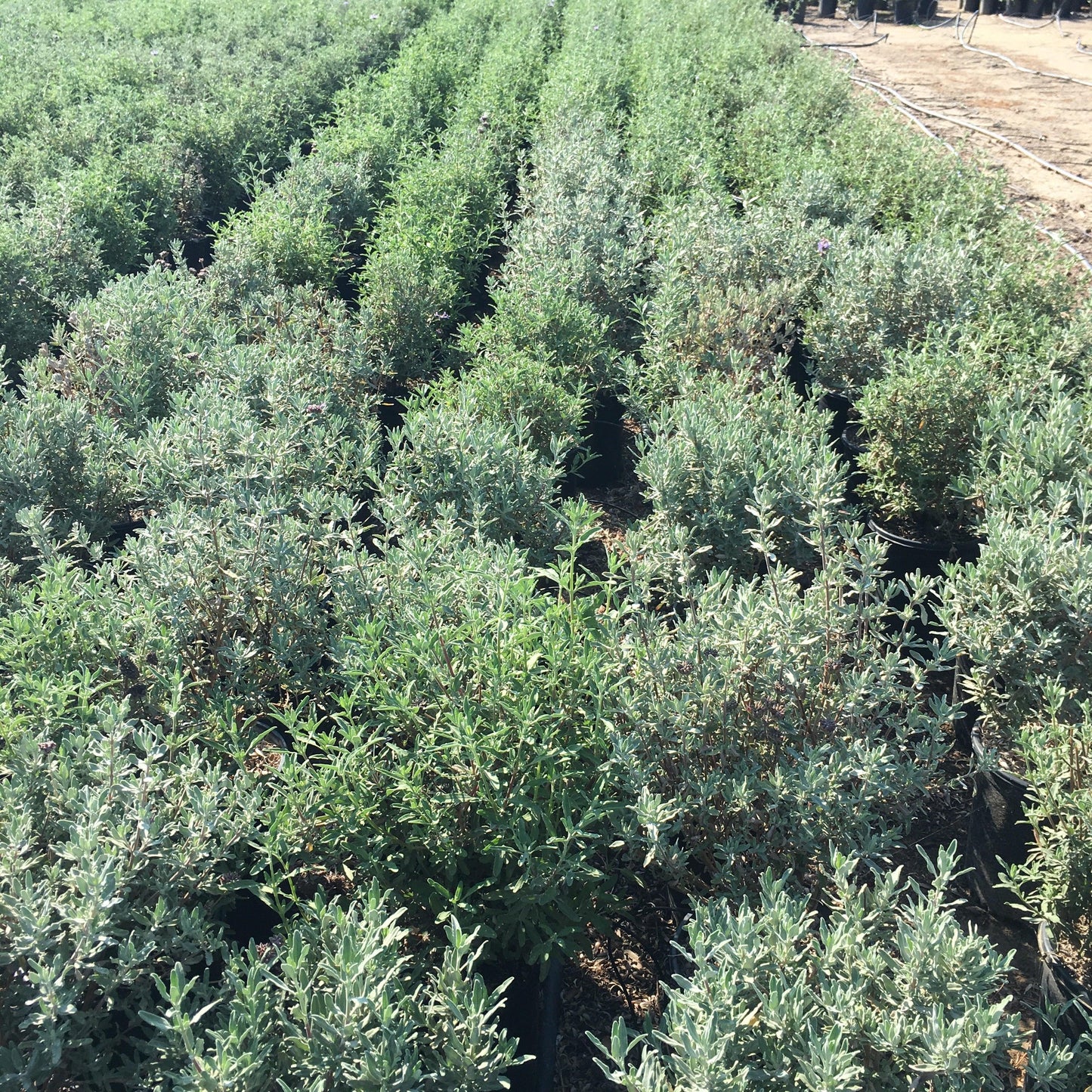
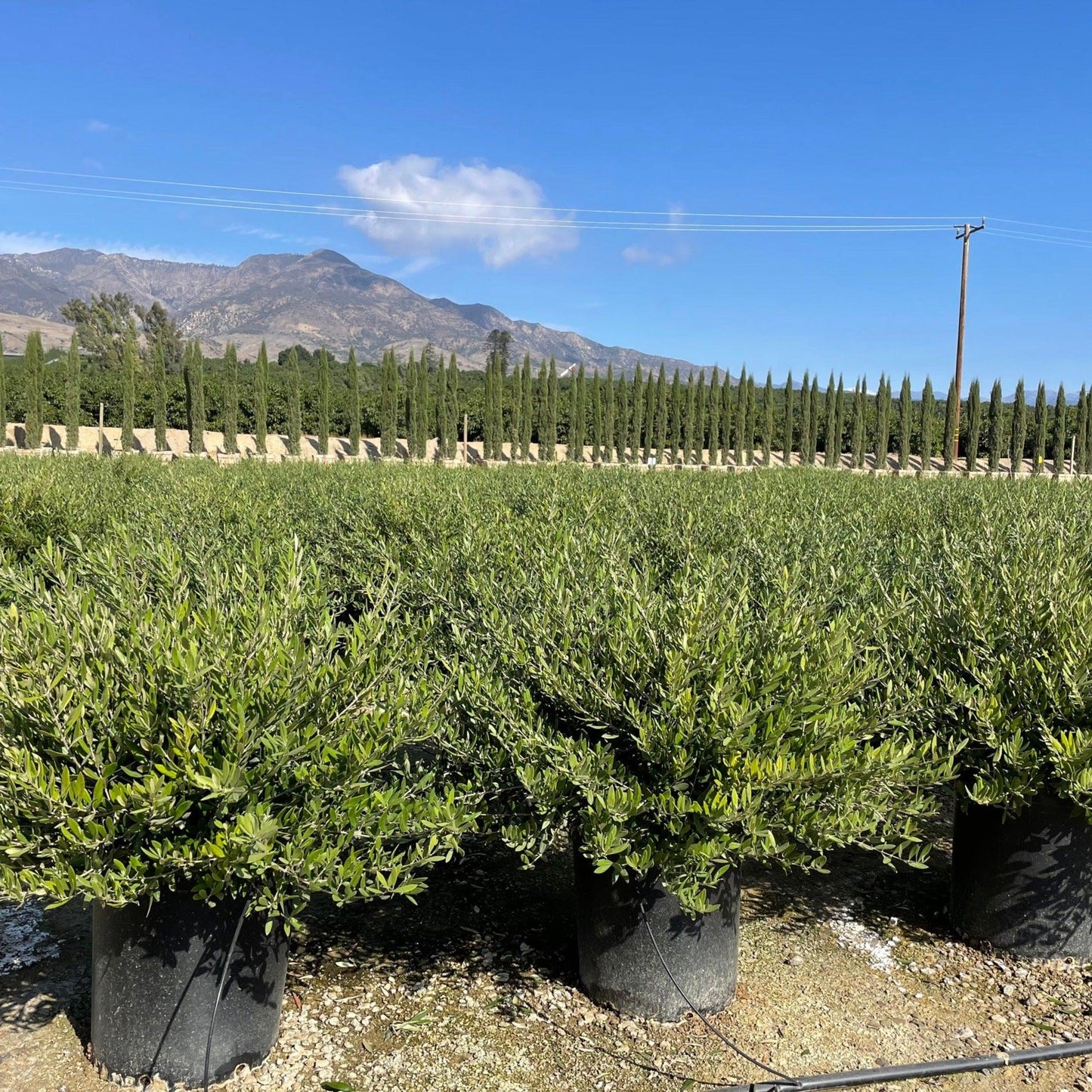
Dense Evergreen Privacy – Westringia fruticosa is prized for its dense rounded shape and steady blooms, providing lush screening and structure in all seasons with its narrow gray green leaves.
-
Responds Beautifully to Pruning – Whether you want a formal hedge, a topiary ball, or a natural bushy form, this shrub shapes easily. Regular shearing improves the density of its growth, and tip pruning encourages dense growth in young plants.
What Makes It Different
Most evergreen shrubs struggle with California's unique combination of salt air, seasonal drought, intense sun, and lean soils. Coast rosemary offers:
-
Superior Salt & Wind Tolerance – Native to the coastal cliffs and headlands of New South Wales, Australia, this species evolved to handle sea spray and relentless wind. It is salt tolerant, ideal for coastal areas and coastal plantings where other shrubs brown out and decline.
-
Nearly Continuous Flowering – While most shrubs offer a brief flush of spring color, Westringia fruticosa produces white flowers year-round in frost-free areas, with heaviest flowering in spring and summer. That means your garden has structure and color in every season.
-
Mediterranean Climate Heritage – Its native Australian heritage means this plant is naturally suited to the same conditions found along the California coast - dry summers, mild winters, lean soils. It belongs to the mint family (Lamiaceae), though it is completely non-culinary, so there's no confusion with true rosemary (sometimes referenced under the old name westringia rosmariniformis).
-
Minimal Pest & Disease Issues – Healthy specimens are generally free of serious pests and disease. You won't need chemical treatments - just well drained soil and proper placement.
How to Establish Westringia Fruticosa
-
Choose the Right Spot Select a location with full sun (6–8 hours of direct light) for the most compact form and heaviest bloom. Part shade or partial shade is tolerable in hot inland areas. The single most important requirement: well drained soil. It requires well-draining soil and avoids heavy or boggy areas to prevent root rot. If your ground is clay-heavy, amend with grit, coarse sand, or use a raised bed with quality potting mix.
-
Plant and Water for Establishment Plant in spring or early fall so roots can settle before temperature extremes. Water deeply once or twice per week during the first growing season. Apply 2–3 inches of mulch around the base - but keep it away from the stem to avoid rot. Deep root systems of Westringia fruticosa help stabilize sandy or sloped soils, so give the roots time to establish.
-
Maintain with Light Pruning and Minimal Feeding After the main spring flowers bloom, prune lightly to shape. For hedges, clip regularly during the active growth season. Avoid hard pruning late in fall or winter. Feed sparingly - a light application of slow-release fertilizer in spring is sufficient. Over-fertilizing produces soft, weak branches that are prone to damage.
Plant Specifications
-
Mature Height: The shrub typically grows 3 to 6 feet tall and 4 to 10 feet wide, depending on cultivar, pruning, and growing conditions. Westringia fruticosa grows up to 6 feet tall at maturity.
-
Growth Rate: Moderate. Expect an ornamental-sized specimen within 1–2 growing seasons under good conditions.
-
USDA Hardiness: Westringia fruticosa tolerates USDA Hardiness Zones 9 to 11. It handles brief cold snaps down to approximately 20–25°F if planted in well drained soil with some shelter.
-
Soil Requirements: It prefers full sun and well-drained soil. Sandy, gravelly, or loamy ground is ideal. Tolerant of a wide pH range (acid to alkaline).
-
Water Needs: Drought tolerant once established. Deep, infrequent watering is preferred over frequent shallow irrigation. Overwatering and poor drainage are the primary risks.
-
Bloom Time: Flowers bloom heaviest in spring and summer, with intermittent flowering year round in mild climates. Small white flowers are two-lipped, sometimes showing pale lavender tones or faint spotting on the upper petal and two lobes.
-
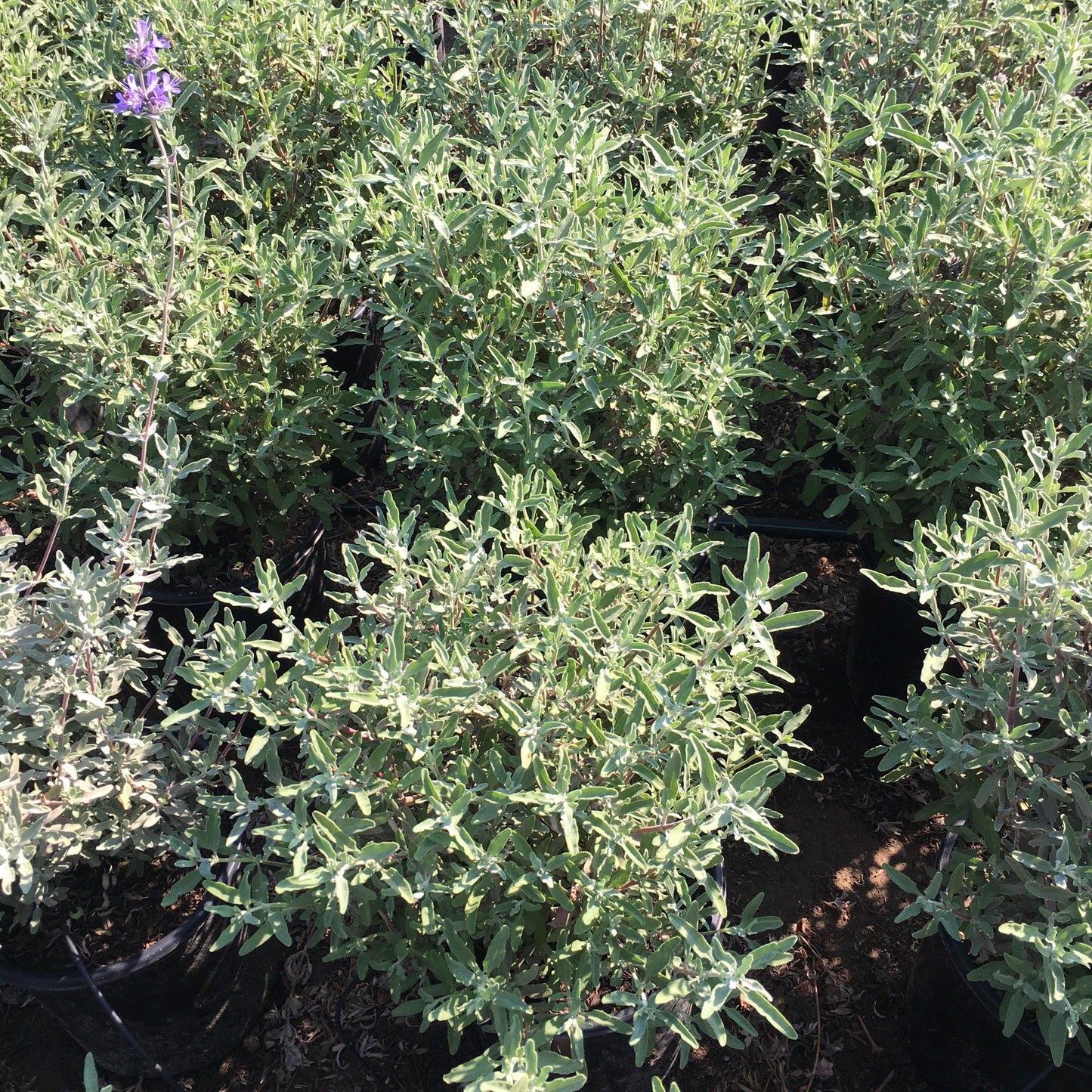
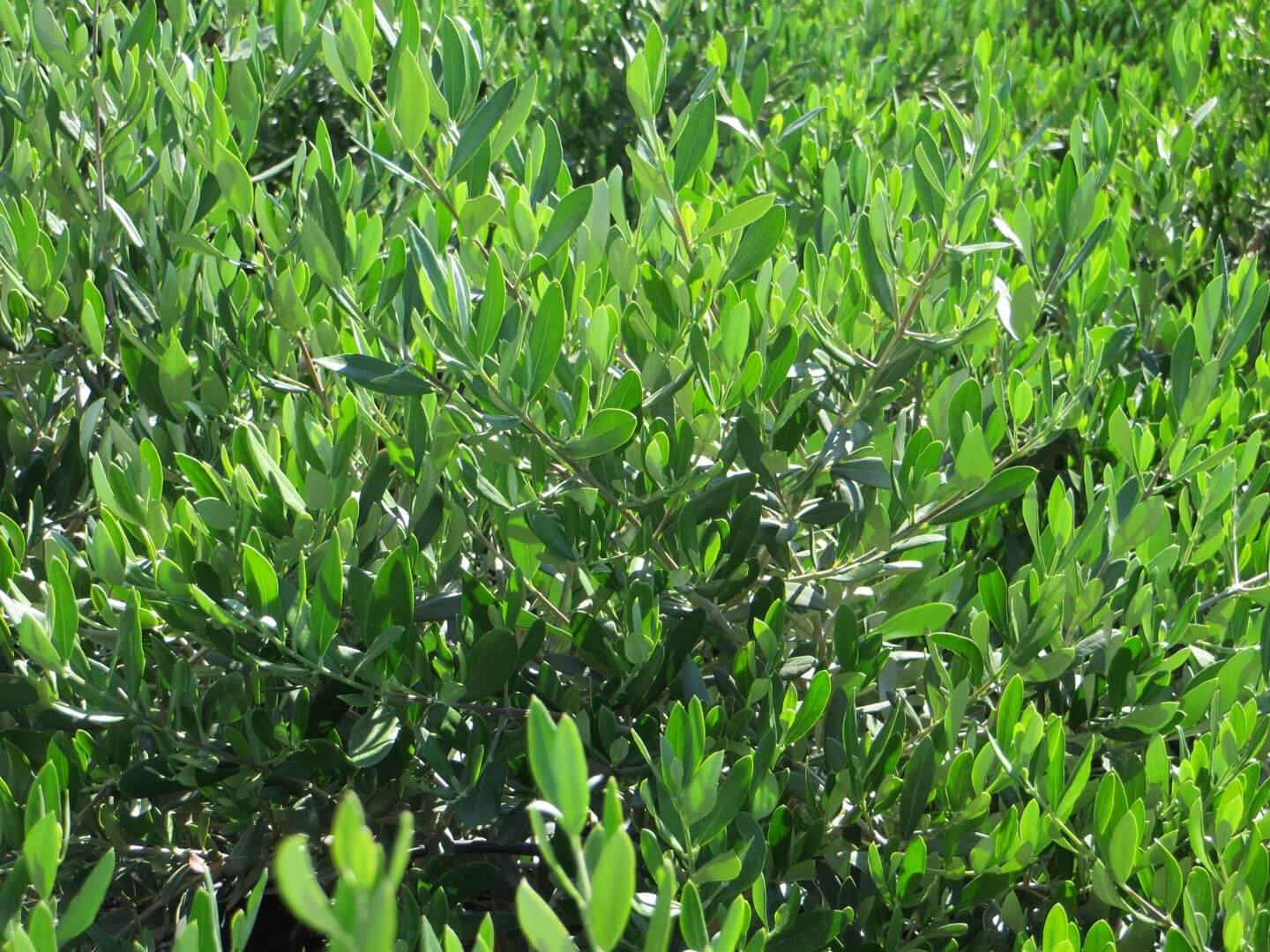
Foliage: Leaves are narrow, gray-green, and up to 2 cm long, arranged in whorls along the branches. The fine-textured, silver-green appearance adds contrast to any planting.
-
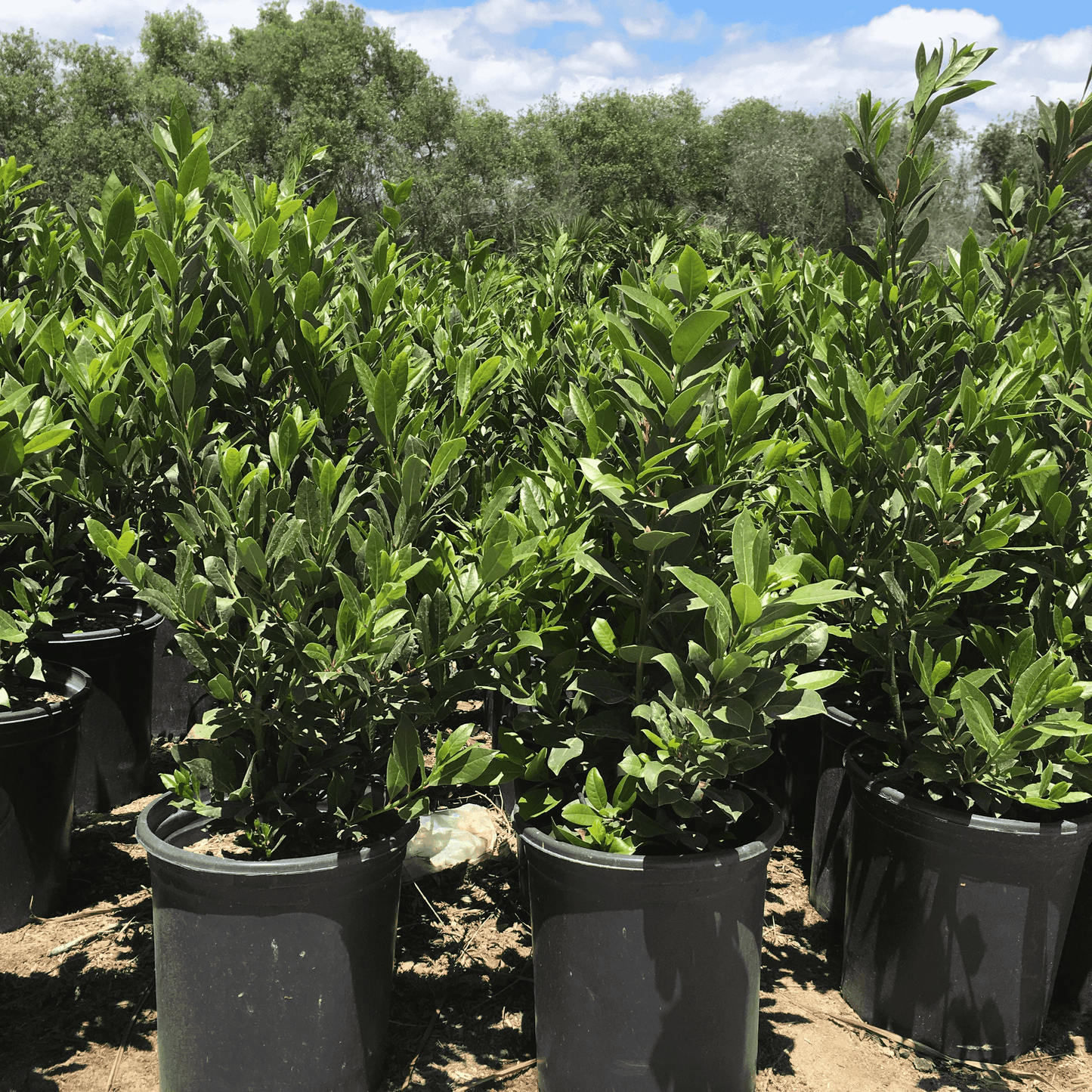
Landscape Uses: It can be used as a hedge, screen, or topiary ball. It also makes an excellent groundcover in waterwise gardens. If you’re planning a mixed hedge, consider pairing it with Brush Cherry for dense evergreen privacy screens. Ideal for mass plantings, containers, erosion control on slopes, and mixed Mediterranean borders.
Perfect for These California Gardeners
-
Coastal property owners dealing with constant salt spray, ocean wind, and sandy ground - this species thrives where others can't survive, especially when combined with other salt-tolerant companions like Autumn Moor Grass (Sesleria autumnalis).
-
Water-conscious gardeners who want beautiful, abundant blooms without high water bills or constant attention to shade water schedules, and may want to mix in other drought-tolerant flowering shrubs such as California Lilac (Ceanothus).
-
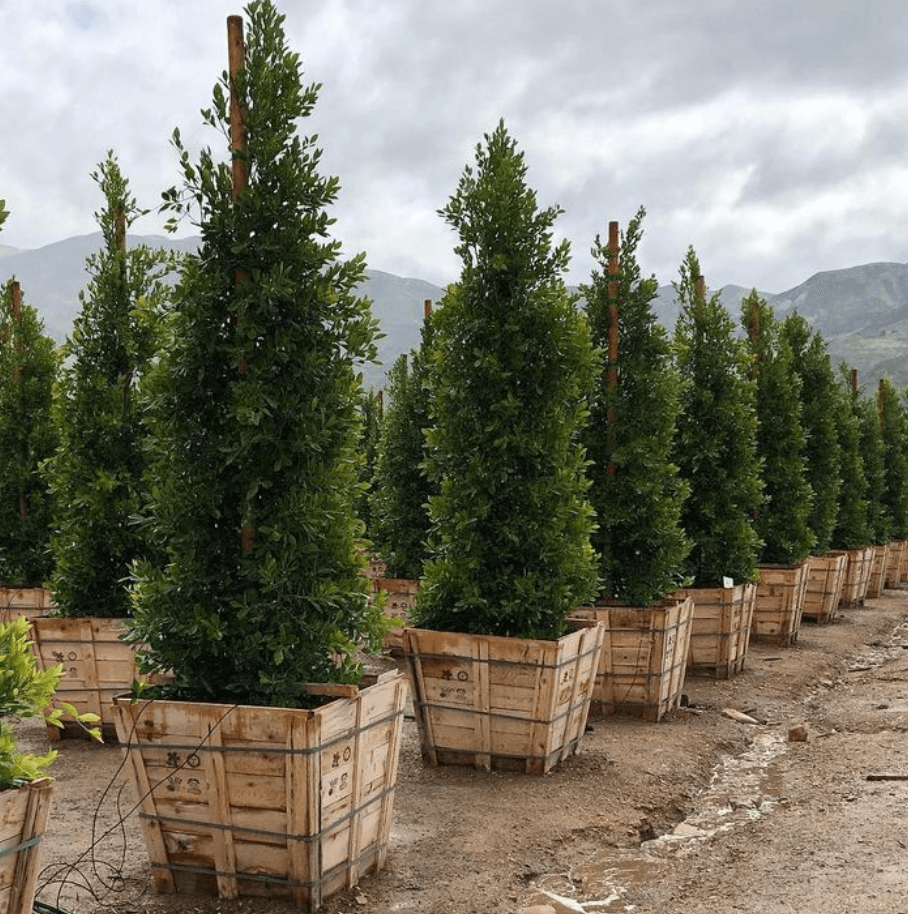
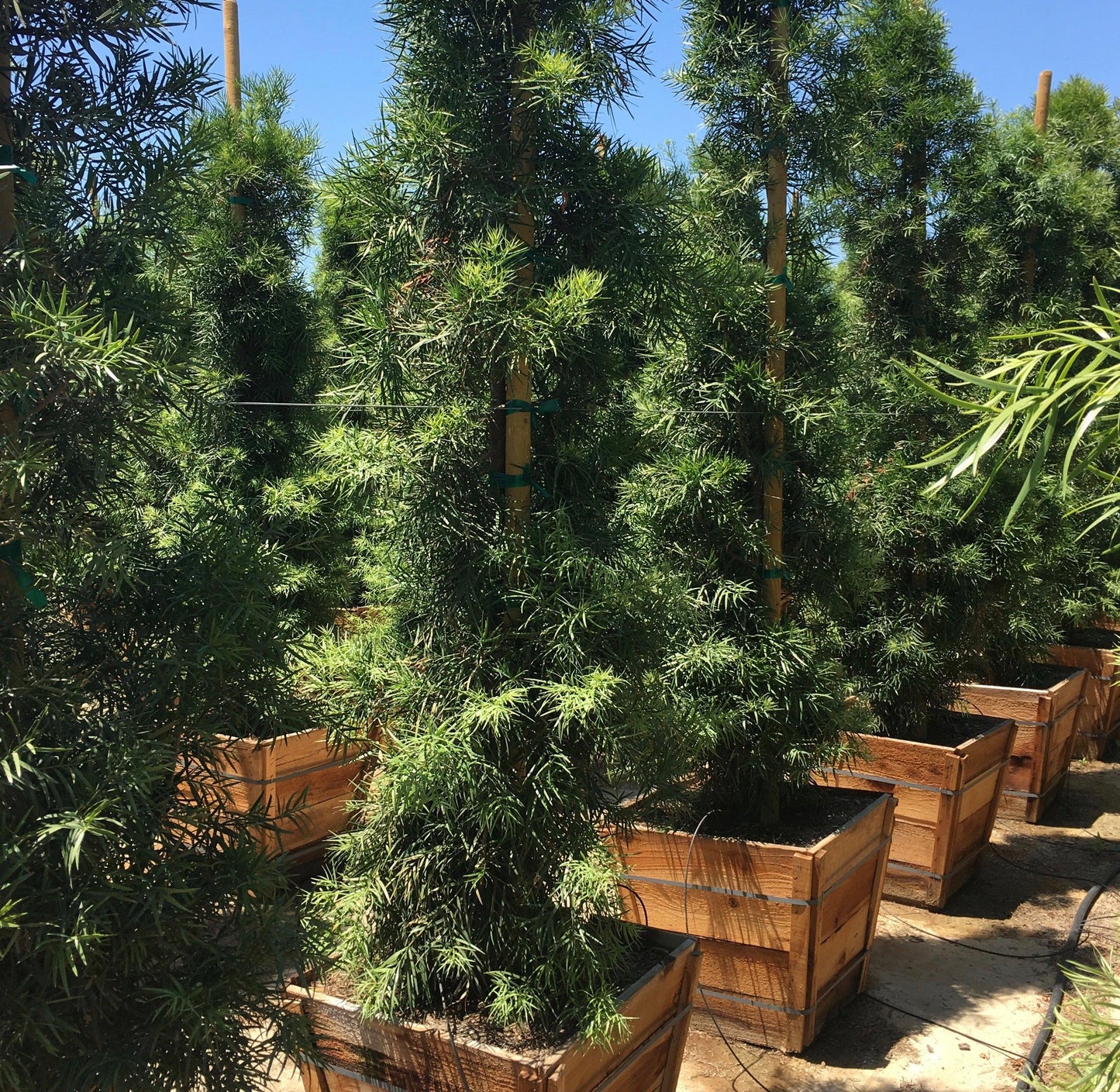
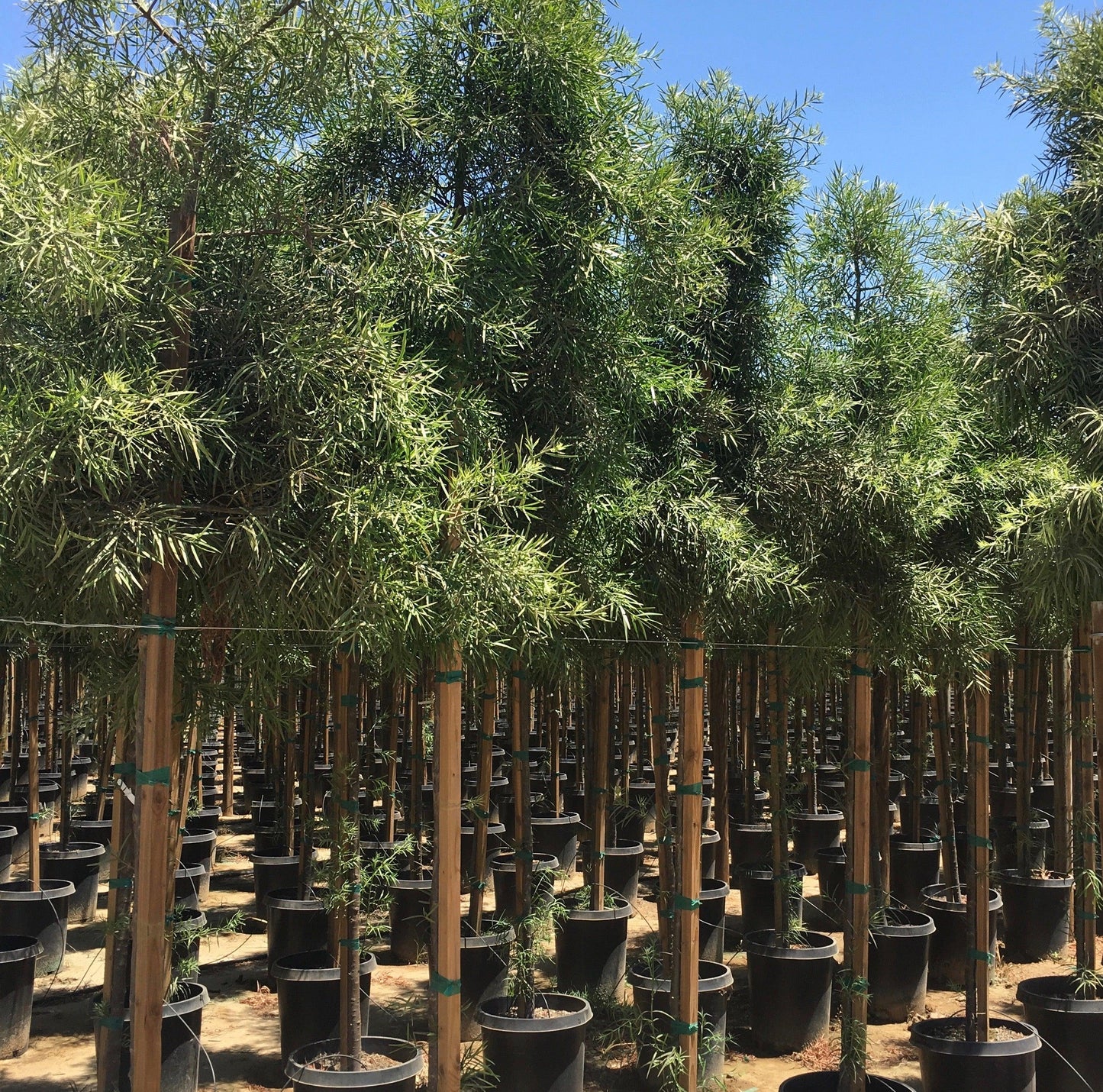
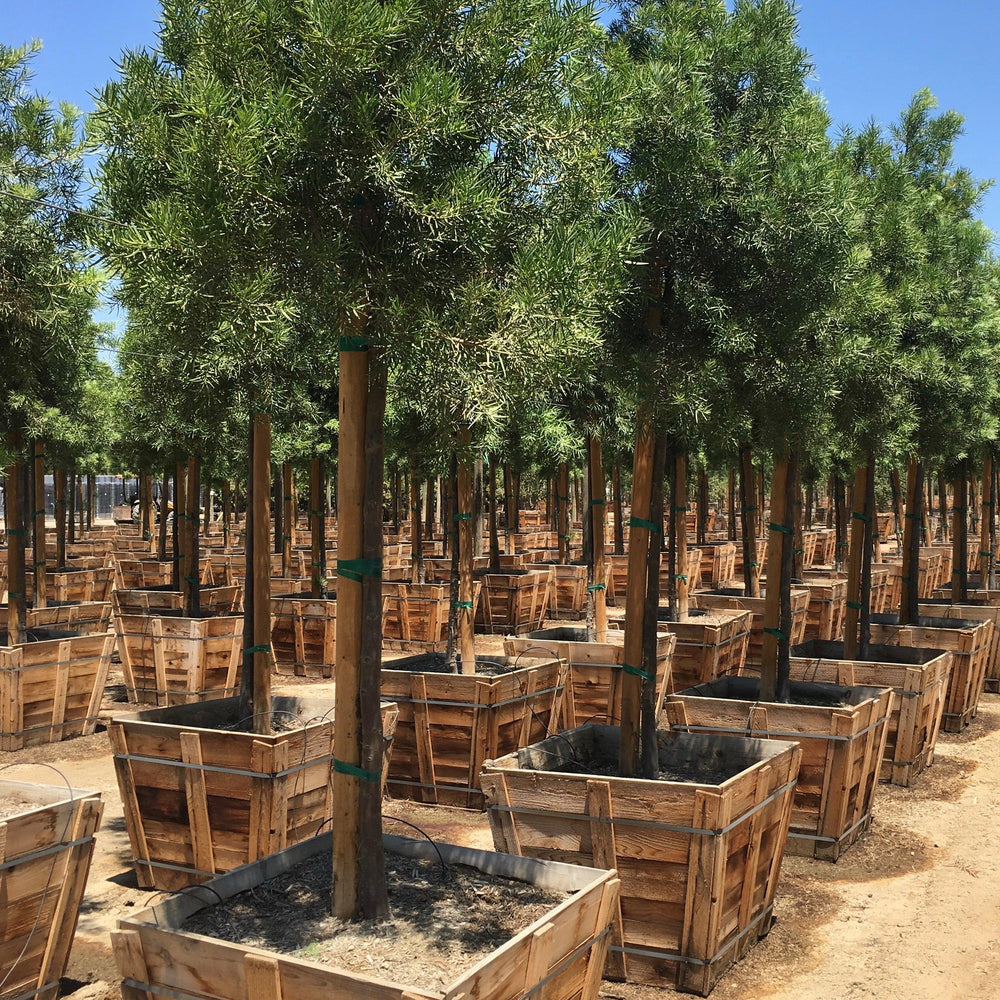
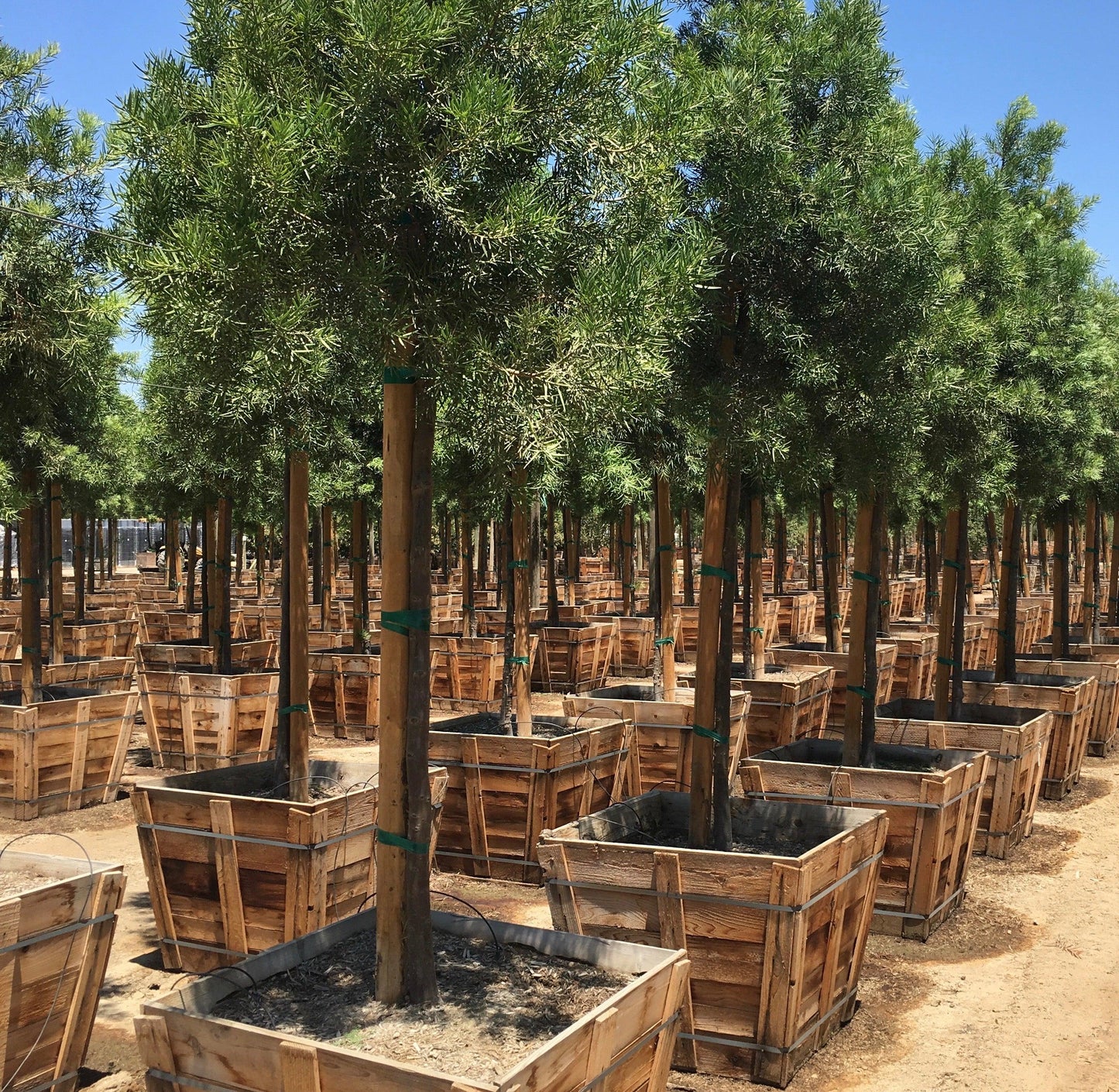
Homeowners seeking privacy with a dense, low-maintenance hedge or screen that stays green and full in winter, spring, summer, and fall may also like the structured look of a Fern Pine hedge (Podocarpus gracilior).
-
Mediterranean and native garden designers looking for year round structure, soft gray green foliage, and pollinator-friendly flowers in low growing or taller forms often combine coast rosemary with flowering trees suited to California gardens to build multi-layered canopies.
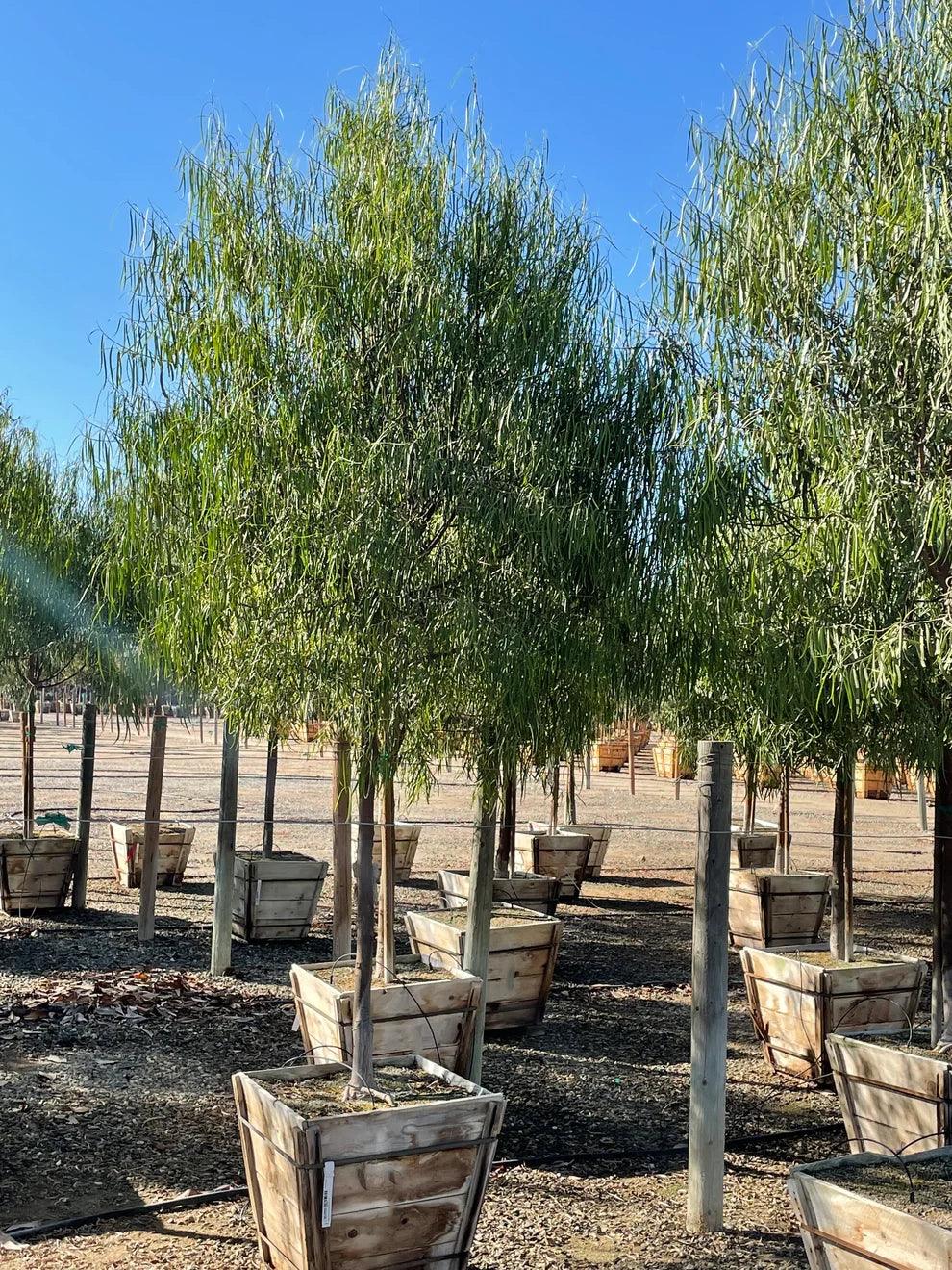
If you want a resilient, beautiful shrub that performs in California's toughest conditions, coast rosemary is a good choice, and it pairs well with drought-tolerant ornamentals like the California Pepper Tree (Schinus molle).
Frequently Asked Questions
How drought tolerant is Coast Rosemary once established? Very. After 1–2 years of establishment watering, Westringia fruticosa is drought tolerant and needs only occasional deep watering, similar to other tough evergreens such as Fern Pine trees (Podocarpus gracilior). In the hottest inland areas or when grown in containers or a pot, you may need to supplement during extended dry spells, but coastal gardens can often rely on natural moisture.
Can it handle California's coastal conditions and salt spray? Absolutely. Westringia fruticosa is salt tolerant for coastal landscapes, thriving in direct exposure to sea spray, wind, and reflected heat. It evolved on the cliffs and headlands of coastal New South Wales in Australia - conditions very similar to California's coast.
How often should I prune it and when? Prune lightly after the main spring or summer flowering flush. For hedging, regular light clipping during the growing season keeps the form dense and bushy. Avoid heavy pruning late in fall or winter to protect new growth from cold. Tip pruning encourages dense growth in young plants, building a strong framework early on.
Will it attract beneficial wildlife to my garden? Yes. The shrub attracts butterflies and bees when in bloom, as well as birds. Its nearly continuous flowers provide a reliable food source for pollinators throughout the year in mild climates.
Does it grow well in containers? Coast rosemary is well suited to containers as long as drainage is excellent, much like other container-friendly privacy plants such as Pittosporum 'Silver Sheen'. Use a high-quality, fast-draining potting mix, ensure the pot has drainage holes, and water when the top inch of soil is dry. Bring containers to a sheltered spot if hard frost threatens.
Can I grow it from seed or cuttings? Westringia fruticosa can be propagated from semi-hardwood cuttings taken in spring or summer. Seed propagation is possible but slower and less reliable. For most gardeners, purchasing an established plant is the fastest path to results, especially when you can source coast rosemary and companion privacy trees from a dedicated California nursery for evergreen and fast-growing trees.
Ready to Add Coast Rosemary to Your Garden?
Westringia fruticosa gives you the dense, beautiful, evergreen structure California gardens need - with white flowers, tough foliage, and genuine drought tolerance that lasts year round.
Add Coast Rosemary to your garden today. Our plants are selected by experts, shipped fresh to your door in California, and backed by our plant guarantee. Need help choosing the right spot or preparing your soil? Take advantage of our consultation and soil testing services for optimal planting success.
The Perfect Low-Maintenance Evergreen for California Gardens
Westringia fruticosa delivers year-round structure, white flowers, and lush gray green foliage with remarkably little effort on your part. This Australian native evergreen shrub - commonly known as coast rosemary or coastal rosemary - thrives in California's Mediterranean climate, producing small white flowers bloom after bloom while asking for almost nothing in return. If you're looking for a drought tolerant, salt-tolerant shrub that looks beautiful in every season, this plant belongs in your garden.
Why You'll Love Coast Rosemary
-
Year-Round Blooms – The shrub blooms year-round in frost-free areas, producing abundant white flowers that attract beneficial pollinators like bees, butterflies, and birds to your garden throughout every season.
-
Exceptional Drought Tolerance – Westringia fruticosa is drought tolerant and needs only occasional watering once established, saving you water and cutting maintenance time dramatically.
-
Built for the Coast – It is highly resistant to salt spray and harsh coastal winds, making it a perfect fit for coastal areas and seaside properties where other shrubs fail.
-
Dense Evergreen Privacy – Westringia fruticosa is prized for its dense rounded shape and steady blooms, providing lush screening and structure in all seasons with its narrow gray green leaves.
-
Responds Beautifully to Pruning – Whether you want a formal hedge, a topiary ball, or a natural bushy form, this shrub shapes easily. Regular shearing improves the density of its growth, and tip pruning encourages dense growth in young plants.
What Makes It Different
Most evergreen shrubs struggle with California's unique combination of salt air, seasonal drought, intense sun, and lean soils. Coast rosemary offers:
-
Superior Salt & Wind Tolerance – Native to the coastal cliffs and headlands of New South Wales, Australia, this species evolved to handle sea spray and relentless wind. It is salt tolerant, ideal for coastal areas and coastal plantings where other shrubs brown out and decline.
-
Nearly Continuous Flowering – While most shrubs offer a brief flush of spring color, Westringia fruticosa produces white flowers year-round in frost-free areas, with heaviest flowering in spring and summer. That means your garden has structure and color in every season.
-
Mediterranean Climate Heritage – Its native Australian heritage means this plant is naturally suited to the same conditions found along the California coast - dry summers, mild winters, lean soils. It belongs to the mint family (Lamiaceae), though it is completely non-culinary, so there's no confusion with true rosemary (sometimes referenced under the old name westringia rosmariniformis).
-
Minimal Pest & Disease Issues – Healthy specimens are generally free of serious pests and disease. You won't need chemical treatments - just well drained soil and proper placement.
How to Establish Westringia Fruticosa
-
Choose the Right Spot Select a location with full sun (6–8 hours of direct light) for the most compact form and heaviest bloom. Part shade or partial shade is tolerable in hot inland areas. The single most important requirement: well drained soil. It requires well-draining soil and avoids heavy or boggy areas to prevent root rot. If your ground is clay-heavy, amend with grit, coarse sand, or use a raised bed with quality potting mix.
-
Plant and Water for Establishment Plant in spring or early fall so roots can settle before temperature extremes. Water deeply once or twice per week during the first growing season. Apply 2–3 inches of mulch around the base - but keep it away from the stem to avoid rot. Deep root systems of Westringia fruticosa help stabilize sandy or sloped soils, so give the roots time to establish.
-
Maintain with Light Pruning and Minimal Feeding After the main spring flowers bloom, prune lightly to shape. For hedges, clip regularly during the active growth season. Avoid hard pruning late in fall or winter. Feed sparingly - a light application of slow-release fertilizer in spring is sufficient. Over-fertilizing produces soft, weak branches that are prone to damage.
Plant Specifications
-
Mature Height: The shrub typically grows 3 to 6 feet tall and 4 to 10 feet wide, depending on cultivar, pruning, and growing conditions. Westringia fruticosa grows up to 6 feet tall at maturity.
-
Growth Rate: Moderate. Expect an ornamental-sized specimen within 1–2 growing seasons under good conditions.
-
USDA Hardiness: Westringia fruticosa tolerates USDA Hardiness Zones 9 to 11. It handles brief cold snaps down to approximately 20–25°F if planted in well drained soil with some shelter.
-
Soil Requirements: It prefers full sun and well-drained soil. Sandy, gravelly, or loamy ground is ideal. Tolerant of a wide pH range (acid to alkaline).
-
Water Needs: Drought tolerant once established. Deep, infrequent watering is preferred over frequent shallow irrigation. Overwatering and poor drainage are the primary risks.
-
Bloom Time: Flowers bloom heaviest in spring and summer, with intermittent flowering year round in mild climates. Small white flowers are two-lipped, sometimes showing pale lavender tones or faint spotting on the upper petal and two lobes.
-
Foliage: Leaves are narrow, gray-green, and up to 2 cm long, arranged in whorls along the branches. The fine-textured, silver-green appearance adds contrast to any planting.
-
Landscape Uses: It can be used as a hedge, screen, or topiary ball. It also makes an excellent groundcover in waterwise gardens. If you’re planning a mixed hedge, consider pairing it with Brush Cherry for dense evergreen privacy screens. Ideal for mass plantings, containers, erosion control on slopes, and mixed Mediterranean borders.
Perfect for These California Gardeners
-
Coastal property owners dealing with constant salt spray, ocean wind, and sandy ground - this species thrives where others can't survive, especially when combined with other salt-tolerant companions like Autumn Moor Grass (Sesleria autumnalis).
-
Water-conscious gardeners who want beautiful, abundant blooms without high water bills or constant attention to shade water schedules, and may want to mix in other drought-tolerant flowering shrubs such as California Lilac (Ceanothus).
-
Homeowners seeking privacy with a dense, low-maintenance hedge or screen that stays green and full in winter, spring, summer, and fall may also like the structured look of a Fern Pine hedge (Podocarpus gracilior).
-
Mediterranean and native garden designers looking for year round structure, soft gray green foliage, and pollinator-friendly flowers in low growing or taller forms often combine coast rosemary with flowering trees suited to California gardens to build multi-layered canopies.
If you want a resilient, beautiful shrub that performs in California's toughest conditions, coast rosemary is a good choice, and it pairs well with drought-tolerant ornamentals like the California Pepper Tree (Schinus molle).
Frequently Asked Questions
How drought tolerant is Coast Rosemary once established? Very. After 1–2 years of establishment watering, Westringia fruticosa is drought tolerant and needs only occasional deep watering, similar to other tough evergreens such as Fern Pine trees (Podocarpus gracilior). In the hottest inland areas or when grown in containers or a pot, you may need to supplement during extended dry spells, but coastal gardens can often rely on natural moisture.
Can it handle California's coastal conditions and salt spray? Absolutely. Westringia fruticosa is salt tolerant for coastal landscapes, thriving in direct exposure to sea spray, wind, and reflected heat. It evolved on the cliffs and headlands of coastal New South Wales in Australia - conditions very similar to California's coast.
How often should I prune it and when? Prune lightly after the main spring or summer flowering flush. For hedging, regular light clipping during the growing season keeps the form dense and bushy. Avoid heavy pruning late in fall or winter to protect new growth from cold. Tip pruning encourages dense growth in young plants, building a strong framework early on.
Will it attract beneficial wildlife to my garden? Yes. The shrub attracts butterflies and bees when in bloom, as well as birds. Its nearly continuous flowers provide a reliable food source for pollinators throughout the year in mild climates.
Does it grow well in containers? Coast rosemary is well suited to containers as long as drainage is excellent, much like other container-friendly privacy plants such as Pittosporum 'Silver Sheen'. Use a high-quality, fast-draining potting mix, ensure the pot has drainage holes, and water when the top inch of soil is dry. Bring containers to a sheltered spot if hard frost threatens.
Can I grow it from seed or cuttings? Westringia fruticosa can be propagated from semi-hardwood cuttings taken in spring or summer. Seed propagation is possible but slower and less reliable. For most gardeners, purchasing an established plant is the fastest path to results, especially when you can source coast rosemary and companion privacy trees from a dedicated California nursery for evergreen and fast-growing trees.
Ready to Add Coast Rosemary to Your Garden?
Westringia fruticosa gives you the dense, beautiful, evergreen structure California gardens need - with white flowers, tough foliage, and genuine drought tolerance that lasts year round.
Add Coast Rosemary to your garden today. Our plants are selected by experts, shipped fresh to your door in California, and backed by our plant guarantee. Need help choosing the right spot or preparing your soil? Take advantage of our consultation and soil testing services for optimal planting success.
Plants vary greatly by type and no guarantees are made on sizing.
However here is a rough idea of sizes based on containers that are direct from our growing grounds.
15 Gallon Shrub 3-4 Ft. Tall
15 Gallon Tree 5-6 Ft. Tall
24" Box Shrub 5-6 Ft. Tall
24" Box Tree 6-7 Ft. Tall
36" Box Tree 8-10 Ft. Tall
48" Box Tree 10-12 Ft. Tall
Please note: Citrus and California Native plants such as Manzanita are smaller than traditional sizing.
Please contact us to confirm sizing of items before purchasing if this is a concern.
Plants vary greatly by type and no guarantees are made on sizing.
However here is a rough idea of sizes based on containers that are direct from our growing grounds.
15 Gallon Shrub 3-4 Ft. Tall
15 Gallon Tree 5-6 Ft. Tall
24" Box Shrub 5-6 Ft. Tall
24" Box Tree 6-7 Ft. Tall
36" Box Tree 8-10 Ft. Tall
48" Box Tree 10-12 Ft. Tall
Please note: Citrus and California Native plants such as Manzanita are smaller than traditional sizing.
Please contact us to confirm sizing of items before purchasing if this is a concern.
Delivery does not include unloading of trees and plants larger than a 24" box.
Trees and plants in smaller containers will be dropped curbside.
Delivery beyond a curbside drop will be charged extra.
Trees and plants that are sold in container sizes larger than a 24" box size will require equipment and an operator onsite to help unload from the truck.
Please reach out to our team PRIOR to placing your order to coordinate.
Our team can provide unloading assistance with equipment for an extra fee.
Delivery does not include unloading of trees and plants larger than a 24" box.
Trees and plants in smaller containers will be dropped curbside.
Delivery beyond a curbside drop will be charged extra.
Trees and plants that are sold in container sizes larger than a 24" box size will require equipment and an operator onsite to help unload from the truck.
Please reach out to our team PRIOR to placing your order to coordinate.
Our team can provide unloading assistance with equipment for an extra fee.
You may also like...


Westringia Fruticosa (Coast Rosemary)
Regular price
$65.00
Size
The Perfect Low-Maintenance Evergreen for California Gardens
Westringia fruticosa delivers year-round structure, white flowers, and lush gray green foliage with remarkably little effort on your part. This Australian native evergreen shrub - commonly known as coast rosemary or coastal rosemary - thrives in California's Mediterranean climate, producing small white flowers bloom after bloom while asking for almost nothing in return. If you're looking for a drought tolerant, salt-tolerant shrub that looks beautiful in every season, this plant belongs in your garden.
Why You'll Love Coast Rosemary
-
Year-Round Blooms – The shrub blooms year-round in frost-free areas, producing abundant white flowers that attract beneficial pollinators like bees, butterflies, and birds to your garden throughout every season.
-
Exceptional Drought Tolerance – Westringia fruticosa is drought tolerant and needs only occasional watering once established, saving you water and cutting maintenance time dramatically.
-
Built for the Coast – It is highly resistant to salt spray and harsh coastal winds, making it a perfect fit for coastal areas and seaside properties where other shrubs fail.
-
Dense Evergreen Privacy – Westringia fruticosa is prized for its dense rounded shape and steady blooms, providing lush screening and structure in all seasons with its narrow gray green leaves.
-
Responds Beautifully to Pruning – Whether you want a formal hedge, a topiary ball, or a natural bushy form, this shrub shapes easily. Regular shearing improves the density of its growth, and tip pruning encourages dense growth in young plants.
What Makes It Different
Most evergreen shrubs struggle with California's unique combination of salt air, seasonal drought, intense sun, and lean soils. Coast rosemary offers:
-
Superior Salt & Wind Tolerance – Native to the coastal cliffs and headlands of New South Wales, Australia, this species evolved to handle sea spray and relentless wind. It is salt tolerant, ideal for coastal areas and coastal plantings where other shrubs brown out and decline.
-
Nearly Continuous Flowering – While most shrubs offer a brief flush of spring color, Westringia fruticosa produces white flowers year-round in frost-free areas, with heaviest flowering in spring and summer. That means your garden has structure and color in every season.
-
Mediterranean Climate Heritage – Its native Australian heritage means this plant is naturally suited to the same conditions found along the California coast - dry summers, mild winters, lean soils. It belongs to the mint family (Lamiaceae), though it is completely non-culinary, so there's no confusion with true rosemary (sometimes referenced under the old name westringia rosmariniformis).
-
Minimal Pest & Disease Issues – Healthy specimens are generally free of serious pests and disease. You won't need chemical treatments - just well drained soil and proper placement.
How to Establish Westringia Fruticosa
-
Choose the Right Spot Select a location with full sun (6–8 hours of direct light) for the most compact form and heaviest bloom. Part shade or partial shade is tolerable in hot inland areas. The single most important requirement: well drained soil. It requires well-draining soil and avoids heavy or boggy areas to prevent root rot. If your ground is clay-heavy, amend with grit, coarse sand, or use a raised bed with quality potting mix.
-
Plant and Water for Establishment Plant in spring or early fall so roots can settle before temperature extremes. Water deeply once or twice per week during the first growing season. Apply 2–3 inches of mulch around the base - but keep it away from the stem to avoid rot. Deep root systems of Westringia fruticosa help stabilize sandy or sloped soils, so give the roots time to establish.
-
Maintain with Light Pruning and Minimal Feeding After the main spring flowers bloom, prune lightly to shape. For hedges, clip regularly during the active growth season. Avoid hard pruning late in fall or winter. Feed sparingly - a light application of slow-release fertilizer in spring is sufficient. Over-fertilizing produces soft, weak branches that are prone to damage.
Plant Specifications
-
Mature Height: The shrub typically grows 3 to 6 feet tall and 4 to 10 feet wide, depending on cultivar, pruning, and growing conditions. Westringia fruticosa grows up to 6 feet tall at maturity.
-
Growth Rate: Moderate. Expect an ornamental-sized specimen within 1–2 growing seasons under good conditions.
-
USDA Hardiness: Westringia fruticosa tolerates USDA Hardiness Zones 9 to 11. It handles brief cold snaps down to approximately 20–25°F if planted in well drained soil with some shelter.
-
Soil Requirements: It prefers full sun and well-drained soil. Sandy, gravelly, or loamy ground is ideal. Tolerant of a wide pH range (acid to alkaline).
-
Water Needs: Drought tolerant once established. Deep, infrequent watering is preferred over frequent shallow irrigation. Overwatering and poor drainage are the primary risks.
-
Bloom Time: Flowers bloom heaviest in spring and summer, with intermittent flowering year round in mild climates. Small white flowers are two-lipped, sometimes showing pale lavender tones or faint spotting on the upper petal and two lobes.
-
Foliage: Leaves are narrow, gray-green, and up to 2 cm long, arranged in whorls along the branches. The fine-textured, silver-green appearance adds contrast to any planting.
-
Landscape Uses: It can be used as a hedge, screen, or topiary ball. It also makes an excellent groundcover in waterwise gardens. If you’re planning a mixed hedge, consider pairing it with Brush Cherry for dense evergreen privacy screens. Ideal for mass plantings, containers, erosion control on slopes, and mixed Mediterranean borders.
Perfect for These California Gardeners
-
Coastal property owners dealing with constant salt spray, ocean wind, and sandy ground - this species thrives where others can't survive, especially when combined with other salt-tolerant companions like Autumn Moor Grass (Sesleria autumnalis).
-
Water-conscious gardeners who want beautiful, abundant blooms without high water bills or constant attention to shade water schedules, and may want to mix in other drought-tolerant flowering shrubs such as California Lilac (Ceanothus).
-
Homeowners seeking privacy with a dense, low-maintenance hedge or screen that stays green and full in winter, spring, summer, and fall may also like the structured look of a Fern Pine hedge (Podocarpus gracilior).
-
Mediterranean and native garden designers looking for year round structure, soft gray green foliage, and pollinator-friendly flowers in low growing or taller forms often combine coast rosemary with flowering trees suited to California gardens to build multi-layered canopies.
If you want a resilient, beautiful shrub that performs in California's toughest conditions, coast rosemary is a good choice, and it pairs well with drought-tolerant ornamentals like the California Pepper Tree (Schinus molle).
Frequently Asked Questions
How drought tolerant is Coast Rosemary once established? Very. After 1–2 years of establishment watering, Westringia fruticosa is drought tolerant and needs only occasional deep watering, similar to other tough evergreens such as Fern Pine trees (Podocarpus gracilior). In the hottest inland areas or when grown in containers or a pot, you may need to supplement during extended dry spells, but coastal gardens can often rely on natural moisture.
Can it handle California's coastal conditions and salt spray? Absolutely. Westringia fruticosa is salt tolerant for coastal landscapes, thriving in direct exposure to sea spray, wind, and reflected heat. It evolved on the cliffs and headlands of coastal New South Wales in Australia - conditions very similar to California's coast.
How often should I prune it and when? Prune lightly after the main spring or summer flowering flush. For hedging, regular light clipping during the growing season keeps the form dense and bushy. Avoid heavy pruning late in fall or winter to protect new growth from cold. Tip pruning encourages dense growth in young plants, building a strong framework early on.
Will it attract beneficial wildlife to my garden? Yes. The shrub attracts butterflies and bees when in bloom, as well as birds. Its nearly continuous flowers provide a reliable food source for pollinators throughout the year in mild climates.
Does it grow well in containers? Coast rosemary is well suited to containers as long as drainage is excellent, much like other container-friendly privacy plants such as Pittosporum 'Silver Sheen'. Use a high-quality, fast-draining potting mix, ensure the pot has drainage holes, and water when the top inch of soil is dry. Bring containers to a sheltered spot if hard frost threatens.
Can I grow it from seed or cuttings? Westringia fruticosa can be propagated from semi-hardwood cuttings taken in spring or summer. Seed propagation is possible but slower and less reliable. For most gardeners, purchasing an established plant is the fastest path to results, especially when you can source coast rosemary and companion privacy trees from a dedicated California nursery for evergreen and fast-growing trees.
Ready to Add Coast Rosemary to Your Garden?
Westringia fruticosa gives you the dense, beautiful, evergreen structure California gardens need - with white flowers, tough foliage, and genuine drought tolerance that lasts year round.
Add Coast Rosemary to your garden today. Our plants are selected by experts, shipped fresh to your door in California, and backed by our plant guarantee. Need help choosing the right spot or preparing your soil? Take advantage of our consultation and soil testing services for optimal planting success.
The Perfect Low-Maintenance Evergreen for California Gardens
Westringia fruticosa delivers year-round structure, white flowers, and lush gray green foliage with remarkably little effort on your part. This Australian native evergreen shrub - commonly known as coast rosemary or coastal rosemary - thrives in California's Mediterranean climate, producing small white flowers bloom after bloom while asking for almost nothing in return. If you're looking for a drought tolerant, salt-tolerant shrub that looks beautiful in every season, this plant belongs in your garden.
Why You'll Love Coast Rosemary
-
Year-Round Blooms – The shrub blooms year-round in frost-free areas, producing abundant white flowers that attract beneficial pollinators like bees, butterflies, and birds to your garden throughout every season.
-
Exceptional Drought Tolerance – Westringia fruticosa is drought tolerant and needs only occasional watering once established, saving you water and cutting maintenance time dramatically.
-
Built for the Coast – It is highly resistant to salt spray and harsh coastal winds, making it a perfect fit for coastal areas and seaside properties where other shrubs fail.
-
Dense Evergreen Privacy – Westringia fruticosa is prized for its dense rounded shape and steady blooms, providing lush screening and structure in all seasons with its narrow gray green leaves.
-
Responds Beautifully to Pruning – Whether you want a formal hedge, a topiary ball, or a natural bushy form, this shrub shapes easily. Regular shearing improves the density of its growth, and tip pruning encourages dense growth in young plants.
What Makes It Different
Most evergreen shrubs struggle with California's unique combination of salt air, seasonal drought, intense sun, and lean soils. Coast rosemary offers:
-
Superior Salt & Wind Tolerance – Native to the coastal cliffs and headlands of New South Wales, Australia, this species evolved to handle sea spray and relentless wind. It is salt tolerant, ideal for coastal areas and coastal plantings where other shrubs brown out and decline.
-
Nearly Continuous Flowering – While most shrubs offer a brief flush of spring color, Westringia fruticosa produces white flowers year-round in frost-free areas, with heaviest flowering in spring and summer. That means your garden has structure and color in every season.
-
Mediterranean Climate Heritage – Its native Australian heritage means this plant is naturally suited to the same conditions found along the California coast - dry summers, mild winters, lean soils. It belongs to the mint family (Lamiaceae), though it is completely non-culinary, so there's no confusion with true rosemary (sometimes referenced under the old name westringia rosmariniformis).
-
Minimal Pest & Disease Issues – Healthy specimens are generally free of serious pests and disease. You won't need chemical treatments - just well drained soil and proper placement.
How to Establish Westringia Fruticosa
-
Choose the Right Spot Select a location with full sun (6–8 hours of direct light) for the most compact form and heaviest bloom. Part shade or partial shade is tolerable in hot inland areas. The single most important requirement: well drained soil. It requires well-draining soil and avoids heavy or boggy areas to prevent root rot. If your ground is clay-heavy, amend with grit, coarse sand, or use a raised bed with quality potting mix.
-
Plant and Water for Establishment Plant in spring or early fall so roots can settle before temperature extremes. Water deeply once or twice per week during the first growing season. Apply 2–3 inches of mulch around the base - but keep it away from the stem to avoid rot. Deep root systems of Westringia fruticosa help stabilize sandy or sloped soils, so give the roots time to establish.
-
Maintain with Light Pruning and Minimal Feeding After the main spring flowers bloom, prune lightly to shape. For hedges, clip regularly during the active growth season. Avoid hard pruning late in fall or winter. Feed sparingly - a light application of slow-release fertilizer in spring is sufficient. Over-fertilizing produces soft, weak branches that are prone to damage.
Plant Specifications
-
Mature Height: The shrub typically grows 3 to 6 feet tall and 4 to 10 feet wide, depending on cultivar, pruning, and growing conditions. Westringia fruticosa grows up to 6 feet tall at maturity.
-
Growth Rate: Moderate. Expect an ornamental-sized specimen within 1–2 growing seasons under good conditions.
-
USDA Hardiness: Westringia fruticosa tolerates USDA Hardiness Zones 9 to 11. It handles brief cold snaps down to approximately 20–25°F if planted in well drained soil with some shelter.
-
Soil Requirements: It prefers full sun and well-drained soil. Sandy, gravelly, or loamy ground is ideal. Tolerant of a wide pH range (acid to alkaline).
-
Water Needs: Drought tolerant once established. Deep, infrequent watering is preferred over frequent shallow irrigation. Overwatering and poor drainage are the primary risks.
-
Bloom Time: Flowers bloom heaviest in spring and summer, with intermittent flowering year round in mild climates. Small white flowers are two-lipped, sometimes showing pale lavender tones or faint spotting on the upper petal and two lobes.
-
Foliage: Leaves are narrow, gray-green, and up to 2 cm long, arranged in whorls along the branches. The fine-textured, silver-green appearance adds contrast to any planting.
-
Landscape Uses: It can be used as a hedge, screen, or topiary ball. It also makes an excellent groundcover in waterwise gardens. If you’re planning a mixed hedge, consider pairing it with Brush Cherry for dense evergreen privacy screens. Ideal for mass plantings, containers, erosion control on slopes, and mixed Mediterranean borders.
Perfect for These California Gardeners
-
Coastal property owners dealing with constant salt spray, ocean wind, and sandy ground - this species thrives where others can't survive, especially when combined with other salt-tolerant companions like Autumn Moor Grass (Sesleria autumnalis).
-
Water-conscious gardeners who want beautiful, abundant blooms without high water bills or constant attention to shade water schedules, and may want to mix in other drought-tolerant flowering shrubs such as California Lilac (Ceanothus).
-
Homeowners seeking privacy with a dense, low-maintenance hedge or screen that stays green and full in winter, spring, summer, and fall may also like the structured look of a Fern Pine hedge (Podocarpus gracilior).
-
Mediterranean and native garden designers looking for year round structure, soft gray green foliage, and pollinator-friendly flowers in low growing or taller forms often combine coast rosemary with flowering trees suited to California gardens to build multi-layered canopies.
If you want a resilient, beautiful shrub that performs in California's toughest conditions, coast rosemary is a good choice, and it pairs well with drought-tolerant ornamentals like the California Pepper Tree (Schinus molle).
Frequently Asked Questions
How drought tolerant is Coast Rosemary once established? Very. After 1–2 years of establishment watering, Westringia fruticosa is drought tolerant and needs only occasional deep watering, similar to other tough evergreens such as Fern Pine trees (Podocarpus gracilior). In the hottest inland areas or when grown in containers or a pot, you may need to supplement during extended dry spells, but coastal gardens can often rely on natural moisture.
Can it handle California's coastal conditions and salt spray? Absolutely. Westringia fruticosa is salt tolerant for coastal landscapes, thriving in direct exposure to sea spray, wind, and reflected heat. It evolved on the cliffs and headlands of coastal New South Wales in Australia - conditions very similar to California's coast.
How often should I prune it and when? Prune lightly after the main spring or summer flowering flush. For hedging, regular light clipping during the growing season keeps the form dense and bushy. Avoid heavy pruning late in fall or winter to protect new growth from cold. Tip pruning encourages dense growth in young plants, building a strong framework early on.
Will it attract beneficial wildlife to my garden? Yes. The shrub attracts butterflies and bees when in bloom, as well as birds. Its nearly continuous flowers provide a reliable food source for pollinators throughout the year in mild climates.
Does it grow well in containers? Coast rosemary is well suited to containers as long as drainage is excellent, much like other container-friendly privacy plants such as Pittosporum 'Silver Sheen'. Use a high-quality, fast-draining potting mix, ensure the pot has drainage holes, and water when the top inch of soil is dry. Bring containers to a sheltered spot if hard frost threatens.
Can I grow it from seed or cuttings? Westringia fruticosa can be propagated from semi-hardwood cuttings taken in spring or summer. Seed propagation is possible but slower and less reliable. For most gardeners, purchasing an established plant is the fastest path to results, especially when you can source coast rosemary and companion privacy trees from a dedicated California nursery for evergreen and fast-growing trees.
Ready to Add Coast Rosemary to Your Garden?
Westringia fruticosa gives you the dense, beautiful, evergreen structure California gardens need - with white flowers, tough foliage, and genuine drought tolerance that lasts year round.
Add Coast Rosemary to your garden today. Our plants are selected by experts, shipped fresh to your door in California, and backed by our plant guarantee. Need help choosing the right spot or preparing your soil? Take advantage of our consultation and soil testing services for optimal planting success.
Plants vary greatly by type and no guarantees are made on sizing.
However here is a rough idea of sizes based on containers that are direct from our growing grounds.
15 Gallon Shrub 3-4 Ft. Tall
15 Gallon Tree 5-6 Ft. Tall
24" Box Shrub 5-6 Ft. Tall
24" Box Tree 6-7 Ft. Tall
36" Box Tree 8-10 Ft. Tall
48" Box Tree 10-12 Ft. Tall
Please note: Citrus and California Native plants such as Manzanita are smaller than traditional sizing.
Please contact us to confirm sizing of items before purchasing if this is a concern.
Plants vary greatly by type and no guarantees are made on sizing.
However here is a rough idea of sizes based on containers that are direct from our growing grounds.
15 Gallon Shrub 3-4 Ft. Tall
15 Gallon Tree 5-6 Ft. Tall
24" Box Shrub 5-6 Ft. Tall
24" Box Tree 6-7 Ft. Tall
36" Box Tree 8-10 Ft. Tall
48" Box Tree 10-12 Ft. Tall
Please note: Citrus and California Native plants such as Manzanita are smaller than traditional sizing.
Please contact us to confirm sizing of items before purchasing if this is a concern.
Delivery does not include unloading of trees and plants larger than a 24" box.
Trees and plants in smaller containers will be dropped curbside.
Delivery beyond a curbside drop will be charged extra.
Trees and plants that are sold in container sizes larger than a 24" box size will require equipment and an operator onsite to help unload from the truck.
Please reach out to our team PRIOR to placing your order to coordinate.
Our team can provide unloading assistance with equipment for an extra fee.
Delivery does not include unloading of trees and plants larger than a 24" box.
Trees and plants in smaller containers will be dropped curbside.
Delivery beyond a curbside drop will be charged extra.
Trees and plants that are sold in container sizes larger than a 24" box size will require equipment and an operator onsite to help unload from the truck.
Please reach out to our team PRIOR to placing your order to coordinate.
Our team can provide unloading assistance with equipment for an extra fee.
Recommended For You







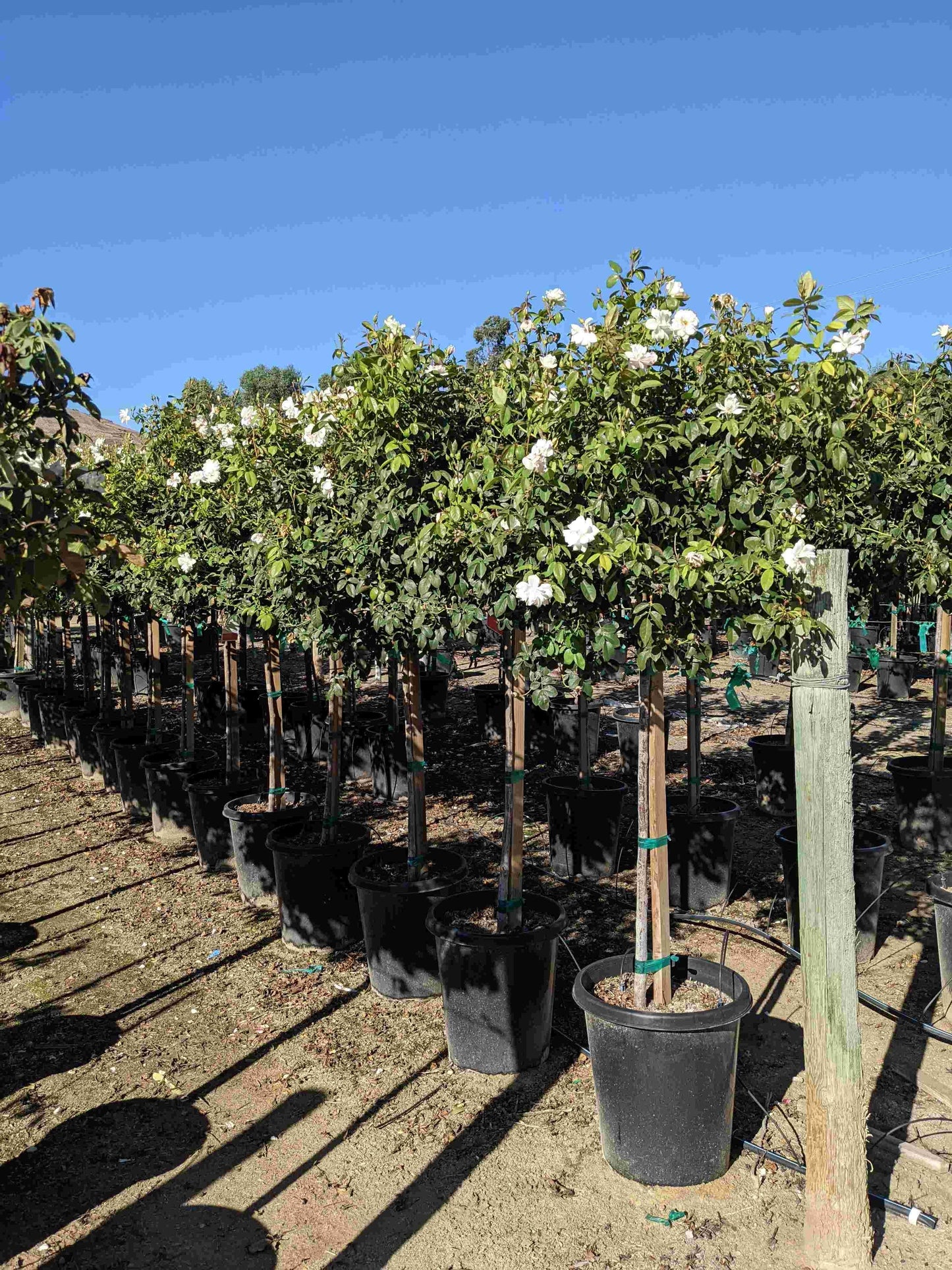

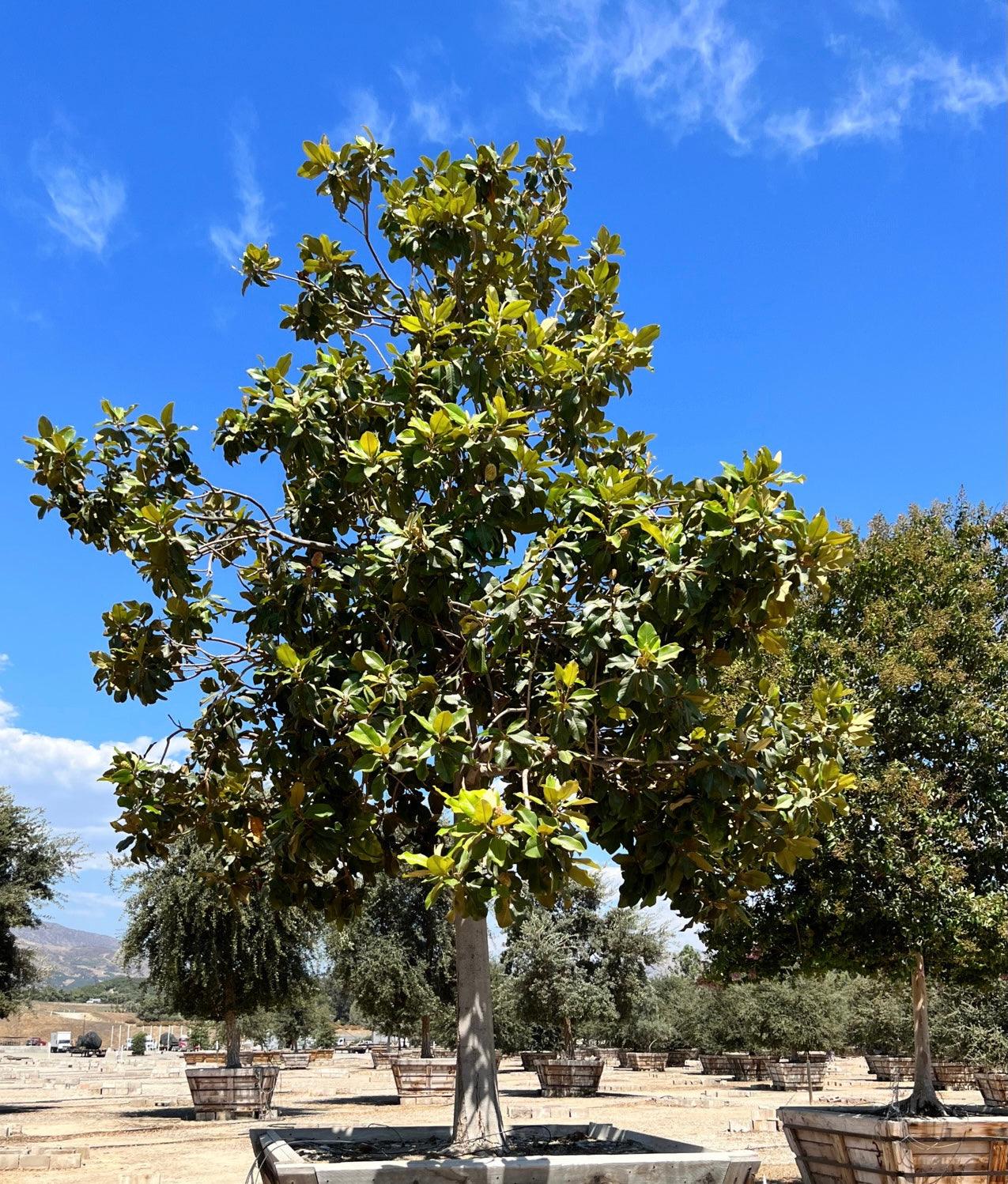

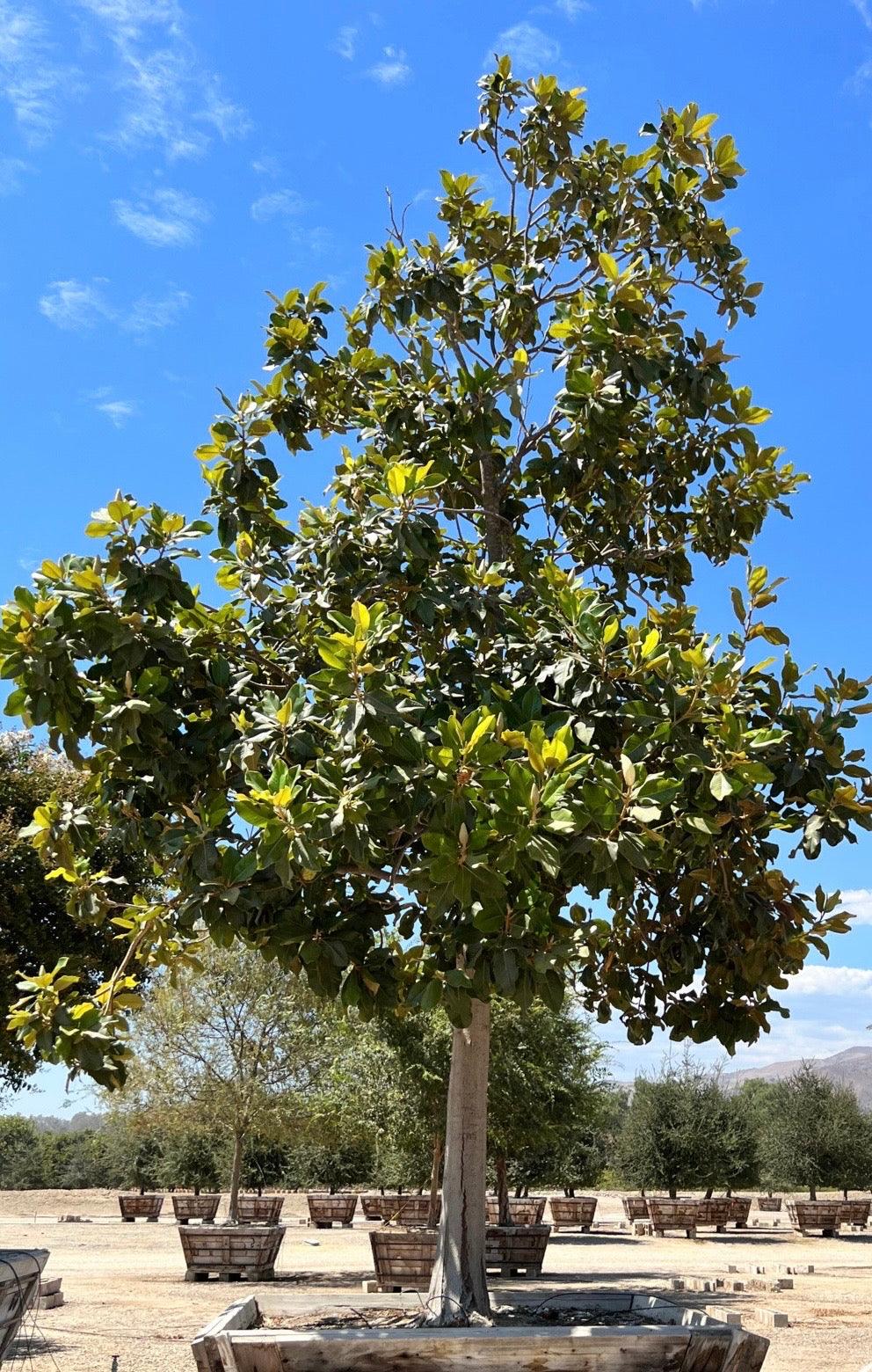

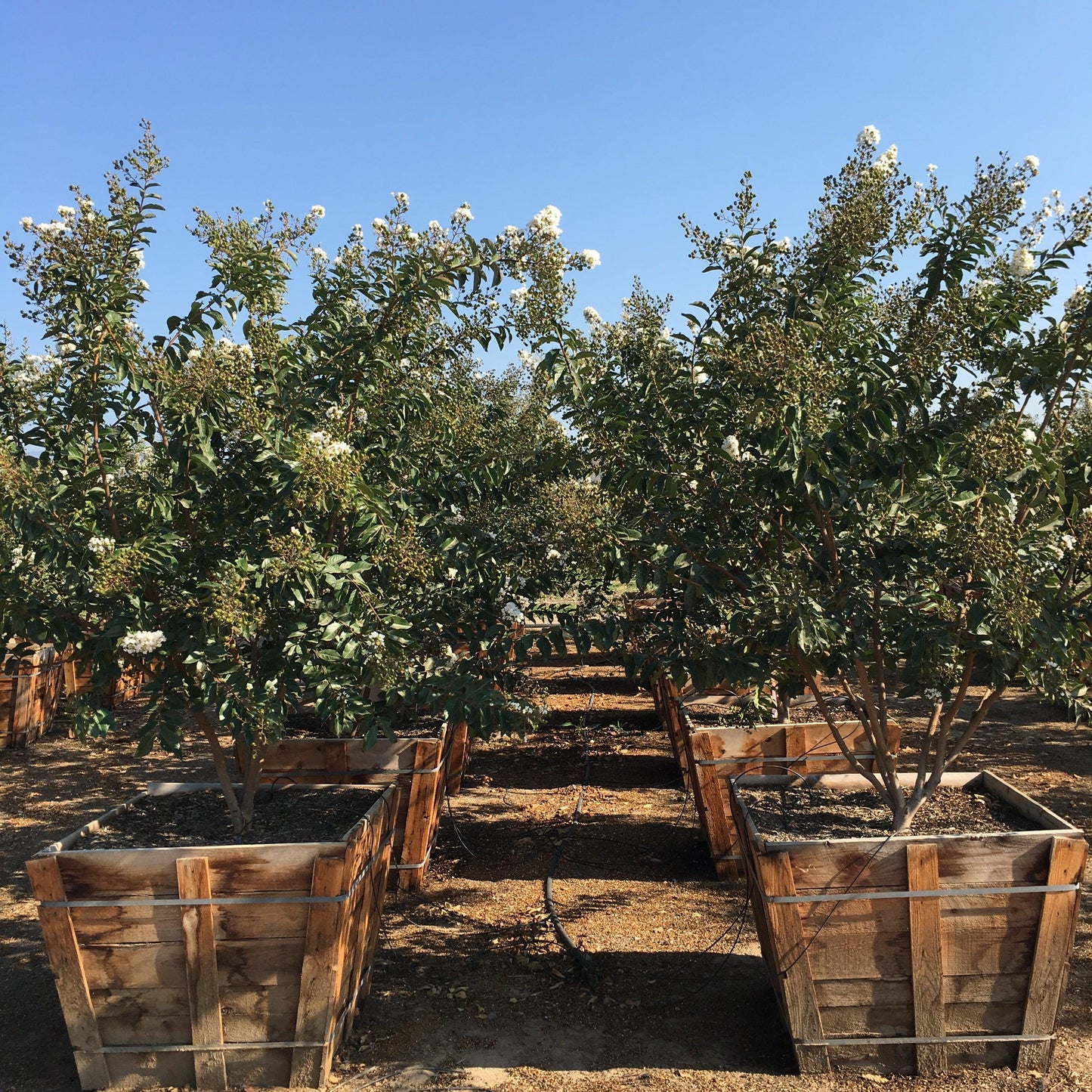





Pairs Well With













You May Also Like












Thousands of Healthy Plants Delivered


Yardwork was so great to work with. First they had the Swan Hill olive trees that we had been searching for, we had contacted several other nurseries without any luck previously. Then they answered all of our questions in a timely matter prior to ordering and finally delivered within a few days of placing it. Their staff is incredibly knowledgeable; they delivered and planted our trees with expertise to ensure that they would do well in our yard. We would definitely work with them again for future projects.









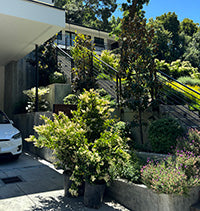

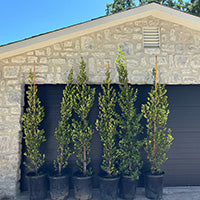

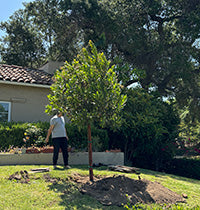

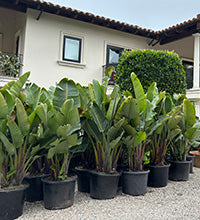
A Modern Experience
At Yardwork, we carefully curate thousands of plants, in all container sizes, to provide you with the best selection of the highest quality trees and plants at the best price, with the convenience of an online platform.
Uncompromised Quality
We choose only the finest specimens and hand select our plants just before delivery to ensure you receive the freshest and most robust specimens available for your landscape.
Industry Leading Warranties
Our 30, 90, and 365 extended warranties provide some of the best coverage to ensure our trees and plants thrive in your landscape.
Frequently Asked Questions
We're committed to changing everything about trees and plants - how they’re grown, how you shop for them, and how much they cost. We handle orders ourselves. No middlemen to get between us (or our prices) and you.
We're committed to changing everything about trees and plants - how they’re grown, how you shop for them, and how much they cost. We handle orders ourselves. No middlemen to get between us (or our prices) and you.
Delivery does not include unloading of trees and plants LARGER than a 24" box.
Trees and plants in smaller containers will be dropped curbside (usually on the driveway or near the front doorstep).
Delivery beyond a curbside drop will be charged extra.
Trees and plants that are sold in container sizes LARGER than a 24" box size will require equipment and/or enough manpower onsite to help unload from the truck.
Please reach out to our team PRIOR to placing your order to help coordinate.
Our team can provide unloading assistance with equipment for an extra fee as well.
Delivery does not include unloading of trees and plants LARGER than a 24" box.
Trees and plants in smaller containers will be dropped curbside (usually on the driveway or near the front doorstep).
Delivery beyond a curbside drop will be charged extra.
Trees and plants that are sold in container sizes LARGER than a 24" box size will require equipment and/or enough manpower onsite to help unload from the truck.
Please reach out to our team PRIOR to placing your order to help coordinate.
Our team can provide unloading assistance with equipment for an extra fee as well.
We ship locally within California within 7-10 days of your order being placed.
We ship nationally using carrier partners, based on order size. Our common order minimums for out of state shipping is $5,000.
Text or call 323-576-4159 for specific shipping details for your location.
We ship locally within California within 7-10 days of your order being placed.
We ship nationally using carrier partners, based on order size. Our common order minimums for out of state shipping is $5,000.
Text or call 323-576-4159 for specific shipping details for your location.
We are currently online only and don't have physical locations where you can view plants in person.
That's why we have photos direct from the growing grounds of the plants we will ship and we display pricing right in our store.
We do make sure to pick the very best trees and plants prior to shipping and make sure that they have gone through our multi-point inspection for health and structure.
We will always reach out prior to delivery if we find a quality issue or need to provide a substitute.
We are currently online only and don't have physical locations where you can view plants in person.
That's why we have photos direct from the growing grounds of the plants we will ship and we display pricing right in our store.
We do make sure to pick the very best trees and plants prior to shipping and make sure that they have gone through our multi-point inspection for health and structure.
We will always reach out prior to delivery if we find a quality issue or need to provide a substitute.
Plants vary greatly by type. Here is a rough idea of sizes based on containers that are direct from our growing grounds.
15 Gallon Shrub 3-4 Ft. Tall
15 Gallon Tree 5-6 Ft. Tall
24" Box Shrub 5-6 Ft. Tall
24" Box Tree 6-7 Ft. Tall
36" Box Shrub/Tree 7-9 Ft. Tall
48" Box Shrub/Tree 8-10 Ft. Tall
**Please note that we do not make guarantees of sizes. If you have questions or concerns, please call or text to request accurate sizing for the particular plant you're considering, prior to ordering.
Plants vary greatly by type. Here is a rough idea of sizes based on containers that are direct from our growing grounds.
15 Gallon Shrub 3-4 Ft. Tall
15 Gallon Tree 5-6 Ft. Tall
24" Box Shrub 5-6 Ft. Tall
24" Box Tree 6-7 Ft. Tall
36" Box Shrub/Tree 7-9 Ft. Tall
48" Box Shrub/Tree 8-10 Ft. Tall
**Please note that we do not make guarantees of sizes. If you have questions or concerns, please call or text to request accurate sizing for the particular plant you're considering, prior to ordering.
We offer a limited 30 day warranty for plants that are delivered and planted by someone else and a 90 day warranty for plants that we plant.
The limited warranty covers plants that die as a result of disease or fungus which was derived from our growing grounds or from root balls that were root bound.
The warranty does not cover damage due to watering, fertilizer, soils, or any other conditions beyond our control. Additionally, the warranty does not cover plants that are shipped out of the state of California or shipped into California from other states. Custom plant orders are also not covered under warranty. Plants must be planted within 24 hours after delivery to qualify.
We can assist you in recommending the right soils and fertilizers to help your plant thrive after you plant it.
Text or call 323-576-4159 for further warranty information.
We offer a limited 30 day warranty for plants that are delivered and planted by someone else and a 90 day warranty for plants that we plant.
The limited warranty covers plants that die as a result of disease or fungus which was derived from our growing grounds or from root balls that were root bound.
The warranty does not cover damage due to watering, fertilizer, soils, or any other conditions beyond our control. Additionally, the warranty does not cover plants that are shipped out of the state of California or shipped into California from other states. Custom plant orders are also not covered under warranty. Plants must be planted within 24 hours after delivery to qualify.
We can assist you in recommending the right soils and fertilizers to help your plant thrive after you plant it.
Text or call 323-576-4159 for further warranty information.
Our local delivery team covers most cities in California.
There are some exceptions, so please get in touch to confirm prior to ordering.
Additionally, we ship using semi trucks and trailers throughout the entire United States and even abroad for large orders over $5,000. Each shipment is custom, so please reach out to our team to coordinate.
Our local delivery team covers most cities in California.
There are some exceptions, so please get in touch to confirm prior to ordering.
Additionally, we ship using semi trucks and trailers throughout the entire United States and even abroad for large orders over $5,000. Each shipment is custom, so please reach out to our team to coordinate.