

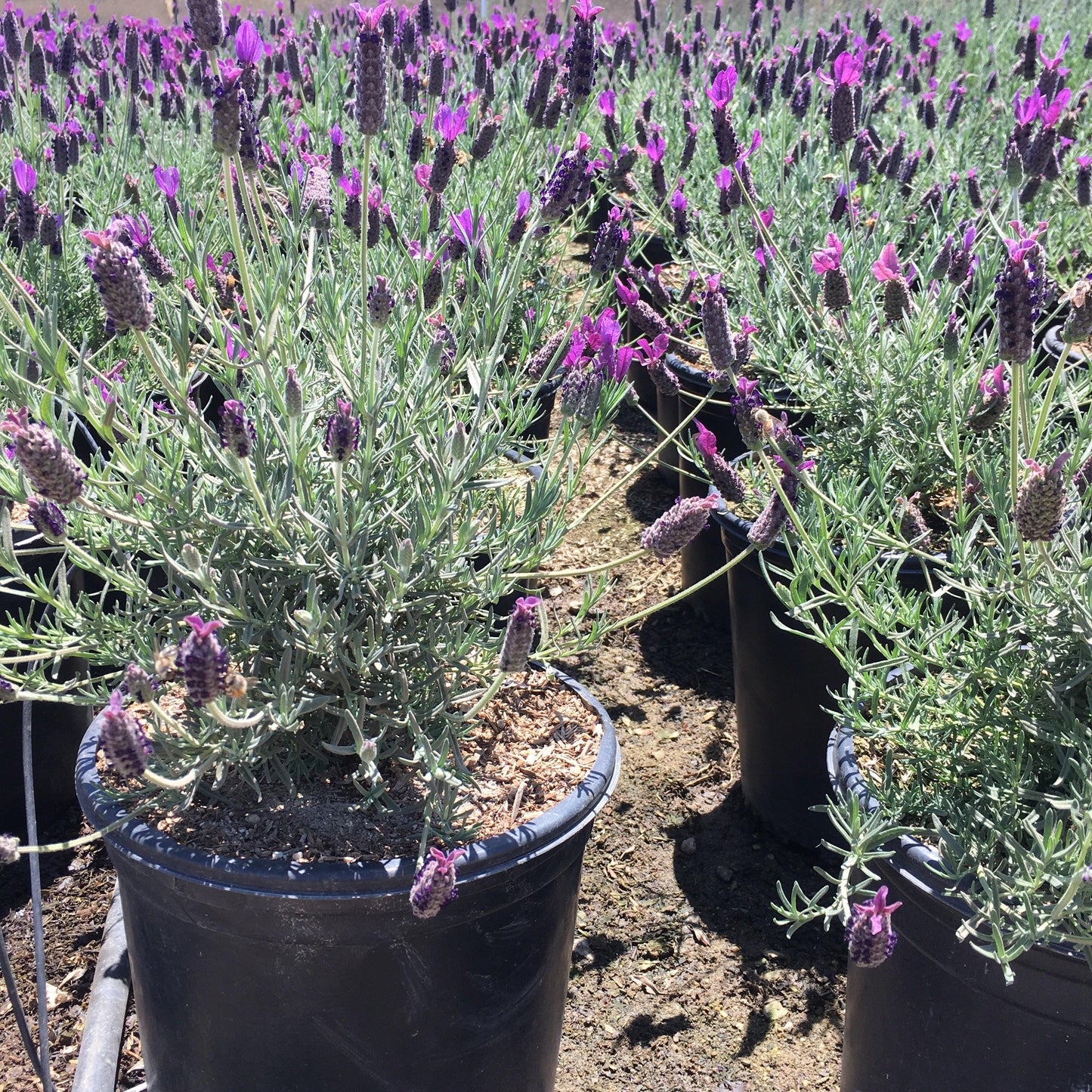
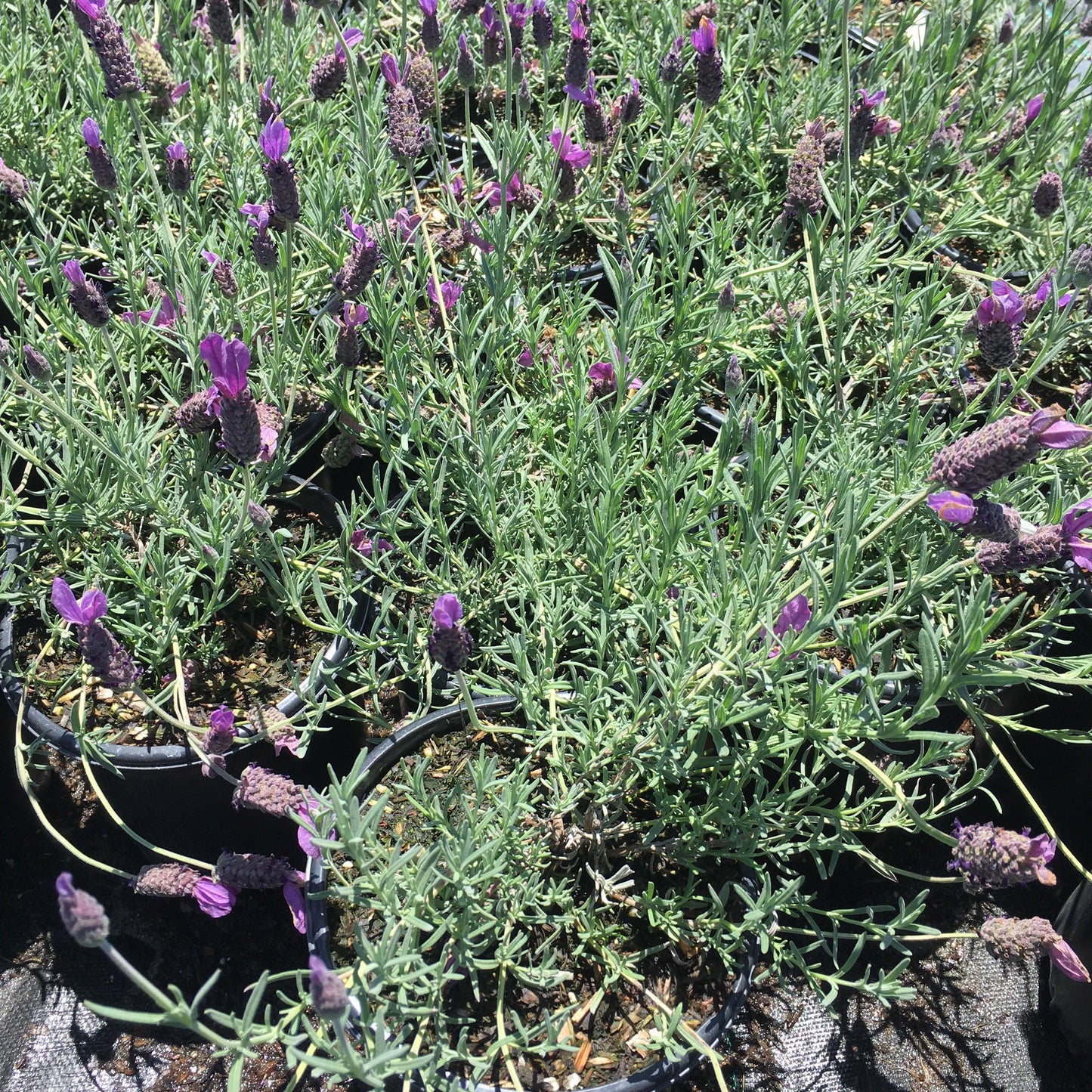


Lavandula Stoechas (Spanish Lavender)
Regular price
$25.00
Size
Transform Your Garden with Fragrant Mediterranean Beauty
Spanish lavender gives your garden bold color, aromatic foliage, and unmistakable cone-like lavender flowers topped with showy “rabbit ear” bracts. Lavandula stoechas is a distinctive lavender species in the mint family, valued for its compact growth, gray green foliage, and strong Mediterranean presence.
Plant it where you want an attractive, drought tolerant shrub that brings pollinators into the garden without demanding constant care. In full sun and well drained soil, Spanish lavender creates fragrant borders, container displays, herb gardens, and mass plantings that feel fresh from the mediterranean region.
Why You'll Love It
-
Unique Flower Structure – Lavandula stoechas, commonly known as Spanish lavender, features distinctive cone-like flower heads topped with showy bracts, often referred to as “rabbit ears,” giving every plant a sculptural look that common lavender flowers do not provide.
-
Extended Bloom Period – Spanish lavender typically blooms from mid-spring to late summer, with flowering starting as early as May in mild climates, and can produce additional flushes of flowers in June and late summer.
-
Drought Tolerance – Spanish lavender thrives in extreme heat and arid Mediterranean-like climates, and once established it does not require frequent watering.
-
Pollinator Magnet – This species of lavender is known for attracting pollinators such as bees and butterflies due to its rich nectar and pollen, making it an excellent choice for pollinator gardens and other pollinators.
-
Versatile Use – Lavandula stoechas is highly valued in gardens for its compact growth, aromatic foliage, and distinctive cone-like flower heads, making it suitable for beds, borders, containers, rock gardens, low-water xeriscaping, and mixed perennial borders.
The high concentration of essential oils in L. stoechas foliage naturally repels pests like deer, rabbits, and mosquitoes. The plant is naturally resistant to deer and rabbits due to the intense essential oils in its foliage, making it well suited for California homeowners who want beauty with less browsing pressure, especially when planted alongside drought-tolerant trees like the California Pepper Tree (Schinus molle).
What Makes It Different
Most lavender varieties offer familiar purple flowers and a soft sweet fragrance. Spanish lavender stands apart with bolder flower spikes, colorful top bracts, and a sharper scent profile than traditional English lavender.
-
Distinctive Bracts – The showy “rabbit ear” petals sit above the flower spikes, creating a lovely contrast with purple, violet, pink, white, or dark blue blooms.
-
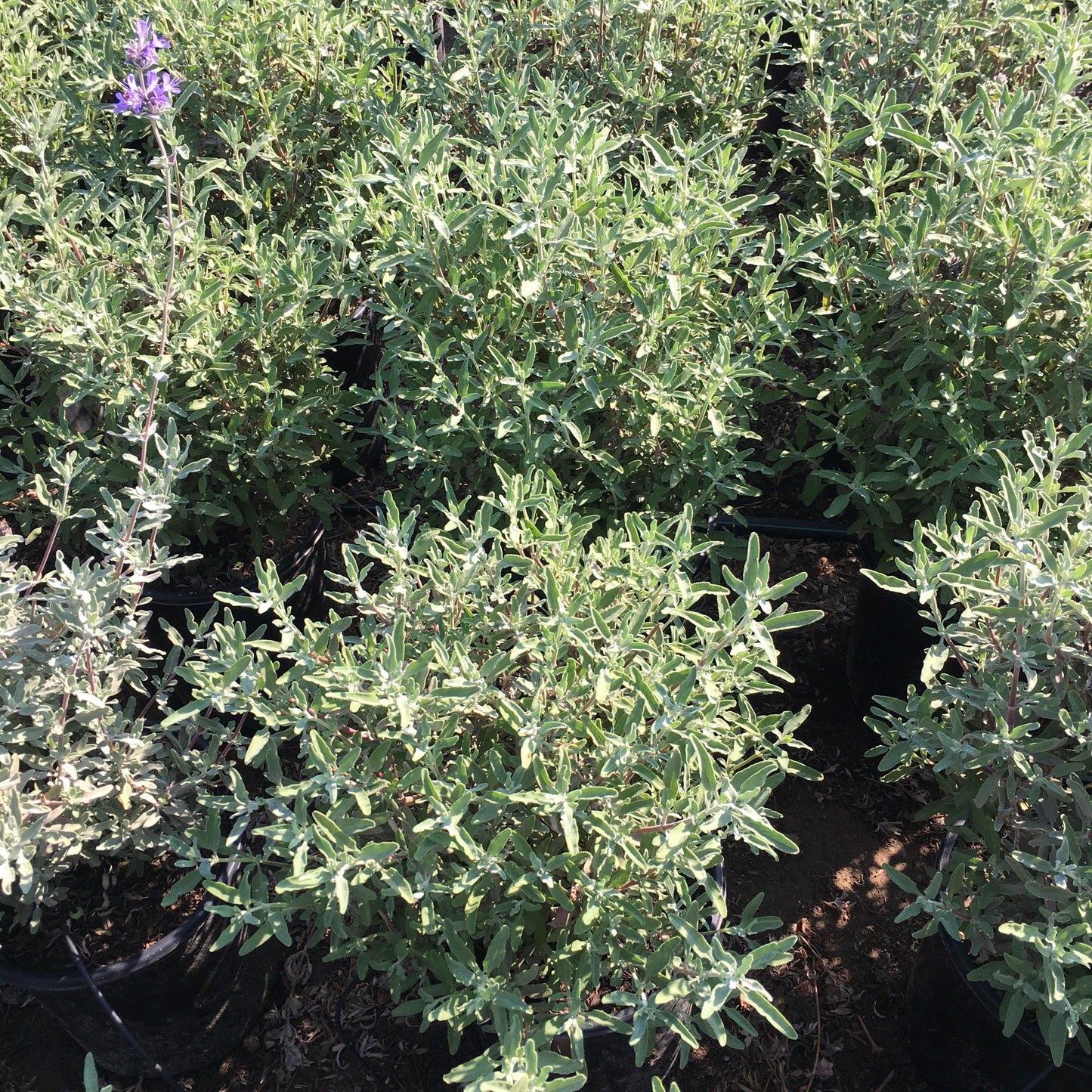
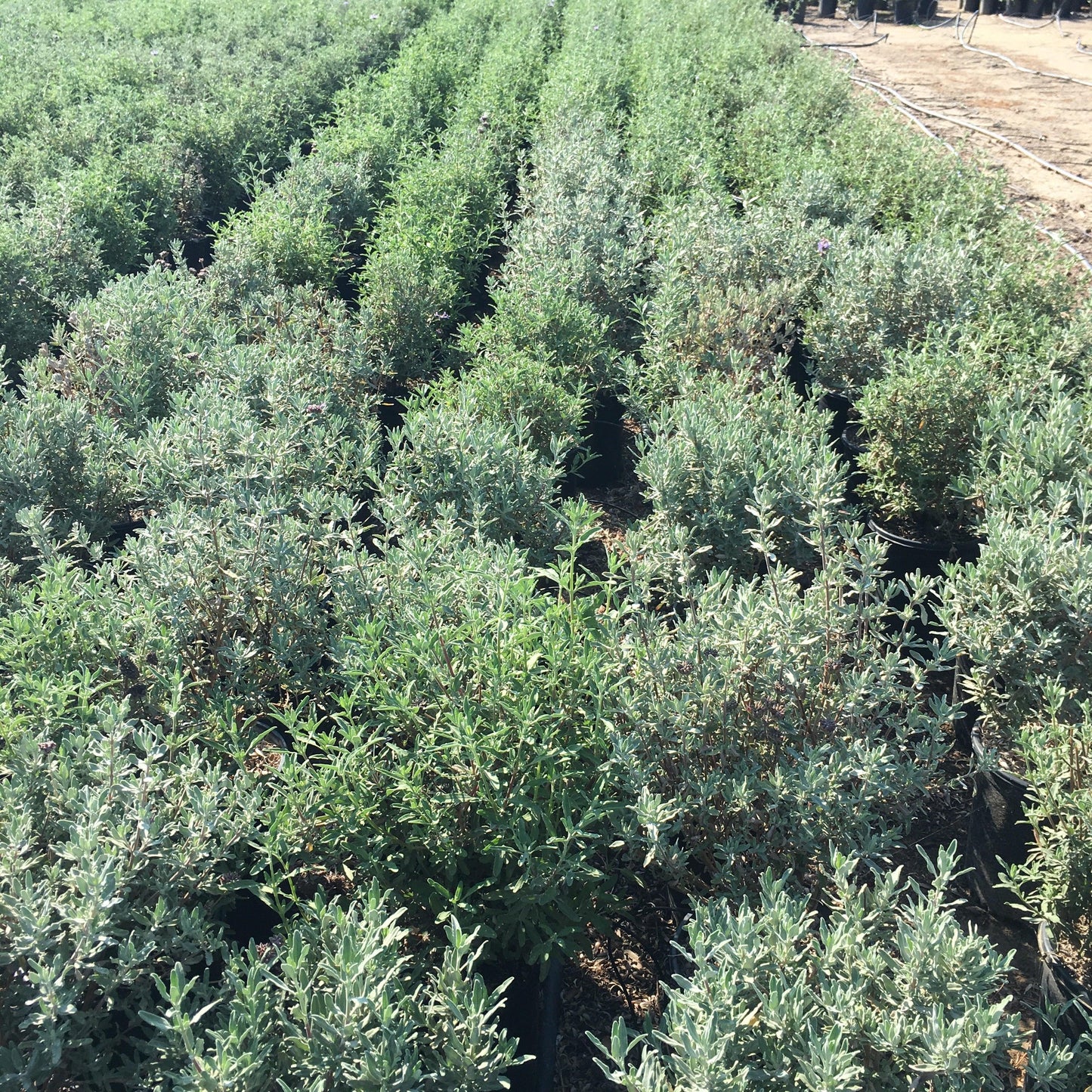
Compact Growth – L. stoechas grows as a dense, mounded evergreen sub-shrub, reaching 18 to 24 inches tall and 2 to 3 feet wide, with gray green foliage covered in fine hairs.
-
Early Blooming – Spanish lavender flowers earlier in spring than many lavandula species, extending color before lavandula angustifolia and many common English lavender selections reach their peak.
Its fragrance is also different. The fragrance of L. stoechas is sharper and more resinous compared to traditional English lavender. The flowers of L. stoechas produce a sharp, camphor-like aroma rather than a sweet scent, and the plant has a pungent and heavy camphorous aroma, making it unsuitable for culinary use.
For comparison, lavandula dentata has more visibly toothed foliage, often described as pinnately toothed, while Spanish lavender is chosen for its bold bracts and compact mounding form. Across the genus Lavandula, this species is one of the most visually dramatic choices for modern water-wise landscapes, especially when contrasted with more traditional options like English lavender (Lavandula angustifolia).
How To Grow Lavandula Stoechas Successfully
-
Plant in a Well-Draining Location
Lavandula stoechas, commonly known as Spanish lavender, requires full sun and should be planted in a location that receives at least 6-8 hours of direct sunlight per day. This lavender species prefers well-drained soil that is poor, light, and sandy, and it is essential to ensure excellent drainage and air circulation, especially in hot, humid climates. -
Establish the Root System
Spanish lavender is drought-tolerant and does not require frequent watering; it should be watered deeply once a week during the growing season and less in the fall and winter. L. stoechas demands excellent soil drainage to avoid root rot and related issues, and it is sensitive to high summer humidity combined with wet soils, which can cause fatal root rot, similar to many other California native drought-tolerant shrubs like Ceanothus (California lilac). -
Enjoy Continuous Blooms
Deadhead spent blooms to encourage repeat flowering through summer. Pruning should be done in late summer or early fall after the flowers have faded, trimming the plant back by one-third to one-half its size to encourage bushier growth and more flowers.
Do not prune Spanish lavender hard into old, woody stems. L. stoechas cannot regenerate from old wood and requires regular pruning to maintain its shape. Lavandula stoechas can be propagated by seed, cuttings, or division, with cuttings being the easiest and most reliable method, taken in late summer or early fall.
Plant Details
-
Botanical Name: Lavandula stoechas
-
Common Names: Spanish lavender, French lavender, topped lavender
-
Plant Family: Mint family
-
Mature Size: 18-24 inches tall and 2-3 feet wide
-
Growth Habit: Dense, mounded evergreen sub-shrub with aromatic gray green foliage
-
Sun Requirements: Full sun; at least 6-8 hours of direct sunlight daily
-
Soil Type: Poor, light, sandy, or rocky soil
-
Soil pH: Neutral to mildly alkaline pH of 6.5 to 7.5
-
Drainage: Requires excellent drainage and good air circulation
-
Hardiness Zones: 8-10 for many Yardwork California plantings; cultivars of Lavandula stoechas are generally more tender than other lavender species, with hardiness typically ranging from zones 7 to 9, depending on the specific cultivar
-
Cold Protection: May need winter protection in zone 7 or frost-prone microclimates; it is less cold hardy than many English lavender types
-
Bloom Season: Mid-spring to late summer, with blooms beginning as early as May in mild climates and possible flushes in June and late summer
-
Bloom Colors: Purple, violet, pink, white, dark blue, and contrasting bracts
-
Fragrance: Strong, aromatic, camphor-like scent from flowers and essential oils
-
Landscape Uses: Beds, mixed borders, containers, herb gardens, rock gardens, low-water xeriscaping, mass plantings, Mediterranean-style gardens, and alongside roses, rosemary, and other perennials or other Mediterranean-style flowering shrubs like purple bougainvillea
-
Wildlife Value: Attracts bees, butterflies, and pollinators
-
Pest Resistance: Naturally resistant to deer and rabbits; essential oils may also help repel mosquitoes
-
Lifespan: L. stoechas is relatively short-lived compared to other woody perennials, needing replacement after 3 to 5 years
-
Pet Note: L. stoechas contains linalool, which can be mildly toxic to dogs and cats if ingested in large quantities
-
Aromatic Uses: Lavandula stoechas is often used in traditional medicine and aromatherapy for its calming properties, and its aromatic leaves are commonly utilized in potpourris and essential oils
-
Not Recommended For: Culinary use because of its pungent, heavy camphorous aroma
-
Shipping: Available for California delivery, with large orders nationwide through Yardwork and access to a broader selection of trees, shrubs, and garden plants
Selected cultivars offer different color and habit options. The cultivar ‘Helmsdale’ is a hybrid of Lavandula stoechas and is noted for its rich burgundy bracts and vibrant flowers, thriving in well-drained conditions and requiring winter protection. The ‘Madrid Blue’ cultivar of Lavandula stoechas features plump, long-blooming dark blue flowers topped with white tufts, and is known for its strong fragrance and compact growth habit, much like other compact flowering perennials such as Lavender Mexican Heather.
In certain warm regions, L. stoechas is considered a noxious weed due to its aggressive spreading behavior. Yardwork recommends planting responsibly, avoiding disposal of seed-bearing garden waste into wild areas, and confirming local guidance when planting near open space, just as you would when adding larger landscape trees such as the California Pepper Tree and other featured yard trees.
Who It's For
Ideal for gardeners seeking:
-
Mediterranean and drought-tolerant landscape plants for hot sun, including small desert trees for hot, dry landscapes
-
California homeowners designing water-wise outdoor spaces
-
Container gardeners wanting fragrant, low-maintenance shrubs
-
Pollinator garden creators looking to attract bees, butterflies, and other pollinators
-
Landscapers specifying compact shrubs for hot, dry microclimates who may also need evergreen and fast-growing privacy trees
-
Designers creating mixed borders, mass plantings, herb gardens, or rock gardens with year round structure
If you want lavender with more visual drama than lavandula angustifolia, Spanish lavender delivers colorful flower spikes, aromatic foliage, and strong performance in direct sunlight. It is especially well suited to gardens with excellent drainage, lean soil, and plenty of sun, and pairs beautifully with flowering trees selected for California gardens.
Frequently Asked Questions
Is Spanish lavender hardy in my area?
Spanish lavender thrives in zones 8-10 for many mild-winter landscapes, though cultivars of Lavandula stoechas are generally more tender than other lavender species, with hardiness typically ranging from zones 7 to 9, depending on the specific cultivar. In colder areas, provide winter protection.
How often should I prune it?
Prune in late summer or early fall after the flowers fade. Trim the plant back by one-third to one-half to encourage bushier growth and more blooms, but avoid cutting into old wood because L. stoechas cannot regenerate from old wood.
Will it survive California drought conditions?
Yes. Spanish lavender thrives in extreme heat and arid Mediterranean-like climates. Once established, it is drought tolerant and should be watered deeply once a week during the growing season, then watered less in fall and winter.
Can I grow it in containers?
Yes. Spanish lavender performs beautifully in containers when the pot has excellent drainage, the soil is light and well drained, and the plant receives full sun. Containers are also useful where winter protection is needed.
Is it better for humid climates than English lavender?
L. stoechas thrives in hotter, more humid regions compared to common English lavender, but only when planted with excellent drainage and good air circulation. High humidity combined with wet soils can still cause fatal root rot.
Can I use Spanish lavender for dried bouquets or perfumes?
Yes. The aromatic flowers and foliage can be used in dried bouquets, potpourris, perfumes, and essential oils. Its scent is sharper and more camphorous than the classic sweet fragrance associated with English lavender.
Does Spanish lavender have historical uses?
Yes. Lavender has been valued since ancient times and through the Middle Ages for aromatic, household, and traditional wellness uses. Lavandula stoechas remains popular in aromatherapy and traditional medicine for its calming properties.
Ready to Transform Your Garden?
Choose Lavandula Stoechas (Spanish Lavender) for a compact, drought tolerant shrub that brings bees, butterflies, fragrance, and bold seasonal color to your garden.
Yardwork selects quality plants for California conditions, with expert guidance, professional growing practices, and dependable California delivery. For larger landscape projects, Yardwork also supports consultation and large orders nationwide.
Transform Your Garden with Fragrant Mediterranean Beauty
Spanish lavender gives your garden bold color, aromatic foliage, and unmistakable cone-like lavender flowers topped with showy “rabbit ear” bracts. Lavandula stoechas is a distinctive lavender species in the mint family, valued for its compact growth, gray green foliage, and strong Mediterranean presence.
Plant it where you want an attractive, drought tolerant shrub that brings pollinators into the garden without demanding constant care. In full sun and well drained soil, Spanish lavender creates fragrant borders, container displays, herb gardens, and mass plantings that feel fresh from the mediterranean region.
Why You'll Love It
-
Unique Flower Structure – Lavandula stoechas, commonly known as Spanish lavender, features distinctive cone-like flower heads topped with showy bracts, often referred to as “rabbit ears,” giving every plant a sculptural look that common lavender flowers do not provide.
-
Extended Bloom Period – Spanish lavender typically blooms from mid-spring to late summer, with flowering starting as early as May in mild climates, and can produce additional flushes of flowers in June and late summer.
-
Drought Tolerance – Spanish lavender thrives in extreme heat and arid Mediterranean-like climates, and once established it does not require frequent watering.
-
Pollinator Magnet – This species of lavender is known for attracting pollinators such as bees and butterflies due to its rich nectar and pollen, making it an excellent choice for pollinator gardens and other pollinators.
-
Versatile Use – Lavandula stoechas is highly valued in gardens for its compact growth, aromatic foliage, and distinctive cone-like flower heads, making it suitable for beds, borders, containers, rock gardens, low-water xeriscaping, and mixed perennial borders.
The high concentration of essential oils in L. stoechas foliage naturally repels pests like deer, rabbits, and mosquitoes. The plant is naturally resistant to deer and rabbits due to the intense essential oils in its foliage, making it well suited for California homeowners who want beauty with less browsing pressure, especially when planted alongside drought-tolerant trees like the California Pepper Tree (Schinus molle).
What Makes It Different
Most lavender varieties offer familiar purple flowers and a soft sweet fragrance. Spanish lavender stands apart with bolder flower spikes, colorful top bracts, and a sharper scent profile than traditional English lavender.
-
Distinctive Bracts – The showy “rabbit ear” petals sit above the flower spikes, creating a lovely contrast with purple, violet, pink, white, or dark blue blooms.
-
Compact Growth – L. stoechas grows as a dense, mounded evergreen sub-shrub, reaching 18 to 24 inches tall and 2 to 3 feet wide, with gray green foliage covered in fine hairs.
-
Early Blooming – Spanish lavender flowers earlier in spring than many lavandula species, extending color before lavandula angustifolia and many common English lavender selections reach their peak.
Its fragrance is also different. The fragrance of L. stoechas is sharper and more resinous compared to traditional English lavender. The flowers of L. stoechas produce a sharp, camphor-like aroma rather than a sweet scent, and the plant has a pungent and heavy camphorous aroma, making it unsuitable for culinary use.
For comparison, lavandula dentata has more visibly toothed foliage, often described as pinnately toothed, while Spanish lavender is chosen for its bold bracts and compact mounding form. Across the genus Lavandula, this species is one of the most visually dramatic choices for modern water-wise landscapes, especially when contrasted with more traditional options like English lavender (Lavandula angustifolia).
How To Grow Lavandula Stoechas Successfully
-
Plant in a Well-Draining Location
Lavandula stoechas, commonly known as Spanish lavender, requires full sun and should be planted in a location that receives at least 6-8 hours of direct sunlight per day. This lavender species prefers well-drained soil that is poor, light, and sandy, and it is essential to ensure excellent drainage and air circulation, especially in hot, humid climates. -
Establish the Root System
Spanish lavender is drought-tolerant and does not require frequent watering; it should be watered deeply once a week during the growing season and less in the fall and winter. L. stoechas demands excellent soil drainage to avoid root rot and related issues, and it is sensitive to high summer humidity combined with wet soils, which can cause fatal root rot, similar to many other California native drought-tolerant shrubs like Ceanothus (California lilac). -
Enjoy Continuous Blooms
Deadhead spent blooms to encourage repeat flowering through summer. Pruning should be done in late summer or early fall after the flowers have faded, trimming the plant back by one-third to one-half its size to encourage bushier growth and more flowers.
Do not prune Spanish lavender hard into old, woody stems. L. stoechas cannot regenerate from old wood and requires regular pruning to maintain its shape. Lavandula stoechas can be propagated by seed, cuttings, or division, with cuttings being the easiest and most reliable method, taken in late summer or early fall.
Plant Details
-
Botanical Name: Lavandula stoechas
-
Common Names: Spanish lavender, French lavender, topped lavender
-
Plant Family: Mint family
-
Mature Size: 18-24 inches tall and 2-3 feet wide
-
Growth Habit: Dense, mounded evergreen sub-shrub with aromatic gray green foliage
-
Sun Requirements: Full sun; at least 6-8 hours of direct sunlight daily
-
Soil Type: Poor, light, sandy, or rocky soil
-
Soil pH: Neutral to mildly alkaline pH of 6.5 to 7.5
-
Drainage: Requires excellent drainage and good air circulation
-
Hardiness Zones: 8-10 for many Yardwork California plantings; cultivars of Lavandula stoechas are generally more tender than other lavender species, with hardiness typically ranging from zones 7 to 9, depending on the specific cultivar
-
Cold Protection: May need winter protection in zone 7 or frost-prone microclimates; it is less cold hardy than many English lavender types
-
Bloom Season: Mid-spring to late summer, with blooms beginning as early as May in mild climates and possible flushes in June and late summer
-
Bloom Colors: Purple, violet, pink, white, dark blue, and contrasting bracts
-
Fragrance: Strong, aromatic, camphor-like scent from flowers and essential oils
-
Landscape Uses: Beds, mixed borders, containers, herb gardens, rock gardens, low-water xeriscaping, mass plantings, Mediterranean-style gardens, and alongside roses, rosemary, and other perennials or other Mediterranean-style flowering shrubs like purple bougainvillea
-
Wildlife Value: Attracts bees, butterflies, and pollinators
-
Pest Resistance: Naturally resistant to deer and rabbits; essential oils may also help repel mosquitoes
-
Lifespan: L. stoechas is relatively short-lived compared to other woody perennials, needing replacement after 3 to 5 years
-
Pet Note: L. stoechas contains linalool, which can be mildly toxic to dogs and cats if ingested in large quantities
-
Aromatic Uses: Lavandula stoechas is often used in traditional medicine and aromatherapy for its calming properties, and its aromatic leaves are commonly utilized in potpourris and essential oils
-
Not Recommended For: Culinary use because of its pungent, heavy camphorous aroma
-
Shipping: Available for California delivery, with large orders nationwide through Yardwork and access to a broader selection of trees, shrubs, and garden plants
Selected cultivars offer different color and habit options. The cultivar ‘Helmsdale’ is a hybrid of Lavandula stoechas and is noted for its rich burgundy bracts and vibrant flowers, thriving in well-drained conditions and requiring winter protection. The ‘Madrid Blue’ cultivar of Lavandula stoechas features plump, long-blooming dark blue flowers topped with white tufts, and is known for its strong fragrance and compact growth habit, much like other compact flowering perennials such as Lavender Mexican Heather.
In certain warm regions, L. stoechas is considered a noxious weed due to its aggressive spreading behavior. Yardwork recommends planting responsibly, avoiding disposal of seed-bearing garden waste into wild areas, and confirming local guidance when planting near open space, just as you would when adding larger landscape trees such as the California Pepper Tree and other featured yard trees.
Who It's For
Ideal for gardeners seeking:
-
Mediterranean and drought-tolerant landscape plants for hot sun, including small desert trees for hot, dry landscapes
-
California homeowners designing water-wise outdoor spaces
-
Container gardeners wanting fragrant, low-maintenance shrubs
-
Pollinator garden creators looking to attract bees, butterflies, and other pollinators
-
Landscapers specifying compact shrubs for hot, dry microclimates who may also need evergreen and fast-growing privacy trees
-
Designers creating mixed borders, mass plantings, herb gardens, or rock gardens with year round structure
If you want lavender with more visual drama than lavandula angustifolia, Spanish lavender delivers colorful flower spikes, aromatic foliage, and strong performance in direct sunlight. It is especially well suited to gardens with excellent drainage, lean soil, and plenty of sun, and pairs beautifully with flowering trees selected for California gardens.
Frequently Asked Questions
Is Spanish lavender hardy in my area?
Spanish lavender thrives in zones 8-10 for many mild-winter landscapes, though cultivars of Lavandula stoechas are generally more tender than other lavender species, with hardiness typically ranging from zones 7 to 9, depending on the specific cultivar. In colder areas, provide winter protection.
How often should I prune it?
Prune in late summer or early fall after the flowers fade. Trim the plant back by one-third to one-half to encourage bushier growth and more blooms, but avoid cutting into old wood because L. stoechas cannot regenerate from old wood.
Will it survive California drought conditions?
Yes. Spanish lavender thrives in extreme heat and arid Mediterranean-like climates. Once established, it is drought tolerant and should be watered deeply once a week during the growing season, then watered less in fall and winter.
Can I grow it in containers?
Yes. Spanish lavender performs beautifully in containers when the pot has excellent drainage, the soil is light and well drained, and the plant receives full sun. Containers are also useful where winter protection is needed.
Is it better for humid climates than English lavender?
L. stoechas thrives in hotter, more humid regions compared to common English lavender, but only when planted with excellent drainage and good air circulation. High humidity combined with wet soils can still cause fatal root rot.
Can I use Spanish lavender for dried bouquets or perfumes?
Yes. The aromatic flowers and foliage can be used in dried bouquets, potpourris, perfumes, and essential oils. Its scent is sharper and more camphorous than the classic sweet fragrance associated with English lavender.
Does Spanish lavender have historical uses?
Yes. Lavender has been valued since ancient times and through the Middle Ages for aromatic, household, and traditional wellness uses. Lavandula stoechas remains popular in aromatherapy and traditional medicine for its calming properties.
Ready to Transform Your Garden?
Choose Lavandula Stoechas (Spanish Lavender) for a compact, drought tolerant shrub that brings bees, butterflies, fragrance, and bold seasonal color to your garden.
Yardwork selects quality plants for California conditions, with expert guidance, professional growing practices, and dependable California delivery. For larger landscape projects, Yardwork also supports consultation and large orders nationwide.
Plants vary greatly by type and no guarantees are made on sizing.
However here is a rough idea of sizes based on containers that are direct from our growing grounds.
15 Gallon Shrub 3-4 Ft. Tall
15 Gallon Tree 5-6 Ft. Tall
24" Box Shrub 5-6 Ft. Tall
24" Box Tree 6-7 Ft. Tall
36" Box Tree 8-10 Ft. Tall
48" Box Tree 10-12 Ft. Tall
Please note: Citrus and California Native plants such as Manzanita are smaller than traditional sizing.
Please contact us to confirm sizing of items before purchasing if this is a concern.
Plants vary greatly by type and no guarantees are made on sizing.
However here is a rough idea of sizes based on containers that are direct from our growing grounds.
15 Gallon Shrub 3-4 Ft. Tall
15 Gallon Tree 5-6 Ft. Tall
24" Box Shrub 5-6 Ft. Tall
24" Box Tree 6-7 Ft. Tall
36" Box Tree 8-10 Ft. Tall
48" Box Tree 10-12 Ft. Tall
Please note: Citrus and California Native plants such as Manzanita are smaller than traditional sizing.
Please contact us to confirm sizing of items before purchasing if this is a concern.
Delivery does not include unloading of trees and plants larger than a 24" box.
Trees and plants in smaller containers will be dropped curbside.
Delivery beyond a curbside drop will be charged extra.
Trees and plants that are sold in container sizes larger than a 24" box size will require equipment and an operator onsite to help unload from the truck.
Please reach out to our team PRIOR to placing your order to coordinate.
Our team can provide unloading assistance with equipment for an extra fee.
Delivery does not include unloading of trees and plants larger than a 24" box.
Trees and plants in smaller containers will be dropped curbside.
Delivery beyond a curbside drop will be charged extra.
Trees and plants that are sold in container sizes larger than a 24" box size will require equipment and an operator onsite to help unload from the truck.
Please reach out to our team PRIOR to placing your order to coordinate.
Our team can provide unloading assistance with equipment for an extra fee.
You may also like...


Lavandula Stoechas (Spanish Lavender)
Regular price
$25.00
Size
Transform Your Garden with Fragrant Mediterranean Beauty
Spanish lavender gives your garden bold color, aromatic foliage, and unmistakable cone-like lavender flowers topped with showy “rabbit ear” bracts. Lavandula stoechas is a distinctive lavender species in the mint family, valued for its compact growth, gray green foliage, and strong Mediterranean presence.
Plant it where you want an attractive, drought tolerant shrub that brings pollinators into the garden without demanding constant care. In full sun and well drained soil, Spanish lavender creates fragrant borders, container displays, herb gardens, and mass plantings that feel fresh from the mediterranean region.
Why You'll Love It
-
Unique Flower Structure – Lavandula stoechas, commonly known as Spanish lavender, features distinctive cone-like flower heads topped with showy bracts, often referred to as “rabbit ears,” giving every plant a sculptural look that common lavender flowers do not provide.
-
Extended Bloom Period – Spanish lavender typically blooms from mid-spring to late summer, with flowering starting as early as May in mild climates, and can produce additional flushes of flowers in June and late summer.
-
Drought Tolerance – Spanish lavender thrives in extreme heat and arid Mediterranean-like climates, and once established it does not require frequent watering.
-
Pollinator Magnet – This species of lavender is known for attracting pollinators such as bees and butterflies due to its rich nectar and pollen, making it an excellent choice for pollinator gardens and other pollinators.
-
Versatile Use – Lavandula stoechas is highly valued in gardens for its compact growth, aromatic foliage, and distinctive cone-like flower heads, making it suitable for beds, borders, containers, rock gardens, low-water xeriscaping, and mixed perennial borders.
The high concentration of essential oils in L. stoechas foliage naturally repels pests like deer, rabbits, and mosquitoes. The plant is naturally resistant to deer and rabbits due to the intense essential oils in its foliage, making it well suited for California homeowners who want beauty with less browsing pressure, especially when planted alongside drought-tolerant trees like the California Pepper Tree (Schinus molle).
What Makes It Different
Most lavender varieties offer familiar purple flowers and a soft sweet fragrance. Spanish lavender stands apart with bolder flower spikes, colorful top bracts, and a sharper scent profile than traditional English lavender.
-
Distinctive Bracts – The showy “rabbit ear” petals sit above the flower spikes, creating a lovely contrast with purple, violet, pink, white, or dark blue blooms.
-
Compact Growth – L. stoechas grows as a dense, mounded evergreen sub-shrub, reaching 18 to 24 inches tall and 2 to 3 feet wide, with gray green foliage covered in fine hairs.
-
Early Blooming – Spanish lavender flowers earlier in spring than many lavandula species, extending color before lavandula angustifolia and many common English lavender selections reach their peak.
Its fragrance is also different. The fragrance of L. stoechas is sharper and more resinous compared to traditional English lavender. The flowers of L. stoechas produce a sharp, camphor-like aroma rather than a sweet scent, and the plant has a pungent and heavy camphorous aroma, making it unsuitable for culinary use.
For comparison, lavandula dentata has more visibly toothed foliage, often described as pinnately toothed, while Spanish lavender is chosen for its bold bracts and compact mounding form. Across the genus Lavandula, this species is one of the most visually dramatic choices for modern water-wise landscapes, especially when contrasted with more traditional options like English lavender (Lavandula angustifolia).
How To Grow Lavandula Stoechas Successfully
-
Plant in a Well-Draining Location
Lavandula stoechas, commonly known as Spanish lavender, requires full sun and should be planted in a location that receives at least 6-8 hours of direct sunlight per day. This lavender species prefers well-drained soil that is poor, light, and sandy, and it is essential to ensure excellent drainage and air circulation, especially in hot, humid climates. -
Establish the Root System
Spanish lavender is drought-tolerant and does not require frequent watering; it should be watered deeply once a week during the growing season and less in the fall and winter. L. stoechas demands excellent soil drainage to avoid root rot and related issues, and it is sensitive to high summer humidity combined with wet soils, which can cause fatal root rot, similar to many other California native drought-tolerant shrubs like Ceanothus (California lilac). -
Enjoy Continuous Blooms
Deadhead spent blooms to encourage repeat flowering through summer. Pruning should be done in late summer or early fall after the flowers have faded, trimming the plant back by one-third to one-half its size to encourage bushier growth and more flowers.
Do not prune Spanish lavender hard into old, woody stems. L. stoechas cannot regenerate from old wood and requires regular pruning to maintain its shape. Lavandula stoechas can be propagated by seed, cuttings, or division, with cuttings being the easiest and most reliable method, taken in late summer or early fall.
Plant Details
-
Botanical Name: Lavandula stoechas
-
Common Names: Spanish lavender, French lavender, topped lavender
-
Plant Family: Mint family
-
Mature Size: 18-24 inches tall and 2-3 feet wide
-
Growth Habit: Dense, mounded evergreen sub-shrub with aromatic gray green foliage
-
Sun Requirements: Full sun; at least 6-8 hours of direct sunlight daily
-
Soil Type: Poor, light, sandy, or rocky soil
-
Soil pH: Neutral to mildly alkaline pH of 6.5 to 7.5
-
Drainage: Requires excellent drainage and good air circulation
-
Hardiness Zones: 8-10 for many Yardwork California plantings; cultivars of Lavandula stoechas are generally more tender than other lavender species, with hardiness typically ranging from zones 7 to 9, depending on the specific cultivar
-
Cold Protection: May need winter protection in zone 7 or frost-prone microclimates; it is less cold hardy than many English lavender types
-
Bloom Season: Mid-spring to late summer, with blooms beginning as early as May in mild climates and possible flushes in June and late summer
-
Bloom Colors: Purple, violet, pink, white, dark blue, and contrasting bracts
-
Fragrance: Strong, aromatic, camphor-like scent from flowers and essential oils
-
Landscape Uses: Beds, mixed borders, containers, herb gardens, rock gardens, low-water xeriscaping, mass plantings, Mediterranean-style gardens, and alongside roses, rosemary, and other perennials or other Mediterranean-style flowering shrubs like purple bougainvillea
-
Wildlife Value: Attracts bees, butterflies, and pollinators
-
Pest Resistance: Naturally resistant to deer and rabbits; essential oils may also help repel mosquitoes
-
Lifespan: L. stoechas is relatively short-lived compared to other woody perennials, needing replacement after 3 to 5 years
-
Pet Note: L. stoechas contains linalool, which can be mildly toxic to dogs and cats if ingested in large quantities
-
Aromatic Uses: Lavandula stoechas is often used in traditional medicine and aromatherapy for its calming properties, and its aromatic leaves are commonly utilized in potpourris and essential oils
-
Not Recommended For: Culinary use because of its pungent, heavy camphorous aroma
-
Shipping: Available for California delivery, with large orders nationwide through Yardwork and access to a broader selection of trees, shrubs, and garden plants
Selected cultivars offer different color and habit options. The cultivar ‘Helmsdale’ is a hybrid of Lavandula stoechas and is noted for its rich burgundy bracts and vibrant flowers, thriving in well-drained conditions and requiring winter protection. The ‘Madrid Blue’ cultivar of Lavandula stoechas features plump, long-blooming dark blue flowers topped with white tufts, and is known for its strong fragrance and compact growth habit, much like other compact flowering perennials such as Lavender Mexican Heather.
In certain warm regions, L. stoechas is considered a noxious weed due to its aggressive spreading behavior. Yardwork recommends planting responsibly, avoiding disposal of seed-bearing garden waste into wild areas, and confirming local guidance when planting near open space, just as you would when adding larger landscape trees such as the California Pepper Tree and other featured yard trees.
Who It's For
Ideal for gardeners seeking:
-
Mediterranean and drought-tolerant landscape plants for hot sun, including small desert trees for hot, dry landscapes
-
California homeowners designing water-wise outdoor spaces
-
Container gardeners wanting fragrant, low-maintenance shrubs
-
Pollinator garden creators looking to attract bees, butterflies, and other pollinators
-
Landscapers specifying compact shrubs for hot, dry microclimates who may also need evergreen and fast-growing privacy trees
-
Designers creating mixed borders, mass plantings, herb gardens, or rock gardens with year round structure
If you want lavender with more visual drama than lavandula angustifolia, Spanish lavender delivers colorful flower spikes, aromatic foliage, and strong performance in direct sunlight. It is especially well suited to gardens with excellent drainage, lean soil, and plenty of sun, and pairs beautifully with flowering trees selected for California gardens.
Frequently Asked Questions
Is Spanish lavender hardy in my area?
Spanish lavender thrives in zones 8-10 for many mild-winter landscapes, though cultivars of Lavandula stoechas are generally more tender than other lavender species, with hardiness typically ranging from zones 7 to 9, depending on the specific cultivar. In colder areas, provide winter protection.
How often should I prune it?
Prune in late summer or early fall after the flowers fade. Trim the plant back by one-third to one-half to encourage bushier growth and more blooms, but avoid cutting into old wood because L. stoechas cannot regenerate from old wood.
Will it survive California drought conditions?
Yes. Spanish lavender thrives in extreme heat and arid Mediterranean-like climates. Once established, it is drought tolerant and should be watered deeply once a week during the growing season, then watered less in fall and winter.
Can I grow it in containers?
Yes. Spanish lavender performs beautifully in containers when the pot has excellent drainage, the soil is light and well drained, and the plant receives full sun. Containers are also useful where winter protection is needed.
Is it better for humid climates than English lavender?
L. stoechas thrives in hotter, more humid regions compared to common English lavender, but only when planted with excellent drainage and good air circulation. High humidity combined with wet soils can still cause fatal root rot.
Can I use Spanish lavender for dried bouquets or perfumes?
Yes. The aromatic flowers and foliage can be used in dried bouquets, potpourris, perfumes, and essential oils. Its scent is sharper and more camphorous than the classic sweet fragrance associated with English lavender.
Does Spanish lavender have historical uses?
Yes. Lavender has been valued since ancient times and through the Middle Ages for aromatic, household, and traditional wellness uses. Lavandula stoechas remains popular in aromatherapy and traditional medicine for its calming properties.
Ready to Transform Your Garden?
Choose Lavandula Stoechas (Spanish Lavender) for a compact, drought tolerant shrub that brings bees, butterflies, fragrance, and bold seasonal color to your garden.
Yardwork selects quality plants for California conditions, with expert guidance, professional growing practices, and dependable California delivery. For larger landscape projects, Yardwork also supports consultation and large orders nationwide.
Transform Your Garden with Fragrant Mediterranean Beauty
Spanish lavender gives your garden bold color, aromatic foliage, and unmistakable cone-like lavender flowers topped with showy “rabbit ear” bracts. Lavandula stoechas is a distinctive lavender species in the mint family, valued for its compact growth, gray green foliage, and strong Mediterranean presence.
Plant it where you want an attractive, drought tolerant shrub that brings pollinators into the garden without demanding constant care. In full sun and well drained soil, Spanish lavender creates fragrant borders, container displays, herb gardens, and mass plantings that feel fresh from the mediterranean region.
Why You'll Love It
-
Unique Flower Structure – Lavandula stoechas, commonly known as Spanish lavender, features distinctive cone-like flower heads topped with showy bracts, often referred to as “rabbit ears,” giving every plant a sculptural look that common lavender flowers do not provide.
-
Extended Bloom Period – Spanish lavender typically blooms from mid-spring to late summer, with flowering starting as early as May in mild climates, and can produce additional flushes of flowers in June and late summer.
-
Drought Tolerance – Spanish lavender thrives in extreme heat and arid Mediterranean-like climates, and once established it does not require frequent watering.
-
Pollinator Magnet – This species of lavender is known for attracting pollinators such as bees and butterflies due to its rich nectar and pollen, making it an excellent choice for pollinator gardens and other pollinators.
-
Versatile Use – Lavandula stoechas is highly valued in gardens for its compact growth, aromatic foliage, and distinctive cone-like flower heads, making it suitable for beds, borders, containers, rock gardens, low-water xeriscaping, and mixed perennial borders.
The high concentration of essential oils in L. stoechas foliage naturally repels pests like deer, rabbits, and mosquitoes. The plant is naturally resistant to deer and rabbits due to the intense essential oils in its foliage, making it well suited for California homeowners who want beauty with less browsing pressure, especially when planted alongside drought-tolerant trees like the California Pepper Tree (Schinus molle).
What Makes It Different
Most lavender varieties offer familiar purple flowers and a soft sweet fragrance. Spanish lavender stands apart with bolder flower spikes, colorful top bracts, and a sharper scent profile than traditional English lavender.
-
Distinctive Bracts – The showy “rabbit ear” petals sit above the flower spikes, creating a lovely contrast with purple, violet, pink, white, or dark blue blooms.
-
Compact Growth – L. stoechas grows as a dense, mounded evergreen sub-shrub, reaching 18 to 24 inches tall and 2 to 3 feet wide, with gray green foliage covered in fine hairs.
-
Early Blooming – Spanish lavender flowers earlier in spring than many lavandula species, extending color before lavandula angustifolia and many common English lavender selections reach their peak.
Its fragrance is also different. The fragrance of L. stoechas is sharper and more resinous compared to traditional English lavender. The flowers of L. stoechas produce a sharp, camphor-like aroma rather than a sweet scent, and the plant has a pungent and heavy camphorous aroma, making it unsuitable for culinary use.
For comparison, lavandula dentata has more visibly toothed foliage, often described as pinnately toothed, while Spanish lavender is chosen for its bold bracts and compact mounding form. Across the genus Lavandula, this species is one of the most visually dramatic choices for modern water-wise landscapes, especially when contrasted with more traditional options like English lavender (Lavandula angustifolia).
How To Grow Lavandula Stoechas Successfully
-
Plant in a Well-Draining Location
Lavandula stoechas, commonly known as Spanish lavender, requires full sun and should be planted in a location that receives at least 6-8 hours of direct sunlight per day. This lavender species prefers well-drained soil that is poor, light, and sandy, and it is essential to ensure excellent drainage and air circulation, especially in hot, humid climates. -
Establish the Root System
Spanish lavender is drought-tolerant and does not require frequent watering; it should be watered deeply once a week during the growing season and less in the fall and winter. L. stoechas demands excellent soil drainage to avoid root rot and related issues, and it is sensitive to high summer humidity combined with wet soils, which can cause fatal root rot, similar to many other California native drought-tolerant shrubs like Ceanothus (California lilac). -
Enjoy Continuous Blooms
Deadhead spent blooms to encourage repeat flowering through summer. Pruning should be done in late summer or early fall after the flowers have faded, trimming the plant back by one-third to one-half its size to encourage bushier growth and more flowers.
Do not prune Spanish lavender hard into old, woody stems. L. stoechas cannot regenerate from old wood and requires regular pruning to maintain its shape. Lavandula stoechas can be propagated by seed, cuttings, or division, with cuttings being the easiest and most reliable method, taken in late summer or early fall.
Plant Details
-
Botanical Name: Lavandula stoechas
-
Common Names: Spanish lavender, French lavender, topped lavender
-
Plant Family: Mint family
-
Mature Size: 18-24 inches tall and 2-3 feet wide
-
Growth Habit: Dense, mounded evergreen sub-shrub with aromatic gray green foliage
-
Sun Requirements: Full sun; at least 6-8 hours of direct sunlight daily
-
Soil Type: Poor, light, sandy, or rocky soil
-
Soil pH: Neutral to mildly alkaline pH of 6.5 to 7.5
-
Drainage: Requires excellent drainage and good air circulation
-
Hardiness Zones: 8-10 for many Yardwork California plantings; cultivars of Lavandula stoechas are generally more tender than other lavender species, with hardiness typically ranging from zones 7 to 9, depending on the specific cultivar
-
Cold Protection: May need winter protection in zone 7 or frost-prone microclimates; it is less cold hardy than many English lavender types
-
Bloom Season: Mid-spring to late summer, with blooms beginning as early as May in mild climates and possible flushes in June and late summer
-
Bloom Colors: Purple, violet, pink, white, dark blue, and contrasting bracts
-
Fragrance: Strong, aromatic, camphor-like scent from flowers and essential oils
-
Landscape Uses: Beds, mixed borders, containers, herb gardens, rock gardens, low-water xeriscaping, mass plantings, Mediterranean-style gardens, and alongside roses, rosemary, and other perennials or other Mediterranean-style flowering shrubs like purple bougainvillea
-
Wildlife Value: Attracts bees, butterflies, and pollinators
-
Pest Resistance: Naturally resistant to deer and rabbits; essential oils may also help repel mosquitoes
-
Lifespan: L. stoechas is relatively short-lived compared to other woody perennials, needing replacement after 3 to 5 years
-
Pet Note: L. stoechas contains linalool, which can be mildly toxic to dogs and cats if ingested in large quantities
-
Aromatic Uses: Lavandula stoechas is often used in traditional medicine and aromatherapy for its calming properties, and its aromatic leaves are commonly utilized in potpourris and essential oils
-
Not Recommended For: Culinary use because of its pungent, heavy camphorous aroma
-
Shipping: Available for California delivery, with large orders nationwide through Yardwork and access to a broader selection of trees, shrubs, and garden plants
Selected cultivars offer different color and habit options. The cultivar ‘Helmsdale’ is a hybrid of Lavandula stoechas and is noted for its rich burgundy bracts and vibrant flowers, thriving in well-drained conditions and requiring winter protection. The ‘Madrid Blue’ cultivar of Lavandula stoechas features plump, long-blooming dark blue flowers topped with white tufts, and is known for its strong fragrance and compact growth habit, much like other compact flowering perennials such as Lavender Mexican Heather.
In certain warm regions, L. stoechas is considered a noxious weed due to its aggressive spreading behavior. Yardwork recommends planting responsibly, avoiding disposal of seed-bearing garden waste into wild areas, and confirming local guidance when planting near open space, just as you would when adding larger landscape trees such as the California Pepper Tree and other featured yard trees.
Who It's For
Ideal for gardeners seeking:
-
Mediterranean and drought-tolerant landscape plants for hot sun, including small desert trees for hot, dry landscapes
-
California homeowners designing water-wise outdoor spaces
-
Container gardeners wanting fragrant, low-maintenance shrubs
-
Pollinator garden creators looking to attract bees, butterflies, and other pollinators
-
Landscapers specifying compact shrubs for hot, dry microclimates who may also need evergreen and fast-growing privacy trees
-
Designers creating mixed borders, mass plantings, herb gardens, or rock gardens with year round structure
If you want lavender with more visual drama than lavandula angustifolia, Spanish lavender delivers colorful flower spikes, aromatic foliage, and strong performance in direct sunlight. It is especially well suited to gardens with excellent drainage, lean soil, and plenty of sun, and pairs beautifully with flowering trees selected for California gardens.
Frequently Asked Questions
Is Spanish lavender hardy in my area?
Spanish lavender thrives in zones 8-10 for many mild-winter landscapes, though cultivars of Lavandula stoechas are generally more tender than other lavender species, with hardiness typically ranging from zones 7 to 9, depending on the specific cultivar. In colder areas, provide winter protection.
How often should I prune it?
Prune in late summer or early fall after the flowers fade. Trim the plant back by one-third to one-half to encourage bushier growth and more blooms, but avoid cutting into old wood because L. stoechas cannot regenerate from old wood.
Will it survive California drought conditions?
Yes. Spanish lavender thrives in extreme heat and arid Mediterranean-like climates. Once established, it is drought tolerant and should be watered deeply once a week during the growing season, then watered less in fall and winter.
Can I grow it in containers?
Yes. Spanish lavender performs beautifully in containers when the pot has excellent drainage, the soil is light and well drained, and the plant receives full sun. Containers are also useful where winter protection is needed.
Is it better for humid climates than English lavender?
L. stoechas thrives in hotter, more humid regions compared to common English lavender, but only when planted with excellent drainage and good air circulation. High humidity combined with wet soils can still cause fatal root rot.
Can I use Spanish lavender for dried bouquets or perfumes?
Yes. The aromatic flowers and foliage can be used in dried bouquets, potpourris, perfumes, and essential oils. Its scent is sharper and more camphorous than the classic sweet fragrance associated with English lavender.
Does Spanish lavender have historical uses?
Yes. Lavender has been valued since ancient times and through the Middle Ages for aromatic, household, and traditional wellness uses. Lavandula stoechas remains popular in aromatherapy and traditional medicine for its calming properties.
Ready to Transform Your Garden?
Choose Lavandula Stoechas (Spanish Lavender) for a compact, drought tolerant shrub that brings bees, butterflies, fragrance, and bold seasonal color to your garden.
Yardwork selects quality plants for California conditions, with expert guidance, professional growing practices, and dependable California delivery. For larger landscape projects, Yardwork also supports consultation and large orders nationwide.
Plants vary greatly by type and no guarantees are made on sizing.
However here is a rough idea of sizes based on containers that are direct from our growing grounds.
15 Gallon Shrub 3-4 Ft. Tall
15 Gallon Tree 5-6 Ft. Tall
24" Box Shrub 5-6 Ft. Tall
24" Box Tree 6-7 Ft. Tall
36" Box Tree 8-10 Ft. Tall
48" Box Tree 10-12 Ft. Tall
Please note: Citrus and California Native plants such as Manzanita are smaller than traditional sizing.
Please contact us to confirm sizing of items before purchasing if this is a concern.
Plants vary greatly by type and no guarantees are made on sizing.
However here is a rough idea of sizes based on containers that are direct from our growing grounds.
15 Gallon Shrub 3-4 Ft. Tall
15 Gallon Tree 5-6 Ft. Tall
24" Box Shrub 5-6 Ft. Tall
24" Box Tree 6-7 Ft. Tall
36" Box Tree 8-10 Ft. Tall
48" Box Tree 10-12 Ft. Tall
Please note: Citrus and California Native plants such as Manzanita are smaller than traditional sizing.
Please contact us to confirm sizing of items before purchasing if this is a concern.
Delivery does not include unloading of trees and plants larger than a 24" box.
Trees and plants in smaller containers will be dropped curbside.
Delivery beyond a curbside drop will be charged extra.
Trees and plants that are sold in container sizes larger than a 24" box size will require equipment and an operator onsite to help unload from the truck.
Please reach out to our team PRIOR to placing your order to coordinate.
Our team can provide unloading assistance with equipment for an extra fee.
Delivery does not include unloading of trees and plants larger than a 24" box.
Trees and plants in smaller containers will be dropped curbside.
Delivery beyond a curbside drop will be charged extra.
Trees and plants that are sold in container sizes larger than a 24" box size will require equipment and an operator onsite to help unload from the truck.
Please reach out to our team PRIOR to placing your order to coordinate.
Our team can provide unloading assistance with equipment for an extra fee.
Recommended For You















Pairs Well With













You May Also Like












Thousands of Healthy Plants Delivered


Yardwork was so great to work with. First they had the Swan Hill olive trees that we had been searching for, we had contacted several other nurseries without any luck previously. Then they answered all of our questions in a timely matter prior to ordering and finally delivered within a few days of placing it. Their staff is incredibly knowledgeable; they delivered and planted our trees with expertise to ensure that they would do well in our yard. We would definitely work with them again for future projects.

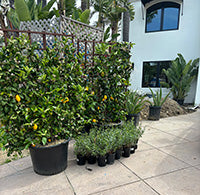










A Modern Experience
At Yardwork, we carefully curate thousands of plants, in all container sizes, to provide you with the best selection of the highest quality trees and plants at the best price, with the convenience of an online platform.
Uncompromised Quality
We choose only the finest specimens and hand select our plants just before delivery to ensure you receive the freshest and most robust specimens available for your landscape.
Industry Leading Warranties
Our 30, 90, and 365 extended warranties provide some of the best coverage to ensure our trees and plants thrive in your landscape.
Frequently Asked Questions
We're committed to changing everything about trees and plants - how they’re grown, how you shop for them, and how much they cost. We handle orders ourselves. No middlemen to get between us (or our prices) and you.
We're committed to changing everything about trees and plants - how they’re grown, how you shop for them, and how much they cost. We handle orders ourselves. No middlemen to get between us (or our prices) and you.
Delivery does not include unloading of trees and plants LARGER than a 24" box.
Trees and plants in smaller containers will be dropped curbside (usually on the driveway or near the front doorstep).
Delivery beyond a curbside drop will be charged extra.
Trees and plants that are sold in container sizes LARGER than a 24" box size will require equipment and/or enough manpower onsite to help unload from the truck.
Please reach out to our team PRIOR to placing your order to help coordinate.
Our team can provide unloading assistance with equipment for an extra fee as well.
Delivery does not include unloading of trees and plants LARGER than a 24" box.
Trees and plants in smaller containers will be dropped curbside (usually on the driveway or near the front doorstep).
Delivery beyond a curbside drop will be charged extra.
Trees and plants that are sold in container sizes LARGER than a 24" box size will require equipment and/or enough manpower onsite to help unload from the truck.
Please reach out to our team PRIOR to placing your order to help coordinate.
Our team can provide unloading assistance with equipment for an extra fee as well.
We ship locally within California within 7-10 days of your order being placed.
We ship nationally using carrier partners, based on order size. Our common order minimums for out of state shipping is $5,000.
Text or call 323-576-4159 for specific shipping details for your location.
We ship locally within California within 7-10 days of your order being placed.
We ship nationally using carrier partners, based on order size. Our common order minimums for out of state shipping is $5,000.
Text or call 323-576-4159 for specific shipping details for your location.
We are currently online only and don't have physical locations where you can view plants in person.
That's why we have photos direct from the growing grounds of the plants we will ship and we display pricing right in our store.
We do make sure to pick the very best trees and plants prior to shipping and make sure that they have gone through our multi-point inspection for health and structure.
We will always reach out prior to delivery if we find a quality issue or need to provide a substitute.
We are currently online only and don't have physical locations where you can view plants in person.
That's why we have photos direct from the growing grounds of the plants we will ship and we display pricing right in our store.
We do make sure to pick the very best trees and plants prior to shipping and make sure that they have gone through our multi-point inspection for health and structure.
We will always reach out prior to delivery if we find a quality issue or need to provide a substitute.
Plants vary greatly by type. Here is a rough idea of sizes based on containers that are direct from our growing grounds.
15 Gallon Shrub 3-4 Ft. Tall
15 Gallon Tree 5-6 Ft. Tall
24" Box Shrub 5-6 Ft. Tall
24" Box Tree 6-7 Ft. Tall
36" Box Shrub/Tree 7-9 Ft. Tall
48" Box Shrub/Tree 8-10 Ft. Tall
**Please note that we do not make guarantees of sizes. If you have questions or concerns, please call or text to request accurate sizing for the particular plant you're considering, prior to ordering.
Plants vary greatly by type. Here is a rough idea of sizes based on containers that are direct from our growing grounds.
15 Gallon Shrub 3-4 Ft. Tall
15 Gallon Tree 5-6 Ft. Tall
24" Box Shrub 5-6 Ft. Tall
24" Box Tree 6-7 Ft. Tall
36" Box Shrub/Tree 7-9 Ft. Tall
48" Box Shrub/Tree 8-10 Ft. Tall
**Please note that we do not make guarantees of sizes. If you have questions or concerns, please call or text to request accurate sizing for the particular plant you're considering, prior to ordering.
We offer a limited 30 day warranty for plants that are delivered and planted by someone else and a 90 day warranty for plants that we plant.
The limited warranty covers plants that die as a result of disease or fungus which was derived from our growing grounds or from root balls that were root bound.
The warranty does not cover damage due to watering, fertilizer, soils, or any other conditions beyond our control. Additionally, the warranty does not cover plants that are shipped out of the state of California or shipped into California from other states. Custom plant orders are also not covered under warranty. Plants must be planted within 24 hours after delivery to qualify.
We can assist you in recommending the right soils and fertilizers to help your plant thrive after you plant it.
Text or call 323-576-4159 for further warranty information.
We offer a limited 30 day warranty for plants that are delivered and planted by someone else and a 90 day warranty for plants that we plant.
The limited warranty covers plants that die as a result of disease or fungus which was derived from our growing grounds or from root balls that were root bound.
The warranty does not cover damage due to watering, fertilizer, soils, or any other conditions beyond our control. Additionally, the warranty does not cover plants that are shipped out of the state of California or shipped into California from other states. Custom plant orders are also not covered under warranty. Plants must be planted within 24 hours after delivery to qualify.
We can assist you in recommending the right soils and fertilizers to help your plant thrive after you plant it.
Text or call 323-576-4159 for further warranty information.
Our local delivery team covers most cities in California.
There are some exceptions, so please get in touch to confirm prior to ordering.
Additionally, we ship using semi trucks and trailers throughout the entire United States and even abroad for large orders over $5,000. Each shipment is custom, so please reach out to our team to coordinate.
Our local delivery team covers most cities in California.
There are some exceptions, so please get in touch to confirm prior to ordering.
Additionally, we ship using semi trucks and trailers throughout the entire United States and even abroad for large orders over $5,000. Each shipment is custom, so please reach out to our team to coordinate.