

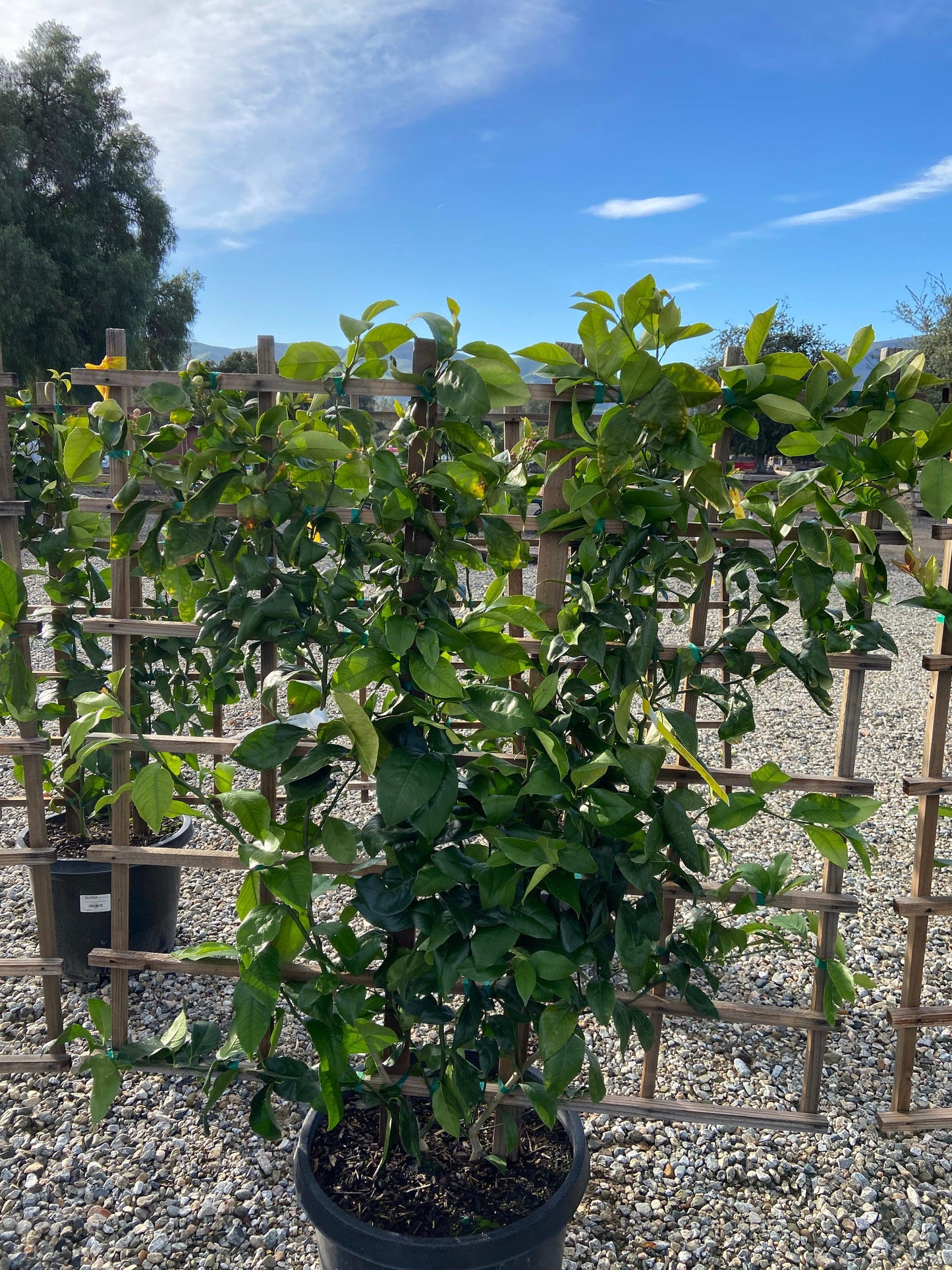
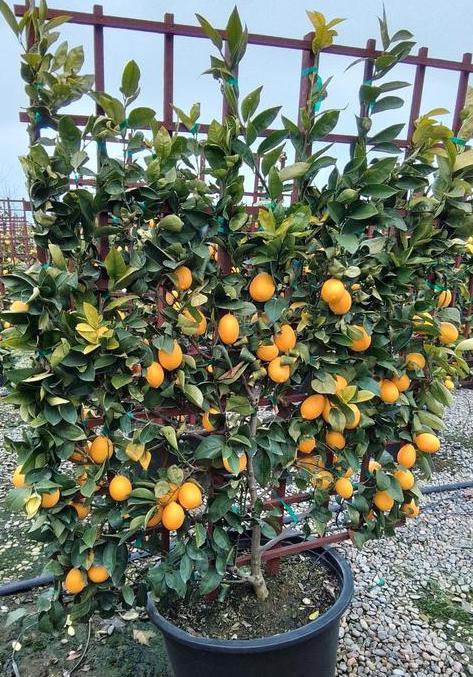
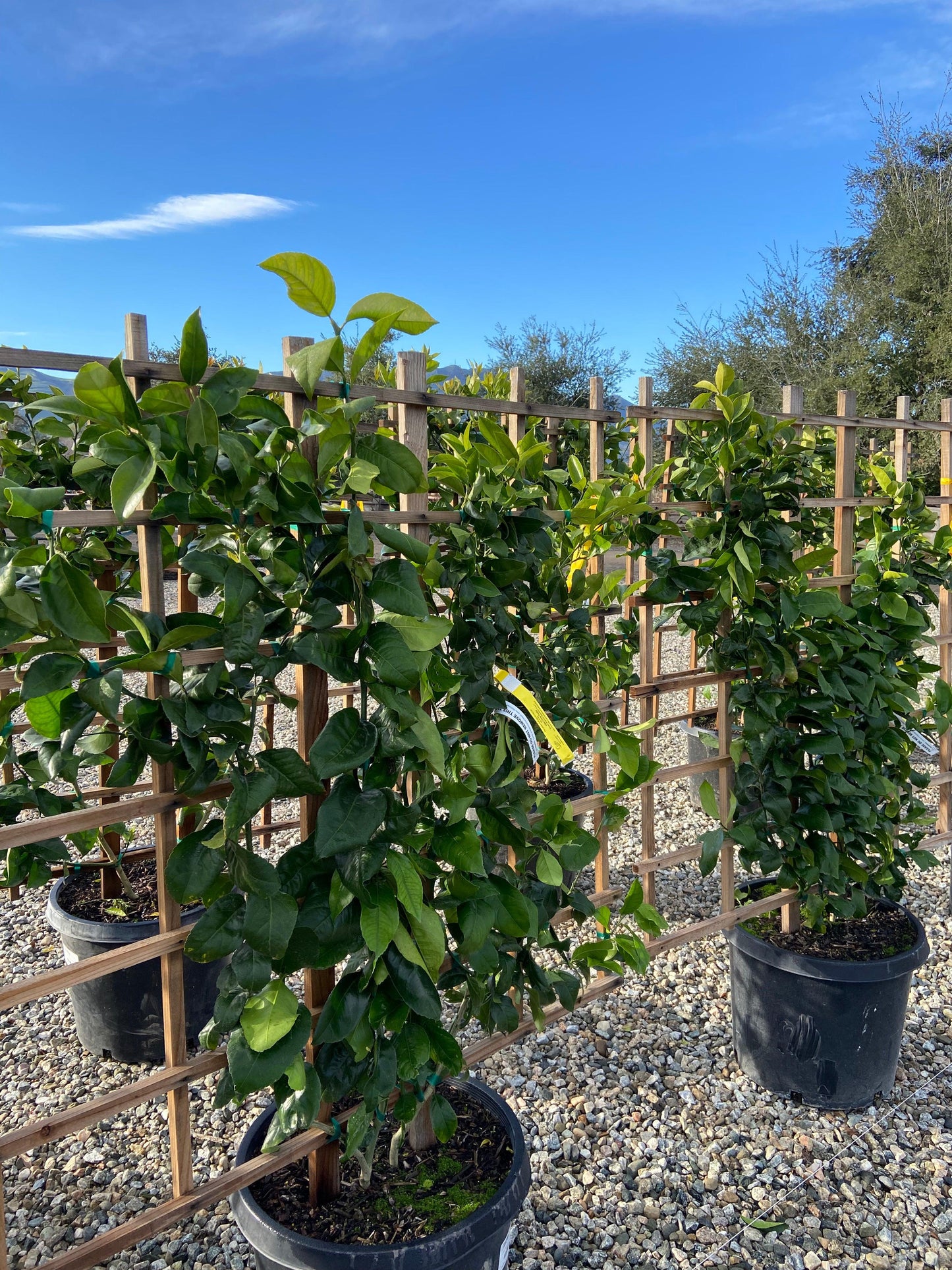


Lemon Tree Espalier
Regular price
$550.00
Size
Transform Your Small Space Into a Productive Citrus Garden
Lemon tree espalier lets you grow fresh lemons against a wall, fence, trellis, or balcony support instead of needing room for a full spreading citrus tree.
Espalier is a method of shaping trees by training their branches to grow along a predetermined structure, such as a wall or fence, which originated in ancient Rome and was popularized in Europe during the Middle Ages. This ancient technique turns a lemon tree into a flat, productive, decorative form that fits beautifully into small spaces and limited spaces.
Designed for gardeners who want more fruit, visual appeal, and easy access without sacrificing a large garden bed, lemon tree espalier is a creative way to combine citrus production with living art.
Why You’ll Love Lemon Tree Espalier
-
Space Efficiency – Grow citrus trees and other fruit trees in narrow side yards, small gardens, patios, and urban spaces where a standard tree would take up too much space.
-
Higher Yields – Espalier fruit trees receive better sunlight exposure, which can help the tree produce more fruit and improve overall fruit production.
-
Easy Harvesting – Lemons grow along reachable branches, giving you easy access for harvesting, pruning, pest checks, and maintenance.
-
Living Art – Espalier techniques can create stunning ornamental displays, transforming bare walls or fences into beautiful living art forms.
-
Year-Round Interest – Evergreen citrus foliage, fragrant blossoms, and golden fruit create structure, color, and form through winter, spring, summer, and fall.
Espalier fruit trees offer several advantages, including space-saving benefits, increased yield due to better sunlight exposure, visual appeal, and ease of maintenance for harvesting and pruning. Espaliered fruit trees can also serve as living fences or privacy screens, decorative accents on walls or trellises, and functional additions to patios or balconies.
What Makes Lemon Trees Perfect for Espalier
Most gardeners love the idea of growing fruit trees, but not everyone has room for apple trees, pears, plums, figs, orange trees, or full-size citrus, and some may prefer to start with citrus fruit trees for sale online rather than planting a full backyard orchard. A lemon tree solves that problem especially well when trained with the espalier method.
Lemon Tree Espalier is built around the natural strengths of citrus:
-
Flexible Branches – A young tree has flexible branches and young wood that can be gently angled into the desired shape using flexible ties.
-
Continuous Production – Meyer lemons and Eureka lemons can produce fruit over a long season when the tree receives strong sunlight, good watering, and regular pruning.
-
Compact Growth – Citrus trees, particularly Meyer lemons and Satsuma mandarins, are highly suitable for espalier due to their adaptability and compact growth.
-
Beginner-Friendly Form – For lemon trees, an informal fan shape is recommended because it allows easy angling of branches outward without forcing right angles.
-
Strong Visual Appeal – An espalier develops into a flat green structure with fragrant flowers and bright lemons displayed against a wall or fence.
Popular choices for espalier include apple, pear, and plum trees, as their hardy stems are easier to manage and prune. Fig trees, or Ficus carica, are also recommended for espalier due to their ability to adapt to the training process and their ornamental value. But for gardeners who want citrus in small spaces, lemon tree espalier is one of the most rewarding options.
How To Grow A Lemon Tree Espalier Successfully
-
Select and Plant
Start with a young tree that has a healthy central trunk, flexible branches, and strong roots. A straight central trunk makes it easier to create structure, whether you choose a fan, horizontal cordon, U shape, or another form. Lemon trees require at least 6 hours of direct sunlight daily, making south- or west-facing walls ideal for their placement. -
Train the Framework
Install a sturdy permanent wire system before training begins. Use horizontal wires, a trellis, bamboo supports, or another strong support structure to guide the branches. A strong trellis framework is essential for underpinning the branches of espaliers to prevent them from breaking under the weight of the fruit. -
Tie and Shape the Branches
Gently bend branches into the desired shape and loosely tie them to the wire. When training branches, use soft, flexible ties to prevent damage to the bark and check them regularly to avoid girdling as the branches grow. -
Prune for Fruit and Form
Branches that grow directly toward the wall or straight out toward the observer should be pruned away to maintain the flat shape. Remove water shoots, overcrowded stems, and unwanted new growth so sunlight reaches the fruiting wood. -
Maintain the Espalier
Espalier trees should be pruned regularly, typically three times a year, to encourage the formation of fruiting spurs. To maintain espaliered trees, annual pruning is essential to control size and encourage healthy growth.
Adventurous gardeners can choose from a range of designs for espaliered trees, including fan shapes, U shapes, and intricate diamond patterns, to create eye-catching features in their gardens.
Essential Requirements
-
Best Varieties: Improved Meyer, Eureka, and Lisbon lemon varieties are popular choices. Meyer lemons are compact and adaptable, while Eureka and Lisbon varieties are classic true lemons with strong production potential, and you can find many of these lemon trees for sale for home gardens and patios.
-
Other Suitable Plants: Citrus trees such as Meyer lemons and Satsuma mandarins are excellent for espalier. Apple trees, pears, plums, and fig trees are also widely used for espaliered fruit trees, including options like an apple tree 6-in-1 multi-grafted 3-tier espalier that combines several varieties on one structure.
-
Sunlight: Espaliered trees should receive 6-8 hours of sunlight daily to ensure optimal fruit production. Lemon trees require at least 6 hours of direct sunlight daily, with south- or west-facing walls preferred. A north-facing wall is usually not ideal unless the site is very bright.
-
Support Structure: A sturdy permanent wire system is needed to train the branches of an espaliered tree. Wires for espalier should be spaced 8 to 10 inches apart to allow essential airflow and prevent fungal diseases.
-
Spacing: Allow about 6-8 feet between trees and place the trunk about 18 inches from the wall for airflow, root space, and easier maintenance.
-
Tools Needed: Pruning shears, soft ties or flexible ties, horizontal wires, vine eyes or eye screws, wire tensioners, bamboo supports if needed, mulch, citrus fertilizer, and clean harvesting tools. Starting with a mature Meyer lemon tree for sale can also speed up your first harvest while you learn espalier techniques.
-
Water and Feeding: Espaliered citrus trees dry out faster and require deep watering and regular fertilization during the growing season.
-
Pest Control: Pest control is crucial for espaliered trees because dense foliage requires regular inspection for pests like aphids and spider mites.
-
Sunburn Protection: Espaliered trees are susceptible to sunburn; a diluted organic tree whitewash can be applied to exposed wood.
-
Best Timing: The ideal time for espaliering trees is during the dormant season when the tree is not actively growing, allowing it to recover from pruning and training without diverting energy into new growth. Late winter to early spring is the preferred time for major shaping, training, and structural pruning.
As a general rule, build the structure before the plant needs it. Once fruit sets, a weak support can sag, wires can loosen, and branches can break under the weight of lemons.
Who Should Try Lemon Tree Espalier
Ideal for:
-
Small space gardeners who want fresh citrus without needing a traditional orchard
-
Homeowners who want to create visual appeal along a blank wall, fence, or trellis
-
Urban gardeners maximizing patios, balconies, courtyards, and narrow garden beds
-
Anyone interested in growing fruit trees in a more controlled, decorative form
-
Gardeners who enjoy pruning, shaping, and long-term plant maintenance and may also appreciate structured evergreens like English laurel (Prunus laurocerasus) in other parts of the garden
Espalier fruit trees are particularly popular in small gardens and urban spaces, as they maximize limited space while providing aesthetic appeal and functionality, much like fruitless olive trees for elegant landscaping do in Mediterranean-style designs. In urban forestry conversations, educators and public tree advocates, including voices associated with groups such as the Arbor Day Foundation, often highlight how trained trees can make productive greenery possible where there is not a lot of open ground, and how selecting the right privacy trees and evergreen nursery options can transform small outdoor spaces. Eric North, a program manager known in urban forestry circles, has also helped bring attention to practical tree care and the value of well-managed trees in built environments, where dense screening plants like an English laurel hedge for privacy can play both functional and aesthetic roles.
If you want homegrown lemons, fragrant blossoms, and a structured garden feature in one plant, lemon tree espalier fits your needs.
Frequently Asked Questions
How long until my espaliered lemon tree produces fruit?
A grafted lemon tree can often produce fruit in about 2-4 years with proper care. Meyer lemons may fruit sooner in good conditions. Seed-grown citrus trees usually take much longer and may not produce the same quality fruit as the parent plant.
Can I espalier lemon trees in containers?
Yes. Espaliered citrus can work in containers if the pot is large, drains well, and has a strong support structure. Container-grown lemon trees need more careful watering, regular fertilizer, winter protection, and monitoring because roots dry out faster than trees planted in the ground.
What’s the best support structure for lemon tree espalier?
A permanent framework of horizontal wires attached to a wall, fence, or freestanding posts is the most reliable option. The support should be strong enough to hold branches, fruit, and new growth without sagging. Wire spacing of 8 to 10 inches helps maintain airflow and reduces fungal disease risk.
How much space do I need for an espaliered lemon tree?
Plan for about 6-8 feet of width, 18 inches of depth from the wall, and enough tree’s height to support the chosen form. A compact fan shape can fit small spaces well, while larger espalier trees need more wall or fence length.
Is lemon tree espalier difficult for beginners?
It requires patience, but it is achievable. The most common mistakes are tying branches too tightly, skipping pruning, allowing water shoots to dominate, choosing a shady wall, and using a weak support. Use flexible ties, prune regularly, maintain airflow, and keep the structure simple at first.
Start Your Lemon Tree Espalier Journey
Choose a lemon tree espalier and create a flat, fragrant, fruiting structure that saves space, improves access, and turns everyday growing into living art. With a young tree, strong wire support, steady pruning, and 6-8 hours of sunlight, even beginners can maintain the shape and enjoy the reward of fresh lemons at home.
Transform Your Small Space Into a Productive Citrus Garden
Lemon tree espalier lets you grow fresh lemons against a wall, fence, trellis, or balcony support instead of needing room for a full spreading citrus tree.
Espalier is a method of shaping trees by training their branches to grow along a predetermined structure, such as a wall or fence, which originated in ancient Rome and was popularized in Europe during the Middle Ages. This ancient technique turns a lemon tree into a flat, productive, decorative form that fits beautifully into small spaces and limited spaces.
Designed for gardeners who want more fruit, visual appeal, and easy access without sacrificing a large garden bed, lemon tree espalier is a creative way to combine citrus production with living art.
Why You’ll Love Lemon Tree Espalier
-
Space Efficiency – Grow citrus trees and other fruit trees in narrow side yards, small gardens, patios, and urban spaces where a standard tree would take up too much space.
-
Higher Yields – Espalier fruit trees receive better sunlight exposure, which can help the tree produce more fruit and improve overall fruit production.
-
Easy Harvesting – Lemons grow along reachable branches, giving you easy access for harvesting, pruning, pest checks, and maintenance.
-
Living Art – Espalier techniques can create stunning ornamental displays, transforming bare walls or fences into beautiful living art forms.
-
Year-Round Interest – Evergreen citrus foliage, fragrant blossoms, and golden fruit create structure, color, and form through winter, spring, summer, and fall.
Espalier fruit trees offer several advantages, including space-saving benefits, increased yield due to better sunlight exposure, visual appeal, and ease of maintenance for harvesting and pruning. Espaliered fruit trees can also serve as living fences or privacy screens, decorative accents on walls or trellises, and functional additions to patios or balconies.
What Makes Lemon Trees Perfect for Espalier
Most gardeners love the idea of growing fruit trees, but not everyone has room for apple trees, pears, plums, figs, orange trees, or full-size citrus, and some may prefer to start with citrus fruit trees for sale online rather than planting a full backyard orchard. A lemon tree solves that problem especially well when trained with the espalier method.
Lemon Tree Espalier is built around the natural strengths of citrus:
-
Flexible Branches – A young tree has flexible branches and young wood that can be gently angled into the desired shape using flexible ties.
-
Continuous Production – Meyer lemons and Eureka lemons can produce fruit over a long season when the tree receives strong sunlight, good watering, and regular pruning.
-
Compact Growth – Citrus trees, particularly Meyer lemons and Satsuma mandarins, are highly suitable for espalier due to their adaptability and compact growth.
-
Beginner-Friendly Form – For lemon trees, an informal fan shape is recommended because it allows easy angling of branches outward without forcing right angles.
-
Strong Visual Appeal – An espalier develops into a flat green structure with fragrant flowers and bright lemons displayed against a wall or fence.
Popular choices for espalier include apple, pear, and plum trees, as their hardy stems are easier to manage and prune. Fig trees, or Ficus carica, are also recommended for espalier due to their ability to adapt to the training process and their ornamental value. But for gardeners who want citrus in small spaces, lemon tree espalier is one of the most rewarding options.
How To Grow A Lemon Tree Espalier Successfully
-
Select and Plant
Start with a young tree that has a healthy central trunk, flexible branches, and strong roots. A straight central trunk makes it easier to create structure, whether you choose a fan, horizontal cordon, U shape, or another form. Lemon trees require at least 6 hours of direct sunlight daily, making south- or west-facing walls ideal for their placement. -
Train the Framework
Install a sturdy permanent wire system before training begins. Use horizontal wires, a trellis, bamboo supports, or another strong support structure to guide the branches. A strong trellis framework is essential for underpinning the branches of espaliers to prevent them from breaking under the weight of the fruit. -
Tie and Shape the Branches
Gently bend branches into the desired shape and loosely tie them to the wire. When training branches, use soft, flexible ties to prevent damage to the bark and check them regularly to avoid girdling as the branches grow. -
Prune for Fruit and Form
Branches that grow directly toward the wall or straight out toward the observer should be pruned away to maintain the flat shape. Remove water shoots, overcrowded stems, and unwanted new growth so sunlight reaches the fruiting wood. -
Maintain the Espalier
Espalier trees should be pruned regularly, typically three times a year, to encourage the formation of fruiting spurs. To maintain espaliered trees, annual pruning is essential to control size and encourage healthy growth.
Adventurous gardeners can choose from a range of designs for espaliered trees, including fan shapes, U shapes, and intricate diamond patterns, to create eye-catching features in their gardens.
Essential Requirements
-
Best Varieties: Improved Meyer, Eureka, and Lisbon lemon varieties are popular choices. Meyer lemons are compact and adaptable, while Eureka and Lisbon varieties are classic true lemons with strong production potential, and you can find many of these lemon trees for sale for home gardens and patios.
-
Other Suitable Plants: Citrus trees such as Meyer lemons and Satsuma mandarins are excellent for espalier. Apple trees, pears, plums, and fig trees are also widely used for espaliered fruit trees, including options like an apple tree 6-in-1 multi-grafted 3-tier espalier that combines several varieties on one structure.
-
Sunlight: Espaliered trees should receive 6-8 hours of sunlight daily to ensure optimal fruit production. Lemon trees require at least 6 hours of direct sunlight daily, with south- or west-facing walls preferred. A north-facing wall is usually not ideal unless the site is very bright.
-
Support Structure: A sturdy permanent wire system is needed to train the branches of an espaliered tree. Wires for espalier should be spaced 8 to 10 inches apart to allow essential airflow and prevent fungal diseases.
-
Spacing: Allow about 6-8 feet between trees and place the trunk about 18 inches from the wall for airflow, root space, and easier maintenance.
-
Tools Needed: Pruning shears, soft ties or flexible ties, horizontal wires, vine eyes or eye screws, wire tensioners, bamboo supports if needed, mulch, citrus fertilizer, and clean harvesting tools. Starting with a mature Meyer lemon tree for sale can also speed up your first harvest while you learn espalier techniques.
-
Water and Feeding: Espaliered citrus trees dry out faster and require deep watering and regular fertilization during the growing season.
-
Pest Control: Pest control is crucial for espaliered trees because dense foliage requires regular inspection for pests like aphids and spider mites.
-
Sunburn Protection: Espaliered trees are susceptible to sunburn; a diluted organic tree whitewash can be applied to exposed wood.
-
Best Timing: The ideal time for espaliering trees is during the dormant season when the tree is not actively growing, allowing it to recover from pruning and training without diverting energy into new growth. Late winter to early spring is the preferred time for major shaping, training, and structural pruning.
As a general rule, build the structure before the plant needs it. Once fruit sets, a weak support can sag, wires can loosen, and branches can break under the weight of lemons.
Who Should Try Lemon Tree Espalier
Ideal for:
-
Small space gardeners who want fresh citrus without needing a traditional orchard
-
Homeowners who want to create visual appeal along a blank wall, fence, or trellis
-
Urban gardeners maximizing patios, balconies, courtyards, and narrow garden beds
-
Anyone interested in growing fruit trees in a more controlled, decorative form
-
Gardeners who enjoy pruning, shaping, and long-term plant maintenance and may also appreciate structured evergreens like English laurel (Prunus laurocerasus) in other parts of the garden
Espalier fruit trees are particularly popular in small gardens and urban spaces, as they maximize limited space while providing aesthetic appeal and functionality, much like fruitless olive trees for elegant landscaping do in Mediterranean-style designs. In urban forestry conversations, educators and public tree advocates, including voices associated with groups such as the Arbor Day Foundation, often highlight how trained trees can make productive greenery possible where there is not a lot of open ground, and how selecting the right privacy trees and evergreen nursery options can transform small outdoor spaces. Eric North, a program manager known in urban forestry circles, has also helped bring attention to practical tree care and the value of well-managed trees in built environments, where dense screening plants like an English laurel hedge for privacy can play both functional and aesthetic roles.
If you want homegrown lemons, fragrant blossoms, and a structured garden feature in one plant, lemon tree espalier fits your needs.
Frequently Asked Questions
How long until my espaliered lemon tree produces fruit?
A grafted lemon tree can often produce fruit in about 2-4 years with proper care. Meyer lemons may fruit sooner in good conditions. Seed-grown citrus trees usually take much longer and may not produce the same quality fruit as the parent plant.
Can I espalier lemon trees in containers?
Yes. Espaliered citrus can work in containers if the pot is large, drains well, and has a strong support structure. Container-grown lemon trees need more careful watering, regular fertilizer, winter protection, and monitoring because roots dry out faster than trees planted in the ground.
What’s the best support structure for lemon tree espalier?
A permanent framework of horizontal wires attached to a wall, fence, or freestanding posts is the most reliable option. The support should be strong enough to hold branches, fruit, and new growth without sagging. Wire spacing of 8 to 10 inches helps maintain airflow and reduces fungal disease risk.
How much space do I need for an espaliered lemon tree?
Plan for about 6-8 feet of width, 18 inches of depth from the wall, and enough tree’s height to support the chosen form. A compact fan shape can fit small spaces well, while larger espalier trees need more wall or fence length.
Is lemon tree espalier difficult for beginners?
It requires patience, but it is achievable. The most common mistakes are tying branches too tightly, skipping pruning, allowing water shoots to dominate, choosing a shady wall, and using a weak support. Use flexible ties, prune regularly, maintain airflow, and keep the structure simple at first.
Start Your Lemon Tree Espalier Journey
Choose a lemon tree espalier and create a flat, fragrant, fruiting structure that saves space, improves access, and turns everyday growing into living art. With a young tree, strong wire support, steady pruning, and 6-8 hours of sunlight, even beginners can maintain the shape and enjoy the reward of fresh lemons at home.
Plants vary greatly by type and no guarantees are made on sizing.
However here is a rough idea of sizes based on containers that are direct from our growing grounds.
15 Gallon Shrub 3-4 Ft. Tall
15 Gallon Tree 5-6 Ft. Tall
24" Box Shrub 5-6 Ft. Tall
24" Box Tree 6-7 Ft. Tall
36" Box Tree 8-10 Ft. Tall
48" Box Tree 10-12 Ft. Tall
Please note: Citrus and California Native plants such as Manzanita are smaller than traditional sizing.
Please contact us to confirm sizing of items before purchasing if this is a concern.
Plants vary greatly by type and no guarantees are made on sizing.
However here is a rough idea of sizes based on containers that are direct from our growing grounds.
15 Gallon Shrub 3-4 Ft. Tall
15 Gallon Tree 5-6 Ft. Tall
24" Box Shrub 5-6 Ft. Tall
24" Box Tree 6-7 Ft. Tall
36" Box Tree 8-10 Ft. Tall
48" Box Tree 10-12 Ft. Tall
Please note: Citrus and California Native plants such as Manzanita are smaller than traditional sizing.
Please contact us to confirm sizing of items before purchasing if this is a concern.
Delivery does not include unloading of trees and plants larger than a 24" box.
Trees and plants in smaller containers will be dropped curbside.
Delivery beyond a curbside drop will be charged extra.
Trees and plants that are sold in container sizes larger than a 24" box size will require equipment and an operator onsite to help unload from the truck.
Please reach out to our team PRIOR to placing your order to coordinate.
Our team can provide unloading assistance with equipment for an extra fee.
Delivery does not include unloading of trees and plants larger than a 24" box.
Trees and plants in smaller containers will be dropped curbside.
Delivery beyond a curbside drop will be charged extra.
Trees and plants that are sold in container sizes larger than a 24" box size will require equipment and an operator onsite to help unload from the truck.
Please reach out to our team PRIOR to placing your order to coordinate.
Our team can provide unloading assistance with equipment for an extra fee.
You may also like...


Lemon Tree Espalier
Regular price
$550.00
Size
Transform Your Small Space Into a Productive Citrus Garden
Lemon tree espalier lets you grow fresh lemons against a wall, fence, trellis, or balcony support instead of needing room for a full spreading citrus tree.
Espalier is a method of shaping trees by training their branches to grow along a predetermined structure, such as a wall or fence, which originated in ancient Rome and was popularized in Europe during the Middle Ages. This ancient technique turns a lemon tree into a flat, productive, decorative form that fits beautifully into small spaces and limited spaces.
Designed for gardeners who want more fruit, visual appeal, and easy access without sacrificing a large garden bed, lemon tree espalier is a creative way to combine citrus production with living art.
Why You’ll Love Lemon Tree Espalier
-
Space Efficiency – Grow citrus trees and other fruit trees in narrow side yards, small gardens, patios, and urban spaces where a standard tree would take up too much space.
-
Higher Yields – Espalier fruit trees receive better sunlight exposure, which can help the tree produce more fruit and improve overall fruit production.
-
Easy Harvesting – Lemons grow along reachable branches, giving you easy access for harvesting, pruning, pest checks, and maintenance.
-
Living Art – Espalier techniques can create stunning ornamental displays, transforming bare walls or fences into beautiful living art forms.
-
Year-Round Interest – Evergreen citrus foliage, fragrant blossoms, and golden fruit create structure, color, and form through winter, spring, summer, and fall.
Espalier fruit trees offer several advantages, including space-saving benefits, increased yield due to better sunlight exposure, visual appeal, and ease of maintenance for harvesting and pruning. Espaliered fruit trees can also serve as living fences or privacy screens, decorative accents on walls or trellises, and functional additions to patios or balconies.
What Makes Lemon Trees Perfect for Espalier
Most gardeners love the idea of growing fruit trees, but not everyone has room for apple trees, pears, plums, figs, orange trees, or full-size citrus, and some may prefer to start with citrus fruit trees for sale online rather than planting a full backyard orchard. A lemon tree solves that problem especially well when trained with the espalier method.
Lemon Tree Espalier is built around the natural strengths of citrus:
-
Flexible Branches – A young tree has flexible branches and young wood that can be gently angled into the desired shape using flexible ties.
-
Continuous Production – Meyer lemons and Eureka lemons can produce fruit over a long season when the tree receives strong sunlight, good watering, and regular pruning.
-
Compact Growth – Citrus trees, particularly Meyer lemons and Satsuma mandarins, are highly suitable for espalier due to their adaptability and compact growth.
-
Beginner-Friendly Form – For lemon trees, an informal fan shape is recommended because it allows easy angling of branches outward without forcing right angles.
-
Strong Visual Appeal – An espalier develops into a flat green structure with fragrant flowers and bright lemons displayed against a wall or fence.
Popular choices for espalier include apple, pear, and plum trees, as their hardy stems are easier to manage and prune. Fig trees, or Ficus carica, are also recommended for espalier due to their ability to adapt to the training process and their ornamental value. But for gardeners who want citrus in small spaces, lemon tree espalier is one of the most rewarding options.
How To Grow A Lemon Tree Espalier Successfully
-
Select and Plant
Start with a young tree that has a healthy central trunk, flexible branches, and strong roots. A straight central trunk makes it easier to create structure, whether you choose a fan, horizontal cordon, U shape, or another form. Lemon trees require at least 6 hours of direct sunlight daily, making south- or west-facing walls ideal for their placement. -
Train the Framework
Install a sturdy permanent wire system before training begins. Use horizontal wires, a trellis, bamboo supports, or another strong support structure to guide the branches. A strong trellis framework is essential for underpinning the branches of espaliers to prevent them from breaking under the weight of the fruit. -
Tie and Shape the Branches
Gently bend branches into the desired shape and loosely tie them to the wire. When training branches, use soft, flexible ties to prevent damage to the bark and check them regularly to avoid girdling as the branches grow. -
Prune for Fruit and Form
Branches that grow directly toward the wall or straight out toward the observer should be pruned away to maintain the flat shape. Remove water shoots, overcrowded stems, and unwanted new growth so sunlight reaches the fruiting wood. -
Maintain the Espalier
Espalier trees should be pruned regularly, typically three times a year, to encourage the formation of fruiting spurs. To maintain espaliered trees, annual pruning is essential to control size and encourage healthy growth.
Adventurous gardeners can choose from a range of designs for espaliered trees, including fan shapes, U shapes, and intricate diamond patterns, to create eye-catching features in their gardens.
Essential Requirements
-
Best Varieties: Improved Meyer, Eureka, and Lisbon lemon varieties are popular choices. Meyer lemons are compact and adaptable, while Eureka and Lisbon varieties are classic true lemons with strong production potential, and you can find many of these lemon trees for sale for home gardens and patios.
-
Other Suitable Plants: Citrus trees such as Meyer lemons and Satsuma mandarins are excellent for espalier. Apple trees, pears, plums, and fig trees are also widely used for espaliered fruit trees, including options like an apple tree 6-in-1 multi-grafted 3-tier espalier that combines several varieties on one structure.
-
Sunlight: Espaliered trees should receive 6-8 hours of sunlight daily to ensure optimal fruit production. Lemon trees require at least 6 hours of direct sunlight daily, with south- or west-facing walls preferred. A north-facing wall is usually not ideal unless the site is very bright.
-
Support Structure: A sturdy permanent wire system is needed to train the branches of an espaliered tree. Wires for espalier should be spaced 8 to 10 inches apart to allow essential airflow and prevent fungal diseases.
-
Spacing: Allow about 6-8 feet between trees and place the trunk about 18 inches from the wall for airflow, root space, and easier maintenance.
-
Tools Needed: Pruning shears, soft ties or flexible ties, horizontal wires, vine eyes or eye screws, wire tensioners, bamboo supports if needed, mulch, citrus fertilizer, and clean harvesting tools. Starting with a mature Meyer lemon tree for sale can also speed up your first harvest while you learn espalier techniques.
-
Water and Feeding: Espaliered citrus trees dry out faster and require deep watering and regular fertilization during the growing season.
-
Pest Control: Pest control is crucial for espaliered trees because dense foliage requires regular inspection for pests like aphids and spider mites.
-
Sunburn Protection: Espaliered trees are susceptible to sunburn; a diluted organic tree whitewash can be applied to exposed wood.
-
Best Timing: The ideal time for espaliering trees is during the dormant season when the tree is not actively growing, allowing it to recover from pruning and training without diverting energy into new growth. Late winter to early spring is the preferred time for major shaping, training, and structural pruning.
As a general rule, build the structure before the plant needs it. Once fruit sets, a weak support can sag, wires can loosen, and branches can break under the weight of lemons.
Who Should Try Lemon Tree Espalier
Ideal for:
-
Small space gardeners who want fresh citrus without needing a traditional orchard
-
Homeowners who want to create visual appeal along a blank wall, fence, or trellis
-
Urban gardeners maximizing patios, balconies, courtyards, and narrow garden beds
-
Anyone interested in growing fruit trees in a more controlled, decorative form
-
Gardeners who enjoy pruning, shaping, and long-term plant maintenance and may also appreciate structured evergreens like English laurel (Prunus laurocerasus) in other parts of the garden
Espalier fruit trees are particularly popular in small gardens and urban spaces, as they maximize limited space while providing aesthetic appeal and functionality, much like fruitless olive trees for elegant landscaping do in Mediterranean-style designs. In urban forestry conversations, educators and public tree advocates, including voices associated with groups such as the Arbor Day Foundation, often highlight how trained trees can make productive greenery possible where there is not a lot of open ground, and how selecting the right privacy trees and evergreen nursery options can transform small outdoor spaces. Eric North, a program manager known in urban forestry circles, has also helped bring attention to practical tree care and the value of well-managed trees in built environments, where dense screening plants like an English laurel hedge for privacy can play both functional and aesthetic roles.
If you want homegrown lemons, fragrant blossoms, and a structured garden feature in one plant, lemon tree espalier fits your needs.
Frequently Asked Questions
How long until my espaliered lemon tree produces fruit?
A grafted lemon tree can often produce fruit in about 2-4 years with proper care. Meyer lemons may fruit sooner in good conditions. Seed-grown citrus trees usually take much longer and may not produce the same quality fruit as the parent plant.
Can I espalier lemon trees in containers?
Yes. Espaliered citrus can work in containers if the pot is large, drains well, and has a strong support structure. Container-grown lemon trees need more careful watering, regular fertilizer, winter protection, and monitoring because roots dry out faster than trees planted in the ground.
What’s the best support structure for lemon tree espalier?
A permanent framework of horizontal wires attached to a wall, fence, or freestanding posts is the most reliable option. The support should be strong enough to hold branches, fruit, and new growth without sagging. Wire spacing of 8 to 10 inches helps maintain airflow and reduces fungal disease risk.
How much space do I need for an espaliered lemon tree?
Plan for about 6-8 feet of width, 18 inches of depth from the wall, and enough tree’s height to support the chosen form. A compact fan shape can fit small spaces well, while larger espalier trees need more wall or fence length.
Is lemon tree espalier difficult for beginners?
It requires patience, but it is achievable. The most common mistakes are tying branches too tightly, skipping pruning, allowing water shoots to dominate, choosing a shady wall, and using a weak support. Use flexible ties, prune regularly, maintain airflow, and keep the structure simple at first.
Start Your Lemon Tree Espalier Journey
Choose a lemon tree espalier and create a flat, fragrant, fruiting structure that saves space, improves access, and turns everyday growing into living art. With a young tree, strong wire support, steady pruning, and 6-8 hours of sunlight, even beginners can maintain the shape and enjoy the reward of fresh lemons at home.
Transform Your Small Space Into a Productive Citrus Garden
Lemon tree espalier lets you grow fresh lemons against a wall, fence, trellis, or balcony support instead of needing room for a full spreading citrus tree.
Espalier is a method of shaping trees by training their branches to grow along a predetermined structure, such as a wall or fence, which originated in ancient Rome and was popularized in Europe during the Middle Ages. This ancient technique turns a lemon tree into a flat, productive, decorative form that fits beautifully into small spaces and limited spaces.
Designed for gardeners who want more fruit, visual appeal, and easy access without sacrificing a large garden bed, lemon tree espalier is a creative way to combine citrus production with living art.
Why You’ll Love Lemon Tree Espalier
-
Space Efficiency – Grow citrus trees and other fruit trees in narrow side yards, small gardens, patios, and urban spaces where a standard tree would take up too much space.
-
Higher Yields – Espalier fruit trees receive better sunlight exposure, which can help the tree produce more fruit and improve overall fruit production.
-
Easy Harvesting – Lemons grow along reachable branches, giving you easy access for harvesting, pruning, pest checks, and maintenance.
-
Living Art – Espalier techniques can create stunning ornamental displays, transforming bare walls or fences into beautiful living art forms.
-
Year-Round Interest – Evergreen citrus foliage, fragrant blossoms, and golden fruit create structure, color, and form through winter, spring, summer, and fall.
Espalier fruit trees offer several advantages, including space-saving benefits, increased yield due to better sunlight exposure, visual appeal, and ease of maintenance for harvesting and pruning. Espaliered fruit trees can also serve as living fences or privacy screens, decorative accents on walls or trellises, and functional additions to patios or balconies.
What Makes Lemon Trees Perfect for Espalier
Most gardeners love the idea of growing fruit trees, but not everyone has room for apple trees, pears, plums, figs, orange trees, or full-size citrus, and some may prefer to start with citrus fruit trees for sale online rather than planting a full backyard orchard. A lemon tree solves that problem especially well when trained with the espalier method.
Lemon Tree Espalier is built around the natural strengths of citrus:
-
Flexible Branches – A young tree has flexible branches and young wood that can be gently angled into the desired shape using flexible ties.
-
Continuous Production – Meyer lemons and Eureka lemons can produce fruit over a long season when the tree receives strong sunlight, good watering, and regular pruning.
-
Compact Growth – Citrus trees, particularly Meyer lemons and Satsuma mandarins, are highly suitable for espalier due to their adaptability and compact growth.
-
Beginner-Friendly Form – For lemon trees, an informal fan shape is recommended because it allows easy angling of branches outward without forcing right angles.
-
Strong Visual Appeal – An espalier develops into a flat green structure with fragrant flowers and bright lemons displayed against a wall or fence.
Popular choices for espalier include apple, pear, and plum trees, as their hardy stems are easier to manage and prune. Fig trees, or Ficus carica, are also recommended for espalier due to their ability to adapt to the training process and their ornamental value. But for gardeners who want citrus in small spaces, lemon tree espalier is one of the most rewarding options.
How To Grow A Lemon Tree Espalier Successfully
-
Select and Plant
Start with a young tree that has a healthy central trunk, flexible branches, and strong roots. A straight central trunk makes it easier to create structure, whether you choose a fan, horizontal cordon, U shape, or another form. Lemon trees require at least 6 hours of direct sunlight daily, making south- or west-facing walls ideal for their placement. -
Train the Framework
Install a sturdy permanent wire system before training begins. Use horizontal wires, a trellis, bamboo supports, or another strong support structure to guide the branches. A strong trellis framework is essential for underpinning the branches of espaliers to prevent them from breaking under the weight of the fruit. -
Tie and Shape the Branches
Gently bend branches into the desired shape and loosely tie them to the wire. When training branches, use soft, flexible ties to prevent damage to the bark and check them regularly to avoid girdling as the branches grow. -
Prune for Fruit and Form
Branches that grow directly toward the wall or straight out toward the observer should be pruned away to maintain the flat shape. Remove water shoots, overcrowded stems, and unwanted new growth so sunlight reaches the fruiting wood. -
Maintain the Espalier
Espalier trees should be pruned regularly, typically three times a year, to encourage the formation of fruiting spurs. To maintain espaliered trees, annual pruning is essential to control size and encourage healthy growth.
Adventurous gardeners can choose from a range of designs for espaliered trees, including fan shapes, U shapes, and intricate diamond patterns, to create eye-catching features in their gardens.
Essential Requirements
-
Best Varieties: Improved Meyer, Eureka, and Lisbon lemon varieties are popular choices. Meyer lemons are compact and adaptable, while Eureka and Lisbon varieties are classic true lemons with strong production potential, and you can find many of these lemon trees for sale for home gardens and patios.
-
Other Suitable Plants: Citrus trees such as Meyer lemons and Satsuma mandarins are excellent for espalier. Apple trees, pears, plums, and fig trees are also widely used for espaliered fruit trees, including options like an apple tree 6-in-1 multi-grafted 3-tier espalier that combines several varieties on one structure.
-
Sunlight: Espaliered trees should receive 6-8 hours of sunlight daily to ensure optimal fruit production. Lemon trees require at least 6 hours of direct sunlight daily, with south- or west-facing walls preferred. A north-facing wall is usually not ideal unless the site is very bright.
-
Support Structure: A sturdy permanent wire system is needed to train the branches of an espaliered tree. Wires for espalier should be spaced 8 to 10 inches apart to allow essential airflow and prevent fungal diseases.
-
Spacing: Allow about 6-8 feet between trees and place the trunk about 18 inches from the wall for airflow, root space, and easier maintenance.
-
Tools Needed: Pruning shears, soft ties or flexible ties, horizontal wires, vine eyes or eye screws, wire tensioners, bamboo supports if needed, mulch, citrus fertilizer, and clean harvesting tools. Starting with a mature Meyer lemon tree for sale can also speed up your first harvest while you learn espalier techniques.
-
Water and Feeding: Espaliered citrus trees dry out faster and require deep watering and regular fertilization during the growing season.
-
Pest Control: Pest control is crucial for espaliered trees because dense foliage requires regular inspection for pests like aphids and spider mites.
-
Sunburn Protection: Espaliered trees are susceptible to sunburn; a diluted organic tree whitewash can be applied to exposed wood.
-
Best Timing: The ideal time for espaliering trees is during the dormant season when the tree is not actively growing, allowing it to recover from pruning and training without diverting energy into new growth. Late winter to early spring is the preferred time for major shaping, training, and structural pruning.
As a general rule, build the structure before the plant needs it. Once fruit sets, a weak support can sag, wires can loosen, and branches can break under the weight of lemons.
Who Should Try Lemon Tree Espalier
Ideal for:
-
Small space gardeners who want fresh citrus without needing a traditional orchard
-
Homeowners who want to create visual appeal along a blank wall, fence, or trellis
-
Urban gardeners maximizing patios, balconies, courtyards, and narrow garden beds
-
Anyone interested in growing fruit trees in a more controlled, decorative form
-
Gardeners who enjoy pruning, shaping, and long-term plant maintenance and may also appreciate structured evergreens like English laurel (Prunus laurocerasus) in other parts of the garden
Espalier fruit trees are particularly popular in small gardens and urban spaces, as they maximize limited space while providing aesthetic appeal and functionality, much like fruitless olive trees for elegant landscaping do in Mediterranean-style designs. In urban forestry conversations, educators and public tree advocates, including voices associated with groups such as the Arbor Day Foundation, often highlight how trained trees can make productive greenery possible where there is not a lot of open ground, and how selecting the right privacy trees and evergreen nursery options can transform small outdoor spaces. Eric North, a program manager known in urban forestry circles, has also helped bring attention to practical tree care and the value of well-managed trees in built environments, where dense screening plants like an English laurel hedge for privacy can play both functional and aesthetic roles.
If you want homegrown lemons, fragrant blossoms, and a structured garden feature in one plant, lemon tree espalier fits your needs.
Frequently Asked Questions
How long until my espaliered lemon tree produces fruit?
A grafted lemon tree can often produce fruit in about 2-4 years with proper care. Meyer lemons may fruit sooner in good conditions. Seed-grown citrus trees usually take much longer and may not produce the same quality fruit as the parent plant.
Can I espalier lemon trees in containers?
Yes. Espaliered citrus can work in containers if the pot is large, drains well, and has a strong support structure. Container-grown lemon trees need more careful watering, regular fertilizer, winter protection, and monitoring because roots dry out faster than trees planted in the ground.
What’s the best support structure for lemon tree espalier?
A permanent framework of horizontal wires attached to a wall, fence, or freestanding posts is the most reliable option. The support should be strong enough to hold branches, fruit, and new growth without sagging. Wire spacing of 8 to 10 inches helps maintain airflow and reduces fungal disease risk.
How much space do I need for an espaliered lemon tree?
Plan for about 6-8 feet of width, 18 inches of depth from the wall, and enough tree’s height to support the chosen form. A compact fan shape can fit small spaces well, while larger espalier trees need more wall or fence length.
Is lemon tree espalier difficult for beginners?
It requires patience, but it is achievable. The most common mistakes are tying branches too tightly, skipping pruning, allowing water shoots to dominate, choosing a shady wall, and using a weak support. Use flexible ties, prune regularly, maintain airflow, and keep the structure simple at first.
Start Your Lemon Tree Espalier Journey
Choose a lemon tree espalier and create a flat, fragrant, fruiting structure that saves space, improves access, and turns everyday growing into living art. With a young tree, strong wire support, steady pruning, and 6-8 hours of sunlight, even beginners can maintain the shape and enjoy the reward of fresh lemons at home.
Plants vary greatly by type and no guarantees are made on sizing.
However here is a rough idea of sizes based on containers that are direct from our growing grounds.
15 Gallon Shrub 3-4 Ft. Tall
15 Gallon Tree 5-6 Ft. Tall
24" Box Shrub 5-6 Ft. Tall
24" Box Tree 6-7 Ft. Tall
36" Box Tree 8-10 Ft. Tall
48" Box Tree 10-12 Ft. Tall
Please note: Citrus and California Native plants such as Manzanita are smaller than traditional sizing.
Please contact us to confirm sizing of items before purchasing if this is a concern.
Plants vary greatly by type and no guarantees are made on sizing.
However here is a rough idea of sizes based on containers that are direct from our growing grounds.
15 Gallon Shrub 3-4 Ft. Tall
15 Gallon Tree 5-6 Ft. Tall
24" Box Shrub 5-6 Ft. Tall
24" Box Tree 6-7 Ft. Tall
36" Box Tree 8-10 Ft. Tall
48" Box Tree 10-12 Ft. Tall
Please note: Citrus and California Native plants such as Manzanita are smaller than traditional sizing.
Please contact us to confirm sizing of items before purchasing if this is a concern.
Delivery does not include unloading of trees and plants larger than a 24" box.
Trees and plants in smaller containers will be dropped curbside.
Delivery beyond a curbside drop will be charged extra.
Trees and plants that are sold in container sizes larger than a 24" box size will require equipment and an operator onsite to help unload from the truck.
Please reach out to our team PRIOR to placing your order to coordinate.
Our team can provide unloading assistance with equipment for an extra fee.
Delivery does not include unloading of trees and plants larger than a 24" box.
Trees and plants in smaller containers will be dropped curbside.
Delivery beyond a curbside drop will be charged extra.
Trees and plants that are sold in container sizes larger than a 24" box size will require equipment and an operator onsite to help unload from the truck.
Please reach out to our team PRIOR to placing your order to coordinate.
Our team can provide unloading assistance with equipment for an extra fee.
Recommended For You















Pairs Well With













You May Also Like












Thousands of Healthy Plants Delivered


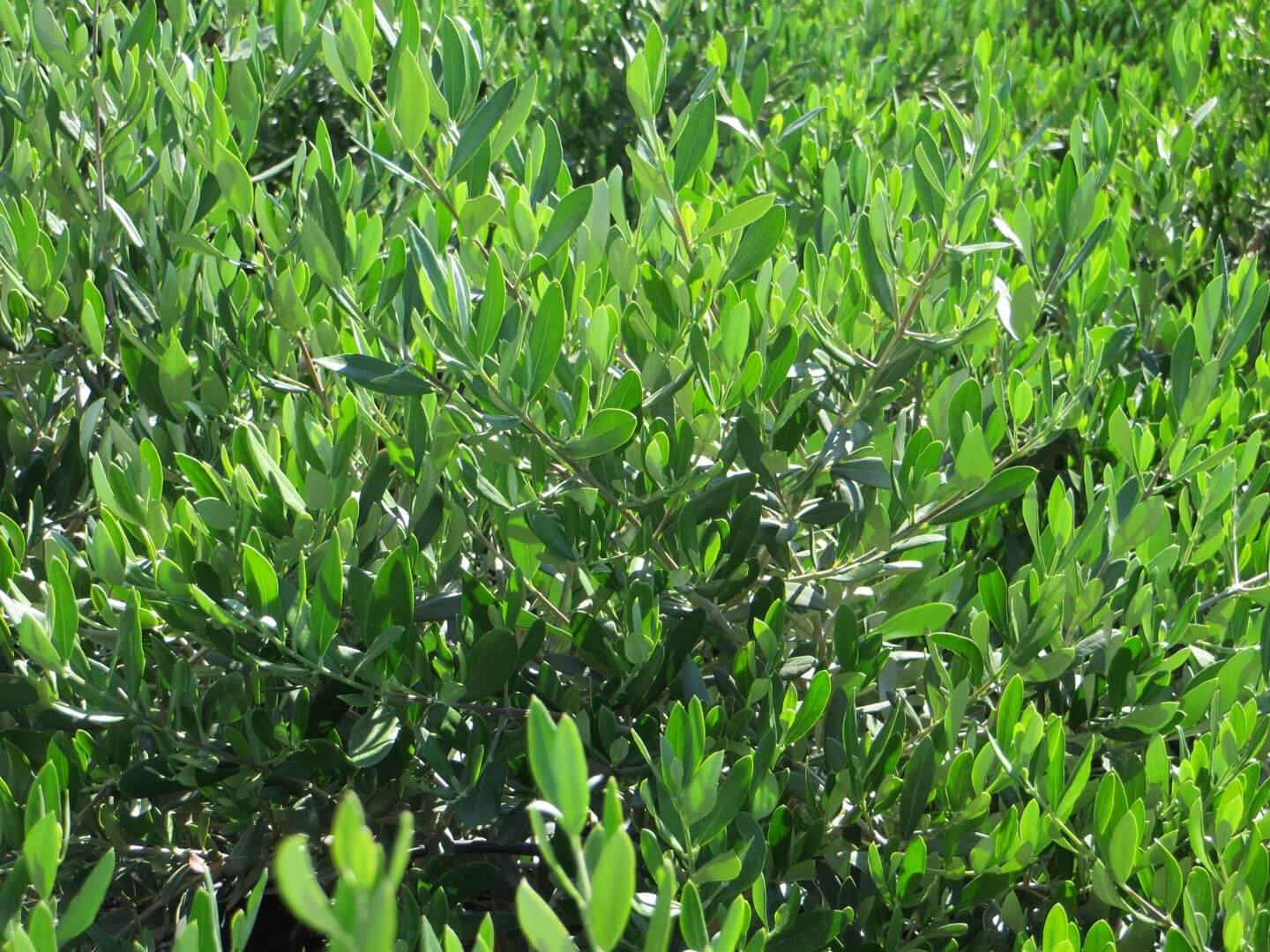
Yardwork was so great to work with. First they had the Swan Hill olive trees that we had been searching for, we had contacted several other nurseries without any luck previously. Then they answered all of our questions in a timely matter prior to ordering and finally delivered within a few days of placing it. Their staff is incredibly knowledgeable; they delivered and planted our trees with expertise to ensure that they would do well in our yard. We would definitely work with them again for future projects.

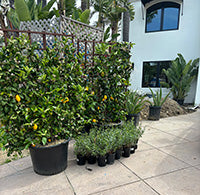










A Modern Experience
At Yardwork, we carefully curate thousands of plants, in all container sizes, to provide you with the best selection of the highest quality trees and plants at the best price, with the convenience of an online platform.
Uncompromised Quality
We choose only the finest specimens and hand select our plants just before delivery to ensure you receive the freshest and most robust specimens available for your landscape.
Industry Leading Warranties
Our 30, 90, and 365 extended warranties provide some of the best coverage to ensure our trees and plants thrive in your landscape.
Frequently Asked Questions
We're committed to changing everything about trees and plants - how they’re grown, how you shop for them, and how much they cost. We handle orders ourselves. No middlemen to get between us (or our prices) and you.
We're committed to changing everything about trees and plants - how they’re grown, how you shop for them, and how much they cost. We handle orders ourselves. No middlemen to get between us (or our prices) and you.
Delivery does not include unloading of trees and plants LARGER than a 24" box.
Trees and plants in smaller containers will be dropped curbside (usually on the driveway or near the front doorstep).
Delivery beyond a curbside drop will be charged extra.
Trees and plants that are sold in container sizes LARGER than a 24" box size will require equipment and/or enough manpower onsite to help unload from the truck.
Please reach out to our team PRIOR to placing your order to help coordinate.
Our team can provide unloading assistance with equipment for an extra fee as well.
Delivery does not include unloading of trees and plants LARGER than a 24" box.
Trees and plants in smaller containers will be dropped curbside (usually on the driveway or near the front doorstep).
Delivery beyond a curbside drop will be charged extra.
Trees and plants that are sold in container sizes LARGER than a 24" box size will require equipment and/or enough manpower onsite to help unload from the truck.
Please reach out to our team PRIOR to placing your order to help coordinate.
Our team can provide unloading assistance with equipment for an extra fee as well.
We ship locally within California within 7-10 days of your order being placed.
We ship nationally using carrier partners, based on order size. Our common order minimums for out of state shipping is $5,000.
Text or call 323-576-4159 for specific shipping details for your location.
We ship locally within California within 7-10 days of your order being placed.
We ship nationally using carrier partners, based on order size. Our common order minimums for out of state shipping is $5,000.
Text or call 323-576-4159 for specific shipping details for your location.
We are currently online only and don't have physical locations where you can view plants in person.
That's why we have photos direct from the growing grounds of the plants we will ship and we display pricing right in our store.
We do make sure to pick the very best trees and plants prior to shipping and make sure that they have gone through our multi-point inspection for health and structure.
We will always reach out prior to delivery if we find a quality issue or need to provide a substitute.
We are currently online only and don't have physical locations where you can view plants in person.
That's why we have photos direct from the growing grounds of the plants we will ship and we display pricing right in our store.
We do make sure to pick the very best trees and plants prior to shipping and make sure that they have gone through our multi-point inspection for health and structure.
We will always reach out prior to delivery if we find a quality issue or need to provide a substitute.
Plants vary greatly by type. Here is a rough idea of sizes based on containers that are direct from our growing grounds.
15 Gallon Shrub 3-4 Ft. Tall
15 Gallon Tree 5-6 Ft. Tall
24" Box Shrub 5-6 Ft. Tall
24" Box Tree 6-7 Ft. Tall
36" Box Shrub/Tree 7-9 Ft. Tall
48" Box Shrub/Tree 8-10 Ft. Tall
**Please note that we do not make guarantees of sizes. If you have questions or concerns, please call or text to request accurate sizing for the particular plant you're considering, prior to ordering.
Plants vary greatly by type. Here is a rough idea of sizes based on containers that are direct from our growing grounds.
15 Gallon Shrub 3-4 Ft. Tall
15 Gallon Tree 5-6 Ft. Tall
24" Box Shrub 5-6 Ft. Tall
24" Box Tree 6-7 Ft. Tall
36" Box Shrub/Tree 7-9 Ft. Tall
48" Box Shrub/Tree 8-10 Ft. Tall
**Please note that we do not make guarantees of sizes. If you have questions or concerns, please call or text to request accurate sizing for the particular plant you're considering, prior to ordering.
We offer a limited 30 day warranty for plants that are delivered and planted by someone else and a 90 day warranty for plants that we plant.
The limited warranty covers plants that die as a result of disease or fungus which was derived from our growing grounds or from root balls that were root bound.
The warranty does not cover damage due to watering, fertilizer, soils, or any other conditions beyond our control. Additionally, the warranty does not cover plants that are shipped out of the state of California or shipped into California from other states. Custom plant orders are also not covered under warranty. Plants must be planted within 24 hours after delivery to qualify.
We can assist you in recommending the right soils and fertilizers to help your plant thrive after you plant it.
Text or call 323-576-4159 for further warranty information.
We offer a limited 30 day warranty for plants that are delivered and planted by someone else and a 90 day warranty for plants that we plant.
The limited warranty covers plants that die as a result of disease or fungus which was derived from our growing grounds or from root balls that were root bound.
The warranty does not cover damage due to watering, fertilizer, soils, or any other conditions beyond our control. Additionally, the warranty does not cover plants that are shipped out of the state of California or shipped into California from other states. Custom plant orders are also not covered under warranty. Plants must be planted within 24 hours after delivery to qualify.
We can assist you in recommending the right soils and fertilizers to help your plant thrive after you plant it.
Text or call 323-576-4159 for further warranty information.
Our local delivery team covers most cities in California.
There are some exceptions, so please get in touch to confirm prior to ordering.
Additionally, we ship using semi trucks and trailers throughout the entire United States and even abroad for large orders over $5,000. Each shipment is custom, so please reach out to our team to coordinate.
Our local delivery team covers most cities in California.
There are some exceptions, so please get in touch to confirm prior to ordering.
Additionally, we ship using semi trucks and trailers throughout the entire United States and even abroad for large orders over $5,000. Each shipment is custom, so please reach out to our team to coordinate.