

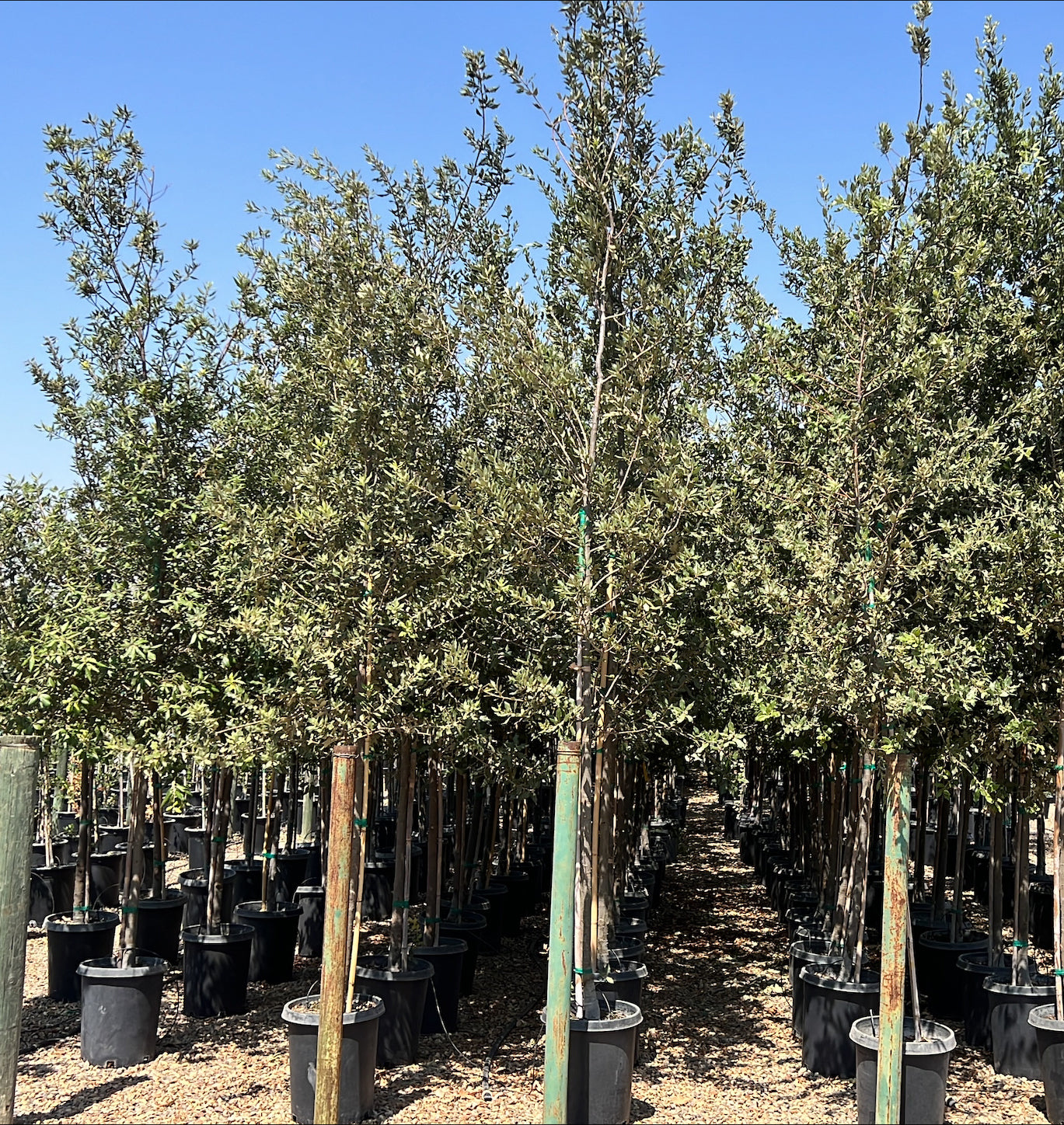
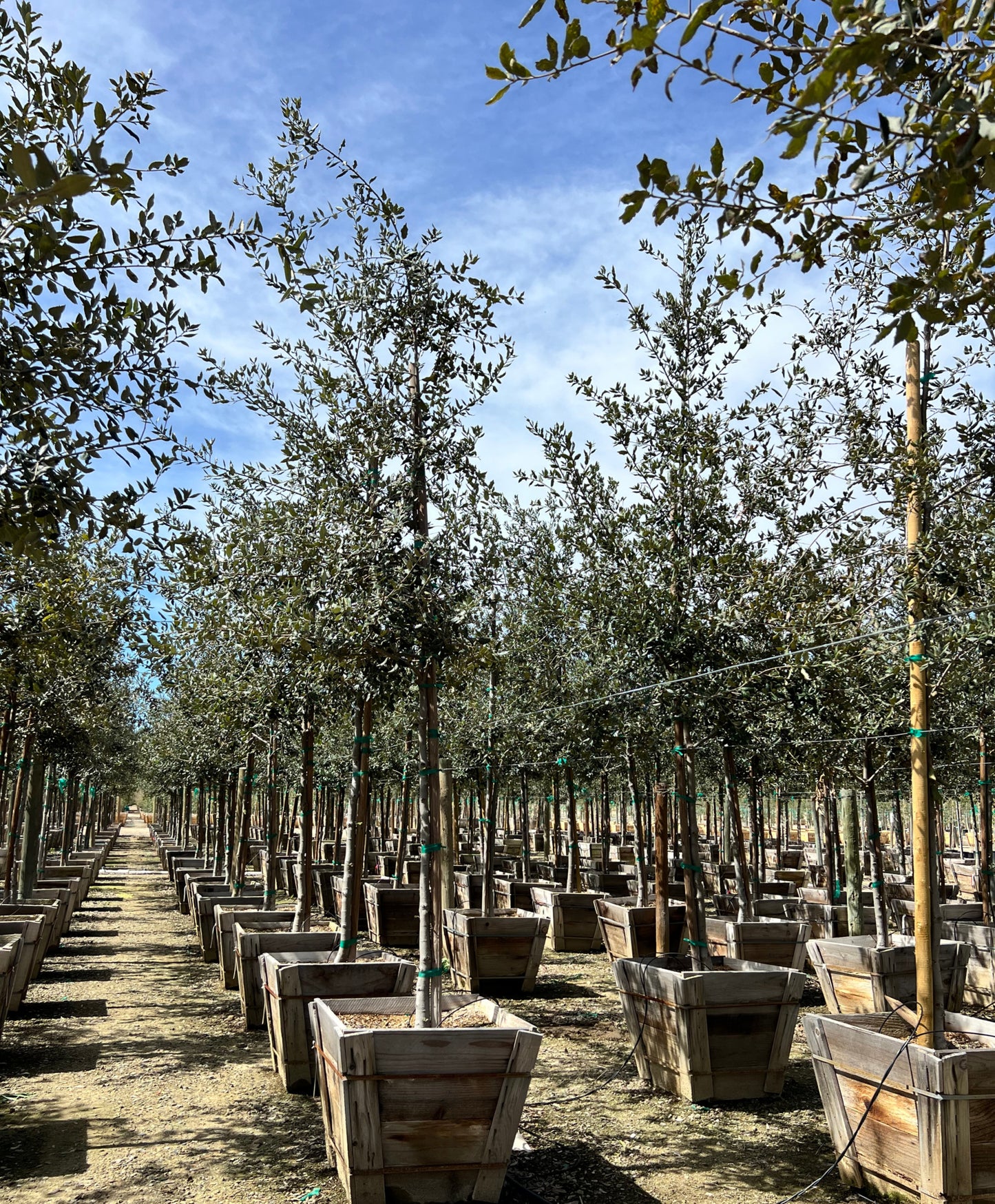


Quercus Ilex - Evergreen Holm Oak
Regular price
$395.00
Size
The Perfect Evergreen Oak for California's Mediterranean Climate
Quercus ilex delivers what few oak trees can: dense, year-round evergreen foliage, exceptional drought tolerance, and a stately rounded crown that defines Mediterranean landscapes. Native to the Mediterranean region spanning southern Europe and northwest Africa, the evergreen holm oak is naturally engineered for the exact climate conditions found across California - hot, dry summers and mild, wet winters. Whether you need a privacy screen, a shade canopy, or a long-lived specimen tree, this low-maintenance evergreen performs with minimal water once established.
Why You'll Love It
-
Year-round privacy and shade – Unlike most oak trees that drop their leaves seasonally, holm oak keeps its dark green, leathery leaves for 3–4 years before cycling them out, ensuring continuous dense coverage for screening and shelter.
-
Drought tolerant once established – Quercus ilex is drought-tolerant and thrives in USDA zones 7–10. After the first year or two of regular watering, this tree shifts into drought-adaptive mode, significantly reducing your water bills and maintenance time.
-
Dense canopy for windbreak and hedge use – The rounded, dense canopy makes it a natural windbreak. Holm oak can be clipped to form a tall hedge, or left to grow as a broad shade tree - equally effective either way. It is often planted as a windbreak in coastal areas.
-
Supports local wildlife – The acorns are a vital food source for wildlife, including birds and mammals. Holm oak provides year-round shelter for birds, and its catkins offer pollen for bees and insects. Yellowish-green flowers bloom in April–May followed by acorns in the same season.
-
Coastal and urban tough – Holm oak tolerates coastal salt-spray well and handles urban pollution, making it a valuable choice for properties near the ocean or in city environments. It is often used as a specimen tree in coastal urban landscapes.
What Makes It Different
Most oak trees are deciduous, shedding their canopy in fall and leaving you exposed through winter. Other evergreen options often lack the structural presence, longevity, or ecological value that a true oak provides.
Quercus ilex offers:
-
Truly evergreen foliage – While California natives like the coast live oak are semi-evergreen and can thin noticeably, evergreen or holm oak maintains a consistently dense, glossy canopy throughout every season. Quercus ilex has leathery, dark green leaves that are downy beneath, with a whitish underside that reduces water loss.
-
Superior drought physiology – This tree uses multiple strategies to survive dry conditions: sclerophyllous leaf structure, tight stomatal regulation, and osmotic adjustment. Research shows Evergreen Oak fully recovers carbon and water fluxes after even severe drought events, making it remarkably resilient under California's increasingly dry conditions.
-
Distinctive leaf character – Young leaves feature spiny, holly like teeth (the quercus ilex common name "holly oak" comes from this resemblance to ilex aquifolium, the true holly). As the tree matures, leaves become smooth and oval - a subtle, refreshing transformation across the canopy. Evergreen oak leaves are oval, dark green, and concave.
-
Exceptional longevity – The tree can live up to 500 years, providing long-term shade. The oldest Evergreen oak in Spain is 1,200 years old. This is a legacy tree that rewards decades of patient stewardship.
How To Grow Quercus Ilex Successfully
-
Plant in well-draining soil with full sun Choose a site with full sun exposure and well-drained soil. It prefers well-drained soil for optimal growth. Avoid waterlogged or heavily compacted clay. Fall or early spring planting gives the tree's roots the best start while soil moisture is naturally higher.
-
Water regularly during the first year, then taper Deep watering once per week during the establishment period helps the root system spread. By year two, reduce frequency. After years 2–3, water only during extended drought. Nursery research into drought hardening shows that stress-preconditioned seedlings perform significantly better after transplanting.
-
Enjoy decades of evergreen beauty with minimal care Once established, holm oak requires little beyond occasional deadwood removal and light shaping. Mulch around the base to retain moist soil conditions and protect roots - but keep mulch away from the trunk. The moderate growth rate means the tree fills in steadily without aggressive pruning needs, eventually reaching its full, rounded crown.
Plant Details
-
Mature size: It typically grows 40–70 feet tall with a rounded crown; holm oak can grow up to 20 m in height, with a similarly broad spread
-
Growth rate: Moderate - roughly 1–2 feet per year during early establishment, slowing as the canopy fills
-
Sun requirements: The tree prefers full to partial sun exposure
-
Water needs: Low to moderate once established; regular deep watering in year one
-
Soil preferences: Well-draining; tolerates calcareous, neutral, and slightly alkaline soils; poor drainage is problematic
-
Cold hardiness: USDA zones 7–10; it is not tolerant of cold continental winters
-
Bark: Grey when young, becoming finely cracked and deeply fissured, almost black on mature specimens
-
Leaves: Evergreen, leathery, 4–8 cm long, glossy dark green above with a downy, whitish underside
-
Acorns: Holm oak acorns are smaller and pointed compared to other oaks, maturing in one season, 1–3 together on short downy stalks; young acorns appear after female flowers are pollinated in spring
-
Wood: Its wood is hard and tough, historically used for construction, firewood, and charcoal since ancient Greece.
Who It's For
Ideal for:
-
California homeowners seeking drought tolerant trees that provide year-round shade and privacy without heavy watering
-
Landscape designers creating Mediterranean-style gardens, estate grounds, or parks with an authentic, classical character - the classical name ilex has been associated with this genus since antiquity
-
Coastal property owners needing salt-tolerant, wind-resistant trees; holm oak is resistant to salt-spray from the sea and thrives in exposed coastal sites
-
Wildlife-conscious gardeners wanting to support birds, pollinators, and ground-dwelling mammals through acorn production and evergreen shelter; holm oak supports plenty of wildlife
-
Truffle enthusiasts - Quercus ilex is used extensively in truffle orchards due to mycorrhizal associations, where truffles grow in symbiosis with the tree's roots
If you want a widely planted, long-lived evergreen oak that anchors your landscape for generations, Quercus ilex fits your needs. Quercus ilex forms a keystone species in Mediterranean woodlands, and that same ecological resilience translates directly to California gardens.
Frequently Asked Questions
How fast does the Evergreen Oak grow? Moderate. Expect roughly 1–2 feet per year during the early establishment years, with growth slowing as the dense canopy develops. Full mature size - 40–70 feet tall and wide - takes several decades to achieve.
Is it really drought tolerant? Yes. Evergreen oak uses multiple physiological strategies including sclerophyllous leaf structure, stomatal regulation, and osmotic adjustment to survive dry conditions. Research on different provenancesshows that trees from drier inland origins (the quercus rotundifolia morphotype/subspecies) demonstrate the highest drought resistance. Quercus ilex also helps stabilize soil and prevent erosion, keeping your site intact during dry periods.
Will it damage foundations or hardscape? Evergreen oak develops a deep taproot with strong lateral roots. Plant at least 15–20 feet from foundations, driveways, or hardscape to avoid root intrusion. In smaller gardens, regular pruning or selecting a site with adequate space is essential.
Do the acorns create a mess? Acorns drop annually, with heavier mast years occurring periodically. The acorns attract wildlife - birds and mammals - which some homeowners view as a benefit. If clean ground beneath the tree is a priority, seasonal cleanup will be needed.
Can it handle California's clay soils? Heavy clay with poor drainage is the main challenge. Amend with organic matter and consider planting on a slight mound to ensure water drains away from the root zone. Holm oak is susceptible to root rot in waterlogged conditions.
What's the difference between Evergreen Oak and Live Oak? Evergreen oak (Quercus ilex) maintains a denser, more consistently evergreen canopy than California's native coast live oak (Quercus agrifolia). Evergreen oak typically offers better salt-spray tolerance and a more formally rounded crown. Live oaks are native and well-adapted to local pest and fungal dynamics. Both are valuable - evergreen oak was introduced to California in 1858 and has naturalized along the US West Coast, while live oak is a habitat cornerstone. It has naturalized in parts of the UK and the US West Coast.
Can it naturally regenerate? Yes. Evergreen oak can naturally regenerate from acorns and is naturalized in parts of California. In managed landscapes, volunteer seedlings are easy to remove if unwanted.
Ready to Add Mediterranean Beauty to Your Landscape?
Quercus ilex delivers year-round evergreen beauty, proven drought resilience, and a lifespan measured in centuries, not decades.
Our team can help you select the right specimen size, advise on site placement for your specific California microclimate, and coordinate delivery and installation. Explore our full collection of evergreen trees and oak trees, or reach out for expert consultation.
The Perfect Evergreen Oak for California's Mediterranean Climate
Quercus ilex delivers what few oak trees can: dense, year-round evergreen foliage, exceptional drought tolerance, and a stately rounded crown that defines Mediterranean landscapes. Native to the Mediterranean region spanning southern Europe and northwest Africa, the evergreen holm oak is naturally engineered for the exact climate conditions found across California - hot, dry summers and mild, wet winters. Whether you need a privacy screen, a shade canopy, or a long-lived specimen tree, this low-maintenance evergreen performs with minimal water once established.
Why You'll Love It
-
Year-round privacy and shade – Unlike most oak trees that drop their leaves seasonally, holm oak keeps its dark green, leathery leaves for 3–4 years before cycling them out, ensuring continuous dense coverage for screening and shelter.
-
Drought tolerant once established – Quercus ilex is drought-tolerant and thrives in USDA zones 7–10. After the first year or two of regular watering, this tree shifts into drought-adaptive mode, significantly reducing your water bills and maintenance time.
-
Dense canopy for windbreak and hedge use – The rounded, dense canopy makes it a natural windbreak. Holm oak can be clipped to form a tall hedge, or left to grow as a broad shade tree - equally effective either way. It is often planted as a windbreak in coastal areas.
-
Supports local wildlife – The acorns are a vital food source for wildlife, including birds and mammals. Holm oak provides year-round shelter for birds, and its catkins offer pollen for bees and insects. Yellowish-green flowers bloom in April–May followed by acorns in the same season.
-
Coastal and urban tough – Holm oak tolerates coastal salt-spray well and handles urban pollution, making it a valuable choice for properties near the ocean or in city environments. It is often used as a specimen tree in coastal urban landscapes.
What Makes It Different
Most oak trees are deciduous, shedding their canopy in fall and leaving you exposed through winter. Other evergreen options often lack the structural presence, longevity, or ecological value that a true oak provides.
Quercus ilex offers:
-
Truly evergreen foliage – While California natives like the coast live oak are semi-evergreen and can thin noticeably, evergreen or holm oak maintains a consistently dense, glossy canopy throughout every season. Quercus ilex has leathery, dark green leaves that are downy beneath, with a whitish underside that reduces water loss.
-
Superior drought physiology – This tree uses multiple strategies to survive dry conditions: sclerophyllous leaf structure, tight stomatal regulation, and osmotic adjustment. Research shows Evergreen Oak fully recovers carbon and water fluxes after even severe drought events, making it remarkably resilient under California's increasingly dry conditions.
-
Distinctive leaf character – Young leaves feature spiny, holly like teeth (the quercus ilex common name "holly oak" comes from this resemblance to ilex aquifolium, the true holly). As the tree matures, leaves become smooth and oval - a subtle, refreshing transformation across the canopy. Evergreen oak leaves are oval, dark green, and concave.
-
Exceptional longevity – The tree can live up to 500 years, providing long-term shade. The oldest Evergreen oak in Spain is 1,200 years old. This is a legacy tree that rewards decades of patient stewardship.
How To Grow Quercus Ilex Successfully
-
Plant in well-draining soil with full sun Choose a site with full sun exposure and well-drained soil. It prefers well-drained soil for optimal growth. Avoid waterlogged or heavily compacted clay. Fall or early spring planting gives the tree's roots the best start while soil moisture is naturally higher.
-
Water regularly during the first year, then taper Deep watering once per week during the establishment period helps the root system spread. By year two, reduce frequency. After years 2–3, water only during extended drought. Nursery research into drought hardening shows that stress-preconditioned seedlings perform significantly better after transplanting.
-
Enjoy decades of evergreen beauty with minimal care Once established, holm oak requires little beyond occasional deadwood removal and light shaping. Mulch around the base to retain moist soil conditions and protect roots - but keep mulch away from the trunk. The moderate growth rate means the tree fills in steadily without aggressive pruning needs, eventually reaching its full, rounded crown.
Plant Details
-
Mature size: It typically grows 40–70 feet tall with a rounded crown; holm oak can grow up to 20 m in height, with a similarly broad spread
-
Growth rate: Moderate - roughly 1–2 feet per year during early establishment, slowing as the canopy fills
-
Sun requirements: The tree prefers full to partial sun exposure
-
Water needs: Low to moderate once established; regular deep watering in year one
-
Soil preferences: Well-draining; tolerates calcareous, neutral, and slightly alkaline soils; poor drainage is problematic
-
Cold hardiness: USDA zones 7–10; it is not tolerant of cold continental winters
-
Bark: Grey when young, becoming finely cracked and deeply fissured, almost black on mature specimens
-
Leaves: Evergreen, leathery, 4–8 cm long, glossy dark green above with a downy, whitish underside
-
Acorns: Holm oak acorns are smaller and pointed compared to other oaks, maturing in one season, 1–3 together on short downy stalks; young acorns appear after female flowers are pollinated in spring
-
Wood: Its wood is hard and tough, historically used for construction, firewood, and charcoal since ancient Greece.
Who It's For
Ideal for:
-
California homeowners seeking drought tolerant trees that provide year-round shade and privacy without heavy watering
-
Landscape designers creating Mediterranean-style gardens, estate grounds, or parks with an authentic, classical character - the classical name ilex has been associated with this genus since antiquity
-
Coastal property owners needing salt-tolerant, wind-resistant trees; holm oak is resistant to salt-spray from the sea and thrives in exposed coastal sites
-
Wildlife-conscious gardeners wanting to support birds, pollinators, and ground-dwelling mammals through acorn production and evergreen shelter; holm oak supports plenty of wildlife
-
Truffle enthusiasts - Quercus ilex is used extensively in truffle orchards due to mycorrhizal associations, where truffles grow in symbiosis with the tree's roots
If you want a widely planted, long-lived evergreen oak that anchors your landscape for generations, Quercus ilex fits your needs. Quercus ilex forms a keystone species in Mediterranean woodlands, and that same ecological resilience translates directly to California gardens.
Frequently Asked Questions
How fast does the Evergreen Oak grow? Moderate. Expect roughly 1–2 feet per year during the early establishment years, with growth slowing as the dense canopy develops. Full mature size - 40–70 feet tall and wide - takes several decades to achieve.
Is it really drought tolerant? Yes. Evergreen oak uses multiple physiological strategies including sclerophyllous leaf structure, stomatal regulation, and osmotic adjustment to survive dry conditions. Research on different provenancesshows that trees from drier inland origins (the quercus rotundifolia morphotype/subspecies) demonstrate the highest drought resistance. Quercus ilex also helps stabilize soil and prevent erosion, keeping your site intact during dry periods.
Will it damage foundations or hardscape? Evergreen oak develops a deep taproot with strong lateral roots. Plant at least 15–20 feet from foundations, driveways, or hardscape to avoid root intrusion. In smaller gardens, regular pruning or selecting a site with adequate space is essential.
Do the acorns create a mess? Acorns drop annually, with heavier mast years occurring periodically. The acorns attract wildlife - birds and mammals - which some homeowners view as a benefit. If clean ground beneath the tree is a priority, seasonal cleanup will be needed.
Can it handle California's clay soils? Heavy clay with poor drainage is the main challenge. Amend with organic matter and consider planting on a slight mound to ensure water drains away from the root zone. Holm oak is susceptible to root rot in waterlogged conditions.
What's the difference between Evergreen Oak and Live Oak? Evergreen oak (Quercus ilex) maintains a denser, more consistently evergreen canopy than California's native coast live oak (Quercus agrifolia). Evergreen oak typically offers better salt-spray tolerance and a more formally rounded crown. Live oaks are native and well-adapted to local pest and fungal dynamics. Both are valuable - evergreen oak was introduced to California in 1858 and has naturalized along the US West Coast, while live oak is a habitat cornerstone. It has naturalized in parts of the UK and the US West Coast.
Can it naturally regenerate? Yes. Evergreen oak can naturally regenerate from acorns and is naturalized in parts of California. In managed landscapes, volunteer seedlings are easy to remove if unwanted.
Ready to Add Mediterranean Beauty to Your Landscape?
Quercus ilex delivers year-round evergreen beauty, proven drought resilience, and a lifespan measured in centuries, not decades.
Our team can help you select the right specimen size, advise on site placement for your specific California microclimate, and coordinate delivery and installation. Explore our full collection of evergreen trees and oak trees, or reach out for expert consultation.
Plants vary greatly by type and no guarantees are made on sizing.
However here is a rough idea of sizes based on containers that are direct from our growing grounds.
15 Gallon Shrub 3-4 Ft. Tall
15 Gallon Tree 5-6 Ft. Tall
24" Box Shrub 5-6 Ft. Tall
24" Box Tree 6-7 Ft. Tall
36" Box Tree 8-10 Ft. Tall
48" Box Tree 10-12 Ft. Tall
Please note: Citrus and California Native plants such as Manzanita are smaller than traditional sizing.
Please contact us to confirm sizing of items before purchasing if this is a concern.
Plants vary greatly by type and no guarantees are made on sizing.
However here is a rough idea of sizes based on containers that are direct from our growing grounds.
15 Gallon Shrub 3-4 Ft. Tall
15 Gallon Tree 5-6 Ft. Tall
24" Box Shrub 5-6 Ft. Tall
24" Box Tree 6-7 Ft. Tall
36" Box Tree 8-10 Ft. Tall
48" Box Tree 10-12 Ft. Tall
Please note: Citrus and California Native plants such as Manzanita are smaller than traditional sizing.
Please contact us to confirm sizing of items before purchasing if this is a concern.
Delivery does not include unloading of trees and plants larger than a 24" box.
Trees and plants in smaller containers will be dropped curbside.
Delivery beyond a curbside drop will be charged extra.
Trees and plants that are sold in container sizes larger than a 24" box size will require equipment and an operator onsite to help unload from the truck.
Please reach out to our team PRIOR to placing your order to coordinate.
Our team can provide unloading assistance with equipment for an extra fee.
Delivery does not include unloading of trees and plants larger than a 24" box.
Trees and plants in smaller containers will be dropped curbside.
Delivery beyond a curbside drop will be charged extra.
Trees and plants that are sold in container sizes larger than a 24" box size will require equipment and an operator onsite to help unload from the truck.
Please reach out to our team PRIOR to placing your order to coordinate.
Our team can provide unloading assistance with equipment for an extra fee.
You may also like...


Quercus Ilex - Evergreen Holm Oak
Regular price
$395.00
Size
The Perfect Evergreen Oak for California's Mediterranean Climate
Quercus ilex delivers what few oak trees can: dense, year-round evergreen foliage, exceptional drought tolerance, and a stately rounded crown that defines Mediterranean landscapes. Native to the Mediterranean region spanning southern Europe and northwest Africa, the evergreen holm oak is naturally engineered for the exact climate conditions found across California - hot, dry summers and mild, wet winters. Whether you need a privacy screen, a shade canopy, or a long-lived specimen tree, this low-maintenance evergreen performs with minimal water once established.
Why You'll Love It
-
Year-round privacy and shade – Unlike most oak trees that drop their leaves seasonally, holm oak keeps its dark green, leathery leaves for 3–4 years before cycling them out, ensuring continuous dense coverage for screening and shelter.
-
Drought tolerant once established – Quercus ilex is drought-tolerant and thrives in USDA zones 7–10. After the first year or two of regular watering, this tree shifts into drought-adaptive mode, significantly reducing your water bills and maintenance time.
-
Dense canopy for windbreak and hedge use – The rounded, dense canopy makes it a natural windbreak. Holm oak can be clipped to form a tall hedge, or left to grow as a broad shade tree - equally effective either way. It is often planted as a windbreak in coastal areas.
-
Supports local wildlife – The acorns are a vital food source for wildlife, including birds and mammals. Holm oak provides year-round shelter for birds, and its catkins offer pollen for bees and insects. Yellowish-green flowers bloom in April–May followed by acorns in the same season.
-
Coastal and urban tough – Holm oak tolerates coastal salt-spray well and handles urban pollution, making it a valuable choice for properties near the ocean or in city environments. It is often used as a specimen tree in coastal urban landscapes.
What Makes It Different
Most oak trees are deciduous, shedding their canopy in fall and leaving you exposed through winter. Other evergreen options often lack the structural presence, longevity, or ecological value that a true oak provides.
Quercus ilex offers:
-
Truly evergreen foliage – While California natives like the coast live oak are semi-evergreen and can thin noticeably, evergreen or holm oak maintains a consistently dense, glossy canopy throughout every season. Quercus ilex has leathery, dark green leaves that are downy beneath, with a whitish underside that reduces water loss.
-
Superior drought physiology – This tree uses multiple strategies to survive dry conditions: sclerophyllous leaf structure, tight stomatal regulation, and osmotic adjustment. Research shows Evergreen Oak fully recovers carbon and water fluxes after even severe drought events, making it remarkably resilient under California's increasingly dry conditions.
-
Distinctive leaf character – Young leaves feature spiny, holly like teeth (the quercus ilex common name "holly oak" comes from this resemblance to ilex aquifolium, the true holly). As the tree matures, leaves become smooth and oval - a subtle, refreshing transformation across the canopy. Evergreen oak leaves are oval, dark green, and concave.
-
Exceptional longevity – The tree can live up to 500 years, providing long-term shade. The oldest Evergreen oak in Spain is 1,200 years old. This is a legacy tree that rewards decades of patient stewardship.
How To Grow Quercus Ilex Successfully
-
Plant in well-draining soil with full sun Choose a site with full sun exposure and well-drained soil. It prefers well-drained soil for optimal growth. Avoid waterlogged or heavily compacted clay. Fall or early spring planting gives the tree's roots the best start while soil moisture is naturally higher.
-
Water regularly during the first year, then taper Deep watering once per week during the establishment period helps the root system spread. By year two, reduce frequency. After years 2–3, water only during extended drought. Nursery research into drought hardening shows that stress-preconditioned seedlings perform significantly better after transplanting.
-
Enjoy decades of evergreen beauty with minimal care Once established, holm oak requires little beyond occasional deadwood removal and light shaping. Mulch around the base to retain moist soil conditions and protect roots - but keep mulch away from the trunk. The moderate growth rate means the tree fills in steadily without aggressive pruning needs, eventually reaching its full, rounded crown.
Plant Details
-
Mature size: It typically grows 40–70 feet tall with a rounded crown; holm oak can grow up to 20 m in height, with a similarly broad spread
-
Growth rate: Moderate - roughly 1–2 feet per year during early establishment, slowing as the canopy fills
-
Sun requirements: The tree prefers full to partial sun exposure
-
Water needs: Low to moderate once established; regular deep watering in year one
-
Soil preferences: Well-draining; tolerates calcareous, neutral, and slightly alkaline soils; poor drainage is problematic
-
Cold hardiness: USDA zones 7–10; it is not tolerant of cold continental winters
-
Bark: Grey when young, becoming finely cracked and deeply fissured, almost black on mature specimens
-
Leaves: Evergreen, leathery, 4–8 cm long, glossy dark green above with a downy, whitish underside
-
Acorns: Holm oak acorns are smaller and pointed compared to other oaks, maturing in one season, 1–3 together on short downy stalks; young acorns appear after female flowers are pollinated in spring
-
Wood: Its wood is hard and tough, historically used for construction, firewood, and charcoal since ancient Greece.
Who It's For
Ideal for:
-
California homeowners seeking drought tolerant trees that provide year-round shade and privacy without heavy watering
-
Landscape designers creating Mediterranean-style gardens, estate grounds, or parks with an authentic, classical character - the classical name ilex has been associated with this genus since antiquity
-
Coastal property owners needing salt-tolerant, wind-resistant trees; holm oak is resistant to salt-spray from the sea and thrives in exposed coastal sites
-
Wildlife-conscious gardeners wanting to support birds, pollinators, and ground-dwelling mammals through acorn production and evergreen shelter; holm oak supports plenty of wildlife
-
Truffle enthusiasts - Quercus ilex is used extensively in truffle orchards due to mycorrhizal associations, where truffles grow in symbiosis with the tree's roots
If you want a widely planted, long-lived evergreen oak that anchors your landscape for generations, Quercus ilex fits your needs. Quercus ilex forms a keystone species in Mediterranean woodlands, and that same ecological resilience translates directly to California gardens.
Frequently Asked Questions
How fast does the Evergreen Oak grow? Moderate. Expect roughly 1–2 feet per year during the early establishment years, with growth slowing as the dense canopy develops. Full mature size - 40–70 feet tall and wide - takes several decades to achieve.
Is it really drought tolerant? Yes. Evergreen oak uses multiple physiological strategies including sclerophyllous leaf structure, stomatal regulation, and osmotic adjustment to survive dry conditions. Research on different provenancesshows that trees from drier inland origins (the quercus rotundifolia morphotype/subspecies) demonstrate the highest drought resistance. Quercus ilex also helps stabilize soil and prevent erosion, keeping your site intact during dry periods.
Will it damage foundations or hardscape? Evergreen oak develops a deep taproot with strong lateral roots. Plant at least 15–20 feet from foundations, driveways, or hardscape to avoid root intrusion. In smaller gardens, regular pruning or selecting a site with adequate space is essential.
Do the acorns create a mess? Acorns drop annually, with heavier mast years occurring periodically. The acorns attract wildlife - birds and mammals - which some homeowners view as a benefit. If clean ground beneath the tree is a priority, seasonal cleanup will be needed.
Can it handle California's clay soils? Heavy clay with poor drainage is the main challenge. Amend with organic matter and consider planting on a slight mound to ensure water drains away from the root zone. Holm oak is susceptible to root rot in waterlogged conditions.
What's the difference between Evergreen Oak and Live Oak? Evergreen oak (Quercus ilex) maintains a denser, more consistently evergreen canopy than California's native coast live oak (Quercus agrifolia). Evergreen oak typically offers better salt-spray tolerance and a more formally rounded crown. Live oaks are native and well-adapted to local pest and fungal dynamics. Both are valuable - evergreen oak was introduced to California in 1858 and has naturalized along the US West Coast, while live oak is a habitat cornerstone. It has naturalized in parts of the UK and the US West Coast.
Can it naturally regenerate? Yes. Evergreen oak can naturally regenerate from acorns and is naturalized in parts of California. In managed landscapes, volunteer seedlings are easy to remove if unwanted.
Ready to Add Mediterranean Beauty to Your Landscape?
Quercus ilex delivers year-round evergreen beauty, proven drought resilience, and a lifespan measured in centuries, not decades.
Our team can help you select the right specimen size, advise on site placement for your specific California microclimate, and coordinate delivery and installation. Explore our full collection of evergreen trees and oak trees, or reach out for expert consultation.
The Perfect Evergreen Oak for California's Mediterranean Climate
Quercus ilex delivers what few oak trees can: dense, year-round evergreen foliage, exceptional drought tolerance, and a stately rounded crown that defines Mediterranean landscapes. Native to the Mediterranean region spanning southern Europe and northwest Africa, the evergreen holm oak is naturally engineered for the exact climate conditions found across California - hot, dry summers and mild, wet winters. Whether you need a privacy screen, a shade canopy, or a long-lived specimen tree, this low-maintenance evergreen performs with minimal water once established.
Why You'll Love It
-
Year-round privacy and shade – Unlike most oak trees that drop their leaves seasonally, holm oak keeps its dark green, leathery leaves for 3–4 years before cycling them out, ensuring continuous dense coverage for screening and shelter.
-
Drought tolerant once established – Quercus ilex is drought-tolerant and thrives in USDA zones 7–10. After the first year or two of regular watering, this tree shifts into drought-adaptive mode, significantly reducing your water bills and maintenance time.
-
Dense canopy for windbreak and hedge use – The rounded, dense canopy makes it a natural windbreak. Holm oak can be clipped to form a tall hedge, or left to grow as a broad shade tree - equally effective either way. It is often planted as a windbreak in coastal areas.
-
Supports local wildlife – The acorns are a vital food source for wildlife, including birds and mammals. Holm oak provides year-round shelter for birds, and its catkins offer pollen for bees and insects. Yellowish-green flowers bloom in April–May followed by acorns in the same season.
-
Coastal and urban tough – Holm oak tolerates coastal salt-spray well and handles urban pollution, making it a valuable choice for properties near the ocean or in city environments. It is often used as a specimen tree in coastal urban landscapes.
What Makes It Different
Most oak trees are deciduous, shedding their canopy in fall and leaving you exposed through winter. Other evergreen options often lack the structural presence, longevity, or ecological value that a true oak provides.
Quercus ilex offers:
-
Truly evergreen foliage – While California natives like the coast live oak are semi-evergreen and can thin noticeably, evergreen or holm oak maintains a consistently dense, glossy canopy throughout every season. Quercus ilex has leathery, dark green leaves that are downy beneath, with a whitish underside that reduces water loss.
-
Superior drought physiology – This tree uses multiple strategies to survive dry conditions: sclerophyllous leaf structure, tight stomatal regulation, and osmotic adjustment. Research shows Evergreen Oak fully recovers carbon and water fluxes after even severe drought events, making it remarkably resilient under California's increasingly dry conditions.
-
Distinctive leaf character – Young leaves feature spiny, holly like teeth (the quercus ilex common name "holly oak" comes from this resemblance to ilex aquifolium, the true holly). As the tree matures, leaves become smooth and oval - a subtle, refreshing transformation across the canopy. Evergreen oak leaves are oval, dark green, and concave.
-
Exceptional longevity – The tree can live up to 500 years, providing long-term shade. The oldest Evergreen oak in Spain is 1,200 years old. This is a legacy tree that rewards decades of patient stewardship.
How To Grow Quercus Ilex Successfully
-
Plant in well-draining soil with full sun Choose a site with full sun exposure and well-drained soil. It prefers well-drained soil for optimal growth. Avoid waterlogged or heavily compacted clay. Fall or early spring planting gives the tree's roots the best start while soil moisture is naturally higher.
-
Water regularly during the first year, then taper Deep watering once per week during the establishment period helps the root system spread. By year two, reduce frequency. After years 2–3, water only during extended drought. Nursery research into drought hardening shows that stress-preconditioned seedlings perform significantly better after transplanting.
-
Enjoy decades of evergreen beauty with minimal care Once established, holm oak requires little beyond occasional deadwood removal and light shaping. Mulch around the base to retain moist soil conditions and protect roots - but keep mulch away from the trunk. The moderate growth rate means the tree fills in steadily without aggressive pruning needs, eventually reaching its full, rounded crown.
Plant Details
-
Mature size: It typically grows 40–70 feet tall with a rounded crown; holm oak can grow up to 20 m in height, with a similarly broad spread
-
Growth rate: Moderate - roughly 1–2 feet per year during early establishment, slowing as the canopy fills
-
Sun requirements: The tree prefers full to partial sun exposure
-
Water needs: Low to moderate once established; regular deep watering in year one
-
Soil preferences: Well-draining; tolerates calcareous, neutral, and slightly alkaline soils; poor drainage is problematic
-
Cold hardiness: USDA zones 7–10; it is not tolerant of cold continental winters
-
Bark: Grey when young, becoming finely cracked and deeply fissured, almost black on mature specimens
-
Leaves: Evergreen, leathery, 4–8 cm long, glossy dark green above with a downy, whitish underside
-
Acorns: Holm oak acorns are smaller and pointed compared to other oaks, maturing in one season, 1–3 together on short downy stalks; young acorns appear after female flowers are pollinated in spring
-
Wood: Its wood is hard and tough, historically used for construction, firewood, and charcoal since ancient Greece.
Who It's For
Ideal for:
-
California homeowners seeking drought tolerant trees that provide year-round shade and privacy without heavy watering
-
Landscape designers creating Mediterranean-style gardens, estate grounds, or parks with an authentic, classical character - the classical name ilex has been associated with this genus since antiquity
-
Coastal property owners needing salt-tolerant, wind-resistant trees; holm oak is resistant to salt-spray from the sea and thrives in exposed coastal sites
-
Wildlife-conscious gardeners wanting to support birds, pollinators, and ground-dwelling mammals through acorn production and evergreen shelter; holm oak supports plenty of wildlife
-
Truffle enthusiasts - Quercus ilex is used extensively in truffle orchards due to mycorrhizal associations, where truffles grow in symbiosis with the tree's roots
If you want a widely planted, long-lived evergreen oak that anchors your landscape for generations, Quercus ilex fits your needs. Quercus ilex forms a keystone species in Mediterranean woodlands, and that same ecological resilience translates directly to California gardens.
Frequently Asked Questions
How fast does the Evergreen Oak grow? Moderate. Expect roughly 1–2 feet per year during the early establishment years, with growth slowing as the dense canopy develops. Full mature size - 40–70 feet tall and wide - takes several decades to achieve.
Is it really drought tolerant? Yes. Evergreen oak uses multiple physiological strategies including sclerophyllous leaf structure, stomatal regulation, and osmotic adjustment to survive dry conditions. Research on different provenancesshows that trees from drier inland origins (the quercus rotundifolia morphotype/subspecies) demonstrate the highest drought resistance. Quercus ilex also helps stabilize soil and prevent erosion, keeping your site intact during dry periods.
Will it damage foundations or hardscape? Evergreen oak develops a deep taproot with strong lateral roots. Plant at least 15–20 feet from foundations, driveways, or hardscape to avoid root intrusion. In smaller gardens, regular pruning or selecting a site with adequate space is essential.
Do the acorns create a mess? Acorns drop annually, with heavier mast years occurring periodically. The acorns attract wildlife - birds and mammals - which some homeowners view as a benefit. If clean ground beneath the tree is a priority, seasonal cleanup will be needed.
Can it handle California's clay soils? Heavy clay with poor drainage is the main challenge. Amend with organic matter and consider planting on a slight mound to ensure water drains away from the root zone. Holm oak is susceptible to root rot in waterlogged conditions.
What's the difference between Evergreen Oak and Live Oak? Evergreen oak (Quercus ilex) maintains a denser, more consistently evergreen canopy than California's native coast live oak (Quercus agrifolia). Evergreen oak typically offers better salt-spray tolerance and a more formally rounded crown. Live oaks are native and well-adapted to local pest and fungal dynamics. Both are valuable - evergreen oak was introduced to California in 1858 and has naturalized along the US West Coast, while live oak is a habitat cornerstone. It has naturalized in parts of the UK and the US West Coast.
Can it naturally regenerate? Yes. Evergreen oak can naturally regenerate from acorns and is naturalized in parts of California. In managed landscapes, volunteer seedlings are easy to remove if unwanted.
Ready to Add Mediterranean Beauty to Your Landscape?
Quercus ilex delivers year-round evergreen beauty, proven drought resilience, and a lifespan measured in centuries, not decades.
Our team can help you select the right specimen size, advise on site placement for your specific California microclimate, and coordinate delivery and installation. Explore our full collection of evergreen trees and oak trees, or reach out for expert consultation.
Plants vary greatly by type and no guarantees are made on sizing.
However here is a rough idea of sizes based on containers that are direct from our growing grounds.
15 Gallon Shrub 3-4 Ft. Tall
15 Gallon Tree 5-6 Ft. Tall
24" Box Shrub 5-6 Ft. Tall
24" Box Tree 6-7 Ft. Tall
36" Box Tree 8-10 Ft. Tall
48" Box Tree 10-12 Ft. Tall
Please note: Citrus and California Native plants such as Manzanita are smaller than traditional sizing.
Please contact us to confirm sizing of items before purchasing if this is a concern.
Plants vary greatly by type and no guarantees are made on sizing.
However here is a rough idea of sizes based on containers that are direct from our growing grounds.
15 Gallon Shrub 3-4 Ft. Tall
15 Gallon Tree 5-6 Ft. Tall
24" Box Shrub 5-6 Ft. Tall
24" Box Tree 6-7 Ft. Tall
36" Box Tree 8-10 Ft. Tall
48" Box Tree 10-12 Ft. Tall
Please note: Citrus and California Native plants such as Manzanita are smaller than traditional sizing.
Please contact us to confirm sizing of items before purchasing if this is a concern.
Delivery does not include unloading of trees and plants larger than a 24" box.
Trees and plants in smaller containers will be dropped curbside.
Delivery beyond a curbside drop will be charged extra.
Trees and plants that are sold in container sizes larger than a 24" box size will require equipment and an operator onsite to help unload from the truck.
Please reach out to our team PRIOR to placing your order to coordinate.
Our team can provide unloading assistance with equipment for an extra fee.
Delivery does not include unloading of trees and plants larger than a 24" box.
Trees and plants in smaller containers will be dropped curbside.
Delivery beyond a curbside drop will be charged extra.
Trees and plants that are sold in container sizes larger than a 24" box size will require equipment and an operator onsite to help unload from the truck.
Please reach out to our team PRIOR to placing your order to coordinate.
Our team can provide unloading assistance with equipment for an extra fee.
Recommended For You















Pairs Well With













You May Also Like












Thousands of Healthy Plants Delivered


Yardwork was so great to work with. First they had the Swan Hill olive trees that we had been searching for, we had contacted several other nurseries without any luck previously. Then they answered all of our questions in a timely matter prior to ordering and finally delivered within a few days of placing it. Their staff is incredibly knowledgeable; they delivered and planted our trees with expertise to ensure that they would do well in our yard. We would definitely work with them again for future projects.

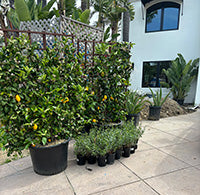


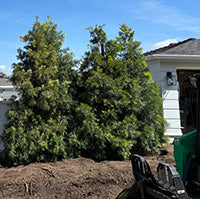

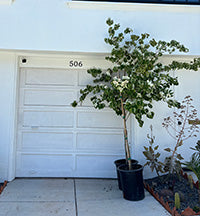







A Modern Experience
At Yardwork, we carefully curate thousands of plants, in all container sizes, to provide you with the best selection of the highest quality trees and plants at the best price, with the convenience of an online platform.
Uncompromised Quality
We choose only the finest specimens and hand select our plants just before delivery to ensure you receive the freshest and most robust specimens available for your landscape.
Industry Leading Warranties
Our 30, 90, and 365 extended warranties provide some of the best coverage to ensure our trees and plants thrive in your landscape.
Frequently Asked Questions
We're committed to changing everything about trees and plants - how they’re grown, how you shop for them, and how much they cost. We handle orders ourselves. No middlemen to get between us (or our prices) and you.
We're committed to changing everything about trees and plants - how they’re grown, how you shop for them, and how much they cost. We handle orders ourselves. No middlemen to get between us (or our prices) and you.
Delivery does not include unloading of trees and plants LARGER than a 24" box.
Trees and plants in smaller containers will be dropped curbside (usually on the driveway or near the front doorstep).
Delivery beyond a curbside drop will be charged extra.
Trees and plants that are sold in container sizes LARGER than a 24" box size will require equipment and/or enough manpower onsite to help unload from the truck.
Please reach out to our team PRIOR to placing your order to help coordinate.
Our team can provide unloading assistance with equipment for an extra fee as well.
Delivery does not include unloading of trees and plants LARGER than a 24" box.
Trees and plants in smaller containers will be dropped curbside (usually on the driveway or near the front doorstep).
Delivery beyond a curbside drop will be charged extra.
Trees and plants that are sold in container sizes LARGER than a 24" box size will require equipment and/or enough manpower onsite to help unload from the truck.
Please reach out to our team PRIOR to placing your order to help coordinate.
Our team can provide unloading assistance with equipment for an extra fee as well.
We ship locally within California within 7-10 days of your order being placed.
We ship nationally using carrier partners, based on order size. Our common order minimums for out of state shipping is $5,000.
Text or call 323-576-4159 for specific shipping details for your location.
We ship locally within California within 7-10 days of your order being placed.
We ship nationally using carrier partners, based on order size. Our common order minimums for out of state shipping is $5,000.
Text or call 323-576-4159 for specific shipping details for your location.
We are currently online only and don't have physical locations where you can view plants in person.
That's why we have photos direct from the growing grounds of the plants we will ship and we display pricing right in our store.
We do make sure to pick the very best trees and plants prior to shipping and make sure that they have gone through our multi-point inspection for health and structure.
We will always reach out prior to delivery if we find a quality issue or need to provide a substitute.
We are currently online only and don't have physical locations where you can view plants in person.
That's why we have photos direct from the growing grounds of the plants we will ship and we display pricing right in our store.
We do make sure to pick the very best trees and plants prior to shipping and make sure that they have gone through our multi-point inspection for health and structure.
We will always reach out prior to delivery if we find a quality issue or need to provide a substitute.
Plants vary greatly by type. Here is a rough idea of sizes based on containers that are direct from our growing grounds.
15 Gallon Shrub 3-4 Ft. Tall
15 Gallon Tree 5-6 Ft. Tall
24" Box Shrub 5-6 Ft. Tall
24" Box Tree 6-7 Ft. Tall
36" Box Shrub/Tree 7-9 Ft. Tall
48" Box Shrub/Tree 8-10 Ft. Tall
**Please note that we do not make guarantees of sizes. If you have questions or concerns, please call or text to request accurate sizing for the particular plant you're considering, prior to ordering.
Plants vary greatly by type. Here is a rough idea of sizes based on containers that are direct from our growing grounds.
15 Gallon Shrub 3-4 Ft. Tall
15 Gallon Tree 5-6 Ft. Tall
24" Box Shrub 5-6 Ft. Tall
24" Box Tree 6-7 Ft. Tall
36" Box Shrub/Tree 7-9 Ft. Tall
48" Box Shrub/Tree 8-10 Ft. Tall
**Please note that we do not make guarantees of sizes. If you have questions or concerns, please call or text to request accurate sizing for the particular plant you're considering, prior to ordering.
We offer a limited 30 day warranty for plants that are delivered and planted by someone else and a 90 day warranty for plants that we plant.
The limited warranty covers plants that die as a result of disease or fungus which was derived from our growing grounds or from root balls that were root bound.
The warranty does not cover damage due to watering, fertilizer, soils, or any other conditions beyond our control. Additionally, the warranty does not cover plants that are shipped out of the state of California or shipped into California from other states. Custom plant orders are also not covered under warranty. Plants must be planted within 24 hours after delivery to qualify.
We can assist you in recommending the right soils and fertilizers to help your plant thrive after you plant it.
Text or call 323-576-4159 for further warranty information.
We offer a limited 30 day warranty for plants that are delivered and planted by someone else and a 90 day warranty for plants that we plant.
The limited warranty covers plants that die as a result of disease or fungus which was derived from our growing grounds or from root balls that were root bound.
The warranty does not cover damage due to watering, fertilizer, soils, or any other conditions beyond our control. Additionally, the warranty does not cover plants that are shipped out of the state of California or shipped into California from other states. Custom plant orders are also not covered under warranty. Plants must be planted within 24 hours after delivery to qualify.
We can assist you in recommending the right soils and fertilizers to help your plant thrive after you plant it.
Text or call 323-576-4159 for further warranty information.
Our local delivery team covers most cities in California.
There are some exceptions, so please get in touch to confirm prior to ordering.
Additionally, we ship using semi trucks and trailers throughout the entire United States and even abroad for large orders over $5,000. Each shipment is custom, so please reach out to our team to coordinate.
Our local delivery team covers most cities in California.
There are some exceptions, so please get in touch to confirm prior to ordering.
Additionally, we ship using semi trucks and trailers throughout the entire United States and even abroad for large orders over $5,000. Each shipment is custom, so please reach out to our team to coordinate.