



Australian Willow - Geijera parviflora
Regular price
$395.00
Size
Create a Graceful Privacy Screen That Thrives in California's Climate
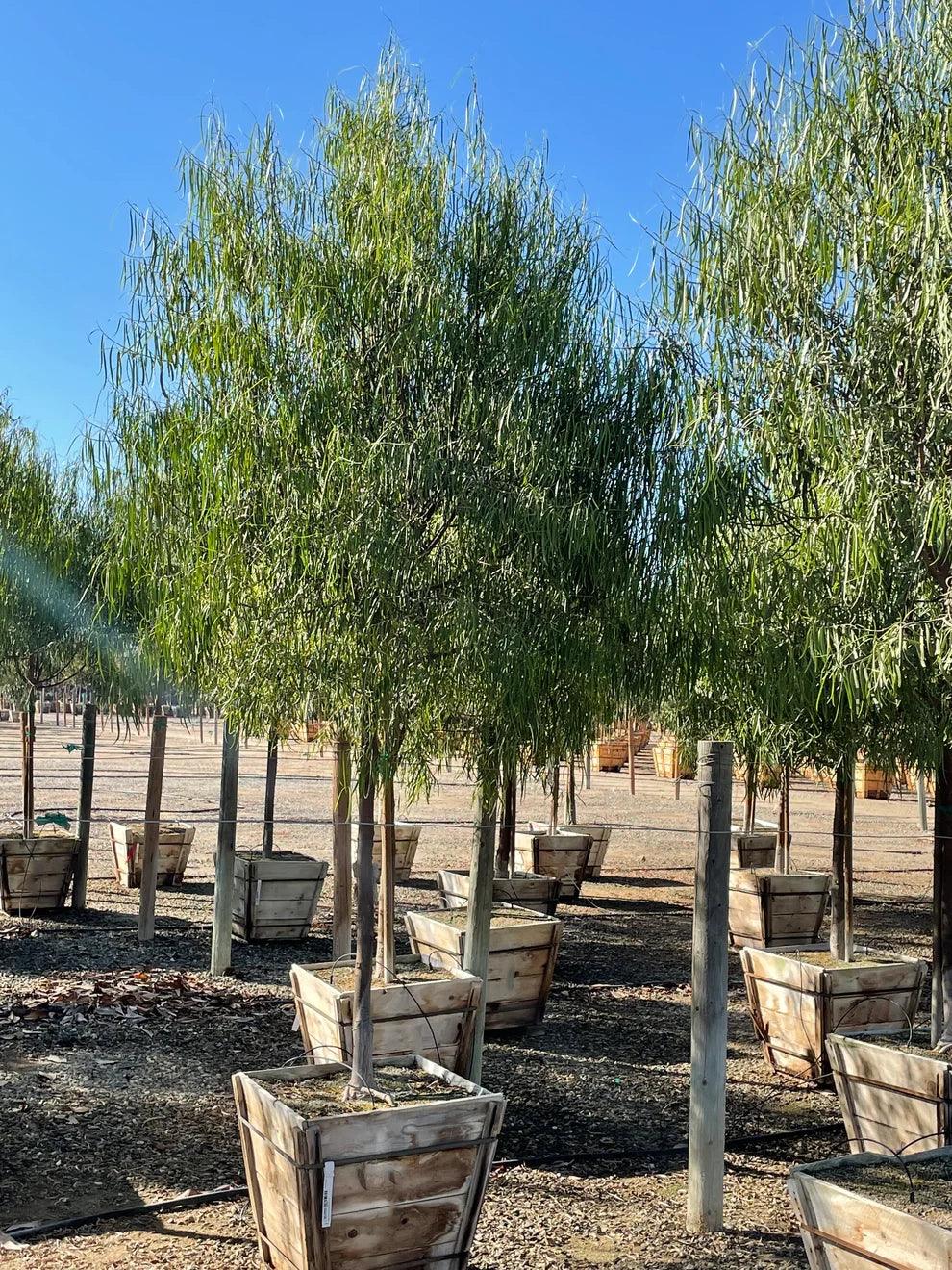
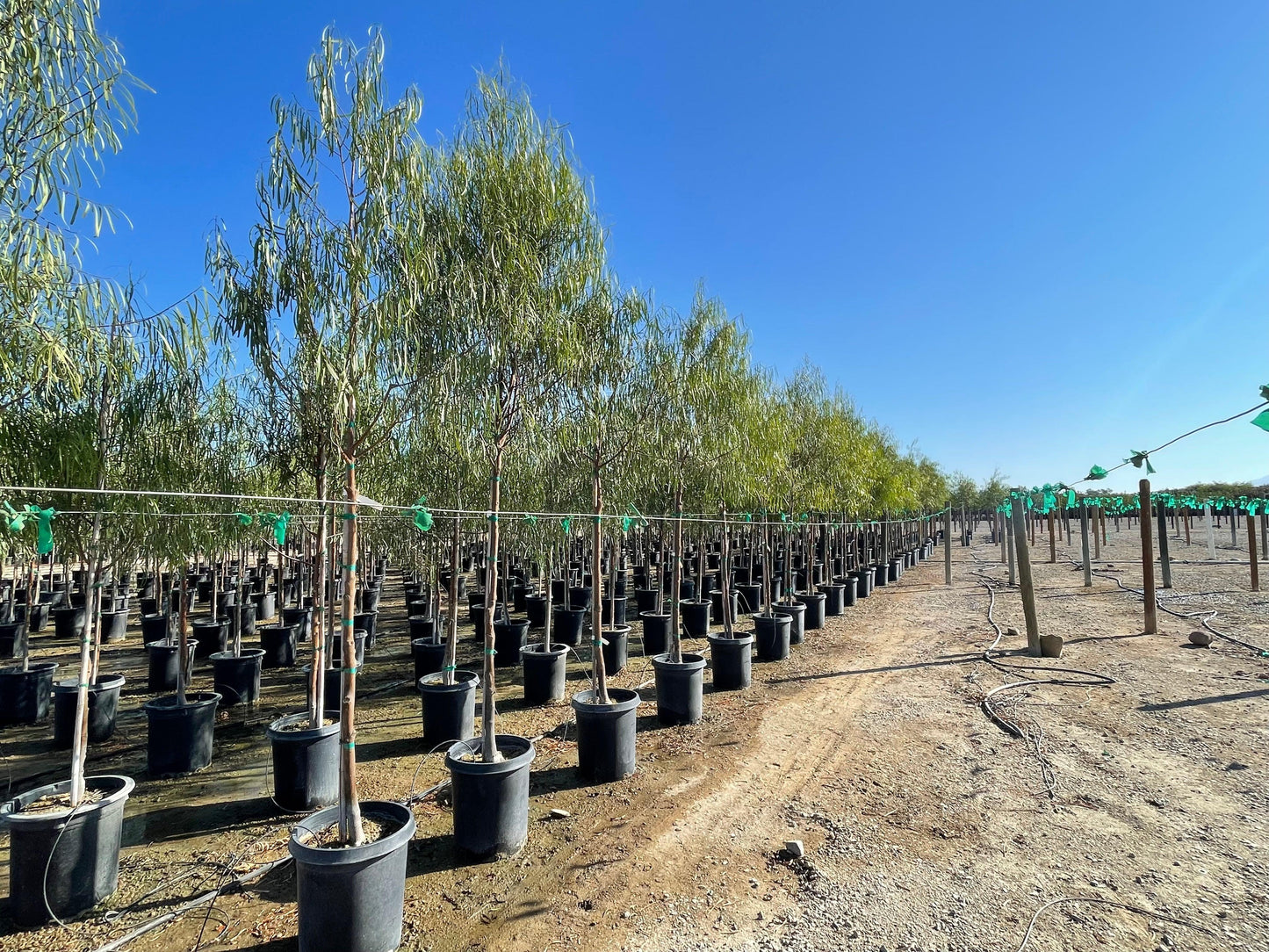
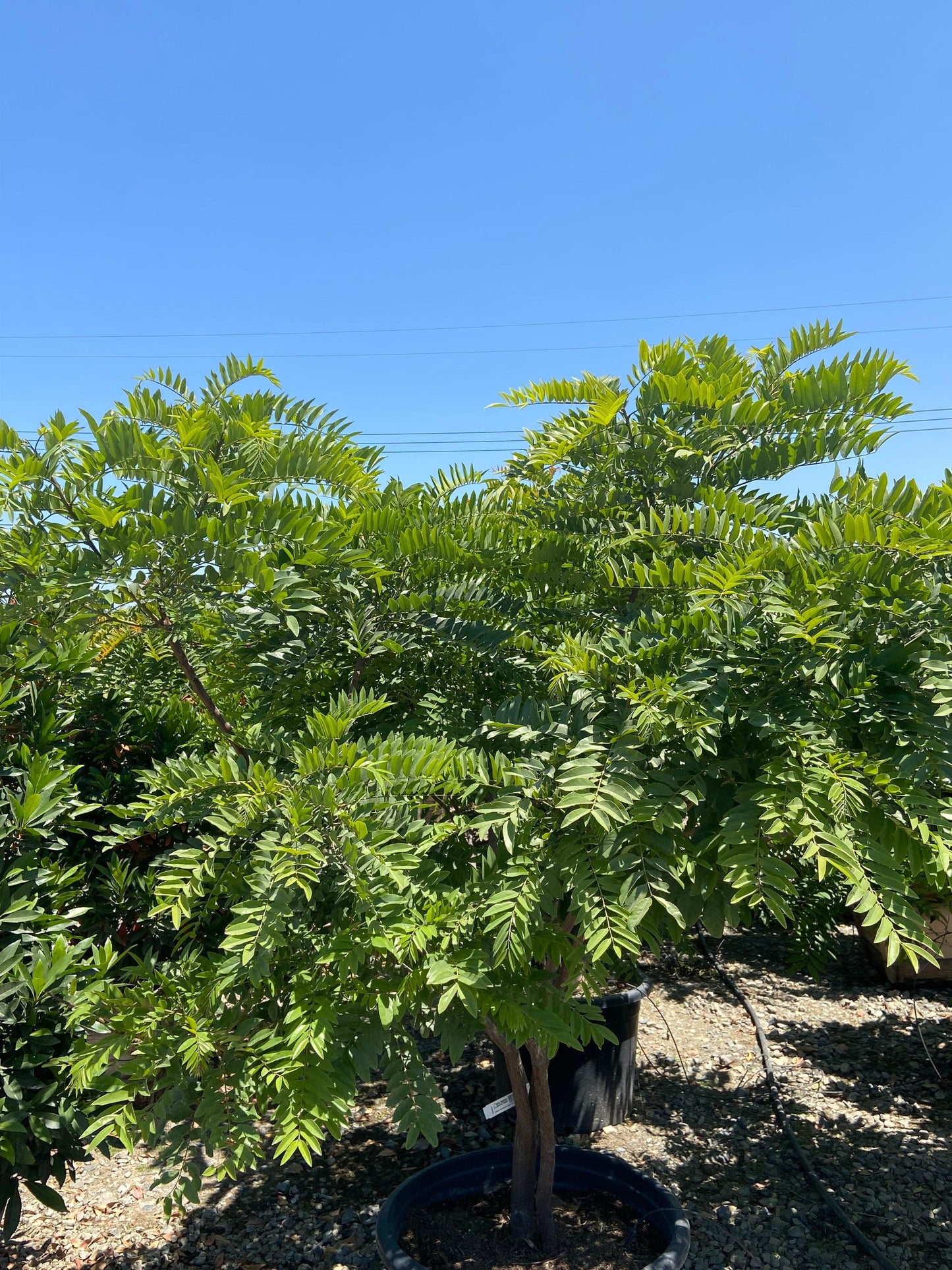
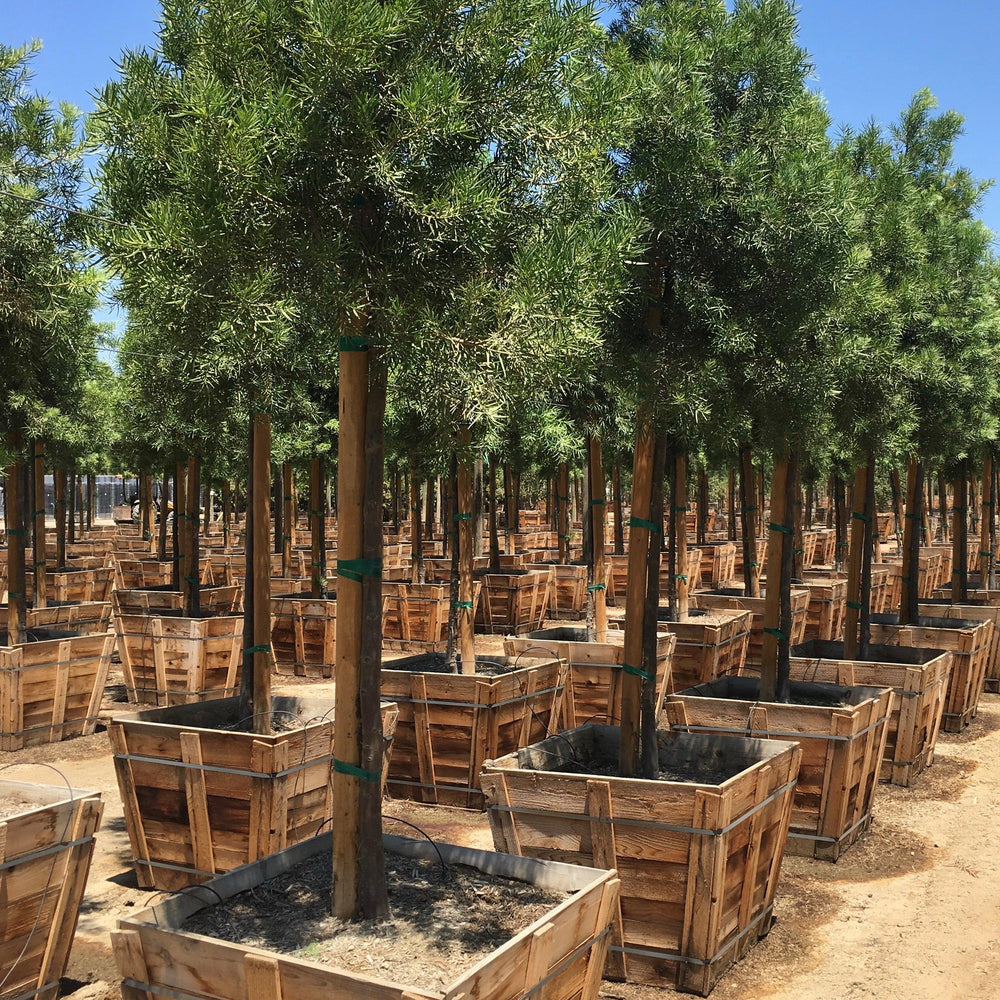
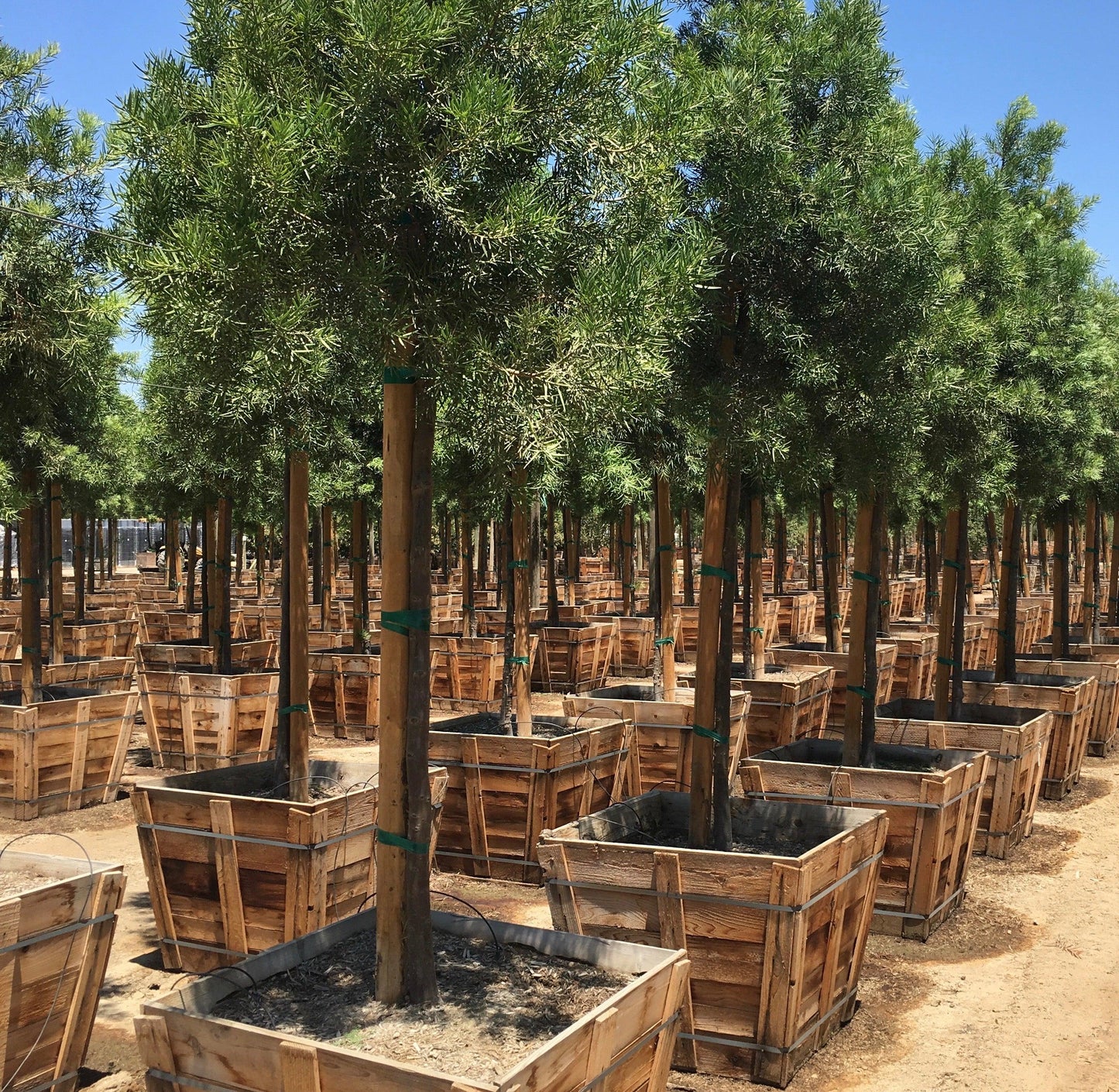
The Australian Willow (Geijera parviflora) delivers the elegant, weeping silhouette of a classic willow without the heavy water demands. This evergreen tree is native to Australia, where it thrives in the arid woodlands of eastern Australia, and it translates beautifully into Southern California landscapes. If you want a graceful, drought tolerant privacy screen that stays green through every season, this is the tree to plant.
Why You'll Love It
-
Drought Tolerant – Once established, Australian willows require little to moderate watering and are suitable for xeriscape environments. In deep soils across Southern California, mature trees can go two to three weeks without irrigation during summer.
-
Fast Growing – With a moderate-to-fast growth rate, young trees can put on 6–10 feet per year in favorable conditions, providing meaningful screening in a short time. Australian willows can grow up to 30 feet tall at maturity.
-
Evergreen Beauty – They are evergreen trees with narrow, weeping leaves that hold their silvery-green color year-round, providing constant privacy and a soft, textured canopy. The aromatic leaves release a subtle citrus scent when crushed.
-
Low Maintenance – The tree is considered largely pest- and disease-free. Once established, it requires very little maintenance-just occasional shape pruning in the early years and minimal cleanup since the Australian Willow drops minimal leaf litter compared to true willows.
-
Versatile Placement – Works beautifully as a patio tree, among street trees, or as a privacy screen. The tree is ideal for creating light shade around patios, and it is popular in urban landscapes as a street tree due to its tolerance of city conditions.
What Makes It Different
Most people who want a weeping willow in California quickly discover that traditional Salix species demand constant moisture, grow aggressively large (30–50 feet with wide-spreading roots), and drop mountains of leaf litter. They belong near rivers, not in a suburban yard with water restrictions.
Australian Willow offers:
-
True Drought Resistance – Unlike the traditional weeping willow that needs riparian conditions, this native willow from the dry woodlands of eastern Australia thrives on low water once its roots are established. It is remarkably heat-tolerant and can withstand light frost, making it suited to California's Mediterranean climate.
-
Evergreen Nature – While deciduous willows go bare in winter and leave you staring at naked branches, the Australian willow tree keeps its foliage all year long, providing uninterrupted screening and beauty through every season.
-
Non-Invasive Roots – The Australian Willow has a deep, non-invasive root system, meaning you can plant it near patios, walkways, and structures without the infrastructure damage that true willows are notorious for.
How To Grow The Australian Willow Successfully
-
Choose Your Location Select a spot with full sun to partial sun and well-drained soil. Australian willows prefer full sun exposure for the densest canopy and best form, though they tolerate filtered shade. They thrive in well-drained soils and can handle a range of soil types-from clay to sandy to alkaline. Allow space for a mature spread of 20–25 feet.
-
Plant and Establish Water regularly during the first year-weekly or more during dry months. Mulch around the base to retain soil moisture and protect developing roots. After one to two seasons of consistent care, your tree will be fully established and ready to thrive on its own with minimal supplemental water.
-
Watch It Grow As the tree matures, the inner structure stays upright while outer branches develop that characteristic weeping appearance. The tree's canopy provides a graceful, draped silhouette that gets more stunning with time. It produces fragrant, creamy-white flowers from late fall to early summer, and the small white flowers in spring and fall attract bees and wildlife to your garden. The Australian Willow attracts birds and bees to gardens, adding life to your landscape.
Plant Details
-
Botanical Name: Geijera parviflora (genus Rutaceae, also known as Wilga or Sheepbush)
-
Mature Size: The Australian Willow typically grows 20 to 35 feet high and 20 to 25 feet wide
-
USDA Zones: It thrives in USDA Zones 8b to 11-perfect for California. Also performs well in desert landscapes
-
Water Needs: Low to moderate once established; they can tolerate occasional light frost and drought
-
Soil Requirements: Well-draining; tolerates various soil types including clay, sandy, loamy, and alkaline soils
-
Growth Rate: Fast (6–10 ft/year when young, moderating with maturity)
-
Bark: The bark of the Australian Willow is grey and furrowed with age, adding winter interest and a rough, textured trunk
-
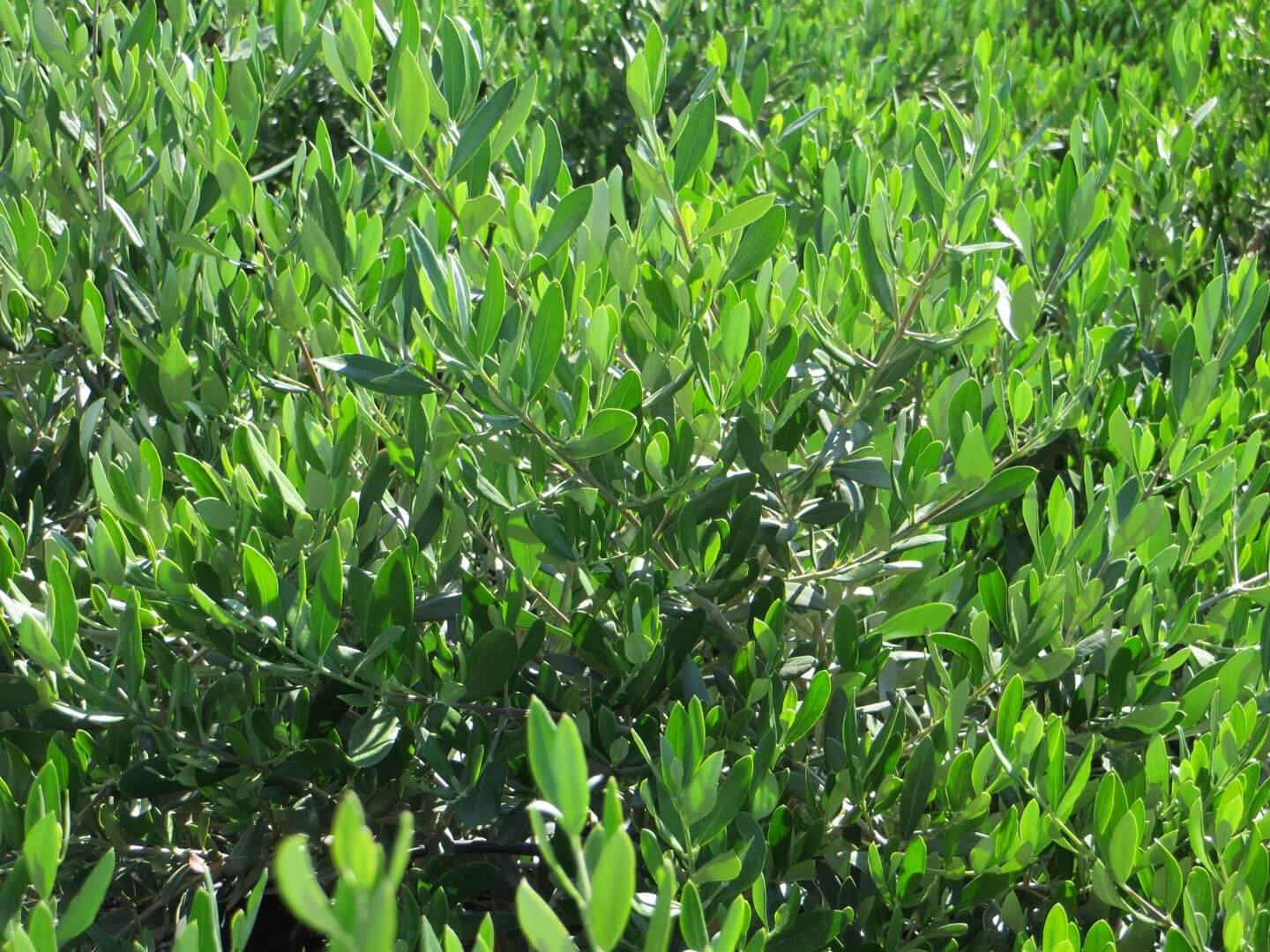
Foliage: Narrow, lance-linear leaves 3.5–25 cm long, olive to silvery-green
-
Flowers: Small white flowers in loose panicles; creamy-white blooms appear in spring and fall
-
Light: Full sun preferred; tolerates partial sun
-
Available Sizes: Commonly offered in 5-gallon, 15-gallon, 24-inch box, 36-inch box, and 48-inch box containers
Who It's For
Ideal for:
-
California homeowners seeking a drought tolerant, elegant small tree that won't spike their water bill
-
Property owners needing fast-growing screening for patios, lot lines, or streetside planting
-
Landscape designers creating water-wise gardens that still deliver graceful form and year-round foliage
-
Gardeners who love the weeping willow aesthetic but live in a climate where traditional willows simply don't make sense
-
Urban planners looking for well-behaved evergreen trees with non-invasive roots for street and median plantings
If you want a tree that brings beauty, privacy, and drought resilience to your California landscape without the high maintenance, Australian Willow fits your needs.
Frequently Asked Questions
How fast does Australian Willow grow? The growth rate is moderate to fast. Young trees in favorable conditions can add 6–10 feet per year. Growth slows as the tree approaches its mature height of 20–35 feet. A 24-inch box specimen typically arrives at about 6–7 feet tall and will establish quickly in the right conditions.
Does it really need less water than regular willows? Yes-dramatically less. Traditional weeping willows are high water-use trees that need consistently moist soil, often near water sources. Australian willows, once established after one to two years, they require little to moderate watering. In Southern California's climate, mature trees in deep soils can go weeks between waterings during summer. They are suitable for xeriscape environments.
Will it work in my California climate zone? Australian willows thrive in USDA zones 9 to 11, which covers the vast majority of California from coastal areas to inland valleys to the low desert. They can handle the heat of inland Southern California and the mild winters along the coast. They can tolerate occasional light frost down to about 15–20°F, so even cooler California microclimates in zone 8b can support this tree.
How much pruning does it need? Minimal. Early-year shape pruning helps develop a strong leader and manage canopy form, but once the tree is mature, only occasional removal of broken or crossing branches is needed. Avoid heavy pruning-the natural weeping form is its best feature.
What if it doesn't thrive in my yard? Contact our team for a consultation. We can help assess your site conditions-soil drainage, sun exposure, and watering schedule-to give your tree the best start. Yardwork stands behind the quality of every tree we ship.
Ready to Transform Your Landscape?
The Australian willow tree delivers the graceful, weeping elegance you want with the drought tolerance your landscape needs-all while staying green through every season, providing light shade, and attracting birds and bees to your garden.
Create a Graceful Privacy Screen That Thrives in California's Climate
The Australian Willow (Geijera parviflora) delivers the elegant, weeping silhouette of a classic willow without the heavy water demands. This evergreen tree is native to Australia, where it thrives in the arid woodlands of eastern Australia, and it translates beautifully into Southern California landscapes. If you want a graceful, drought tolerant privacy screen that stays green through every season, this is the tree to plant.
Why You'll Love It
-
Drought Tolerant – Once established, Australian willows require little to moderate watering and are suitable for xeriscape environments. In deep soils across Southern California, mature trees can go two to three weeks without irrigation during summer.
-
Fast Growing – With a moderate-to-fast growth rate, young trees can put on 6–10 feet per year in favorable conditions, providing meaningful screening in a short time. Australian willows can grow up to 30 feet tall at maturity.
-
Evergreen Beauty – They are evergreen trees with narrow, weeping leaves that hold their silvery-green color year-round, providing constant privacy and a soft, textured canopy. The aromatic leaves release a subtle citrus scent when crushed.
-
Low Maintenance – The tree is considered largely pest- and disease-free. Once established, it requires very little maintenance-just occasional shape pruning in the early years and minimal cleanup since the Australian Willow drops minimal leaf litter compared to true willows.
-
Versatile Placement – Works beautifully as a patio tree, among street trees, or as a privacy screen. The tree is ideal for creating light shade around patios, and it is popular in urban landscapes as a street tree due to its tolerance of city conditions.
What Makes It Different
Most people who want a weeping willow in California quickly discover that traditional Salix species demand constant moisture, grow aggressively large (30–50 feet with wide-spreading roots), and drop mountains of leaf litter. They belong near rivers, not in a suburban yard with water restrictions.
Australian Willow offers:
-
True Drought Resistance – Unlike the traditional weeping willow that needs riparian conditions, this native willow from the dry woodlands of eastern Australia thrives on low water once its roots are established. It is remarkably heat-tolerant and can withstand light frost, making it suited to California's Mediterranean climate.
-
Evergreen Nature – While deciduous willows go bare in winter and leave you staring at naked branches, the Australian willow tree keeps its foliage all year long, providing uninterrupted screening and beauty through every season.
-
Non-Invasive Roots – The Australian Willow has a deep, non-invasive root system, meaning you can plant it near patios, walkways, and structures without the infrastructure damage that true willows are notorious for.
How To Grow The Australian Willow Successfully
-
Choose Your Location Select a spot with full sun to partial sun and well-drained soil. Australian willows prefer full sun exposure for the densest canopy and best form, though they tolerate filtered shade. They thrive in well-drained soils and can handle a range of soil types-from clay to sandy to alkaline. Allow space for a mature spread of 20–25 feet.
-
Plant and Establish Water regularly during the first year-weekly or more during dry months. Mulch around the base to retain soil moisture and protect developing roots. After one to two seasons of consistent care, your tree will be fully established and ready to thrive on its own with minimal supplemental water.
-
Watch It Grow As the tree matures, the inner structure stays upright while outer branches develop that characteristic weeping appearance. The tree's canopy provides a graceful, draped silhouette that gets more stunning with time. It produces fragrant, creamy-white flowers from late fall to early summer, and the small white flowers in spring and fall attract bees and wildlife to your garden. The Australian Willow attracts birds and bees to gardens, adding life to your landscape.
Plant Details
-
Botanical Name: Geijera parviflora (genus Rutaceae, also known as Wilga or Sheepbush)
-
Mature Size: The Australian Willow typically grows 20 to 35 feet high and 20 to 25 feet wide
-
USDA Zones: It thrives in USDA Zones 8b to 11-perfect for California. Also performs well in desert landscapes
-
Water Needs: Low to moderate once established; they can tolerate occasional light frost and drought
-
Soil Requirements: Well-draining; tolerates various soil types including clay, sandy, loamy, and alkaline soils
-
Growth Rate: Fast (6–10 ft/year when young, moderating with maturity)
-
Bark: The bark of the Australian Willow is grey and furrowed with age, adding winter interest and a rough, textured trunk
-
Foliage: Narrow, lance-linear leaves 3.5–25 cm long, olive to silvery-green
-
Flowers: Small white flowers in loose panicles; creamy-white blooms appear in spring and fall
-
Light: Full sun preferred; tolerates partial sun
-
Available Sizes: Commonly offered in 5-gallon, 15-gallon, 24-inch box, 36-inch box, and 48-inch box containers
Who It's For
Ideal for:
-
California homeowners seeking a drought tolerant, elegant small tree that won't spike their water bill
-
Property owners needing fast-growing screening for patios, lot lines, or streetside planting
-
Landscape designers creating water-wise gardens that still deliver graceful form and year-round foliage
-
Gardeners who love the weeping willow aesthetic but live in a climate where traditional willows simply don't make sense
-
Urban planners looking for well-behaved evergreen trees with non-invasive roots for street and median plantings
If you want a tree that brings beauty, privacy, and drought resilience to your California landscape without the high maintenance, Australian Willow fits your needs.
Frequently Asked Questions
How fast does Australian Willow grow? The growth rate is moderate to fast. Young trees in favorable conditions can add 6–10 feet per year. Growth slows as the tree approaches its mature height of 20–35 feet. A 24-inch box specimen typically arrives at about 6–7 feet tall and will establish quickly in the right conditions.
Does it really need less water than regular willows? Yes-dramatically less. Traditional weeping willows are high water-use trees that need consistently moist soil, often near water sources. Australian willows, once established after one to two years, they require little to moderate watering. In Southern California's climate, mature trees in deep soils can go weeks between waterings during summer. They are suitable for xeriscape environments.
Will it work in my California climate zone? Australian willows thrive in USDA zones 9 to 11, which covers the vast majority of California from coastal areas to inland valleys to the low desert. They can handle the heat of inland Southern California and the mild winters along the coast. They can tolerate occasional light frost down to about 15–20°F, so even cooler California microclimates in zone 8b can support this tree.
How much pruning does it need? Minimal. Early-year shape pruning helps develop a strong leader and manage canopy form, but once the tree is mature, only occasional removal of broken or crossing branches is needed. Avoid heavy pruning-the natural weeping form is its best feature.
What if it doesn't thrive in my yard? Contact our team for a consultation. We can help assess your site conditions-soil drainage, sun exposure, and watering schedule-to give your tree the best start. Yardwork stands behind the quality of every tree we ship.
Ready to Transform Your Landscape?
The Australian willow tree delivers the graceful, weeping elegance you want with the drought tolerance your landscape needs-all while staying green through every season, providing light shade, and attracting birds and bees to your garden.
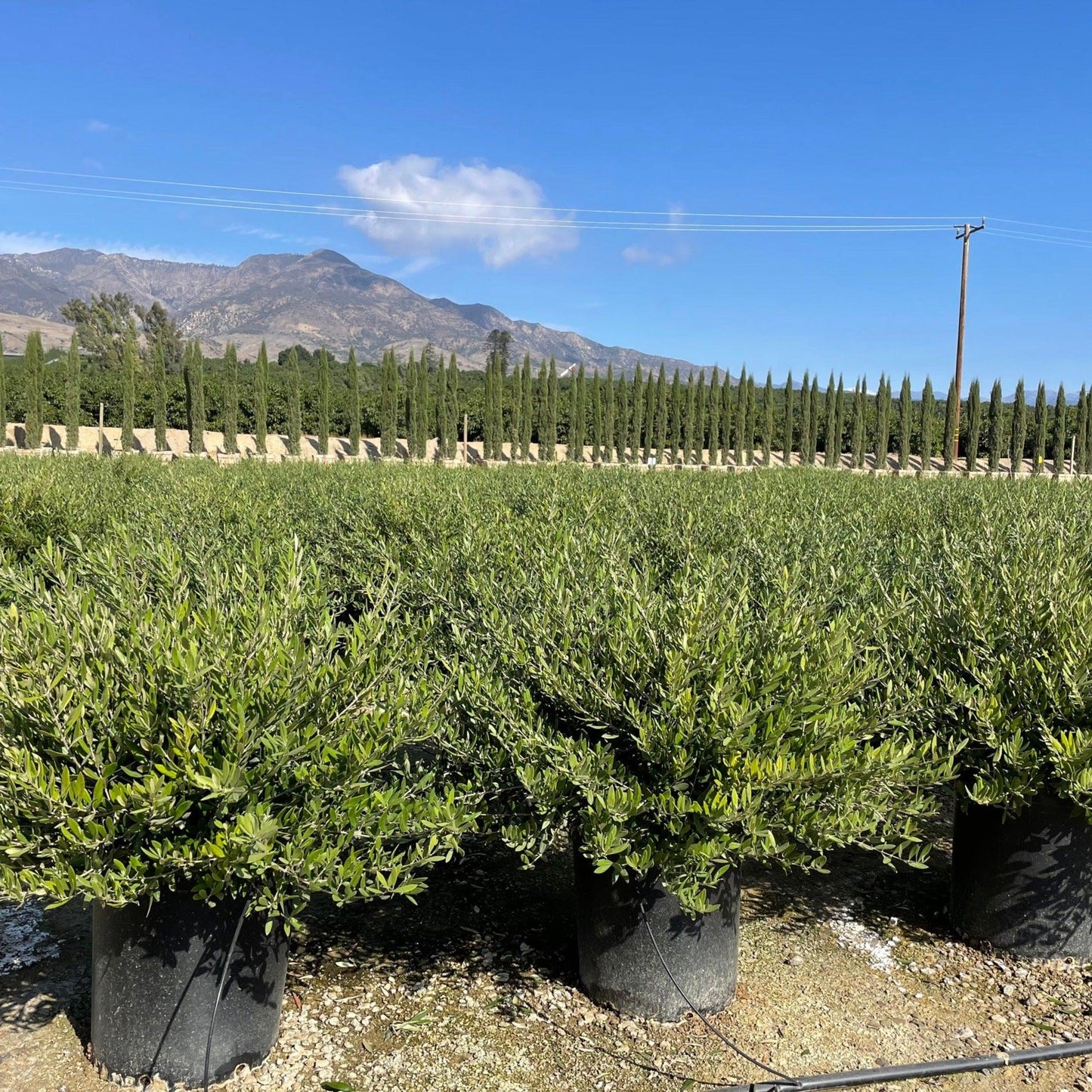
Plants vary greatly by type and no guarantees are made on sizing.
However here is a rough idea of sizes based on containers that are direct from our growing grounds.
15 Gallon Shrub 3-4 Ft. Tall
15 Gallon Tree 5-6 Ft. Tall
24" Box Shrub 5-6 Ft. Tall
24" Box Tree 6-7 Ft. Tall
36" Box Tree 8-10 Ft. Tall
48" Box Tree 10-12 Ft. Tall
Please note: Citrus and California Native plants such as Manzanita are smaller than traditional sizing.
Please contact us to confirm sizing of items before purchasing if this is a concern.
Plants vary greatly by type and no guarantees are made on sizing.
However here is a rough idea of sizes based on containers that are direct from our growing grounds.
15 Gallon Shrub 3-4 Ft. Tall
15 Gallon Tree 5-6 Ft. Tall
24" Box Shrub 5-6 Ft. Tall
24" Box Tree 6-7 Ft. Tall
36" Box Tree 8-10 Ft. Tall
48" Box Tree 10-12 Ft. Tall
Please note: Citrus and California Native plants such as Manzanita are smaller than traditional sizing.
Please contact us to confirm sizing of items before purchasing if this is a concern.
Delivery does not include unloading of trees and plants larger than a 24" box.
Trees and plants in smaller containers will be dropped curbside.
Delivery beyond a curbside drop will be charged extra.
Trees and plants that are sold in container sizes larger than a 24" box size will require equipment and an operator onsite to help unload from the truck.
Please reach out to our team PRIOR to placing your order to coordinate.
Our team can provide unloading assistance with equipment for an extra fee.
Delivery does not include unloading of trees and plants larger than a 24" box.
Trees and plants in smaller containers will be dropped curbside.
Delivery beyond a curbside drop will be charged extra.
Trees and plants that are sold in container sizes larger than a 24" box size will require equipment and an operator onsite to help unload from the truck.
Please reach out to our team PRIOR to placing your order to coordinate.
Our team can provide unloading assistance with equipment for an extra fee.
You may also like...


Australian Willow - Geijera parviflora
Regular price
$395.00
Size
Create a Graceful Privacy Screen That Thrives in California's Climate
The Australian Willow (Geijera parviflora) delivers the elegant, weeping silhouette of a classic willow without the heavy water demands. This evergreen tree is native to Australia, where it thrives in the arid woodlands of eastern Australia, and it translates beautifully into Southern California landscapes. If you want a graceful, drought tolerant privacy screen that stays green through every season, this is the tree to plant.
Why You'll Love It
-
Drought Tolerant – Once established, Australian willows require little to moderate watering and are suitable for xeriscape environments. In deep soils across Southern California, mature trees can go two to three weeks without irrigation during summer.
-
Fast Growing – With a moderate-to-fast growth rate, young trees can put on 6–10 feet per year in favorable conditions, providing meaningful screening in a short time. Australian willows can grow up to 30 feet tall at maturity.
-
Evergreen Beauty – They are evergreen trees with narrow, weeping leaves that hold their silvery-green color year-round, providing constant privacy and a soft, textured canopy. The aromatic leaves release a subtle citrus scent when crushed.
-
Low Maintenance – The tree is considered largely pest- and disease-free. Once established, it requires very little maintenance-just occasional shape pruning in the early years and minimal cleanup since the Australian Willow drops minimal leaf litter compared to true willows.
-
Versatile Placement – Works beautifully as a patio tree, among street trees, or as a privacy screen. The tree is ideal for creating light shade around patios, and it is popular in urban landscapes as a street tree due to its tolerance of city conditions.
What Makes It Different
Most people who want a weeping willow in California quickly discover that traditional Salix species demand constant moisture, grow aggressively large (30–50 feet with wide-spreading roots), and drop mountains of leaf litter. They belong near rivers, not in a suburban yard with water restrictions.
Australian Willow offers:
-
True Drought Resistance – Unlike the traditional weeping willow that needs riparian conditions, this native willow from the dry woodlands of eastern Australia thrives on low water once its roots are established. It is remarkably heat-tolerant and can withstand light frost, making it suited to California's Mediterranean climate.
-
Evergreen Nature – While deciduous willows go bare in winter and leave you staring at naked branches, the Australian willow tree keeps its foliage all year long, providing uninterrupted screening and beauty through every season.
-
Non-Invasive Roots – The Australian Willow has a deep, non-invasive root system, meaning you can plant it near patios, walkways, and structures without the infrastructure damage that true willows are notorious for.
How To Grow The Australian Willow Successfully
-
Choose Your Location Select a spot with full sun to partial sun and well-drained soil. Australian willows prefer full sun exposure for the densest canopy and best form, though they tolerate filtered shade. They thrive in well-drained soils and can handle a range of soil types-from clay to sandy to alkaline. Allow space for a mature spread of 20–25 feet.
-
Plant and Establish Water regularly during the first year-weekly or more during dry months. Mulch around the base to retain soil moisture and protect developing roots. After one to two seasons of consistent care, your tree will be fully established and ready to thrive on its own with minimal supplemental water.
-
Watch It Grow As the tree matures, the inner structure stays upright while outer branches develop that characteristic weeping appearance. The tree's canopy provides a graceful, draped silhouette that gets more stunning with time. It produces fragrant, creamy-white flowers from late fall to early summer, and the small white flowers in spring and fall attract bees and wildlife to your garden. The Australian Willow attracts birds and bees to gardens, adding life to your landscape.
Plant Details
-
Botanical Name: Geijera parviflora (genus Rutaceae, also known as Wilga or Sheepbush)
-
Mature Size: The Australian Willow typically grows 20 to 35 feet high and 20 to 25 feet wide
-
USDA Zones: It thrives in USDA Zones 8b to 11-perfect for California. Also performs well in desert landscapes
-
Water Needs: Low to moderate once established; they can tolerate occasional light frost and drought
-
Soil Requirements: Well-draining; tolerates various soil types including clay, sandy, loamy, and alkaline soils
-
Growth Rate: Fast (6–10 ft/year when young, moderating with maturity)
-
Bark: The bark of the Australian Willow is grey and furrowed with age, adding winter interest and a rough, textured trunk
-
Foliage: Narrow, lance-linear leaves 3.5–25 cm long, olive to silvery-green
-
Flowers: Small white flowers in loose panicles; creamy-white blooms appear in spring and fall
-
Light: Full sun preferred; tolerates partial sun
-
Available Sizes: Commonly offered in 5-gallon, 15-gallon, 24-inch box, 36-inch box, and 48-inch box containers
Who It's For
Ideal for:
-
California homeowners seeking a drought tolerant, elegant small tree that won't spike their water bill
-
Property owners needing fast-growing screening for patios, lot lines, or streetside planting
-
Landscape designers creating water-wise gardens that still deliver graceful form and year-round foliage
-
Gardeners who love the weeping willow aesthetic but live in a climate where traditional willows simply don't make sense
-
Urban planners looking for well-behaved evergreen trees with non-invasive roots for street and median plantings
If you want a tree that brings beauty, privacy, and drought resilience to your California landscape without the high maintenance, Australian Willow fits your needs.
Frequently Asked Questions
How fast does Australian Willow grow? The growth rate is moderate to fast. Young trees in favorable conditions can add 6–10 feet per year. Growth slows as the tree approaches its mature height of 20–35 feet. A 24-inch box specimen typically arrives at about 6–7 feet tall and will establish quickly in the right conditions.
Does it really need less water than regular willows? Yes-dramatically less. Traditional weeping willows are high water-use trees that need consistently moist soil, often near water sources. Australian willows, once established after one to two years, they require little to moderate watering. In Southern California's climate, mature trees in deep soils can go weeks between waterings during summer. They are suitable for xeriscape environments.
Will it work in my California climate zone? Australian willows thrive in USDA zones 9 to 11, which covers the vast majority of California from coastal areas to inland valleys to the low desert. They can handle the heat of inland Southern California and the mild winters along the coast. They can tolerate occasional light frost down to about 15–20°F, so even cooler California microclimates in zone 8b can support this tree.
How much pruning does it need? Minimal. Early-year shape pruning helps develop a strong leader and manage canopy form, but once the tree is mature, only occasional removal of broken or crossing branches is needed. Avoid heavy pruning-the natural weeping form is its best feature.
What if it doesn't thrive in my yard? Contact our team for a consultation. We can help assess your site conditions-soil drainage, sun exposure, and watering schedule-to give your tree the best start. Yardwork stands behind the quality of every tree we ship.
Ready to Transform Your Landscape?
The Australian willow tree delivers the graceful, weeping elegance you want with the drought tolerance your landscape needs-all while staying green through every season, providing light shade, and attracting birds and bees to your garden.
Create a Graceful Privacy Screen That Thrives in California's Climate
The Australian Willow (Geijera parviflora) delivers the elegant, weeping silhouette of a classic willow without the heavy water demands. This evergreen tree is native to Australia, where it thrives in the arid woodlands of eastern Australia, and it translates beautifully into Southern California landscapes. If you want a graceful, drought tolerant privacy screen that stays green through every season, this is the tree to plant.
Why You'll Love It
-
Drought Tolerant – Once established, Australian willows require little to moderate watering and are suitable for xeriscape environments. In deep soils across Southern California, mature trees can go two to three weeks without irrigation during summer.
-
Fast Growing – With a moderate-to-fast growth rate, young trees can put on 6–10 feet per year in favorable conditions, providing meaningful screening in a short time. Australian willows can grow up to 30 feet tall at maturity.
-
Evergreen Beauty – They are evergreen trees with narrow, weeping leaves that hold their silvery-green color year-round, providing constant privacy and a soft, textured canopy. The aromatic leaves release a subtle citrus scent when crushed.
-
Low Maintenance – The tree is considered largely pest- and disease-free. Once established, it requires very little maintenance-just occasional shape pruning in the early years and minimal cleanup since the Australian Willow drops minimal leaf litter compared to true willows.
-
Versatile Placement – Works beautifully as a patio tree, among street trees, or as a privacy screen. The tree is ideal for creating light shade around patios, and it is popular in urban landscapes as a street tree due to its tolerance of city conditions.
What Makes It Different
Most people who want a weeping willow in California quickly discover that traditional Salix species demand constant moisture, grow aggressively large (30–50 feet with wide-spreading roots), and drop mountains of leaf litter. They belong near rivers, not in a suburban yard with water restrictions.
Australian Willow offers:
-
True Drought Resistance – Unlike the traditional weeping willow that needs riparian conditions, this native willow from the dry woodlands of eastern Australia thrives on low water once its roots are established. It is remarkably heat-tolerant and can withstand light frost, making it suited to California's Mediterranean climate.
-
Evergreen Nature – While deciduous willows go bare in winter and leave you staring at naked branches, the Australian willow tree keeps its foliage all year long, providing uninterrupted screening and beauty through every season.
-
Non-Invasive Roots – The Australian Willow has a deep, non-invasive root system, meaning you can plant it near patios, walkways, and structures without the infrastructure damage that true willows are notorious for.
How To Grow The Australian Willow Successfully
-
Choose Your Location Select a spot with full sun to partial sun and well-drained soil. Australian willows prefer full sun exposure for the densest canopy and best form, though they tolerate filtered shade. They thrive in well-drained soils and can handle a range of soil types-from clay to sandy to alkaline. Allow space for a mature spread of 20–25 feet.
-
Plant and Establish Water regularly during the first year-weekly or more during dry months. Mulch around the base to retain soil moisture and protect developing roots. After one to two seasons of consistent care, your tree will be fully established and ready to thrive on its own with minimal supplemental water.
-
Watch It Grow As the tree matures, the inner structure stays upright while outer branches develop that characteristic weeping appearance. The tree's canopy provides a graceful, draped silhouette that gets more stunning with time. It produces fragrant, creamy-white flowers from late fall to early summer, and the small white flowers in spring and fall attract bees and wildlife to your garden. The Australian Willow attracts birds and bees to gardens, adding life to your landscape.
Plant Details
-
Botanical Name: Geijera parviflora (genus Rutaceae, also known as Wilga or Sheepbush)
-
Mature Size: The Australian Willow typically grows 20 to 35 feet high and 20 to 25 feet wide
-
USDA Zones: It thrives in USDA Zones 8b to 11-perfect for California. Also performs well in desert landscapes
-
Water Needs: Low to moderate once established; they can tolerate occasional light frost and drought
-
Soil Requirements: Well-draining; tolerates various soil types including clay, sandy, loamy, and alkaline soils
-
Growth Rate: Fast (6–10 ft/year when young, moderating with maturity)
-
Bark: The bark of the Australian Willow is grey and furrowed with age, adding winter interest and a rough, textured trunk
-
Foliage: Narrow, lance-linear leaves 3.5–25 cm long, olive to silvery-green
-
Flowers: Small white flowers in loose panicles; creamy-white blooms appear in spring and fall
-
Light: Full sun preferred; tolerates partial sun
-
Available Sizes: Commonly offered in 5-gallon, 15-gallon, 24-inch box, 36-inch box, and 48-inch box containers
Who It's For
Ideal for:
-
California homeowners seeking a drought tolerant, elegant small tree that won't spike their water bill
-
Property owners needing fast-growing screening for patios, lot lines, or streetside planting
-
Landscape designers creating water-wise gardens that still deliver graceful form and year-round foliage
-
Gardeners who love the weeping willow aesthetic but live in a climate where traditional willows simply don't make sense
-
Urban planners looking for well-behaved evergreen trees with non-invasive roots for street and median plantings
If you want a tree that brings beauty, privacy, and drought resilience to your California landscape without the high maintenance, Australian Willow fits your needs.
Frequently Asked Questions
How fast does Australian Willow grow? The growth rate is moderate to fast. Young trees in favorable conditions can add 6–10 feet per year. Growth slows as the tree approaches its mature height of 20–35 feet. A 24-inch box specimen typically arrives at about 6–7 feet tall and will establish quickly in the right conditions.
Does it really need less water than regular willows? Yes-dramatically less. Traditional weeping willows are high water-use trees that need consistently moist soil, often near water sources. Australian willows, once established after one to two years, they require little to moderate watering. In Southern California's climate, mature trees in deep soils can go weeks between waterings during summer. They are suitable for xeriscape environments.
Will it work in my California climate zone? Australian willows thrive in USDA zones 9 to 11, which covers the vast majority of California from coastal areas to inland valleys to the low desert. They can handle the heat of inland Southern California and the mild winters along the coast. They can tolerate occasional light frost down to about 15–20°F, so even cooler California microclimates in zone 8b can support this tree.
How much pruning does it need? Minimal. Early-year shape pruning helps develop a strong leader and manage canopy form, but once the tree is mature, only occasional removal of broken or crossing branches is needed. Avoid heavy pruning-the natural weeping form is its best feature.
What if it doesn't thrive in my yard? Contact our team for a consultation. We can help assess your site conditions-soil drainage, sun exposure, and watering schedule-to give your tree the best start. Yardwork stands behind the quality of every tree we ship.
Ready to Transform Your Landscape?
The Australian willow tree delivers the graceful, weeping elegance you want with the drought tolerance your landscape needs-all while staying green through every season, providing light shade, and attracting birds and bees to your garden.
Plants vary greatly by type and no guarantees are made on sizing.
However here is a rough idea of sizes based on containers that are direct from our growing grounds.
15 Gallon Shrub 3-4 Ft. Tall
15 Gallon Tree 5-6 Ft. Tall
24" Box Shrub 5-6 Ft. Tall
24" Box Tree 6-7 Ft. Tall
36" Box Tree 8-10 Ft. Tall
48" Box Tree 10-12 Ft. Tall
Please note: Citrus and California Native plants such as Manzanita are smaller than traditional sizing.
Please contact us to confirm sizing of items before purchasing if this is a concern.
Plants vary greatly by type and no guarantees are made on sizing.
However here is a rough idea of sizes based on containers that are direct from our growing grounds.
15 Gallon Shrub 3-4 Ft. Tall
15 Gallon Tree 5-6 Ft. Tall
24" Box Shrub 5-6 Ft. Tall
24" Box Tree 6-7 Ft. Tall
36" Box Tree 8-10 Ft. Tall
48" Box Tree 10-12 Ft. Tall
Please note: Citrus and California Native plants such as Manzanita are smaller than traditional sizing.
Please contact us to confirm sizing of items before purchasing if this is a concern.
Delivery does not include unloading of trees and plants larger than a 24" box.
Trees and plants in smaller containers will be dropped curbside.
Delivery beyond a curbside drop will be charged extra.
Trees and plants that are sold in container sizes larger than a 24" box size will require equipment and an operator onsite to help unload from the truck.
Please reach out to our team PRIOR to placing your order to coordinate.
Our team can provide unloading assistance with equipment for an extra fee.
Delivery does not include unloading of trees and plants larger than a 24" box.
Trees and plants in smaller containers will be dropped curbside.
Delivery beyond a curbside drop will be charged extra.
Trees and plants that are sold in container sizes larger than a 24" box size will require equipment and an operator onsite to help unload from the truck.
Please reach out to our team PRIOR to placing your order to coordinate.
Our team can provide unloading assistance with equipment for an extra fee.
Recommended For You















Pairs Well With











You May Also Like












Thousands of Healthy Plants Delivered

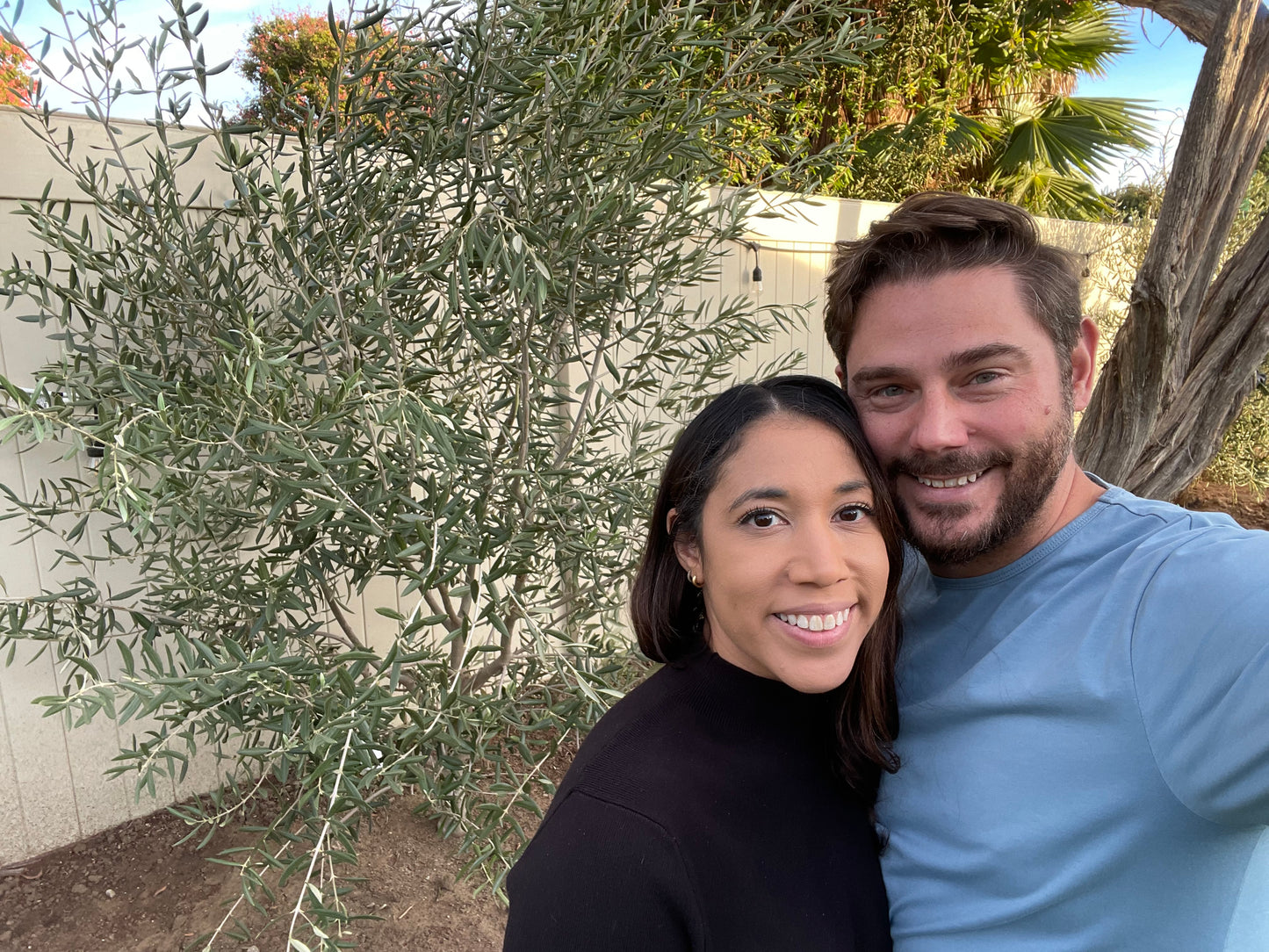
Yardwork was so great to work with. First they had the Swan Hill olive trees that we had been searching for, we had contacted several other nurseries without any luck previously. Then they answered all of our questions in a timely matter prior to ordering and finally delivered within a few days of placing it. Their staff is incredibly knowledgeable; they delivered and planted our trees with expertise to ensure that they would do well in our yard. We would definitely work with them again for future projects.











A Modern Experience
At Yardwork, we carefully curate thousands of plants, in all container sizes, to provide you with the best selection of the highest quality trees and plants at the best price, with the convenience of an online platform.
Uncompromised Quality
We choose only the finest specimens and hand select our plants just before delivery to ensure you receive the freshest and most robust specimens available for your landscape.
Industry Leading Warranties
Our 30, 90, and 365 extended warranties provide some of the best coverage to ensure our trees and plants thrive in your landscape.
Frequently Asked Questions
We're committed to changing everything about trees and plants - how they’re grown, how you shop for them, and how much they cost. We handle orders ourselves. No middlemen to get between us (or our prices) and you.
We're committed to changing everything about trees and plants - how they’re grown, how you shop for them, and how much they cost. We handle orders ourselves. No middlemen to get between us (or our prices) and you.
Delivery does not include unloading of trees and plants LARGER than a 24" box.
Trees and plants in smaller containers will be dropped curbside (usually on the driveway or near the front doorstep).
Delivery beyond a curbside drop will be charged extra.
Trees and plants that are sold in container sizes LARGER than a 24" box size will require equipment and/or enough manpower onsite to help unload from the truck.
Please reach out to our team PRIOR to placing your order to help coordinate.
Our team can provide unloading assistance with equipment for an extra fee as well.
Delivery does not include unloading of trees and plants LARGER than a 24" box.
Trees and plants in smaller containers will be dropped curbside (usually on the driveway or near the front doorstep).
Delivery beyond a curbside drop will be charged extra.
Trees and plants that are sold in container sizes LARGER than a 24" box size will require equipment and/or enough manpower onsite to help unload from the truck.
Please reach out to our team PRIOR to placing your order to help coordinate.
Our team can provide unloading assistance with equipment for an extra fee as well.
We ship locally within California within 7-10 days of your order being placed.
We ship nationally using carrier partners, based on order size. Our common order minimums for out of state shipping is $5,000.
Text or call 323-576-4159 for specific shipping details for your location.
We ship locally within California within 7-10 days of your order being placed.
We ship nationally using carrier partners, based on order size. Our common order minimums for out of state shipping is $5,000.
Text or call 323-576-4159 for specific shipping details for your location.
We are currently online only and don't have physical locations where you can view plants in person.
That's why we have photos direct from the growing grounds of the plants we will ship and we display pricing right in our store.
We do make sure to pick the very best trees and plants prior to shipping and make sure that they have gone through our multi-point inspection for health and structure.
We will always reach out prior to delivery if we find a quality issue or need to provide a substitute.
We are currently online only and don't have physical locations where you can view plants in person.
That's why we have photos direct from the growing grounds of the plants we will ship and we display pricing right in our store.
We do make sure to pick the very best trees and plants prior to shipping and make sure that they have gone through our multi-point inspection for health and structure.
We will always reach out prior to delivery if we find a quality issue or need to provide a substitute.
Plants vary greatly by type. Here is a rough idea of sizes based on containers that are direct from our growing grounds.
15 Gallon Shrub 3-4 Ft. Tall
15 Gallon Tree 5-6 Ft. Tall
24" Box Shrub 5-6 Ft. Tall
24" Box Tree 6-7 Ft. Tall
36" Box Shrub/Tree 7-9 Ft. Tall
48" Box Shrub/Tree 8-10 Ft. Tall
**Please note that we do not make guarantees of sizes. If you have questions or concerns, please call or text to request accurate sizing for the particular plant you're considering, prior to ordering.
Plants vary greatly by type. Here is a rough idea of sizes based on containers that are direct from our growing grounds.
15 Gallon Shrub 3-4 Ft. Tall
15 Gallon Tree 5-6 Ft. Tall
24" Box Shrub 5-6 Ft. Tall
24" Box Tree 6-7 Ft. Tall
36" Box Shrub/Tree 7-9 Ft. Tall
48" Box Shrub/Tree 8-10 Ft. Tall
**Please note that we do not make guarantees of sizes. If you have questions or concerns, please call or text to request accurate sizing for the particular plant you're considering, prior to ordering.
We offer a limited 30 day warranty for plants that are delivered and planted by someone else and a 90 day warranty for plants that we plant.
The limited warranty covers plants that die as a result of disease or fungus which was derived from our growing grounds or from root balls that were root bound.
The warranty does not cover damage due to watering, fertilizer, soils, or any other conditions beyond our control. Additionally, the warranty does not cover plants that are shipped out of the state of California or shipped into California from other states. Custom plant orders are also not covered under warranty. Plants must be planted within 24 hours after delivery to qualify.
We can assist you in recommending the right soils and fertilizers to help your plant thrive after you plant it.
Text or call 323-576-4159 for further warranty information.
We offer a limited 30 day warranty for plants that are delivered and planted by someone else and a 90 day warranty for plants that we plant.
The limited warranty covers plants that die as a result of disease or fungus which was derived from our growing grounds or from root balls that were root bound.
The warranty does not cover damage due to watering, fertilizer, soils, or any other conditions beyond our control. Additionally, the warranty does not cover plants that are shipped out of the state of California or shipped into California from other states. Custom plant orders are also not covered under warranty. Plants must be planted within 24 hours after delivery to qualify.
We can assist you in recommending the right soils and fertilizers to help your plant thrive after you plant it.
Text or call 323-576-4159 for further warranty information.
Our local delivery team covers most cities in California.
There are some exceptions, so please get in touch to confirm prior to ordering.
Additionally, we ship using semi trucks and trailers throughout the entire United States and even abroad for large orders over $5,000. Each shipment is custom, so please reach out to our team to coordinate.
Our local delivery team covers most cities in California.
There are some exceptions, so please get in touch to confirm prior to ordering.
Additionally, we ship using semi trucks and trailers throughout the entire United States and even abroad for large orders over $5,000. Each shipment is custom, so please reach out to our team to coordinate.