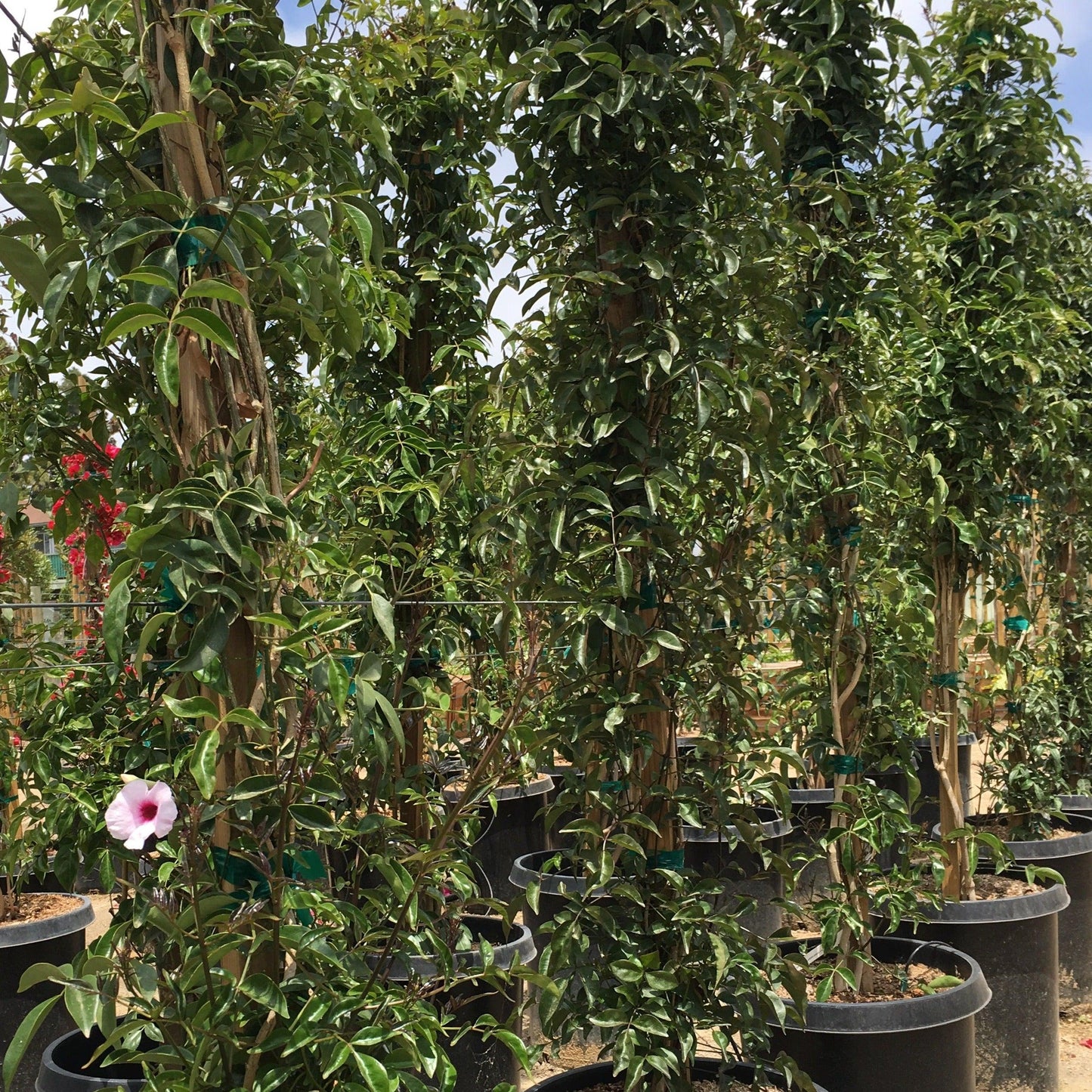
Transform Your Outdoor Space with Climbing Beauty
Vine plants are the right choice when you want fast vertical coverage, fragrant flowers, edible fruit, or a softer way to frame fences, pergolas, walls, and patios. From flowering vines like clematis and honeysuckle to productive grape vines and scarlet runner beans, the best option depends on your sun exposure, support structure, soil, and long-term vine maintenance needs.
Explore climbing plants suited to California gardens, from full sun privacy screens to shade-friendly ornamental vines, compact patio climbers, and indoor trailing favorites.
Vine Plants for Every Garden Purpose
Whether you need privacy, color, harvest, or shade, vines grow upward and outward to make the most of your outdoor space. Their growth habit varies by species: some use tendrils, some are twining, some cling with aerial roots or aerial rootlets, and some scramblers need help attaching to a trellis or frame, and a local plant nursery near you can help you match growth habit to the right structures.
Privacy Screening & Coverage Vines
For quick privacy, choose fast growing vines that can cover fences, pergolas, and arbors with dense foliage. Trumpet vine and American wisteria are strong options when you need height and screening, and they can be combined with tall evergreen privacy trees for year-round coverage, but both require regular pruning and a sturdy support structure to stay controlled.
Trumpet vine (Campsis radicans) is a fast-growing flowering vine that can reach heights of 20 to 40 feet and is known for attracting hummingbirds with its large funnel-shaped flowers. Wisteria (Wisteria spp.) is a well-known climbing flowering vine that can grow 10 to 50 feet long and is often grown for its long hanging clusters of flowers in shades of lavender, purple, white, or blue.
For dense coverage, virginia creeper, boston ivy, climbing hydrangea, and hydrangea vine can soften garden walls and create natural barriers. Climbing hydrangea (Hydrangea anomala subsp. petiolaris) can grow 30 to 50 feet tall and is suitable for shade, producing delicate white flowers from late spring to mid-summer.
Decorative & Flowering Vines
Flowering vines add color, movement, and seasonal interest to patios, garden walls, and outdoor entertaining areas. Clematis (Clematis spp.) is a versatile perennial flowering vine that can grow from 2 to 50 feet tall and blooms from early spring to fall, depending on the variety.
For fragrance, consider star jasmine, honeysuckle, and Carolina jessamine. Honeysuckle (Lonicera spp.) is a vigorous perennial vine that can grow 8 to 30 feet tall and is known for its fragrant tubular flowers that attract pollinators. Many varieties bring butterflies, hummingbirds, and bees into the garden with pink, yellow, orange, purple, creamy white, or green-accented blooms.
Passionflower is another attractive tropical vine for dramatic flowers, while purple bougainvillea brings vivid color in hot full sun locations and has roots in South America. Use these ornamental vines to frame a patio, trail over an arbor, or climb beside shrubs and trees for a layered landscape.
Edible & Functional Vines
Edible vines combine beauty with harvest. Grape vines offer edible fruit, summer shade, and strong architectural value over a pergola or trellis. Scarlet runner beans are a vigorous vining plant with bright flowers, edible pods and seeds, and excellent pollinator appeal.
These dual-purpose varieties fit well into kitchen gardens, sustainable landscaping, and compact edible beds. They are a great choice when you want flowers, foliage, and food from the same plant, and can pair well with larger fruiting options like a mature avocado tree elsewhere in the yard.
For busy homeowners, choose the right plants for your site from the beginning. Proper spacing and regular pruning prevent disease and encourage maximum fruit or flower production for vine plants, while good soil preparation reduces long-term maintenance.
Choose the Right Vine Plant for Your Growing Conditions
Vines can thrive in a variety of light conditions, from full sun to deep shade, depending on their specific species and growth habits. The best choice starts with where the plant will grow, how much space it can occupy, and what kind of structure it can climb.
For Full Sun Areas
Full sun locations suit heat-tolerant climbers that need strong light for flowers and fruit. Bougainvillea, morning glory, trumpet vine, grapes, and many passionflower varieties perform best where they receive long hours of sun.
Drought-resistant options are especially useful in California gardens once established, but young vines still need consistent water. To grow healthy vine plants, sturdy structural support and effective soil moisture management must be provided.
Choose vigorous growers carefully. A vigorous grower can deliver fast coverage, but regular pruning is essential to keep stems, branches, and roots from overwhelming nearby trees, fences, roofs, or shrubs.
For Shade & Partial Shade
Shade and partial shade areas can still support attractive climbing plants. Climbing hydrangea is one of the best choices for north-facing walls, under tree canopies, and cooler garden corners because it tolerates shade and attaches with aerial roots.
English ivy, also known as common ivy or Hedera helix, can provide strong coverage in shade, though it needs careful control outdoors. English ivy (Hedera helix) is a vigorous indoor vining plant that can grow rapidly, sometimes reaching lengths of up to 100 feet, and requires regular pruning to maintain its size indoors.
For low-light indoor spaces, pothos plants are reliable and easy to place on shelves, hanging baskets, or a moss pole. Pothos (Epipremnum aureum) is one of the most popular indoor vining plants due to its low maintenance and ability to thrive in low light conditions, growing up to 12 feet long.
For Small Spaces & Containers
Small gardens, balconies, and patios benefit from compact climbers that stay manageable in containers. Clematis, mandevilla, hoya carnosa, arrowhead vine, monstera peru, and heartleaf philodendron can bring trailing foliage, waxy leaves, and flowers to tight spaces.
The heartleaf philodendron (Philodendron hederaceum) is a common indoor vining plant that can grow up to 10 feet long and is known for its attractive draping vines, making it ideal for hanging baskets or shelves. Many indoor-outdoor vines can be trained on a moss pole, small trellis, or decorative frame.
Mandevilla is often treated as a tender perennial in cooler areas and can be moved indoors during colder months. For containers, focus on drainage, steady moisture, and support before the vines grow too large, and consider pairing them with compact citrus like a Valencia orange tree in a nearby bed for added color and fragrance.
For Large Coverage Areas
Large walls, long fences, mature arbors, and pergolas need vines with enough vigor to fill the space. Wisteria, virginia creeper, trumpet vine, climbing hydrangea, and grape vines can create major visual impact when matched to the right support structure, while evergreen options like a Fern Pine hedge can extend privacy and greenery beyond climbing plants.
Different types of vines have unique methods of attachment, such as twining stems, tendrils, or aerial rootlets, which influence their growth habits and support needs. Tendril climbers utilize curly appendages to grab onto supports and do best on narrow structures. Twining vines corkscrew around their supports and thrive on poles, thin wire, or chain-link fencing.
Clinging vines use small root-like holdfasts to adhere to rough surfaces like brick or wood. Scramblers do not naturally attach themselves to supports and need to be manually tied using soft garden ties. Planning for these attachment styles helps prevent damage and keeps coverage attractive over time.
Popular Vine Plant Varieties That Thrive in California
California gardens range from coastal shade to inland heat, so the best vine depends on water needs, sun exposure, mature size, and maintenance level. Yardwork helps match species to your microclimate so the plant performs well after planting, whether you’re choosing climbing plants or complementary flowering trees for added height and bloom.
Low-Maintenance Favorites
For water-conscious landscaping, native and adapted vines are often the most practical choices. California wild grape, native clematis species, star jasmine, and established climbing hydrangea can perform well with less intervention once roots are developed.
Hardy varieties are especially useful where homeowners want beauty without constant care. Adding a mulch layer around the base of the plant helps retain moisture and prevent weeds, while rich, well-draining soil supports stronger roots and healthier foliage.
Vines thrive in rich, well-draining soil and avoid over-fertilizing the planting hole initially. Too much fertilizer at planting can push leafy growth before the root system is ready to support it.
Flowering & Fragrant Varieties
For seasonal color and scent, clematis, honeysuckle, star jasmine vines, wisteria, Carolina jessamine, and passionflower offer standout blooms. These flowering vines can attract hummingbirds, butterflies, and other pollinators while giving patios and garden entrances a softer, more finished look.
Look for bloom timing that suits your space. Spring bloomers deliver early color, early summer varieties extend the display, and late summer flowering vines add interest when many shrubs have finished blooming.
Fragrant flowers are especially valuable near seating areas, walkways, and outdoor dining spaces. Star jasmine offers glossy green foliage and perfume, honeysuckle brings tubular flowers, and clematis varieties can provide purple, pink, white, or blue-toned blooms depending on the cultivar.
Fast-Growing Coverage Options
When you need immediate screening, fast growing vines offer quick results. Trumpet vine, virginia creeper, wisteria, morning glory, and some honeysuckle species can cover a trellis or fence rapidly.
Aggressive growth needs management. Pruning helps keep vines under control and encourages better airflow; the best time to prune depends on the plant’s bloom cycle. Late bloomers or non-flowering vines should be pruned in late winter before new spring growth begins.
Early bloomers should be pruned after flowering in the spring if they bloom on “old wood.” Balanced selection matters: the fastest vine is not always the best vine if it requires more control than your garden plan allows.
How to Plant and Care for Your Vine Plants
Healthy vines start with the right site, the right support, and the right planting method. Vines can be trained to grow over walls, pergolas, and fences, providing quick coverage and visual interest in gardens.
Planting & Installation Tips
Prepare soil before planting by improving drainage, loosening compacted areas, and adding organic matter where needed. Most vines prefer rich, well-draining soil, consistent moisture during establishment, and a planting location that matches their sun or shade needs.
Install the support structure before or during planting. Tendril climbers need narrow supports, twining vines need poles or wire, clinging vines need suitable rough surfaces, and scramblers need soft ties to guide their stems.
Spacing matters for airflow and mature coverage. Clematis often needs room at the base, grape vines need space for long-term pruning and fruit production, and large climbers like wisteria or climbing hydrangea need strong structures that can handle mature weight.
Yardwork’s soil testing and consultation services help confirm pH, drainage, and planting conditions before installation. This is especially useful for edible vines, complex privacy screens, and large vertical garden projects.
Ongoing Care & Maintenance
Watering should reflect your California climate zone. Coastal gardens may need less frequent irrigation but better airflow to reduce mildew, while inland gardens often need deeper, more consistent summer watering.
Prune to control size, improve airflow, and encourage better flower or fruit production. Grapes, wisteria, clematis, hydrangea vine, and honeysuckle all have different pruning needs, so timing should follow the plant’s bloom cycle and growth habit.
A practical seasonal care calendar includes structural checks in winter, pruning before or after bloom depending on the species, training new stems in spring, watering and mulching in summer, and cleanup in fall. For complex installations, Yardwork can help with plant selection, support planning, and professional maintenance guidance.
Shop Vine Plants With Yardwork
Browse our curated selection of vine plants suited for California gardens, including ornamental vines, flowering vines, edible vines, shade climbers, and compact options for containers or indoors.
Professional delivery and planting services are available, along with free consultation to help you choose the right varieties for your space. We also offers soil testing services to ensure optimal growing conditions before your vines are planted.
Whether you want a fragrant star jasmine trellis, a clematis-covered arbor, a grape-covered pergola, or a fast privacy screen, our experts can help you create a healthy vertical garden that grows beautifully season after season.
Aggressive growth needs management. Pruning helps keep vines under control and encourages better airflow; the best time to prune depends on the plant's bloom cycle. Late bloomers or non-flowering vines should be pruned in late winter before new spring growth begins.
Early bloomers should be pruned after flowering in the spring if they bloom on "old wood." Balanced selection matters: the fastest vine is not always the best vine if it requires more control than your garden plan allows.