

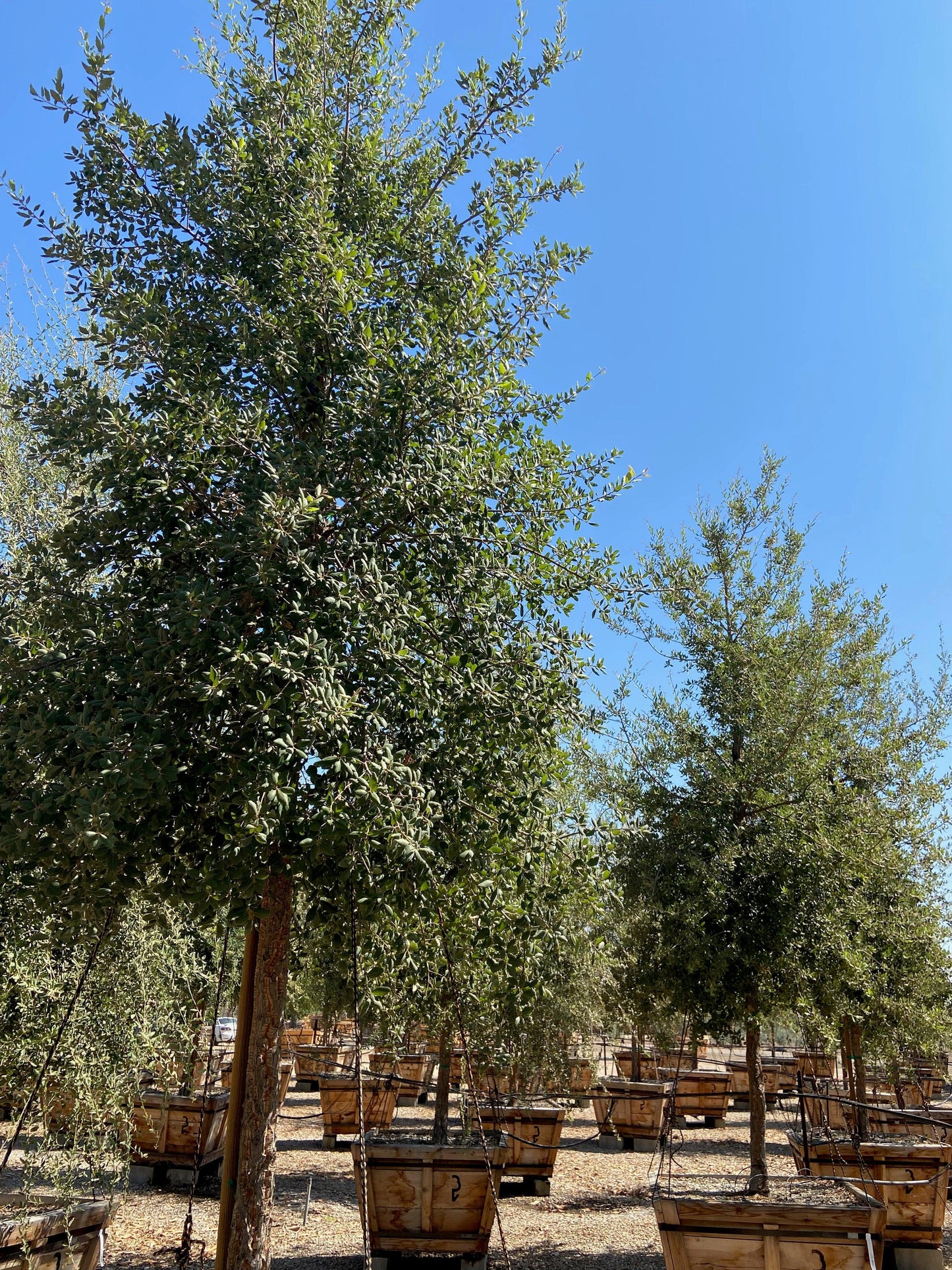
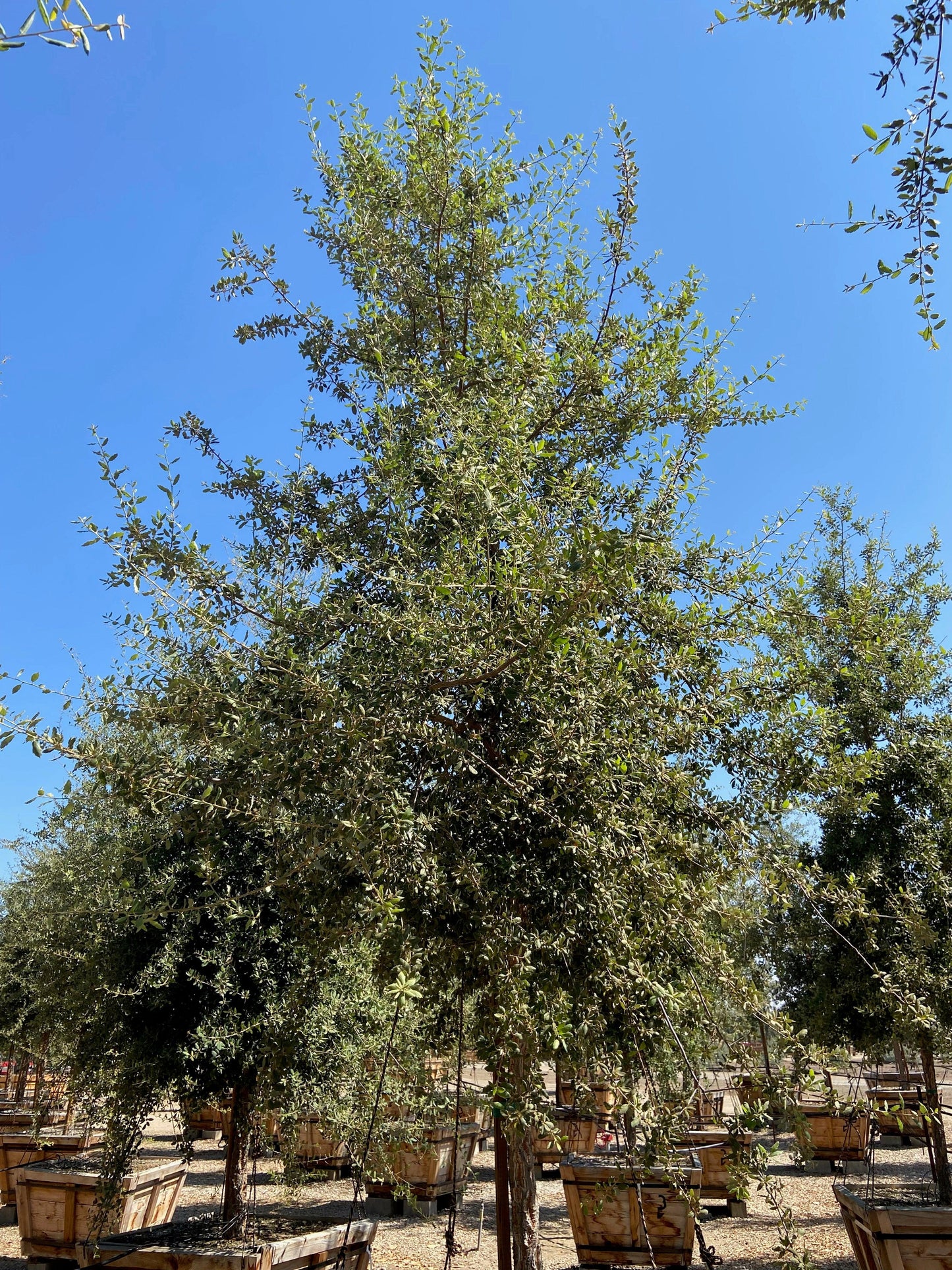
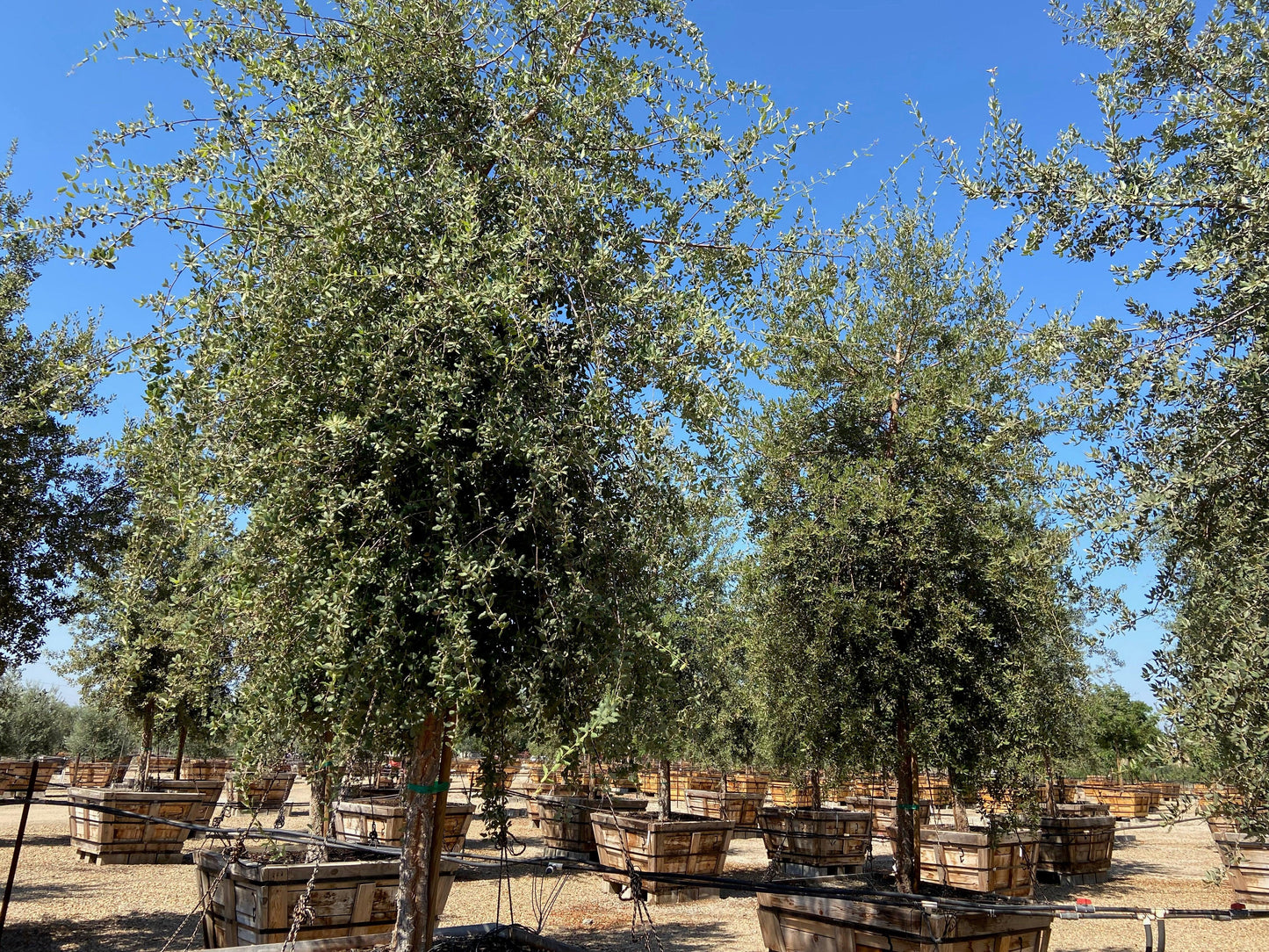
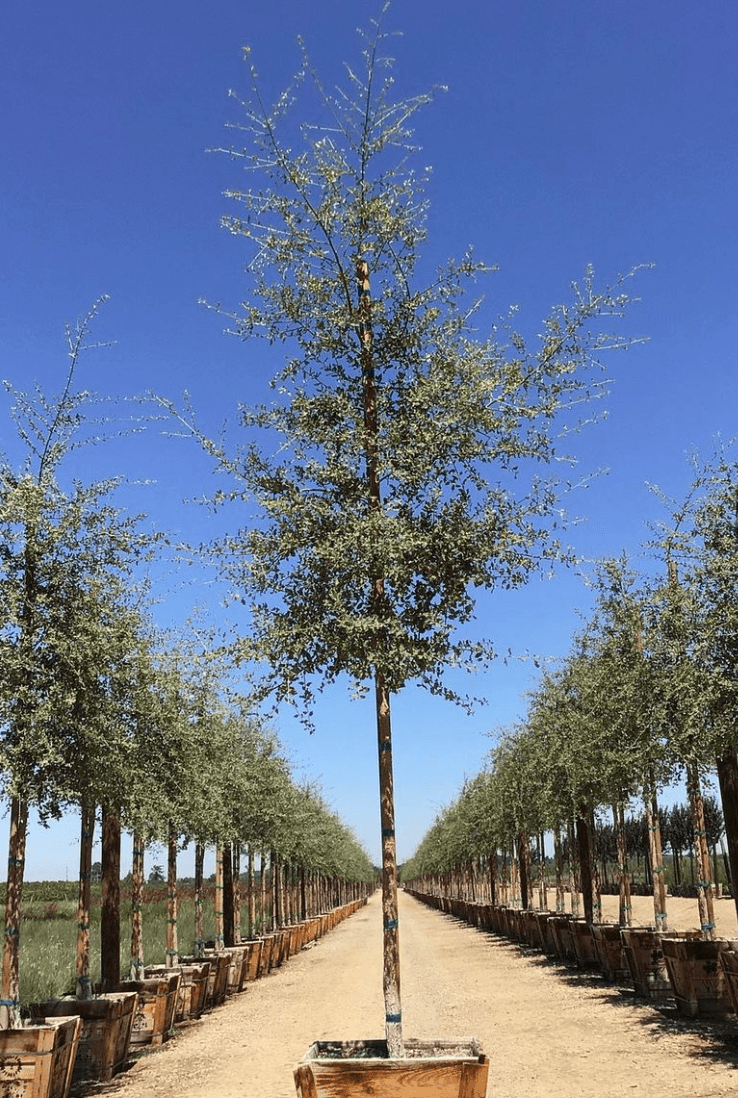


Cork Oak - Quercus Suber
Regular price
$4,500.00
Size
Transform Your California Landscape with Mediterranean Elegance
Cork Oak gives California landscapes a long-lived, drought-ready evergreen oak tree with sculptural bark, steady shade, and the character of the Mediterranean Basin. Known botanically as Quercus suber, this tree species is native to southwestern Europe and northwest Africa, especially Portugal, Spain, Italy, and other Mediterranean countries.
Designed for sunny, dry-climate gardens, cork oak trees bring year-round beauty with leathery evergreen foliage, a rounded canopy, textured branches, and a thick trunk covered in distinctive spongy bark. Once established, Cork Oak handles California’s dry summers with far less irrigation than many water-hungry shade trees.
Its thick, insulating bark is the feature that makes it unforgettable. The cork texture creates instant visual impact, while the broad canopy adds shade, privacy, habitat, and natural structure to residential landscapes.
Why You’ll Love Cork Oak
-
Drought-resistant once established – After the first 2–3 years, Cork Oak can rely largely on winter rain and occasional deep watering, helping reduce water use and maintenance costs.
-
Evergreen shade and privacy – The dense canopy provides year-round screening, light shade, and a grounded landscape presence, with some seasonal leaf drop in spring.
-
One-of-a-kind bark texture – The thick cork bark is spongy, rugged, and visually rich, making a single tree feel like a mature specimen.
-
Wildlife-friendly habitat – Cork oak forests support birds, beneficial insects, acorns, fruit-feeding wildlife, and rich understory life.
-
Low maintenance over time – Once planted correctly in sun and well-draining soil, this oak becomes a durable, long-term landscape anchor.
Cork oaks can live for over 200 years, with some specimens reaching ages of up to 400 years. In the right location, mature Cork Oak trees are not just a tree for today’s yard - they are a long-term investment in shade, wildlife value, and sustainable landscape design.
What Makes Cork Oak Different
Most shade trees need frequent irrigation to stay healthy in California. Many fast-growing trees also come with weak wood, high cleanup, invasive roots, or short lifespans, which is why many homeowners consider small desert trees for landscaping when designing drought-ready yards.
Cork Oak offers:
-
Thick cork bark provides natural fire resistance – The cork oak has a thick, insulating bark that allows it to recover quickly after forest fires, making it well adapted to fire-prone ecosystems.
-
Mediterranean origin fits California’s climate – Cork Oak comes from the Mediterranean Basin, where hot, dry summers and mild, wet winters mirror much of California.
-
Distinctive spongy bark no other oak offers – Unlike holm oaks, valley oaks, or many other oak species, Quercus suber develops the elastic, thick bark used for cork production, and it can be paired with other oak trees for sale to build a diverse, resilient canopy.
Cork is impervious to liquids and gases due to the suberin lining of its cell walls, contributing to its use in wine stoppers and closures. That same natural material has made cork valuable for wine bottle stoppers, wine bottles, flooring, insulation, fashion accessories, and even aerospace applications.
Cork tissue comprises a honeycomb-like structure of 14-sided polyhedral cells filled with low-density gas, making it compressible and lightweight. Cork is utilized in various industries due to its lightweight, impermeable, elastic, and insulating properties.
How It Thrives
-
Plant in full sun and well-draining soil
Cork Oak performs best in open light, with room for its canopy and roots to develop. It prefers well-draining acidic soils to neutral soils and should not be planted where water collects or clay stays saturated. -
Water regularly for the first 2–3 years
Young trees need deep, consistent watering while they establish a strong root system. Cork oaks require annual rainfall of 500 to 700 millimeters (20 to 28 inches) for optimal growth, but can survive in areas with as little as 400 millimeters (16 inches) under certain conditions. -
Enjoy decades of low-maintenance beauty
Once established, Cork Oak becomes highly drought tolerant and can provide shade, structure, wildlife habitat, and Mediterranean character for generations.
Cork oak forests have deep root systems that stabilize soil and help combat desertification by preventing soil erosion. Similar to Coast Live Oak trees, cork oak forests help prevent soil erosion from wind and water, and increase the absorption rate of rainfall, enhancing the ecosystem’s resilience.
Tree Details
-
Botanical name: Quercus suber
-
Common name: Cork Oak
-
Plant type: Evergreen oak tree, suitable for pairing with other evergreen privacy trees
-
Mature landscape size: 30–65 feet tall and 25–40 feet wide
-
Botanical size reference: The cork oak (Quercus suber) can grow to heights of 10 to 15 meters (33 to 49 feet) and has a trunk diameter of 50 to 100 centimeters (20 to 39 inches).
-
Growth rate: Slow to moderate, typically 12–24 inches per year when young
-
Climate fit: The cork oak thrives in warm climates, preferring temperatures between 13 to 17 °C (55 to 63 °F) and can tolerate maximum temperatures of up to 40 °C (104 °F).
-
Hardiness zones: 7–10, suitable for many California landscapes where it can complement drought-tolerant options like African Sumac and other landscape trees
-
Soil requirements: Well-draining soil; avoid compacted, waterlogged, or poorly drained sites
-
Best exposure: Full sun
-
Included with purchase: Care guide and planting instructions
Cork harvesting is done manually without machinery, requiring specialized training to minimize damage to the tree during the process. The bark is traditionally peeled or stripped with an axe, then stacked in piles before processing. The first cork harvest occurs when the tree is about 25 years old and has a trunk diameter of 70 cm (28 in), with subsequent harvests taking place every 9 to 12 years. A cork oak can be harvested 16 times over its lifespan, which can exceed 200 years, with the best quality cork obtained from the third and fourth harvests. The first harvest is often called virgin cork.
Cork is used as a sustainable alternative in construction for insulation boards and flooring due to its eco-friendly characteristics. Cork serves as a vegan leather alternative for fashion and accessories due to its lightweight and water-resistant properties. Cork is employed in aerospace applications as a heat shield for spacecraft due to its extreme heat resistance and low weight.
Heritage note: Cork has been valued since ancient Greece, and cork oak forests in southern Portugal remain among the most famous in the world. The Whistler Tree in Portugal is often cited as one of the oldest cork oak specimens and a national monument, showing how a single tree can become part of a country’s living landscape.
Who It’s For
Ideal for:
-
California homeowners seeking drought-tolerant shade trees, whether Cork Oak or other options like California Pepper Trees
-
Landscape designers creating Mediterranean-style gardens who may mix evergreen oaks with flowering trees for California landscapes
-
Property owners wanting unique specimen trees with character, such as Cork Oak or a Rocky Mountain Glow Maple centerpiece tree
-
Homeowners replacing thirsty shade trees with sustainable landscaping solutions, potentially combining Cork Oak with native species like Engelmann Oak for added habitat value
-
Gardens where evergreen canopy, natural bark texture, and wildlife value matter
Cork oak forests create ecosystems that support endangered species such as the Iberian lynx and the Spanish imperial eagle. Cork oak forests are home to a high diversity of plant species, with almost 135 different plant species per square kilometer, contributing to overall biodiversity.
Cork oak forests account for approximately 10 million tons of CO2 absorption each year, significantly contributing to carbon storage in the environment. The cork oak tree can store up to five times more carbon than an unharvested tree, as it utilizes additional carbon in the regeneration of its bark.
If you want an oak that combines beauty, drought resilience, fire adaptation, habitat value, and long-term structure, Cork Oak is a strong fit for California landscapes.
Frequently Asked Questions
How long does Cork Oak take to establish?
Cork Oak usually takes about 2–3 years to establish deep roots. During that time, regular deep watering is important. After establishment, cork oak trees become much more drought tolerant.
Will Cork Oak survive California’s dry summers?
Yes. Quercus suber is native to the Mediterranean Basin, including Portugal, Spain, Italy, southwestern Europe, and parts of North Africa. Its natural climate includes dry summers, winter rain, and intense sun, making it well suited to many California regions.
Is Cork Oak fire resistant?
Cork Oak is one of the better oak species for fire-prone landscapes because its thick, insulating bark helps protect the living tissue beneath the bark. Mature cork oaks can survive fires and regenerate more effectively than many thin-barked trees, though young trees and recently harvested trees are more vulnerable.
Does Cork Oak produce acorns?
Yes. Like other oak trees, Cork Oak produces acorns. These acorns can support wildlife and add ecological value to the landscape.
What should I know about pests or disease?
Cork Oak needs excellent drainage. Cork oak woodlands have been devastated by the common water mould Phytophthora cinnamomi, which grows in the roots of the tree. Avoid overwatering, compacted soil, and standing water to reduce disease pressure.
Are cork oak forests under threat?
Yes. The cork oak faces many threats such as fire, deforestation, agricultural expansion, disease, and climate change. Increased demand for alternative wine stoppers poses a significant threat to cork oak populations, as the market for cork decreases, leading to less conservation of cork oak landscapes.
Ready to Plant?
Choose the Cork Oak for Mediterranean beauty, thick cork bark, evergreen shade, wildlife habitat, and long-term California resilience. Our team offers expert planting guidance so your Cork Oak starts strong and grows into a lasting landscape feature.
Transform Your California Landscape with Mediterranean Elegance
Cork Oak gives California landscapes a long-lived, drought-ready evergreen oak tree with sculptural bark, steady shade, and the character of the Mediterranean Basin. Known botanically as Quercus suber, this tree species is native to southwestern Europe and northwest Africa, especially Portugal, Spain, Italy, and other Mediterranean countries.
Designed for sunny, dry-climate gardens, cork oak trees bring year-round beauty with leathery evergreen foliage, a rounded canopy, textured branches, and a thick trunk covered in distinctive spongy bark. Once established, Cork Oak handles California’s dry summers with far less irrigation than many water-hungry shade trees.
Its thick, insulating bark is the feature that makes it unforgettable. The cork texture creates instant visual impact, while the broad canopy adds shade, privacy, habitat, and natural structure to residential landscapes.
Why You’ll Love Cork Oak
-
Drought-resistant once established – After the first 2–3 years, Cork Oak can rely largely on winter rain and occasional deep watering, helping reduce water use and maintenance costs.
-
Evergreen shade and privacy – The dense canopy provides year-round screening, light shade, and a grounded landscape presence, with some seasonal leaf drop in spring.
-
One-of-a-kind bark texture – The thick cork bark is spongy, rugged, and visually rich, making a single tree feel like a mature specimen.
-
Wildlife-friendly habitat – Cork oak forests support birds, beneficial insects, acorns, fruit-feeding wildlife, and rich understory life.
-
Low maintenance over time – Once planted correctly in sun and well-draining soil, this oak becomes a durable, long-term landscape anchor.
Cork oaks can live for over 200 years, with some specimens reaching ages of up to 400 years. In the right location, mature Cork Oak trees are not just a tree for today’s yard - they are a long-term investment in shade, wildlife value, and sustainable landscape design.
What Makes Cork Oak Different
Most shade trees need frequent irrigation to stay healthy in California. Many fast-growing trees also come with weak wood, high cleanup, invasive roots, or short lifespans, which is why many homeowners consider small desert trees for landscaping when designing drought-ready yards.
Cork Oak offers:
-
Thick cork bark provides natural fire resistance – The cork oak has a thick, insulating bark that allows it to recover quickly after forest fires, making it well adapted to fire-prone ecosystems.
-
Mediterranean origin fits California’s climate – Cork Oak comes from the Mediterranean Basin, where hot, dry summers and mild, wet winters mirror much of California.
-
Distinctive spongy bark no other oak offers – Unlike holm oaks, valley oaks, or many other oak species, Quercus suber develops the elastic, thick bark used for cork production, and it can be paired with other oak trees for sale to build a diverse, resilient canopy.
Cork is impervious to liquids and gases due to the suberin lining of its cell walls, contributing to its use in wine stoppers and closures. That same natural material has made cork valuable for wine bottle stoppers, wine bottles, flooring, insulation, fashion accessories, and even aerospace applications.
Cork tissue comprises a honeycomb-like structure of 14-sided polyhedral cells filled with low-density gas, making it compressible and lightweight. Cork is utilized in various industries due to its lightweight, impermeable, elastic, and insulating properties.
How It Thrives
-
Plant in full sun and well-draining soil
Cork Oak performs best in open light, with room for its canopy and roots to develop. It prefers well-draining acidic soils to neutral soils and should not be planted where water collects or clay stays saturated. -
Water regularly for the first 2–3 years
Young trees need deep, consistent watering while they establish a strong root system. Cork oaks require annual rainfall of 500 to 700 millimeters (20 to 28 inches) for optimal growth, but can survive in areas with as little as 400 millimeters (16 inches) under certain conditions. -
Enjoy decades of low-maintenance beauty
Once established, Cork Oak becomes highly drought tolerant and can provide shade, structure, wildlife habitat, and Mediterranean character for generations.
Cork oak forests have deep root systems that stabilize soil and help combat desertification by preventing soil erosion. Similar to Coast Live Oak trees, cork oak forests help prevent soil erosion from wind and water, and increase the absorption rate of rainfall, enhancing the ecosystem’s resilience.
Tree Details
-
Botanical name: Quercus suber
-
Common name: Cork Oak
-
Plant type: Evergreen oak tree, suitable for pairing with other evergreen privacy trees
-
Mature landscape size: 30–65 feet tall and 25–40 feet wide
-
Botanical size reference: The cork oak (Quercus suber) can grow to heights of 10 to 15 meters (33 to 49 feet) and has a trunk diameter of 50 to 100 centimeters (20 to 39 inches).
-
Growth rate: Slow to moderate, typically 12–24 inches per year when young
-
Climate fit: The cork oak thrives in warm climates, preferring temperatures between 13 to 17 °C (55 to 63 °F) and can tolerate maximum temperatures of up to 40 °C (104 °F).
-
Hardiness zones: 7–10, suitable for many California landscapes where it can complement drought-tolerant options like African Sumac and other landscape trees
-
Soil requirements: Well-draining soil; avoid compacted, waterlogged, or poorly drained sites
-
Best exposure: Full sun
-
Included with purchase: Care guide and planting instructions
Cork harvesting is done manually without machinery, requiring specialized training to minimize damage to the tree during the process. The bark is traditionally peeled or stripped with an axe, then stacked in piles before processing. The first cork harvest occurs when the tree is about 25 years old and has a trunk diameter of 70 cm (28 in), with subsequent harvests taking place every 9 to 12 years. A cork oak can be harvested 16 times over its lifespan, which can exceed 200 years, with the best quality cork obtained from the third and fourth harvests. The first harvest is often called virgin cork.
Cork is used as a sustainable alternative in construction for insulation boards and flooring due to its eco-friendly characteristics. Cork serves as a vegan leather alternative for fashion and accessories due to its lightweight and water-resistant properties. Cork is employed in aerospace applications as a heat shield for spacecraft due to its extreme heat resistance and low weight.
Heritage note: Cork has been valued since ancient Greece, and cork oak forests in southern Portugal remain among the most famous in the world. The Whistler Tree in Portugal is often cited as one of the oldest cork oak specimens and a national monument, showing how a single tree can become part of a country’s living landscape.
Who It’s For
Ideal for:
-
California homeowners seeking drought-tolerant shade trees, whether Cork Oak or other options like California Pepper Trees
-
Landscape designers creating Mediterranean-style gardens who may mix evergreen oaks with flowering trees for California landscapes
-
Property owners wanting unique specimen trees with character, such as Cork Oak or a Rocky Mountain Glow Maple centerpiece tree
-
Homeowners replacing thirsty shade trees with sustainable landscaping solutions, potentially combining Cork Oak with native species like Engelmann Oak for added habitat value
-
Gardens where evergreen canopy, natural bark texture, and wildlife value matter
Cork oak forests create ecosystems that support endangered species such as the Iberian lynx and the Spanish imperial eagle. Cork oak forests are home to a high diversity of plant species, with almost 135 different plant species per square kilometer, contributing to overall biodiversity.
Cork oak forests account for approximately 10 million tons of CO2 absorption each year, significantly contributing to carbon storage in the environment. The cork oak tree can store up to five times more carbon than an unharvested tree, as it utilizes additional carbon in the regeneration of its bark.
If you want an oak that combines beauty, drought resilience, fire adaptation, habitat value, and long-term structure, Cork Oak is a strong fit for California landscapes.
Frequently Asked Questions
How long does Cork Oak take to establish?
Cork Oak usually takes about 2–3 years to establish deep roots. During that time, regular deep watering is important. After establishment, cork oak trees become much more drought tolerant.
Will Cork Oak survive California’s dry summers?
Yes. Quercus suber is native to the Mediterranean Basin, including Portugal, Spain, Italy, southwestern Europe, and parts of North Africa. Its natural climate includes dry summers, winter rain, and intense sun, making it well suited to many California regions.
Is Cork Oak fire resistant?
Cork Oak is one of the better oak species for fire-prone landscapes because its thick, insulating bark helps protect the living tissue beneath the bark. Mature cork oaks can survive fires and regenerate more effectively than many thin-barked trees, though young trees and recently harvested trees are more vulnerable.
Does Cork Oak produce acorns?
Yes. Like other oak trees, Cork Oak produces acorns. These acorns can support wildlife and add ecological value to the landscape.
What should I know about pests or disease?
Cork Oak needs excellent drainage. Cork oak woodlands have been devastated by the common water mould Phytophthora cinnamomi, which grows in the roots of the tree. Avoid overwatering, compacted soil, and standing water to reduce disease pressure.
Are cork oak forests under threat?
Yes. The cork oak faces many threats such as fire, deforestation, agricultural expansion, disease, and climate change. Increased demand for alternative wine stoppers poses a significant threat to cork oak populations, as the market for cork decreases, leading to less conservation of cork oak landscapes.
Ready to Plant?
Choose the Cork Oak for Mediterranean beauty, thick cork bark, evergreen shade, wildlife habitat, and long-term California resilience. Our team offers expert planting guidance so your Cork Oak starts strong and grows into a lasting landscape feature.
Plants vary greatly by type and no guarantees are made on sizing.
However here is a rough idea of sizes based on containers that are direct from our growing grounds.
15 Gallon Shrub 3-4 Ft. Tall
15 Gallon Tree 5-6 Ft. Tall
24" Box Shrub 5-6 Ft. Tall
24" Box Tree 6-7 Ft. Tall
36" Box Tree 8-10 Ft. Tall
48" Box Tree 10-12 Ft. Tall
Please note: Citrus and California Native plants such as Manzanita are smaller than traditional sizing.
Please contact us to confirm sizing of items before purchasing if this is a concern.
Plants vary greatly by type and no guarantees are made on sizing.
However here is a rough idea of sizes based on containers that are direct from our growing grounds.
15 Gallon Shrub 3-4 Ft. Tall
15 Gallon Tree 5-6 Ft. Tall
24" Box Shrub 5-6 Ft. Tall
24" Box Tree 6-7 Ft. Tall
36" Box Tree 8-10 Ft. Tall
48" Box Tree 10-12 Ft. Tall
Please note: Citrus and California Native plants such as Manzanita are smaller than traditional sizing.
Please contact us to confirm sizing of items before purchasing if this is a concern.
Delivery does not include unloading of trees and plants larger than a 24" box.
Trees and plants in smaller containers will be dropped curbside.
Delivery beyond a curbside drop will be charged extra.
Trees and plants that are sold in container sizes larger than a 24" box size will require equipment and an operator onsite to help unload from the truck.
Please reach out to our team PRIOR to placing your order to coordinate.
Our team can provide unloading assistance with equipment for an extra fee.
Delivery does not include unloading of trees and plants larger than a 24" box.
Trees and plants in smaller containers will be dropped curbside.
Delivery beyond a curbside drop will be charged extra.
Trees and plants that are sold in container sizes larger than a 24" box size will require equipment and an operator onsite to help unload from the truck.
Please reach out to our team PRIOR to placing your order to coordinate.
Our team can provide unloading assistance with equipment for an extra fee.
You may also like...


Cork Oak - Quercus Suber
Regular price
$4,500.00
Size
Transform Your California Landscape with Mediterranean Elegance
Cork Oak gives California landscapes a long-lived, drought-ready evergreen oak tree with sculptural bark, steady shade, and the character of the Mediterranean Basin. Known botanically as Quercus suber, this tree species is native to southwestern Europe and northwest Africa, especially Portugal, Spain, Italy, and other Mediterranean countries.
Designed for sunny, dry-climate gardens, cork oak trees bring year-round beauty with leathery evergreen foliage, a rounded canopy, textured branches, and a thick trunk covered in distinctive spongy bark. Once established, Cork Oak handles California’s dry summers with far less irrigation than many water-hungry shade trees.
Its thick, insulating bark is the feature that makes it unforgettable. The cork texture creates instant visual impact, while the broad canopy adds shade, privacy, habitat, and natural structure to residential landscapes.
Why You’ll Love Cork Oak
-
Drought-resistant once established – After the first 2–3 years, Cork Oak can rely largely on winter rain and occasional deep watering, helping reduce water use and maintenance costs.
-
Evergreen shade and privacy – The dense canopy provides year-round screening, light shade, and a grounded landscape presence, with some seasonal leaf drop in spring.
-
One-of-a-kind bark texture – The thick cork bark is spongy, rugged, and visually rich, making a single tree feel like a mature specimen.
-
Wildlife-friendly habitat – Cork oak forests support birds, beneficial insects, acorns, fruit-feeding wildlife, and rich understory life.
-
Low maintenance over time – Once planted correctly in sun and well-draining soil, this oak becomes a durable, long-term landscape anchor.
Cork oaks can live for over 200 years, with some specimens reaching ages of up to 400 years. In the right location, mature Cork Oak trees are not just a tree for today’s yard - they are a long-term investment in shade, wildlife value, and sustainable landscape design.
What Makes Cork Oak Different
Most shade trees need frequent irrigation to stay healthy in California. Many fast-growing trees also come with weak wood, high cleanup, invasive roots, or short lifespans, which is why many homeowners consider small desert trees for landscaping when designing drought-ready yards.
Cork Oak offers:
-
Thick cork bark provides natural fire resistance – The cork oak has a thick, insulating bark that allows it to recover quickly after forest fires, making it well adapted to fire-prone ecosystems.
-
Mediterranean origin fits California’s climate – Cork Oak comes from the Mediterranean Basin, where hot, dry summers and mild, wet winters mirror much of California.
-
Distinctive spongy bark no other oak offers – Unlike holm oaks, valley oaks, or many other oak species, Quercus suber develops the elastic, thick bark used for cork production, and it can be paired with other oak trees for sale to build a diverse, resilient canopy.
Cork is impervious to liquids and gases due to the suberin lining of its cell walls, contributing to its use in wine stoppers and closures. That same natural material has made cork valuable for wine bottle stoppers, wine bottles, flooring, insulation, fashion accessories, and even aerospace applications.
Cork tissue comprises a honeycomb-like structure of 14-sided polyhedral cells filled with low-density gas, making it compressible and lightweight. Cork is utilized in various industries due to its lightweight, impermeable, elastic, and insulating properties.
How It Thrives
-
Plant in full sun and well-draining soil
Cork Oak performs best in open light, with room for its canopy and roots to develop. It prefers well-draining acidic soils to neutral soils and should not be planted where water collects or clay stays saturated. -
Water regularly for the first 2–3 years
Young trees need deep, consistent watering while they establish a strong root system. Cork oaks require annual rainfall of 500 to 700 millimeters (20 to 28 inches) for optimal growth, but can survive in areas with as little as 400 millimeters (16 inches) under certain conditions. -
Enjoy decades of low-maintenance beauty
Once established, Cork Oak becomes highly drought tolerant and can provide shade, structure, wildlife habitat, and Mediterranean character for generations.
Cork oak forests have deep root systems that stabilize soil and help combat desertification by preventing soil erosion. Similar to Coast Live Oak trees, cork oak forests help prevent soil erosion from wind and water, and increase the absorption rate of rainfall, enhancing the ecosystem’s resilience.
Tree Details
-
Botanical name: Quercus suber
-
Common name: Cork Oak
-
Plant type: Evergreen oak tree, suitable for pairing with other evergreen privacy trees
-
Mature landscape size: 30–65 feet tall and 25–40 feet wide
-
Botanical size reference: The cork oak (Quercus suber) can grow to heights of 10 to 15 meters (33 to 49 feet) and has a trunk diameter of 50 to 100 centimeters (20 to 39 inches).
-
Growth rate: Slow to moderate, typically 12–24 inches per year when young
-
Climate fit: The cork oak thrives in warm climates, preferring temperatures between 13 to 17 °C (55 to 63 °F) and can tolerate maximum temperatures of up to 40 °C (104 °F).
-
Hardiness zones: 7–10, suitable for many California landscapes where it can complement drought-tolerant options like African Sumac and other landscape trees
-
Soil requirements: Well-draining soil; avoid compacted, waterlogged, or poorly drained sites
-
Best exposure: Full sun
-
Included with purchase: Care guide and planting instructions
Cork harvesting is done manually without machinery, requiring specialized training to minimize damage to the tree during the process. The bark is traditionally peeled or stripped with an axe, then stacked in piles before processing. The first cork harvest occurs when the tree is about 25 years old and has a trunk diameter of 70 cm (28 in), with subsequent harvests taking place every 9 to 12 years. A cork oak can be harvested 16 times over its lifespan, which can exceed 200 years, with the best quality cork obtained from the third and fourth harvests. The first harvest is often called virgin cork.
Cork is used as a sustainable alternative in construction for insulation boards and flooring due to its eco-friendly characteristics. Cork serves as a vegan leather alternative for fashion and accessories due to its lightweight and water-resistant properties. Cork is employed in aerospace applications as a heat shield for spacecraft due to its extreme heat resistance and low weight.
Heritage note: Cork has been valued since ancient Greece, and cork oak forests in southern Portugal remain among the most famous in the world. The Whistler Tree in Portugal is often cited as one of the oldest cork oak specimens and a national monument, showing how a single tree can become part of a country’s living landscape.
Who It’s For
Ideal for:
-
California homeowners seeking drought-tolerant shade trees, whether Cork Oak or other options like California Pepper Trees
-
Landscape designers creating Mediterranean-style gardens who may mix evergreen oaks with flowering trees for California landscapes
-
Property owners wanting unique specimen trees with character, such as Cork Oak or a Rocky Mountain Glow Maple centerpiece tree
-
Homeowners replacing thirsty shade trees with sustainable landscaping solutions, potentially combining Cork Oak with native species like Engelmann Oak for added habitat value
-
Gardens where evergreen canopy, natural bark texture, and wildlife value matter
Cork oak forests create ecosystems that support endangered species such as the Iberian lynx and the Spanish imperial eagle. Cork oak forests are home to a high diversity of plant species, with almost 135 different plant species per square kilometer, contributing to overall biodiversity.
Cork oak forests account for approximately 10 million tons of CO2 absorption each year, significantly contributing to carbon storage in the environment. The cork oak tree can store up to five times more carbon than an unharvested tree, as it utilizes additional carbon in the regeneration of its bark.
If you want an oak that combines beauty, drought resilience, fire adaptation, habitat value, and long-term structure, Cork Oak is a strong fit for California landscapes.
Frequently Asked Questions
How long does Cork Oak take to establish?
Cork Oak usually takes about 2–3 years to establish deep roots. During that time, regular deep watering is important. After establishment, cork oak trees become much more drought tolerant.
Will Cork Oak survive California’s dry summers?
Yes. Quercus suber is native to the Mediterranean Basin, including Portugal, Spain, Italy, southwestern Europe, and parts of North Africa. Its natural climate includes dry summers, winter rain, and intense sun, making it well suited to many California regions.
Is Cork Oak fire resistant?
Cork Oak is one of the better oak species for fire-prone landscapes because its thick, insulating bark helps protect the living tissue beneath the bark. Mature cork oaks can survive fires and regenerate more effectively than many thin-barked trees, though young trees and recently harvested trees are more vulnerable.
Does Cork Oak produce acorns?
Yes. Like other oak trees, Cork Oak produces acorns. These acorns can support wildlife and add ecological value to the landscape.
What should I know about pests or disease?
Cork Oak needs excellent drainage. Cork oak woodlands have been devastated by the common water mould Phytophthora cinnamomi, which grows in the roots of the tree. Avoid overwatering, compacted soil, and standing water to reduce disease pressure.
Are cork oak forests under threat?
Yes. The cork oak faces many threats such as fire, deforestation, agricultural expansion, disease, and climate change. Increased demand for alternative wine stoppers poses a significant threat to cork oak populations, as the market for cork decreases, leading to less conservation of cork oak landscapes.
Ready to Plant?
Choose the Cork Oak for Mediterranean beauty, thick cork bark, evergreen shade, wildlife habitat, and long-term California resilience. Our team offers expert planting guidance so your Cork Oak starts strong and grows into a lasting landscape feature.
Transform Your California Landscape with Mediterranean Elegance
Cork Oak gives California landscapes a long-lived, drought-ready evergreen oak tree with sculptural bark, steady shade, and the character of the Mediterranean Basin. Known botanically as Quercus suber, this tree species is native to southwestern Europe and northwest Africa, especially Portugal, Spain, Italy, and other Mediterranean countries.
Designed for sunny, dry-climate gardens, cork oak trees bring year-round beauty with leathery evergreen foliage, a rounded canopy, textured branches, and a thick trunk covered in distinctive spongy bark. Once established, Cork Oak handles California’s dry summers with far less irrigation than many water-hungry shade trees.
Its thick, insulating bark is the feature that makes it unforgettable. The cork texture creates instant visual impact, while the broad canopy adds shade, privacy, habitat, and natural structure to residential landscapes.
Why You’ll Love Cork Oak
-
Drought-resistant once established – After the first 2–3 years, Cork Oak can rely largely on winter rain and occasional deep watering, helping reduce water use and maintenance costs.
-
Evergreen shade and privacy – The dense canopy provides year-round screening, light shade, and a grounded landscape presence, with some seasonal leaf drop in spring.
-
One-of-a-kind bark texture – The thick cork bark is spongy, rugged, and visually rich, making a single tree feel like a mature specimen.
-
Wildlife-friendly habitat – Cork oak forests support birds, beneficial insects, acorns, fruit-feeding wildlife, and rich understory life.
-
Low maintenance over time – Once planted correctly in sun and well-draining soil, this oak becomes a durable, long-term landscape anchor.
Cork oaks can live for over 200 years, with some specimens reaching ages of up to 400 years. In the right location, mature Cork Oak trees are not just a tree for today’s yard - they are a long-term investment in shade, wildlife value, and sustainable landscape design.
What Makes Cork Oak Different
Most shade trees need frequent irrigation to stay healthy in California. Many fast-growing trees also come with weak wood, high cleanup, invasive roots, or short lifespans, which is why many homeowners consider small desert trees for landscaping when designing drought-ready yards.
Cork Oak offers:
-
Thick cork bark provides natural fire resistance – The cork oak has a thick, insulating bark that allows it to recover quickly after forest fires, making it well adapted to fire-prone ecosystems.
-
Mediterranean origin fits California’s climate – Cork Oak comes from the Mediterranean Basin, where hot, dry summers and mild, wet winters mirror much of California.
-
Distinctive spongy bark no other oak offers – Unlike holm oaks, valley oaks, or many other oak species, Quercus suber develops the elastic, thick bark used for cork production, and it can be paired with other oak trees for sale to build a diverse, resilient canopy.
Cork is impervious to liquids and gases due to the suberin lining of its cell walls, contributing to its use in wine stoppers and closures. That same natural material has made cork valuable for wine bottle stoppers, wine bottles, flooring, insulation, fashion accessories, and even aerospace applications.
Cork tissue comprises a honeycomb-like structure of 14-sided polyhedral cells filled with low-density gas, making it compressible and lightweight. Cork is utilized in various industries due to its lightweight, impermeable, elastic, and insulating properties.
How It Thrives
-
Plant in full sun and well-draining soil
Cork Oak performs best in open light, with room for its canopy and roots to develop. It prefers well-draining acidic soils to neutral soils and should not be planted where water collects or clay stays saturated. -
Water regularly for the first 2–3 years
Young trees need deep, consistent watering while they establish a strong root system. Cork oaks require annual rainfall of 500 to 700 millimeters (20 to 28 inches) for optimal growth, but can survive in areas with as little as 400 millimeters (16 inches) under certain conditions. -
Enjoy decades of low-maintenance beauty
Once established, Cork Oak becomes highly drought tolerant and can provide shade, structure, wildlife habitat, and Mediterranean character for generations.
Cork oak forests have deep root systems that stabilize soil and help combat desertification by preventing soil erosion. Similar to Coast Live Oak trees, cork oak forests help prevent soil erosion from wind and water, and increase the absorption rate of rainfall, enhancing the ecosystem’s resilience.
Tree Details
-
Botanical name: Quercus suber
-
Common name: Cork Oak
-
Plant type: Evergreen oak tree, suitable for pairing with other evergreen privacy trees
-
Mature landscape size: 30–65 feet tall and 25–40 feet wide
-
Botanical size reference: The cork oak (Quercus suber) can grow to heights of 10 to 15 meters (33 to 49 feet) and has a trunk diameter of 50 to 100 centimeters (20 to 39 inches).
-
Growth rate: Slow to moderate, typically 12–24 inches per year when young
-
Climate fit: The cork oak thrives in warm climates, preferring temperatures between 13 to 17 °C (55 to 63 °F) and can tolerate maximum temperatures of up to 40 °C (104 °F).
-
Hardiness zones: 7–10, suitable for many California landscapes where it can complement drought-tolerant options like African Sumac and other landscape trees
-
Soil requirements: Well-draining soil; avoid compacted, waterlogged, or poorly drained sites
-
Best exposure: Full sun
-
Included with purchase: Care guide and planting instructions
Cork harvesting is done manually without machinery, requiring specialized training to minimize damage to the tree during the process. The bark is traditionally peeled or stripped with an axe, then stacked in piles before processing. The first cork harvest occurs when the tree is about 25 years old and has a trunk diameter of 70 cm (28 in), with subsequent harvests taking place every 9 to 12 years. A cork oak can be harvested 16 times over its lifespan, which can exceed 200 years, with the best quality cork obtained from the third and fourth harvests. The first harvest is often called virgin cork.
Cork is used as a sustainable alternative in construction for insulation boards and flooring due to its eco-friendly characteristics. Cork serves as a vegan leather alternative for fashion and accessories due to its lightweight and water-resistant properties. Cork is employed in aerospace applications as a heat shield for spacecraft due to its extreme heat resistance and low weight.
Heritage note: Cork has been valued since ancient Greece, and cork oak forests in southern Portugal remain among the most famous in the world. The Whistler Tree in Portugal is often cited as one of the oldest cork oak specimens and a national monument, showing how a single tree can become part of a country’s living landscape.
Who It’s For
Ideal for:
-
California homeowners seeking drought-tolerant shade trees, whether Cork Oak or other options like California Pepper Trees
-
Landscape designers creating Mediterranean-style gardens who may mix evergreen oaks with flowering trees for California landscapes
-
Property owners wanting unique specimen trees with character, such as Cork Oak or a Rocky Mountain Glow Maple centerpiece tree
-
Homeowners replacing thirsty shade trees with sustainable landscaping solutions, potentially combining Cork Oak with native species like Engelmann Oak for added habitat value
-
Gardens where evergreen canopy, natural bark texture, and wildlife value matter
Cork oak forests create ecosystems that support endangered species such as the Iberian lynx and the Spanish imperial eagle. Cork oak forests are home to a high diversity of plant species, with almost 135 different plant species per square kilometer, contributing to overall biodiversity.
Cork oak forests account for approximately 10 million tons of CO2 absorption each year, significantly contributing to carbon storage in the environment. The cork oak tree can store up to five times more carbon than an unharvested tree, as it utilizes additional carbon in the regeneration of its bark.
If you want an oak that combines beauty, drought resilience, fire adaptation, habitat value, and long-term structure, Cork Oak is a strong fit for California landscapes.
Frequently Asked Questions
How long does Cork Oak take to establish?
Cork Oak usually takes about 2–3 years to establish deep roots. During that time, regular deep watering is important. After establishment, cork oak trees become much more drought tolerant.
Will Cork Oak survive California’s dry summers?
Yes. Quercus suber is native to the Mediterranean Basin, including Portugal, Spain, Italy, southwestern Europe, and parts of North Africa. Its natural climate includes dry summers, winter rain, and intense sun, making it well suited to many California regions.
Is Cork Oak fire resistant?
Cork Oak is one of the better oak species for fire-prone landscapes because its thick, insulating bark helps protect the living tissue beneath the bark. Mature cork oaks can survive fires and regenerate more effectively than many thin-barked trees, though young trees and recently harvested trees are more vulnerable.
Does Cork Oak produce acorns?
Yes. Like other oak trees, Cork Oak produces acorns. These acorns can support wildlife and add ecological value to the landscape.
What should I know about pests or disease?
Cork Oak needs excellent drainage. Cork oak woodlands have been devastated by the common water mould Phytophthora cinnamomi, which grows in the roots of the tree. Avoid overwatering, compacted soil, and standing water to reduce disease pressure.
Are cork oak forests under threat?
Yes. The cork oak faces many threats such as fire, deforestation, agricultural expansion, disease, and climate change. Increased demand for alternative wine stoppers poses a significant threat to cork oak populations, as the market for cork decreases, leading to less conservation of cork oak landscapes.
Ready to Plant?
Choose the Cork Oak for Mediterranean beauty, thick cork bark, evergreen shade, wildlife habitat, and long-term California resilience. Our team offers expert planting guidance so your Cork Oak starts strong and grows into a lasting landscape feature.
Plants vary greatly by type and no guarantees are made on sizing.
However here is a rough idea of sizes based on containers that are direct from our growing grounds.
15 Gallon Shrub 3-4 Ft. Tall
15 Gallon Tree 5-6 Ft. Tall
24" Box Shrub 5-6 Ft. Tall
24" Box Tree 6-7 Ft. Tall
36" Box Tree 8-10 Ft. Tall
48" Box Tree 10-12 Ft. Tall
Please note: Citrus and California Native plants such as Manzanita are smaller than traditional sizing.
Please contact us to confirm sizing of items before purchasing if this is a concern.
Plants vary greatly by type and no guarantees are made on sizing.
However here is a rough idea of sizes based on containers that are direct from our growing grounds.
15 Gallon Shrub 3-4 Ft. Tall
15 Gallon Tree 5-6 Ft. Tall
24" Box Shrub 5-6 Ft. Tall
24" Box Tree 6-7 Ft. Tall
36" Box Tree 8-10 Ft. Tall
48" Box Tree 10-12 Ft. Tall
Please note: Citrus and California Native plants such as Manzanita are smaller than traditional sizing.
Please contact us to confirm sizing of items before purchasing if this is a concern.
Delivery does not include unloading of trees and plants larger than a 24" box.
Trees and plants in smaller containers will be dropped curbside.
Delivery beyond a curbside drop will be charged extra.
Trees and plants that are sold in container sizes larger than a 24" box size will require equipment and an operator onsite to help unload from the truck.
Please reach out to our team PRIOR to placing your order to coordinate.
Our team can provide unloading assistance with equipment for an extra fee.
Delivery does not include unloading of trees and plants larger than a 24" box.
Trees and plants in smaller containers will be dropped curbside.
Delivery beyond a curbside drop will be charged extra.
Trees and plants that are sold in container sizes larger than a 24" box size will require equipment and an operator onsite to help unload from the truck.
Please reach out to our team PRIOR to placing your order to coordinate.
Our team can provide unloading assistance with equipment for an extra fee.
Recommended For You















Pairs Well With













You May Also Like












Thousands of Healthy Plants Delivered


Yardwork was so great to work with. First they had the Swan Hill olive trees that we had been searching for, we had contacted several other nurseries without any luck previously. Then they answered all of our questions in a timely matter prior to ordering and finally delivered within a few days of placing it. Their staff is incredibly knowledgeable; they delivered and planted our trees with expertise to ensure that they would do well in our yard. We would definitely work with them again for future projects.











A Modern Experience
At Yardwork, we carefully curate thousands of plants, in all container sizes, to provide you with the best selection of the highest quality trees and plants at the best price, with the convenience of an online platform.
Uncompromised Quality
We choose only the finest specimens and hand select our plants just before delivery to ensure you receive the freshest and most robust specimens available for your landscape.
Industry Leading Warranties
Our 30, 90, and 365 extended warranties provide some of the best coverage to ensure our trees and plants thrive in your landscape.
Frequently Asked Questions
We're committed to changing everything about trees and plants - how they’re grown, how you shop for them, and how much they cost. We handle orders ourselves. No middlemen to get between us (or our prices) and you.
We're committed to changing everything about trees and plants - how they’re grown, how you shop for them, and how much they cost. We handle orders ourselves. No middlemen to get between us (or our prices) and you.
Delivery does not include unloading of trees and plants LARGER than a 24" box.
Trees and plants in smaller containers will be dropped curbside (usually on the driveway or near the front doorstep).
Delivery beyond a curbside drop will be charged extra.
Trees and plants that are sold in container sizes LARGER than a 24" box size will require equipment and/or enough manpower onsite to help unload from the truck.
Please reach out to our team PRIOR to placing your order to help coordinate.
Our team can provide unloading assistance with equipment for an extra fee as well.
Delivery does not include unloading of trees and plants LARGER than a 24" box.
Trees and plants in smaller containers will be dropped curbside (usually on the driveway or near the front doorstep).
Delivery beyond a curbside drop will be charged extra.
Trees and plants that are sold in container sizes LARGER than a 24" box size will require equipment and/or enough manpower onsite to help unload from the truck.
Please reach out to our team PRIOR to placing your order to help coordinate.
Our team can provide unloading assistance with equipment for an extra fee as well.
We ship locally within California within 7-10 days of your order being placed.
We ship nationally using carrier partners, based on order size.
Text or call 323-576-4159 for specific shipping details for your location.
We ship locally within California within 7-10 days of your order being placed.
We ship nationally using carrier partners, based on order size.
Text or call 323-576-4159 for specific shipping details for your location.
We are currently online only and don't have physical locations where you can view plants in person.
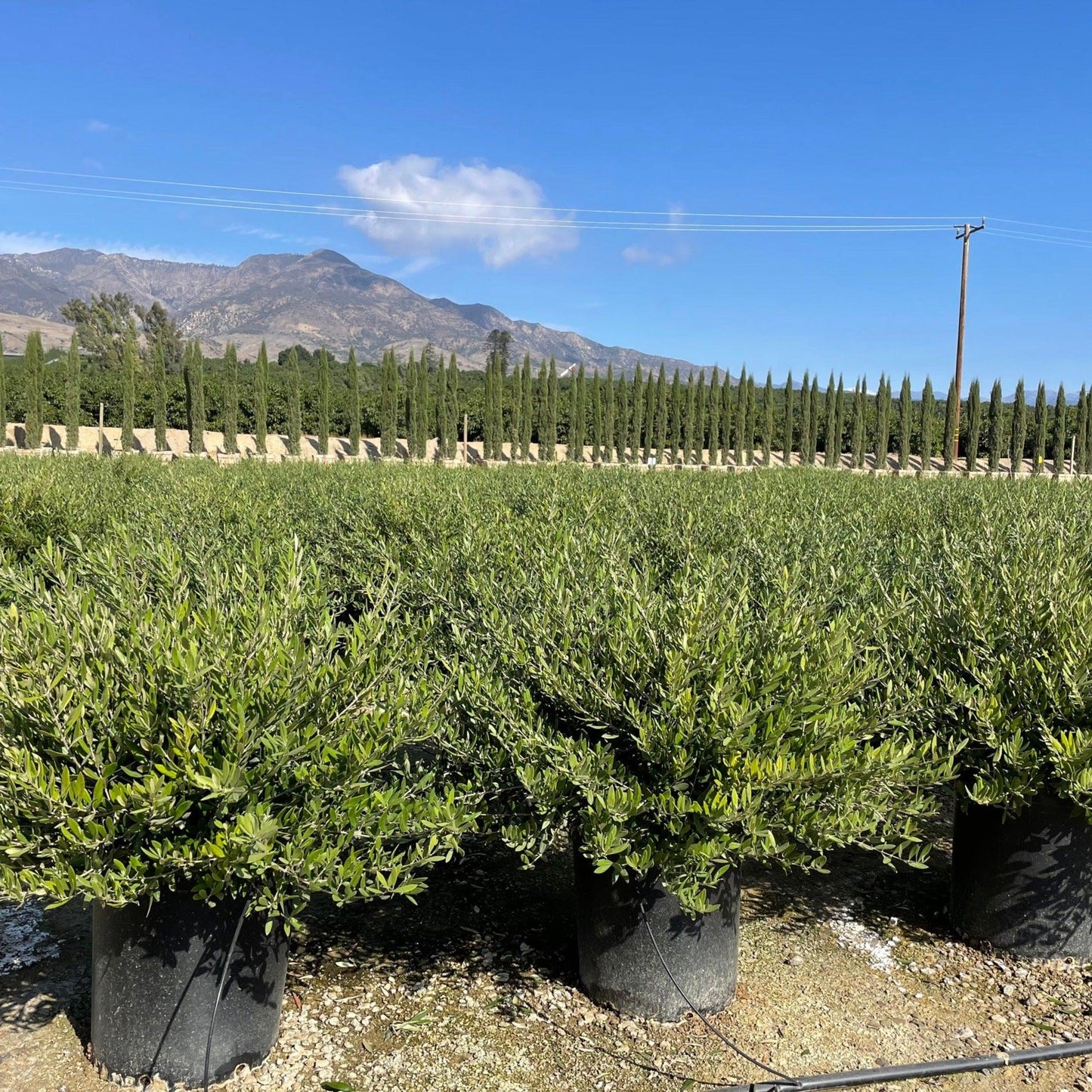
That's why we have photos direct from the growing grounds of the plants we will ship and we display pricing right in our store.
We do make sure to pick the very best trees and plants prior to shipping and make sure that they have gone through our multi-point inspection for health and structure.
We will always reach out prior to delivery if we find a quality issue or need to provide a substitute.
We are currently online only and don't have physical locations where you can view plants in person.
That's why we have photos direct from the growing grounds of the plants we will ship and we display pricing right in our store.
We do make sure to pick the very best trees and plants prior to shipping and make sure that they have gone through our multi-point inspection for health and structure.
We will always reach out prior to delivery if we find a quality issue or need to provide a substitute.
Plants vary greatly by type. Here is a rough idea of sizes based on containers that are direct from our growing grounds.
15 Gallon Shrub 3-4 Ft. Tall
15 Gallon Tree 5-6 Ft. Tall
24" Box Shrub 5-6 Ft. Tall
24" Box Tree 6-7 Ft. Tall
36" Box Shrub/Tree 7-9 Ft. Tall
48" Box Shrub/Tree 8-10 Ft. Tall
**Please note that we do not make guarantees of sizes. If you have questions or concerns, please call or text to request accurate sizing for the particular plant you're considering, prior to ordering.
Plants vary greatly by type. Here is a rough idea of sizes based on containers that are direct from our growing grounds.
15 Gallon Shrub 3-4 Ft. Tall
15 Gallon Tree 5-6 Ft. Tall
24" Box Shrub 5-6 Ft. Tall
24" Box Tree 6-7 Ft. Tall
36" Box Shrub/Tree 7-9 Ft. Tall
48" Box Shrub/Tree 8-10 Ft. Tall
**Please note that we do not make guarantees of sizes. If you have questions or concerns, please call or text to request accurate sizing for the particular plant you're considering, prior to ordering.
We offer a limited 30 day warranty for plants that are delivered and a 90 day warranty for plants that we plant.
The limited warranty covers plants that die as a result of disease or fungus which was derived from our growing grounds or from root balls that were root bound.
The warranty does not cover damage due to watering, fertilizer, soils, or any other conditions beyond our control. Additionally, the warranty does not cover certain plants that are shipped out of the state of California or shipped into California from other states. Custom plant orders are also not covered under warranty. Plants must be planted within 24 hours after delivery to qualify.
We can assist you in recommending the right soils and fertilizers to help your plant thrive after you plant it.
Text or call 323-576-4159 for further warranty information.
We offer a limited 30 day warranty for plants that are delivered and a 90 day warranty for plants that we plant.
The limited warranty covers plants that die as a result of disease or fungus which was derived from our growing grounds or from root balls that were root bound.
The warranty does not cover damage due to watering, fertilizer, soils, or any other conditions beyond our control. Additionally, the warranty does not cover certain plants that are shipped out of the state of California or shipped into California from other states. Custom plant orders are also not covered under warranty. Plants must be planted within 24 hours after delivery to qualify.
We can assist you in recommending the right soils and fertilizers to help your plant thrive after you plant it.
Text or call 323-576-4159 for further warranty information.
Our local delivery team covers most cities in California.
There are some exceptions, so please get in touch to confirm prior to ordering.
Additionally, we ship throughout the entire United States and even internationally. Each shipment is custom, so please reach out to our team to coordinate.
Our local delivery team covers most cities in California.
There are some exceptions, so please get in touch to confirm prior to ordering.
Additionally, we ship throughout the entire United States and even internationally. Each shipment is custom, so please reach out to our team to coordinate.