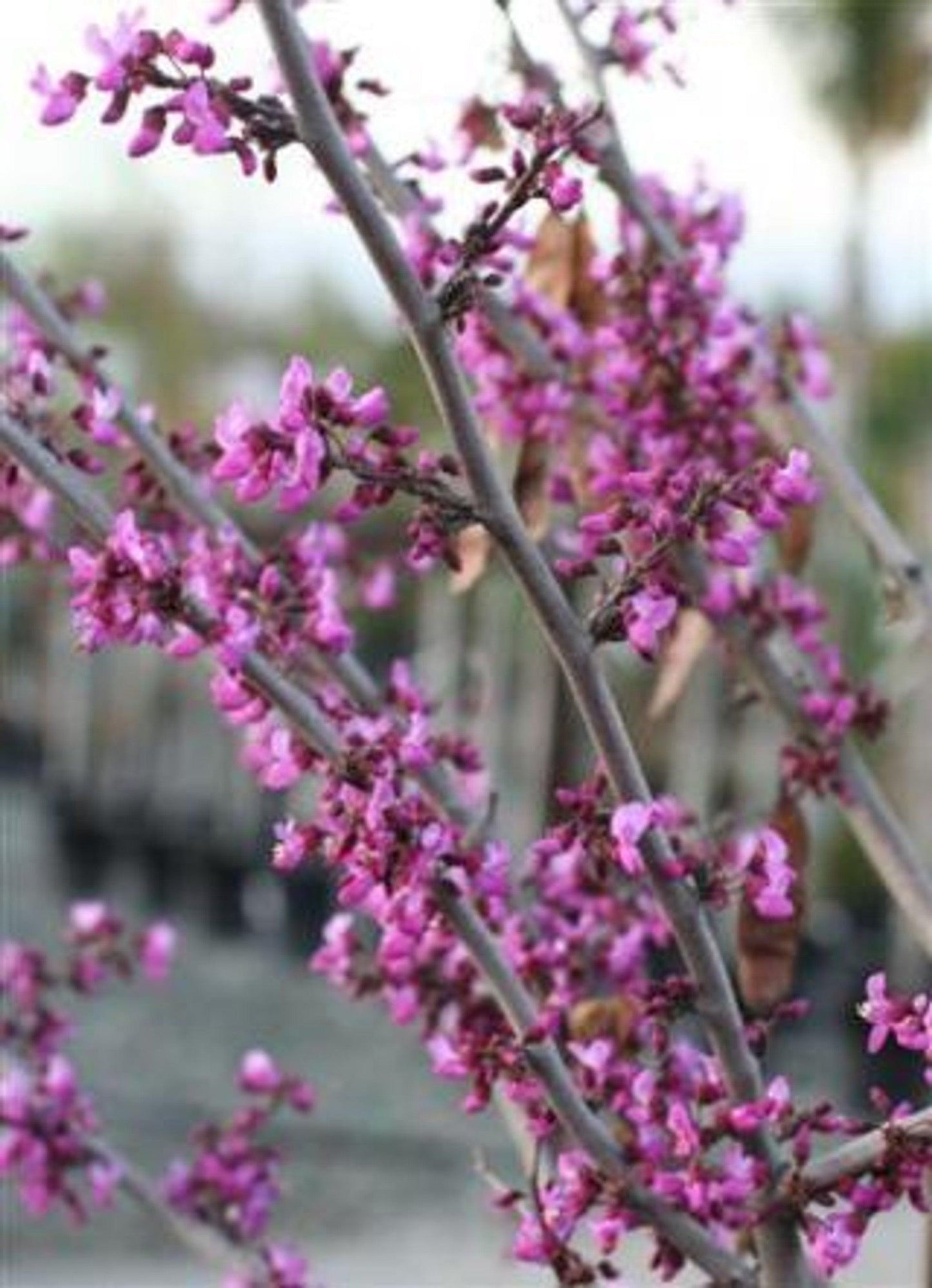
Redbud Trees – Plant the Perfect Native Beauty for Your Landscape
Redbud trees are ideal small ornamental trees for spring color, compact shade, wildlife value, and climate-smart planting. Choose Eastern, Western, Chinese, or specialty redbud varieties to add pink flowers, heart shaped leaves, and reliable early season beauty to California landscapes.
From compact patios to large properties, Yardwork’s redbud collection helps you match the right tree to your space, soil conditions, and local climate.
Find your perfect redbud variety and transform your outdoor space today.
Redbud Trees for Every Landscape Need
Whether you’re creating privacy, adding seasonal interest, or enhancing curb appeal, there’s a redbud tree for every landscape goal.
Small Garden & Patio Redbuds
For small spaces, choose compact redbud trees with a restrained growth habit. Chinese Redbud (Cercis chinensis) generally grows 8 to 15 feet tall and has rose-purple flowers, with popular cultivars including ‘Avondale’ and ‘Don Egolf’. These smaller trees work well near patios, entry gardens, shrub borders, and courtyards where a full-size tree would feel too large.
Dwarf and weeping form selections also bring structure without overwhelming the planting area. ‘Ruby Falls’ is a favorite for its cascading branches, dark purple foliage, and patio-friendly size, while ‘Rising Sun’ offers bright foliage that shifts through warm tones before the leaves fade to green. Container planting is possible when the root zone has room, drainage is excellent, and regular watering is provided during establishment.
Landscape Accent & Specimen Trees
A full-size eastern redbud makes a strong focal point in a lawn, mixed border, or entry landscape. Eastern Redbud (Cercis canadensis) typically grows 20 to 30 feet tall and 25 to 35 feet wide, with pink flowers and green foliage that can change to yellow in the fall. Its rounded crown, vase shaped branching, and heart shaped leaves create interest from spring through winter.
The flowers of redbud trees bloom in early spring before the foliage emerges, creating a spectacular display of color on bare branches. Many selections produce pea like flowers in pink, rose, lavender, or even white flowers, followed by seed pods later in the season. Popular trees such as ‘Forest Pansy’ add dark purple spring foliage, while ‘Rising Sun’ brings chartreuse and apricot tones for high-impact color.
Naturalistic & Wildlife Gardens
Redbuds are versatile and can be used in a variety of landscape situations, including mixed borders, woodland gardens, and as focal points in lawns, making them a strong addition to broader landscape tree plantings. As an understory tree, redbud fits beautifully beneath taller oaks, along woodland edges, or in layered native plantings with shrubs and perennials.
Redbuds can serve as host plants for several butterfly and moth species, providing ecological support. Their spring flowers attract beneficial insects when few other trees are blooming, and mature branching can offer nesting sites for birds. Redbud trees are not favored by deer, making them a good choice for gardens in areas where deer are prevalent; deer tend to browse other plants first.
Choose the Right Redbud Variety for Your Climate
The right variety thrives in your specific growing conditions and delivers years of reliable beauty, especially when you pair redbuds with other flowering trees suited to California gardens.
Eastern Redbud (Cercis canadensis)
Eastern redbud, or Cercis canadensis, is native to the eastern United States and southern Ontario and is one of the most widely planted redbud species in North America. Redbud trees are hardy in USDA Zones 4–9, and Eastern redbud trees can reach a height of 20 to 30 feet and a width of 25 to 35 feet, with dwarf varieties being smaller.
This small tree is known for spring flowers on bare branches, green leaves that are broadly ovate to heart shaped with an entire margin, and fall color that can turn yellow in fall. The straight species offers classic green foliage and pink flowers, while cultivars expand the palette with burgundy, gold, chartreuse, and dark purple leaves. Eastern redbud is an excellent choice where moderate moisture, partial shade, and well drained soils are available.
Western Redbud (Cercis occidentalis)
Western Redbud (Cercis occidentalis) is smaller, reaching 10 to 15 feet tall and wide, and features rose-purple flowers and purple-brown seed pods. It is especially useful in California’s mediterranean region, foothill gardens, dry slopes, and hot summer climates where drought tolerance matters.
This species has a naturally shrubby growth habit and can be used as a multi-stem tree, informal screen, street tree in suitable settings, or accent in native shrub borders. Western redbud performs best in sun to part shade, adapts to clay soil when drainage is good, and needs less supplemental water once established than many Eastern selections.
Specialty Cultivars
Specialty redbuds give you more control over size, shape, foliage, and flower color. ‘Forest Pansy’ is valued for dark purple foliage and rose-pink flowers, ‘Ruby Falls’ provides a weeping form for small spaces, and ‘Rising Sun’ adds bright new growth that changes through the season. Some varieties offer white flowers, compact branching, or dramatic late spring foliage color.
The most common species of redbud include Eastern Redbud (Cercis canadensis), Western Redbud (Cercis occidentalis), Chinese Redbud (Cercis chinensis), and Oklahoma Redbud (Cercis canadensis var. texensis). Oklahoma Redbud (Cercis canadensis var. texensis) grows 15 to 20 feet tall and features burgundy-red flowers, with a notable drought tolerance compared to the Eastern Redbud.
Growing Conditions That Ensure Success
Healthy redbud trees start with proper site selection and soil preparation.
Sunlight & Positioning
Redbuds thrive in full sun to partial shade, requiring at least 4 to 6 hours of daily sunlight. When planting redbud trees, choose a site that receives at least 4 to 6 hours of direct sunlight and is located 8 to 25 feet away from any building structure to prevent damage to foundations, and consider how other plants from a full-service plant nursery for California landscapes will share that space.
In cooler coastal areas, full sun supports the heaviest bloom. In hot summer climates, part shade or afternoon shade can reduce leaf scorch, especially on purple or variegated foliage. Redbud trees are shade tolerant and adaptable to different soil conditions, making them suitable for various garden environments, including areas with clay soil as long as it drains well.
Soil Requirements
Redbud trees prefer moist, well-draining soil with average fertility and a pH level between 6.5 and 8.0, but can adapt to a range of soil conditions. Redbud trees prefer deep, moist, organic, well-drained soils but can adapt to a range of soil conditions, including acidic or alkaline pH, as long as they are not overly wet.
Redbud trees prefer well-drained, loamy soils and can tolerate various soil types including clay, but heavily compacted ground can cause root rot. Well drained soils are especially important around the crown and root zone, because standing water can lead to decline, leaf drop, fungal stress, and reduced lifespan.
California Climate Considerations
The best time to plant redbud trees is in early spring after the last frost, or in fall for USDA zone 8 or higher, about six weeks before the first hard frost. This timing allows roots to establish before summer heat or winter cold.
Redbud trees typically grow at a moderate rate, averaging 1 to 2 feet of new growth per year, influenced by variety and growing conditions. The average lifespan of a redbud tree is between 20 to 50 years, although some specimens may live up to 70 years depending on growing conditions. In California, Western redbud and drought-tolerant cultivars are especially valuable for dry summers, while Eastern and specialty varieties perform best where soil moisture, winter chill, and afternoon shade are well matched.
How to Care for Your Redbud Trees
Proper care ensures vigorous growth, abundant blooms, and long-term tree health.
Watering & Establishment
Redbud trees need to be watered regularly during their first growing season, with deep watering to penetrate the root zone, while mature trees are drought tolerant and require little supplemental water in areas with summer rainfall. Deep, infrequent watering is better than shallow daily watering because it encourages stronger roots, especially when establishing large, mature trees for instant impact elsewhere in the landscape.
A 1- to 2-inch layer of mulch is recommended around the root zone of redbud trees to retain moisture and regulate soil temperature. Keep mulch slightly away from the trunk, and use it to suppress weeds, retain moisture, and protect young trees during late summer heat. Redbuds rarely need heavy feeding; a light application of balanced, slow-release fertilizer in early spring is usually sufficient.
Pruning & Maintenance
Pruning redbud trees should be done in late winter or early spring before flowering, allowing the trees to retain their natural shape while removing dead, diseased, or damaged branches. Keep pruning light, preserve the natural rounded crown or vase shaped structure, and remove dead, crossing, or weak branches before they become entry points for disease.
Redbud trees may be susceptible to various pests and diseases, including aphids, borers, and diseases like anthracnose and verticillium wilt, which can affect their health and lifespan. Good airflow, proper watering, careful pruning, and avoiding trunk injury help reduce stress. The flowers and buds of redbud trees are edible and feature high levels of Vitamin C, adding another practical reason to appreciate this spring-blooming tree.
Shop Redbud Trees With Yardwork
Explore Yardwork’s selection of redbud trees, including Eastern redbud, Western redbud, Chinese redbud, Oklahoma redbud, and specialty cultivars such as ‘Forest Pansy’, ‘Rising Sun’, and ‘Ruby Falls’. Each tree ships with the goal of helping you choose the right variety for your climate, space, and design style.
Need help deciding? Our team can provide expert recommendations based on sun exposure, clay soil, drainage, mature size, and planting goals, including how to pair redbuds with evergreen and privacy trees for year-round structure. Yardwork also offers soil testing services to help optimize planting success before your redbud is planted.
Order your redbuds as well as citrus fruit trees like lemons and oranges, statement specimens such as Bloodgood Japanese maple trees, and other versatile options like California pepper trees and companion shrubs. You can also explore hardy evergreens such as Incense cedar and related landscape conifers and productive Valencia orange trees for backyard harvests. Request personalized recommendations today and choose a redbud tree that brings early spring flowers, beautiful foliage, and lasting landscape value to your outdoor space.