Podocarpus Plants – Choose the Perfect Evergreen for Your Garden
Podocarpus plants are evergreen conifers prized for their dense, leathery, needle-like foliage and exceptional versatility in landscaping. Whether you need a formal podocarpus hedge, a narrow privacy screen, a sculpted topiary, or a handsome podocarpus tree for structure, this adaptable plant brings year-round green foliage with minimal maintenance once established.
Explore podocarpus varieties suited to sun, partial shade, coastal salt, patios, lawns, and foundation beds - and choose the right form for your garden today.
Podocarpus Plants for Every Garden Purpose
Whether you need privacy screening or decorative accents, there’s a podocarpus variety for every landscaping goal.
Privacy Hedges & Screens
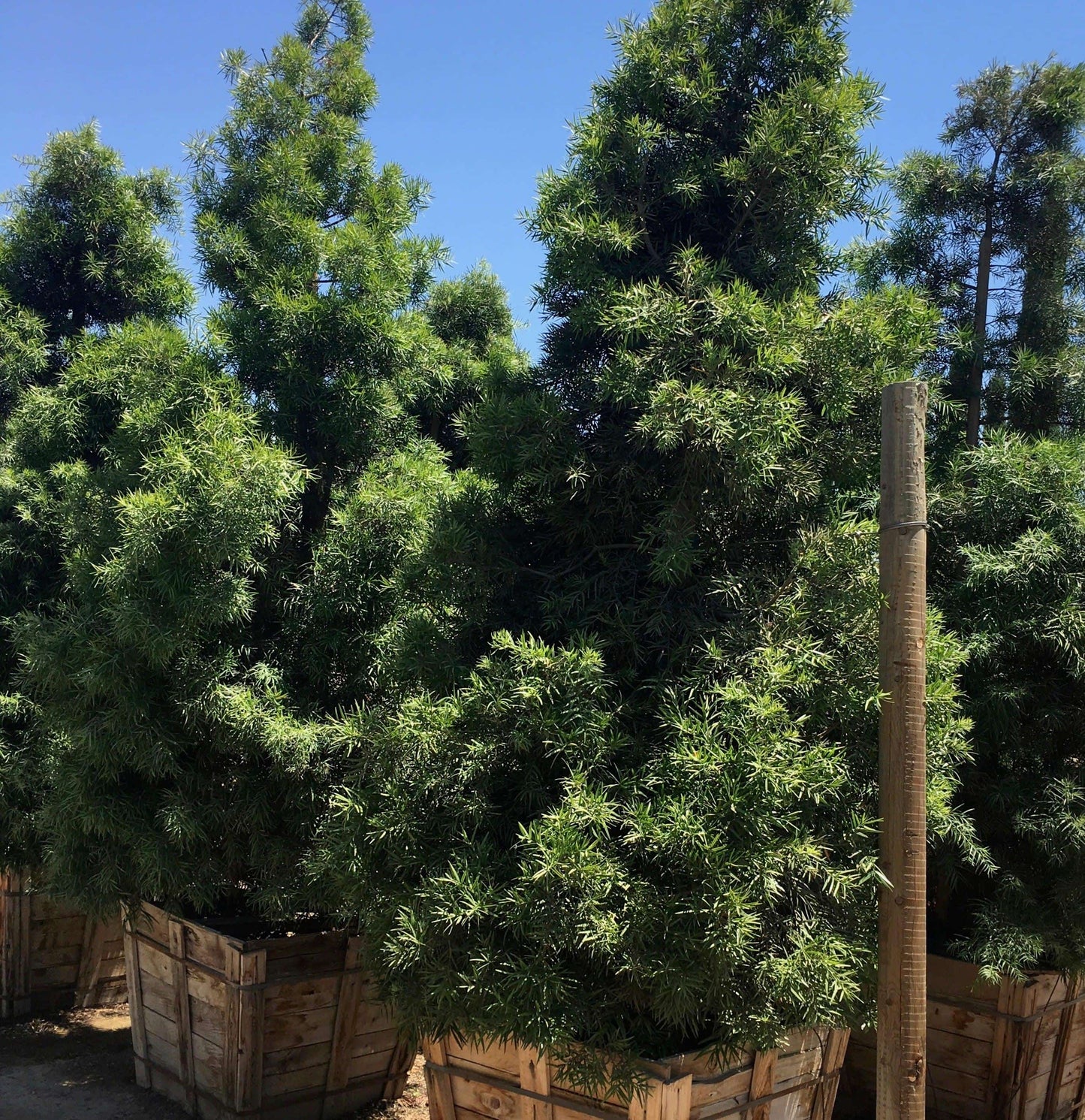
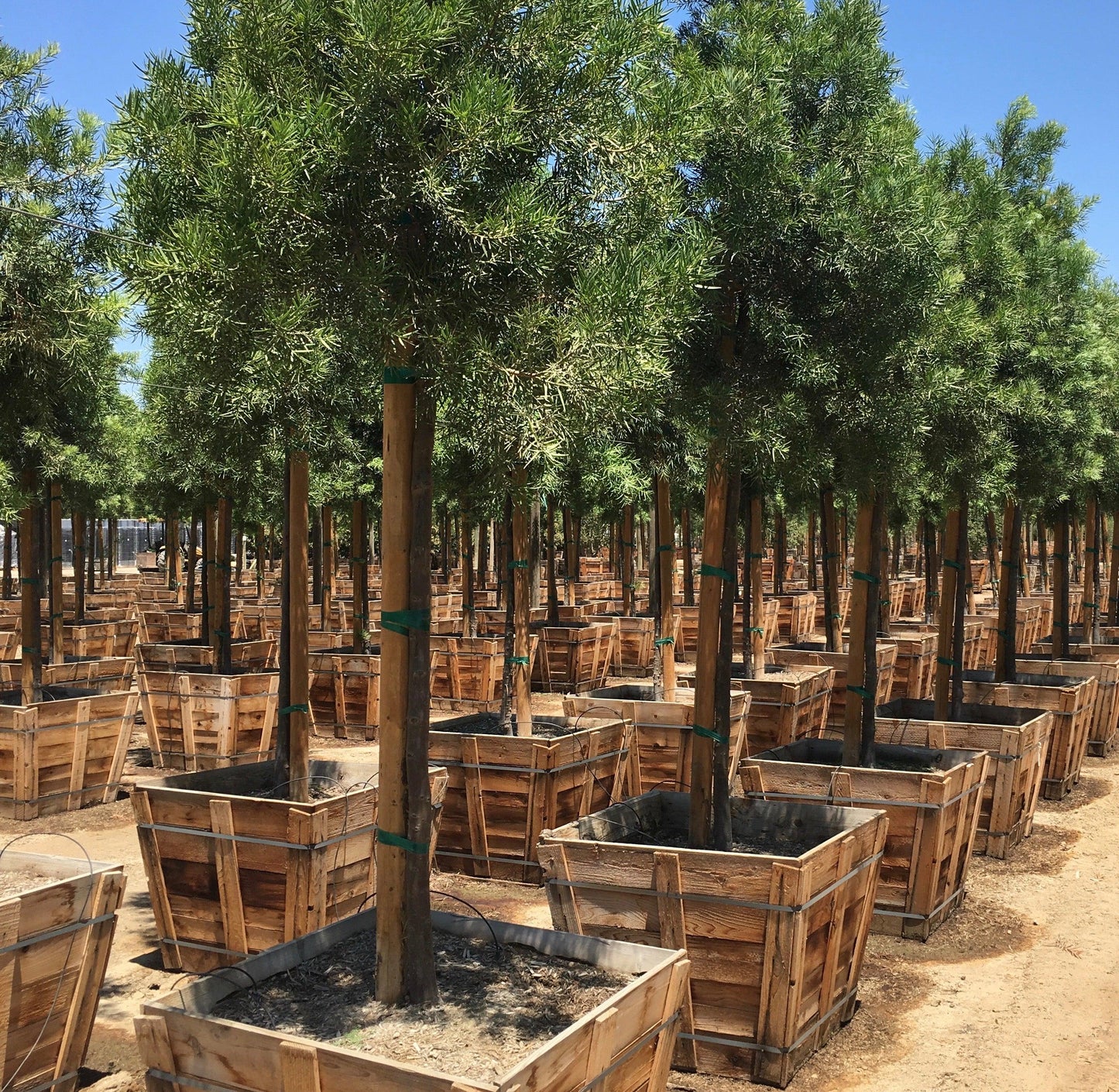
Podocarpus can be used as a hedge, evergreen privacy screen, or to camouflage unsightly areas around the house due to its dense growth habit. Buddhist Pine, also called yew pine, is especially useful for evergreen screening because its dark green foliage stays full through the year, unlike deciduous shrubs that drop leaves in winter.
For a solid podocarpus hedge, plants are commonly spaced close enough to allow the foliage to meet as they grow, while taller forms can be used as a windbreak or backdrop. This plant can grow as tall as 40 feet, making it suitable for tall privacy hedges or as a backdrop for other plants in landscaping. Podocarpus exhibits slow to moderate growth rates depending on the environment and can reach 30 to 40 feet in height if unpruned.
Foundation Plantings & Accent Trees
Compact podocarpus varieties are excellent near foundations, entries, walls, and walkways because they add structure without overwhelming the house. The dwarf podocarpus is a smaller version of the species, ideal for use in tighter spaces or as foundation plants.
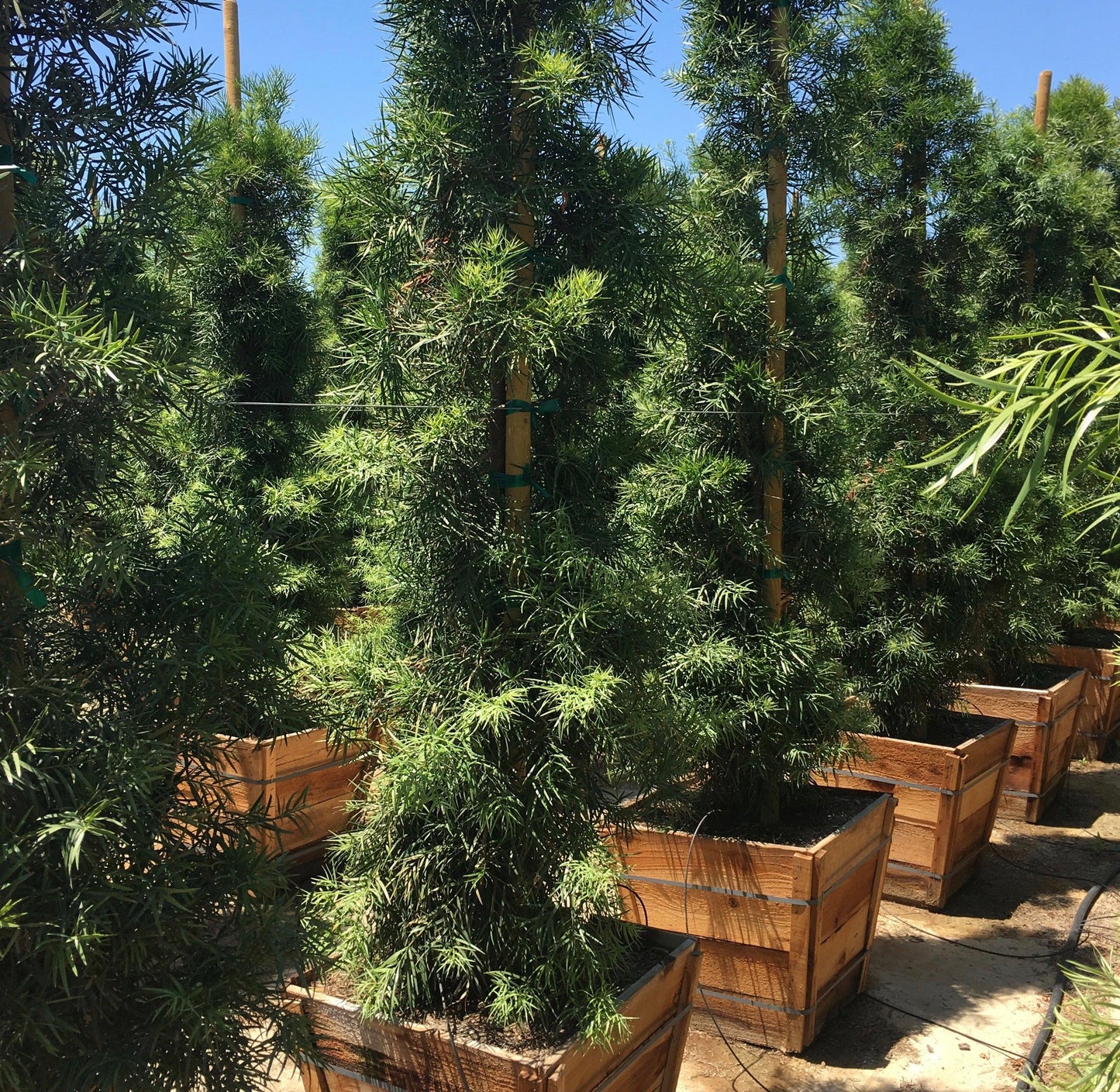
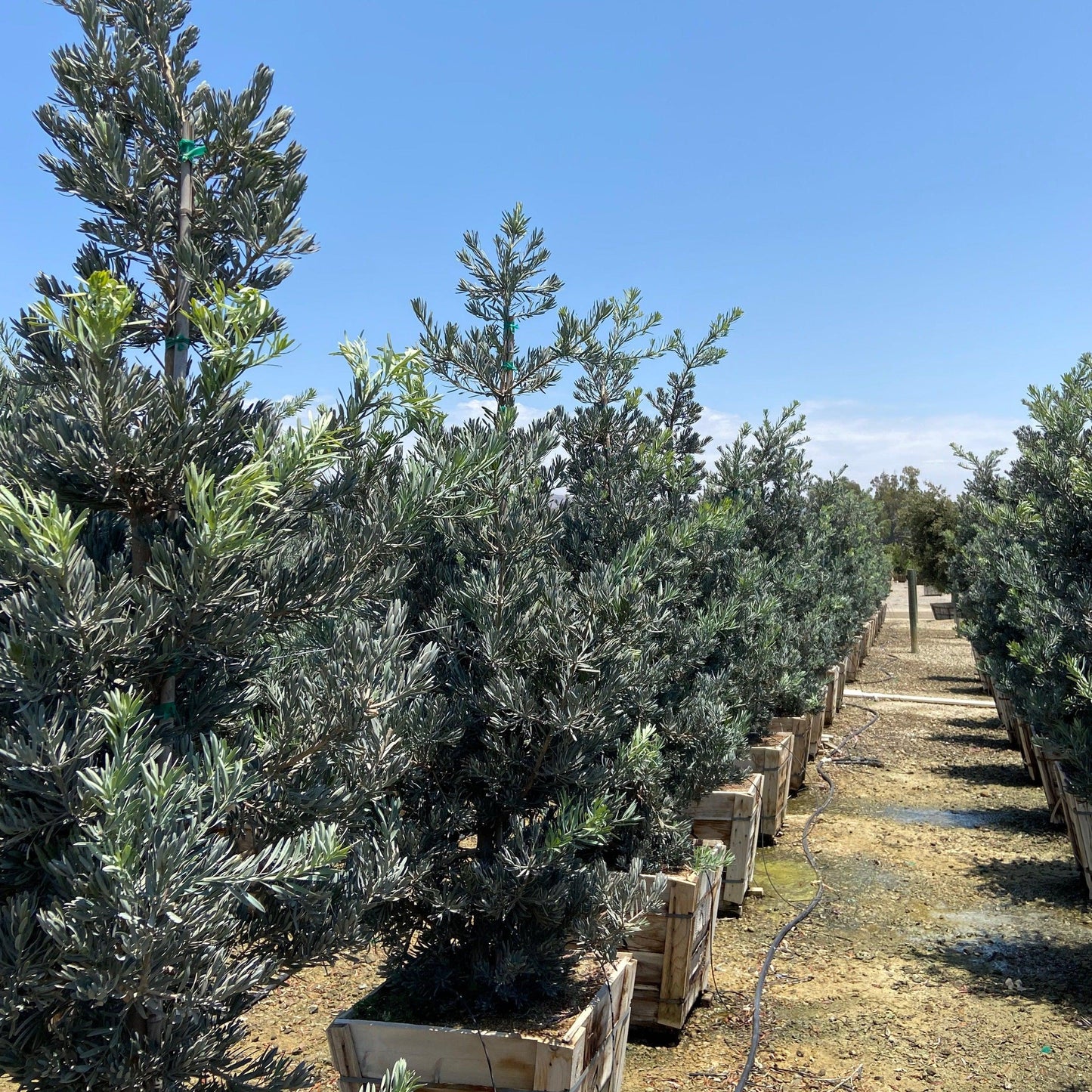
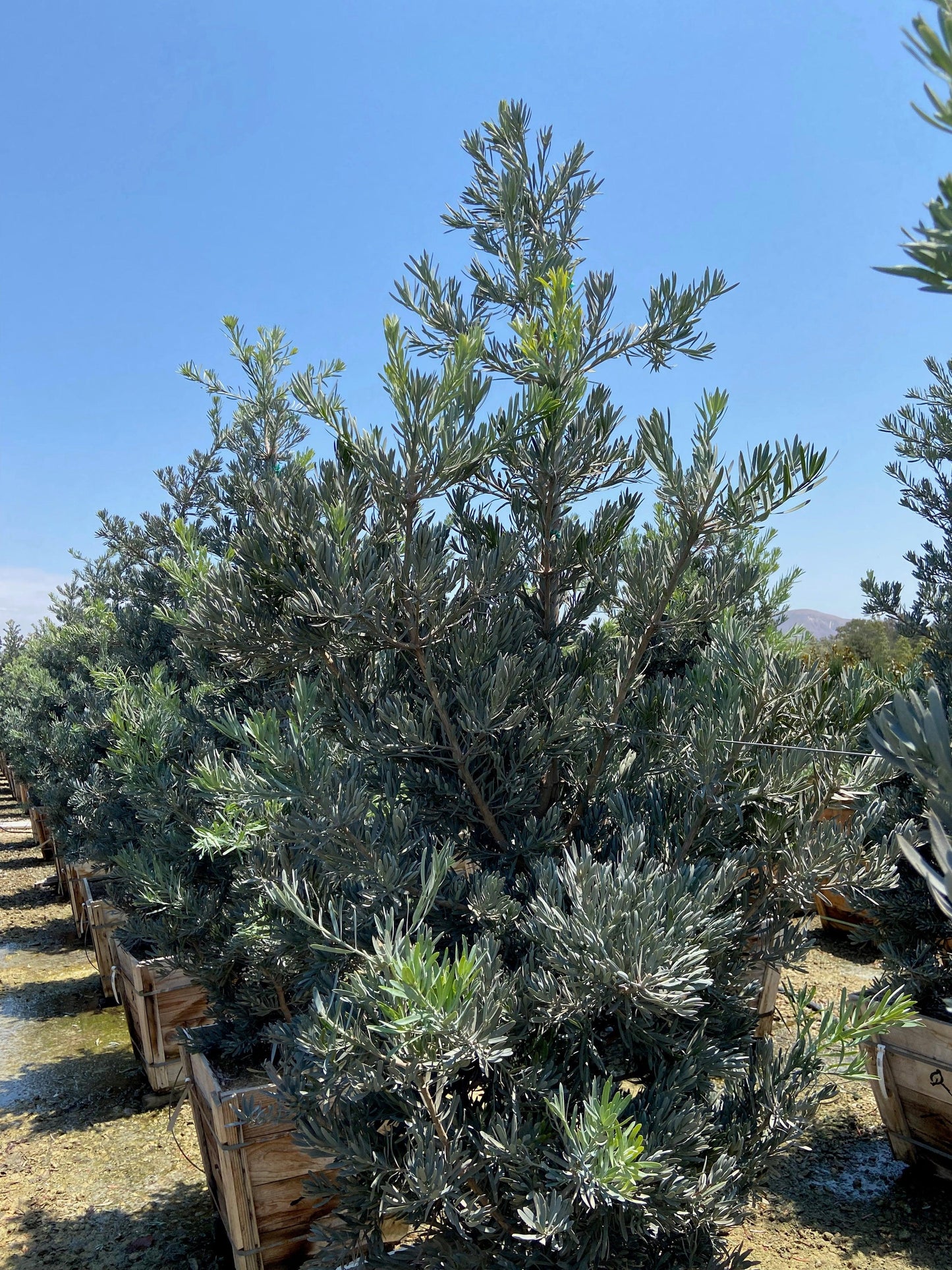
Podocarpus species feature a natural upright, columnar growth habit and can grow from dwarf shrubs to large trees. Used as a large shrub, column, or tree form, podocarpus enhances architectural lines and pairs well with flowering perennials, ornamental grasses, palms, and other evergreen landscape plants.
Container Gardens & Bonsai
Smaller podocarpus selections work beautifully in containers on patios, balconies, and formal garden spaces. Choose a pot with excellent drainage, use rich organic soil, and keep young roots evenly moist while the plant becomes established.
Podocarpus is also widely cultivated for bonsai because it responds well to careful trim work, wiring, and shaping. Indoors or in sheltered containers, give the plant bright light with some sun where possible, protect it from cold drafts, and move potted plants to a protected location in colder zones during winter.
Choose the Right Podocarpus for Your Growing Conditions
The right variety thrives in your specific climate and soil while requiring minimal maintenance.
For Full Sun Locations
Podocarpus prefers full sun to partial shade, with more sunshine leading to better growth. In full sun, foliage usually becomes denser, stems strengthen naturally, and the plant develops a more compact shape that is easier to maintain as a hedge or topiary.
These plants are exceptionally heat-tolerant and drought tolerant once established, making them reliable for warm gardens and exposed sites. For best performance, provide regular water after planting, then reduce watering as the roots settle into the ground.
For Partial Shade Areas
Podocarpus macrophyllus is a popular type known for its handsome and hardy nature, making it suitable for both sun and shade environments. In partial shade, it may grow a little more open than it would in full sun, but it still provides attractive green foliage and dependable evergreen form.
Use podocarpus in woodland edges, understory plantings, shaded side yards, and mixed borders where softer foliage is needed. Avoid deep, dark shade if you want a dense hedge, and prune lightly to encourage new growth and a fuller outline.
For Coastal & Salt-Tolerant Gardens
Podocarpus is exceptionally heat-tolerant, wind-resistant, and salt-tolerant, making it suitable for coastal environments. It is a strong choice for seaside gardens, protected coastal landscapes, and sandy soil locations where salt and wind can stress less adaptable shrubs.
Podocarpus prefers rich, organic soil that is moist and drains well, and it tolerates a variety of well-draining soils, including sandy soil, making it compatible with other drought-tolerant shrubs like conebush (Leucodendron). Good drainage is essential, especially near the coast, because podocarpus does not thrive in soggy, compacted ground.
For Cold-Hardy Zones
Podocarpus plants thrive in USDA Hardiness Zones 7 through 11 and require minimal maintenance once established. In Zones 7–8, choose hardy selections, plant in a sheltered location, mulch the root zone, and protect young plants from harsh winter wind.
Cold damage can cause browning or dieback, but recovery is often possible if you wait until spring to prune dead or damaged branches. Container plants in borderline climates should be overwintered in a protected place where temperatures stay mild; podocarpus grows best in temperatures between 60°F to 75°F and should be kept above 55°F for optimal growth.
Popular Varieties That Deliver Results
Each podocarpus variety offers unique characteristics suited to specific landscape needs.
Buddhist Pine (Podocarpus macrophyllus)
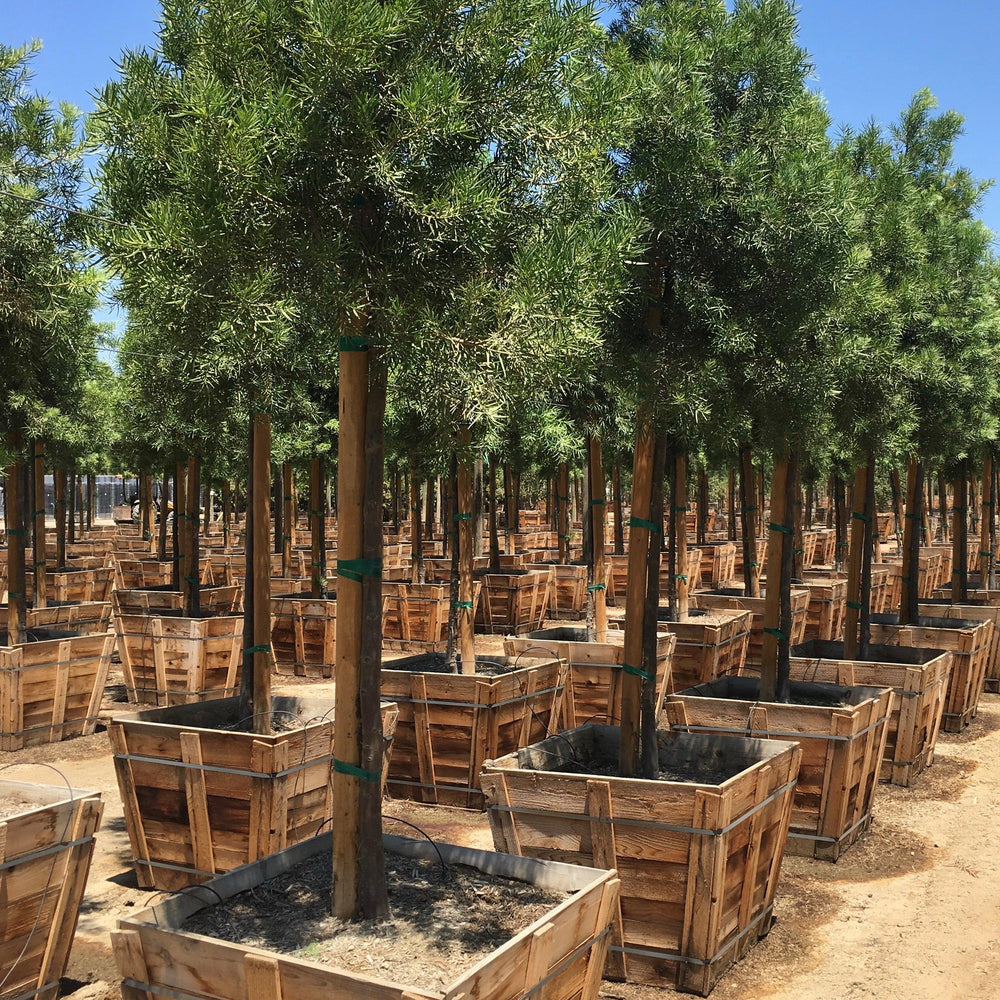
Buddhist Pine, or podocarpus macrophyllus, is one of the most popular cultivated species in the podocarp family. Native to areas including southern China and Japan, it is valued for its upright habit, dark green foliage, and dependable performance as a hedge, screen, or specimen tree.
Podocarpus foliage consists of linear, strap-like needles that typically measure 2 to 5 inches long and grow in dense, spiral arrangements. The plant tolerates pruning well, can be shaped into topiary forms or formal hedges, and becomes drought-resistant after establishment.
Fern Pine (Podocarpus gracilior)
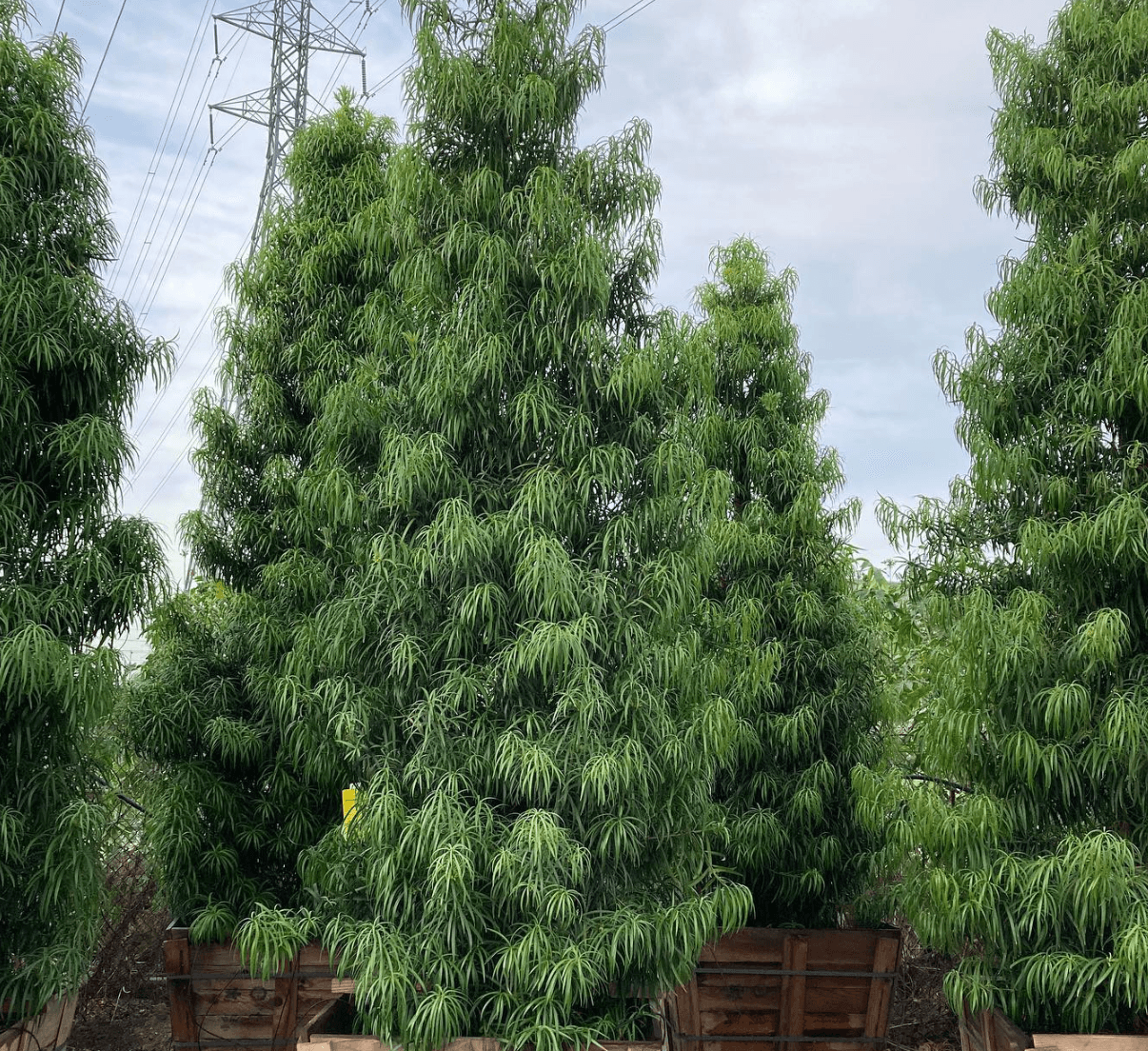
Fern pine, commonly sold as Podocarpus gracilior and also associated with eastern Africa, has fine-textured foliage and a graceful, weeping form. The weeping podocarpus tree features the same hardiness and foliage as the shrub but grows in a beautiful weeping form, making it a unique landscape option.
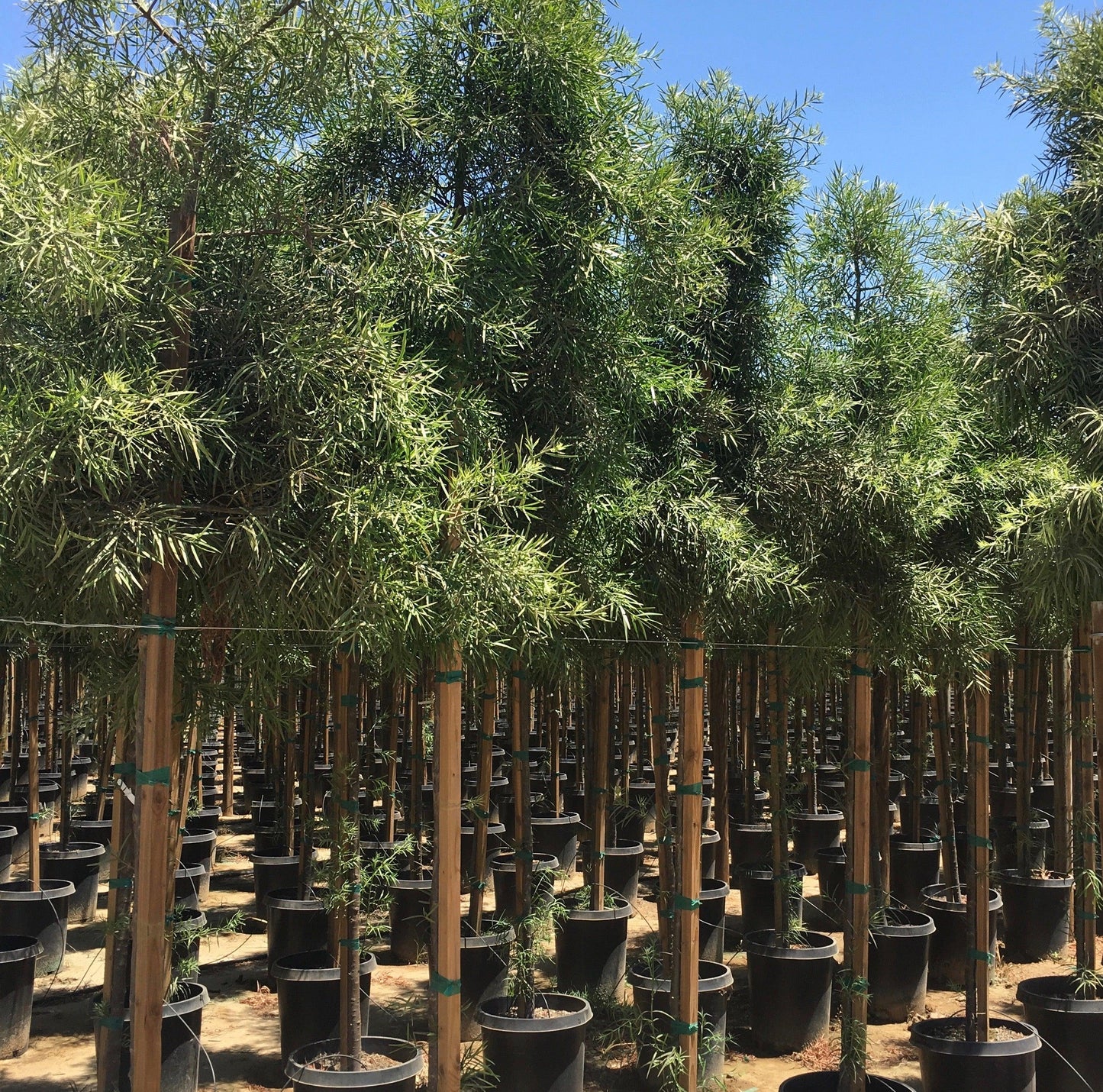
Fern pine is often chosen for specimen trees, broad screens, and large hedges in warm climates. It grows faster in heat than many tighter-growing podocarpus selections, but it is more sensitive to cold and is best used where frost is limited.
Compact Varieties
Compact podocarpus varieties are ideal for smaller gardens, patios, foundation beds, and low formal hedges, much like narrow, upright Italian cypress selections that provide strong vertical structure in tight spaces. These dwarf shrubs offer the same evergreen character in a smaller, easier-to-control form, similar to compact evergreen shrubs like Dwarf Strawberry Tree that bring year-round structure to limited spaces.
They require little routine pruning, though you can trim them to keep a clean shape. Compact selections also work well where a plum pine effect, yew-like texture, or refined evergreen accent is desired without planting a full-size tree.
How to Care for Podocarpus Plants
Proper care ensures healthy growth and long-term garden performance.
Essential Growing Requirements
These plants thrive in rich, organic soil that is moist and well-drained, and they do not grow well in soggy, heavy soil. A slightly acidic to neutral soil helps prevent chlorosis, which appears as yellowing foliage when nutrients become unavailable.
When first planted, young podocarpus trees or shrubs need regular watering to establish, but once established, they are drought-resistant and require no special watering. Podocarpus prefers full sun to partial shade, handles summer heat well, and performs best with air movement that reduces pests such as scale, mites, and aphids.
Fertilizing & Seasonal Care
Fertilizing podocarpus is not necessary, but applying a dose of slow-release fertilizer in the spring can encourage lush growth; do not fertilize in the fall. Organic compost can also improve soil texture, support roots, and encourage steady new growth.
Podocarpus plants are dioecious, meaning individual plants are either male or female, with females producing non-showy fleshy arils in the presence of male plants. Male cones, also called pollen cones, may appear in clusters, while female plants can form fruit-like cones with seeds that attract birds. However, do not treat podocarpus fruit as edible: all parts of the Podocarpus plant are highly toxic to humans and pets if ingested, and the plant should be considered poisonous if eaten.
Pruning & Shaping Techniques
Podocarpus does not require regular pruning, but it can be trimmed as needed to shape it into a topiary or hedge, and dead or damaged branches should be removed. Light, regular pruning creates a denser hedge than cutting back hard after the plant becomes overgrown.
Prune in spring for structural shaping, then trim lightly during the growing season to maintain form. Use clean, sharp tools, avoid removing too much old bare wood at once, and shape formal hedges slightly narrower at the top so lower foliage still receives sun.
Start Growing Podocarpus Plants
Explore our selection of podocarpus varieties suited to your climate and landscape goals. Choose from hedge-ready plants, specimen trees, and compact varieties to create the evergreen garden you’ve always wanted.
Your perfect podocarpus is ready to plant today.