Shop Premium Evergreens Online
Pine trees are a smart choice when you want year-round greenery, privacy, wind protection, or a distinctive evergreen focal point for your California landscape. Yardwork offers high-quality pine trees in multiple sizes, pine species, and mature options, selected for strong health, reliable growth, and suitability across California’s varied climates.
Shop compact ornamental pines, fast-growing screening trees, drought-tolerant native selections, and 6-9 foot mature specimens ready for immediate impact. Our team can help you match the right tree to your property, soil conditions, sunlight, and long-term space requirements, with expert consultation and delivery available.
Pine Trees for Every Landscape Need
Most pine trees are evergreen trees native to the northern hemisphere, valued for resinous bark, pine needles, cones, and the ability to stay green through all seasons. Whether you want privacy screens, windbreaks, shade, timber value, or a low maintenance landscape feature, the right pine can transform a yard, garden, ranch, or estate property, much like other versatile landscape trees that enhance outdoor spaces.
Privacy Screen Pine Trees
Pine trees can create effective privacy screens due to their dense foliage, making them ideal for blocking wind, noise, and prying eyes, especially when combined with other evergreen trees for year-round privacy. Eastern White Pine and Austrian Pine are commonly used for natural privacy barriers because they grow tall, hold their needles year long, and create consistent coverage even during winter months when many other trees are bare.
Eastern White Pine (Pinus strobus) is characterized by soft needles and a graceful shape, growing quickly in moist, well-drained soils. Eastern White Pine can grow two to three feet per year under optimal conditions, making it one of the faster-growing pine species. Many pine tree varieties are known for rapid growth, with some species growing two to three feet per year under optimal conditions, making them a quick solution for landscaping needs.
Austrian Pine is also recognized for its fast growth rate, typically growing 40 to 60 feet tall and can reach over 100 feet in ideal conditions. Plant pine trees for screening with enough space for mature spread; spacing often varies depending on species, but 10-15 feet apart is commonly suited for privacy plantings. Full sun, proper initial watering, and a hole sized correctly for the root ball are crucial for dense new growth within 3-5 years.
Windbreak and Protection Pines
For windbreaks, choose hardy pines with strong branching, drought tolerance, and the ability to thrive in exposed locations. Ponderosa, Scots Pine, Austrian Pine, and selected native California pine species are well suited for protecting homes, gardens, and open landscapes from seasonal winds, dust, and heat stress.
Austrian Pine (Pinus nigra) can grow 40 to 60 feet tall and is known for its ability to withstand pollution and salt sprays, which makes it useful in urban, roadside, and coastal-influenced locations. Ponderosa pines can become very tall over time and are often chosen for acreage where long-term height and spread are benefits rather than limitations.
Strategic placement matters. Windbreak pine trees are usually planted in rows along the direction of prevailing winds, with enough space between trees for healthy airflow and root development. Pine trees can grow about 1 to 2 feet per year on average, with some fast-growing species reaching up to 3 feet annually under optimal conditions, so mature size and growth rate should guide every windbreak plan.
Landscape Specimen Pine Trees
Ornamental pines bring texture, architectural form, and year long green color to Mediterranean, modern, and naturalistic landscapes. Japanese White Pine, Mugo Pine, dwarf white pine selections, and sculptural native pines can become distinctive focal points near entries, patios, slopes, and garden beds.
Japanese White Pine offers soft, refined needles and layered branching, while Mugo Pine works beautifully where a compact, rounded evergreen is needed; drought-tolerant options like Mondell Pine for low-maintenance landscapes are also excellent where water conservation is a priority. Dwarf varieties are excellent for smaller yards and container planting, especially when the design calls for a pine that ages gracefully without overwhelming the space.
Specimen pines add curb appeal through shape, bark texture, needle color, cones, and form. With the right location, sunlight, and soil, many pines are long lived and can anchor a landscape for decades or even centuries.
Choose the Right Pine Tree for Your Property
Selecting pine trees starts with your property goals: privacy, wind protection, shade, ornamental structure, drought resilience, or low maintenance growth, and some homeowners prefer mature trees for immediate landscape impact to achieve these benefits faster. For selecting pine trees, match the species to your property’s mature size constraints and verify the health of the tree’s trunk, needles, and roots before planting.
For Small to Medium Yards
For compact yards, choose dwarf cultivars or slower-growing ornamental options like the Pinyon Pine, or consider complementary flowering trees to boost curb appeal. Mugo Pine, Columnar White Pine, compact Austrian Pine selections, and other narrow or slow to moderate growers give suburban properties evergreen structure without taking over the yard.
Vertical growth patterns help maximize impact where horizontal space is limited. Recommended mature heights of 15-30 feet are often more manageable for residential landscapes, especially near fences, driveways, patios, and utility areas.
Even smaller pines still need full sun and good soil conditions. Pine trees generally require 6 to 8 hours of direct daily sunlight for healthy growth, and most pine trees perform best where the soil is well drained rather than soggy.
For Large Properties and Acreage
Large properties can use fast-growing Eastern White Pine and Loblolly Pine for quick establishment, broad privacy screens, windbreaks, or estate-scale planting. Mature specimens are also available when you want immediate height, visual weight, and landscape structure from day one.
For ranches, large gardens, and reforestation-style projects, Yardwork can support large-scale planting options and project planning, similar to the services highlighted on our nursery for evergreen and privacy trees. Bulk pricing is available for orders over $5,000, and buying bare-root seedlings in bulk can save money when planting windbreaks, privacy screens, or reforesting large areas.
Physical inspection of trees should include checking the trunk, root ball, and branches before purchase. Ensure the root ball is not tightly circling the container edge to avoid girdling, and remember that a tree with a 1-inch trunk caliper should have a root ball at least 16 inches in diameter to meet industry standards.
For California’s Diverse Climate Zones
California includes coastal fog belts, inland valleys, mountain regions, cold climates, hot foothills, and Southern California dry zones, so pine species must be selected carefully. Drought-tolerant pines such as Pinyon, Jeffrey, and Austrian Pine are suited to inland valleys and Southern California landscapes once established.
Cold-hardy varieties are better for mountain and northern regions, where winter months, snow, and shorter growing seasons shape plant performance. Coastal-adapted pines such as Japanese Black Pine and Bishop Pine handle salt air, fog, and wind more reliably than species that dislike salt or heat.
Native California pine species can support sustainable landscaping when matched to the right location, and they often pair well with drought-tolerant companions such as the California Pepper Tree and other dry-climate species. Pine trees prefer well-drained, slightly acidic soils but are adaptable to a wide range of conditions, including sandy or rocky soils once established.
For Low-Maintenance Landscapes
Low maintenance pine trees are those that become self-sustaining after establishment, tolerate local rainfall patterns, and resist common pest or disease pressures, much like a well-managed Fern Pine hedge for effortless privacy. Native and climate-adapted pines often thrive with less intervention because they are already suited to California soil types, heat, and seasonal moisture patterns.
Bristlecone Pine (Pinus aristata) is known for its long lifespan and ability to thrive in harsh landscapes, reaching heights of at least 20 meters. Jack Pine (Pinus banksiana) thrives in poor, rocky soil and can grow 30 to 70 feet tall, often seen taking over barren land after wildfires.
Fire-resistant varieties and thick-barked pines are valuable for wildfire-prone areas, though spacing, pruning, and defensible space remain crucial; adaptable evergreens like the Fern Pine tree for shade and privacy can also contribute to resilient planting plans. Deer, drought stress, bark beetles, and poor drainage can still affect tree health, so the best results come from choosing resilient species and planting them in the right place.
Premium Quality Trees That Thrive
Yardwork focuses on pine trees with strong roots, balanced branching, healthy needles, and proven performance. Our goal is to make it easier to plant pine trees that establish quickly, grow confidently, and support beautiful California landscapes for many ages.
Mature Container-Grown Pines
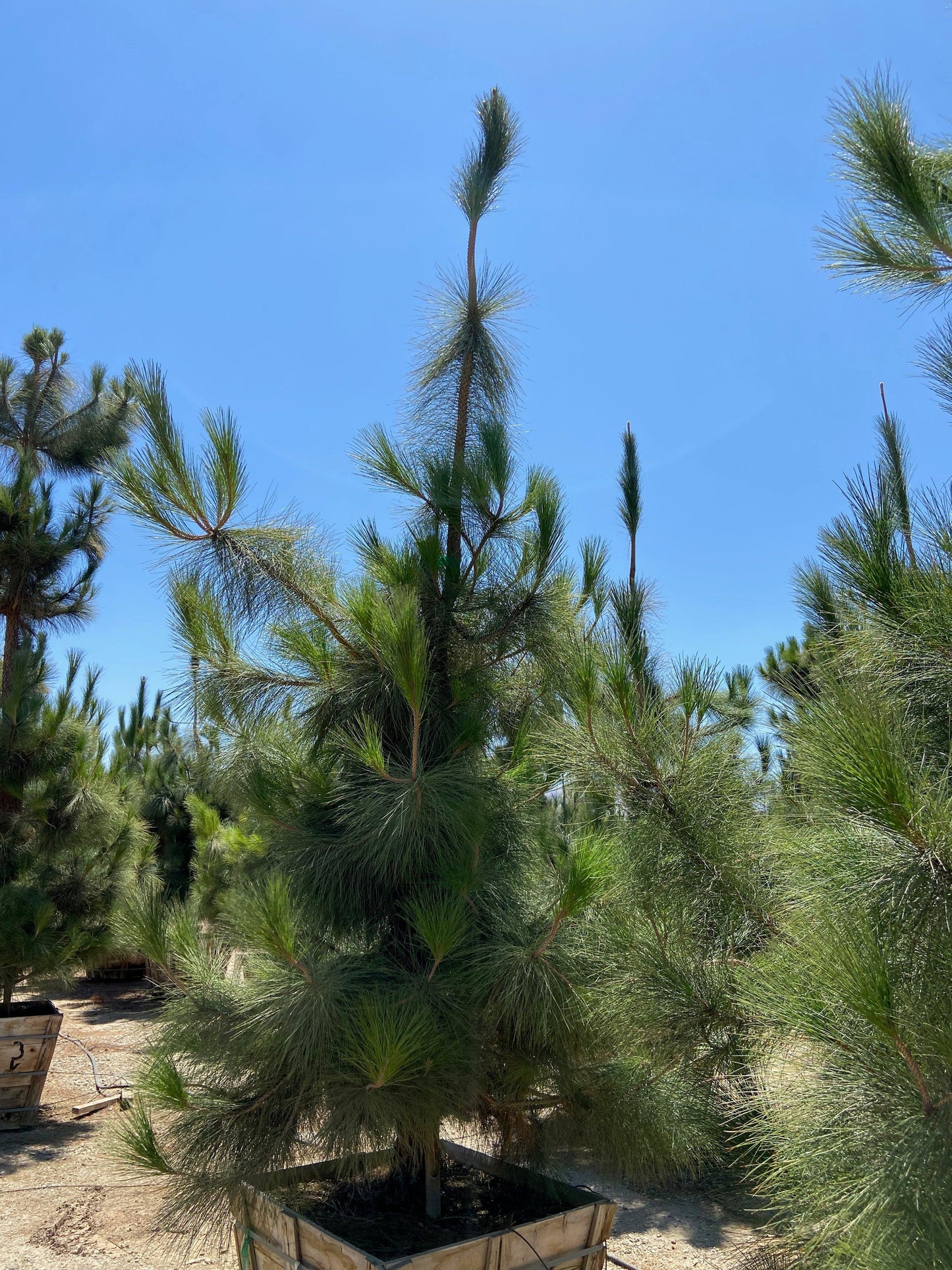
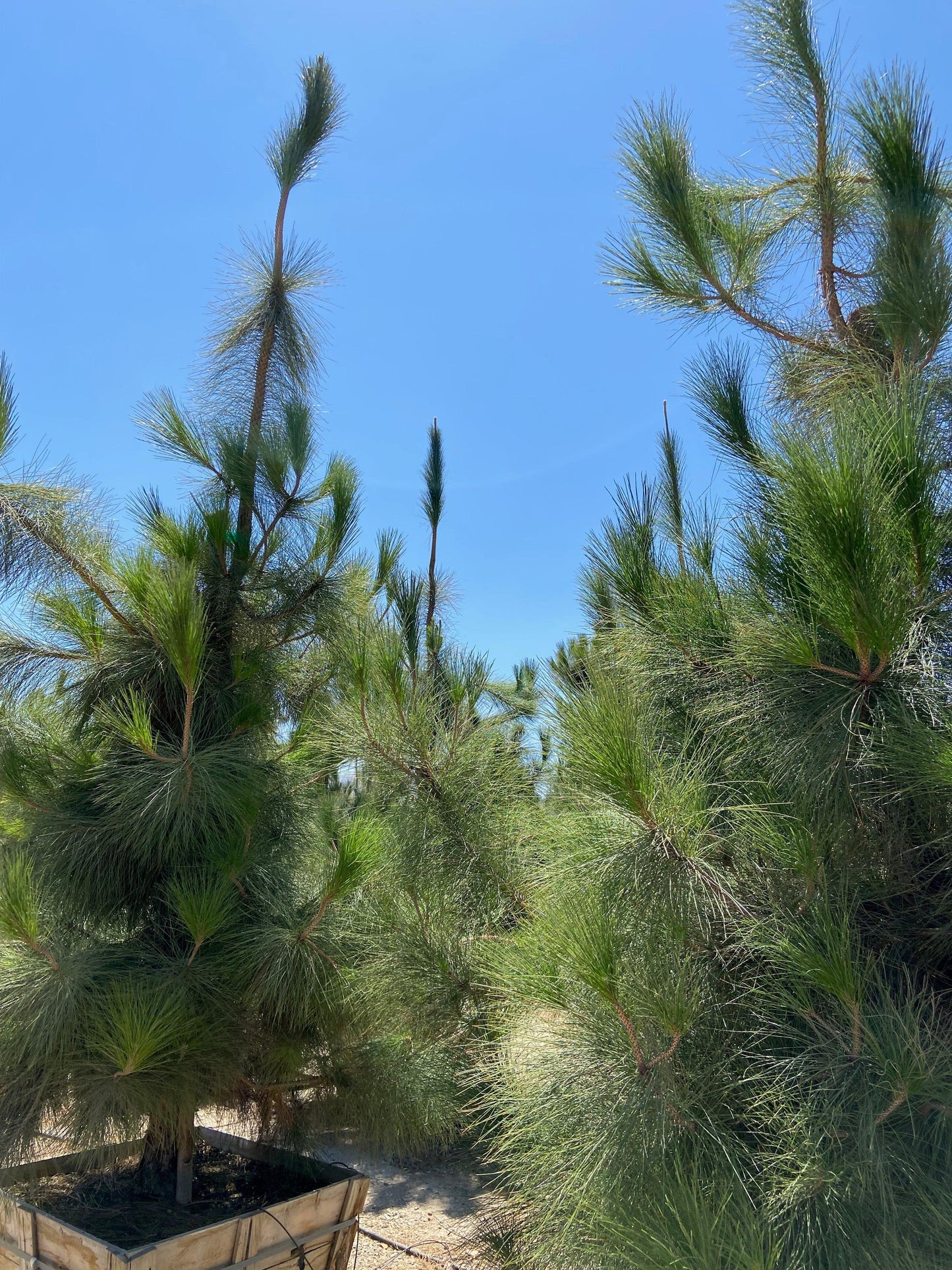
Choose 6-9 foot mature container-grown pines when you want immediate landscape impact. These trees are ready to create structure, privacy, and evergreen presence without waiting years for small seedlings to gain height.
Well-developed root systems help trees establish faster and improve survival rates after planting. Yardwork’s professional growing techniques support strong trunks, balanced branching, and healthy root development, while pricing ranges from $479 to $659 depending on species and size.
Container quality matters. The root ball should be firm and well formed, not packed with circling roots, and the tree should show healthy green needles, strong branching, and no major trunk wounds.
Climate-Adapted Varieties
Yardwork selects pine trees specifically for California growing conditions, from coastal salt exposure to dry inland heat and cooler mountain locations. Heat and drought tolerance are considered carefully so each pine has the best chance to thrive after establishment.
Our climate-adapted varieties are chosen for disease resistance, pest resilience, and reliable performance in real California soil and weather patterns. Some pines prefer moist, well drained soil, while others tolerate sandy or rocky sites once established.
A reputable local garden center can help you get tree varieties proven to thrive in your region’s specific soil and climate, and Yardwork’s own plant nursery and landscaping support make it easier to source those options with expert guidance. Online retailers are best for sourcing specific pine varieties shipped directly to your door, and Yardwork combines online access with expert California-focused guidance.
Expert-Selected Specimens
Every Yardwork specimen is hand-picked for form, vigor, and health. Professional grading looks at straight trunks, balanced branching, dense needles, root quality, and overall structure before a tree is approved for sale.
Quarantine and inspection processes help support pest-free delivery and protect the health of your landscape. Before purchasing any pine, confirm that the trunk, needles, branches, and roots are in good condition and that the species is suited to your mature space, sunlight, and soil conditions.
Consultation is available if you need help choosing between Eastern White Pine, Austrian Pine, Ponderosa, Mugo Pine, native California pines, or other species. Yardwork can recommend a tree based on your goals, whether you want privacy, wind protection, ornamental value, or a long lived evergreen for the next generation.
How to Plant and Care for Pine Trees
Successful planting starts before the tree goes in the ground. The optimal time for planting pine trees is during the cooler months of fall or early spring, which allows for better root establishment before the stress of summer heat or winter cold.
Professional Planting and Establishment
Before digging, state laws require you to dial 811 to have underground utility lines marked before planting any tree. Choose a full sun location with enough space for mature height and spread, then assess drainage because pines need oxygen access around their roots.
When planting pine trees, the hole should be twice as wide as the root ball but only as deep as the root ball to prevent the tree from settling too low, ensuring proper oxygen access for the roots. Soil preparation may include loosening compacted soil, improving drainage, and using amendments only when needed for local soil conditions.
Newly planted pine trees require consistent moisture and should be watered once a week for the first year to establish a strong root system. During the first two years, watering should be adjusted for heat, rainfall, soil type, and exposure, with deeper watering preferred over frequent shallow watering.
Long-term Care and Maintenance
Once established, most pine trees are relatively low maintenance. Pine trees generally require minimal fertilization; however, a balanced, slow-release fertilizer can be applied in early spring if growth appears slow or needle color is dull.
Pruning pine trees should focus on removing dead, damaged, or diseased branches, and is best done in late winter or early spring before new growth starts. Avoid heavy pruning into old wood, and keep the natural form of the pine intact whenever possible.
Monitor for pests, needle discoloration, drought stress, and root issues, especially during hot summers or after unusual winter weather. Mulch helps conserve moisture, moderate soil temperature, and reduce competition, while organic treatment options can support tree health when pest pressure appears.
Shop Pine Trees from Yardwork
Explore our online nursery to find pine trees for privacy screens, windbreaks, specimen planting, large properties, small yards, and climate-adapted California landscapes. Browse our pine tree collection online to choose your preferred size, species, and delivery option.
For large orders, bulk planting, estate landscapes, ranch projects, or custom tree sourcing, contact our team for a tailored recommendation and quote. The right pine tree can bring green structure, privacy, protection, and lasting value to your property for generations.