Palm Trees – Find Your Perfect Tropical Addition
Looking for palm trees that transform your outdoor space? Discover fan palms, date palms and feather varieties designed for every landscape. From privacy screens to statement centerpieces, our California-grown collection combines climate-appropriate species, expert selection guidance and mature specimens ready to thrive.
Palm trees range from towering tropical giants to compact indoor varieties, so the right choice depends on mature size, sun exposure, water needs and your local hardiness zones. Find your perfect palm and elevate your yard today.
Palm Trees for Every Landscape Need
Whether you’re creating privacy or adding tropical flair, there’s a palm tree for every outdoor project.
Privacy and Screening Palms
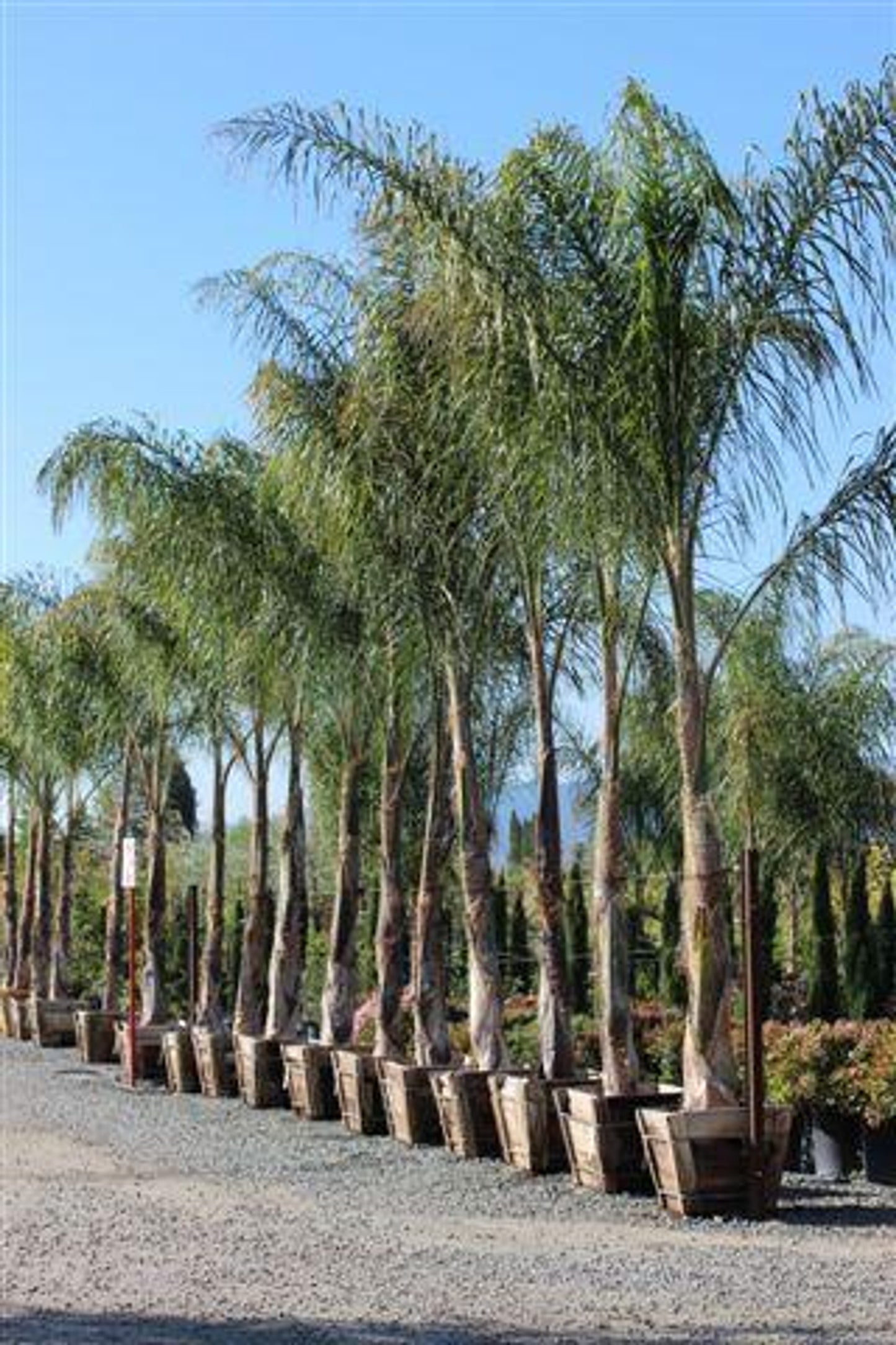
Choose fast-growing palms such as King Palm and Queen Palm when you want vertical privacy quickly. Queen Palm is loved for its feathery fronds, tropical feel and strong height potential, often reaching 25–50 feet in warm climates with the right care.
For an effective screen, many palms are planted 8–12 feet apart, depending on mature size and crown spread. King Palm can work well for 15–30 foot privacy needs, while Queen Palm and Mexican Fan Palm suit taller screening goals. The Mexican fan palm is a fast-growing species that can reach significant heights, making it suitable for large yards, but it is not very drought-tolerant and can be susceptible to diseases.
Privacy plantings need consistent upkeep. Caring for garden palm trees requires a balance of proper watering, targeted fertilization, and selective pruning, especially when palms are planted in dense clusters or exposed to wind.
Accent and Specimen Palms
For a dramatic focal point, select bold single-trunk varieties like Canary Island Date Palm, Date Palm or Chilean Wine Palm. These palms develop architectural trunks, evergreen leaves and strong silhouettes that complement pools, patios, driveways and entryways.
Palm trees are primarily categorized by their leaf structures: palmate, or fan-shaped fronds, and pinnate, or feather-shaped fronds. A palm branch with palmate leaves creates a broad, sculptural outline, while palms with pinnate leaves create a softer, resort-style effect.
Always plan for mature size before planting a specimen palm. Large Phoenix palms can dominate a small yard, cast significant shade and require professional placement away from roofs, utilities and hardscape. The date palm is well-known for its sweet, edible fruits and can grow up to 50 feet tall, requiring well-drained soil and plenty of sunlight.
Container and Small Space Palms
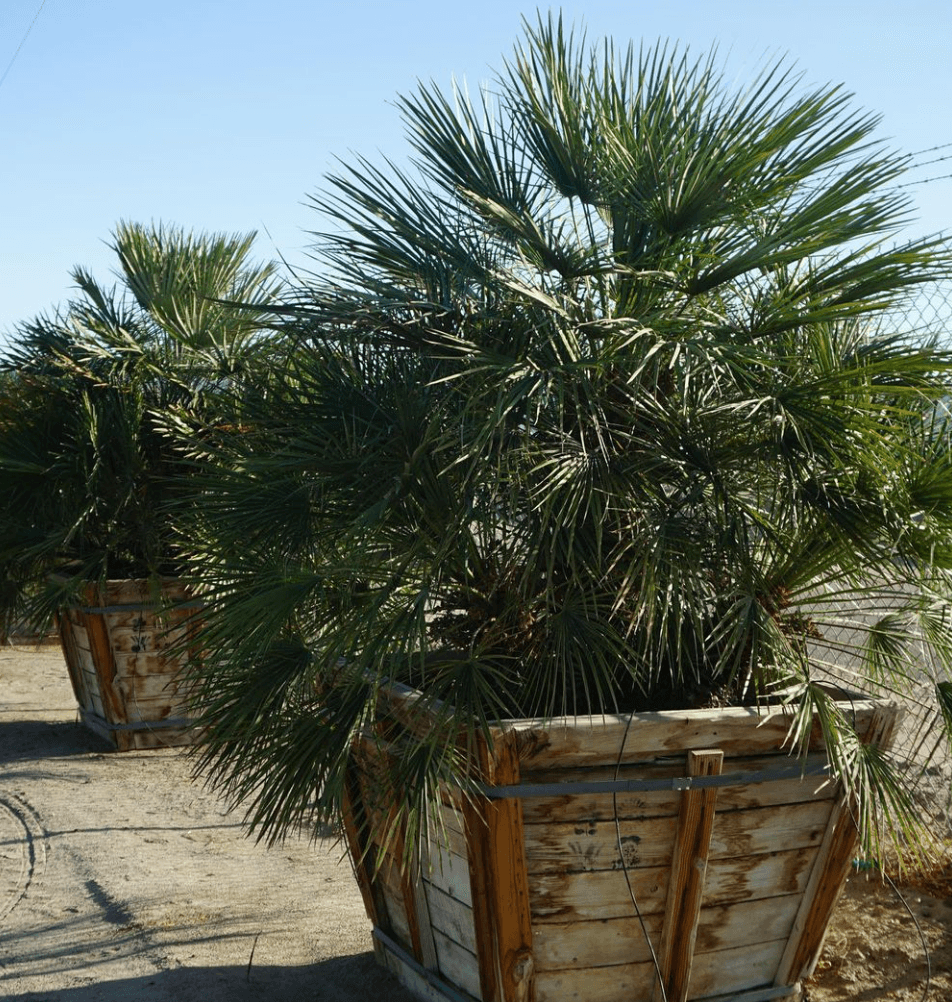
For patios, courtyards and compact landscapes, consider Pygmy Date Palm, Mediterranean Fan Palm, Lady Palm, Parlor Palm and other smaller palm species. The European fan palm is a low-maintenance species that can tolerate temperatures as low as 10°F and is ideal for smaller spaces due to its compact, clumping form.
Container palms give you more control over soil, drainage and mobility. They are especially useful for growing indoors, protecting cold-sensitive plants during winter or shifting a palm between full sun, partial shade and bright indirect light as seasons change.
Indoor palm trees also bring greenery into living spaces. The Areca palm, also known as the bamboo palm, is a popular indoor plant that effectively lowers carbon dioxide levels and thrives in bright, indirect light. The Majesty palm is a popular indoor palm known for its tall, elegant fronds and air-purifying qualities, requiring bright, indirect light and consistent moisture. The Kentia palm is an adaptable indoor species that thrives in a range of light and soil conditions, making it suitable for various indoor environments.
Choose the Right Palm Tree for Your Property
The right palm species thrives in your specific conditions and enhances your landscape vision.
For Coastal Properties
Coastal gardens need palms that can handle wind, salt air and sandy, well drained soil. Windmill Palm, Mexican Fan Palm, Cabbage Palm, Saw Palmetto and Needle Palm are strong options depending on space, exposure and design goals. The windmill palm tree is especially useful where cold hardy performance matters.
The windmill palm is one of the most cold-hardy palm varieties, capable of surviving temperatures as low as 10°F, making it suitable for cooler climates. Cabbage palm is also known as the state tree of South Carolina, and it is valued for coastal resilience in regions with salt exposure.
Near the ocean, drainage is essential. Salt air is different from salty soil, so water deeply after heavy salt spray and avoid waterlogged root zones. Most palms prefer a stable root environment, and hardened outdoor growing specimens handle wind better than newly planted trees.
For Inland Valley Properties
Inland valley landscapes need palms that tolerate heat, sun and dry summer conditions, or companion plantings such as desert trees for dry, hot climates. Date Palm, Queen Palm, Mexican Fan Palm and Foxtail Palm can perform beautifully when irrigation, mulch and soil nutrition are managed correctly.
Foxtail Palm (Wodyetia bifurcata) is highly ornamental and drought-tolerant once established. Date Palm also performs well in hot climates because it loves full sun, deep soil and heat. Coconut Palm (Cocos nucifera) thrives in tropical, humid climates and produces coconuts, but especially the coconut palm is better suited to moist and hot climates than most dry inland California sites.
Protect young palms from hot, dry winds until roots expand. Most palm trees thrive in full sun but can tolerate some shade, especially when newly planted, which should be watered deeply twice weekly until established. Mulching with 2 to 3 inches of organic material around the base of the palm helps retain moisture and insulates the soil.
For Smaller Yards
Smaller yards need palms with controlled growth, compact crowns and predictable spacing. King Palm, Guadalupe Palm, Pygmy Date Palm, Mediterranean Fan Palm and Jelly Palm are excellent choices where a large specimen would overwhelm the space, while compact ornamental trees like the Butterfly Japanese Maple can add seasonal color and structure.
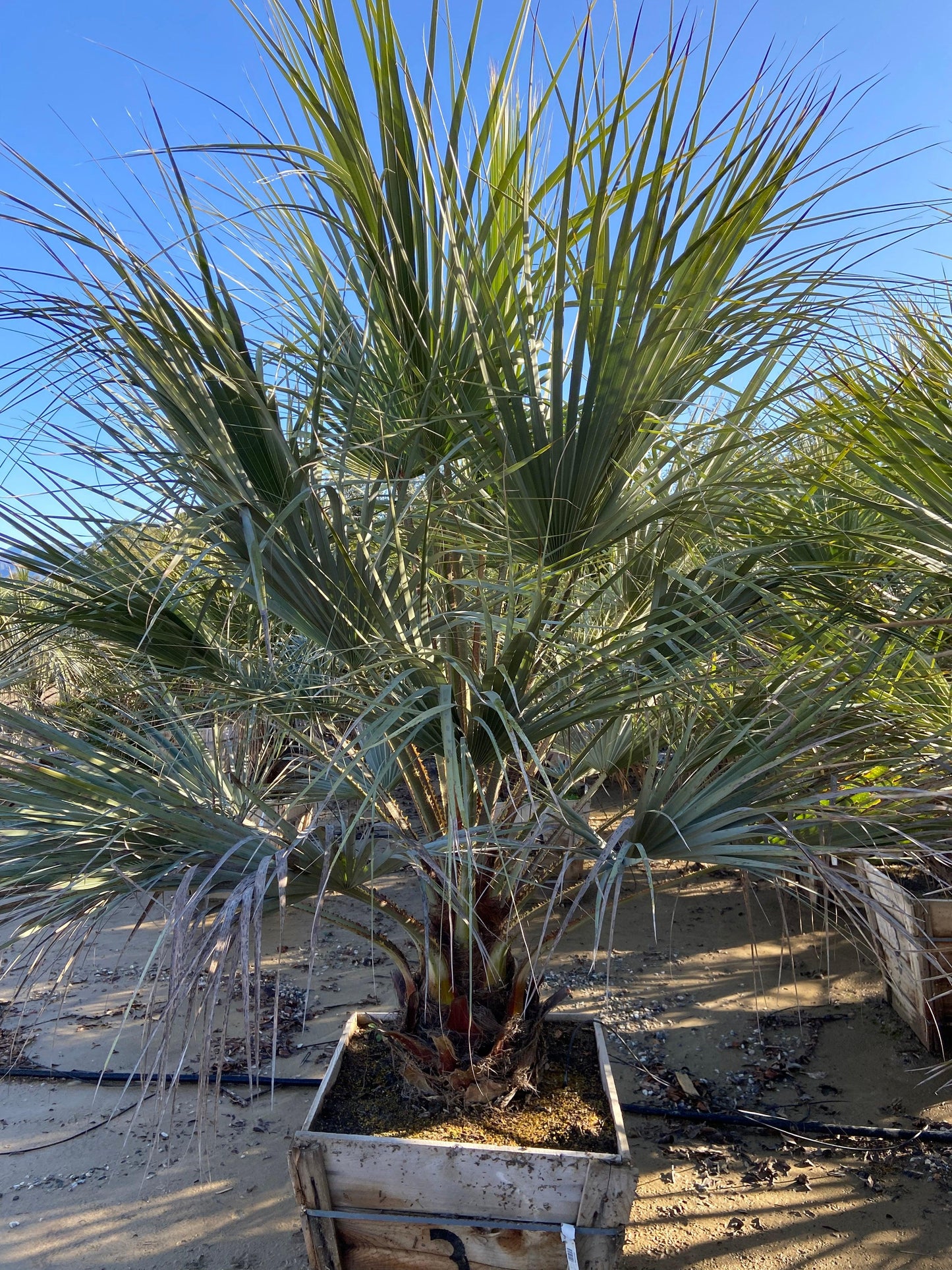
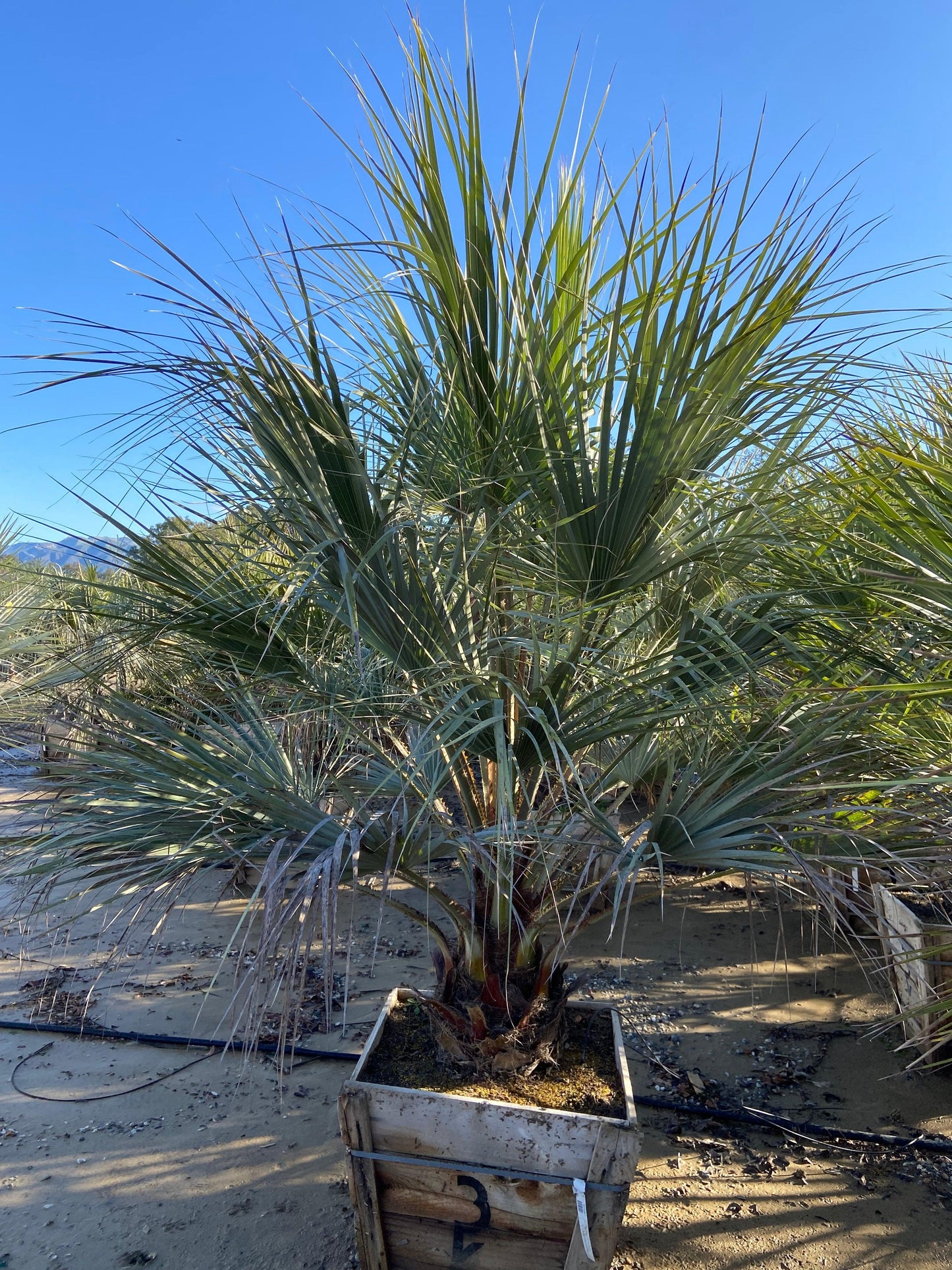
The jelly palm is a cold-hardy and adaptable variety that can grow in most residential landscapes, featuring curving, feathery fronds that add elegance to any space. Chinese Fan Palm can also work where you want fan shaped fronds without the massive scale of some Washingtonia palms.
Consider distance from walls, fences, roofs and utilities. Palms do not branch like many other trees; many true palms grow from a solitary shoot ending in a crown, and once the trunk develops, the trunk often keeps an almost constant diameter. Avoid relying on heavy pruning for size control, because never cutting healthy green fronds is critical to long-term health.
For Large Estate Properties
Large estates can support grand palms such as Canary Island Date Palm, Chilean Wine Palm, Date Palm and mature Mexican Fan Palm, as well as substantial shade trees like California Sycamore or desert-adapted options such as Desert Museum Palo Verde. These varieties create formal alleys, grove plantings and resort-style spaces with strong long-term landscape impact.
Grouping strategies work best when you combine height, spacing and form. Fan palms deliver bold palmate leaves, feather palms provide soft movement, and specialty palms add sculptural detail. Many palms can be repeated along drives or around lawns or paired with evergreen privacy trees from our nursery to unify a large design.
Professional installation is strongly recommended for mature palms. Large rootballs, heavy trunks and exact planting depth require equipment and experience. When installed correctly, palms thrive for decades and become defining landscape trees rather than short-term accents.
Premium Palm Tree Varieties That Thrive
A beautiful palm tree should adapt to your climate and deliver lasting beauty.
Fan Palms
Fan palms are defined by fan shaped fronds, often with palmate leaves that radiate from a central point. Mediterranean Fan Palm, Mexican Fan Palm, Chinese Fan Palm, Windmill Palm and Ruffled Fan Palm all bring strong texture and structure to the landscape, and can be combined with character trees like the California Pepper Tree for additional shade and movement.
These palms are useful in subtropical climates, coastal areas and smaller gardens depending on the species. Windmill Palm and European Fan Palm offer impressive cold hardy performance, while Mexican Fan Palm offers speed and height for large outdoor spaces, and flowering trees for California landscapes can layer in seasonal color.
Fan palms are often relatively low maintenance once established. Many are drought tolerant compared with thirstier tropical palms, but they still need well drained soil and careful watering during establishment.
Feather Palms
Feather palms include King Palm, Queen Palm, Date Palm, Areca Palm, Kentia Palm and Majesty Palm. Palms have fronds resembling bird feathers or ferns, with leaflets arranged along a central stem, creating the elegant look many people associate with tropical and subtropical landscapes.
These palms often bring faster growth and larger mature sizes than compact fan palms. Queen Palm gives quick height, Date Palm offers edible fruits, and açaí palm, coconut palm and other tropical palms are known for food, fiber and cultural uses. Date palms have also been valued for centuries by other Middle Eastern peoples, while some palm genera are associated with palm wine production.
Feather palms generally need more water and nutrients than tougher dry-climate types. Palms require higher levels of micronutrients than other trees, so soil testing and palm-specific feeding help prevent yellowing, weak growth and nutrient lockout.
Specialty Palms
Specialty palms add personality through unusual trunks, crown shapes and growth habits. Bottle Palm has a swollen trunk and sculptural profile, Triangle Palm has a distinctive three-sided arrangement, and Ruffled Fan Palm offers dramatic, pleated foliage.
These varieties are ideal near patios, courtyards and feature gardens where form matters as much as height. Some are best for protected warm climates, while others can be used as collector specimens in containers.
Not every palm-like plant is a true palm. Sago Palm and Ponytail Palm are popular companion plants with palm-like structure, but they are not true palms in the palm family. True palms belong to Arecaceae, a group of flowering plants with nearly 190 palm genera and more than 2,450 palm species worldwide; several palm genera grow as solitary trunks, while a clustering habit results when new shoots emerge from the base or an axillary bud near a leaf node.
How to Care for Your Palm Trees
Palm trees are low-maintenance when planted correctly. Proper care ensures healthy growth and lasting beauty.
Planting and Establishment
Start with the right location, correct planting depth and well drained soil. Most palms prefer soil that holds some moisture without staying soggy, and the root zone should sit at the same level as it did in the nursery container or box.
New palms need deep establishment watering. Palms thrive with a slow, deep soaking rather than shallow, frequent watering, and newly planted palms should be watered deeply twice weekly until established. Established palms require deep watering infrequently, allowing water to reach 3 feet deep every 1 to 2 weeks.
Mulch helps stabilize soil temperature and moisture. Use 2 to 3 inches of organic material around the base while keeping mulch away from the trunk. For large palms, professional installation protects the solitary shoot, crown and trunk from damage that palms cannot easily repair.
Ongoing Maintenance
Feed palms with the right nutrients at the right time. Palms require a slow-release, palm-specific granular fertilizer in early spring and early fall when palms are actively growing. A balanced slow-release fertilizer can be applied in the spring to support the growth of palm trees, particularly after conducting a soil test to determine nutrient needs.
Prune selectively and conservatively. Never cut healthy, green fronds from a palm, as this can starve the tree of vital nutrients. Palm trees generally do not require pruning, but damaged fronds should be trimmed back to the trunk or where they meet other foliage, using appropriate tools based on the size of the tree.
Watch for pests, nutrient deficiencies and weather stress. Cold-sensitive palms should be watered heavily just before a freeze to hold heat better than dry soil. Adjust care seasonally: more water in summer heat, less frequent irrigation in cool periods, and extra monitoring after wind, frost or extreme coastal exposure.
Shop Palm Trees with Expert Guidance
Explore our selection of California-grown palm trees perfect for your landscape. Choose from mature specimens, compact patio palms, indoor plants and hardy outdoor varieties suited to tropical and subtropical climates, subtropical climates and warm climates across California.
Whether you want a low maintenance privacy screen, a drought tolerant specimen, or indoor palm trees such as Parlor Palm, Lady Palm, Areca Palm, Kentia Palm or Majesty Palm, expert guidance helps match the right palm to your light, soil, water and mature size needs.
Your perfect palm tree is just a consultation away.