Shop Premium Mediterranean Trees From Yardwork
Olive trees are long-lived, drought-tolerant evergreens that bring sculptural Mediterranean beauty, edible fruit and potential olive oil production to California gardens. From dwarf patio trees to mature landscape specimens, our collection includes varieties suited to containers, courtyards, small gardens and large estates.
Looking for an olive tree that brings Mediterranean elegance to your landscape? Discover dwarf, standard and heritage varieties designed for every garden space. From container patios to expansive estates, our collection combines drought-tolerant resilience, gray green leaves, a gnarled trunk and authentic Mediterranean character.
Find your perfect olive tree and transform your outdoor space today.
Olive Trees for Every Garden
Whether you’re creating a Mediterranean oasis or adding architectural interest, there’s an olive tree for every landscape vision. Olea europaea, also called the common olive or European olive, is an evergreen tree from the Mediterranean region, valued for year round structure, edible olive harvests and elegant olive branches.
Fossil evidence indicates that the olive tree originated 20–40 million years ago in the Oligocene, in what now corresponds to Italy and the eastern Mediterranean Basin. The olive plant was first cultivated in the Mediterranean between 8,000 and 6,000 years ago, with domestication likely beginning in the Levant based on archaeological findings.
The earliest evidence of the olive tree in Egypt dates back to the Eighteenth Dynasty (1570–1345 BC), during which olive oil was used in cooking, lamps, cosmetics, medicine, and embalming. The Romans expanded olive cultivation throughout the Mediterranean, introducing it to regions such as Gaul and North Africa, where it became a major economic pillar. Spanish colonists brought the olive to the New World in the 18th century, where its cultivation prospered in present-day Peru, Chile, Uruguay, and Argentina.
Outdoor Landscape Olive Trees
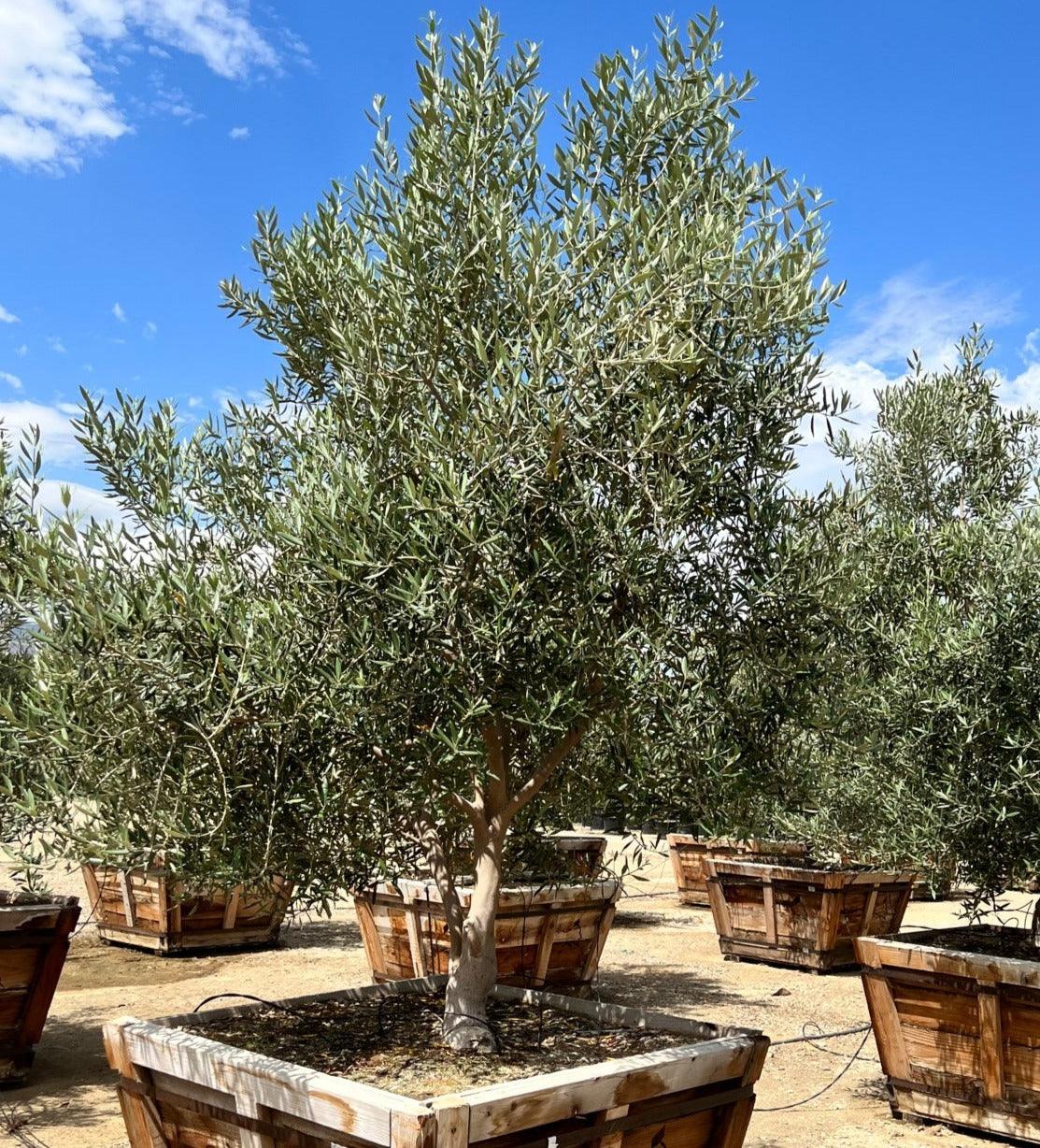
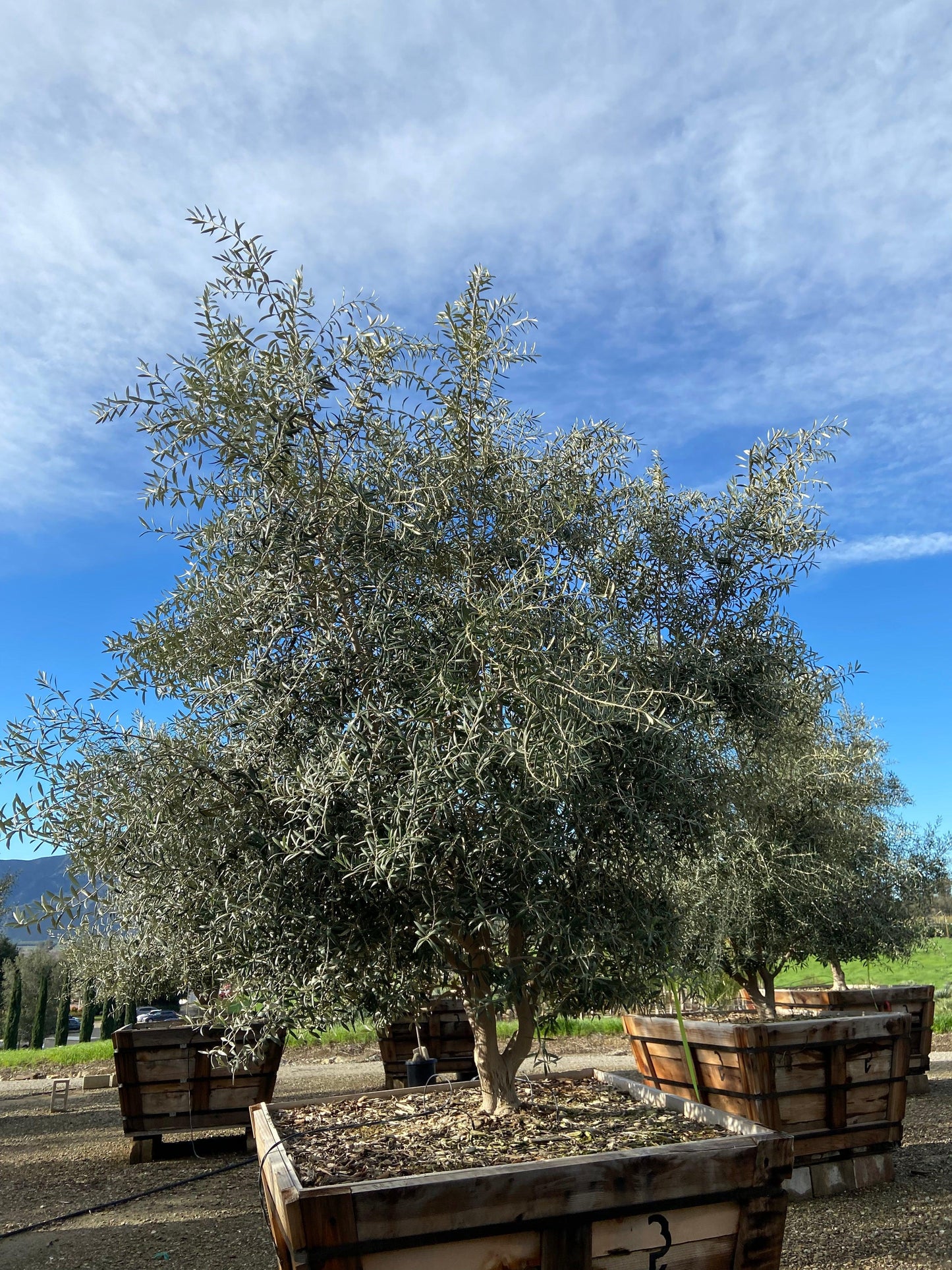
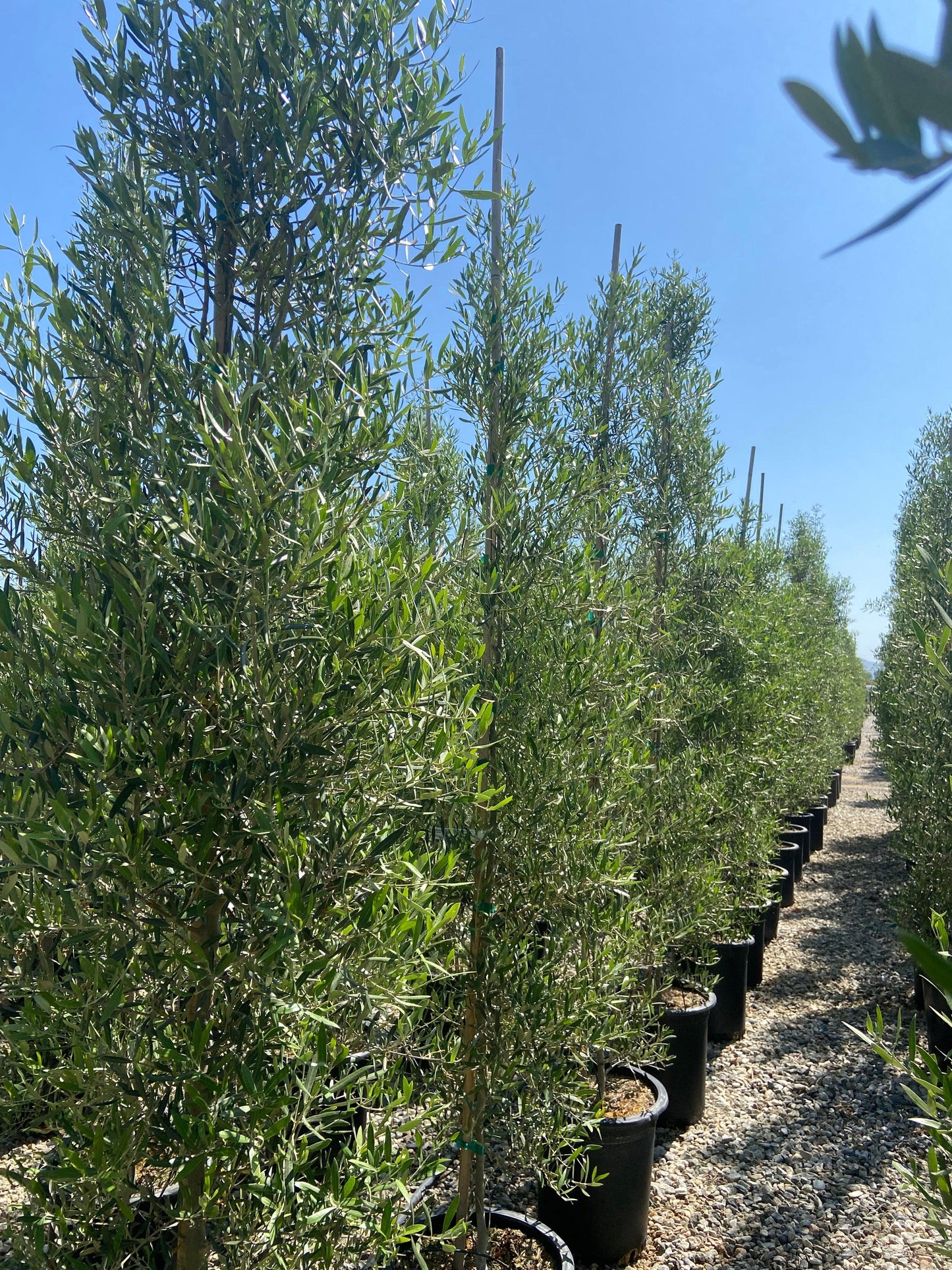
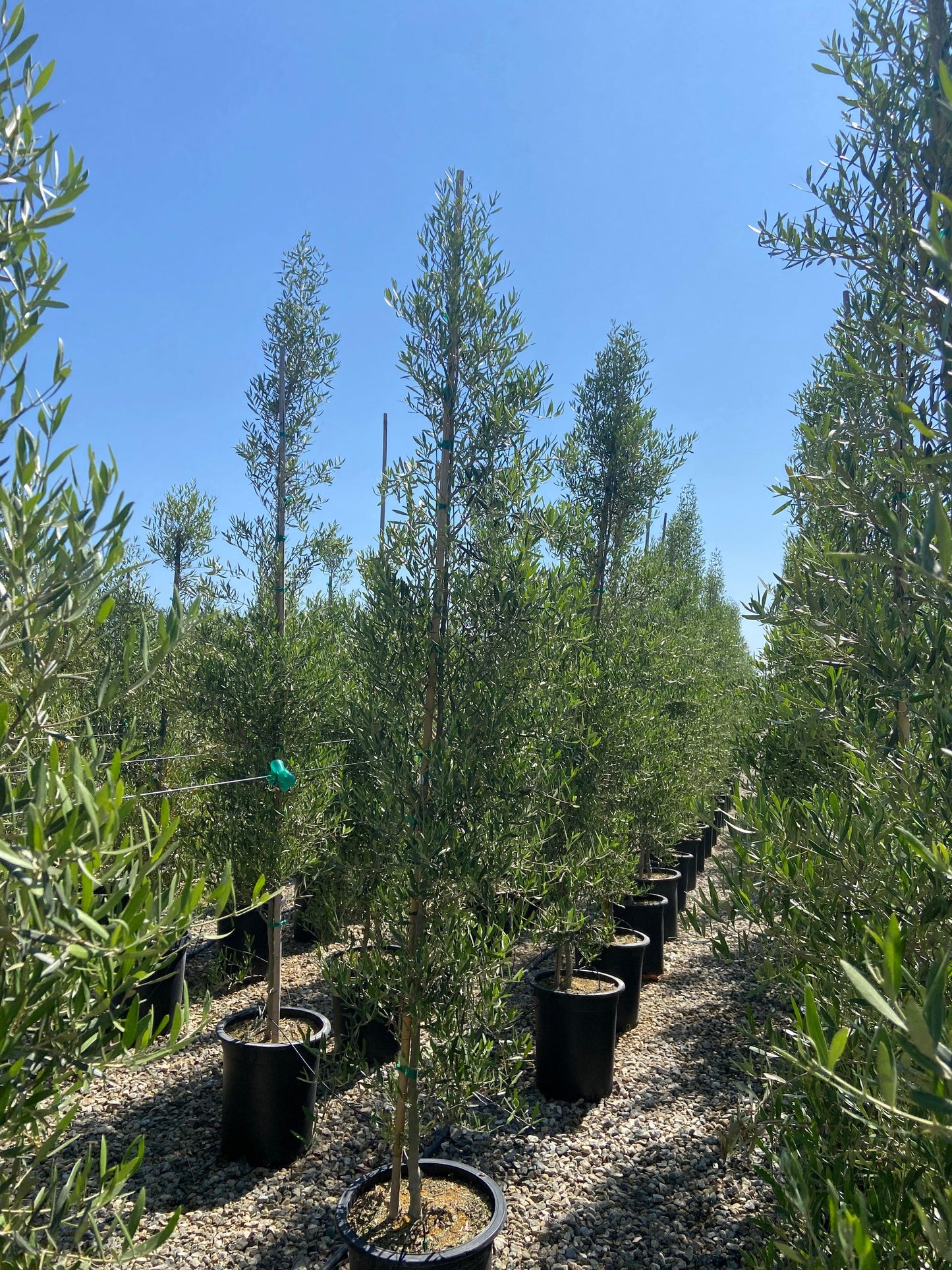
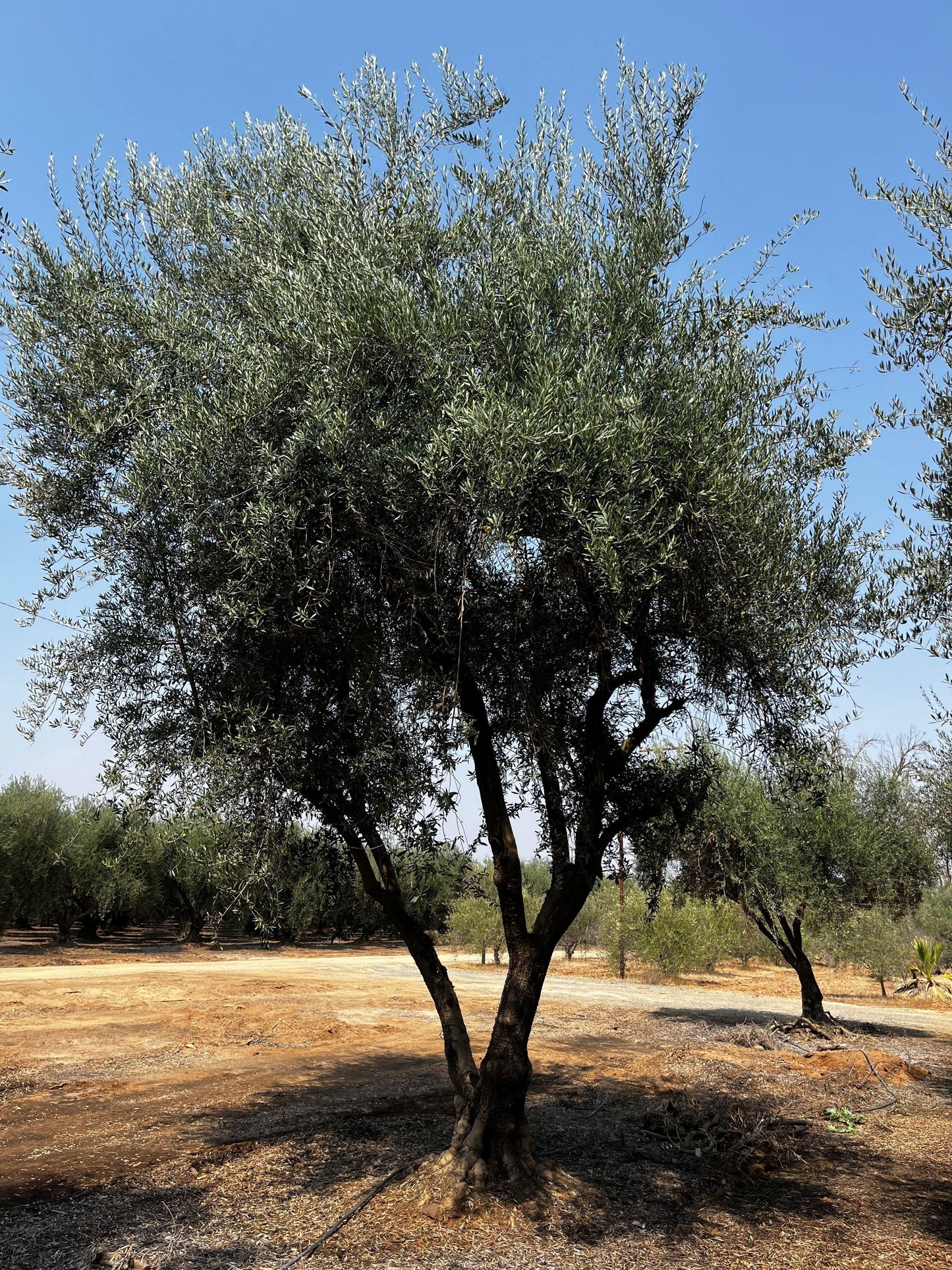
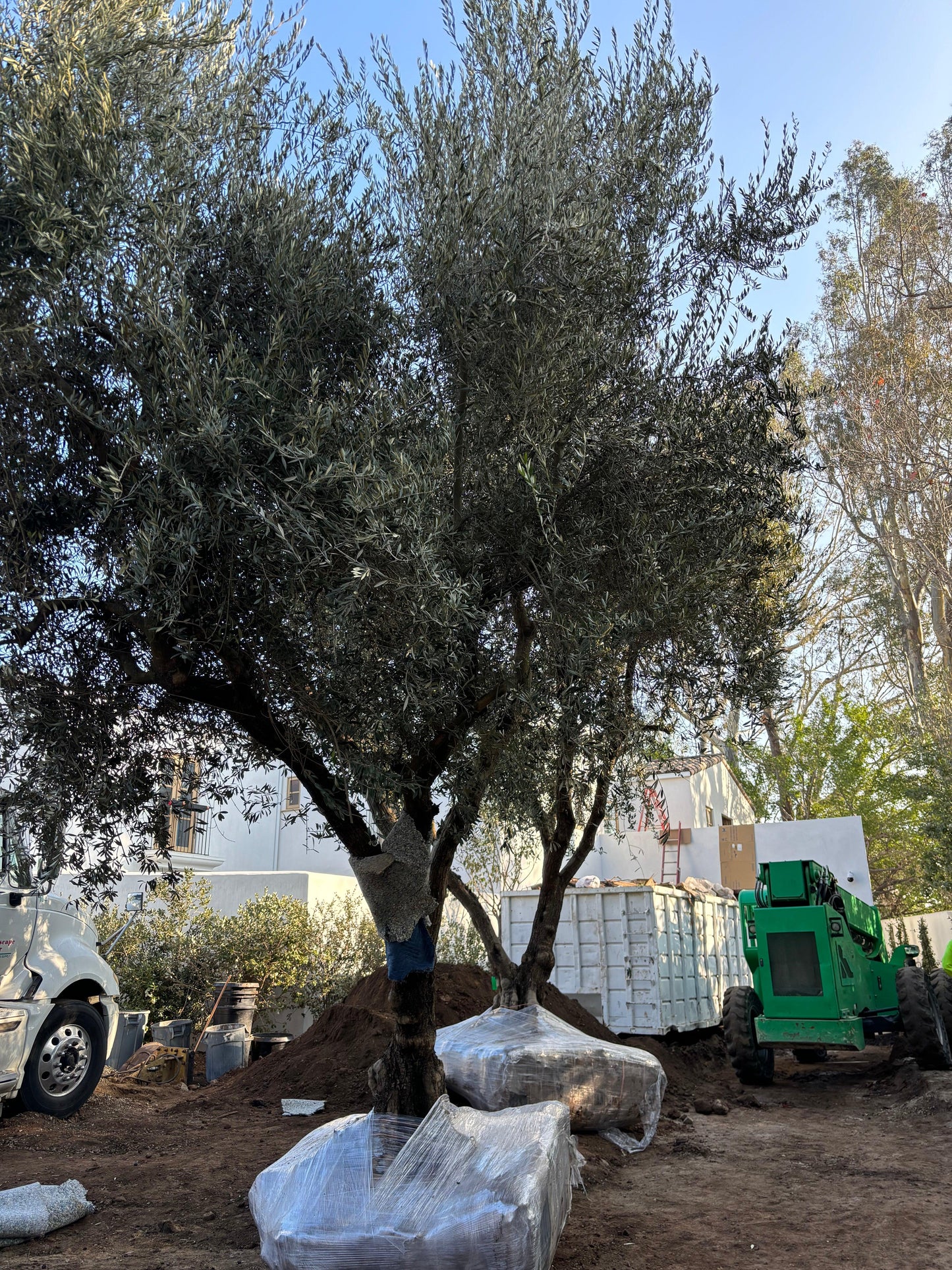
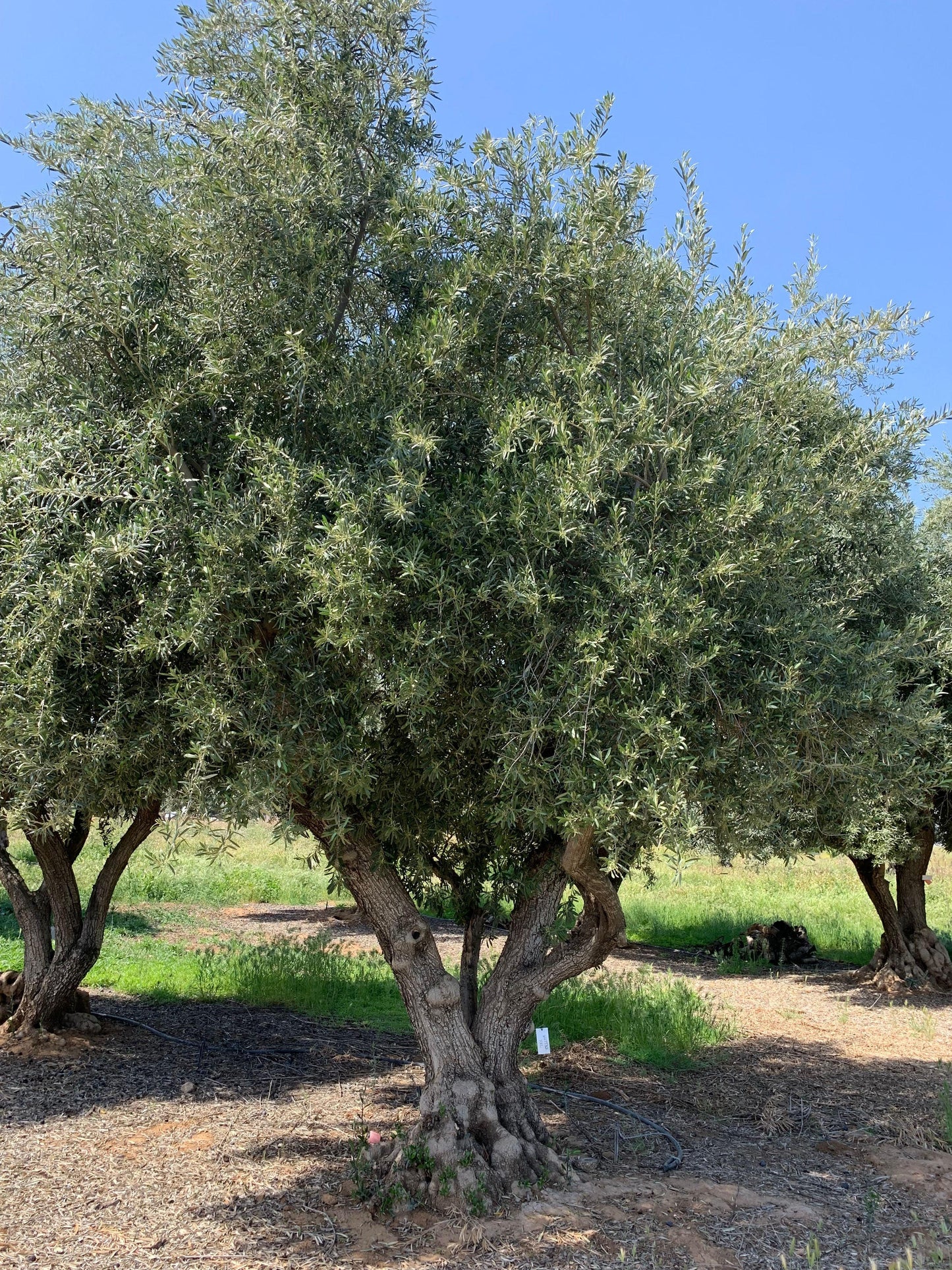
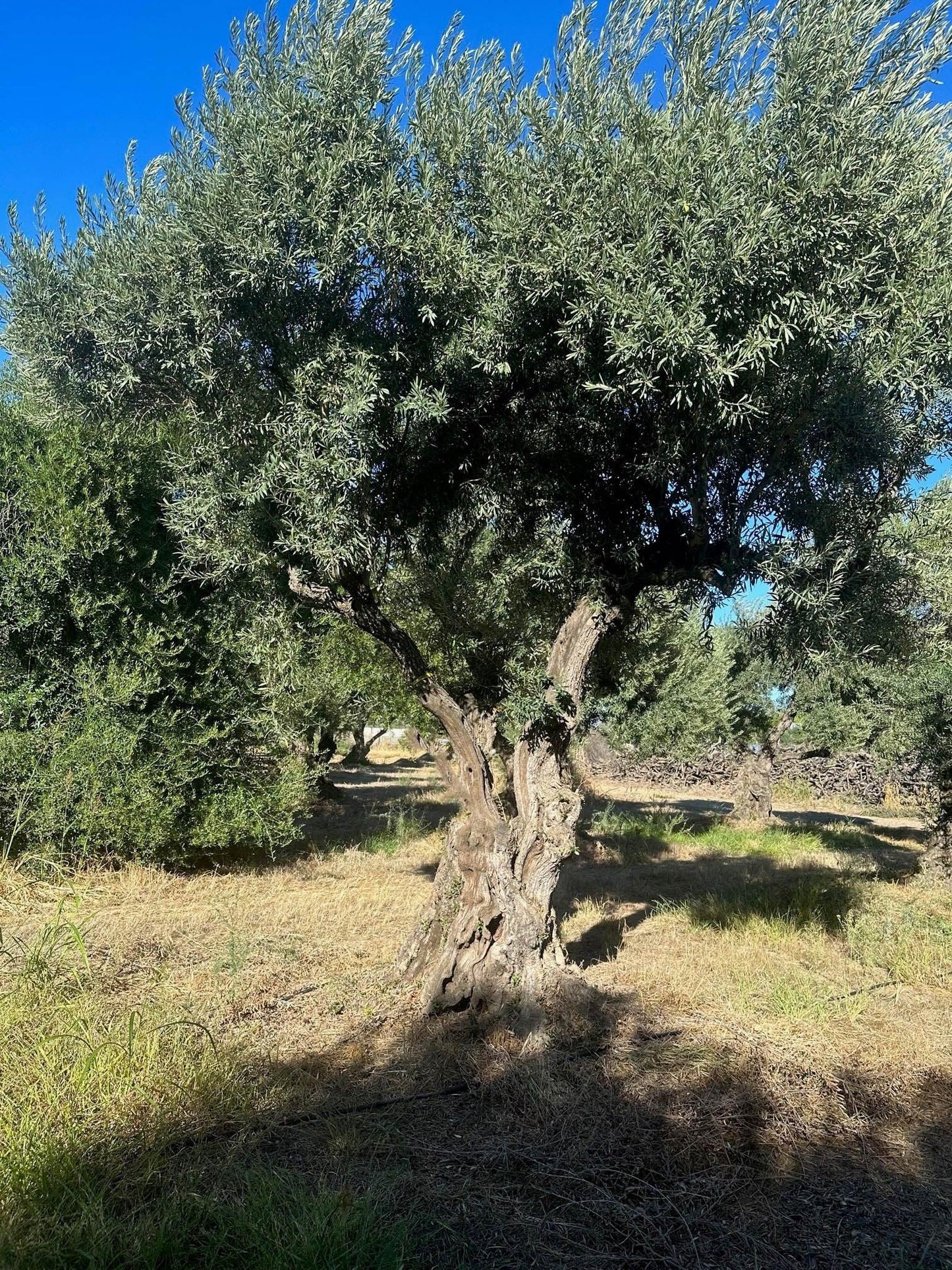
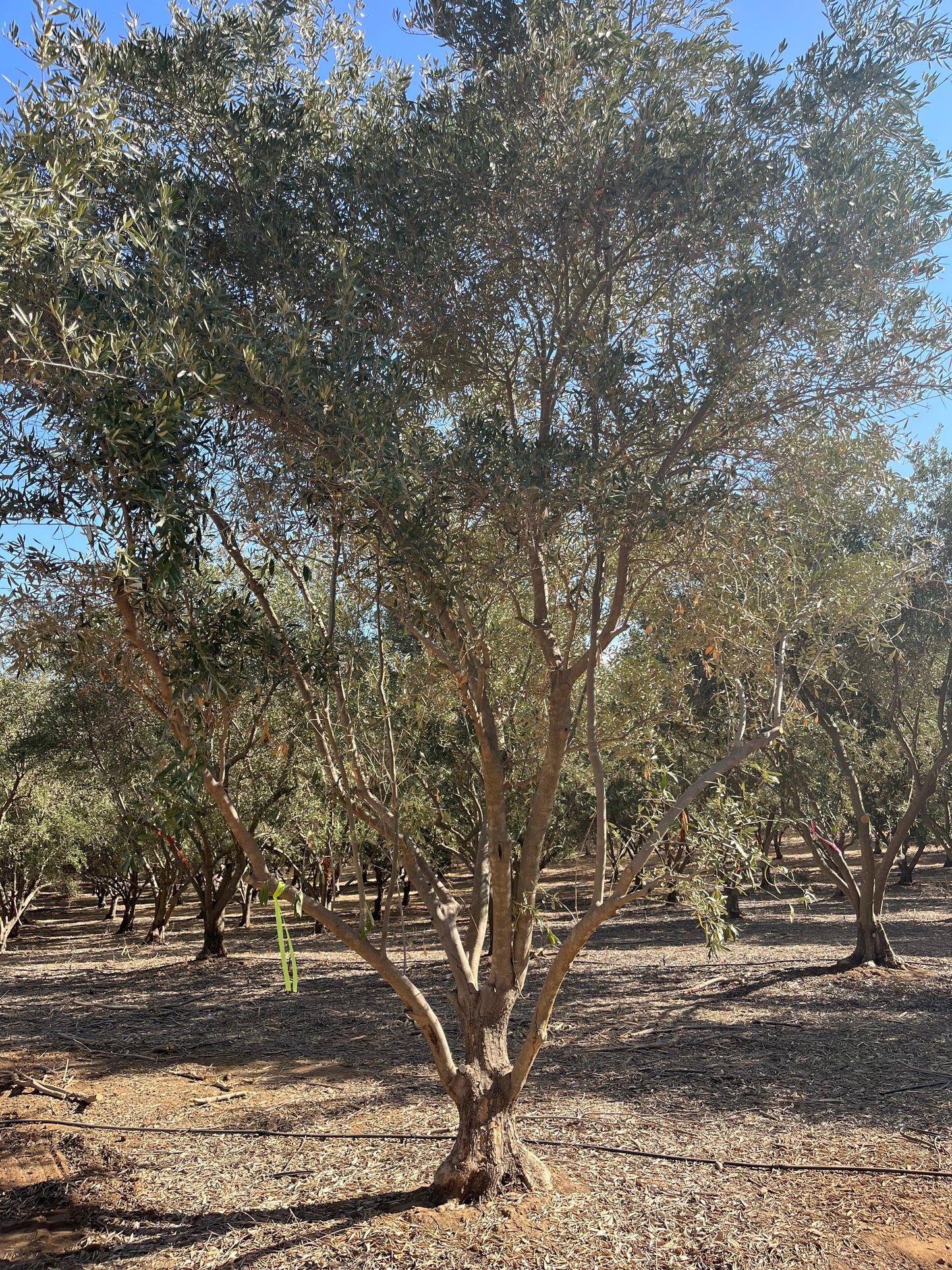
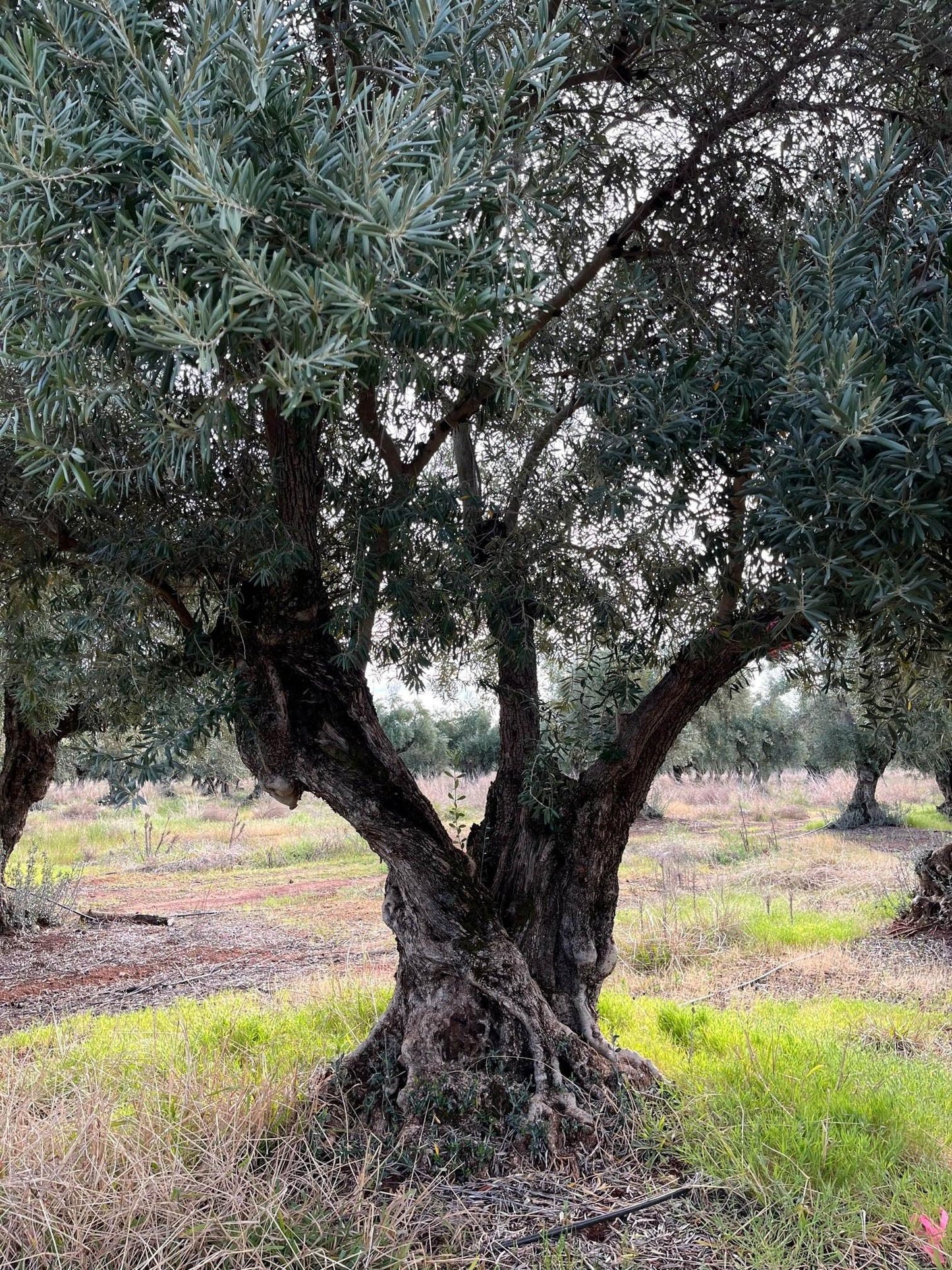
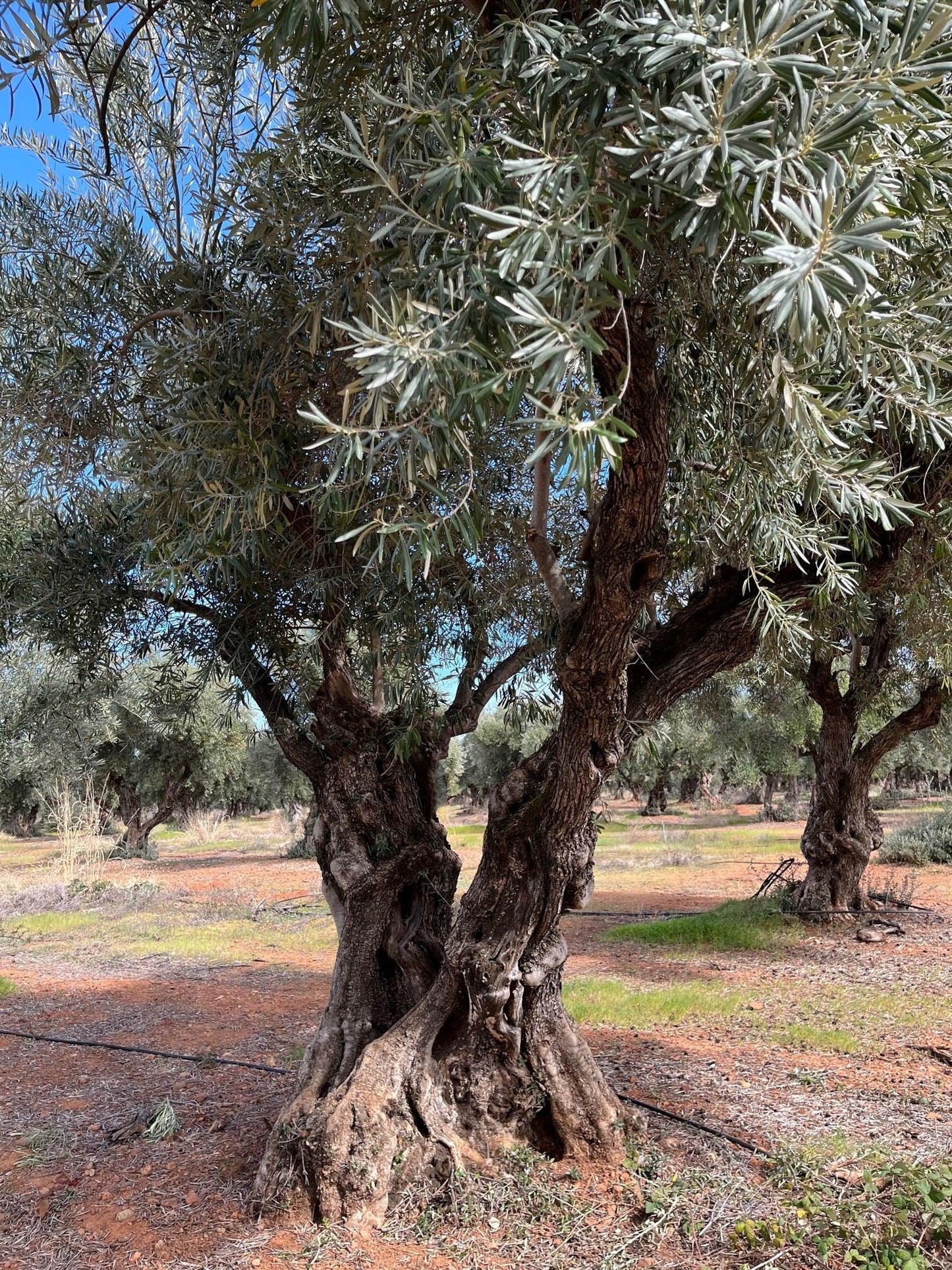
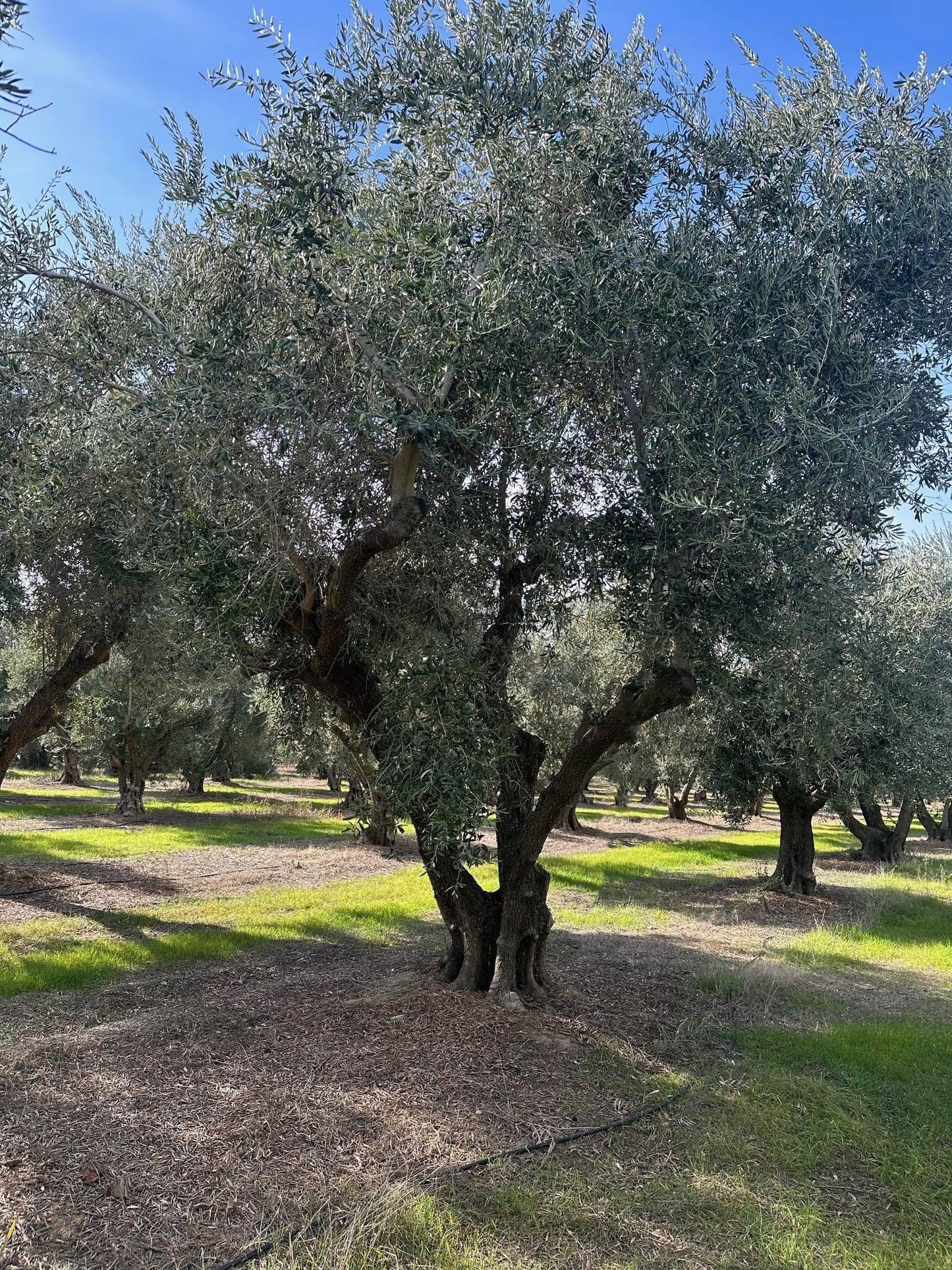
Choose mature standard olive trees for focal points, privacy screening or Mediterranean-style gardens. These trees typically reach heights of 20 to 30 feet and can develop thick, gnarled trunks and intricate branching, lending them a strong architectural presence in landscapes. Olive trees offer a distinctive Mediterranean aesthetic with a gnarled, sculptural trunk that becomes more beautiful with age.
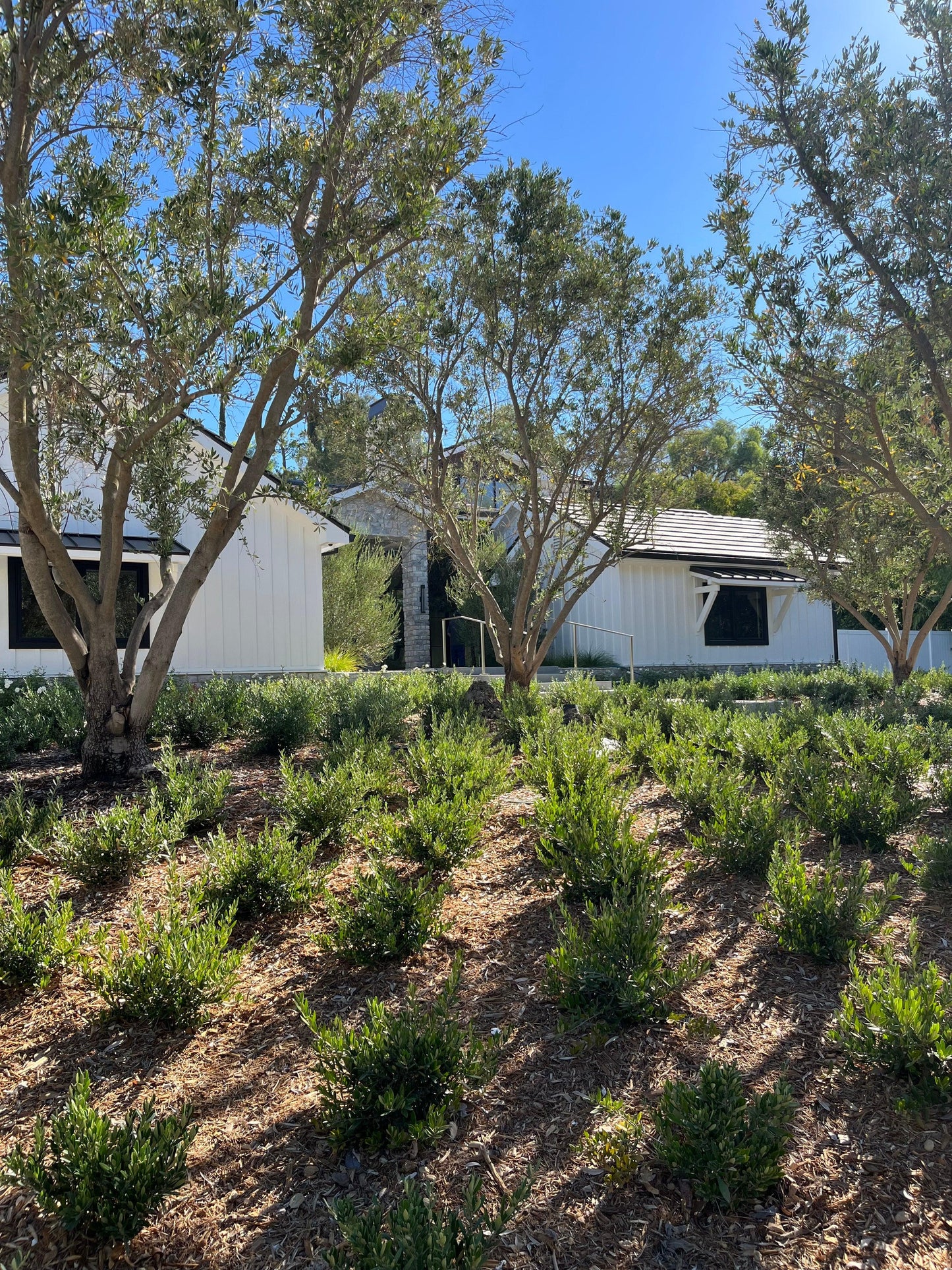
For California landscapes, select suitable climates and varieties with the right balance of heat tolerance and winter resilience. ‘Arbequina’ is a compact, self fertile choice for many gardens, while ‘Frantoio’ performs beautifully in full sun with good drainage and mild winter protection. Pair olive trees with lavender, rosemary, ornamental grasses and other Mediterranean plants for a cohesive garden style.
Container & Patio Olive Trees
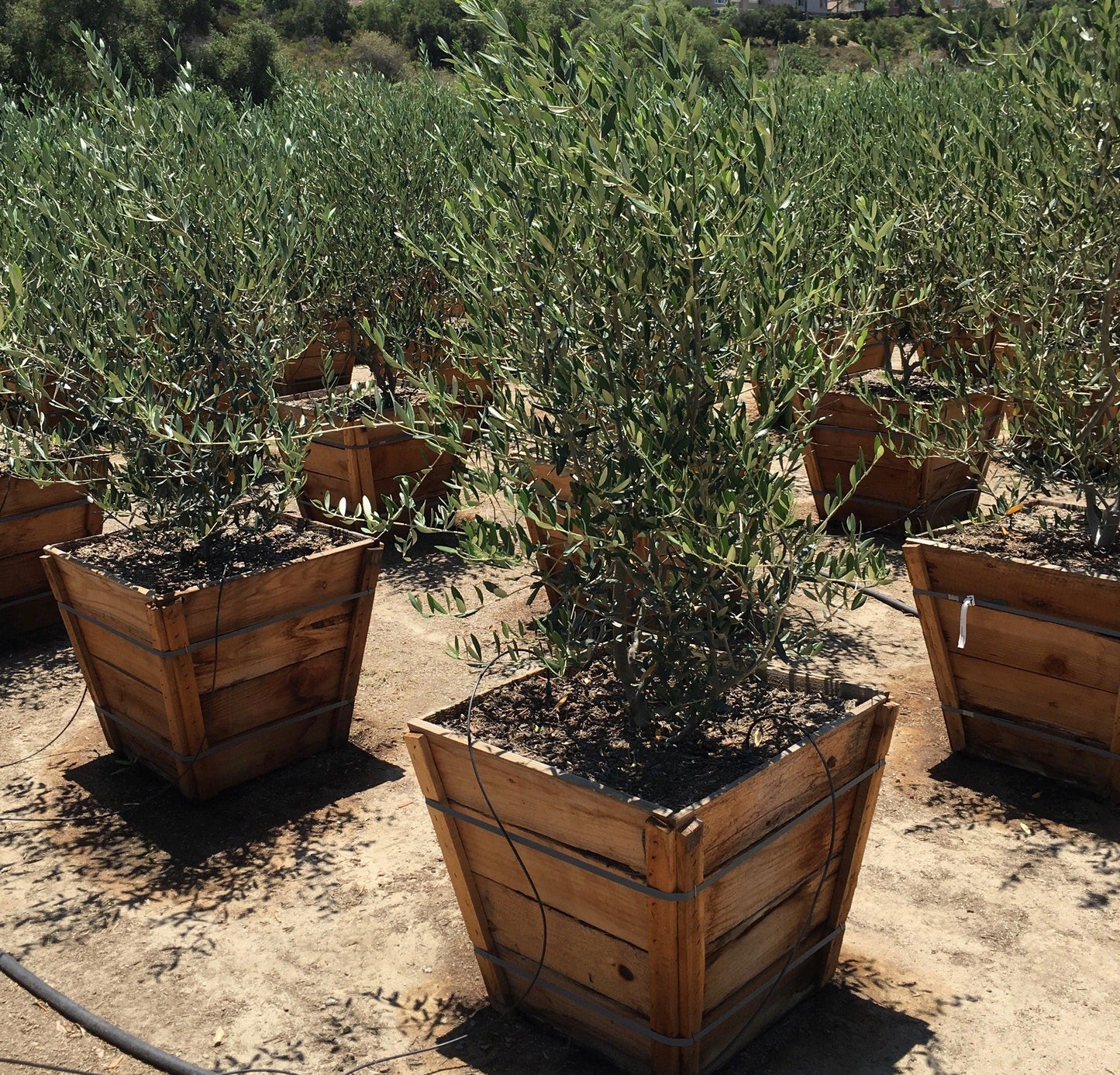
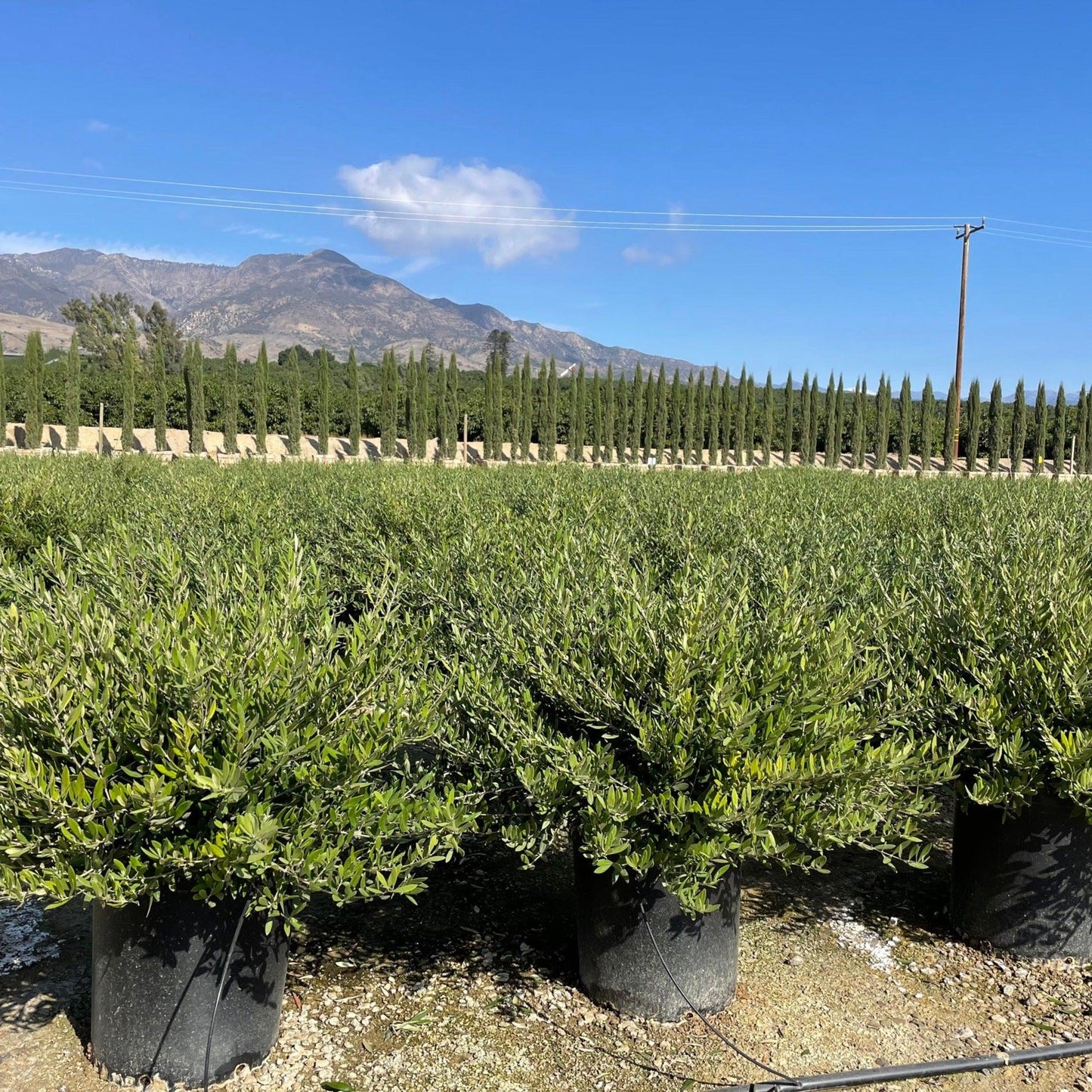
Opt for dwarf varieties in decorative containers for patios, decks and courtyards. A 5-15 gallon Little Ollie dwarf olive tree can provide immediate impact while remaining manageable for container growing, especially when planted in a well draining mix with drainage holes.
Container olive planting works best in terracotta or ceramic planters that enhance the Mediterranean aesthetic and help the root system breathe. Compact cultivars such as Koroneiki, Arbequina and Arbosana can become an edible patio feature, offering foliage, form and, in suitable conditions, olive fruit.
Indoor Olive Trees
Indoor olive trees need bright light, enough sunlight and the sunniest possible position, ideally near south or west-facing windows. Olive trees thrive in full sun and require at least six hours of direct sunlight daily to grow strong and healthy, so indoor placement must provide as much direct sunlight as possible.
Choose compact or ornamental olive cultivars indoors if foliage beauty matters more than harvest. Proper watering helps prevent root rot and leaf drop, while rotating the tree and moving it outdoors during warm seasons can support stronger growth.
Choose the Right Olive Tree for Your Space
The right variety enhances your landscape design and ensures long-term growing success. There are over 4,000 distinct olive tree varieties grown worldwide, with various flavors and culinary uses. Olive tree varieties are categorized by their primary use: oil production, table olives, or dual-purpose.
Many olive cultivars descend from cultivated olive selections and wild olive trees, also known as wild olives, within the native range of the Mediterranean basin, southern Europe, southern Italy, the Greek mainland, Mediterranean coastal areas and Mediterranean countries. Across Mediterranean civilisations and the Roman Empire, olives occupied a central place in food, trade, ritual and medicine, and olive farming gained great importance as groves expanded.
For Small Gardens & Patios
Select dwarf cultivars like ‘Arbosana’ or ‘Koroneiki’ that maintain compact growth habits. Koroneiki is known as the “queen of olives” and produces a premium extra virgin olive oil with an intensely fruity flavor.
Small-space olive growing is easiest when the tree can be pruned and trained without losing its Mediterranean character. In small gardens, compact fruiting trees such as a Little Ollie olive tree can deliver form, fragrance from creamy flowers and a possible harvest without overwhelming the space.
For Large Landscapes
Plant heritage varieties like ‘Manzanilla’ or ‘Mission’ where you want impressive mature size, a rounded crown and sculptural trunks. Manzanilla is a plump Spanish olive often stuffed and used in martinis, while Mission remains a classic California dual-purpose option.
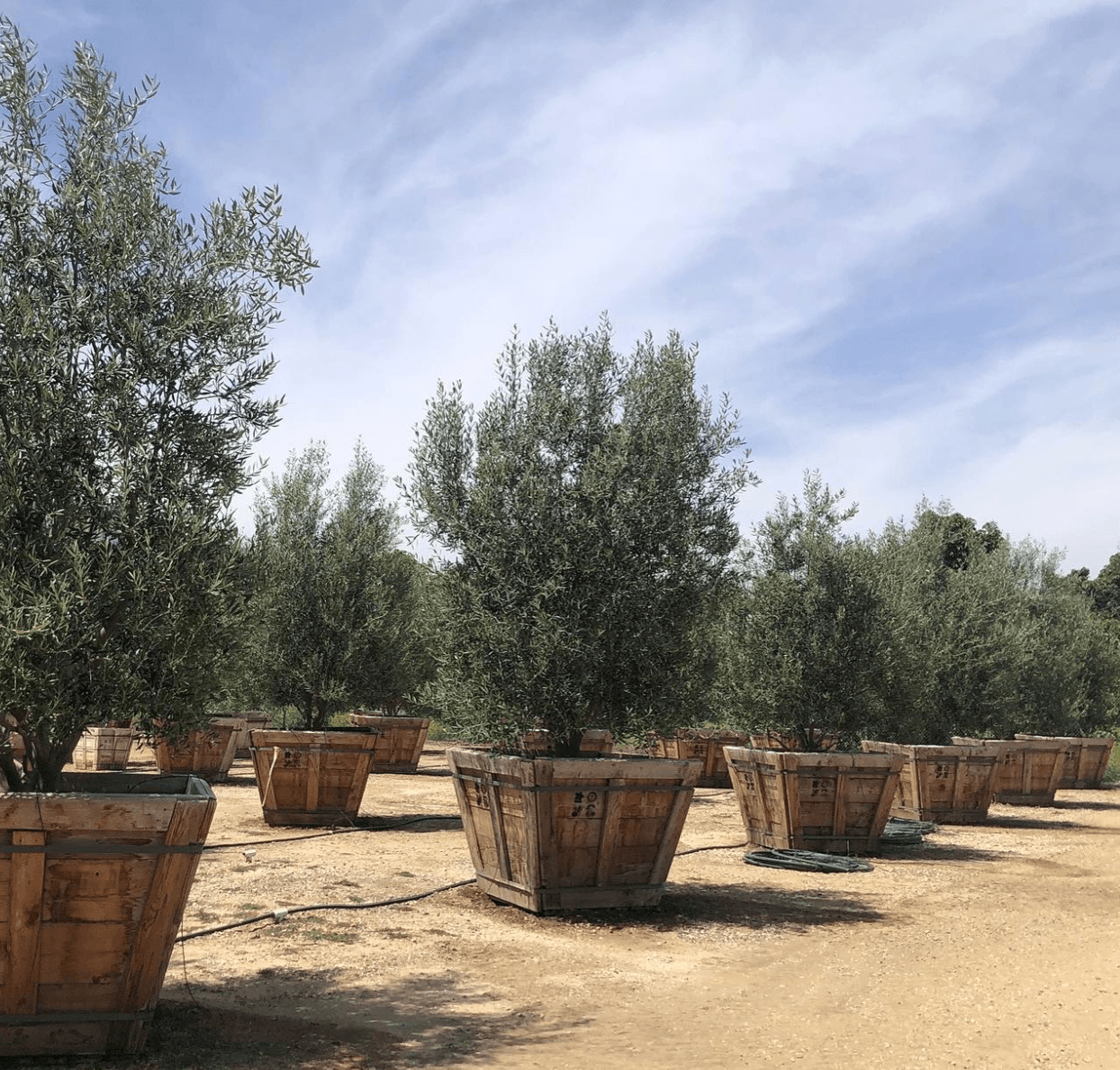
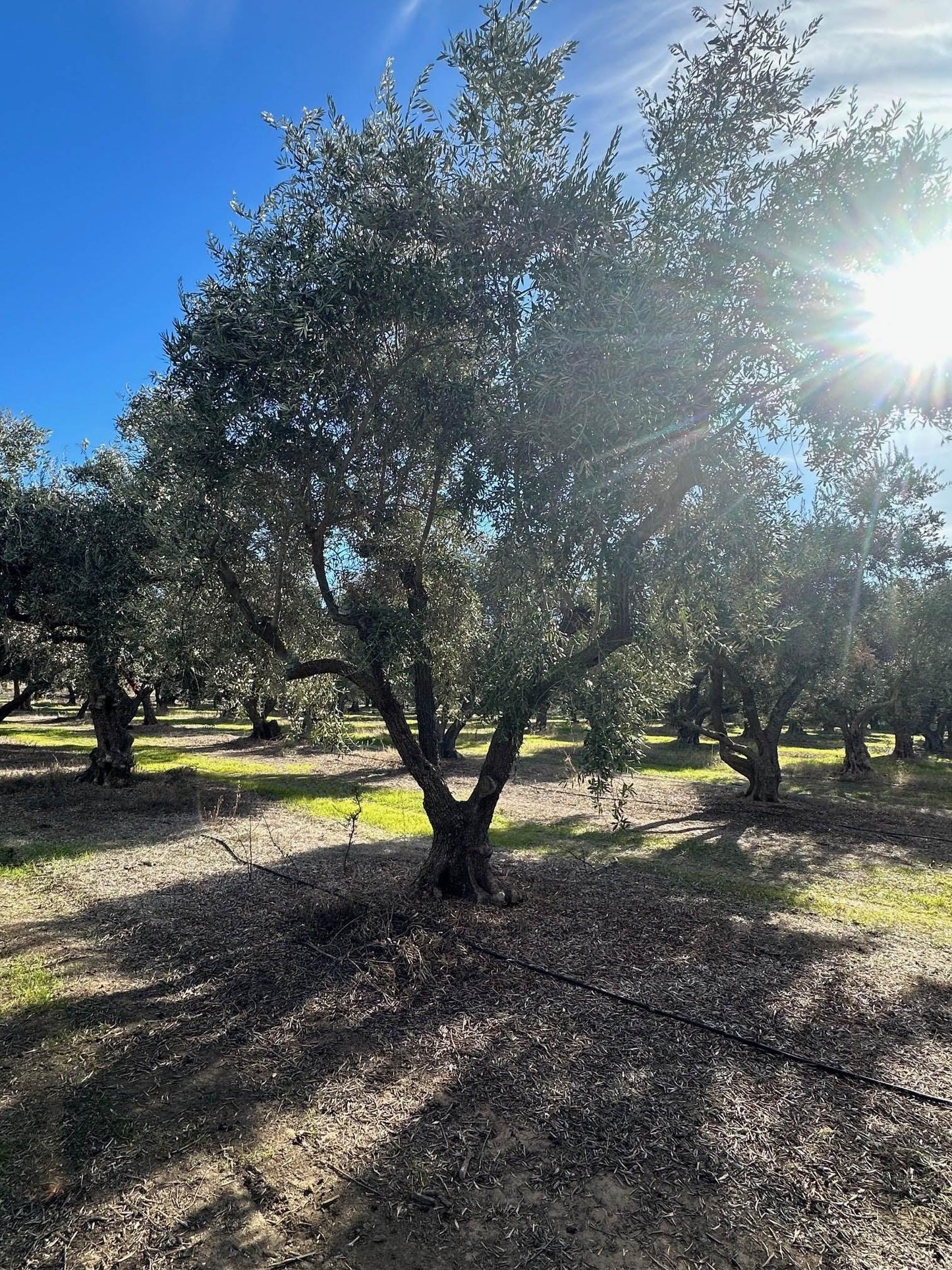
Space multiple trees 15-20 feet apart to create olive groves or dramatic landscape focal points. In larger designs, mature Sevillano olive trees can create an instant grove effect, while other trees can be used to frame paths, entries or courtyards.
For Container Growing
Choose naturally compact varieties that thrive in restricted root space without compromising health. The best container olives have strong root systems, tolerate pruning and respond well to consistent watering without staying wet.
Use a pot with drainage holes, a gritty well draining mix and deep but infrequent watering. Container trees need more monitoring than in-ground trees because young trees and potted trees dry faster in hot weather.
For California Climate Zones
Plant heat-tolerant varieties for Central Valley locations with intense summer sun and low humidity. Olive trees thrive in hot, dry climates and prefer well-drained, often poor soils, which makes them suitable for cultivation in Mediterranean regions and similar climates worldwide.
Choose cold-aware cultivars for coastal areas subject to occasional frost and marine layer conditions. In California, olive tree cultivation works best when the site offers full sun, well drained soils and protection for young trees during unusual cold snaps.
Olive Tree Varieties That Thrive
Quality varieties ensure healthy growth, beautiful form and Mediterranean authenticity. Olive trees produce small, creamy-white flowers from leaf axils; the olive tree produces small, creamy-white flowers that are primarily wind-pollinated, and many cultivars are partially or fully self-fertile, improving fruit set and yield when multiple varieties are planted together.
If you want an olive tree increase quantity plan for better harvests, plant compatible varieties close enough to cross pollinate. Even self fertile trees often set more fruit when another cultivar is nearby.
Fruiting Olive Varieties
Productive cultivars like ‘Picual’ and ‘Frantoio’ offer both ornamental value and potential olive harvests. Picual is the most widely planted olive variety globally, responsible for roughly one-third of global oil production. Hojiblanca produces a versatile oil with fresh herbal notes, suitable for both cooking and finishing dishes.
For table olives, Kalamata olives are rich, meaty, and slightly smoky, often used in salads and tapenades. Sevillano olives are large and meaty, often used for stuffing or Sicilian-style salt-brine curing. Olives must be cured and fermented after harvesting to remove oleuropein, a bitter compound, making them palatable for consumption, because raw fruit is not eaten directly from the tree.
Olive trees yield fruits after 3 to 5 years, which can be cured for eating or pressed for oil. Olives are harvested in the autumn and winter, with green olives picked from the end of September to mid-November in the Northern Hemisphere, and black olives collected from mid-November to early February. Most olives today are harvested by shaking the boughs or the whole tree, while hand harvesting is used for table olives to avoid damaging the fruit.
The amount of oil contained in the fruit differs greatly by cultivar, with typical yields being 1.5 to 2.2 kg (3 lb 5 oz – 4 lb 14 oz) of oil per tree per year.
Ornamental Olive Varieties
Non-fruiting cultivars like ‘Wilsonii’ semi-fruitless olive trees provide Mediterranean beauty without concerns about fruit drop or harvesting. ‘Swan Hill’ fruitless olive trees are another popular ornamental choice for low-mess landscapes where the goal is evergreen structure rather than edible fruit.
Sterile or low-fruiting varieties focus energy on foliage and form, creating stunning sculptural specimens for landscape design. These trees are ideal near patios, walkways and pool areas where fruit cleanup would be inconvenient.
Dwarf & Compact Varieties
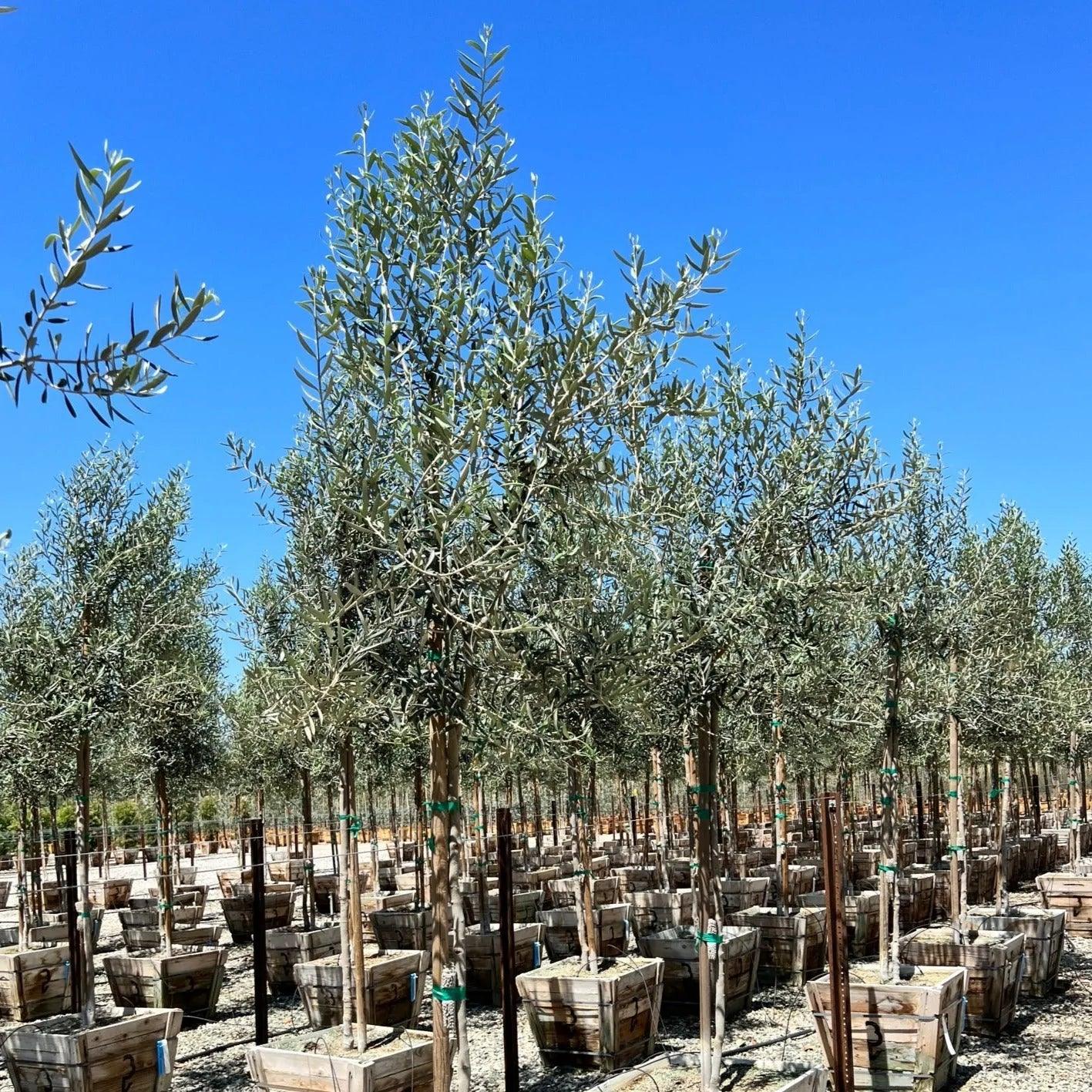
Space-saving cultivars are perfect for small gardens, containers and urban landscapes with limited growing area. Naturally compact growth habits require minimal pruning while maintaining authentic olive tree appearance and character.
Dwarf and compact olive cultivars are especially useful for homeowners who want the look of old trees without the mature tree size. With more sun, proper watering and occasional feeding, fruitless olive trees for elegant landscapingcan remain dense, healthy and elegant year round.
How to Care for Your Olive Tree
Proper care ensures your olive tree thrives and develops the characteristic Mediterranean beauty you desire. Olive trees possess high resistance to most common garden pests and diseases, requiring low maintenance, but the right site and watering routine make a major difference.
Olive trees (Olea europaea) are long-lived evergreens that can thrive in hot, dry climates and poor, rocky soils, making them ideal for low-maintenance gardens. Like the Coast Live Oak tree for sale, olive trees prefer well-drained, often poor soils and can tolerate drought well due to their extensive root systems. Olive trees are known for their exceptional drought tolerance due to their deep and wide-spreading root systems, allowing them to access moisture deep in the soil.
Planting & Initial Care
Plant in well-draining soil with 6-8 hours of direct sunlight daily for optimal growth and health. Olive trees thrive in sandy or rocky soils with excellent drainage and a pH between 5.0 and 8.5.
Water deeply immediately after planting and weekly during the first year to establish strong root systems. Young trees need consistent watering while roots develop, but the soil should never remain soggy because poor drainage can cause root rot.
Apply balanced 10-10-10 fertilizer in early spring to support vigorous growth and development. Olive trees for sale online benefit from regular feeding with a balanced fertilizer, especially in poor soils, to support new growth and fruiting wood.
Ongoing Maintenance & Pruning
Prune in late winter to remove dead branches, dead wood, crossing growth and crowded interior branches. Light pruning improves air circulation, helps sunlight reach the canopy and protects previous-year fruiting wood.
Water established trees deeply every two weeks during dry periods, allowing soil to dry between waterings. Watering should be deep and infrequent; established olive trees are drought-tolerant but benefit from deep watering every two weeks in dry conditions.
Monitor for pests and diseases while enjoying the tree’s natural drought tolerance and low maintenance requirements. Good olive tree cultivation depends on full sun, well drained soils, balanced feeding and careful pruning rather than heavy intervention.
Shop Olive Trees From Yardwork
Explore our curated collection of Mediterranean olive plants, from compact container varieties to impressive landscape specimens. Choose your preferred size, variety and style to create the Mediterranean garden of your dreams.
Whether you want indoor olive trees, a fruiting tree for table olives, a cultivar for high quality oil or a fruitless ornamental like Swan Hill, our olive trees are selected for beauty, resilience and California garden performance.
Your perfect olive tree is ready for California delivery today.