



Live Oak Tree - Quercus Virginiana Cathedral
Regular price
$895.00
Size
Transform Your Landscape with America’s Most Majestic Shade Tree
A live oak tree gives large properties a long-lasting focal point, deep shade, and year-round structure with an iconic spreading canopy that can serve your landscape for generations.
The southern live oak (Quercus virginiana) is one of the most recognizable shade trees of the southern United States, native from southeastern Virginia south through the Carolinas, Georgia, Florida, the Gulf Coasts, and west toward Texas. With dark green foliage through winter, massive horizontal branches, and a mature crown that can span greater than 150 feet, this oak creates the kind of outdoor presence that smaller shade trees cannot match.
Southern live oaks can live for 300 to 500 years and can reach heights of 60 to 90 feet, making each tree a true long-term investment. Planted with the right soil, sun, water, and space, a live oak grows from a young landscape tree into a legacy feature that increases property character, supports wildlife, and becomes part of the ground it shades.
Why You’ll Love It
-
Year-Round Beauty – Live oaks are semi-evergreen, retaining their leathery, dark green leaves throughout winter and dropping them in spring as new leaves emerge.
-
Massive Canopy – Mature live oaks have an expansive, low-spreading canopy and shallow root systems that require substantial landscaping space, creating natural outdoor living rooms under broad shade.
-
Wildlife Magnet – Acorns feed bobwhite quail, wood ducks, sapsuckers, wild turkeys, squirrels, whitetail deer, blue jays, and other birds, while the large canopy provides nesting sites for birds and squirrels and supports local biodiversity.
-
Storm Resistant – Live oaks are highly tolerant of sandy or acidic soils, brackish water, heavy salt spray, and coastal areas where wind and weather challenge many other species.
-
Low Maintenance – Once established, live oaks need modest care, monthly deep watering only during severe dry periods, and thoughtful pruning to maintain a strong shape.
Live oak trees also support various species of butterflies and moths, which rely on the tree for habitat and food sources. In humid southern landscapes, spanish moss hanging from mature branches adds the classic coastal and southern character many homeowners want.
What Makes It Different
Most shade trees, including laurel oak, water oak, and many deciduous oak species, lose their leaves seasonally and provide less winter coverage. A live oak is different because it holds foliage through winter, then refreshes its canopy during the spring growing season as new buds push fresh leaf growth.
The Live Oak Tree has:
-
Evergreen Advantage – Unlike many deciduous oaks, the live oak keeps a covered, green presence through winter, with thick, leathery leaves that are dark evergreen above and often pale beneath.
-
Iconic Architecture – The species develops powerful horizontal branches, a low-spreading shape, and a broad mature crown that gives the tree its landmark quality.
-
Salt Tolerance – Live oaks thrive best in full sun but can tolerate partial shade and prefer well-drained, acidic, sandy loam soil; they also handle sandy soils, salt spray, and coastal exposure better than many landscape trees.
-
Living Heritage – Historically, wood from the southern live oak was used for building wooden sailing ships because its dense wood and curved branches were ideal for the ribs and sides of ships. Naval vessels made from live oak, such as the USS Constitution, also known as Old Ironsides, were known for their durability because cannon balls would bounce off their hulls.
The southern live oak belongs to the beech family and remains one of the most planted ornamental trees in urban settings due to its aesthetic appeal and ability to provide shade. For California landscapes, Yardwork can also help distinguish southern live oak from related choices such as the Coast Live Oak (Quercus agrifolia), which is found along the fog-belt coastal ranges of California, as well as texas live oak, sand live oak, and mexican blue oak when you’re choosing among landscape trees for sale.
How To Grow A Live Oak Tree Successfully
-
Plant in Optimal Location
Choose full sun when possible, with partial shade tolerated, and allow generous room for the mature canopy. For long-term planning, live oaks typically require at least 20 feet of space from building foundations and 15 feet from sidewalks and driveways, while larger estate-style plantings should plan for a 150+ foot diameter and 75+ feet from major structures when full crown spread is expected. -
Establish Strong Roots
Newly planted live oaks should be watered deeply 2 to 3 times a week for the first year. Deep watering during the first 2 to 3 years supports the root system, while established trees only require monthly deep watering during severe dry periods. Proper mulching with a 2-to-4-inch layer of hardwood mulch or wood chips is recommended under the canopy to retain moisture and suppress weeds. -
Shape the Tree Early
Pruning is essential in the first 5 to 10 years to establish a strong structural foundation for live oak trees. Live oak trees should be pruned exclusively during mid-to-late summer or mid-winter to avoid transmission of Oak Wilt fungal disease. -
Watch It Transform
In years 1 to 3, the tree focuses on roots. By years 5 to 15, expect more visible height gain and developing branches. By years 20 to 50, the live oak produces substantial shade, mature bark texture, and regular acorns. After 100 years, the tree can become a monumental landscape feature with spanish moss habitat, wildlife activity, and a crown that defines the property.
Because live oak root systems are sensitive to suffocation, the area under the canopy should be managed carefully to avoid soil compaction, excess fill, and heavy traffic around roots, just as with other specimen trees such as Engelmann oak or colorful shade trees like the Rocky Mountain Glow maple.
Tree Specifications
-
Botanical Name: Quercus virginiana
-
Common Name: Southern live oak, live oak
-
Plant Family: Beech family
-
Mature Size: 60 to 90 feet tall, with a crown that can span greater than 150 feet
-
Growth Rate: Moderate growth rate; 2 to 3 feet per year when young under strong conditions
-
Climate Zones: USDA zones 7 to 10
-
Sun Exposure: Full sun to partial shade
-
Soil Requirements: Well-draining soil; performs well in acidic, sandy loam soil and tolerates a range of soil types, including sandy soils and clay when drainage is adequate
-
Water Needs: Moist establishment period; deep watering 2 to 3 times weekly during the first year, then monthly deep watering only during severe dry periods once mature
-
Salt Tolerance: High tolerance of brackish water, heavy salt spray, and coast conditions
-
Foliage: Semi-evergreen; dark green, thick, leathery leaves that persist through winter and drop in spring with new growth
-
Bark: The bark of the southern live oak is reddish brown to dark brown and becomes deeply furrowed with age
-
Flowers and Fruits: Southern live oaks produce yellow-green catkins as male flowers and small spike flowers as female flowers in the spring, with mature acorns being dark brown and approximately ¾ inch in size
-
Wildlife Value: Acorns feed birds and mammals, including wood ducks, wild turkeys, squirrels, and deer; the canopy supports insects, butterflies, moths, and nesting habitat
-
Lifespan: 300 to 500+ years
-
Maintenance Notes: Prune only in mid-to-late summer or mid-winter to reduce Oak Wilt risk; mulch with 2 to 4 inches of hardwood mulch or wood chips
Who It’s For
Ideal for:
-
California homeowners with large properties seeking a statement shade tree
-
Landscapers designing Mediterranean, coastal, southern, or heritage-style gardens who may also be considering complementary Mediterranean species such as Cork Oak or Swan Hill Olives® fruitless olive trees
-
Property owners who want a multi-generational oak with long-term value
-
Customers looking for wildlife-friendly landscaping with acorns, birds, butterflies, moths, and year-round foliage
-
Coastal property owners who need a tree with salt spray tolerance and strong visual impact
If you want quick temporary shade, a live oak may not be the right plant. If you want a mature landscape anchor that can outlive the house around it, the live oak is one of the strongest options available.
Space matters. Mature live oaks need room for their branches, roots, leaf drop, acorns, and future canopy spread. Yardwork can help California customers compare southern live oak with native or regionally adapted alternatives, including Coast Live Oak (Quercus agrifolia), and explore a broader selection of oak trees for sale, such as texas live oak, sand live oak, and other oak species suited to specific sites from coastal areas to central Texas-style dry landscapes.
Frequently Asked Questions
How much space do live oaks need?
Plan for a mature canopy diameter of 150+ feet where possible. Live oaks typically require at least 20 feet from building foundations and 15 feet from sidewalks and driveways, but large properties should place them 75+ feet from major structures when planning for full maturity.
Do live oaks drop leaves?
Yes. Live oaks are semi-evergreen, not completely leafless in fall like many deciduous trees. They retain leathery, dark green leaves through winter, then drop older foliage in spring as new leaves emerge.
How long before a live oak provides shade?
Young trees can show a moderate growth rate of 2 to 3 feet per year in good conditions. Expect noticeable shade in 10 to 15 years, with a full, mature canopy developing over several decades and major presence after 50+ years.
Are live oaks messy?
They have moderate leaf drop and seasonal acorns. The acorns are valuable food for wildlife, including bobwhite quail, wood ducks, sapsuckers, wild turkeys, squirrels, and whitetail deer, but placement should account for cleanup near patios, driveways, and walkways.
Can live oaks survive transplanting?
Yes, especially when planted young. Trees under 10 feet tall usually establish better than large mature specimens because the root ball is easier to manage and the roots adapt more readily to the new soil.
When should live oaks be pruned?
Live oak trees should be pruned exclusively during mid-to-late summer or mid-winter to avoid transmission of Oak Wilt fungal disease. Early structural pruning during the first 5 to 10 years is important for strong branches and long-term safety.
Can a live oak grow in California?
Yes, with the right site selection, soil, water, and space. The Coast Live Oak (Quercus agrifolia) is found along the fog-belt coastal ranges of California, while southern live oak can be used in suitable California landscapes when climate, drainage, and mature size are carefully evaluated.
Ready to Plant Your Legacy Tree?
Stop settling for short-lived shade solutions when your property has room for a tree that can shape the landscape for centuries. Choose Live Oak Tree for evergreen beauty, broad shade, wildlife value, dense wood heritage, and a mature form that becomes more impressive every year.
Yardwork helps California customers plan live oak placement with expert consultation, delivery coordination, and soil testing to confirm drainage, compaction, pH, moisture, and planting suitability before the tree goes in the ground, whether you’re working with a local plant nursery near you or exploring options for evergreen and fast-growing privacy trees.
Transform Your Landscape with America’s Most Majestic Shade Tree
A live oak tree gives large properties a long-lasting focal point, deep shade, and year-round structure with an iconic spreading canopy that can serve your landscape for generations.
The southern live oak (Quercus virginiana) is one of the most recognizable shade trees of the southern United States, native from southeastern Virginia south through the Carolinas, Georgia, Florida, the Gulf Coasts, and west toward Texas. With dark green foliage through winter, massive horizontal branches, and a mature crown that can span greater than 150 feet, this oak creates the kind of outdoor presence that smaller shade trees cannot match.
Southern live oaks can live for 300 to 500 years and can reach heights of 60 to 90 feet, making each tree a true long-term investment. Planted with the right soil, sun, water, and space, a live oak grows from a young landscape tree into a legacy feature that increases property character, supports wildlife, and becomes part of the ground it shades.
Why You’ll Love It
-
Year-Round Beauty – Live oaks are semi-evergreen, retaining their leathery, dark green leaves throughout winter and dropping them in spring as new leaves emerge.
-
Massive Canopy – Mature live oaks have an expansive, low-spreading canopy and shallow root systems that require substantial landscaping space, creating natural outdoor living rooms under broad shade.
-
Wildlife Magnet – Acorns feed bobwhite quail, wood ducks, sapsuckers, wild turkeys, squirrels, whitetail deer, blue jays, and other birds, while the large canopy provides nesting sites for birds and squirrels and supports local biodiversity.
-
Storm Resistant – Live oaks are highly tolerant of sandy or acidic soils, brackish water, heavy salt spray, and coastal areas where wind and weather challenge many other species.
-
Low Maintenance – Once established, live oaks need modest care, monthly deep watering only during severe dry periods, and thoughtful pruning to maintain a strong shape.
Live oak trees also support various species of butterflies and moths, which rely on the tree for habitat and food sources. In humid southern landscapes, spanish moss hanging from mature branches adds the classic coastal and southern character many homeowners want.
What Makes It Different
Most shade trees, including laurel oak, water oak, and many deciduous oak species, lose their leaves seasonally and provide less winter coverage. A live oak is different because it holds foliage through winter, then refreshes its canopy during the spring growing season as new buds push fresh leaf growth.
The Live Oak Tree has:
-
Evergreen Advantage – Unlike many deciduous oaks, the live oak keeps a covered, green presence through winter, with thick, leathery leaves that are dark evergreen above and often pale beneath.
-
Iconic Architecture – The species develops powerful horizontal branches, a low-spreading shape, and a broad mature crown that gives the tree its landmark quality.
-
Salt Tolerance – Live oaks thrive best in full sun but can tolerate partial shade and prefer well-drained, acidic, sandy loam soil; they also handle sandy soils, salt spray, and coastal exposure better than many landscape trees.
-
Living Heritage – Historically, wood from the southern live oak was used for building wooden sailing ships because its dense wood and curved branches were ideal for the ribs and sides of ships. Naval vessels made from live oak, such as the USS Constitution, also known as Old Ironsides, were known for their durability because cannon balls would bounce off their hulls.
The southern live oak belongs to the beech family and remains one of the most planted ornamental trees in urban settings due to its aesthetic appeal and ability to provide shade. For California landscapes, Yardwork can also help distinguish southern live oak from related choices such as the Coast Live Oak (Quercus agrifolia), which is found along the fog-belt coastal ranges of California, as well as texas live oak, sand live oak, and mexican blue oak when you’re choosing among landscape trees for sale.
How To Grow A Live Oak Tree Successfully
-
Plant in Optimal Location
Choose full sun when possible, with partial shade tolerated, and allow generous room for the mature canopy. For long-term planning, live oaks typically require at least 20 feet of space from building foundations and 15 feet from sidewalks and driveways, while larger estate-style plantings should plan for a 150+ foot diameter and 75+ feet from major structures when full crown spread is expected. -
Establish Strong Roots
Newly planted live oaks should be watered deeply 2 to 3 times a week for the first year. Deep watering during the first 2 to 3 years supports the root system, while established trees only require monthly deep watering during severe dry periods. Proper mulching with a 2-to-4-inch layer of hardwood mulch or wood chips is recommended under the canopy to retain moisture and suppress weeds. -
Shape the Tree Early
Pruning is essential in the first 5 to 10 years to establish a strong structural foundation for live oak trees. Live oak trees should be pruned exclusively during mid-to-late summer or mid-winter to avoid transmission of Oak Wilt fungal disease. -
Watch It Transform
In years 1 to 3, the tree focuses on roots. By years 5 to 15, expect more visible height gain and developing branches. By years 20 to 50, the live oak produces substantial shade, mature bark texture, and regular acorns. After 100 years, the tree can become a monumental landscape feature with spanish moss habitat, wildlife activity, and a crown that defines the property.
Because live oak root systems are sensitive to suffocation, the area under the canopy should be managed carefully to avoid soil compaction, excess fill, and heavy traffic around roots, just as with other specimen trees such as Engelmann oak or colorful shade trees like the Rocky Mountain Glow maple.
Tree Specifications
-
Botanical Name: Quercus virginiana
-
Common Name: Southern live oak, live oak
-
Plant Family: Beech family
-
Mature Size: 60 to 90 feet tall, with a crown that can span greater than 150 feet
-
Growth Rate: Moderate growth rate; 2 to 3 feet per year when young under strong conditions
-
Climate Zones: USDA zones 7 to 10
-
Sun Exposure: Full sun to partial shade
-
Soil Requirements: Well-draining soil; performs well in acidic, sandy loam soil and tolerates a range of soil types, including sandy soils and clay when drainage is adequate
-
Water Needs: Moist establishment period; deep watering 2 to 3 times weekly during the first year, then monthly deep watering only during severe dry periods once mature
-
Salt Tolerance: High tolerance of brackish water, heavy salt spray, and coast conditions
-
Foliage: Semi-evergreen; dark green, thick, leathery leaves that persist through winter and drop in spring with new growth
-
Bark: The bark of the southern live oak is reddish brown to dark brown and becomes deeply furrowed with age
-
Flowers and Fruits: Southern live oaks produce yellow-green catkins as male flowers and small spike flowers as female flowers in the spring, with mature acorns being dark brown and approximately ¾ inch in size
-
Wildlife Value: Acorns feed birds and mammals, including wood ducks, wild turkeys, squirrels, and deer; the canopy supports insects, butterflies, moths, and nesting habitat
-
Lifespan: 300 to 500+ years
-
Maintenance Notes: Prune only in mid-to-late summer or mid-winter to reduce Oak Wilt risk; mulch with 2 to 4 inches of hardwood mulch or wood chips
Who It’s For
Ideal for:
-
California homeowners with large properties seeking a statement shade tree
-
Landscapers designing Mediterranean, coastal, southern, or heritage-style gardens who may also be considering complementary Mediterranean species such as Cork Oak or Swan Hill Olives® fruitless olive trees
-
Property owners who want a multi-generational oak with long-term value
-
Customers looking for wildlife-friendly landscaping with acorns, birds, butterflies, moths, and year-round foliage
-
Coastal property owners who need a tree with salt spray tolerance and strong visual impact
If you want quick temporary shade, a live oak may not be the right plant. If you want a mature landscape anchor that can outlive the house around it, the live oak is one of the strongest options available.
Space matters. Mature live oaks need room for their branches, roots, leaf drop, acorns, and future canopy spread. Yardwork can help California customers compare southern live oak with native or regionally adapted alternatives, including Coast Live Oak (Quercus agrifolia), and explore a broader selection of oak trees for sale, such as texas live oak, sand live oak, and other oak species suited to specific sites from coastal areas to central Texas-style dry landscapes.
Frequently Asked Questions
How much space do live oaks need?
Plan for a mature canopy diameter of 150+ feet where possible. Live oaks typically require at least 20 feet from building foundations and 15 feet from sidewalks and driveways, but large properties should place them 75+ feet from major structures when planning for full maturity.
Do live oaks drop leaves?
Yes. Live oaks are semi-evergreen, not completely leafless in fall like many deciduous trees. They retain leathery, dark green leaves through winter, then drop older foliage in spring as new leaves emerge.
How long before a live oak provides shade?
Young trees can show a moderate growth rate of 2 to 3 feet per year in good conditions. Expect noticeable shade in 10 to 15 years, with a full, mature canopy developing over several decades and major presence after 50+ years.
Are live oaks messy?
They have moderate leaf drop and seasonal acorns. The acorns are valuable food for wildlife, including bobwhite quail, wood ducks, sapsuckers, wild turkeys, squirrels, and whitetail deer, but placement should account for cleanup near patios, driveways, and walkways.
Can live oaks survive transplanting?
Yes, especially when planted young. Trees under 10 feet tall usually establish better than large mature specimens because the root ball is easier to manage and the roots adapt more readily to the new soil.
When should live oaks be pruned?
Live oak trees should be pruned exclusively during mid-to-late summer or mid-winter to avoid transmission of Oak Wilt fungal disease. Early structural pruning during the first 5 to 10 years is important for strong branches and long-term safety.
Can a live oak grow in California?
Yes, with the right site selection, soil, water, and space. The Coast Live Oak (Quercus agrifolia) is found along the fog-belt coastal ranges of California, while southern live oak can be used in suitable California landscapes when climate, drainage, and mature size are carefully evaluated.
Ready to Plant Your Legacy Tree?
Stop settling for short-lived shade solutions when your property has room for a tree that can shape the landscape for centuries. Choose Live Oak Tree for evergreen beauty, broad shade, wildlife value, dense wood heritage, and a mature form that becomes more impressive every year.
Yardwork helps California customers plan live oak placement with expert consultation, delivery coordination, and soil testing to confirm drainage, compaction, pH, moisture, and planting suitability before the tree goes in the ground, whether you’re working with a local plant nursery near you or exploring options for evergreen and fast-growing privacy trees.
Plants vary greatly by type and no guarantees are made on sizing.
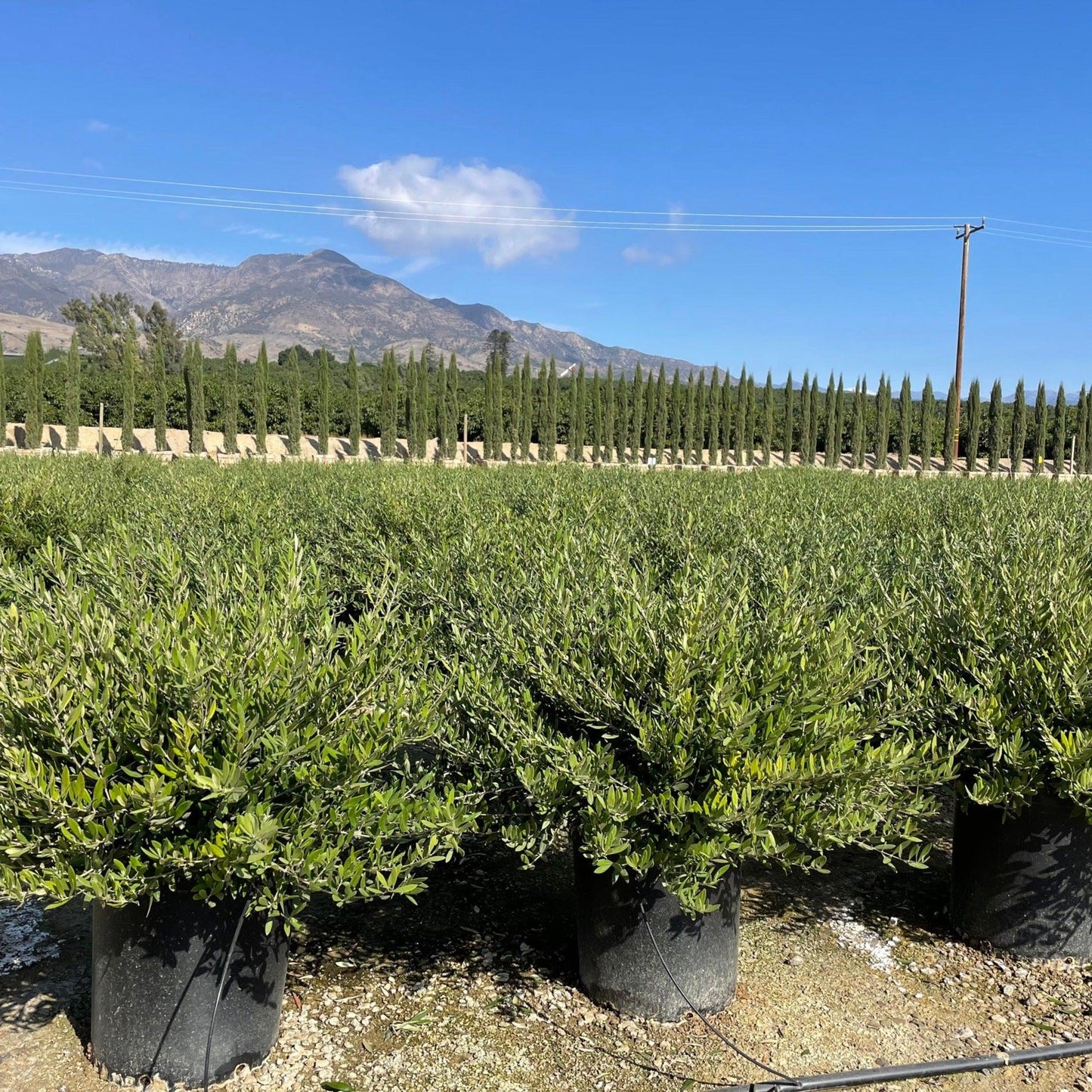
However here is a rough idea of sizes based on containers that are direct from our growing grounds.
15 Gallon Shrub 3-4 Ft. Tall
15 Gallon Tree 5-6 Ft. Tall
24" Box Shrub 5-6 Ft. Tall
24" Box Tree 6-7 Ft. Tall
36" Box Tree 8-10 Ft. Tall
48" Box Tree 10-12 Ft. Tall
Please note: Citrus and California Native plants such as Manzanita are smaller than traditional sizing.
Please contact us to confirm sizing of items before purchasing if this is a concern.
Plants vary greatly by type and no guarantees are made on sizing.
However here is a rough idea of sizes based on containers that are direct from our growing grounds.
15 Gallon Shrub 3-4 Ft. Tall
15 Gallon Tree 5-6 Ft. Tall
24" Box Shrub 5-6 Ft. Tall
24" Box Tree 6-7 Ft. Tall
36" Box Tree 8-10 Ft. Tall
48" Box Tree 10-12 Ft. Tall
Please note: Citrus and California Native plants such as Manzanita are smaller than traditional sizing.
Please contact us to confirm sizing of items before purchasing if this is a concern.
Delivery does not include unloading of trees and plants larger than a 24" box.
Trees and plants in smaller containers will be dropped curbside.
Delivery beyond a curbside drop will be charged extra.
Trees and plants that are sold in container sizes larger than a 24" box size will require equipment and an operator onsite to help unload from the truck.
Please reach out to our team PRIOR to placing your order to coordinate.
Our team can provide unloading assistance with equipment for an extra fee.
Delivery does not include unloading of trees and plants larger than a 24" box.
Trees and plants in smaller containers will be dropped curbside.
Delivery beyond a curbside drop will be charged extra.
Trees and plants that are sold in container sizes larger than a 24" box size will require equipment and an operator onsite to help unload from the truck.
Please reach out to our team PRIOR to placing your order to coordinate.
Our team can provide unloading assistance with equipment for an extra fee.
You may also like...


Live Oak Tree - Quercus Virginiana Cathedral
Regular price
$895.00
Size
Transform Your Landscape with America’s Most Majestic Shade Tree
A live oak tree gives large properties a long-lasting focal point, deep shade, and year-round structure with an iconic spreading canopy that can serve your landscape for generations.
The southern live oak (Quercus virginiana) is one of the most recognizable shade trees of the southern United States, native from southeastern Virginia south through the Carolinas, Georgia, Florida, the Gulf Coasts, and west toward Texas. With dark green foliage through winter, massive horizontal branches, and a mature crown that can span greater than 150 feet, this oak creates the kind of outdoor presence that smaller shade trees cannot match.
Southern live oaks can live for 300 to 500 years and can reach heights of 60 to 90 feet, making each tree a true long-term investment. Planted with the right soil, sun, water, and space, a live oak grows from a young landscape tree into a legacy feature that increases property character, supports wildlife, and becomes part of the ground it shades.
Why You’ll Love It
-
Year-Round Beauty – Live oaks are semi-evergreen, retaining their leathery, dark green leaves throughout winter and dropping them in spring as new leaves emerge.
-
Massive Canopy – Mature live oaks have an expansive, low-spreading canopy and shallow root systems that require substantial landscaping space, creating natural outdoor living rooms under broad shade.
-
Wildlife Magnet – Acorns feed bobwhite quail, wood ducks, sapsuckers, wild turkeys, squirrels, whitetail deer, blue jays, and other birds, while the large canopy provides nesting sites for birds and squirrels and supports local biodiversity.
-
Storm Resistant – Live oaks are highly tolerant of sandy or acidic soils, brackish water, heavy salt spray, and coastal areas where wind and weather challenge many other species.
-
Low Maintenance – Once established, live oaks need modest care, monthly deep watering only during severe dry periods, and thoughtful pruning to maintain a strong shape.
Live oak trees also support various species of butterflies and moths, which rely on the tree for habitat and food sources. In humid southern landscapes, spanish moss hanging from mature branches adds the classic coastal and southern character many homeowners want.
What Makes It Different
Most shade trees, including laurel oak, water oak, and many deciduous oak species, lose their leaves seasonally and provide less winter coverage. A live oak is different because it holds foliage through winter, then refreshes its canopy during the spring growing season as new buds push fresh leaf growth.
The Live Oak Tree has:
-
Evergreen Advantage – Unlike many deciduous oaks, the live oak keeps a covered, green presence through winter, with thick, leathery leaves that are dark evergreen above and often pale beneath.
-
Iconic Architecture – The species develops powerful horizontal branches, a low-spreading shape, and a broad mature crown that gives the tree its landmark quality.
-
Salt Tolerance – Live oaks thrive best in full sun but can tolerate partial shade and prefer well-drained, acidic, sandy loam soil; they also handle sandy soils, salt spray, and coastal exposure better than many landscape trees.
-
Living Heritage – Historically, wood from the southern live oak was used for building wooden sailing ships because its dense wood and curved branches were ideal for the ribs and sides of ships. Naval vessels made from live oak, such as the USS Constitution, also known as Old Ironsides, were known for their durability because cannon balls would bounce off their hulls.
The southern live oak belongs to the beech family and remains one of the most planted ornamental trees in urban settings due to its aesthetic appeal and ability to provide shade. For California landscapes, Yardwork can also help distinguish southern live oak from related choices such as the Coast Live Oak (Quercus agrifolia), which is found along the fog-belt coastal ranges of California, as well as texas live oak, sand live oak, and mexican blue oak when you’re choosing among landscape trees for sale.
How To Grow A Live Oak Tree Successfully
-
Plant in Optimal Location
Choose full sun when possible, with partial shade tolerated, and allow generous room for the mature canopy. For long-term planning, live oaks typically require at least 20 feet of space from building foundations and 15 feet from sidewalks and driveways, while larger estate-style plantings should plan for a 150+ foot diameter and 75+ feet from major structures when full crown spread is expected. -
Establish Strong Roots
Newly planted live oaks should be watered deeply 2 to 3 times a week for the first year. Deep watering during the first 2 to 3 years supports the root system, while established trees only require monthly deep watering during severe dry periods. Proper mulching with a 2-to-4-inch layer of hardwood mulch or wood chips is recommended under the canopy to retain moisture and suppress weeds. -
Shape the Tree Early
Pruning is essential in the first 5 to 10 years to establish a strong structural foundation for live oak trees. Live oak trees should be pruned exclusively during mid-to-late summer or mid-winter to avoid transmission of Oak Wilt fungal disease. -
Watch It Transform
In years 1 to 3, the tree focuses on roots. By years 5 to 15, expect more visible height gain and developing branches. By years 20 to 50, the live oak produces substantial shade, mature bark texture, and regular acorns. After 100 years, the tree can become a monumental landscape feature with spanish moss habitat, wildlife activity, and a crown that defines the property.
Because live oak root systems are sensitive to suffocation, the area under the canopy should be managed carefully to avoid soil compaction, excess fill, and heavy traffic around roots, just as with other specimen trees such as Engelmann oak or colorful shade trees like the Rocky Mountain Glow maple.
Tree Specifications
-
Botanical Name: Quercus virginiana
-
Common Name: Southern live oak, live oak
-
Plant Family: Beech family
-
Mature Size: 60 to 90 feet tall, with a crown that can span greater than 150 feet
-
Growth Rate: Moderate growth rate; 2 to 3 feet per year when young under strong conditions
-
Climate Zones: USDA zones 7 to 10
-
Sun Exposure: Full sun to partial shade
-
Soil Requirements: Well-draining soil; performs well in acidic, sandy loam soil and tolerates a range of soil types, including sandy soils and clay when drainage is adequate
-
Water Needs: Moist establishment period; deep watering 2 to 3 times weekly during the first year, then monthly deep watering only during severe dry periods once mature
-
Salt Tolerance: High tolerance of brackish water, heavy salt spray, and coast conditions
-
Foliage: Semi-evergreen; dark green, thick, leathery leaves that persist through winter and drop in spring with new growth
-
Bark: The bark of the southern live oak is reddish brown to dark brown and becomes deeply furrowed with age
-
Flowers and Fruits: Southern live oaks produce yellow-green catkins as male flowers and small spike flowers as female flowers in the spring, with mature acorns being dark brown and approximately ¾ inch in size
-
Wildlife Value: Acorns feed birds and mammals, including wood ducks, wild turkeys, squirrels, and deer; the canopy supports insects, butterflies, moths, and nesting habitat
-
Lifespan: 300 to 500+ years
-
Maintenance Notes: Prune only in mid-to-late summer or mid-winter to reduce Oak Wilt risk; mulch with 2 to 4 inches of hardwood mulch or wood chips
Who It’s For
Ideal for:
-
California homeowners with large properties seeking a statement shade tree
-
Landscapers designing Mediterranean, coastal, southern, or heritage-style gardens who may also be considering complementary Mediterranean species such as Cork Oak or Swan Hill Olives® fruitless olive trees
-
Property owners who want a multi-generational oak with long-term value
-
Customers looking for wildlife-friendly landscaping with acorns, birds, butterflies, moths, and year-round foliage
-
Coastal property owners who need a tree with salt spray tolerance and strong visual impact
If you want quick temporary shade, a live oak may not be the right plant. If you want a mature landscape anchor that can outlive the house around it, the live oak is one of the strongest options available.
Space matters. Mature live oaks need room for their branches, roots, leaf drop, acorns, and future canopy spread. Yardwork can help California customers compare southern live oak with native or regionally adapted alternatives, including Coast Live Oak (Quercus agrifolia), and explore a broader selection of oak trees for sale, such as texas live oak, sand live oak, and other oak species suited to specific sites from coastal areas to central Texas-style dry landscapes.
Frequently Asked Questions
How much space do live oaks need?
Plan for a mature canopy diameter of 150+ feet where possible. Live oaks typically require at least 20 feet from building foundations and 15 feet from sidewalks and driveways, but large properties should place them 75+ feet from major structures when planning for full maturity.
Do live oaks drop leaves?
Yes. Live oaks are semi-evergreen, not completely leafless in fall like many deciduous trees. They retain leathery, dark green leaves through winter, then drop older foliage in spring as new leaves emerge.
How long before a live oak provides shade?
Young trees can show a moderate growth rate of 2 to 3 feet per year in good conditions. Expect noticeable shade in 10 to 15 years, with a full, mature canopy developing over several decades and major presence after 50+ years.
Are live oaks messy?
They have moderate leaf drop and seasonal acorns. The acorns are valuable food for wildlife, including bobwhite quail, wood ducks, sapsuckers, wild turkeys, squirrels, and whitetail deer, but placement should account for cleanup near patios, driveways, and walkways.
Can live oaks survive transplanting?
Yes, especially when planted young. Trees under 10 feet tall usually establish better than large mature specimens because the root ball is easier to manage and the roots adapt more readily to the new soil.
When should live oaks be pruned?
Live oak trees should be pruned exclusively during mid-to-late summer or mid-winter to avoid transmission of Oak Wilt fungal disease. Early structural pruning during the first 5 to 10 years is important for strong branches and long-term safety.
Can a live oak grow in California?
Yes, with the right site selection, soil, water, and space. The Coast Live Oak (Quercus agrifolia) is found along the fog-belt coastal ranges of California, while southern live oak can be used in suitable California landscapes when climate, drainage, and mature size are carefully evaluated.
Ready to Plant Your Legacy Tree?
Stop settling for short-lived shade solutions when your property has room for a tree that can shape the landscape for centuries. Choose Live Oak Tree for evergreen beauty, broad shade, wildlife value, dense wood heritage, and a mature form that becomes more impressive every year.
Yardwork helps California customers plan live oak placement with expert consultation, delivery coordination, and soil testing to confirm drainage, compaction, pH, moisture, and planting suitability before the tree goes in the ground, whether you’re working with a local plant nursery near you or exploring options for evergreen and fast-growing privacy trees.
Transform Your Landscape with America’s Most Majestic Shade Tree
A live oak tree gives large properties a long-lasting focal point, deep shade, and year-round structure with an iconic spreading canopy that can serve your landscape for generations.
The southern live oak (Quercus virginiana) is one of the most recognizable shade trees of the southern United States, native from southeastern Virginia south through the Carolinas, Georgia, Florida, the Gulf Coasts, and west toward Texas. With dark green foliage through winter, massive horizontal branches, and a mature crown that can span greater than 150 feet, this oak creates the kind of outdoor presence that smaller shade trees cannot match.
Southern live oaks can live for 300 to 500 years and can reach heights of 60 to 90 feet, making each tree a true long-term investment. Planted with the right soil, sun, water, and space, a live oak grows from a young landscape tree into a legacy feature that increases property character, supports wildlife, and becomes part of the ground it shades.
Why You’ll Love It
-
Year-Round Beauty – Live oaks are semi-evergreen, retaining their leathery, dark green leaves throughout winter and dropping them in spring as new leaves emerge.
-
Massive Canopy – Mature live oaks have an expansive, low-spreading canopy and shallow root systems that require substantial landscaping space, creating natural outdoor living rooms under broad shade.
-
Wildlife Magnet – Acorns feed bobwhite quail, wood ducks, sapsuckers, wild turkeys, squirrels, whitetail deer, blue jays, and other birds, while the large canopy provides nesting sites for birds and squirrels and supports local biodiversity.
-
Storm Resistant – Live oaks are highly tolerant of sandy or acidic soils, brackish water, heavy salt spray, and coastal areas where wind and weather challenge many other species.
-
Low Maintenance – Once established, live oaks need modest care, monthly deep watering only during severe dry periods, and thoughtful pruning to maintain a strong shape.
Live oak trees also support various species of butterflies and moths, which rely on the tree for habitat and food sources. In humid southern landscapes, spanish moss hanging from mature branches adds the classic coastal and southern character many homeowners want.
What Makes It Different
Most shade trees, including laurel oak, water oak, and many deciduous oak species, lose their leaves seasonally and provide less winter coverage. A live oak is different because it holds foliage through winter, then refreshes its canopy during the spring growing season as new buds push fresh leaf growth.
The Live Oak Tree has:
-
Evergreen Advantage – Unlike many deciduous oaks, the live oak keeps a covered, green presence through winter, with thick, leathery leaves that are dark evergreen above and often pale beneath.
-
Iconic Architecture – The species develops powerful horizontal branches, a low-spreading shape, and a broad mature crown that gives the tree its landmark quality.
-
Salt Tolerance – Live oaks thrive best in full sun but can tolerate partial shade and prefer well-drained, acidic, sandy loam soil; they also handle sandy soils, salt spray, and coastal exposure better than many landscape trees.
-
Living Heritage – Historically, wood from the southern live oak was used for building wooden sailing ships because its dense wood and curved branches were ideal for the ribs and sides of ships. Naval vessels made from live oak, such as the USS Constitution, also known as Old Ironsides, were known for their durability because cannon balls would bounce off their hulls.
The southern live oak belongs to the beech family and remains one of the most planted ornamental trees in urban settings due to its aesthetic appeal and ability to provide shade. For California landscapes, Yardwork can also help distinguish southern live oak from related choices such as the Coast Live Oak (Quercus agrifolia), which is found along the fog-belt coastal ranges of California, as well as texas live oak, sand live oak, and mexican blue oak when you’re choosing among landscape trees for sale.
How To Grow A Live Oak Tree Successfully
-
Plant in Optimal Location
Choose full sun when possible, with partial shade tolerated, and allow generous room for the mature canopy. For long-term planning, live oaks typically require at least 20 feet of space from building foundations and 15 feet from sidewalks and driveways, while larger estate-style plantings should plan for a 150+ foot diameter and 75+ feet from major structures when full crown spread is expected. -
Establish Strong Roots
Newly planted live oaks should be watered deeply 2 to 3 times a week for the first year. Deep watering during the first 2 to 3 years supports the root system, while established trees only require monthly deep watering during severe dry periods. Proper mulching with a 2-to-4-inch layer of hardwood mulch or wood chips is recommended under the canopy to retain moisture and suppress weeds. -
Shape the Tree Early
Pruning is essential in the first 5 to 10 years to establish a strong structural foundation for live oak trees. Live oak trees should be pruned exclusively during mid-to-late summer or mid-winter to avoid transmission of Oak Wilt fungal disease. -
Watch It Transform
In years 1 to 3, the tree focuses on roots. By years 5 to 15, expect more visible height gain and developing branches. By years 20 to 50, the live oak produces substantial shade, mature bark texture, and regular acorns. After 100 years, the tree can become a monumental landscape feature with spanish moss habitat, wildlife activity, and a crown that defines the property.
Because live oak root systems are sensitive to suffocation, the area under the canopy should be managed carefully to avoid soil compaction, excess fill, and heavy traffic around roots, just as with other specimen trees such as Engelmann oak or colorful shade trees like the Rocky Mountain Glow maple.
Tree Specifications
-
Botanical Name: Quercus virginiana
-
Common Name: Southern live oak, live oak
-
Plant Family: Beech family
-
Mature Size: 60 to 90 feet tall, with a crown that can span greater than 150 feet
-
Growth Rate: Moderate growth rate; 2 to 3 feet per year when young under strong conditions
-
Climate Zones: USDA zones 7 to 10
-
Sun Exposure: Full sun to partial shade
-
Soil Requirements: Well-draining soil; performs well in acidic, sandy loam soil and tolerates a range of soil types, including sandy soils and clay when drainage is adequate
-
Water Needs: Moist establishment period; deep watering 2 to 3 times weekly during the first year, then monthly deep watering only during severe dry periods once mature
-
Salt Tolerance: High tolerance of brackish water, heavy salt spray, and coast conditions
-
Foliage: Semi-evergreen; dark green, thick, leathery leaves that persist through winter and drop in spring with new growth
-
Bark: The bark of the southern live oak is reddish brown to dark brown and becomes deeply furrowed with age
-
Flowers and Fruits: Southern live oaks produce yellow-green catkins as male flowers and small spike flowers as female flowers in the spring, with mature acorns being dark brown and approximately ¾ inch in size
-
Wildlife Value: Acorns feed birds and mammals, including wood ducks, wild turkeys, squirrels, and deer; the canopy supports insects, butterflies, moths, and nesting habitat
-
Lifespan: 300 to 500+ years
-
Maintenance Notes: Prune only in mid-to-late summer or mid-winter to reduce Oak Wilt risk; mulch with 2 to 4 inches of hardwood mulch or wood chips
Who It’s For
Ideal for:
-
California homeowners with large properties seeking a statement shade tree
-
Landscapers designing Mediterranean, coastal, southern, or heritage-style gardens who may also be considering complementary Mediterranean species such as Cork Oak or Swan Hill Olives® fruitless olive trees
-
Property owners who want a multi-generational oak with long-term value
-
Customers looking for wildlife-friendly landscaping with acorns, birds, butterflies, moths, and year-round foliage
-
Coastal property owners who need a tree with salt spray tolerance and strong visual impact
If you want quick temporary shade, a live oak may not be the right plant. If you want a mature landscape anchor that can outlive the house around it, the live oak is one of the strongest options available.
Space matters. Mature live oaks need room for their branches, roots, leaf drop, acorns, and future canopy spread. Yardwork can help California customers compare southern live oak with native or regionally adapted alternatives, including Coast Live Oak (Quercus agrifolia), and explore a broader selection of oak trees for sale, such as texas live oak, sand live oak, and other oak species suited to specific sites from coastal areas to central Texas-style dry landscapes.
Frequently Asked Questions
How much space do live oaks need?
Plan for a mature canopy diameter of 150+ feet where possible. Live oaks typically require at least 20 feet from building foundations and 15 feet from sidewalks and driveways, but large properties should place them 75+ feet from major structures when planning for full maturity.
Do live oaks drop leaves?
Yes. Live oaks are semi-evergreen, not completely leafless in fall like many deciduous trees. They retain leathery, dark green leaves through winter, then drop older foliage in spring as new leaves emerge.
How long before a live oak provides shade?
Young trees can show a moderate growth rate of 2 to 3 feet per year in good conditions. Expect noticeable shade in 10 to 15 years, with a full, mature canopy developing over several decades and major presence after 50+ years.
Are live oaks messy?
They have moderate leaf drop and seasonal acorns. The acorns are valuable food for wildlife, including bobwhite quail, wood ducks, sapsuckers, wild turkeys, squirrels, and whitetail deer, but placement should account for cleanup near patios, driveways, and walkways.
Can live oaks survive transplanting?
Yes, especially when planted young. Trees under 10 feet tall usually establish better than large mature specimens because the root ball is easier to manage and the roots adapt more readily to the new soil.
When should live oaks be pruned?
Live oak trees should be pruned exclusively during mid-to-late summer or mid-winter to avoid transmission of Oak Wilt fungal disease. Early structural pruning during the first 5 to 10 years is important for strong branches and long-term safety.
Can a live oak grow in California?
Yes, with the right site selection, soil, water, and space. The Coast Live Oak (Quercus agrifolia) is found along the fog-belt coastal ranges of California, while southern live oak can be used in suitable California landscapes when climate, drainage, and mature size are carefully evaluated.
Ready to Plant Your Legacy Tree?
Stop settling for short-lived shade solutions when your property has room for a tree that can shape the landscape for centuries. Choose Live Oak Tree for evergreen beauty, broad shade, wildlife value, dense wood heritage, and a mature form that becomes more impressive every year.
Yardwork helps California customers plan live oak placement with expert consultation, delivery coordination, and soil testing to confirm drainage, compaction, pH, moisture, and planting suitability before the tree goes in the ground, whether you’re working with a local plant nursery near you or exploring options for evergreen and fast-growing privacy trees.
Plants vary greatly by type and no guarantees are made on sizing.
However here is a rough idea of sizes based on containers that are direct from our growing grounds.
15 Gallon Shrub 3-4 Ft. Tall
15 Gallon Tree 5-6 Ft. Tall
24" Box Shrub 5-6 Ft. Tall
24" Box Tree 6-7 Ft. Tall
36" Box Tree 8-10 Ft. Tall
48" Box Tree 10-12 Ft. Tall
Please note: Citrus and California Native plants such as Manzanita are smaller than traditional sizing.
Please contact us to confirm sizing of items before purchasing if this is a concern.
Plants vary greatly by type and no guarantees are made on sizing.
However here is a rough idea of sizes based on containers that are direct from our growing grounds.
15 Gallon Shrub 3-4 Ft. Tall
15 Gallon Tree 5-6 Ft. Tall
24" Box Shrub 5-6 Ft. Tall
24" Box Tree 6-7 Ft. Tall
36" Box Tree 8-10 Ft. Tall
48" Box Tree 10-12 Ft. Tall
Please note: Citrus and California Native plants such as Manzanita are smaller than traditional sizing.
Please contact us to confirm sizing of items before purchasing if this is a concern.
Delivery does not include unloading of trees and plants larger than a 24" box.
Trees and plants in smaller containers will be dropped curbside.
Delivery beyond a curbside drop will be charged extra.
Trees and plants that are sold in container sizes larger than a 24" box size will require equipment and an operator onsite to help unload from the truck.
Please reach out to our team PRIOR to placing your order to coordinate.
Our team can provide unloading assistance with equipment for an extra fee.
Delivery does not include unloading of trees and plants larger than a 24" box.
Trees and plants in smaller containers will be dropped curbside.
Delivery beyond a curbside drop will be charged extra.
Trees and plants that are sold in container sizes larger than a 24" box size will require equipment and an operator onsite to help unload from the truck.
Please reach out to our team PRIOR to placing your order to coordinate.
Our team can provide unloading assistance with equipment for an extra fee.
Recommended For You















Pairs Well With













You May Also Like












Thousands of Healthy Plants Delivered

Yardwork was so great to work with. First they had the Swan Hill olive trees that we had been searching for, we had contacted several other nurseries without any luck previously. Then they answered all of our questions in a timely matter prior to ordering and finally delivered within a few days of placing it. Their staff is incredibly knowledgeable; they delivered and planted our trees with expertise to ensure that they would do well in our yard. We would definitely work with them again for future projects.











A Modern Experience
At Yardwork, we carefully curate thousands of plants, in all container sizes, to provide you with the best selection of the highest quality trees and plants at the best price, with the convenience of an online platform.
Uncompromised Quality
We choose only the finest specimens and hand select our plants just before delivery to ensure you receive the freshest and most robust specimens available for your landscape.
Industry Leading Warranties
Our 30, 90, and 365 extended warranties provide some of the best coverage to ensure our trees and plants thrive in your landscape.
Frequently Asked Questions
We're committed to changing everything about trees and plants - how they’re grown, how you shop for them, and how much they cost. We handle orders ourselves. No middlemen to get between us (or our prices) and you.
We're committed to changing everything about trees and plants - how they’re grown, how you shop for them, and how much they cost. We handle orders ourselves. No middlemen to get between us (or our prices) and you.
Delivery does not include unloading of trees and plants LARGER than a 24" box.
Trees and plants in smaller containers will be dropped curbside (usually on the driveway or near the front doorstep).
Delivery beyond a curbside drop will be charged extra.
Trees and plants that are sold in container sizes LARGER than a 24" box size will require equipment and/or enough manpower onsite to help unload from the truck.
Please reach out to our team PRIOR to placing your order to help coordinate.
Our team can provide unloading assistance with equipment for an extra fee as well.
Delivery does not include unloading of trees and plants LARGER than a 24" box.
Trees and plants in smaller containers will be dropped curbside (usually on the driveway or near the front doorstep).
Delivery beyond a curbside drop will be charged extra.
Trees and plants that are sold in container sizes LARGER than a 24" box size will require equipment and/or enough manpower onsite to help unload from the truck.
Please reach out to our team PRIOR to placing your order to help coordinate.
Our team can provide unloading assistance with equipment for an extra fee as well.
We ship locally within California within 7-10 days of your order being placed.
We ship nationally using carrier partners, based on order size. Our common order minimums for out of state shipping is $5,000.
Text or call 323-576-4159 for specific shipping details for your location.
We ship locally within California within 7-10 days of your order being placed.
We ship nationally using carrier partners, based on order size. Our common order minimums for out of state shipping is $5,000.
Text or call 323-576-4159 for specific shipping details for your location.
We are currently online only and don't have physical locations where you can view plants in person.
That's why we have photos direct from the growing grounds of the plants we will ship and we display pricing right in our store.
We do make sure to pick the very best trees and plants prior to shipping and make sure that they have gone through our multi-point inspection for health and structure.
We will always reach out prior to delivery if we find a quality issue or need to provide a substitute.
We are currently online only and don't have physical locations where you can view plants in person.
That's why we have photos direct from the growing grounds of the plants we will ship and we display pricing right in our store.
We do make sure to pick the very best trees and plants prior to shipping and make sure that they have gone through our multi-point inspection for health and structure.
We will always reach out prior to delivery if we find a quality issue or need to provide a substitute.
Plants vary greatly by type. Here is a rough idea of sizes based on containers that are direct from our growing grounds.
15 Gallon Shrub 3-4 Ft. Tall
15 Gallon Tree 5-6 Ft. Tall
24" Box Shrub 5-6 Ft. Tall
24" Box Tree 6-7 Ft. Tall
36" Box Shrub/Tree 7-9 Ft. Tall
48" Box Shrub/Tree 8-10 Ft. Tall
**Please note that we do not make guarantees of sizes. If you have questions or concerns, please call or text to request accurate sizing for the particular plant you're considering, prior to ordering.
Plants vary greatly by type. Here is a rough idea of sizes based on containers that are direct from our growing grounds.
15 Gallon Shrub 3-4 Ft. Tall
15 Gallon Tree 5-6 Ft. Tall
24" Box Shrub 5-6 Ft. Tall
24" Box Tree 6-7 Ft. Tall
36" Box Shrub/Tree 7-9 Ft. Tall
48" Box Shrub/Tree 8-10 Ft. Tall
**Please note that we do not make guarantees of sizes. If you have questions or concerns, please call or text to request accurate sizing for the particular plant you're considering, prior to ordering.
We offer a limited 30 day warranty for plants that are delivered and planted by someone else and a 90 day warranty for plants that we plant.
The limited warranty covers plants that die as a result of disease or fungus which was derived from our growing grounds or from root balls that were root bound.
The warranty does not cover damage due to watering, fertilizer, soils, or any other conditions beyond our control. Additionally, the warranty does not cover plants that are shipped out of the state of California or shipped into California from other states. Custom plant orders are also not covered under warranty. Plants must be planted within 24 hours after delivery to qualify.
We can assist you in recommending the right soils and fertilizers to help your plant thrive after you plant it.
Text or call 323-576-4159 for further warranty information.
We offer a limited 30 day warranty for plants that are delivered and planted by someone else and a 90 day warranty for plants that we plant.
The limited warranty covers plants that die as a result of disease or fungus which was derived from our growing grounds or from root balls that were root bound.
The warranty does not cover damage due to watering, fertilizer, soils, or any other conditions beyond our control. Additionally, the warranty does not cover plants that are shipped out of the state of California or shipped into California from other states. Custom plant orders are also not covered under warranty. Plants must be planted within 24 hours after delivery to qualify.
We can assist you in recommending the right soils and fertilizers to help your plant thrive after you plant it.
Text or call 323-576-4159 for further warranty information.
Our local delivery team covers most cities in California.
There are some exceptions, so please get in touch to confirm prior to ordering.
Additionally, we ship using semi trucks and trailers throughout the entire United States and even abroad for large orders over $5,000. Each shipment is custom, so please reach out to our team to coordinate.
Our local delivery team covers most cities in California.
There are some exceptions, so please get in touch to confirm prior to ordering.
Additionally, we ship using semi trucks and trailers throughout the entire United States and even abroad for large orders over $5,000. Each shipment is custom, so please reach out to our team to coordinate.