

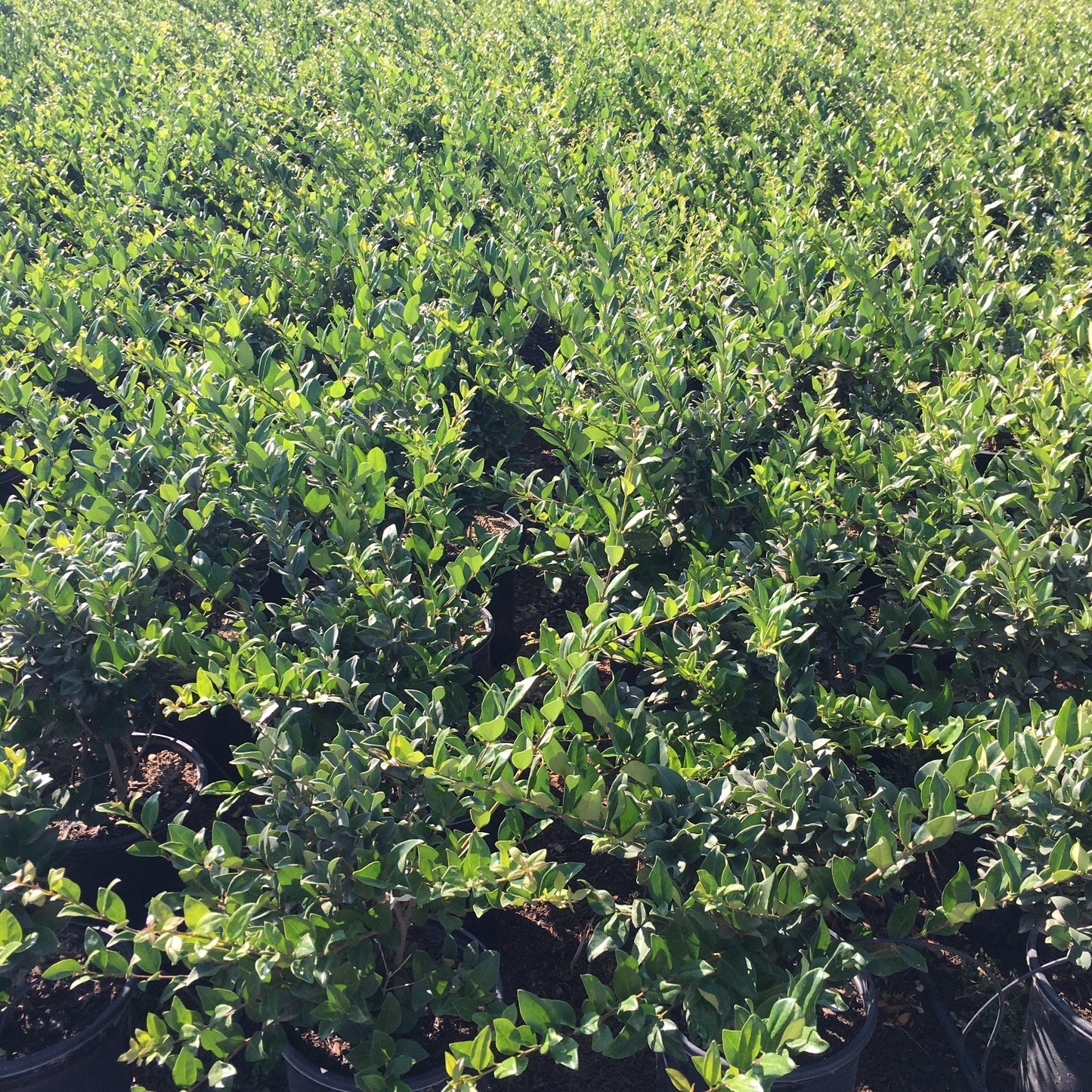
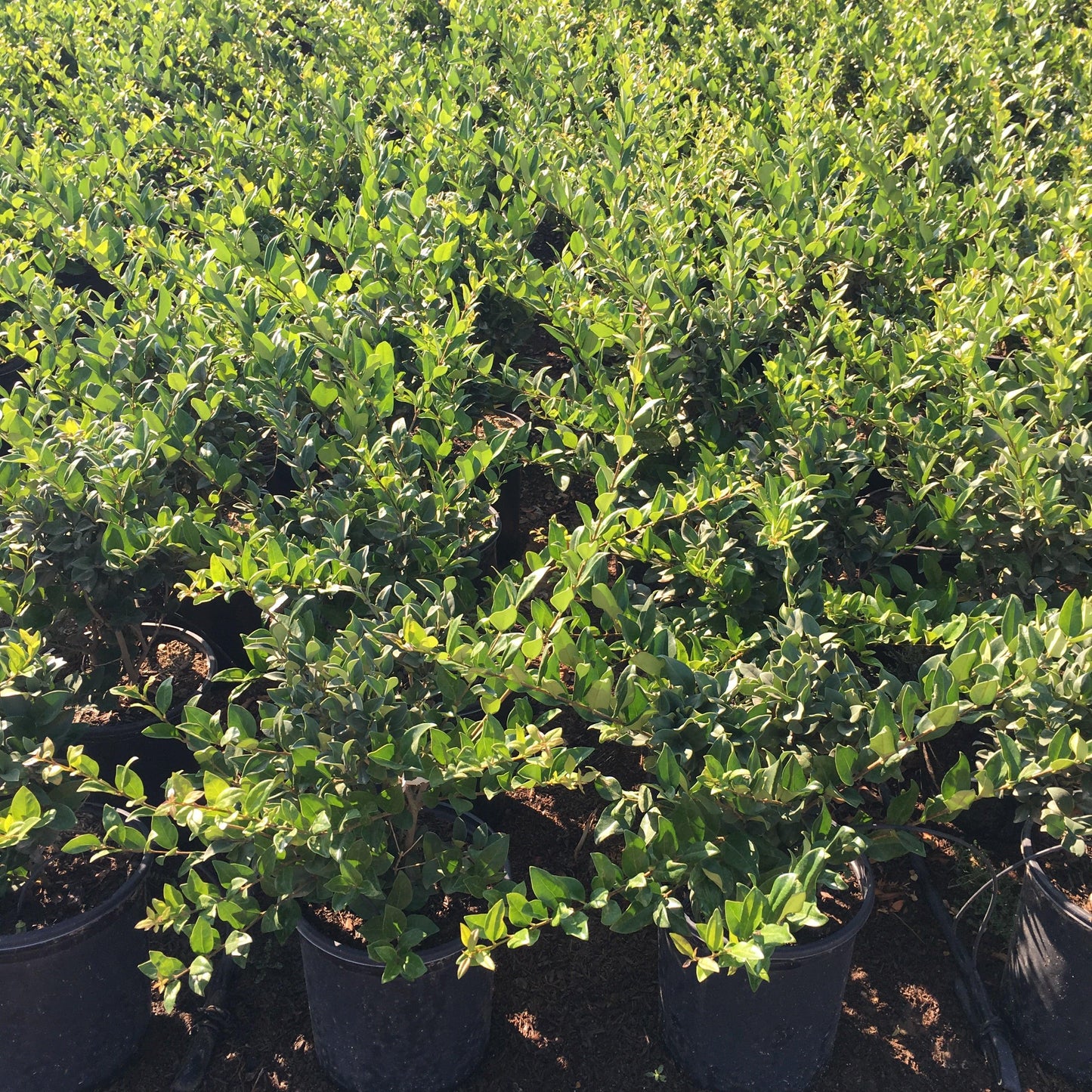
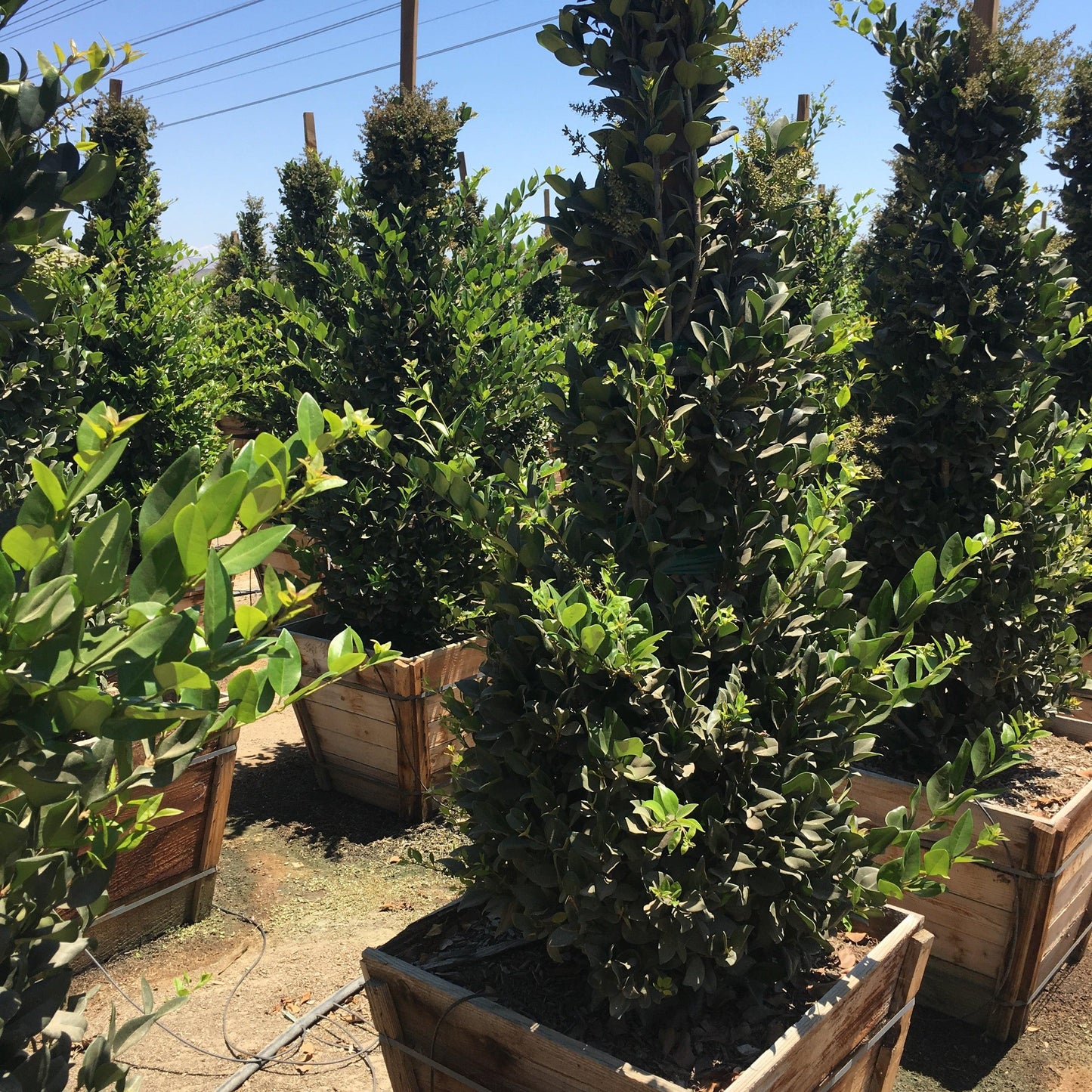
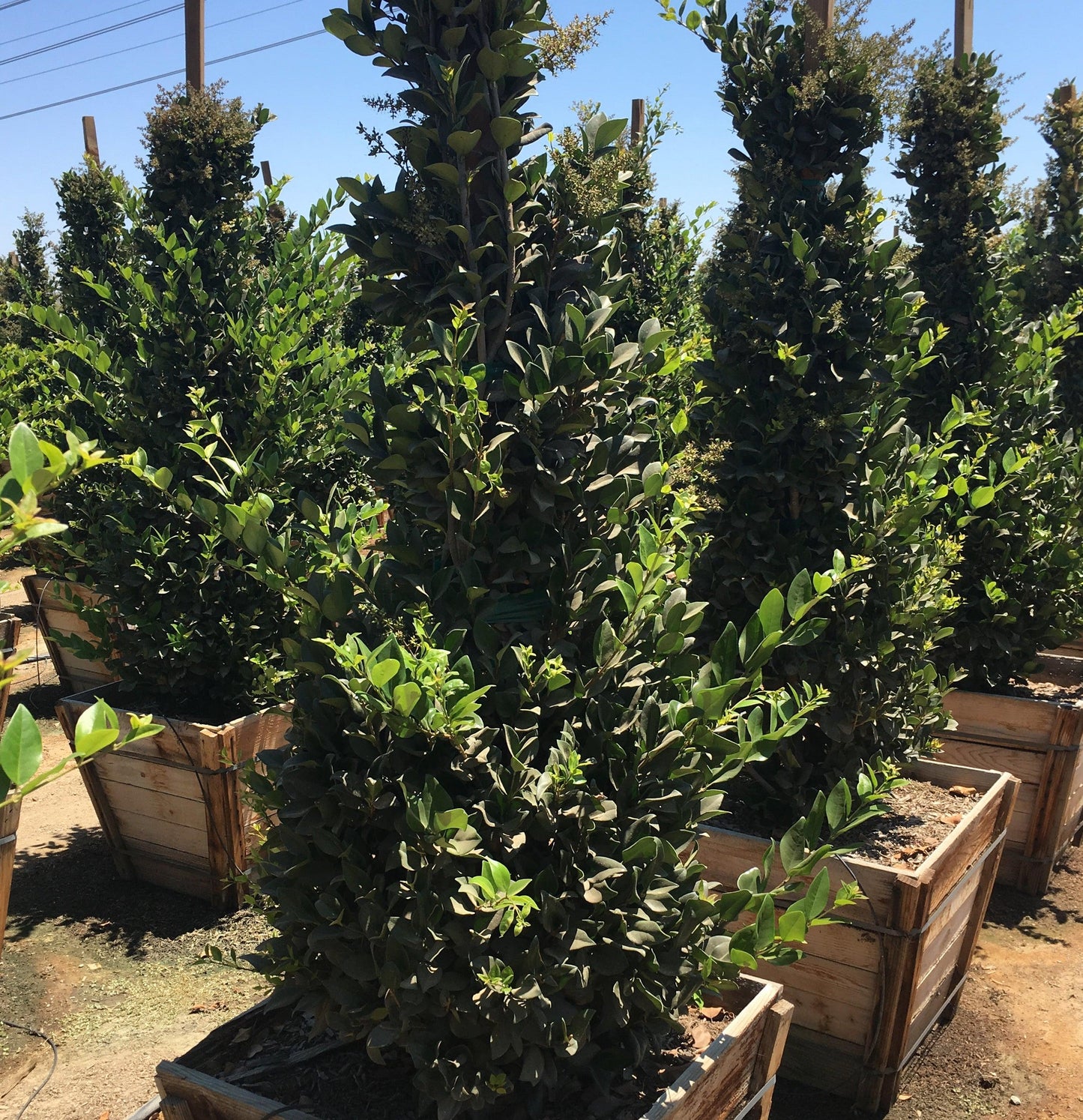
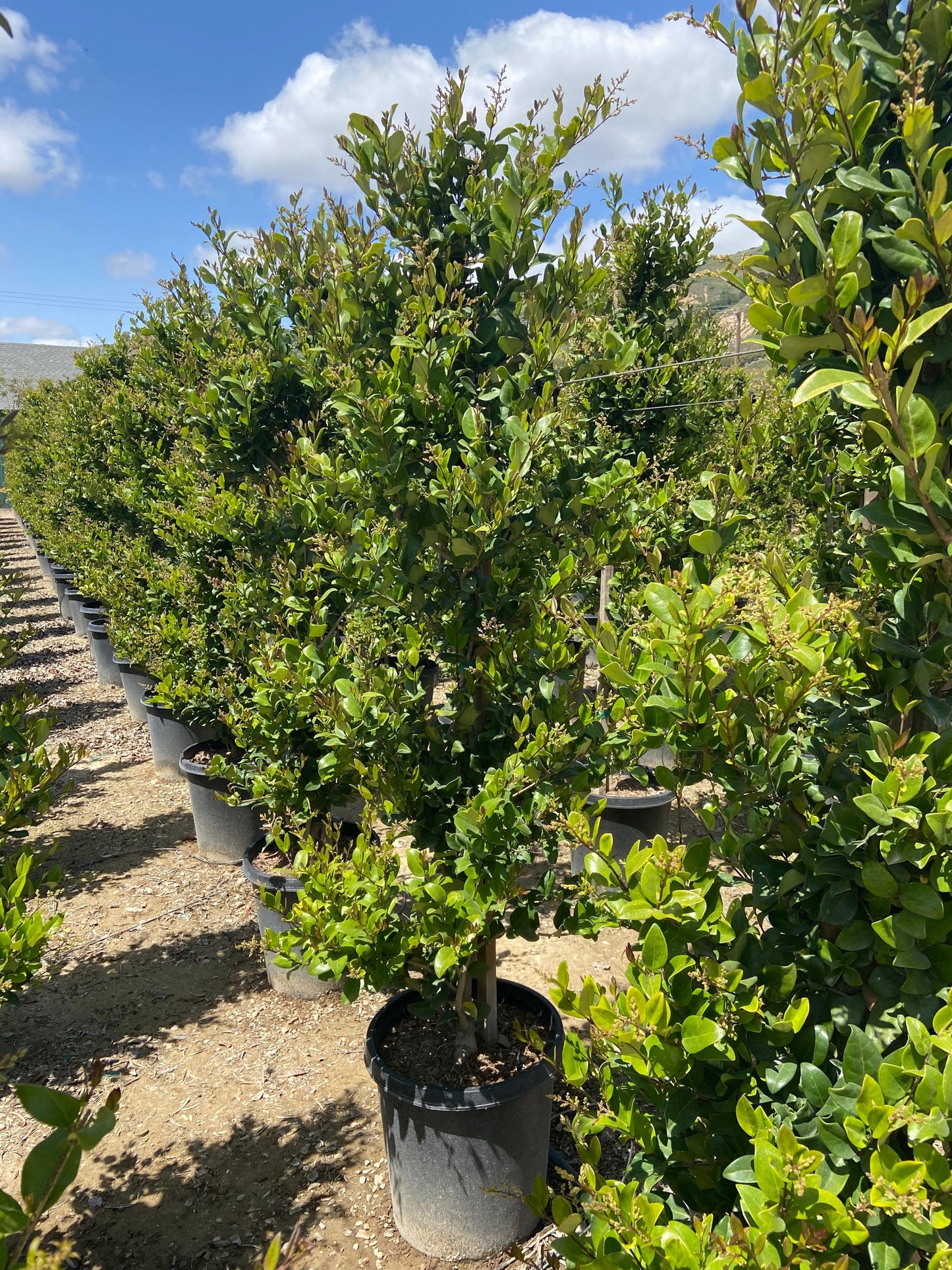
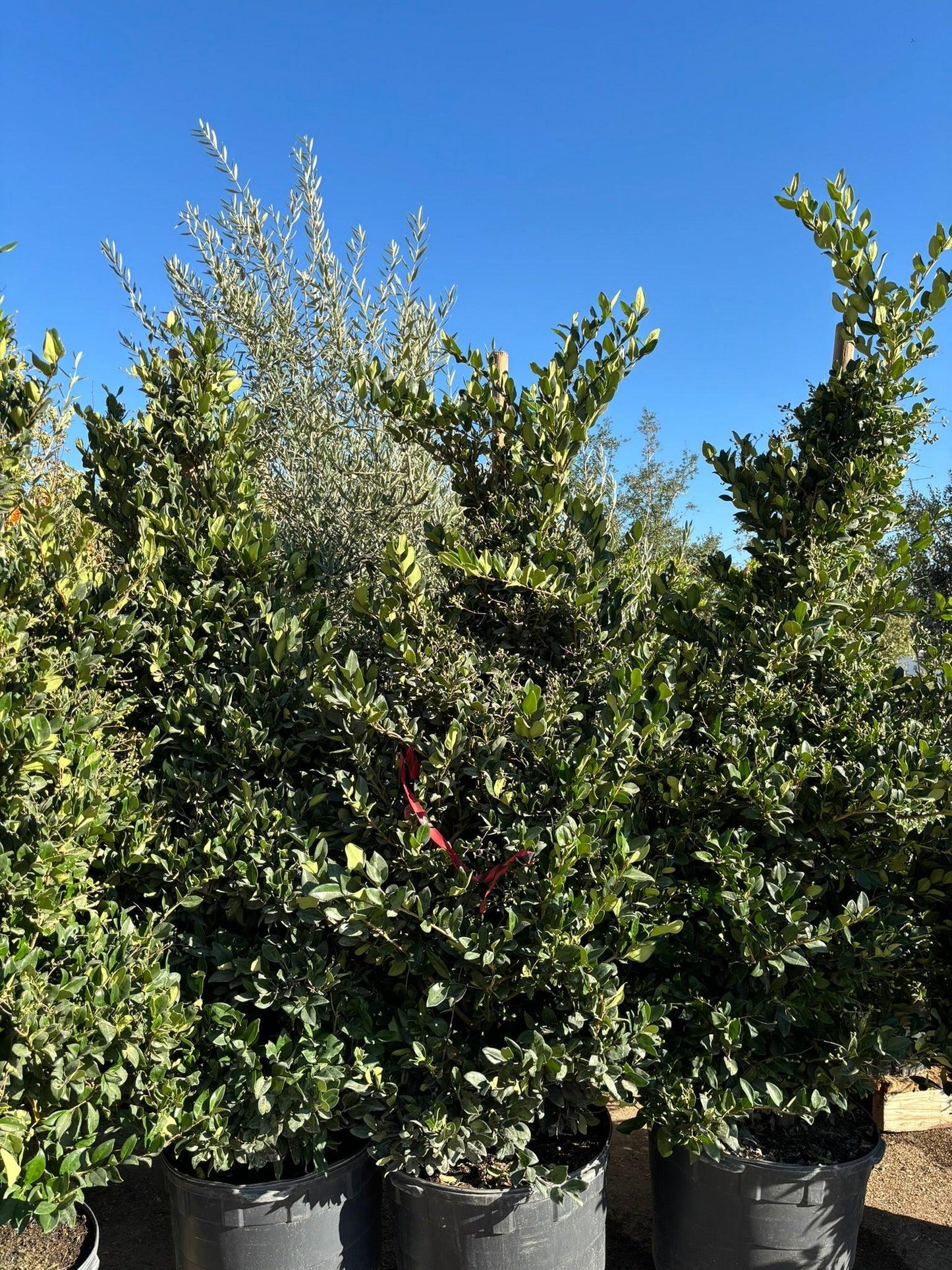
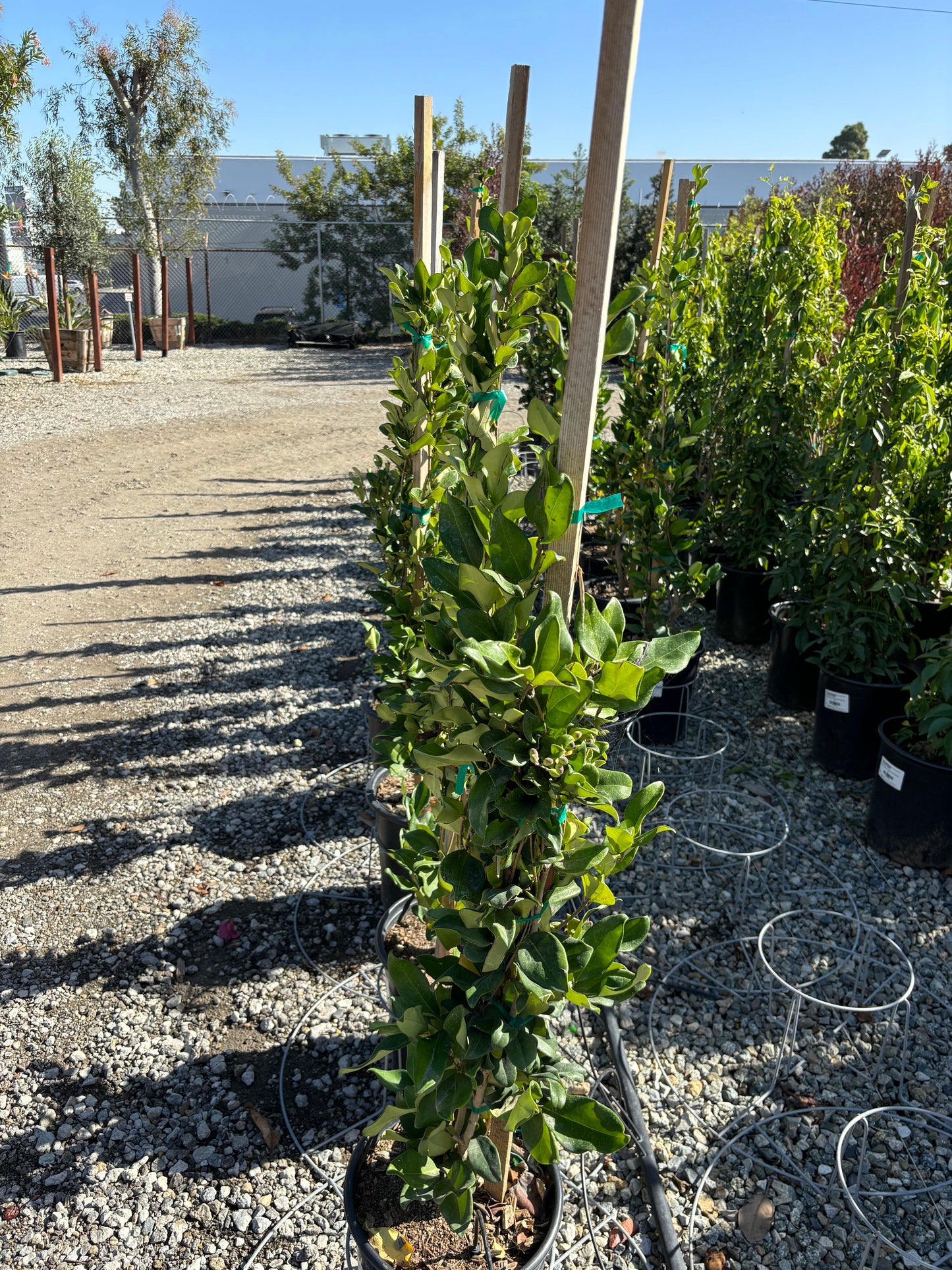


Ligustrum - Waxleaf Privet
Regular price
$55.00
Size
Create the perfect privacy screen with fast-growing, evergreen beauty
Ligustrum gives California homeowners a fast, dense, year-round privacy screen with glossy foliage that can block neighbors, streets, and open sightlines without waiting years for slow-growing trees.
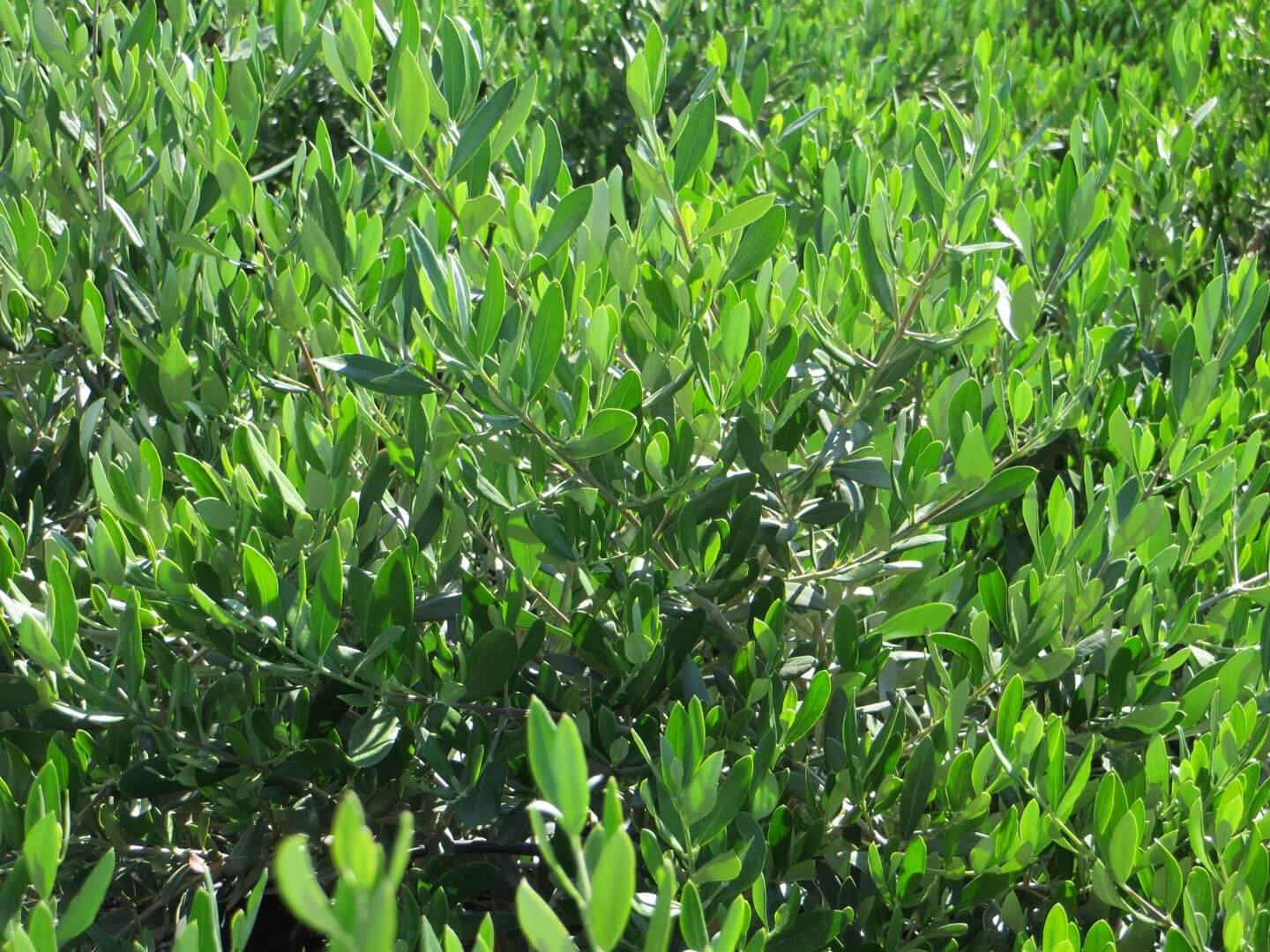
As an evergreen shrub or small tree, the ligustrum plant is valued for dense coverage, rapid growth rate, and flexible use in hedges, shrub borders, and formal landscape screens. Ligustrum shrubs are known for their dense foliage, making them excellent choices for privacy hedges and screens, and Ligustrum species typically feature dense, leathery, glossy-green leaves that remain year-round.
For California yards, ligustrum works especially well because these shrubs are adaptable to various conditions, including drought, heat, and poor soil, which enhances their suitability as privacy hedges in diverse landscapes. Plant ligustrum where it receives full sun to partial shade, give it well drained soil, and it can create a tall screen with fewer seasonal gaps than deciduous alternatives.
Why You’ll Love It
-
Rapid Growth – Japanese Ligustrum can grow over 2 feet per year with minimal care, while smaller varieties like the Sunshine Ligustrum can grow up to 1 foot in height annually. The growth rate of Japanese privet is reported to be 25 inches or more per year, making it a very fast-growing shrub. California privet can grow rapidly to a height of 15 feet, making it suitable for use as a hedge when planted closely together.
-
Year-Round Coverage – Glossy foliage, dark green leaves, and evergreen growth help privet bushes maintain privacy year round. Many ligustrum shrubs hold green leaves through the growing season and beyond, while some varieties act as a semi evergreen shrub in colder areas.
-
Low Maintenance – Ligustrum is naturally resistant to deer, urban pollution, wind exposure, and heavy pruning. Once healthy plants are established, ligustrum is drought tolerant, heat tolerant, and generally disease resistant with fewer disease problems than many high-maintenance screening shrubs.
-
Versatile Design – Use ligustrum as formal hedges, informal shrub borders, a shaped tree form, or an evergreen tree-style accent. Japanese privet, Waxleaf Privet (Ligustrum japonicum ‘Texanum’), Wavy Leaf, golden privet, and sunshine ligustrum can all serve different design goals.
-
Cost-Effective – Ligustrum creates extensive privacy coverage at a lower cost than many fence installations or slow-growing evergreen privacy trees. Its rapid growth rate means fewer seasons waiting for dense coverage.
What Makes It Different
Most privacy plants either grow too slowly, lose leaves seasonally, or struggle with California’s dry summers, urban soil, salt spray, and heat. Ligustrum is built for fast screening in real-world landscapes, especially where homeowners want privacy without constant watering or frequent replacement.
-
Heat and Drought Tolerance – Ligustrum prefers well-drained soil and is tolerant of drought, heat, and various soil types, making it adaptable to different growing conditions. It grows well in full sun to partial shade and adapts to various soil types, offering resilience against urban conditions.
-
Dense Branching Pattern – Ligustrum shrubs naturally form dense thickets when unmanaged, which is one reason they work so well as hedges and screens. With proper spacing, pruning, and air circulation, that same dense habit becomes a clean privacy hedge instead of an overgrown mass.
-
Glossy Evergreen Foliage – Japanese privet, glossy privet, and waxleaf privet are known for glossy foliage that stays attractive through the year. Wavy Leaf Ligustrum and Waxleaf varieties are particularly favored for their ornamental appearance and ability to provide a solid privacy screen.
-
Pollution Resistance – Ligustrum performs well in urban environments and near roadways, handling pollution, wind exposure, and, in many coastal locations, moderate salt spray. This makes it useful for California front yards, driveway edges, and street-facing screens, similar to a Fern Pine hedge (Podocarpus gracilior).
Many gardeners prefer non-invasive, sterile cultivars of Ligustrum to avoid issues with traditional varieties. Most wild-type species of Ligustrum are highly invasive across North America, so sterile options such as Sunshine Ligustrum are often better choices near open space, native plants, riparian areas, or wildland edges.
How To Ensure Success In Your Landscape
-
Plant in Full to Partial Sun
Choose a location with full sun, part shade, or partial shade. Ligustrum requires 4 to 6 hours of direct sun daily to maintain dense growth and vibrant foliage, especially when the goal is a thick privacy hedge with minimal gaps. -
Space 4-6 Feet Apart
Space larger ligustrum shrubs 4-6 feet apart so the plants fill in quickly while still allowing airflow. Adequate plant spacing helps reduce leaf spots, powdery mildew, and other fungal disease problems by keeping foliage drier. -
Water and Mulch
For best results, Ligustrum requires moderate watering during establishment and can thrive with infrequent watering once mature. Water newly planted Ligustrum deeply at the base until the water begins to pool, and apply mulch to help retain moisture and reduce weeds. Mulch also helps conserve moisture around feeder roots. -
Prune as Needed
Ligustrum shrubs can be pruned at any time of the year, but it is best to avoid late fall pruning in warmer zones to prevent damage from freezing temperatures. Light pruning after late spring or early summer flowers keeps hedges neat, while more frequent shearing creates a formal shape.
When planting Ligustrum shrubs, dig a hole at least twice as wide as the root ball and the same depth, ensuring the top of the root ball is slightly higher than the existing soil line. Backfill with surrounding soil or improved native soil, then water deeply to settle the roots.
Plant Details
-
Mature Size: 8-15 feet tall, 6-10 feet wide for many privacy varieties; size varies by variety
-
Growth Rate: 24-36 inches per year for vigorous types under good care
-
Hardiness: USDA zones 7-11 for many landscape varieties, making ligustrum well suited to much of California
-
Soil Requirements: Prefers well drained soil; tolerates loamy, sandy, or clay soil types if drainage is adequate
-
Drainage Note: Ligustrum adapts to loamy, sandy, or clay soils as long as drainage is adequate; avoid standing water to reduce root rot
-
Sun Exposure: Full sun to partial shade; 4-6 hours of sun daily supports dense foliage
-
Water Needs: Moderate water during establishment; infrequent watering once mature
-
Bloom Time: Small white flowers or creamy white flowers appear in late spring to early summer on many varieties
-
Fruit: Some species produce flowers followed by berries; Glossy Privet may produce purple blue berries after bloom
-
Available Varieties: Japanese Privet, Wavy Leaf, Waxleaf, Sunshine, Curly Leaf, Howardi, California privet, glossy privet, chinese privet, european privet, common privet, and other cultivars
Key variety notes:
-
Curly Leaf Ligustrum – Curly Leaf Ligustrum (Ligustrum japonicum ‘Rotundifolium’) grows to a height of 5-6 feet and a width of 3-4 feet, featuring dark green, thick, shiny, curved leaves that are ideal for Asian-inspired gardens.
-
Howardi Ligustrum – Howardi Ligustrum (Ligustrum japonicum ‘Howardi’) can reach a height of 8 feet and a width of 5-6 feet, known for its striking lemon and lime variegation that deepens with age, making it a dense and lush shrub perfect for privacy.
-
Wavy Leaf Ligustrum – Wavy Leaf Ligustrum (Ligustrum japonicum ‘Recurvifolium’) can grow up to 10 feet tall and 6 feet wide, characterized by its unique wavy leaves and suitability for use as a privacy screen or hedge. For very tall privacy, some gardeners also consider Glossy Privet (Ligustrum lucidum).
-
Sunshine Ligustrum – Sunshine Ligustrum (Ligustrum sinense ‘Sunshine’) is a sterile variety that grows 3-6 feet tall and 3-4 feet wide, known for its bright yellow foliage that adds vibrant color to landscapes without the risk of seeding.
-
Glossy Privet – Glossy Privet (Ligustrum lucidum) can grow to heights of 35-40 feet and is often used as a tall screen or windbreak, featuring glossy dark green leaves and large clusters of white flowers followed by purple-blue berries. As an alternative tall, dense hedge, Brush Cherry (Eugenia myrtifolia) also offers evergreen privacy and year-round interest.
-
Japanese Privet – Ligustrum japonicum is a dependable evergreen shrub or small tree for hedges, screens, and tree form accents.
-
Chinese Privet – Ligustrum sinense includes compact ornamental selections such as sunshine ligustrum, but wild forms can be invasive. Other classic hedge choices, such as an English Laurel hedge (Prunus laurocerasus), may be better suited in some landscapes.
-
California Privet – California privet is fast growing and useful for clipped hedges, though site selection and management matter, much like Fern Pine trees (Podocarpus gracilior) used for taller privacy and windbreaks.
-
European Privet / Common Privet – These traditional privet types are classic hedge plants but should be evaluated carefully where invasive spread is a concern. In sensitive areas, many homeowners instead choose non-invasive evergreens like Cheesewood and other Pittosporum varieties.
To prevent fungal diseases on Ligustrum, keep leaves dry by avoiding overhead irrigation and improving air circulation through adequate plant spacing and selective branch pruning.
Who It’s For
Ideal for:
-
California homeowners needing fast privacy screening from neighbors, streets, driveways, or outdoor living areas
-
Property owners wanting low-maintenance evergreen hedges, shrub borders, and dense landscape edges
-
Landscapers and designers creating structured outdoor spaces with glossy foliage, formal hedges, or tree form accents
-
Anyone seeking a cost-effective alternative to fencing or slow-growing privacy trees
-
Homeowners who want drought tolerant, heat tolerant, urban-resilient plants that can handle poor soil once established, and who may be exploring other privacy trees and shrubs from a local nursery
-
Gardeners who prefer sterile or low-seeding cultivars, such as Ligustrum sinense ‘Sunshine’, instead of traditional privet that may spread, and who appreciate the convenience of a full-service plant nursery and landscaping partner
If you want a fast privacy hedge with year round green leaves, plant ligustrum in well drained soil, give it enough sun, and choose the variety that matches your final height, maintenance style, and local ecological needs.
Frequently Asked Questions
How fast does ligustrum grow?
Many ligustrum shrubs grow quickly, with Japanese Ligustrum often growing over 2 feet per year with minimal care. The growth rate of Japanese privet is reported to be 25 inches or more per year, while Wavy Leaf and Waxleaf types can also create a solid screen quickly. Smaller varieties like Sunshine Ligustrum can grow up to 1 foot in height annually.
Does it need a lot of water?
Not once established. For best results, Ligustrum requires moderate watering during establishment and can thrive with infrequent watering once mature. Water deeply during the first growing season, use mulch to conserve moisture, and avoid soggy soil because privet prefers well drained conditions and can suffer from root rot in wet sites.
How often should I prune it?
Prune as needed to maintain height, width, and density. Ligustrum shrubs can be pruned at any time of the year, but it is best to avoid late fall pruning in warmer zones to prevent damage from freezing temperatures. For formal hedges, frequent shearing creates a crisp shape; for a natural screen, selective pruning in early spring or after flowering is often enough.
Will it work in my California location?
Ligustrum is well suited to many California landscapes because it handles full sun to partial shade, heat, drought after establishment, urban conditions, wind exposure, and many soil types. It also tolerates salt spray in many coastal settings. In wildfire-prone areas or near native plants and open space, ask about spacing, pruning, and non-invasive cultivar choices.
What’s the best variety for privacy?
For fast tall privacy, Wavy Leaf Ligustrum, Japanese privet, wax leaf ligustrum, waxleaf privet, and California privet are strong choices. Wavy Leaf Ligustrum (Ligustrum japonicum ‘Recurvifolium’) can grow up to 10 feet tall and 6 feet wide, making it excellent for hedges. For compact color, Sunshine Ligustrum (Ligustrum sinense ‘Sunshine’) grows 3-6 feet tall and 3-4 feet wide with bright yellow foliage and sterile growth. For very tall screens or windbreaks, Glossy Privet (Ligustrum lucidum) can reach 35-40 feet, but its size, berries, and invasive potential require careful management.
Is ligustrum invasive?
Some types can be. Most wild-type species of Ligustrum are highly invasive across North America, and species such as ligustrum lucidum, ligustrum sinense, california privet, european privet, and common privet may spread by seed or roots in certain regions. Many gardeners prefer non-invasive, sterile cultivars of Ligustrum to avoid issues with traditional varieties.
Ready to Transform Your Yard?
Stop waiting years for privacy or settling for thin, seasonal screens. Choose Ligustrum for rapid growth, evergreen coverage, glossy foliage, and a clean landscape structure that works for California yards.
Shop ligustrum shrubs and ask about California delivery options, mature plant availability, and Yardwork support for choosing the right ligustrum for your privacy screen, hedge, or outdoor living space.
Create the perfect privacy screen with fast-growing, evergreen beauty
Ligustrum gives California homeowners a fast, dense, year-round privacy screen with glossy foliage that can block neighbors, streets, and open sightlines without waiting years for slow-growing trees.
As an evergreen shrub or small tree, the ligustrum plant is valued for dense coverage, rapid growth rate, and flexible use in hedges, shrub borders, and formal landscape screens. Ligustrum shrubs are known for their dense foliage, making them excellent choices for privacy hedges and screens, and Ligustrum species typically feature dense, leathery, glossy-green leaves that remain year-round.
For California yards, ligustrum works especially well because these shrubs are adaptable to various conditions, including drought, heat, and poor soil, which enhances their suitability as privacy hedges in diverse landscapes. Plant ligustrum where it receives full sun to partial shade, give it well drained soil, and it can create a tall screen with fewer seasonal gaps than deciduous alternatives.
Why You’ll Love It
-
Rapid Growth – Japanese Ligustrum can grow over 2 feet per year with minimal care, while smaller varieties like the Sunshine Ligustrum can grow up to 1 foot in height annually. The growth rate of Japanese privet is reported to be 25 inches or more per year, making it a very fast-growing shrub. California privet can grow rapidly to a height of 15 feet, making it suitable for use as a hedge when planted closely together.
-
Year-Round Coverage – Glossy foliage, dark green leaves, and evergreen growth help privet bushes maintain privacy year round. Many ligustrum shrubs hold green leaves through the growing season and beyond, while some varieties act as a semi evergreen shrub in colder areas.
-
Low Maintenance – Ligustrum is naturally resistant to deer, urban pollution, wind exposure, and heavy pruning. Once healthy plants are established, ligustrum is drought tolerant, heat tolerant, and generally disease resistant with fewer disease problems than many high-maintenance screening shrubs.
-
Versatile Design – Use ligustrum as formal hedges, informal shrub borders, a shaped tree form, or an evergreen tree-style accent. Japanese privet, Waxleaf Privet (Ligustrum japonicum ‘Texanum’), Wavy Leaf, golden privet, and sunshine ligustrum can all serve different design goals.
-
Cost-Effective – Ligustrum creates extensive privacy coverage at a lower cost than many fence installations or slow-growing evergreen privacy trees. Its rapid growth rate means fewer seasons waiting for dense coverage.
What Makes It Different
Most privacy plants either grow too slowly, lose leaves seasonally, or struggle with California’s dry summers, urban soil, salt spray, and heat. Ligustrum is built for fast screening in real-world landscapes, especially where homeowners want privacy without constant watering or frequent replacement.
-
Heat and Drought Tolerance – Ligustrum prefers well-drained soil and is tolerant of drought, heat, and various soil types, making it adaptable to different growing conditions. It grows well in full sun to partial shade and adapts to various soil types, offering resilience against urban conditions.
-
Dense Branching Pattern – Ligustrum shrubs naturally form dense thickets when unmanaged, which is one reason they work so well as hedges and screens. With proper spacing, pruning, and air circulation, that same dense habit becomes a clean privacy hedge instead of an overgrown mass.
-
Glossy Evergreen Foliage – Japanese privet, glossy privet, and waxleaf privet are known for glossy foliage that stays attractive through the year. Wavy Leaf Ligustrum and Waxleaf varieties are particularly favored for their ornamental appearance and ability to provide a solid privacy screen.
-
Pollution Resistance – Ligustrum performs well in urban environments and near roadways, handling pollution, wind exposure, and, in many coastal locations, moderate salt spray. This makes it useful for California front yards, driveway edges, and street-facing screens, similar to a Fern Pine hedge (Podocarpus gracilior).
Many gardeners prefer non-invasive, sterile cultivars of Ligustrum to avoid issues with traditional varieties. Most wild-type species of Ligustrum are highly invasive across North America, so sterile options such as Sunshine Ligustrum are often better choices near open space, native plants, riparian areas, or wildland edges.
How To Ensure Success In Your Landscape
-
Plant in Full to Partial Sun
Choose a location with full sun, part shade, or partial shade. Ligustrum requires 4 to 6 hours of direct sun daily to maintain dense growth and vibrant foliage, especially when the goal is a thick privacy hedge with minimal gaps. -
Space 4-6 Feet Apart
Space larger ligustrum shrubs 4-6 feet apart so the plants fill in quickly while still allowing airflow. Adequate plant spacing helps reduce leaf spots, powdery mildew, and other fungal disease problems by keeping foliage drier. -
Water and Mulch
For best results, Ligustrum requires moderate watering during establishment and can thrive with infrequent watering once mature. Water newly planted Ligustrum deeply at the base until the water begins to pool, and apply mulch to help retain moisture and reduce weeds. Mulch also helps conserve moisture around feeder roots. -
Prune as Needed
Ligustrum shrubs can be pruned at any time of the year, but it is best to avoid late fall pruning in warmer zones to prevent damage from freezing temperatures. Light pruning after late spring or early summer flowers keeps hedges neat, while more frequent shearing creates a formal shape.
When planting Ligustrum shrubs, dig a hole at least twice as wide as the root ball and the same depth, ensuring the top of the root ball is slightly higher than the existing soil line. Backfill with surrounding soil or improved native soil, then water deeply to settle the roots.
Plant Details
-
Mature Size: 8-15 feet tall, 6-10 feet wide for many privacy varieties; size varies by variety
-
Growth Rate: 24-36 inches per year for vigorous types under good care
-
Hardiness: USDA zones 7-11 for many landscape varieties, making ligustrum well suited to much of California
-
Soil Requirements: Prefers well drained soil; tolerates loamy, sandy, or clay soil types if drainage is adequate
-
Drainage Note: Ligustrum adapts to loamy, sandy, or clay soils as long as drainage is adequate; avoid standing water to reduce root rot
-
Sun Exposure: Full sun to partial shade; 4-6 hours of sun daily supports dense foliage
-
Water Needs: Moderate water during establishment; infrequent watering once mature
-
Bloom Time: Small white flowers or creamy white flowers appear in late spring to early summer on many varieties
-
Fruit: Some species produce flowers followed by berries; Glossy Privet may produce purple blue berries after bloom
-
Available Varieties: Japanese Privet, Wavy Leaf, Waxleaf, Sunshine, Curly Leaf, Howardi, California privet, glossy privet, chinese privet, european privet, common privet, and other cultivars
Key variety notes:
-
Curly Leaf Ligustrum – Curly Leaf Ligustrum (Ligustrum japonicum ‘Rotundifolium’) grows to a height of 5-6 feet and a width of 3-4 feet, featuring dark green, thick, shiny, curved leaves that are ideal for Asian-inspired gardens.
-
Howardi Ligustrum – Howardi Ligustrum (Ligustrum japonicum ‘Howardi’) can reach a height of 8 feet and a width of 5-6 feet, known for its striking lemon and lime variegation that deepens with age, making it a dense and lush shrub perfect for privacy.
-
Wavy Leaf Ligustrum – Wavy Leaf Ligustrum (Ligustrum japonicum ‘Recurvifolium’) can grow up to 10 feet tall and 6 feet wide, characterized by its unique wavy leaves and suitability for use as a privacy screen or hedge. For very tall privacy, some gardeners also consider Glossy Privet (Ligustrum lucidum).
-
Sunshine Ligustrum – Sunshine Ligustrum (Ligustrum sinense ‘Sunshine’) is a sterile variety that grows 3-6 feet tall and 3-4 feet wide, known for its bright yellow foliage that adds vibrant color to landscapes without the risk of seeding.
-
Glossy Privet – Glossy Privet (Ligustrum lucidum) can grow to heights of 35-40 feet and is often used as a tall screen or windbreak, featuring glossy dark green leaves and large clusters of white flowers followed by purple-blue berries. As an alternative tall, dense hedge, Brush Cherry (Eugenia myrtifolia) also offers evergreen privacy and year-round interest.
-
Japanese Privet – Ligustrum japonicum is a dependable evergreen shrub or small tree for hedges, screens, and tree form accents.
-
Chinese Privet – Ligustrum sinense includes compact ornamental selections such as sunshine ligustrum, but wild forms can be invasive. Other classic hedge choices, such as an English Laurel hedge (Prunus laurocerasus), may be better suited in some landscapes.
-
California Privet – California privet is fast growing and useful for clipped hedges, though site selection and management matter, much like Fern Pine trees (Podocarpus gracilior) used for taller privacy and windbreaks.
-
European Privet / Common Privet – These traditional privet types are classic hedge plants but should be evaluated carefully where invasive spread is a concern. In sensitive areas, many homeowners instead choose non-invasive evergreens like Cheesewood and other Pittosporum varieties.
To prevent fungal diseases on Ligustrum, keep leaves dry by avoiding overhead irrigation and improving air circulation through adequate plant spacing and selective branch pruning.
Who It’s For
Ideal for:
-
California homeowners needing fast privacy screening from neighbors, streets, driveways, or outdoor living areas
-
Property owners wanting low-maintenance evergreen hedges, shrub borders, and dense landscape edges
-
Landscapers and designers creating structured outdoor spaces with glossy foliage, formal hedges, or tree form accents
-
Anyone seeking a cost-effective alternative to fencing or slow-growing privacy trees
-
Homeowners who want drought tolerant, heat tolerant, urban-resilient plants that can handle poor soil once established, and who may be exploring other privacy trees and shrubs from a local nursery
-
Gardeners who prefer sterile or low-seeding cultivars, such as Ligustrum sinense ‘Sunshine’, instead of traditional privet that may spread, and who appreciate the convenience of a full-service plant nursery and landscaping partner
If you want a fast privacy hedge with year round green leaves, plant ligustrum in well drained soil, give it enough sun, and choose the variety that matches your final height, maintenance style, and local ecological needs.
Frequently Asked Questions
How fast does ligustrum grow?
Many ligustrum shrubs grow quickly, with Japanese Ligustrum often growing over 2 feet per year with minimal care. The growth rate of Japanese privet is reported to be 25 inches or more per year, while Wavy Leaf and Waxleaf types can also create a solid screen quickly. Smaller varieties like Sunshine Ligustrum can grow up to 1 foot in height annually.
Does it need a lot of water?
Not once established. For best results, Ligustrum requires moderate watering during establishment and can thrive with infrequent watering once mature. Water deeply during the first growing season, use mulch to conserve moisture, and avoid soggy soil because privet prefers well drained conditions and can suffer from root rot in wet sites.
How often should I prune it?
Prune as needed to maintain height, width, and density. Ligustrum shrubs can be pruned at any time of the year, but it is best to avoid late fall pruning in warmer zones to prevent damage from freezing temperatures. For formal hedges, frequent shearing creates a crisp shape; for a natural screen, selective pruning in early spring or after flowering is often enough.
Will it work in my California location?
Ligustrum is well suited to many California landscapes because it handles full sun to partial shade, heat, drought after establishment, urban conditions, wind exposure, and many soil types. It also tolerates salt spray in many coastal settings. In wildfire-prone areas or near native plants and open space, ask about spacing, pruning, and non-invasive cultivar choices.
What’s the best variety for privacy?
For fast tall privacy, Wavy Leaf Ligustrum, Japanese privet, wax leaf ligustrum, waxleaf privet, and California privet are strong choices. Wavy Leaf Ligustrum (Ligustrum japonicum ‘Recurvifolium’) can grow up to 10 feet tall and 6 feet wide, making it excellent for hedges. For compact color, Sunshine Ligustrum (Ligustrum sinense ‘Sunshine’) grows 3-6 feet tall and 3-4 feet wide with bright yellow foliage and sterile growth. For very tall screens or windbreaks, Glossy Privet (Ligustrum lucidum) can reach 35-40 feet, but its size, berries, and invasive potential require careful management.
Is ligustrum invasive?
Some types can be. Most wild-type species of Ligustrum are highly invasive across North America, and species such as ligustrum lucidum, ligustrum sinense, california privet, european privet, and common privet may spread by seed or roots in certain regions. Many gardeners prefer non-invasive, sterile cultivars of Ligustrum to avoid issues with traditional varieties.
Ready to Transform Your Yard?
Stop waiting years for privacy or settling for thin, seasonal screens. Choose Ligustrum for rapid growth, evergreen coverage, glossy foliage, and a clean landscape structure that works for California yards.
Shop ligustrum shrubs and ask about California delivery options, mature plant availability, and Yardwork support for choosing the right ligustrum for your privacy screen, hedge, or outdoor living space.
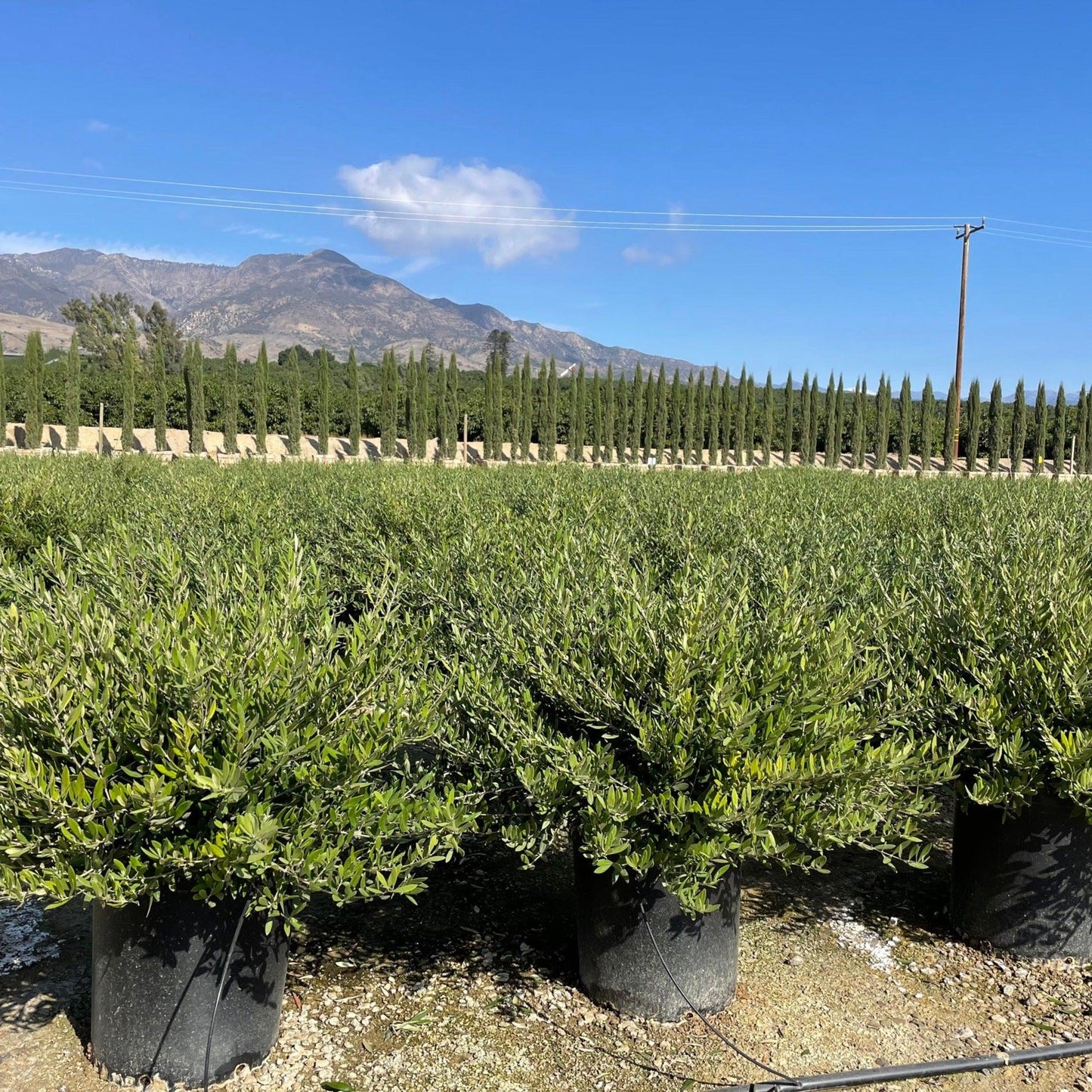
Plants vary greatly by type and no guarantees are made on sizing.
However here is a rough idea of sizes based on containers that are direct from our growing grounds.
15 Gallon Shrub 3-4 Ft. Tall
15 Gallon Tree 5-6 Ft. Tall
24" Box Shrub 5-6 Ft. Tall
24" Box Tree 6-7 Ft. Tall
36" Box Tree 8-10 Ft. Tall
48" Box Tree 10-12 Ft. Tall
Please note: Citrus and California Native plants such as Manzanita are smaller than traditional sizing.
Please contact us to confirm sizing of items before purchasing if this is a concern.
Plants vary greatly by type and no guarantees are made on sizing.
However here is a rough idea of sizes based on containers that are direct from our growing grounds.
15 Gallon Shrub 3-4 Ft. Tall
15 Gallon Tree 5-6 Ft. Tall
24" Box Shrub 5-6 Ft. Tall
24" Box Tree 6-7 Ft. Tall
36" Box Tree 8-10 Ft. Tall
48" Box Tree 10-12 Ft. Tall
Please note: Citrus and California Native plants such as Manzanita are smaller than traditional sizing.
Please contact us to confirm sizing of items before purchasing if this is a concern.
Delivery does not include unloading of trees and plants larger than a 24" box.
Trees and plants in smaller containers will be dropped curbside.
Delivery beyond a curbside drop will be charged extra.
Trees and plants that are sold in container sizes larger than a 24" box size will require equipment and an operator onsite to help unload from the truck.
Please reach out to our team PRIOR to placing your order to coordinate.
Our team can provide unloading assistance with equipment for an extra fee.
Delivery does not include unloading of trees and plants larger than a 24" box.
Trees and plants in smaller containers will be dropped curbside.
Delivery beyond a curbside drop will be charged extra.
Trees and plants that are sold in container sizes larger than a 24" box size will require equipment and an operator onsite to help unload from the truck.
Please reach out to our team PRIOR to placing your order to coordinate.
Our team can provide unloading assistance with equipment for an extra fee.
You may also like...


Ligustrum - Waxleaf Privet
Regular price
$55.00
Size
Create the perfect privacy screen with fast-growing, evergreen beauty
Ligustrum gives California homeowners a fast, dense, year-round privacy screen with glossy foliage that can block neighbors, streets, and open sightlines without waiting years for slow-growing trees.
As an evergreen shrub or small tree, the ligustrum plant is valued for dense coverage, rapid growth rate, and flexible use in hedges, shrub borders, and formal landscape screens. Ligustrum shrubs are known for their dense foliage, making them excellent choices for privacy hedges and screens, and Ligustrum species typically feature dense, leathery, glossy-green leaves that remain year-round.
For California yards, ligustrum works especially well because these shrubs are adaptable to various conditions, including drought, heat, and poor soil, which enhances their suitability as privacy hedges in diverse landscapes. Plant ligustrum where it receives full sun to partial shade, give it well drained soil, and it can create a tall screen with fewer seasonal gaps than deciduous alternatives.
Why You’ll Love It
-
Rapid Growth – Japanese Ligustrum can grow over 2 feet per year with minimal care, while smaller varieties like the Sunshine Ligustrum can grow up to 1 foot in height annually. The growth rate of Japanese privet is reported to be 25 inches or more per year, making it a very fast-growing shrub. California privet can grow rapidly to a height of 15 feet, making it suitable for use as a hedge when planted closely together.
-
Year-Round Coverage – Glossy foliage, dark green leaves, and evergreen growth help privet bushes maintain privacy year round. Many ligustrum shrubs hold green leaves through the growing season and beyond, while some varieties act as a semi evergreen shrub in colder areas.
-
Low Maintenance – Ligustrum is naturally resistant to deer, urban pollution, wind exposure, and heavy pruning. Once healthy plants are established, ligustrum is drought tolerant, heat tolerant, and generally disease resistant with fewer disease problems than many high-maintenance screening shrubs.
-
Versatile Design – Use ligustrum as formal hedges, informal shrub borders, a shaped tree form, or an evergreen tree-style accent. Japanese privet, Waxleaf Privet (Ligustrum japonicum ‘Texanum’), Wavy Leaf, golden privet, and sunshine ligustrum can all serve different design goals.
-
Cost-Effective – Ligustrum creates extensive privacy coverage at a lower cost than many fence installations or slow-growing evergreen privacy trees. Its rapid growth rate means fewer seasons waiting for dense coverage.
What Makes It Different
Most privacy plants either grow too slowly, lose leaves seasonally, or struggle with California’s dry summers, urban soil, salt spray, and heat. Ligustrum is built for fast screening in real-world landscapes, especially where homeowners want privacy without constant watering or frequent replacement.
-
Heat and Drought Tolerance – Ligustrum prefers well-drained soil and is tolerant of drought, heat, and various soil types, making it adaptable to different growing conditions. It grows well in full sun to partial shade and adapts to various soil types, offering resilience against urban conditions.
-
Dense Branching Pattern – Ligustrum shrubs naturally form dense thickets when unmanaged, which is one reason they work so well as hedges and screens. With proper spacing, pruning, and air circulation, that same dense habit becomes a clean privacy hedge instead of an overgrown mass.
-
Glossy Evergreen Foliage – Japanese privet, glossy privet, and waxleaf privet are known for glossy foliage that stays attractive through the year. Wavy Leaf Ligustrum and Waxleaf varieties are particularly favored for their ornamental appearance and ability to provide a solid privacy screen.
-
Pollution Resistance – Ligustrum performs well in urban environments and near roadways, handling pollution, wind exposure, and, in many coastal locations, moderate salt spray. This makes it useful for California front yards, driveway edges, and street-facing screens, similar to a Fern Pine hedge (Podocarpus gracilior).
Many gardeners prefer non-invasive, sterile cultivars of Ligustrum to avoid issues with traditional varieties. Most wild-type species of Ligustrum are highly invasive across North America, so sterile options such as Sunshine Ligustrum are often better choices near open space, native plants, riparian areas, or wildland edges.
How To Ensure Success In Your Landscape
-
Plant in Full to Partial Sun
Choose a location with full sun, part shade, or partial shade. Ligustrum requires 4 to 6 hours of direct sun daily to maintain dense growth and vibrant foliage, especially when the goal is a thick privacy hedge with minimal gaps. -
Space 4-6 Feet Apart
Space larger ligustrum shrubs 4-6 feet apart so the plants fill in quickly while still allowing airflow. Adequate plant spacing helps reduce leaf spots, powdery mildew, and other fungal disease problems by keeping foliage drier. -
Water and Mulch
For best results, Ligustrum requires moderate watering during establishment and can thrive with infrequent watering once mature. Water newly planted Ligustrum deeply at the base until the water begins to pool, and apply mulch to help retain moisture and reduce weeds. Mulch also helps conserve moisture around feeder roots. -
Prune as Needed
Ligustrum shrubs can be pruned at any time of the year, but it is best to avoid late fall pruning in warmer zones to prevent damage from freezing temperatures. Light pruning after late spring or early summer flowers keeps hedges neat, while more frequent shearing creates a formal shape.
When planting Ligustrum shrubs, dig a hole at least twice as wide as the root ball and the same depth, ensuring the top of the root ball is slightly higher than the existing soil line. Backfill with surrounding soil or improved native soil, then water deeply to settle the roots.
Plant Details
-
Mature Size: 8-15 feet tall, 6-10 feet wide for many privacy varieties; size varies by variety
-
Growth Rate: 24-36 inches per year for vigorous types under good care
-
Hardiness: USDA zones 7-11 for many landscape varieties, making ligustrum well suited to much of California
-
Soil Requirements: Prefers well drained soil; tolerates loamy, sandy, or clay soil types if drainage is adequate
-
Drainage Note: Ligustrum adapts to loamy, sandy, or clay soils as long as drainage is adequate; avoid standing water to reduce root rot
-
Sun Exposure: Full sun to partial shade; 4-6 hours of sun daily supports dense foliage
-
Water Needs: Moderate water during establishment; infrequent watering once mature
-
Bloom Time: Small white flowers or creamy white flowers appear in late spring to early summer on many varieties
-
Fruit: Some species produce flowers followed by berries; Glossy Privet may produce purple blue berries after bloom
-
Available Varieties: Japanese Privet, Wavy Leaf, Waxleaf, Sunshine, Curly Leaf, Howardi, California privet, glossy privet, chinese privet, european privet, common privet, and other cultivars
Key variety notes:
-
Curly Leaf Ligustrum – Curly Leaf Ligustrum (Ligustrum japonicum ‘Rotundifolium’) grows to a height of 5-6 feet and a width of 3-4 feet, featuring dark green, thick, shiny, curved leaves that are ideal for Asian-inspired gardens.
-
Howardi Ligustrum – Howardi Ligustrum (Ligustrum japonicum ‘Howardi’) can reach a height of 8 feet and a width of 5-6 feet, known for its striking lemon and lime variegation that deepens with age, making it a dense and lush shrub perfect for privacy.
-
Wavy Leaf Ligustrum – Wavy Leaf Ligustrum (Ligustrum japonicum ‘Recurvifolium’) can grow up to 10 feet tall and 6 feet wide, characterized by its unique wavy leaves and suitability for use as a privacy screen or hedge. For very tall privacy, some gardeners also consider Glossy Privet (Ligustrum lucidum).
-
Sunshine Ligustrum – Sunshine Ligustrum (Ligustrum sinense ‘Sunshine’) is a sterile variety that grows 3-6 feet tall and 3-4 feet wide, known for its bright yellow foliage that adds vibrant color to landscapes without the risk of seeding.
-
Glossy Privet – Glossy Privet (Ligustrum lucidum) can grow to heights of 35-40 feet and is often used as a tall screen or windbreak, featuring glossy dark green leaves and large clusters of white flowers followed by purple-blue berries. As an alternative tall, dense hedge, Brush Cherry (Eugenia myrtifolia) also offers evergreen privacy and year-round interest.
-
Japanese Privet – Ligustrum japonicum is a dependable evergreen shrub or small tree for hedges, screens, and tree form accents.
-
Chinese Privet – Ligustrum sinense includes compact ornamental selections such as sunshine ligustrum, but wild forms can be invasive. Other classic hedge choices, such as an English Laurel hedge (Prunus laurocerasus), may be better suited in some landscapes.
-
California Privet – California privet is fast growing and useful for clipped hedges, though site selection and management matter, much like Fern Pine trees (Podocarpus gracilior) used for taller privacy and windbreaks.
-
European Privet / Common Privet – These traditional privet types are classic hedge plants but should be evaluated carefully where invasive spread is a concern. In sensitive areas, many homeowners instead choose non-invasive evergreens like Cheesewood and other Pittosporum varieties.
To prevent fungal diseases on Ligustrum, keep leaves dry by avoiding overhead irrigation and improving air circulation through adequate plant spacing and selective branch pruning.
Who It’s For
Ideal for:
-
California homeowners needing fast privacy screening from neighbors, streets, driveways, or outdoor living areas
-
Property owners wanting low-maintenance evergreen hedges, shrub borders, and dense landscape edges
-
Landscapers and designers creating structured outdoor spaces with glossy foliage, formal hedges, or tree form accents
-
Anyone seeking a cost-effective alternative to fencing or slow-growing privacy trees
-
Homeowners who want drought tolerant, heat tolerant, urban-resilient plants that can handle poor soil once established, and who may be exploring other privacy trees and shrubs from a local nursery
-
Gardeners who prefer sterile or low-seeding cultivars, such as Ligustrum sinense ‘Sunshine’, instead of traditional privet that may spread, and who appreciate the convenience of a full-service plant nursery and landscaping partner
If you want a fast privacy hedge with year round green leaves, plant ligustrum in well drained soil, give it enough sun, and choose the variety that matches your final height, maintenance style, and local ecological needs.
Frequently Asked Questions
How fast does ligustrum grow?
Many ligustrum shrubs grow quickly, with Japanese Ligustrum often growing over 2 feet per year with minimal care. The growth rate of Japanese privet is reported to be 25 inches or more per year, while Wavy Leaf and Waxleaf types can also create a solid screen quickly. Smaller varieties like Sunshine Ligustrum can grow up to 1 foot in height annually.
Does it need a lot of water?
Not once established. For best results, Ligustrum requires moderate watering during establishment and can thrive with infrequent watering once mature. Water deeply during the first growing season, use mulch to conserve moisture, and avoid soggy soil because privet prefers well drained conditions and can suffer from root rot in wet sites.
How often should I prune it?
Prune as needed to maintain height, width, and density. Ligustrum shrubs can be pruned at any time of the year, but it is best to avoid late fall pruning in warmer zones to prevent damage from freezing temperatures. For formal hedges, frequent shearing creates a crisp shape; for a natural screen, selective pruning in early spring or after flowering is often enough.
Will it work in my California location?
Ligustrum is well suited to many California landscapes because it handles full sun to partial shade, heat, drought after establishment, urban conditions, wind exposure, and many soil types. It also tolerates salt spray in many coastal settings. In wildfire-prone areas or near native plants and open space, ask about spacing, pruning, and non-invasive cultivar choices.
What’s the best variety for privacy?
For fast tall privacy, Wavy Leaf Ligustrum, Japanese privet, wax leaf ligustrum, waxleaf privet, and California privet are strong choices. Wavy Leaf Ligustrum (Ligustrum japonicum ‘Recurvifolium’) can grow up to 10 feet tall and 6 feet wide, making it excellent for hedges. For compact color, Sunshine Ligustrum (Ligustrum sinense ‘Sunshine’) grows 3-6 feet tall and 3-4 feet wide with bright yellow foliage and sterile growth. For very tall screens or windbreaks, Glossy Privet (Ligustrum lucidum) can reach 35-40 feet, but its size, berries, and invasive potential require careful management.
Is ligustrum invasive?
Some types can be. Most wild-type species of Ligustrum are highly invasive across North America, and species such as ligustrum lucidum, ligustrum sinense, california privet, european privet, and common privet may spread by seed or roots in certain regions. Many gardeners prefer non-invasive, sterile cultivars of Ligustrum to avoid issues with traditional varieties.
Ready to Transform Your Yard?
Stop waiting years for privacy or settling for thin, seasonal screens. Choose Ligustrum for rapid growth, evergreen coverage, glossy foliage, and a clean landscape structure that works for California yards.
Shop ligustrum shrubs and ask about California delivery options, mature plant availability, and Yardwork support for choosing the right ligustrum for your privacy screen, hedge, or outdoor living space.
Create the perfect privacy screen with fast-growing, evergreen beauty
Ligustrum gives California homeowners a fast, dense, year-round privacy screen with glossy foliage that can block neighbors, streets, and open sightlines without waiting years for slow-growing trees.
As an evergreen shrub or small tree, the ligustrum plant is valued for dense coverage, rapid growth rate, and flexible use in hedges, shrub borders, and formal landscape screens. Ligustrum shrubs are known for their dense foliage, making them excellent choices for privacy hedges and screens, and Ligustrum species typically feature dense, leathery, glossy-green leaves that remain year-round.
For California yards, ligustrum works especially well because these shrubs are adaptable to various conditions, including drought, heat, and poor soil, which enhances their suitability as privacy hedges in diverse landscapes. Plant ligustrum where it receives full sun to partial shade, give it well drained soil, and it can create a tall screen with fewer seasonal gaps than deciduous alternatives.
Why You’ll Love It
-
Rapid Growth – Japanese Ligustrum can grow over 2 feet per year with minimal care, while smaller varieties like the Sunshine Ligustrum can grow up to 1 foot in height annually. The growth rate of Japanese privet is reported to be 25 inches or more per year, making it a very fast-growing shrub. California privet can grow rapidly to a height of 15 feet, making it suitable for use as a hedge when planted closely together.
-
Year-Round Coverage – Glossy foliage, dark green leaves, and evergreen growth help privet bushes maintain privacy year round. Many ligustrum shrubs hold green leaves through the growing season and beyond, while some varieties act as a semi evergreen shrub in colder areas.
-
Low Maintenance – Ligustrum is naturally resistant to deer, urban pollution, wind exposure, and heavy pruning. Once healthy plants are established, ligustrum is drought tolerant, heat tolerant, and generally disease resistant with fewer disease problems than many high-maintenance screening shrubs.
-
Versatile Design – Use ligustrum as formal hedges, informal shrub borders, a shaped tree form, or an evergreen tree-style accent. Japanese privet, Waxleaf Privet (Ligustrum japonicum ‘Texanum’), Wavy Leaf, golden privet, and sunshine ligustrum can all serve different design goals.
-
Cost-Effective – Ligustrum creates extensive privacy coverage at a lower cost than many fence installations or slow-growing evergreen privacy trees. Its rapid growth rate means fewer seasons waiting for dense coverage.
What Makes It Different
Most privacy plants either grow too slowly, lose leaves seasonally, or struggle with California’s dry summers, urban soil, salt spray, and heat. Ligustrum is built for fast screening in real-world landscapes, especially where homeowners want privacy without constant watering or frequent replacement.
-
Heat and Drought Tolerance – Ligustrum prefers well-drained soil and is tolerant of drought, heat, and various soil types, making it adaptable to different growing conditions. It grows well in full sun to partial shade and adapts to various soil types, offering resilience against urban conditions.
-
Dense Branching Pattern – Ligustrum shrubs naturally form dense thickets when unmanaged, which is one reason they work so well as hedges and screens. With proper spacing, pruning, and air circulation, that same dense habit becomes a clean privacy hedge instead of an overgrown mass.
-
Glossy Evergreen Foliage – Japanese privet, glossy privet, and waxleaf privet are known for glossy foliage that stays attractive through the year. Wavy Leaf Ligustrum and Waxleaf varieties are particularly favored for their ornamental appearance and ability to provide a solid privacy screen.
-
Pollution Resistance – Ligustrum performs well in urban environments and near roadways, handling pollution, wind exposure, and, in many coastal locations, moderate salt spray. This makes it useful for California front yards, driveway edges, and street-facing screens, similar to a Fern Pine hedge (Podocarpus gracilior).
Many gardeners prefer non-invasive, sterile cultivars of Ligustrum to avoid issues with traditional varieties. Most wild-type species of Ligustrum are highly invasive across North America, so sterile options such as Sunshine Ligustrum are often better choices near open space, native plants, riparian areas, or wildland edges.
How To Ensure Success In Your Landscape
-
Plant in Full to Partial Sun
Choose a location with full sun, part shade, or partial shade. Ligustrum requires 4 to 6 hours of direct sun daily to maintain dense growth and vibrant foliage, especially when the goal is a thick privacy hedge with minimal gaps. -
Space 4-6 Feet Apart
Space larger ligustrum shrubs 4-6 feet apart so the plants fill in quickly while still allowing airflow. Adequate plant spacing helps reduce leaf spots, powdery mildew, and other fungal disease problems by keeping foliage drier. -
Water and Mulch
For best results, Ligustrum requires moderate watering during establishment and can thrive with infrequent watering once mature. Water newly planted Ligustrum deeply at the base until the water begins to pool, and apply mulch to help retain moisture and reduce weeds. Mulch also helps conserve moisture around feeder roots. -
Prune as Needed
Ligustrum shrubs can be pruned at any time of the year, but it is best to avoid late fall pruning in warmer zones to prevent damage from freezing temperatures. Light pruning after late spring or early summer flowers keeps hedges neat, while more frequent shearing creates a formal shape.
When planting Ligustrum shrubs, dig a hole at least twice as wide as the root ball and the same depth, ensuring the top of the root ball is slightly higher than the existing soil line. Backfill with surrounding soil or improved native soil, then water deeply to settle the roots.
Plant Details
-
Mature Size: 8-15 feet tall, 6-10 feet wide for many privacy varieties; size varies by variety
-
Growth Rate: 24-36 inches per year for vigorous types under good care
-
Hardiness: USDA zones 7-11 for many landscape varieties, making ligustrum well suited to much of California
-
Soil Requirements: Prefers well drained soil; tolerates loamy, sandy, or clay soil types if drainage is adequate
-
Drainage Note: Ligustrum adapts to loamy, sandy, or clay soils as long as drainage is adequate; avoid standing water to reduce root rot
-
Sun Exposure: Full sun to partial shade; 4-6 hours of sun daily supports dense foliage
-
Water Needs: Moderate water during establishment; infrequent watering once mature
-
Bloom Time: Small white flowers or creamy white flowers appear in late spring to early summer on many varieties
-
Fruit: Some species produce flowers followed by berries; Glossy Privet may produce purple blue berries after bloom
-
Available Varieties: Japanese Privet, Wavy Leaf, Waxleaf, Sunshine, Curly Leaf, Howardi, California privet, glossy privet, chinese privet, european privet, common privet, and other cultivars
Key variety notes:
-
Curly Leaf Ligustrum – Curly Leaf Ligustrum (Ligustrum japonicum ‘Rotundifolium’) grows to a height of 5-6 feet and a width of 3-4 feet, featuring dark green, thick, shiny, curved leaves that are ideal for Asian-inspired gardens.
-
Howardi Ligustrum – Howardi Ligustrum (Ligustrum japonicum ‘Howardi’) can reach a height of 8 feet and a width of 5-6 feet, known for its striking lemon and lime variegation that deepens with age, making it a dense and lush shrub perfect for privacy.
-
Wavy Leaf Ligustrum – Wavy Leaf Ligustrum (Ligustrum japonicum ‘Recurvifolium’) can grow up to 10 feet tall and 6 feet wide, characterized by its unique wavy leaves and suitability for use as a privacy screen or hedge. For very tall privacy, some gardeners also consider Glossy Privet (Ligustrum lucidum).
-
Sunshine Ligustrum – Sunshine Ligustrum (Ligustrum sinense ‘Sunshine’) is a sterile variety that grows 3-6 feet tall and 3-4 feet wide, known for its bright yellow foliage that adds vibrant color to landscapes without the risk of seeding.
-
Glossy Privet – Glossy Privet (Ligustrum lucidum) can grow to heights of 35-40 feet and is often used as a tall screen or windbreak, featuring glossy dark green leaves and large clusters of white flowers followed by purple-blue berries. As an alternative tall, dense hedge, Brush Cherry (Eugenia myrtifolia) also offers evergreen privacy and year-round interest.
-
Japanese Privet – Ligustrum japonicum is a dependable evergreen shrub or small tree for hedges, screens, and tree form accents.
-
Chinese Privet – Ligustrum sinense includes compact ornamental selections such as sunshine ligustrum, but wild forms can be invasive. Other classic hedge choices, such as an English Laurel hedge (Prunus laurocerasus), may be better suited in some landscapes.
-
California Privet – California privet is fast growing and useful for clipped hedges, though site selection and management matter, much like Fern Pine trees (Podocarpus gracilior) used for taller privacy and windbreaks.
-
European Privet / Common Privet – These traditional privet types are classic hedge plants but should be evaluated carefully where invasive spread is a concern. In sensitive areas, many homeowners instead choose non-invasive evergreens like Cheesewood and other Pittosporum varieties.
To prevent fungal diseases on Ligustrum, keep leaves dry by avoiding overhead irrigation and improving air circulation through adequate plant spacing and selective branch pruning.
Who It’s For
Ideal for:
-
California homeowners needing fast privacy screening from neighbors, streets, driveways, or outdoor living areas
-
Property owners wanting low-maintenance evergreen hedges, shrub borders, and dense landscape edges
-
Landscapers and designers creating structured outdoor spaces with glossy foliage, formal hedges, or tree form accents
-
Anyone seeking a cost-effective alternative to fencing or slow-growing privacy trees
-
Homeowners who want drought tolerant, heat tolerant, urban-resilient plants that can handle poor soil once established, and who may be exploring other privacy trees and shrubs from a local nursery
-
Gardeners who prefer sterile or low-seeding cultivars, such as Ligustrum sinense ‘Sunshine’, instead of traditional privet that may spread, and who appreciate the convenience of a full-service plant nursery and landscaping partner
If you want a fast privacy hedge with year round green leaves, plant ligustrum in well drained soil, give it enough sun, and choose the variety that matches your final height, maintenance style, and local ecological needs.
Frequently Asked Questions
How fast does ligustrum grow?
Many ligustrum shrubs grow quickly, with Japanese Ligustrum often growing over 2 feet per year with minimal care. The growth rate of Japanese privet is reported to be 25 inches or more per year, while Wavy Leaf and Waxleaf types can also create a solid screen quickly. Smaller varieties like Sunshine Ligustrum can grow up to 1 foot in height annually.
Does it need a lot of water?
Not once established. For best results, Ligustrum requires moderate watering during establishment and can thrive with infrequent watering once mature. Water deeply during the first growing season, use mulch to conserve moisture, and avoid soggy soil because privet prefers well drained conditions and can suffer from root rot in wet sites.
How often should I prune it?
Prune as needed to maintain height, width, and density. Ligustrum shrubs can be pruned at any time of the year, but it is best to avoid late fall pruning in warmer zones to prevent damage from freezing temperatures. For formal hedges, frequent shearing creates a crisp shape; for a natural screen, selective pruning in early spring or after flowering is often enough.
Will it work in my California location?
Ligustrum is well suited to many California landscapes because it handles full sun to partial shade, heat, drought after establishment, urban conditions, wind exposure, and many soil types. It also tolerates salt spray in many coastal settings. In wildfire-prone areas or near native plants and open space, ask about spacing, pruning, and non-invasive cultivar choices.
What’s the best variety for privacy?
For fast tall privacy, Wavy Leaf Ligustrum, Japanese privet, wax leaf ligustrum, waxleaf privet, and California privet are strong choices. Wavy Leaf Ligustrum (Ligustrum japonicum ‘Recurvifolium’) can grow up to 10 feet tall and 6 feet wide, making it excellent for hedges. For compact color, Sunshine Ligustrum (Ligustrum sinense ‘Sunshine’) grows 3-6 feet tall and 3-4 feet wide with bright yellow foliage and sterile growth. For very tall screens or windbreaks, Glossy Privet (Ligustrum lucidum) can reach 35-40 feet, but its size, berries, and invasive potential require careful management.
Is ligustrum invasive?
Some types can be. Most wild-type species of Ligustrum are highly invasive across North America, and species such as ligustrum lucidum, ligustrum sinense, california privet, european privet, and common privet may spread by seed or roots in certain regions. Many gardeners prefer non-invasive, sterile cultivars of Ligustrum to avoid issues with traditional varieties.
Ready to Transform Your Yard?
Stop waiting years for privacy or settling for thin, seasonal screens. Choose Ligustrum for rapid growth, evergreen coverage, glossy foliage, and a clean landscape structure that works for California yards.
Shop ligustrum shrubs and ask about California delivery options, mature plant availability, and Yardwork support for choosing the right ligustrum for your privacy screen, hedge, or outdoor living space.
Plants vary greatly by type and no guarantees are made on sizing.
However here is a rough idea of sizes based on containers that are direct from our growing grounds.
15 Gallon Shrub 3-4 Ft. Tall
15 Gallon Tree 5-6 Ft. Tall
24" Box Shrub 5-6 Ft. Tall
24" Box Tree 6-7 Ft. Tall
36" Box Tree 8-10 Ft. Tall
48" Box Tree 10-12 Ft. Tall
Please note: Citrus and California Native plants such as Manzanita are smaller than traditional sizing.
Please contact us to confirm sizing of items before purchasing if this is a concern.
Plants vary greatly by type and no guarantees are made on sizing.
However here is a rough idea of sizes based on containers that are direct from our growing grounds.
15 Gallon Shrub 3-4 Ft. Tall
15 Gallon Tree 5-6 Ft. Tall
24" Box Shrub 5-6 Ft. Tall
24" Box Tree 6-7 Ft. Tall
36" Box Tree 8-10 Ft. Tall
48" Box Tree 10-12 Ft. Tall
Please note: Citrus and California Native plants such as Manzanita are smaller than traditional sizing.
Please contact us to confirm sizing of items before purchasing if this is a concern.
Delivery does not include unloading of trees and plants larger than a 24" box.
Trees and plants in smaller containers will be dropped curbside.
Delivery beyond a curbside drop will be charged extra.
Trees and plants that are sold in container sizes larger than a 24" box size will require equipment and an operator onsite to help unload from the truck.
Please reach out to our team PRIOR to placing your order to coordinate.
Our team can provide unloading assistance with equipment for an extra fee.
Delivery does not include unloading of trees and plants larger than a 24" box.
Trees and plants in smaller containers will be dropped curbside.
Delivery beyond a curbside drop will be charged extra.
Trees and plants that are sold in container sizes larger than a 24" box size will require equipment and an operator onsite to help unload from the truck.
Please reach out to our team PRIOR to placing your order to coordinate.
Our team can provide unloading assistance with equipment for an extra fee.
Recommended For You















Pairs Well With










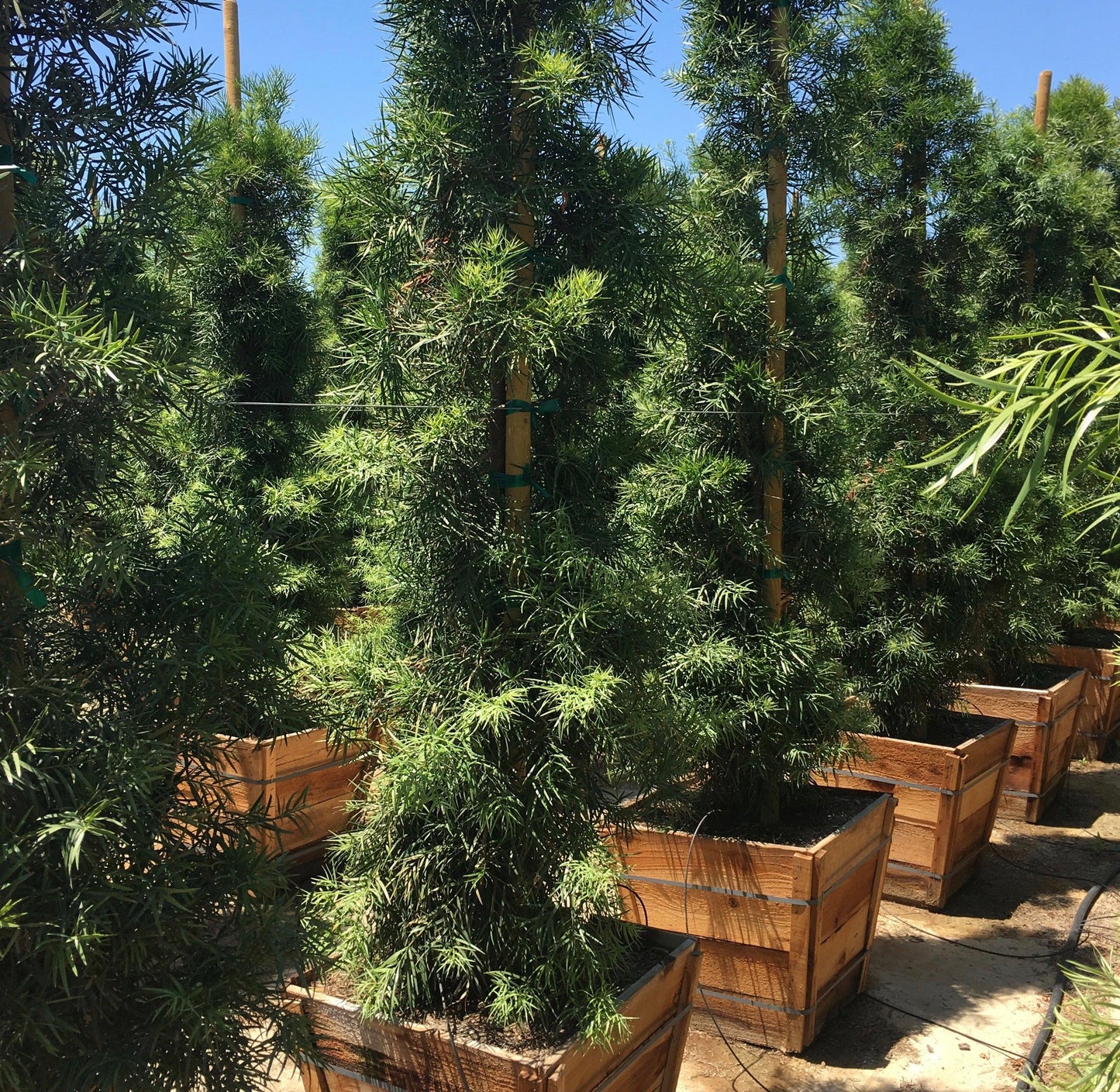

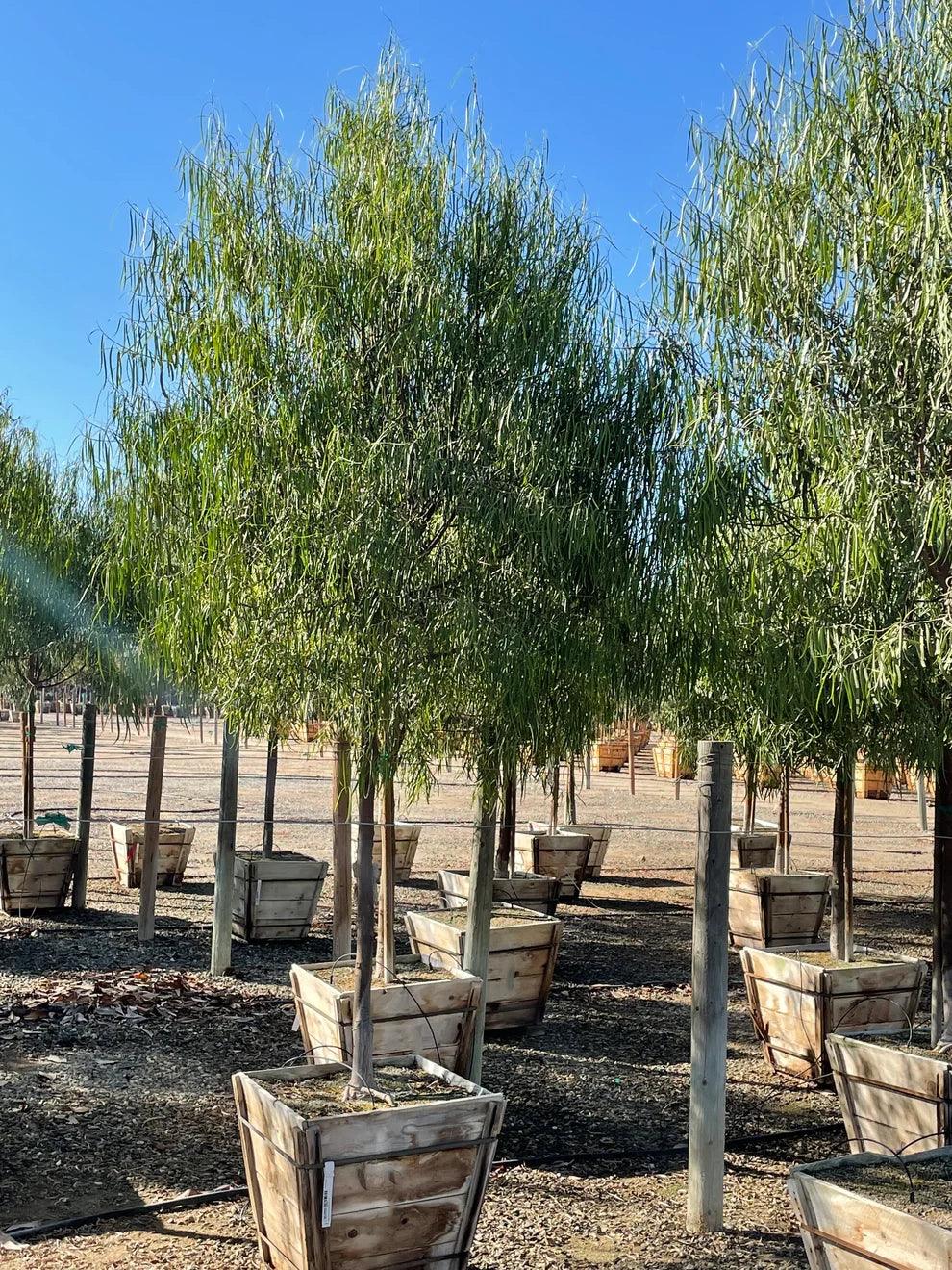

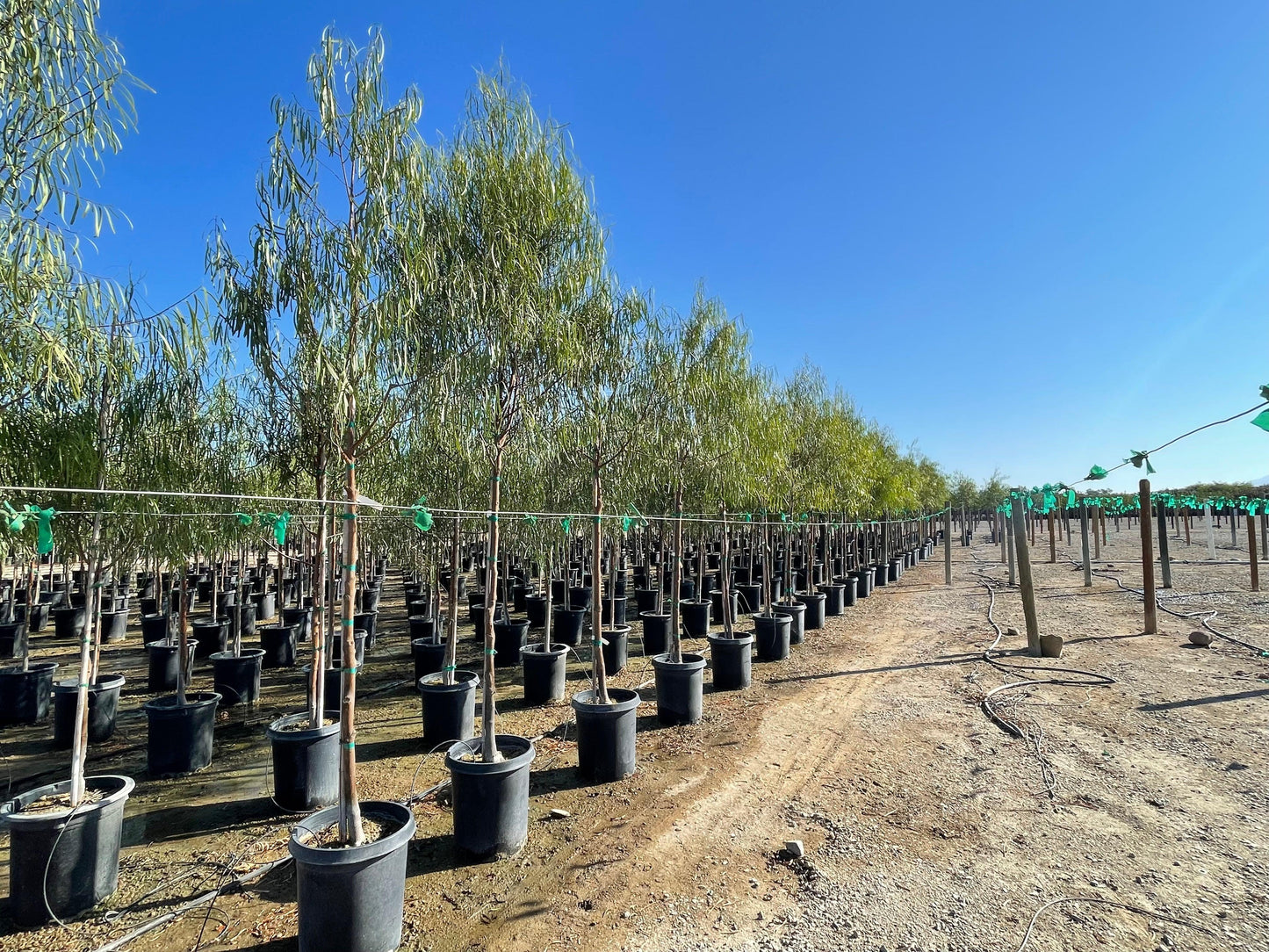

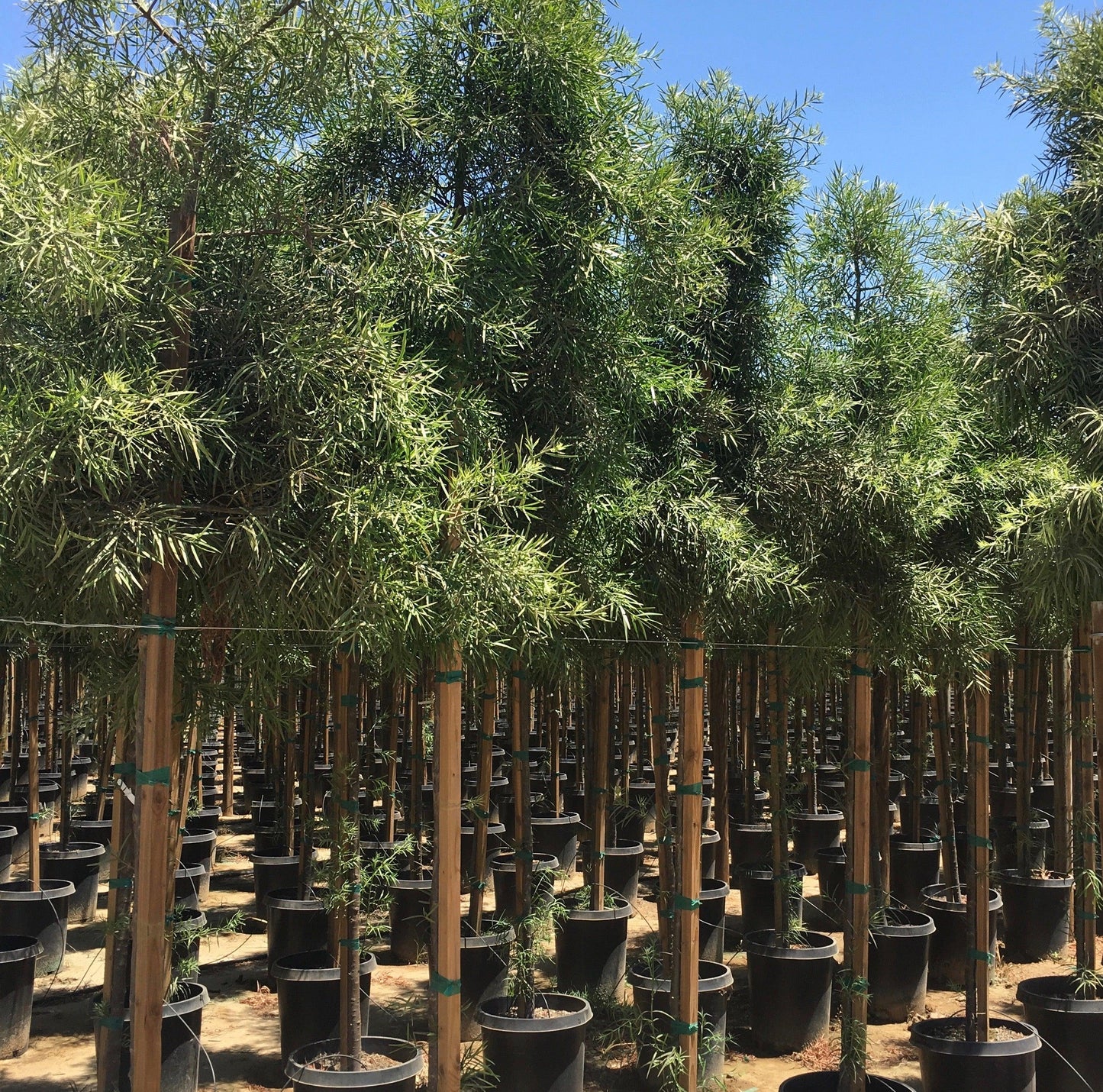
You May Also Like












Thousands of Healthy Plants Delivered

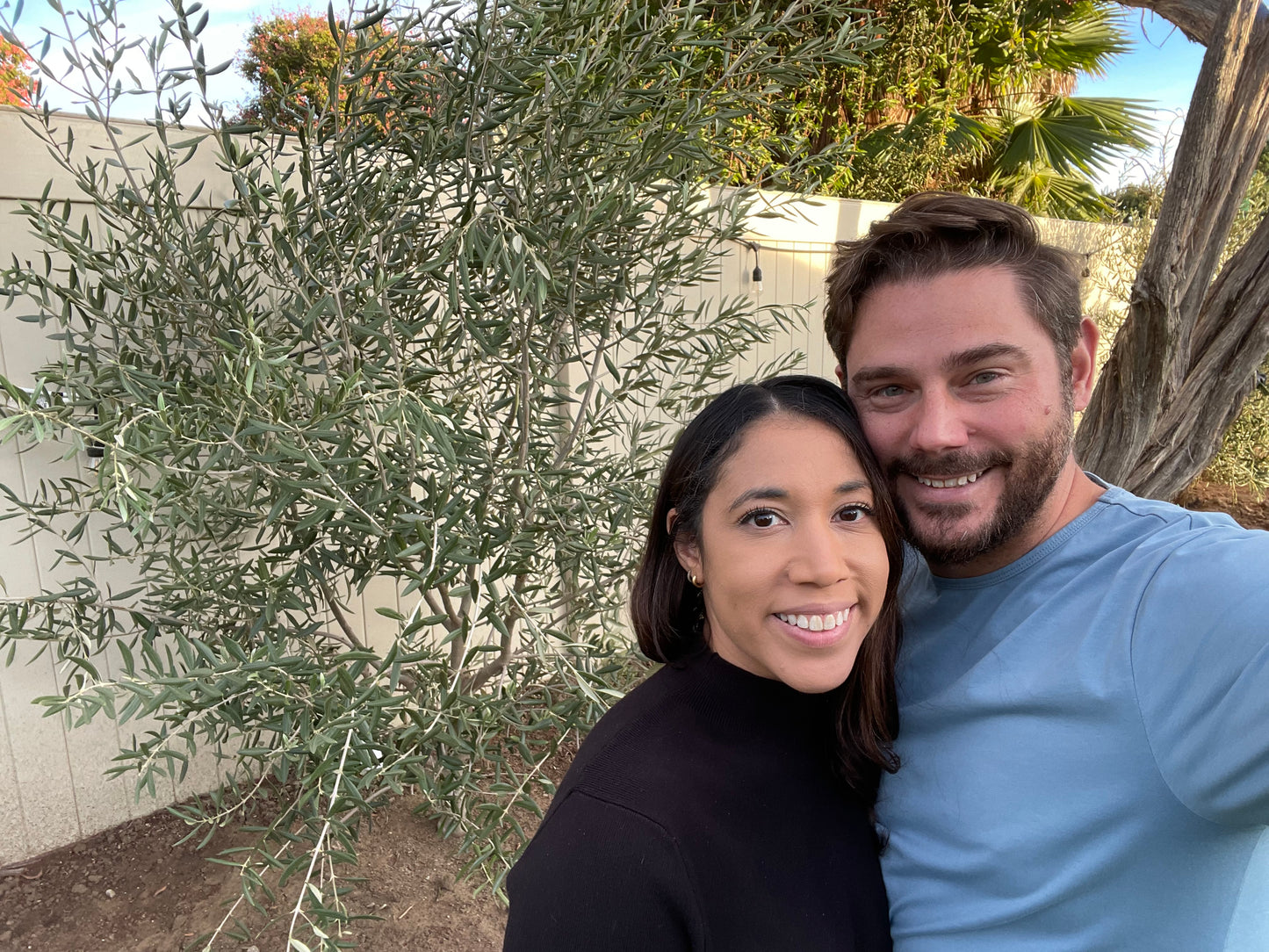
Yardwork was so great to work with. First they had the Swan Hill olive trees that we had been searching for, we had contacted several other nurseries without any luck previously. Then they answered all of our questions in a timely matter prior to ordering and finally delivered within a few days of placing it. Their staff is incredibly knowledgeable; they delivered and planted our trees with expertise to ensure that they would do well in our yard. We would definitely work with them again for future projects.











A Modern Experience
At Yardwork, we carefully curate thousands of plants, in all container sizes, to provide you with the best selection of the highest quality trees and plants at the best price, with the convenience of an online platform.
Uncompromised Quality
We choose only the finest specimens and hand select our plants just before delivery to ensure you receive the freshest and most robust specimens available for your landscape.
Industry Leading Warranties
Our 30, 90, and 365 extended warranties provide some of the best coverage to ensure our trees and plants thrive in your landscape.
Frequently Asked Questions
We're committed to changing everything about trees and plants - how they’re grown, how you shop for them, and how much they cost. We handle orders ourselves. No middlemen to get between us (or our prices) and you.
We're committed to changing everything about trees and plants - how they’re grown, how you shop for them, and how much they cost. We handle orders ourselves. No middlemen to get between us (or our prices) and you.
Delivery does not include unloading of trees and plants LARGER than a 24" box.
Trees and plants in smaller containers will be dropped curbside (usually on the driveway or near the front doorstep).
Delivery beyond a curbside drop will be charged extra.
Trees and plants that are sold in container sizes LARGER than a 24" box size will require equipment and/or enough manpower onsite to help unload from the truck.
Please reach out to our team PRIOR to placing your order to help coordinate.
Our team can provide unloading assistance with equipment for an extra fee as well.
Delivery does not include unloading of trees and plants LARGER than a 24" box.
Trees and plants in smaller containers will be dropped curbside (usually on the driveway or near the front doorstep).
Delivery beyond a curbside drop will be charged extra.
Trees and plants that are sold in container sizes LARGER than a 24" box size will require equipment and/or enough manpower onsite to help unload from the truck.
Please reach out to our team PRIOR to placing your order to help coordinate.
Our team can provide unloading assistance with equipment for an extra fee as well.
We ship locally within California within 7-10 days of your order being placed.
We ship nationally using carrier partners, based on order size. Our common order minimums for out of state shipping is $5,000.
Text or call 323-576-4159 for specific shipping details for your location.
We ship locally within California within 7-10 days of your order being placed.
We ship nationally using carrier partners, based on order size. Our common order minimums for out of state shipping is $5,000.
Text or call 323-576-4159 for specific shipping details for your location.
We are currently online only and don't have physical locations where you can view plants in person.
That's why we have photos direct from the growing grounds of the plants we will ship and we display pricing right in our store.
We do make sure to pick the very best trees and plants prior to shipping and make sure that they have gone through our multi-point inspection for health and structure.
We will always reach out prior to delivery if we find a quality issue or need to provide a substitute.
We are currently online only and don't have physical locations where you can view plants in person.
That's why we have photos direct from the growing grounds of the plants we will ship and we display pricing right in our store.
We do make sure to pick the very best trees and plants prior to shipping and make sure that they have gone through our multi-point inspection for health and structure.
We will always reach out prior to delivery if we find a quality issue or need to provide a substitute.
Plants vary greatly by type. Here is a rough idea of sizes based on containers that are direct from our growing grounds.
15 Gallon Shrub 3-4 Ft. Tall
15 Gallon Tree 5-6 Ft. Tall
24" Box Shrub 5-6 Ft. Tall
24" Box Tree 6-7 Ft. Tall
36" Box Shrub/Tree 7-9 Ft. Tall
48" Box Shrub/Tree 8-10 Ft. Tall
**Please note that we do not make guarantees of sizes. If you have questions or concerns, please call or text to request accurate sizing for the particular plant you're considering, prior to ordering.
Plants vary greatly by type. Here is a rough idea of sizes based on containers that are direct from our growing grounds.
15 Gallon Shrub 3-4 Ft. Tall
15 Gallon Tree 5-6 Ft. Tall
24" Box Shrub 5-6 Ft. Tall
24" Box Tree 6-7 Ft. Tall
36" Box Shrub/Tree 7-9 Ft. Tall
48" Box Shrub/Tree 8-10 Ft. Tall
**Please note that we do not make guarantees of sizes. If you have questions or concerns, please call or text to request accurate sizing for the particular plant you're considering, prior to ordering.
We offer a limited 30 day warranty for plants that are delivered and planted by someone else and a 90 day warranty for plants that we plant.
The limited warranty covers plants that die as a result of disease or fungus which was derived from our growing grounds or from root balls that were root bound.
The warranty does not cover damage due to watering, fertilizer, soils, or any other conditions beyond our control. Additionally, the warranty does not cover plants that are shipped out of the state of California or shipped into California from other states. Custom plant orders are also not covered under warranty. Plants must be planted within 24 hours after delivery to qualify.
We can assist you in recommending the right soils and fertilizers to help your plant thrive after you plant it.
Text or call 323-576-4159 for further warranty information.
We offer a limited 30 day warranty for plants that are delivered and planted by someone else and a 90 day warranty for plants that we plant.
The limited warranty covers plants that die as a result of disease or fungus which was derived from our growing grounds or from root balls that were root bound.
The warranty does not cover damage due to watering, fertilizer, soils, or any other conditions beyond our control. Additionally, the warranty does not cover plants that are shipped out of the state of California or shipped into California from other states. Custom plant orders are also not covered under warranty. Plants must be planted within 24 hours after delivery to qualify.
We can assist you in recommending the right soils and fertilizers to help your plant thrive after you plant it.
Text or call 323-576-4159 for further warranty information.
Our local delivery team covers most cities in California.
There are some exceptions, so please get in touch to confirm prior to ordering.
Additionally, we ship using semi trucks and trailers throughout the entire United States and even abroad for large orders over $5,000. Each shipment is custom, so please reach out to our team to coordinate.
Our local delivery team covers most cities in California.
There are some exceptions, so please get in touch to confirm prior to ordering.
Additionally, we ship using semi trucks and trailers throughout the entire United States and even abroad for large orders over $5,000. Each shipment is custom, so please reach out to our team to coordinate.