

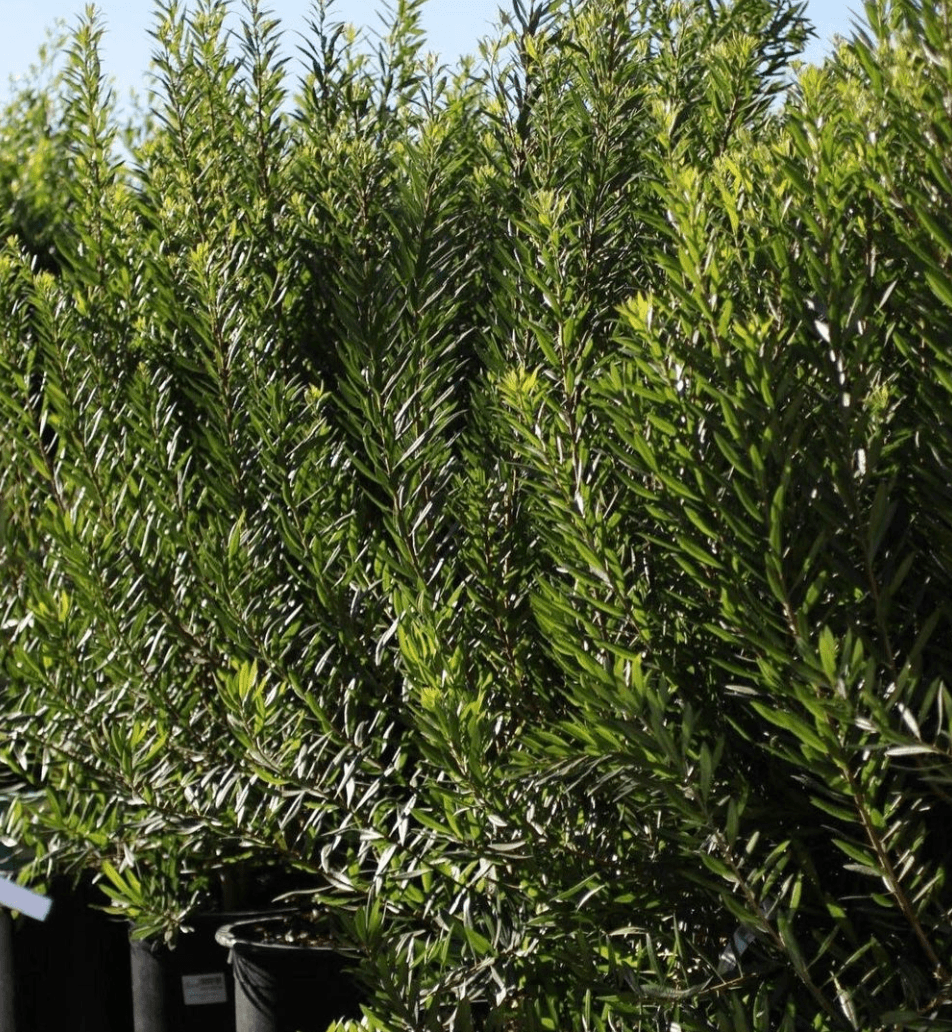
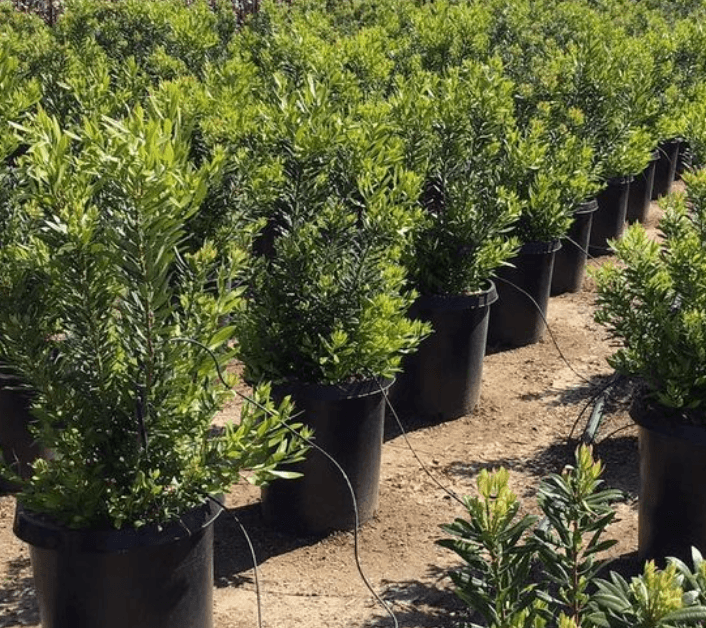


Myrica Californica (Pacific Wax Myrtle)
Regular price
$185.00
Size
Transform Your Landscape with California's Native Evergreen Beauty
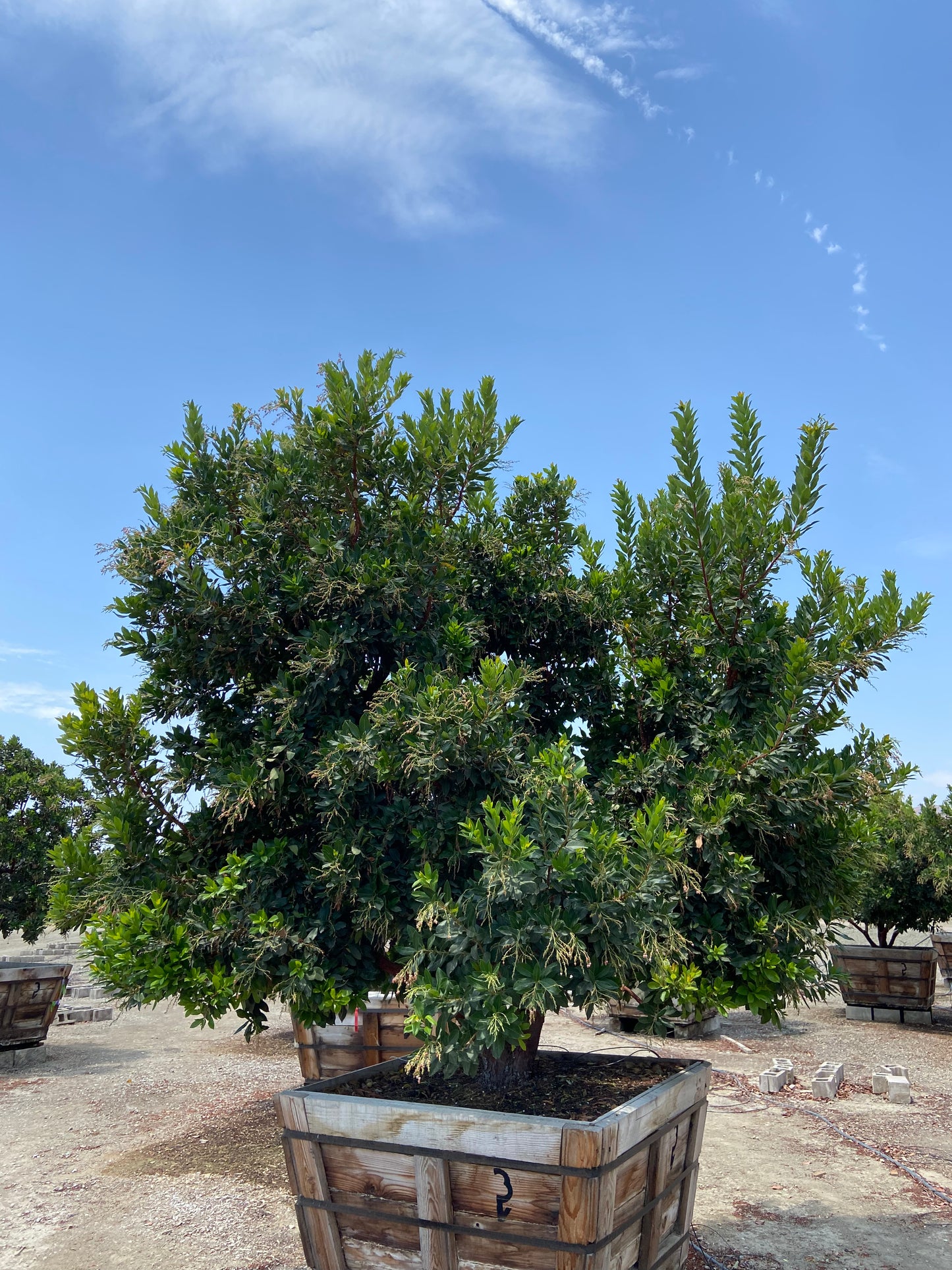
Myrica californica is a fast-growing evergreen shrub native to the Pacific Coast of North America, offering year-round privacy screening, wildlife habitat, and striking foliage effect-all with minimal long-term care. Also known as pacific wax myrtle, california bayberry, or california wax myrtle, this versatile native plant delivers what non-native hedges simply can't: authentic resilience in California's coastal climates with cool, wet winters and dry summers.
Whether you need a dense living screen, a sculptural small tree, or a wildlife-friendly anchor for a sustainable garden, Myrica californica adapts to your vision. It flourishes in coastal areas, thrives in challenging soils from sand to clay, and rewards you with glossy, narrow, serrated leaves that are aromatic-releasing a spicy aroma when crushed. This is the plant California gardens were made for.
Why You'll Love It
-
Year-Round Privacy – The dense foliage provides excellent habitat and shelter for wildlife while creating a natural, impenetrable screen. Upright stems and thick branching from the base mean no gaps-even in winter.
-
Wildlife Magnet – Myrica californica produces waxy purple berries that persist from fall through winter, offering critical season food when other sources are scarce. This plant attracts birds and butterflies to your yard throughout the year.
-
Drought Resilient – Myrica californica thrives in wet soils but is drought tolerant once established. After the first year of regular irrigation, it handles California's dry summers without supplemental watering in most coastal and valley locations.
-
Versatile Growth – It requires full sun to partial shade for optimal growth, but tolerates conditions from full sun to deep shade. Whether your site faces afternoon shade in a canyon or open coastal exposure, this plant performs.
-
Easy Maintenance – Responds beautifully to pruning and shaping. It can be sheared into formal hedges or left to develop its natural rounded form-either way, it stands ordinary garden culture with grace.
What Makes It Different
Most privacy trees and shrubs used in California-like leyland cypress, privet, or pittosporum-demand heavy watering, frequent fertilizing, and ongoing pest management. They weren't built for this climate. Myrica californica offers:
-
California Native Heritage – A member of the family Myricaceae and the genus Myrica (recently referred to as Morella californica in a recent treatment reclassifying it into the genus Morella), this species is naturally adapted to the soils, rainfall patterns, and microclimates of the Pacific Coast. Its native range extends from Vancouver Island in British Columbia through coastal Washington, Oregon, and down to southern California-including habitats near the Santa Monica mountains, canyons, and coastal valleys. It grows alongside redwood forest edges and in closed cone pine forest communities.
-
Aromatic Foliage – Unlike standard screening plants, the leaves of pacific wax myrtle release a pleasant, bay leaves-like spicy aroma when crushed. The foliage effect is striking: lanceolate, glossy green leaves measuring 4–13 cm long and 0.7–3 cm wide provide a lush, textured look that surpasses most alternatives.
-
Multi-Season Interest – Myrica californica produces small yellow-green flowers in spring on inconspicuous catkins, followed by spherical fruits in fall-4–6.5 mm purple drupes coated in natural wax. Berries persist into winter, providing visual interest and food for birds when your garden needs it most.
Compared to related species like Myrica gale (bog myrtle) from Europe, Asia, and northeastern North America, or Myrica hartwegii (california native sierra myrtle), the pacific wax myrtle is specifically adapted to West Coast maritime conditions. It is also more versatile than non-native hedging options like Waxleaf Privet or Pittosporum Silver Sheen, which require more water and chemical inputs to maintain.
How To Grow Myrica Californica Successfully
-
Plant in Optimal Location Choose a site based on your desired sun exposure-full sun yields denser foliage and more berries, while partial shade or afternoon shade is accepted in warmer inland areas. For hedges, space separate plants 6–10 feet apart depending on desired density. Myrica californica adapts to sand, clay, and well-drained to moist soils with a pH range of roughly 5.5–7.5. It is used in restoration projects due to its moderate-to-fast growth and high transplanting success.
-
Establish Root System Water regularly during the first year while roots develop deep, healthy networks. The shrub's nitrogen-fixing root nodules allow it to grow even in soils low in nitrogen, reducing the need for fertilization. It captures excess moisture after rains and manages local microclimates, making it a desirable choice for ecological and practical garden design.
-
Shape as Desired Prune in spring for best results. Shape into a formal hedge, an informal screen, or train into a single- or multi-stem small tree by removing lower branches to reveal smooth silvery bark. Pruning improves air circulation and helps prevent foliar blight-the primary disease concern for this species, especially in shaded or poorly ventilated plantings.
Plant Details
|
Specification |
Detail |
|---|---|
|
Botanical Name |
Myrica californica (syn. Morella californica) |
|
Family |
Myricaceae |
|
Common Names |
Pacific Wax Myrtle, California Bayberry, California Wax Myrtle |
|
Mature Height |
Mature height ranges from 10 to 30 feet |
|
Mature Width |
Mature width can reach 10 to 20 feet |
|
Growth Rate |
Moderate to fast (very fast during the first 10 years) |
|
USDA Zone |
Myrica californica thrives in USDA Zones 7 to 10 |
|
Light |
Full sun to deep shade |
|
Soil |
Sand, clay, well-drained to moist; slightly acidic to neutral |
|
Water Needs |
Water needs are moderate and regular; drought tolerant once established |
|
Special Features |
Aromatic leaves, wildlife berries, salt tolerance, nitrogen-fixing roots |
|
Salt & Wind |
Myrica californica is highly resistant to salt spray and strong winds |
|
Slope Stability |
It stabilizes slopes and prevents erosion due to its extensive root system |
Myrica californica acts as a living windbreak against harsh marine weather, making it an ideal choice for exposed coast and garden sites. The shrub's dense canopy provides nesting sites and protection from predators for local bird species.
Who It's For
Ideal for:
-
California homeowners seeking native privacy screening that won't demand constant watering or chemical treatments
-
Eco-conscious gardeners building wildlife-friendly landscapes with California native plants that support local ecology
-
Landscapers and designers creating sustainable, low-water gardens-suitable for projects from coastal estates to urban drought tolerant plantings
-
Property owners needing a versatile plant for challenging sites: wind-exposed coast, salty air, sandy bluffs, streamside edges, or shaded canyons
If you want authentic California landscaping that grows with purpose and beauty, Myrica californica fits your needs. It pairs beautifully with other native shrubs like Ceanothus (California Lilac), White Sage, and California Buckwheat for a complete native garden.
Frequently Asked Questions
How fast does it grow? Myrica californica grows at a moderate to fast rate-especially during the first 5–10 years after planting, when height gains of 1–2 feet per year are common in favorable coastal conditions. Berry production typically begins 2–4 years after planting. Observations from Pacific Northwest gardens confirm very fast early establishment.
Does it need much water? Regular irrigation during the first year is essential to establish deep roots. Once established, it is highly drought tolerant, particularly in coastal and maritime climates. Avoid overwatering-soggy roots increase disease risk. In most California garden settings, supplemental irrigation can be reduced or eliminated after the first growing season.
Can I shape it into a hedge? Absolutely. Pacific wax myrtle responds excellently to pruning and can be sheared into formal hedges or maintained as an informal screen. For a narrow, formal look, regular spring pruning keeps the shape tight. It can also be trained as a small tree with lower branches removed for a specimen accent. Browse our full selection of fast growing hedging plants and tall evergreen hedging plants for more options.
Will it attract wildlife? Yes. The waxy purple berries provide food for birds from late summer through winter-a critical period when other food sources are scarce. The dense evergreen canopy offers nesting sites, shelter, and protection. This plant attracts birds and butterflies, and it also serves as a larval host for certain moths and butterflies. Note that if berry production is a goal, both male and female separate plants may be needed, as this species can exhibit dioecious traits.
Are there any disease concerns? The primary risk is foliar blight caused by Phytophthora, which affects leaves produced in late fall and winter. Plants grown in deep shade or poorly ventilated sites are most vulnerable. Preventative pruning in spring, good air circulation, and cleanup of fallen debris are accepted best practices for control. Otherwise, few serious pests affect this species.
What makes it different from other bayberry species? Unlike Myrica gale (bog myrtle) from Europe, Asia, and Africa, or bayberry species from northeastern North America, the pacific wax myrtle is specifically adapted to West Coast climates. It is also distinct from Myrica hartwegii, the california native sierra myrtle found in mountain canyons. The recent treatment by taxonomists has led to Myrica californica being renamed and sometimes referred to under the genus Morella, though most nurseries-including references from Theodore Payne Foundation and San Marcos Growers-still use the accepted name Myrica californica.
Ready to Transform Your Yard?
Choose Myrica californica and experience the beauty, resilience, and ecological value of a true California native evergreen shrub.
Whether you're planting a privacy hedge, a windbreak along the coast, or a specimen tree in your California-style backyard, this is the plant that delivers-year after year.
Transform Your Landscape with California's Native Evergreen Beauty
Myrica californica is a fast-growing evergreen shrub native to the Pacific Coast of North America, offering year-round privacy screening, wildlife habitat, and striking foliage effect-all with minimal long-term care. Also known as pacific wax myrtle, california bayberry, or california wax myrtle, this versatile native plant delivers what non-native hedges simply can't: authentic resilience in California's coastal climates with cool, wet winters and dry summers.
Whether you need a dense living screen, a sculptural small tree, or a wildlife-friendly anchor for a sustainable garden, Myrica californica adapts to your vision. It flourishes in coastal areas, thrives in challenging soils from sand to clay, and rewards you with glossy, narrow, serrated leaves that are aromatic-releasing a spicy aroma when crushed. This is the plant California gardens were made for.
Why You'll Love It
-
Year-Round Privacy – The dense foliage provides excellent habitat and shelter for wildlife while creating a natural, impenetrable screen. Upright stems and thick branching from the base mean no gaps-even in winter.
-
Wildlife Magnet – Myrica californica produces waxy purple berries that persist from fall through winter, offering critical season food when other sources are scarce. This plant attracts birds and butterflies to your yard throughout the year.
-
Drought Resilient – Myrica californica thrives in wet soils but is drought tolerant once established. After the first year of regular irrigation, it handles California's dry summers without supplemental watering in most coastal and valley locations.
-
Versatile Growth – It requires full sun to partial shade for optimal growth, but tolerates conditions from full sun to deep shade. Whether your site faces afternoon shade in a canyon or open coastal exposure, this plant performs.
-
Easy Maintenance – Responds beautifully to pruning and shaping. It can be sheared into formal hedges or left to develop its natural rounded form-either way, it stands ordinary garden culture with grace.
What Makes It Different
Most privacy trees and shrubs used in California-like leyland cypress, privet, or pittosporum-demand heavy watering, frequent fertilizing, and ongoing pest management. They weren't built for this climate. Myrica californica offers:
-
California Native Heritage – A member of the family Myricaceae and the genus Myrica (recently referred to as Morella californica in a recent treatment reclassifying it into the genus Morella), this species is naturally adapted to the soils, rainfall patterns, and microclimates of the Pacific Coast. Its native range extends from Vancouver Island in British Columbia through coastal Washington, Oregon, and down to southern California-including habitats near the Santa Monica mountains, canyons, and coastal valleys. It grows alongside redwood forest edges and in closed cone pine forest communities.
-
Aromatic Foliage – Unlike standard screening plants, the leaves of pacific wax myrtle release a pleasant, bay leaves-like spicy aroma when crushed. The foliage effect is striking: lanceolate, glossy green leaves measuring 4–13 cm long and 0.7–3 cm wide provide a lush, textured look that surpasses most alternatives.
-
Multi-Season Interest – Myrica californica produces small yellow-green flowers in spring on inconspicuous catkins, followed by spherical fruits in fall-4–6.5 mm purple drupes coated in natural wax. Berries persist into winter, providing visual interest and food for birds when your garden needs it most.
Compared to related species like Myrica gale (bog myrtle) from Europe, Asia, and northeastern North America, or Myrica hartwegii (california native sierra myrtle), the pacific wax myrtle is specifically adapted to West Coast maritime conditions. It is also more versatile than non-native hedging options like Waxleaf Privet or Pittosporum Silver Sheen, which require more water and chemical inputs to maintain.
How To Grow Myrica Californica Successfully
-
Plant in Optimal Location Choose a site based on your desired sun exposure-full sun yields denser foliage and more berries, while partial shade or afternoon shade is accepted in warmer inland areas. For hedges, space separate plants 6–10 feet apart depending on desired density. Myrica californica adapts to sand, clay, and well-drained to moist soils with a pH range of roughly 5.5–7.5. It is used in restoration projects due to its moderate-to-fast growth and high transplanting success.
-
Establish Root System Water regularly during the first year while roots develop deep, healthy networks. The shrub's nitrogen-fixing root nodules allow it to grow even in soils low in nitrogen, reducing the need for fertilization. It captures excess moisture after rains and manages local microclimates, making it a desirable choice for ecological and practical garden design.
-
Shape as Desired Prune in spring for best results. Shape into a formal hedge, an informal screen, or train into a single- or multi-stem small tree by removing lower branches to reveal smooth silvery bark. Pruning improves air circulation and helps prevent foliar blight-the primary disease concern for this species, especially in shaded or poorly ventilated plantings.
Plant Details
|
Specification |
Detail |
|---|---|
|
Botanical Name |
Myrica californica (syn. Morella californica) |
|
Family |
Myricaceae |
|
Common Names |
Pacific Wax Myrtle, California Bayberry, California Wax Myrtle |
|
Mature Height |
Mature height ranges from 10 to 30 feet |
|
Mature Width |
Mature width can reach 10 to 20 feet |
|
Growth Rate |
Moderate to fast (very fast during the first 10 years) |
|
USDA Zone |
Myrica californica thrives in USDA Zones 7 to 10 |
|
Light |
Full sun to deep shade |
|
Soil |
Sand, clay, well-drained to moist; slightly acidic to neutral |
|
Water Needs |
Water needs are moderate and regular; drought tolerant once established |
|
Special Features |
Aromatic leaves, wildlife berries, salt tolerance, nitrogen-fixing roots |
|
Salt & Wind |
Myrica californica is highly resistant to salt spray and strong winds |
|
Slope Stability |
It stabilizes slopes and prevents erosion due to its extensive root system |
Myrica californica acts as a living windbreak against harsh marine weather, making it an ideal choice for exposed coast and garden sites. The shrub's dense canopy provides nesting sites and protection from predators for local bird species.
Who It's For
Ideal for:
-
California homeowners seeking native privacy screening that won't demand constant watering or chemical treatments
-
Eco-conscious gardeners building wildlife-friendly landscapes with California native plants that support local ecology
-
Landscapers and designers creating sustainable, low-water gardens-suitable for projects from coastal estates to urban drought tolerant plantings
-
Property owners needing a versatile plant for challenging sites: wind-exposed coast, salty air, sandy bluffs, streamside edges, or shaded canyons
If you want authentic California landscaping that grows with purpose and beauty, Myrica californica fits your needs. It pairs beautifully with other native shrubs like Ceanothus (California Lilac), White Sage, and California Buckwheat for a complete native garden.
Frequently Asked Questions
How fast does it grow? Myrica californica grows at a moderate to fast rate-especially during the first 5–10 years after planting, when height gains of 1–2 feet per year are common in favorable coastal conditions. Berry production typically begins 2–4 years after planting. Observations from Pacific Northwest gardens confirm very fast early establishment.
Does it need much water? Regular irrigation during the first year is essential to establish deep roots. Once established, it is highly drought tolerant, particularly in coastal and maritime climates. Avoid overwatering-soggy roots increase disease risk. In most California garden settings, supplemental irrigation can be reduced or eliminated after the first growing season.
Can I shape it into a hedge? Absolutely. Pacific wax myrtle responds excellently to pruning and can be sheared into formal hedges or maintained as an informal screen. For a narrow, formal look, regular spring pruning keeps the shape tight. It can also be trained as a small tree with lower branches removed for a specimen accent. Browse our full selection of fast growing hedging plants and tall evergreen hedging plants for more options.
Will it attract wildlife? Yes. The waxy purple berries provide food for birds from late summer through winter-a critical period when other food sources are scarce. The dense evergreen canopy offers nesting sites, shelter, and protection. This plant attracts birds and butterflies, and it also serves as a larval host for certain moths and butterflies. Note that if berry production is a goal, both male and female separate plants may be needed, as this species can exhibit dioecious traits.
Are there any disease concerns? The primary risk is foliar blight caused by Phytophthora, which affects leaves produced in late fall and winter. Plants grown in deep shade or poorly ventilated sites are most vulnerable. Preventative pruning in spring, good air circulation, and cleanup of fallen debris are accepted best practices for control. Otherwise, few serious pests affect this species.
What makes it different from other bayberry species? Unlike Myrica gale (bog myrtle) from Europe, Asia, and Africa, or bayberry species from northeastern North America, the pacific wax myrtle is specifically adapted to West Coast climates. It is also distinct from Myrica hartwegii, the california native sierra myrtle found in mountain canyons. The recent treatment by taxonomists has led to Myrica californica being renamed and sometimes referred to under the genus Morella, though most nurseries-including references from Theodore Payne Foundation and San Marcos Growers-still use the accepted name Myrica californica.
Ready to Transform Your Yard?
Choose Myrica californica and experience the beauty, resilience, and ecological value of a true California native evergreen shrub.
Whether you're planting a privacy hedge, a windbreak along the coast, or a specimen tree in your California-style backyard, this is the plant that delivers-year after year.
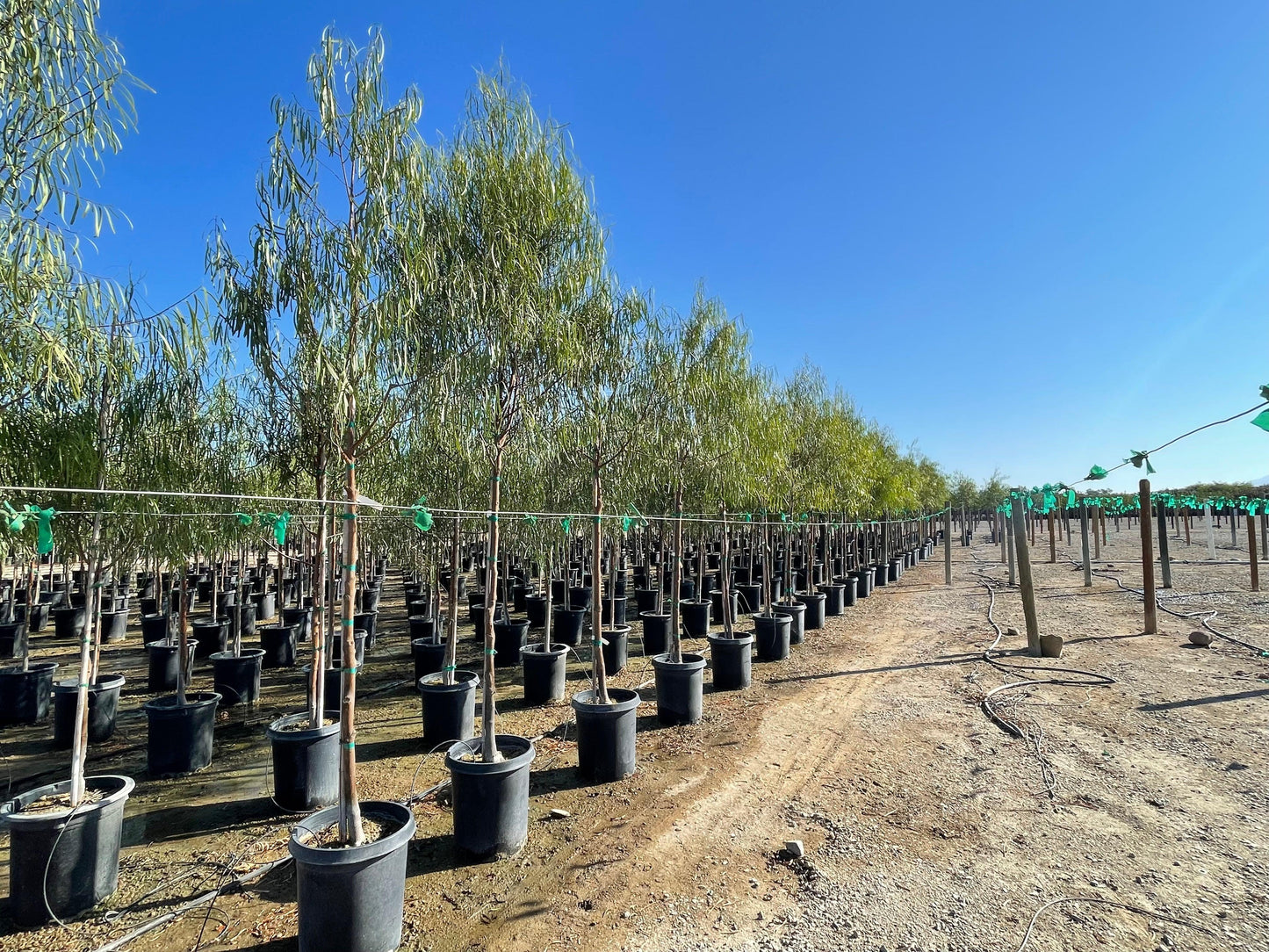
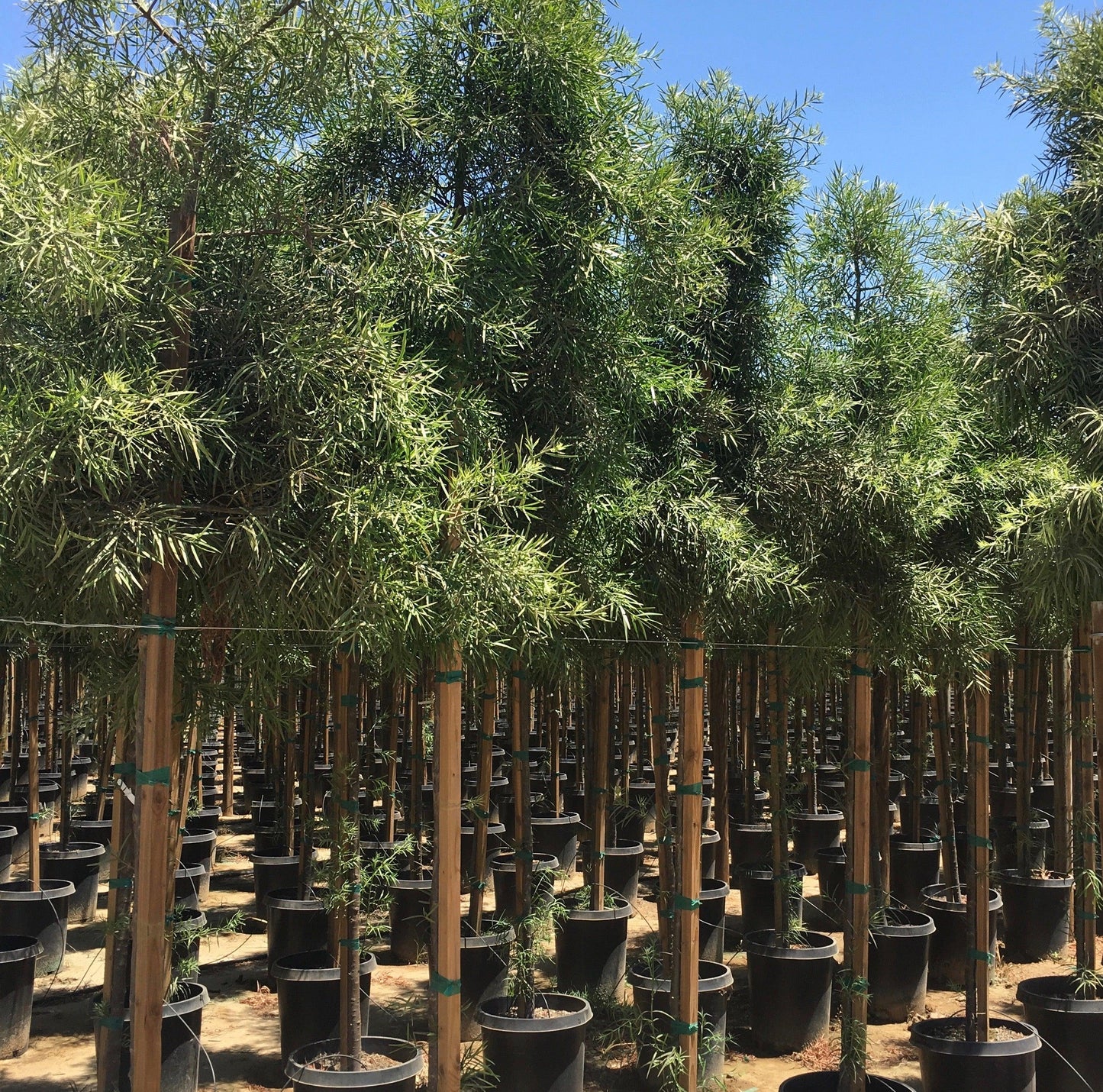
Plants vary greatly by type and no guarantees are made on sizing.
However here is a rough idea of sizes based on containers that are direct from our growing grounds.
15 Gallon Shrub 3-4 Ft. Tall
15 Gallon Tree 5-6 Ft. Tall
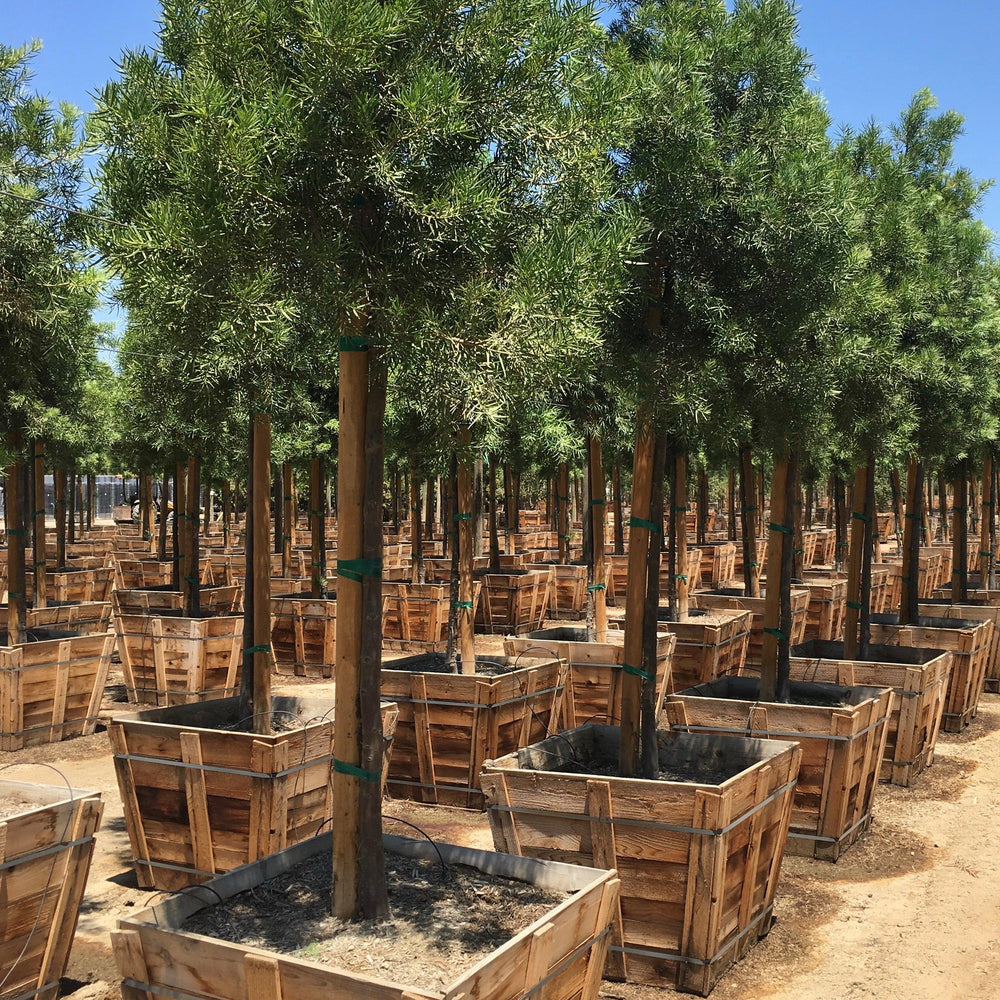
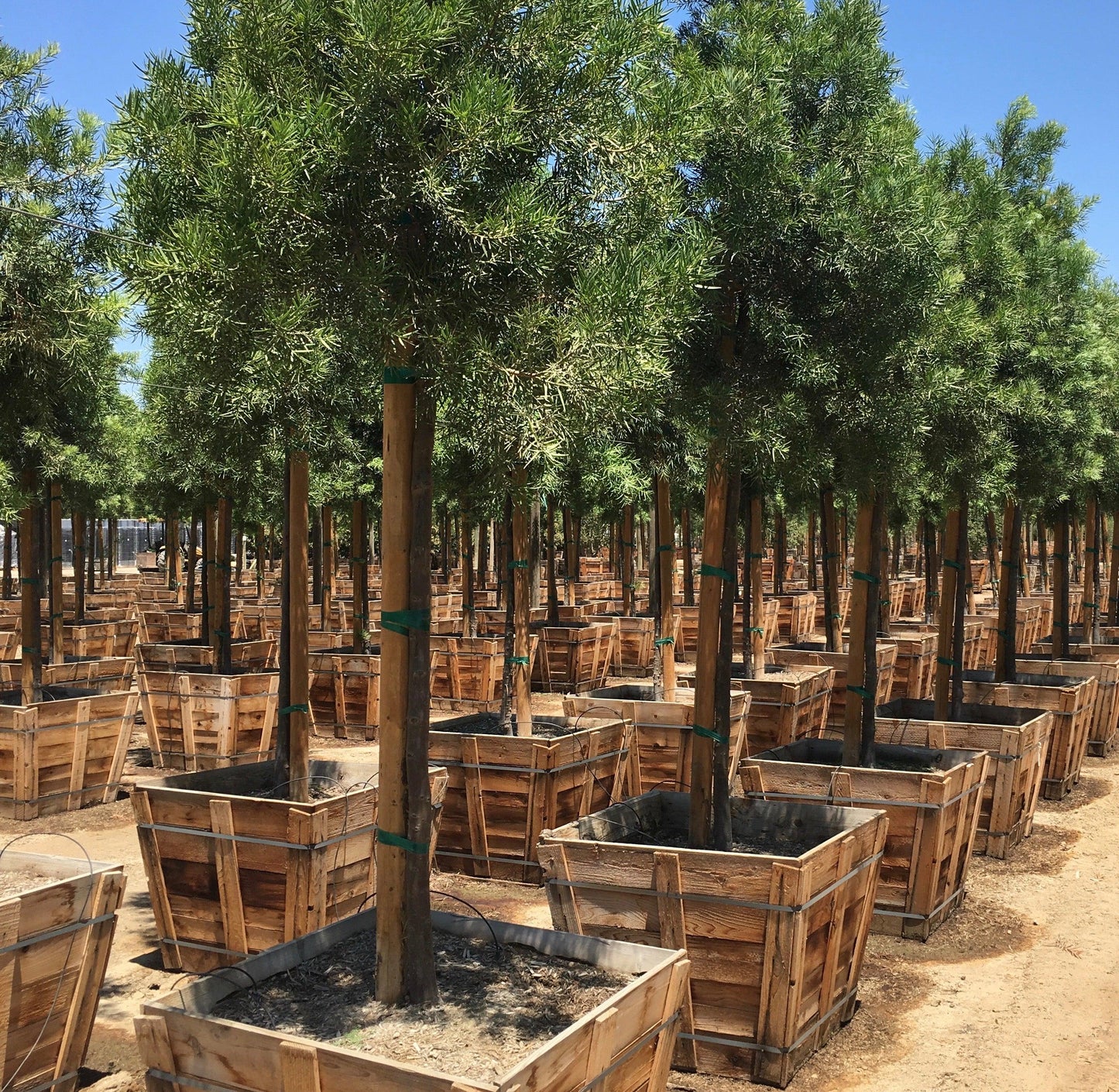
24" Box Shrub 5-6 Ft. Tall
24" Box Tree 6-7 Ft. Tall
36" Box Tree 8-10 Ft. Tall
48" Box Tree 10-12 Ft. Tall
Please note: Citrus and California Native plants such as Manzanita are smaller than traditional sizing.
Please contact us to confirm sizing of items before purchasing if this is a concern.
Plants vary greatly by type and no guarantees are made on sizing.
However here is a rough idea of sizes based on containers that are direct from our growing grounds.
15 Gallon Shrub 3-4 Ft. Tall
15 Gallon Tree 5-6 Ft. Tall
24" Box Shrub 5-6 Ft. Tall
24" Box Tree 6-7 Ft. Tall
36" Box Tree 8-10 Ft. Tall
48" Box Tree 10-12 Ft. Tall
Please note: Citrus and California Native plants such as Manzanita are smaller than traditional sizing.
Please contact us to confirm sizing of items before purchasing if this is a concern.
Delivery does not include unloading of trees and plants larger than a 24" box.
Trees and plants in smaller containers will be dropped curbside.
Delivery beyond a curbside drop will be charged extra.
Trees and plants that are sold in container sizes larger than a 24" box size will require equipment and an operator onsite to help unload from the truck.
Please reach out to our team PRIOR to placing your order to coordinate.
Our team can provide unloading assistance with equipment for an extra fee.
Delivery does not include unloading of trees and plants larger than a 24" box.
Trees and plants in smaller containers will be dropped curbside.
Delivery beyond a curbside drop will be charged extra.
Trees and plants that are sold in container sizes larger than a 24" box size will require equipment and an operator onsite to help unload from the truck.
Please reach out to our team PRIOR to placing your order to coordinate.
Our team can provide unloading assistance with equipment for an extra fee.
You may also like...


Myrica Californica (Pacific Wax Myrtle)
Regular price
$185.00
Size
Transform Your Landscape with California's Native Evergreen Beauty
Myrica californica is a fast-growing evergreen shrub native to the Pacific Coast of North America, offering year-round privacy screening, wildlife habitat, and striking foliage effect-all with minimal long-term care. Also known as pacific wax myrtle, california bayberry, or california wax myrtle, this versatile native plant delivers what non-native hedges simply can't: authentic resilience in California's coastal climates with cool, wet winters and dry summers.
Whether you need a dense living screen, a sculptural small tree, or a wildlife-friendly anchor for a sustainable garden, Myrica californica adapts to your vision. It flourishes in coastal areas, thrives in challenging soils from sand to clay, and rewards you with glossy, narrow, serrated leaves that are aromatic-releasing a spicy aroma when crushed. This is the plant California gardens were made for.
Why You'll Love It
-
Year-Round Privacy – The dense foliage provides excellent habitat and shelter for wildlife while creating a natural, impenetrable screen. Upright stems and thick branching from the base mean no gaps-even in winter.
-
Wildlife Magnet – Myrica californica produces waxy purple berries that persist from fall through winter, offering critical season food when other sources are scarce. This plant attracts birds and butterflies to your yard throughout the year.
-
Drought Resilient – Myrica californica thrives in wet soils but is drought tolerant once established. After the first year of regular irrigation, it handles California's dry summers without supplemental watering in most coastal and valley locations.
-
Versatile Growth – It requires full sun to partial shade for optimal growth, but tolerates conditions from full sun to deep shade. Whether your site faces afternoon shade in a canyon or open coastal exposure, this plant performs.
-
Easy Maintenance – Responds beautifully to pruning and shaping. It can be sheared into formal hedges or left to develop its natural rounded form-either way, it stands ordinary garden culture with grace.
What Makes It Different
Most privacy trees and shrubs used in California-like leyland cypress, privet, or pittosporum-demand heavy watering, frequent fertilizing, and ongoing pest management. They weren't built for this climate. Myrica californica offers:
-
California Native Heritage – A member of the family Myricaceae and the genus Myrica (recently referred to as Morella californica in a recent treatment reclassifying it into the genus Morella), this species is naturally adapted to the soils, rainfall patterns, and microclimates of the Pacific Coast. Its native range extends from Vancouver Island in British Columbia through coastal Washington, Oregon, and down to southern California-including habitats near the Santa Monica mountains, canyons, and coastal valleys. It grows alongside redwood forest edges and in closed cone pine forest communities.
-
Aromatic Foliage – Unlike standard screening plants, the leaves of pacific wax myrtle release a pleasant, bay leaves-like spicy aroma when crushed. The foliage effect is striking: lanceolate, glossy green leaves measuring 4–13 cm long and 0.7–3 cm wide provide a lush, textured look that surpasses most alternatives.
-
Multi-Season Interest – Myrica californica produces small yellow-green flowers in spring on inconspicuous catkins, followed by spherical fruits in fall-4–6.5 mm purple drupes coated in natural wax. Berries persist into winter, providing visual interest and food for birds when your garden needs it most.
Compared to related species like Myrica gale (bog myrtle) from Europe, Asia, and northeastern North America, or Myrica hartwegii (california native sierra myrtle), the pacific wax myrtle is specifically adapted to West Coast maritime conditions. It is also more versatile than non-native hedging options like Waxleaf Privet or Pittosporum Silver Sheen, which require more water and chemical inputs to maintain.
How To Grow Myrica Californica Successfully
-
Plant in Optimal Location Choose a site based on your desired sun exposure-full sun yields denser foliage and more berries, while partial shade or afternoon shade is accepted in warmer inland areas. For hedges, space separate plants 6–10 feet apart depending on desired density. Myrica californica adapts to sand, clay, and well-drained to moist soils with a pH range of roughly 5.5–7.5. It is used in restoration projects due to its moderate-to-fast growth and high transplanting success.
-
Establish Root System Water regularly during the first year while roots develop deep, healthy networks. The shrub's nitrogen-fixing root nodules allow it to grow even in soils low in nitrogen, reducing the need for fertilization. It captures excess moisture after rains and manages local microclimates, making it a desirable choice for ecological and practical garden design.
-
Shape as Desired Prune in spring for best results. Shape into a formal hedge, an informal screen, or train into a single- or multi-stem small tree by removing lower branches to reveal smooth silvery bark. Pruning improves air circulation and helps prevent foliar blight-the primary disease concern for this species, especially in shaded or poorly ventilated plantings.
Plant Details
|
Specification |
Detail |
|---|---|
|
Botanical Name |
Myrica californica (syn. Morella californica) |
|
Family |
Myricaceae |
|
Common Names |
Pacific Wax Myrtle, California Bayberry, California Wax Myrtle |
|
Mature Height |
Mature height ranges from 10 to 30 feet |
|
Mature Width |
Mature width can reach 10 to 20 feet |
|
Growth Rate |
Moderate to fast (very fast during the first 10 years) |
|
USDA Zone |
Myrica californica thrives in USDA Zones 7 to 10 |
|
Light |
Full sun to deep shade |
|
Soil |
Sand, clay, well-drained to moist; slightly acidic to neutral |
|
Water Needs |
Water needs are moderate and regular; drought tolerant once established |
|
Special Features |
Aromatic leaves, wildlife berries, salt tolerance, nitrogen-fixing roots |
|
Salt & Wind |
Myrica californica is highly resistant to salt spray and strong winds |
|
Slope Stability |
It stabilizes slopes and prevents erosion due to its extensive root system |
Myrica californica acts as a living windbreak against harsh marine weather, making it an ideal choice for exposed coast and garden sites. The shrub's dense canopy provides nesting sites and protection from predators for local bird species.
Who It's For
Ideal for:
-
California homeowners seeking native privacy screening that won't demand constant watering or chemical treatments
-
Eco-conscious gardeners building wildlife-friendly landscapes with California native plants that support local ecology
-
Landscapers and designers creating sustainable, low-water gardens-suitable for projects from coastal estates to urban drought tolerant plantings
-
Property owners needing a versatile plant for challenging sites: wind-exposed coast, salty air, sandy bluffs, streamside edges, or shaded canyons
If you want authentic California landscaping that grows with purpose and beauty, Myrica californica fits your needs. It pairs beautifully with other native shrubs like Ceanothus (California Lilac), White Sage, and California Buckwheat for a complete native garden.
Frequently Asked Questions
How fast does it grow? Myrica californica grows at a moderate to fast rate-especially during the first 5–10 years after planting, when height gains of 1–2 feet per year are common in favorable coastal conditions. Berry production typically begins 2–4 years after planting. Observations from Pacific Northwest gardens confirm very fast early establishment.
Does it need much water? Regular irrigation during the first year is essential to establish deep roots. Once established, it is highly drought tolerant, particularly in coastal and maritime climates. Avoid overwatering-soggy roots increase disease risk. In most California garden settings, supplemental irrigation can be reduced or eliminated after the first growing season.
Can I shape it into a hedge? Absolutely. Pacific wax myrtle responds excellently to pruning and can be sheared into formal hedges or maintained as an informal screen. For a narrow, formal look, regular spring pruning keeps the shape tight. It can also be trained as a small tree with lower branches removed for a specimen accent. Browse our full selection of fast growing hedging plants and tall evergreen hedging plants for more options.
Will it attract wildlife? Yes. The waxy purple berries provide food for birds from late summer through winter-a critical period when other food sources are scarce. The dense evergreen canopy offers nesting sites, shelter, and protection. This plant attracts birds and butterflies, and it also serves as a larval host for certain moths and butterflies. Note that if berry production is a goal, both male and female separate plants may be needed, as this species can exhibit dioecious traits.
Are there any disease concerns? The primary risk is foliar blight caused by Phytophthora, which affects leaves produced in late fall and winter. Plants grown in deep shade or poorly ventilated sites are most vulnerable. Preventative pruning in spring, good air circulation, and cleanup of fallen debris are accepted best practices for control. Otherwise, few serious pests affect this species.
What makes it different from other bayberry species? Unlike Myrica gale (bog myrtle) from Europe, Asia, and Africa, or bayberry species from northeastern North America, the pacific wax myrtle is specifically adapted to West Coast climates. It is also distinct from Myrica hartwegii, the california native sierra myrtle found in mountain canyons. The recent treatment by taxonomists has led to Myrica californica being renamed and sometimes referred to under the genus Morella, though most nurseries-including references from Theodore Payne Foundation and San Marcos Growers-still use the accepted name Myrica californica.
Ready to Transform Your Yard?
Choose Myrica californica and experience the beauty, resilience, and ecological value of a true California native evergreen shrub.
Whether you're planting a privacy hedge, a windbreak along the coast, or a specimen tree in your California-style backyard, this is the plant that delivers-year after year.
Transform Your Landscape with California's Native Evergreen Beauty
Myrica californica is a fast-growing evergreen shrub native to the Pacific Coast of North America, offering year-round privacy screening, wildlife habitat, and striking foliage effect-all with minimal long-term care. Also known as pacific wax myrtle, california bayberry, or california wax myrtle, this versatile native plant delivers what non-native hedges simply can't: authentic resilience in California's coastal climates with cool, wet winters and dry summers.
Whether you need a dense living screen, a sculptural small tree, or a wildlife-friendly anchor for a sustainable garden, Myrica californica adapts to your vision. It flourishes in coastal areas, thrives in challenging soils from sand to clay, and rewards you with glossy, narrow, serrated leaves that are aromatic-releasing a spicy aroma when crushed. This is the plant California gardens were made for.
Why You'll Love It
-
Year-Round Privacy – The dense foliage provides excellent habitat and shelter for wildlife while creating a natural, impenetrable screen. Upright stems and thick branching from the base mean no gaps-even in winter.
-
Wildlife Magnet – Myrica californica produces waxy purple berries that persist from fall through winter, offering critical season food when other sources are scarce. This plant attracts birds and butterflies to your yard throughout the year.
-
Drought Resilient – Myrica californica thrives in wet soils but is drought tolerant once established. After the first year of regular irrigation, it handles California's dry summers without supplemental watering in most coastal and valley locations.
-
Versatile Growth – It requires full sun to partial shade for optimal growth, but tolerates conditions from full sun to deep shade. Whether your site faces afternoon shade in a canyon or open coastal exposure, this plant performs.
-
Easy Maintenance – Responds beautifully to pruning and shaping. It can be sheared into formal hedges or left to develop its natural rounded form-either way, it stands ordinary garden culture with grace.
What Makes It Different
Most privacy trees and shrubs used in California-like leyland cypress, privet, or pittosporum-demand heavy watering, frequent fertilizing, and ongoing pest management. They weren't built for this climate. Myrica californica offers:
-
California Native Heritage – A member of the family Myricaceae and the genus Myrica (recently referred to as Morella californica in a recent treatment reclassifying it into the genus Morella), this species is naturally adapted to the soils, rainfall patterns, and microclimates of the Pacific Coast. Its native range extends from Vancouver Island in British Columbia through coastal Washington, Oregon, and down to southern California-including habitats near the Santa Monica mountains, canyons, and coastal valleys. It grows alongside redwood forest edges and in closed cone pine forest communities.
-
Aromatic Foliage – Unlike standard screening plants, the leaves of pacific wax myrtle release a pleasant, bay leaves-like spicy aroma when crushed. The foliage effect is striking: lanceolate, glossy green leaves measuring 4–13 cm long and 0.7–3 cm wide provide a lush, textured look that surpasses most alternatives.
-
Multi-Season Interest – Myrica californica produces small yellow-green flowers in spring on inconspicuous catkins, followed by spherical fruits in fall-4–6.5 mm purple drupes coated in natural wax. Berries persist into winter, providing visual interest and food for birds when your garden needs it most.
Compared to related species like Myrica gale (bog myrtle) from Europe, Asia, and northeastern North America, or Myrica hartwegii (california native sierra myrtle), the pacific wax myrtle is specifically adapted to West Coast maritime conditions. It is also more versatile than non-native hedging options like Waxleaf Privet or Pittosporum Silver Sheen, which require more water and chemical inputs to maintain.
How To Grow Myrica Californica Successfully
-
Plant in Optimal Location Choose a site based on your desired sun exposure-full sun yields denser foliage and more berries, while partial shade or afternoon shade is accepted in warmer inland areas. For hedges, space separate plants 6–10 feet apart depending on desired density. Myrica californica adapts to sand, clay, and well-drained to moist soils with a pH range of roughly 5.5–7.5. It is used in restoration projects due to its moderate-to-fast growth and high transplanting success.
-
Establish Root System Water regularly during the first year while roots develop deep, healthy networks. The shrub's nitrogen-fixing root nodules allow it to grow even in soils low in nitrogen, reducing the need for fertilization. It captures excess moisture after rains and manages local microclimates, making it a desirable choice for ecological and practical garden design.
-
Shape as Desired Prune in spring for best results. Shape into a formal hedge, an informal screen, or train into a single- or multi-stem small tree by removing lower branches to reveal smooth silvery bark. Pruning improves air circulation and helps prevent foliar blight-the primary disease concern for this species, especially in shaded or poorly ventilated plantings.
Plant Details
|
Specification |
Detail |
|---|---|
|
Botanical Name |
Myrica californica (syn. Morella californica) |
|
Family |
Myricaceae |
|
Common Names |
Pacific Wax Myrtle, California Bayberry, California Wax Myrtle |
|
Mature Height |
Mature height ranges from 10 to 30 feet |
|
Mature Width |
Mature width can reach 10 to 20 feet |
|
Growth Rate |
Moderate to fast (very fast during the first 10 years) |
|
USDA Zone |
Myrica californica thrives in USDA Zones 7 to 10 |
|
Light |
Full sun to deep shade |
|
Soil |
Sand, clay, well-drained to moist; slightly acidic to neutral |
|
Water Needs |
Water needs are moderate and regular; drought tolerant once established |
|
Special Features |
Aromatic leaves, wildlife berries, salt tolerance, nitrogen-fixing roots |
|
Salt & Wind |
Myrica californica is highly resistant to salt spray and strong winds |
|
Slope Stability |
It stabilizes slopes and prevents erosion due to its extensive root system |
Myrica californica acts as a living windbreak against harsh marine weather, making it an ideal choice for exposed coast and garden sites. The shrub's dense canopy provides nesting sites and protection from predators for local bird species.
Who It's For
Ideal for:
-
California homeowners seeking native privacy screening that won't demand constant watering or chemical treatments
-
Eco-conscious gardeners building wildlife-friendly landscapes with California native plants that support local ecology
-
Landscapers and designers creating sustainable, low-water gardens-suitable for projects from coastal estates to urban drought tolerant plantings
-
Property owners needing a versatile plant for challenging sites: wind-exposed coast, salty air, sandy bluffs, streamside edges, or shaded canyons
If you want authentic California landscaping that grows with purpose and beauty, Myrica californica fits your needs. It pairs beautifully with other native shrubs like Ceanothus (California Lilac), White Sage, and California Buckwheat for a complete native garden.
Frequently Asked Questions
How fast does it grow? Myrica californica grows at a moderate to fast rate-especially during the first 5–10 years after planting, when height gains of 1–2 feet per year are common in favorable coastal conditions. Berry production typically begins 2–4 years after planting. Observations from Pacific Northwest gardens confirm very fast early establishment.
Does it need much water? Regular irrigation during the first year is essential to establish deep roots. Once established, it is highly drought tolerant, particularly in coastal and maritime climates. Avoid overwatering-soggy roots increase disease risk. In most California garden settings, supplemental irrigation can be reduced or eliminated after the first growing season.
Can I shape it into a hedge? Absolutely. Pacific wax myrtle responds excellently to pruning and can be sheared into formal hedges or maintained as an informal screen. For a narrow, formal look, regular spring pruning keeps the shape tight. It can also be trained as a small tree with lower branches removed for a specimen accent. Browse our full selection of fast growing hedging plants and tall evergreen hedging plants for more options.
Will it attract wildlife? Yes. The waxy purple berries provide food for birds from late summer through winter-a critical period when other food sources are scarce. The dense evergreen canopy offers nesting sites, shelter, and protection. This plant attracts birds and butterflies, and it also serves as a larval host for certain moths and butterflies. Note that if berry production is a goal, both male and female separate plants may be needed, as this species can exhibit dioecious traits.
Are there any disease concerns? The primary risk is foliar blight caused by Phytophthora, which affects leaves produced in late fall and winter. Plants grown in deep shade or poorly ventilated sites are most vulnerable. Preventative pruning in spring, good air circulation, and cleanup of fallen debris are accepted best practices for control. Otherwise, few serious pests affect this species.
What makes it different from other bayberry species? Unlike Myrica gale (bog myrtle) from Europe, Asia, and Africa, or bayberry species from northeastern North America, the pacific wax myrtle is specifically adapted to West Coast climates. It is also distinct from Myrica hartwegii, the california native sierra myrtle found in mountain canyons. The recent treatment by taxonomists has led to Myrica californica being renamed and sometimes referred to under the genus Morella, though most nurseries-including references from Theodore Payne Foundation and San Marcos Growers-still use the accepted name Myrica californica.
Ready to Transform Your Yard?
Choose Myrica californica and experience the beauty, resilience, and ecological value of a true California native evergreen shrub.
Whether you're planting a privacy hedge, a windbreak along the coast, or a specimen tree in your California-style backyard, this is the plant that delivers-year after year.
Plants vary greatly by type and no guarantees are made on sizing.
However here is a rough idea of sizes based on containers that are direct from our growing grounds.
15 Gallon Shrub 3-4 Ft. Tall
15 Gallon Tree 5-6 Ft. Tall
24" Box Shrub 5-6 Ft. Tall
24" Box Tree 6-7 Ft. Tall
36" Box Tree 8-10 Ft. Tall
48" Box Tree 10-12 Ft. Tall
Please note: Citrus and California Native plants such as Manzanita are smaller than traditional sizing.
Please contact us to confirm sizing of items before purchasing if this is a concern.
Plants vary greatly by type and no guarantees are made on sizing.
However here is a rough idea of sizes based on containers that are direct from our growing grounds.
15 Gallon Shrub 3-4 Ft. Tall
15 Gallon Tree 5-6 Ft. Tall
24" Box Shrub 5-6 Ft. Tall
24" Box Tree 6-7 Ft. Tall
36" Box Tree 8-10 Ft. Tall
48" Box Tree 10-12 Ft. Tall
Please note: Citrus and California Native plants such as Manzanita are smaller than traditional sizing.
Please contact us to confirm sizing of items before purchasing if this is a concern.
Delivery does not include unloading of trees and plants larger than a 24" box.
Trees and plants in smaller containers will be dropped curbside.
Delivery beyond a curbside drop will be charged extra.
Trees and plants that are sold in container sizes larger than a 24" box size will require equipment and an operator onsite to help unload from the truck.
Please reach out to our team PRIOR to placing your order to coordinate.
Our team can provide unloading assistance with equipment for an extra fee.
Delivery does not include unloading of trees and plants larger than a 24" box.
Trees and plants in smaller containers will be dropped curbside.
Delivery beyond a curbside drop will be charged extra.
Trees and plants that are sold in container sizes larger than a 24" box size will require equipment and an operator onsite to help unload from the truck.
Please reach out to our team PRIOR to placing your order to coordinate.
Our team can provide unloading assistance with equipment for an extra fee.
Recommended For You













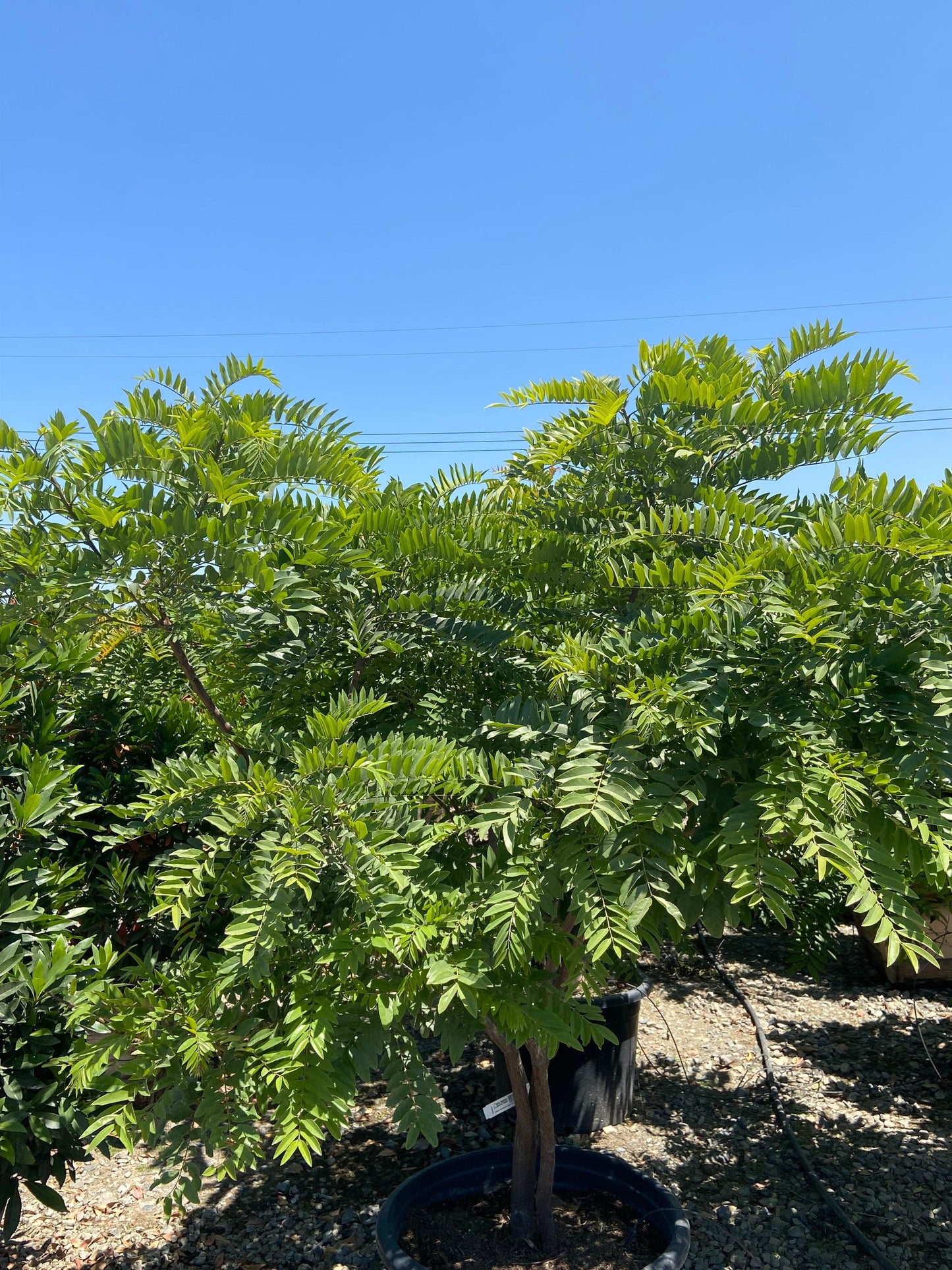


Pairs Well With

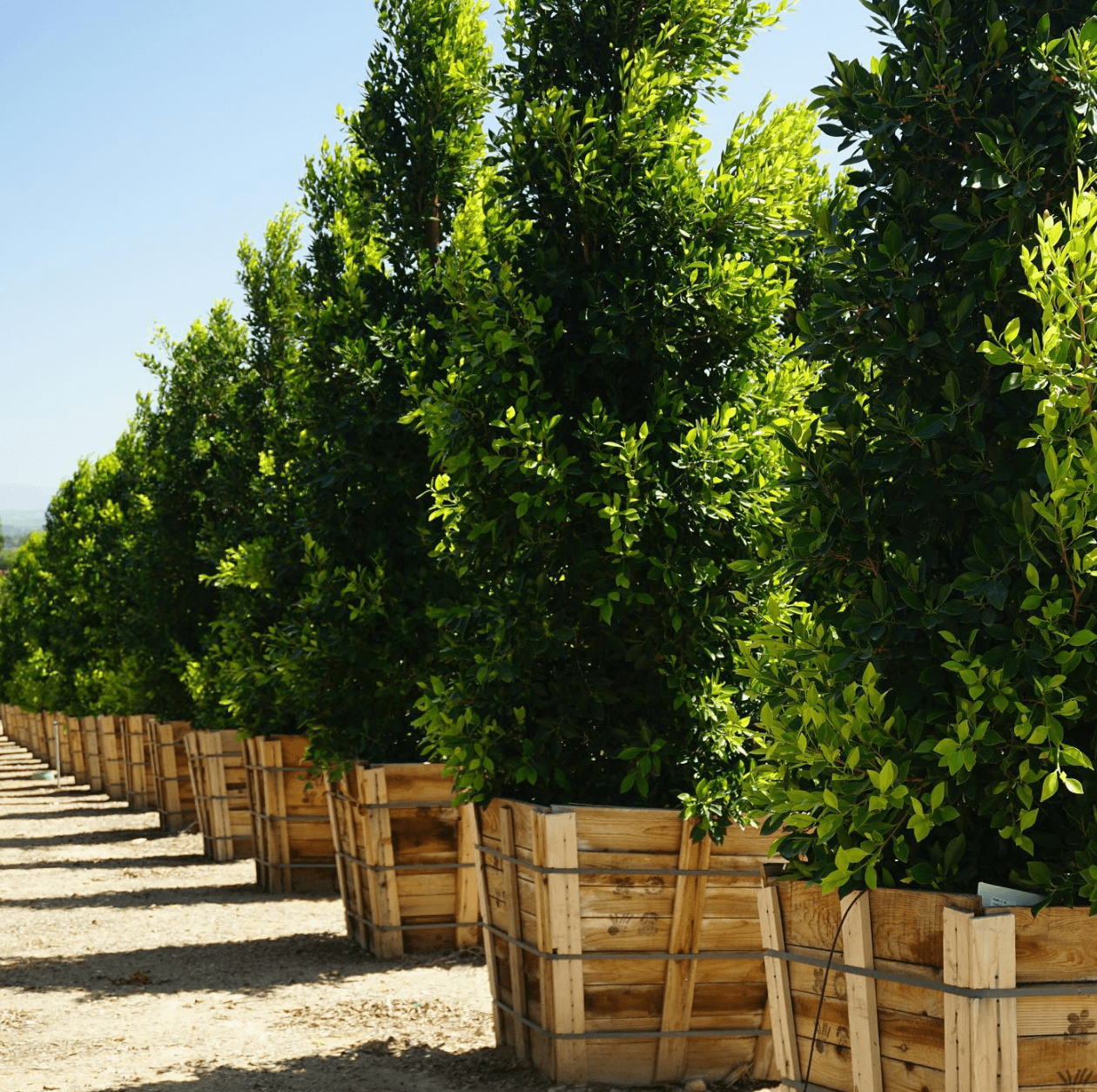

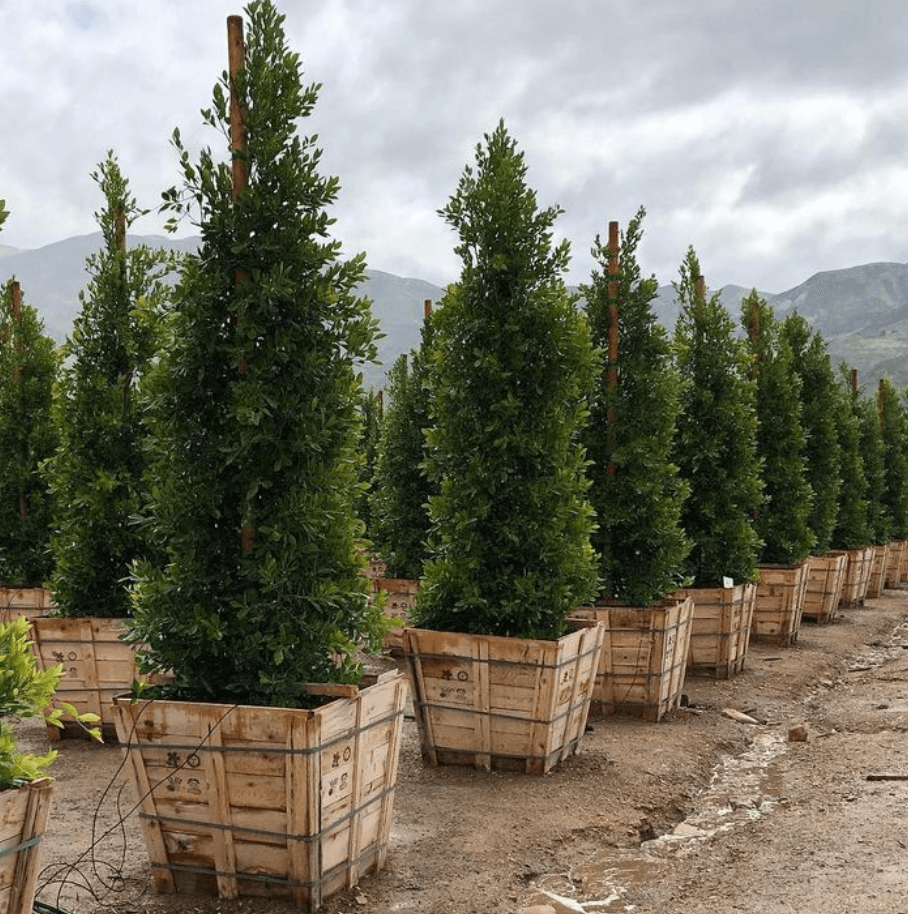

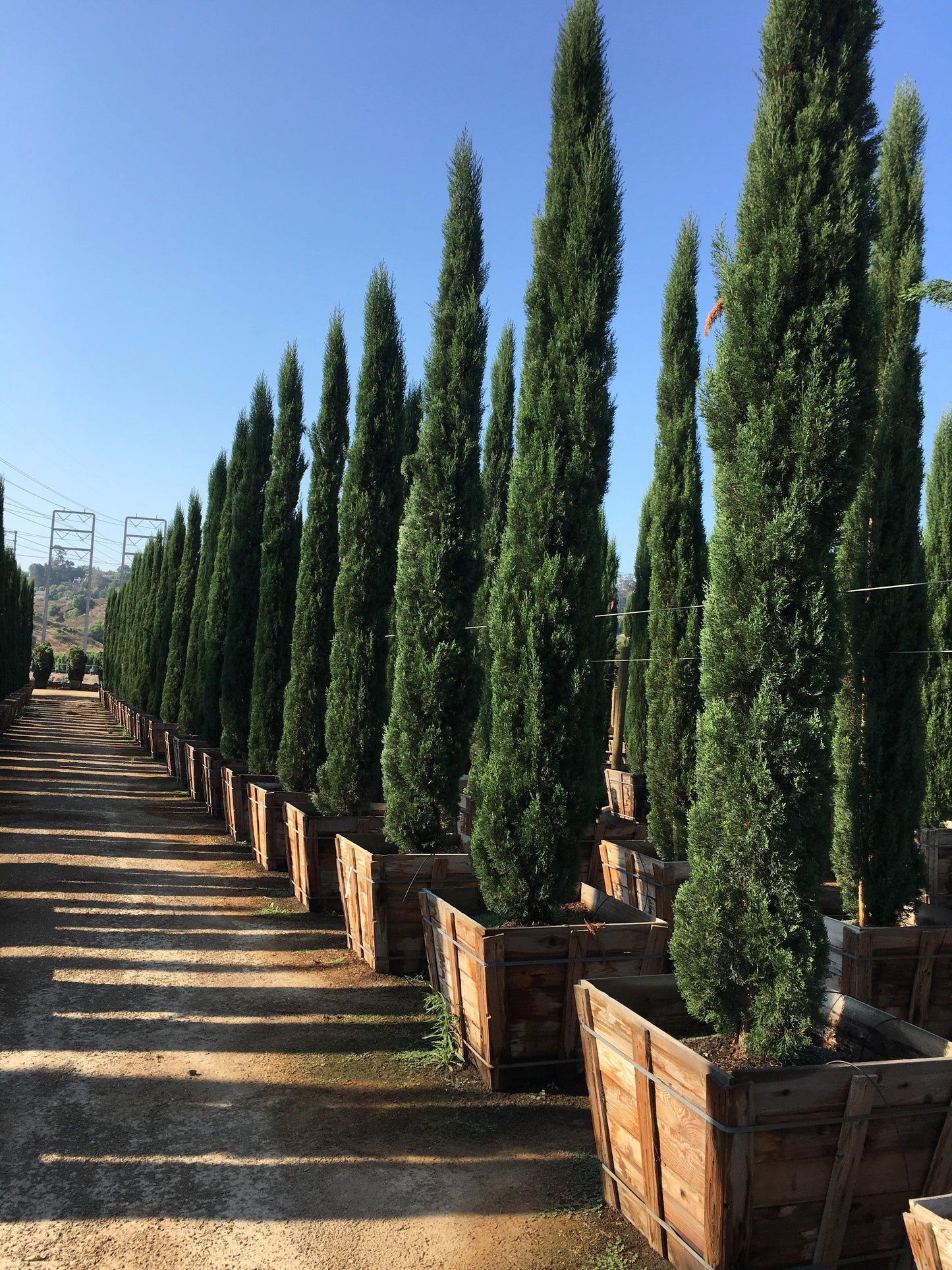










You May Also Like












Thousands of Healthy Plants Delivered


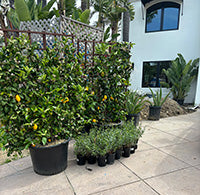
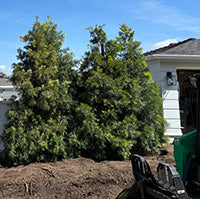
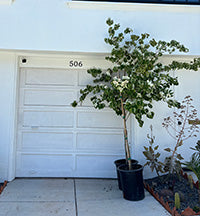
Yardwork was so great to work with. First they had the Swan Hill olive trees that we had been searching for, we had contacted several other nurseries without any luck previously. Then they answered all of our questions in a timely matter prior to ordering and finally delivered within a few days of placing it. Their staff is incredibly knowledgeable; they delivered and planted our trees with expertise to ensure that they would do well in our yard. We would definitely work with them again for future projects.











A Modern Experience
At Yardwork, we carefully curate thousands of plants, in all container sizes, to provide you with the best selection of the highest quality trees and plants at the best price, with the convenience of an online platform.
Uncompromised Quality
We choose only the finest specimens and hand select our plants just before delivery to ensure you receive the freshest and most robust specimens available for your landscape.
Industry Leading Warranties
Our 30, 90, and 365 extended warranties provide some of the best coverage to ensure our trees and plants thrive in your landscape.
Frequently Asked Questions
We're committed to changing everything about trees and plants - how they’re grown, how you shop for them, and how much they cost. We handle orders ourselves. No middlemen to get between us (or our prices) and you.
We're committed to changing everything about trees and plants - how they’re grown, how you shop for them, and how much they cost. We handle orders ourselves. No middlemen to get between us (or our prices) and you.
Delivery does not include unloading of trees and plants LARGER than a 24" box.
Trees and plants in smaller containers will be dropped curbside (usually on the driveway or near the front doorstep).
Delivery beyond a curbside drop will be charged extra.
Trees and plants that are sold in container sizes LARGER than a 24" box size will require equipment and/or enough manpower onsite to help unload from the truck.
Please reach out to our team PRIOR to placing your order to help coordinate.
Our team can provide unloading assistance with equipment for an extra fee as well.
Delivery does not include unloading of trees and plants LARGER than a 24" box.
Trees and plants in smaller containers will be dropped curbside (usually on the driveway or near the front doorstep).
Delivery beyond a curbside drop will be charged extra.
Trees and plants that are sold in container sizes LARGER than a 24" box size will require equipment and/or enough manpower onsite to help unload from the truck.
Please reach out to our team PRIOR to placing your order to help coordinate.
Our team can provide unloading assistance with equipment for an extra fee as well.
We ship locally within California within 7-10 days of your order being placed.
We ship nationally using carrier partners, based on order size. Our common order minimums for out of state shipping is $5,000.
Text or call 323-576-4159 for specific shipping details for your location.
We ship locally within California within 7-10 days of your order being placed.
We ship nationally using carrier partners, based on order size. Our common order minimums for out of state shipping is $5,000.
Text or call 323-576-4159 for specific shipping details for your location.
We are currently online only and don't have physical locations where you can view plants in person.
That's why we have photos direct from the growing grounds of the plants we will ship and we display pricing right in our store.
We do make sure to pick the very best trees and plants prior to shipping and make sure that they have gone through our multi-point inspection for health and structure.
We will always reach out prior to delivery if we find a quality issue or need to provide a substitute.
We are currently online only and don't have physical locations where you can view plants in person.
That's why we have photos direct from the growing grounds of the plants we will ship and we display pricing right in our store.
We do make sure to pick the very best trees and plants prior to shipping and make sure that they have gone through our multi-point inspection for health and structure.
We will always reach out prior to delivery if we find a quality issue or need to provide a substitute.
Plants vary greatly by type. Here is a rough idea of sizes based on containers that are direct from our growing grounds.
15 Gallon Shrub 3-4 Ft. Tall
15 Gallon Tree 5-6 Ft. Tall
24" Box Shrub 5-6 Ft. Tall
24" Box Tree 6-7 Ft. Tall
36" Box Shrub/Tree 7-9 Ft. Tall
48" Box Shrub/Tree 8-10 Ft. Tall
**Please note that we do not make guarantees of sizes. If you have questions or concerns, please call or text to request accurate sizing for the particular plant you're considering, prior to ordering.
Plants vary greatly by type. Here is a rough idea of sizes based on containers that are direct from our growing grounds.
15 Gallon Shrub 3-4 Ft. Tall
15 Gallon Tree 5-6 Ft. Tall
24" Box Shrub 5-6 Ft. Tall
24" Box Tree 6-7 Ft. Tall
36" Box Shrub/Tree 7-9 Ft. Tall
48" Box Shrub/Tree 8-10 Ft. Tall
**Please note that we do not make guarantees of sizes. If you have questions or concerns, please call or text to request accurate sizing for the particular plant you're considering, prior to ordering.
We offer a limited 30 day warranty for plants that are delivered and planted by someone else and a 90 day warranty for plants that we plant.
The limited warranty covers plants that die as a result of disease or fungus which was derived from our growing grounds or from root balls that were root bound.
The warranty does not cover damage due to watering, fertilizer, soils, or any other conditions beyond our control. Additionally, the warranty does not cover plants that are shipped out of the state of California or shipped into California from other states. Custom plant orders are also not covered under warranty. Plants must be planted within 24 hours after delivery to qualify.
We can assist you in recommending the right soils and fertilizers to help your plant thrive after you plant it.
Text or call 323-576-4159 for further warranty information.
We offer a limited 30 day warranty for plants that are delivered and planted by someone else and a 90 day warranty for plants that we plant.
The limited warranty covers plants that die as a result of disease or fungus which was derived from our growing grounds or from root balls that were root bound.
The warranty does not cover damage due to watering, fertilizer, soils, or any other conditions beyond our control. Additionally, the warranty does not cover plants that are shipped out of the state of California or shipped into California from other states. Custom plant orders are also not covered under warranty. Plants must be planted within 24 hours after delivery to qualify.
We can assist you in recommending the right soils and fertilizers to help your plant thrive after you plant it.
Text or call 323-576-4159 for further warranty information.
Our local delivery team covers most cities in California.
There are some exceptions, so please get in touch to confirm prior to ordering.
Additionally, we ship using semi trucks and trailers throughout the entire United States and even abroad for large orders over $5,000. Each shipment is custom, so please reach out to our team to coordinate.
Our local delivery team covers most cities in California.
There are some exceptions, so please get in touch to confirm prior to ordering.
Additionally, we ship using semi trucks and trailers throughout the entire United States and even abroad for large orders over $5,000. Each shipment is custom, so please reach out to our team to coordinate.