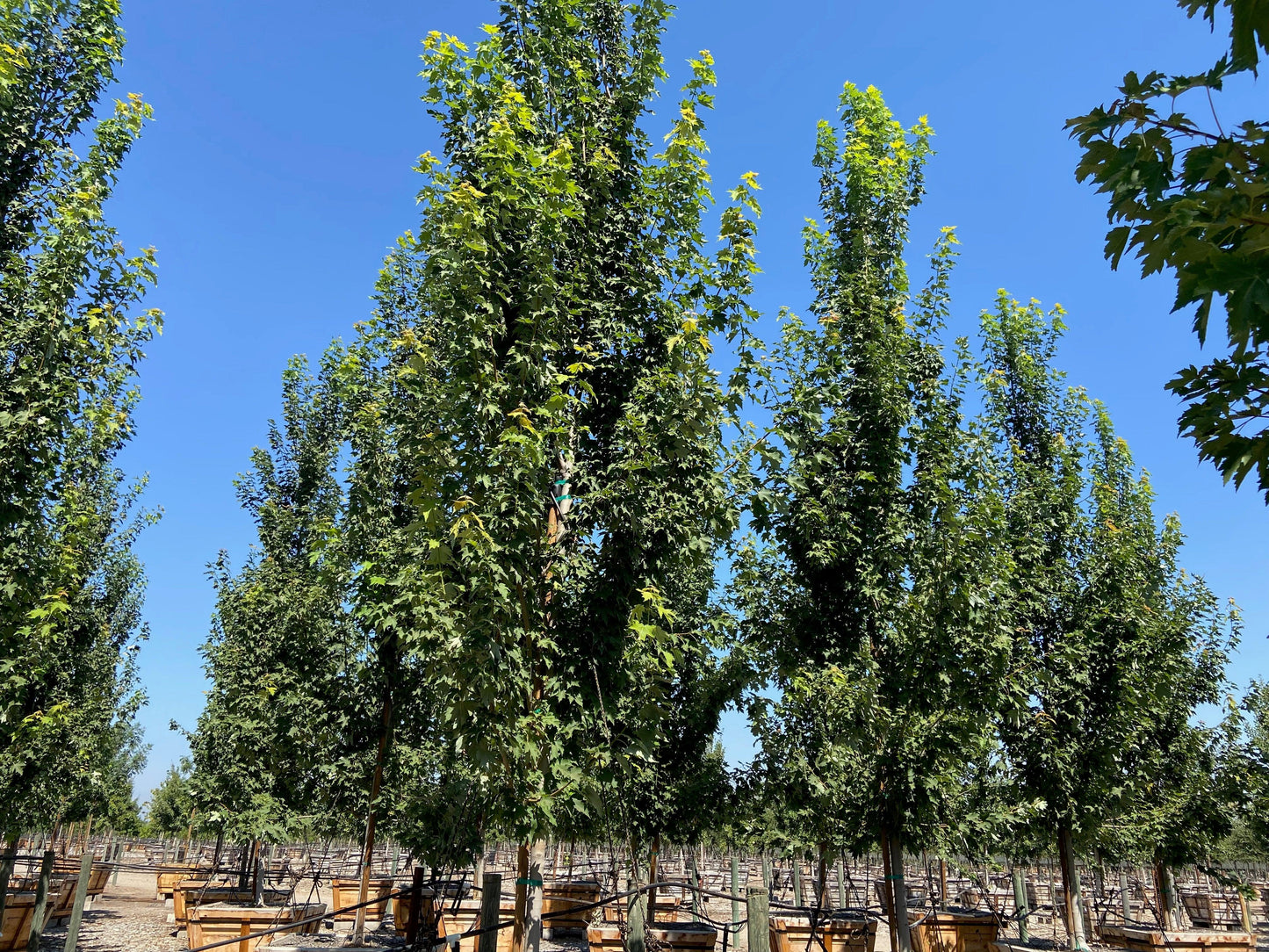
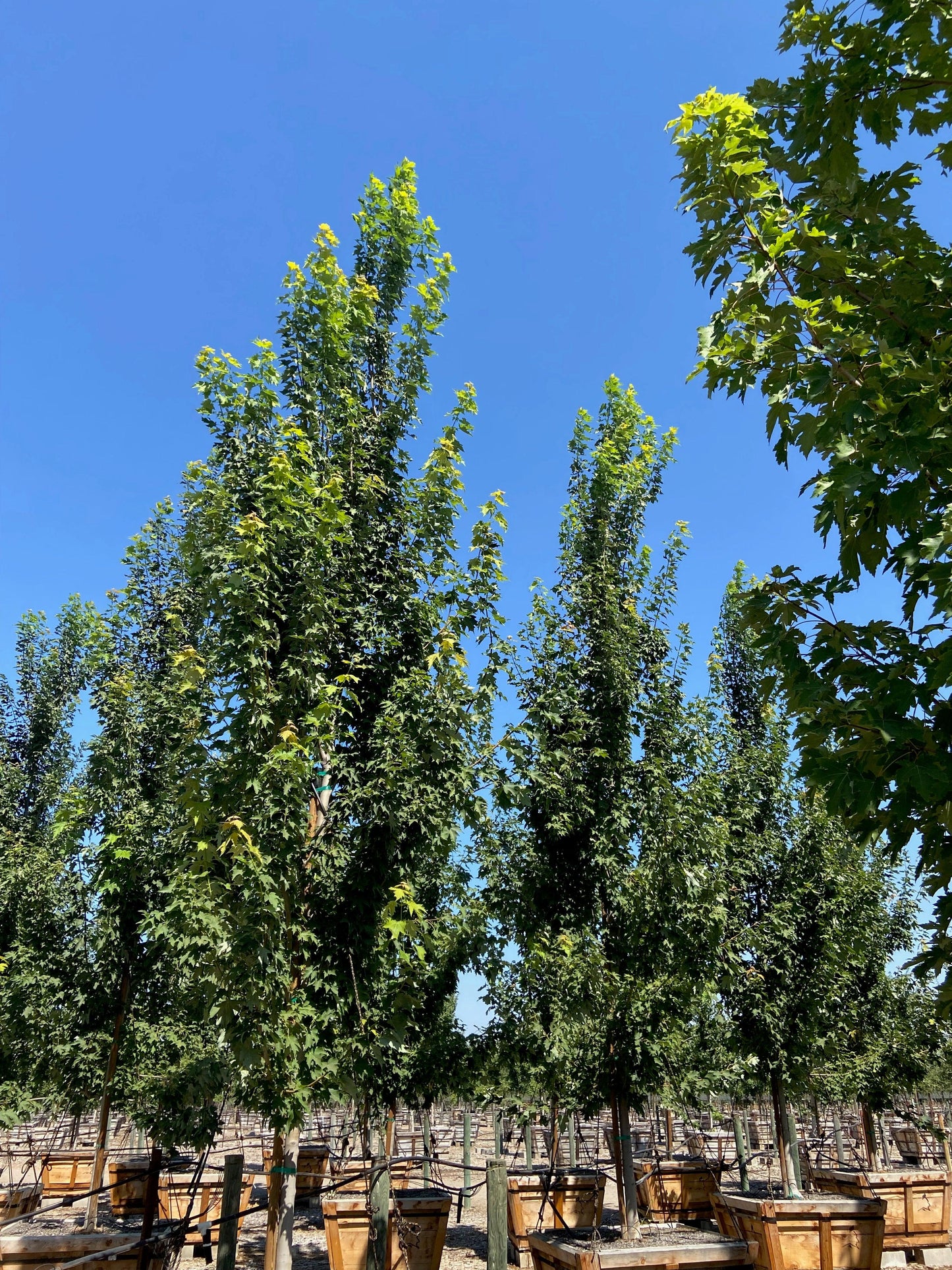
Shop Premium Varieties for Your Landscape
Looking for a maple tree that transforms your yard with brilliant fall color, graceful branching, and dependable shade? Discover sugar maple, japanese maple, red maple, silver maple, vine maple, and other premium maple species selected for your landscape.
Maple trees are popular deciduous trees known for their broad, lobed leaves and vibrant fall colors. They can be identified by distinctive lobed leaves, grayish-brown furrowed bark, and winged seeds known as samaras, which resemble helicopters as they fall. All maple trees also show an opposite branching pattern, where buds, leaves, and branches appear in pairs directly across from each other.
Find your perfect maple and elevate your outdoor space today.
Maple Trees for Every Landscape Purpose
The best maple depends on your needs whether it is to create shade, frame an entry, add red fall foliage, soften a patio, or bring color to small yards. With over 125 species of maple trees worldwide and 13 species native to North America, there are beautiful trees for nearly every landscape goal.
Shade and Privacy Maples
For a broad shade tree or privacy canopy, red maple and sugar maple are classic choices. Red Maple (Acer rubrum) is highly adaptable and can thrive in a variety of habitats, from urban areas to swamps, and is recognized for its striking red foliage in the fall. Sugar Maple (Acer saccharum), also called hard maple, develops dense dark green summer foliage and rich fall color in cooler, well-matched sites.
Most maple trees grow at a rate of 1 to 2 feet per year, while silver maples are known to be faster growers, adding 2 to 3 feet annually. A silver maple can be a fast growing tree for quick screening, but large maples need thoughtful placement because shallow surface roots may damage sidewalks, driveways, or underground utilities over time.
For layered privacy, plant maples with compatible shrubs and other plants beneath or beyond the canopy, leaving enough root space for maturity. Maple trees can take 10 to 30 years to reach their full mature size, depending on the species and growing conditions, and after the first 20 to 30 years, the growth rate of maple trees significantly slows down as they mature.
Ornamental and Accent Maples
For focal points, courtyards, and containers, a japanese maple tree is one of the most refined options. Japanese maple varieties, such as Osakazuki Japanese maple, offer delicate foliage, five lobed leaves or finely cut laceleaf forms, and seasonal color that can shift from green or purple to yellow, brilliant orange, or red fall foliage.
Choose dwarf japanese maple cultivars for small yards, patios, and entry gardens, including iconic selections like Emperor One Japanese maple. Coral bark maple adds winter interest with colorful stems, while paperbark maple, three flowered maple, striped maple, and specialty cultivars create texture beyond fall foliage alone. These specimen trees work beautifully near seating areas, water features, and shaded pathways.
The leaves of maple trees can vary significantly in size, ranging from 1 to 12 inches across, and can display a variety of colors including green, purple, and yellow, especially in the fall. Plan combinations around seasonal display: dark green summer foliage, spring flush color, green seeds or winged seeds, and a final fall show.
Drought-Tolerant and Low-Maintenance Maples
For California gardens, native and adapted choices often perform with less intervention. Bigleaf maple, vine maple, and Rocky Mountain Glow maple can suit naturalistic, woodland, coastal, or montane settings when matched to the right soil conditions and moisture pattern.
Water-wise maple selections are especially important in hotter climates. Many maples appreciate regular moisture, but some varieties like red maple are drought-tolerant once established. In Mediterranean climate gardens, mulch, deep watering, and partial shade during extreme heat help reduce leaf scorch and stress.
For wildfire-prone areas, deciduous maples can be an integral part of a lower-resin landscape plan when properly irrigated, pruned, and spaced. No tree is fireproof, but healthy, well-maintained foliage and clean ground-level care can support a more resilient garden.
Choose the Right Maple for Your Yard Conditions
Maples succeed when the species, sun exposure, soil, and available space work together. Choose a site with full sun, partial sun, or dappled shade depending on the species, and ensure the soil is well-drained to accommodate the tree’s root system.
For Full Sun California Locations
For full sun, look for heat-tolerant maple varieties such as selected red maple cultivars, Autumn Blaze-type hybrids, and adaptable shade tree options. Sugar maple can be more site-sensitive in hot inland conditions, while October Glory red maple is often chosen for strong fall color where conditions are suitable.
Most maples do best in full sun to partial shade, although some delicate varieties prefer morning sun and afternoon shade to prevent leaf scorch. Japanese maple, especially laceleaf and dwarf forms, usually performs best in partial shade or filtered light rather than harsh afternoon exposure.
Newly planted maple trees require consistent watering, about once a week, until established. During dry spells, deep watering is better than frequent shallow watering because it helps the root ball and surrounding soil retain moisture while encouraging stronger root development.
For Clay and Heavy Soils
Clay and heavy soils can work for certain maple species, especially adaptable red maple selections and some silver maple types, but drainage matters. Maple trees prefer well-draining soil with a neutral to slightly acidic pH between 5.0 and 7.0, and they thrive with regular moisture, although some varieties like red maple are drought-tolerant.
Before you plant maples in challenging soil, improve the planting area with compost and structure-building amendments rather than creating a small pocket of overly rich soil. A broad planting hole encourages roots to move outward into native soil.
Our soil testing services help confirm pH, texture, drainage, and moisture behavior before installation. This is especially useful where poor drainage may increase root rot risk or where previous plantings showed verticillium wilt, a serious disease that can affect many maple species.
For Small Yards and Tight Spaces
Compact japanese maple cultivars are ideal for small yards, patios, and courtyards. A dwarf Japanese maple tree can stay controlled for many years while still offering dramatic maple leaves, layered branches, and brilliant fall color.
For narrow spaces, consider upright or columnar habits instead of broad-spreading large maples. Containers can also work well for younger trees when the pot is sized properly, the soil is well drained, and the tree is protected from drying winds.
Maples generally feature shallow root systems, which can sometimes lift nearby driveways or walkways as they mature. Keep surface roots in mind near foundations, paving, and underground utilities, and choose small tree cultivars or other landscape trees suited to tight spaces where space is limited.
For Large Properties and Estates
Large properties can support dramatic plantings of red maple, silver maple, sugar maple, bigleaf maple, or mixed groves of different species. You can also combine maples with long-lived oak trees for shade and structure. A fast-growing silver maple can create quick canopy, while red maple offers adaptable growth and memorable fall color.
Mature maple specimens are available for instant gratification when you want immediate structure, shade, and scale. Specimen and other mature trees require careful handling, but they can transform a driveway, lawn, or estate entrance quickly.
For large-scale projects, grove plantings can look natural and cohesive, especially when maples are paired with other plants that tolerate similar shade and soil conditions. Bulk order options make it easier to plant a unified landscape with consistent spacing, form, and seasonal color.
Premium Maple Quality That Lasts Generations
A maple tree is a long-term investment, so quality matters from the root system to the branching structure. Strong nursery stock establishes faster, resists stress better, and develops into a healthier tree over time.
Superior Root Systems and Nursery Care
Premium maples begin with healthy, non-girdled roots. Container-grown trees should have an established root ball without circling roots, and the root flare should be visible before planting.
Because many maples have shallow roots, proper nursery care reduces future root damage and transplant stress. Our trees are monitored for pests, disease, branch structure, and vigor so they arrive ready for California soil conditions.
A thin layer of mulch, about 2 to 4 inches, should be applied around the base of maple trees in spring to retain moisture, suppress weeds, and provide nutrients, but care should be taken to avoid piling mulch against the trunk to prevent rot. This simple step supports establishment without smothering the trunk.
Proven Cultivars and Genetics
Selected cultivars provide more predictable size, fall color, heat tolerance, and growth habit. Red maple, sugar maple, norway maple, paperbark maple, and October Glory red maple all include cultivars with different strengths, so choosing by genetics helps match the tree to the site.
The Sugar Maple (Acer saccharum) is known for producing the sweetest sap, which is primarily used for making maple syrup. If your interest includes maple syrup or the ability to produce maple syrup from sweet sap, sugar maple is the traditional choice and also carries the iconic maple identity often associated with the Canadian flag.
Proven genetics also influence disease resistance, leaf shape, and color reliability. Maple wood is extremely dense, hard, and durable, making it highly sought after for heavy-duty flooring and cabinetry, which is one reason hard maple has long been valued beyond ornamental planting.
Expert Sizing and Maturity Options
Younger trees are a smart choice for budget-conscious homeowners who want to watch a maple grow into the landscape. Once established, maple trees generally require little to no supplemental fertilizer, but younger trees can benefit from a balanced slow-release fertilizer applied in early spring to promote strong root growth.
Semi-mature options offer faster landscape impact without the cost or complexity of the largest specimen trees. They are ideal when you want shade, structure, or privacy sooner.
Specimen-grade maples create immediate drama, especially in entries, courtyards, and large lawns. Our professional sizing recommendations consider mature height in feet tall, canopy spread, root behavior, and guidance similar to Arbor Day Foundation spacing principles, so your maple has room to mature gracefully.
How to Plant and Establish Your Maple Tree
Proper planting is the difference between a maple that struggles and one that becomes a lasting landscape feature. Timing, depth, watering, and mulch all affect how well maple trees grow after installation.
Optimal Planting Timing
Maple trees can be planted during cooler months in spring or early fall, waiting until all danger of frost is past in spring or at least 6 weeks before the first freeze date in fall to allow roots time to establish. In many California locations, fall planting is especially useful because roots can develop before summer heat.
Early spring planting also works well when the tree is still dormant and weather remains mild. Summer planting is possible with extra care, but hot, dry conditions increase watering demands and leaf scorch risk.
Pruning maple trees is best done in late winter or early spring while the tree is still dormant to avoid dripping sap. During the first year, focus on watering, mulch, and light corrective pruning only, removing damaged or crossing branches as needed.
Professional Planting Techniques
When planting, dig a hole slightly shallower and at least 3 times as wide as the root ball to allow enough room for the shallow spreading roots, and ensure the top of the root ball is at or slightly higher than ground level. A wide planting hole supports lateral root growth and reduces air pockets around the roots.
Set the tree straight, backfill with appropriate soil, and water thoroughly to settle the root zone. Mulch 2 to 4 inches deep, keeping mulch away from the trunk, and stake only when the tree needs support against wind or instability.
For complex sites, our consultation services help determine the best species, placement, sun exposure, and soil preparation, or recommend complementary privacy and evergreen trees from our nursery. We can also help avoid future conflicts with paving, structures, and underground utilities.
Shop Premium Maple Trees From Yardwork
Explore our curated maple collection with expert-selected varieties for shade, privacy, containers, focal points, and large-scale landscapes. From japanese maple and vine maple to red maple, sugar maple, silver maple, and other maples, each tree is selected for beauty, structure, and site performance.
Professional consultation services are available for optimal maple selection, and soil testing is available to ensure perfect maple placement.
Your perfect maple tree is just a consultation away.