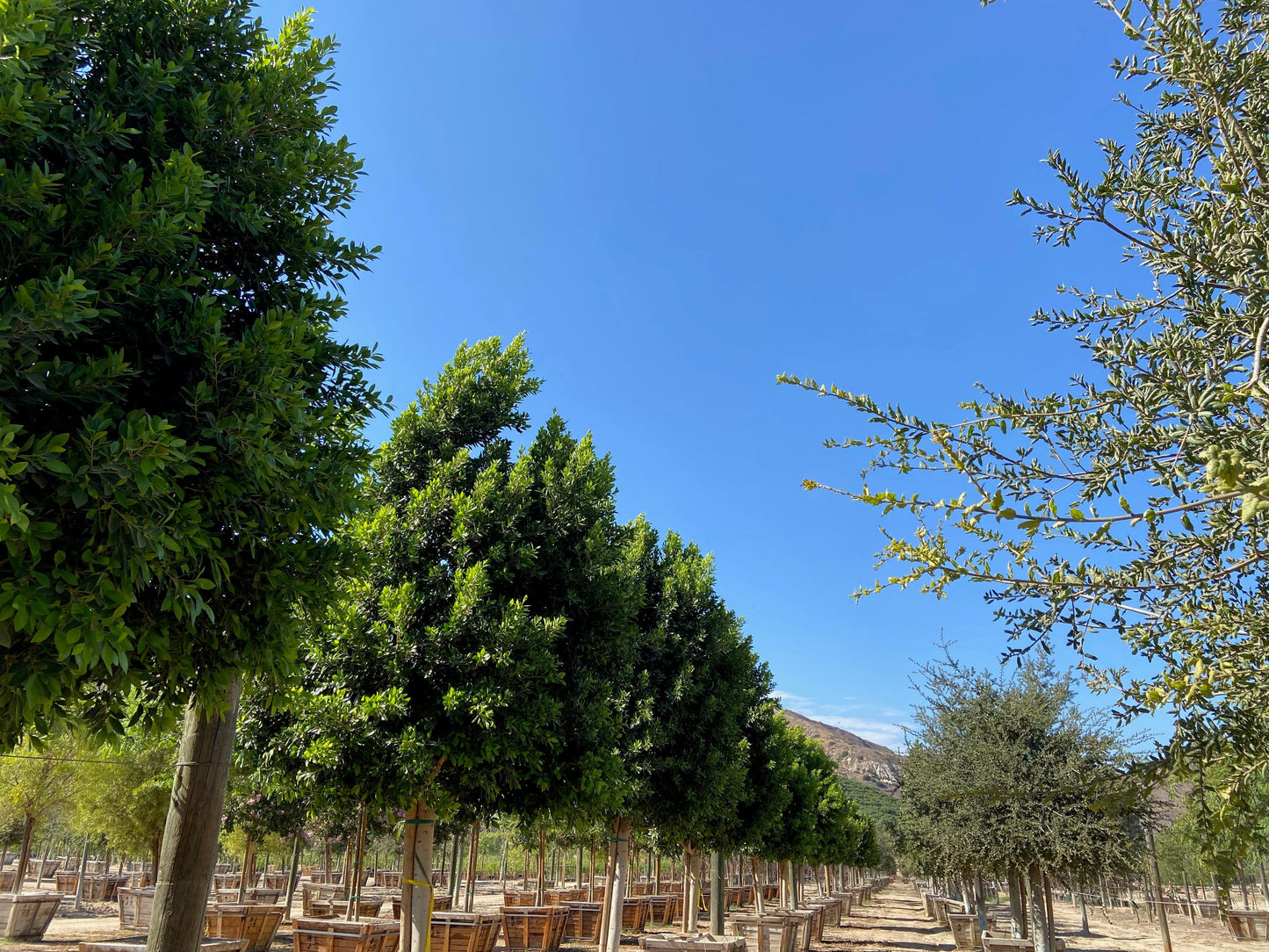
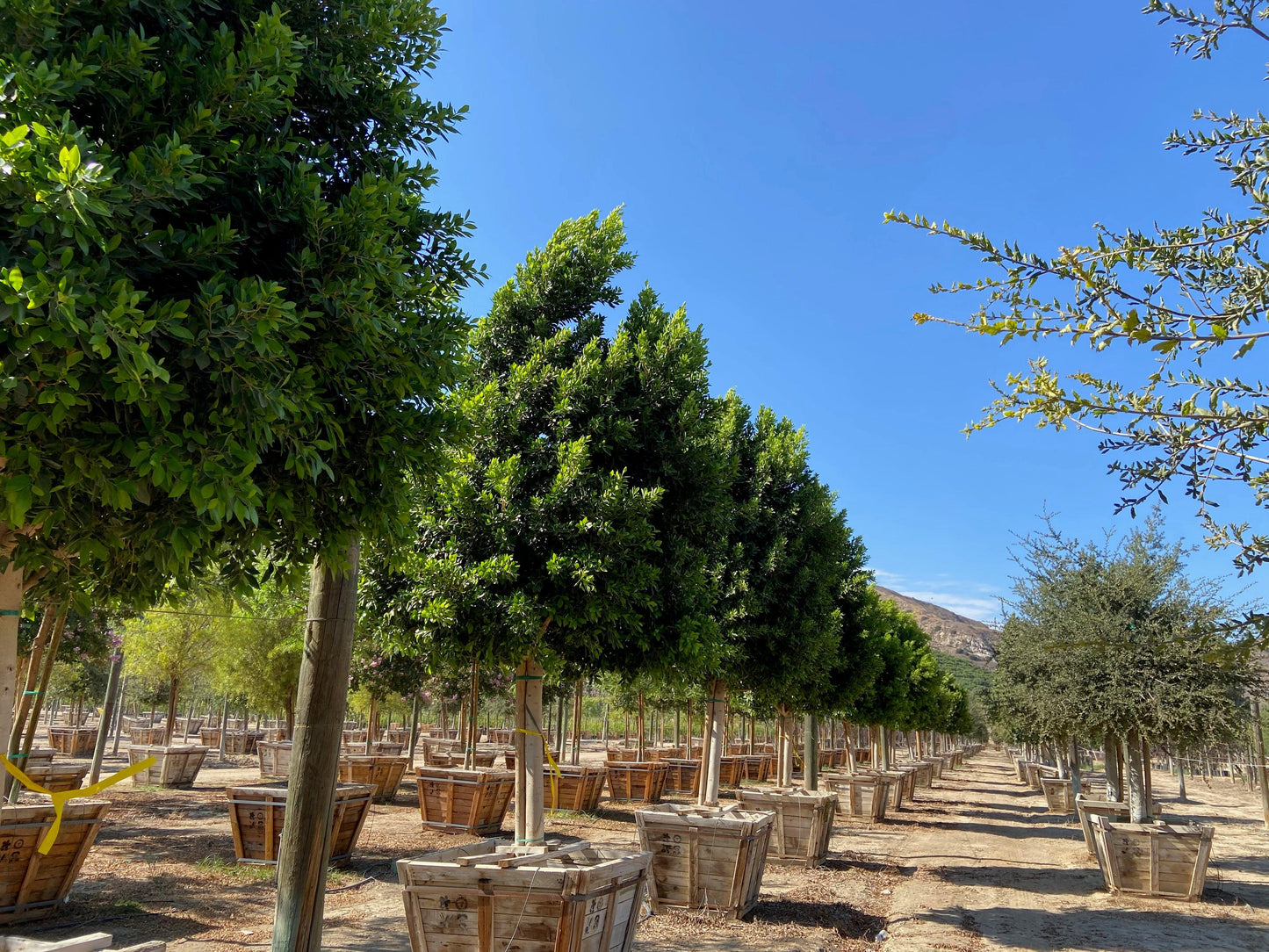
Laurel Tree For Sale
Transform Your Garden with Evergreen Shrub Beauty and Low Maintenance
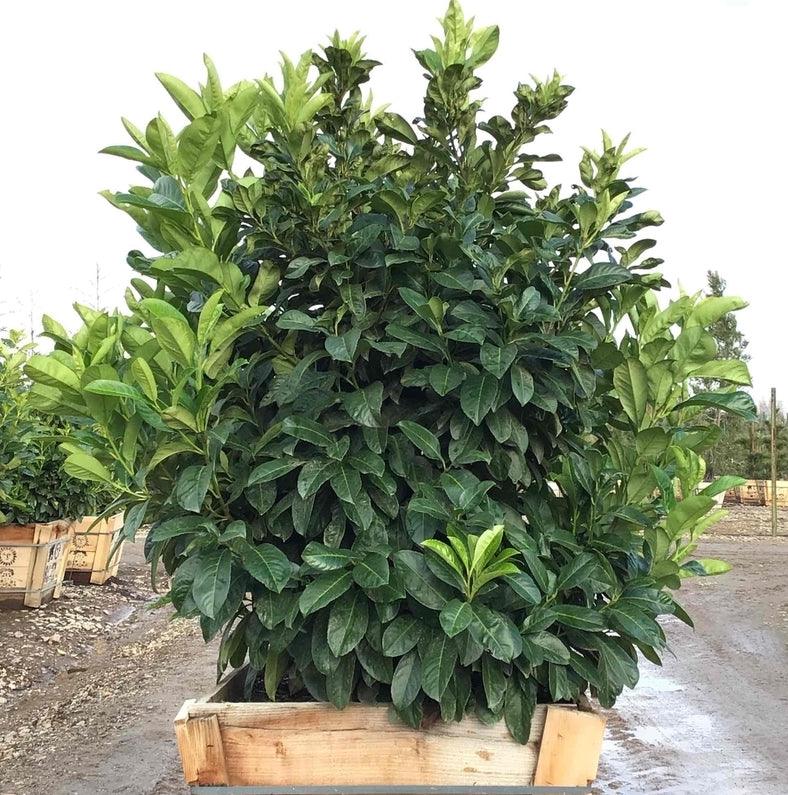
Laurel trees give you year-round structure, privacy, and glossy evergreen foliage without turning your garden into a constant maintenance project. Whether you want a natural screen, a formal hedge, a fragrant evergreen for decorative containers, or fresh bay leaves for cooking soups and sauces, laurel plants offer dependable beauty in a wide range of landscapes.
The name “laurel tree” refers to several main types, including Bay Laurel (Laurus nobilis), Cherry Laurel (Prunus laurocerasus), Portuguese Laurel (Prunus lusitanica), California Laurel (Umbellularia californica), Mountain Laurel (Kalmia latifolia), Japanese Laurel (Aucuba japonica), and Camphor Laurel (Cinnamomum camphora). Some belong to the true laurel family, while others simply share the same evergreen leaves, dense foliage, or landscape use.
For California gardens, laurel trees are especially useful because they combine year round interest with practical function. Use cherry laurel for quick privacy, including Carolina Cherry Laurel selections for compact hedging, bay laurel laurus nobilis for culinary herbs—valued since ancient times for its aromatic qualities and culinary uses, and prized among other herbs for adding unique depth to dishes—Portuguese laurel for elegant glossy foliage, or compact cultivars for small spaces, foundation plantings, and shady locations.
Why You’ll Love Bay Laurel Trees
- Evergreen Beauty – Glossy leaves and evergreen foliage stay attractive year round, giving your landscape structure even when other plants are dormant.
- Low Maintenance – Once established, many laurel plants become drought-tolerant and need only regular pruning, annual feeding, and occasional clipping to stay tidy.
- Versatile Function – Use laurel trees as privacy hedges, specimen plants, culinary herbs in an herb garden, or a small tree in decorative containers. Bay laurel leaves are commonly used in cooking for their deep flavor, especially in French, Italian, Spanish, and Creole dishes, but should be removed before serving as they are not meant to be eaten.
- Fast Growth & Impressive Size – Cherry laurel is a fast growing evergreen shrub that can grow up to about 2 feet per year in good conditions, filling in a hedge in just a few years. Some laurel species, such as bay laurel and California laurel, can reach heights of 60 to even 100 feet tall in optimal conditions, making them ideal for large-scale privacy or shade.
- Adaptable – Many laurels grow in sun to partial shade, tolerate varied well drained soil types, and perform well in full sun, partial shade, or even moderately shady locations.
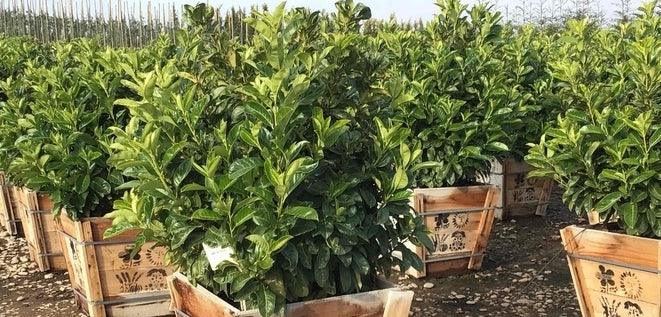
Bay Laurel is known for its culinary uses, particularly for its aromatic leaves that are used in cooking, while Cherry Laurel is often used for hedging due to its dense foliage and fast growth. Cherry Laurel is a fast-growing shrub that can quickly fill in and create a dense hedge, providing privacy and a green backdrop in gardens, making it one of the most popular choices for an English laurel hedge.
Once established, Cherry Laurel hedges are very drought-resistant and require minimal care, needing only annual feeding and occasional clipping. Cherry Laurel can grow in a variety of soil types and is hardy in USDA zones 6 and above, making it suitable for a wide range of climates. A Cherry Laurel hedge can also be trimmed to maintain a desired height, and it will re-sprout from bare branches if cut back, ensuring longevity and resilience.
What Makes Laurel Trees Different
Most evergreen tree and shrub options force a compromise: slow growth, narrow use, high water needs, or limited design flexibility. Laurel trees are different because they can create a living wall, anchor a garden bed, support culinary use, and provide evergreen beauty from the same plant group.
Laurel Trees are built for practical landscapes:
- Dense Growth Habit – Cherry laurel and Portuguese laurel create thick, gap-free hedges that work as privacy screens, windbreaks, and noise barriers.
- Multi-Purpose Value – Bay laurel provides fresh bay leaves for French, Italian, Spanish, and Creole dishes, while Cherry laurel offers superior screening and fast garden coverage.
- Climate Resilience – Established trees withstand drought, wind, sun, and temperature fluctuations better than many other plants when grown in well drained soil.
- California Laurel Distinction – California Laurel can grow up to 100 feet tall, is native to California, features leaves similar in flavor to bay laurel, and its wood is often used for making musical instruments.
The true laurel, Laurus nobilis, is an evergreen that symbolizes victory, status, and immortality. In Greek mythology, the laurel’s connection to glory stems from the myth of Apollo and Daphne, establishing the laurel as a symbol for Apollo. In ancient Greece, woven laurel wreaths were awarded to victors of the Pythian Games and the original Olympic Games, and in Italy, graduates traditionally wear a laurel wreath immediately after earning their university degrees, honoring classical traditions. The ancient Romans also wore laurel wreaths as symbols of honor, achievement, and prestige, further cementing the laurel’s place in history and culture.
The story goes deeper than garden design. Ancient Egyptians and Greeks used evergreen branches of laurel to decorate tombs, symbolizing triumph over death. The Romans adopted the laurel as an emblem of military triumph, with victorious generals wearing laurel wreaths during triumphal parades. Romans believed that laurel trees were immune to lightning strikes, leading emperors to wear laurel wreaths during thunderstorms for protection. The Oracle at Delphi used laurel in her prophetic rituals, chewing bay leaves and inhaling the smoke of burning laurel to induce visions. The laurel is culturally significant as the root of terms for high achievement, such as laureate and baccalaureate.
How to Choose Your Laurel Tree by Growth Rate
- Assess Your Space
Decide how much height, width, and sun your planting area can support. A full-size tree laurel or California laurel may need substantial room, while compact cherry laurel cultivars work better near walkways, windows, and smaller garden beds; for instant impact, some gardeners opt for mature trees that provide immediate structure and privacy. - Select Your Purpose
Choose bay laurel (Laurus nobilis) if you want aromatic leaves and culinary herbs for an herb garden. Choose cherry laurel if you want a fast-growing hedge, privacy screen, or green backdrop. Choose Portuguese laurel if you want refined glossy foliage, elegant red stems, and a more formal hedge. - Pick Your Variety
Match the plant to your conditions. Cherry laurel handles many soil types and shade, bay laurel prefers full sun and well drained soil, and Portuguese laurel performs well where heat, wind, and sun exposure are concerns.
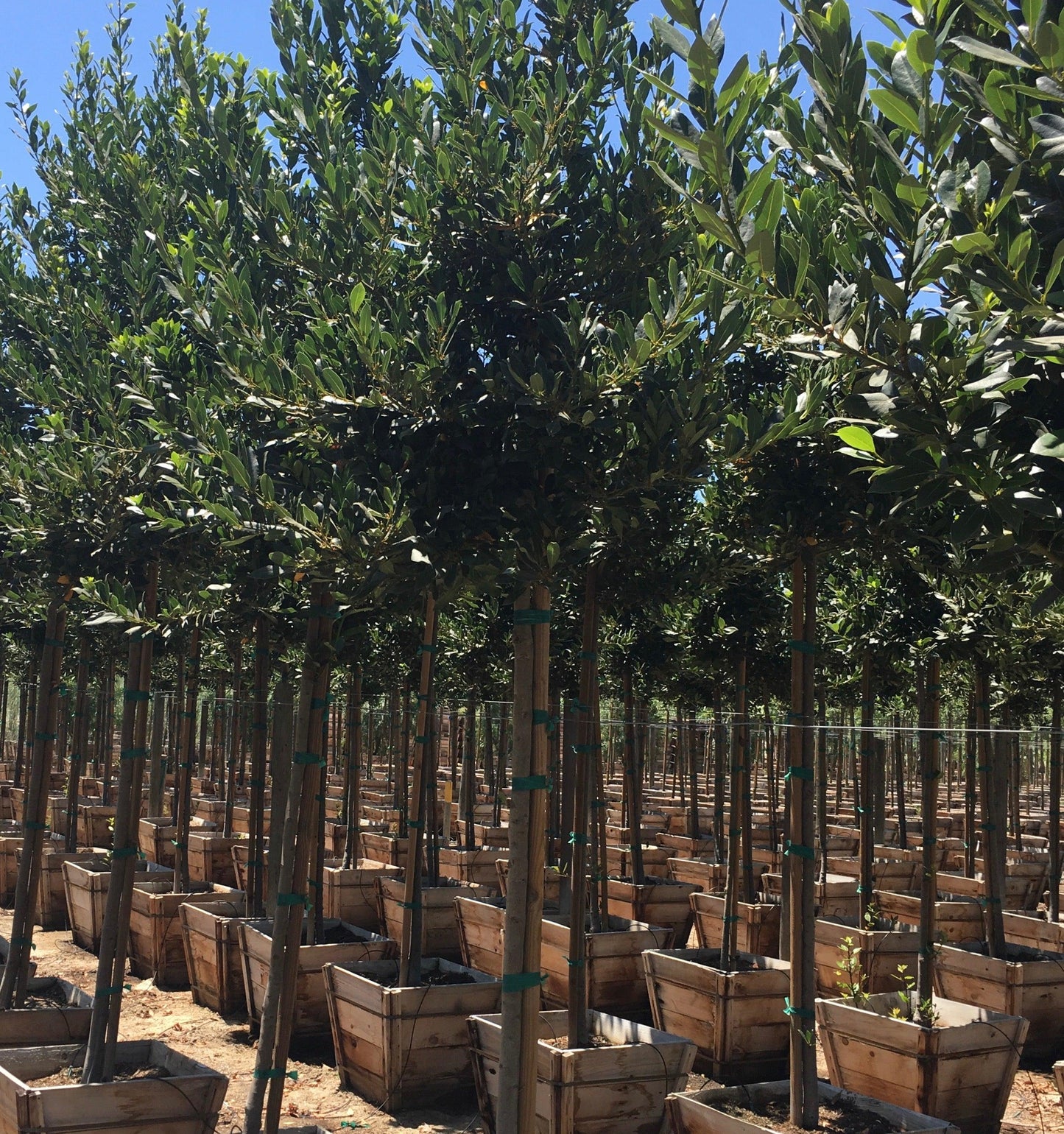
For bay laurel, also consider propagation and climate. If you also want seasonal color overhead, many flowering trees suited to California gardens pair well with evergreen laurels. Bay laurel (Laurus nobilis) is a half-hardy perennial that can grow into a sizable tree, reaching heights of up to 60 feet in its native Mediterranean climate, but is typically grown in containers in cooler climates. To grow bay laurel, it is recommended to plant cuttings rather than seeds, as seeds have a low germination rate and take a long time to sprout.
Some laurels have separate male and female trees. On bay laurel, male and female trees may be needed for berries, and only the female ones produce fruit when pollinated by male plants. Female plants or female trees can add ornamental berries, but most gardeners choose bay laurel primarily for evergreen leaves and culinary use rather than fruit.
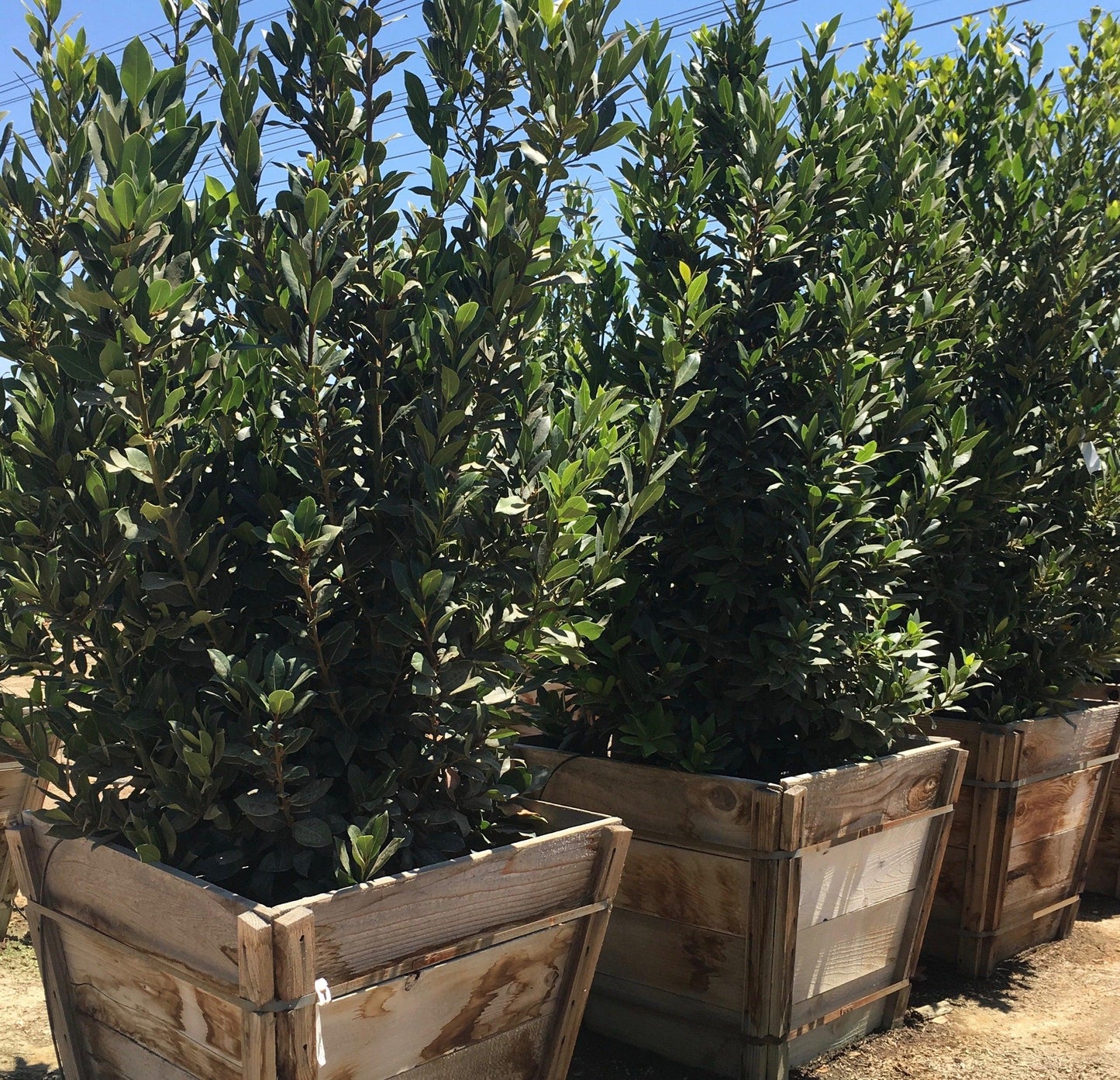
Available sizes and pricing: Yardwork availability varies by season and cultivar. Common nursery formats include small starter pots for herb garden planting, larger hedge-ready containers for cherry laurel and Portuguese laurel, and specimen-size bay laurel trees for patios or entrances. See current Yardwork product listings for live pot sizes, pricing, and delivery options.
Who Laurel Trees Are For
Ideal for:
- California homeowners who want low-maintenance privacy and year round evergreen foliage
- Home cooks who want fresh bay leaves from a bay laurel tree near the kitchen or patio
- Landscape designers building structured garden backbones with glossy foliage and dense foliage
- Property owners who need quick-growing windbreaks, noise barriers, or a natural screen, such as an Indian Laurel Tree (Ficus nitida) hedge
- Beginner gardeners who want adaptable laurel plants that tolerate sun, partial shade, and varied soil conditions
- Experienced gardeners who want formal hedge lines, shaped standards, or beautiful plant combinations with other plants
If you want an evergreen shrub or small tree that looks polished without constant attention, laurel trees fit the job. Cherry laurel is ideal when speed and screening matter most. Bay laurel is the right choice when culinary herbs are the priority. Portuguese laurel suits refined gardens where a durable, elegant hedge is needed.
For eco-conscious landscapes, consider placement carefully. Some Prunus laurel plants can spread when birds move fruit into nearby habitats, so gardeners near sensitive open space may want to compare laurels with native plants or Indian laurel (Ficus microcarpa) and related species and select options that support local wildlife.
Frequently Asked Questions
How fast do laurel trees grow?
Cherry laurel is one of the fastest options and can grow up to about 2 feet per year in good conditions, especially when young. Portuguese laurel grows more moderately, and bay laurel grows slowly to moderately, often staying manageable as a patio bay tree or container-grown fragrant evergreen.
Do laurel trees need full sun?
Most laurels perform well in full sun to partial shade. Bay laurel prefers full sun for the strongest aromatic leaves, while cherry laurel and aucuba japonica handle shady locations better. In hot inland areas, partial shade can help prevent leaf scorch.
When should I prune my laurel hedge?
Prune after the main growth flush, often in late spring or early summer, then lightly shape again if needed. Cherry laurel tolerates regular pruning and can be clipped into a formal hedge. Avoid harsh shearing during extreme heat, and remove diseased or damaged growth when seen.
Are laurel trees deer resistant?
Laurel plants are often considered less attractive to deer than many softer garden plants, but deer resistance is never guaranteed. Occasional pests can also appear, including scale on bay laurel and leaf spot or shot-hole disease on cherry laurel. Good spacing, airflow, and well drained soil reduce many problems, including root rot. In regions where laurel wilt is present, monitor susceptible trees and follow local guidance.
Can I grow bay laurel in containers?
Yes. Bay laurel is commonly grown indoors or brought indoors during cold weather in cooler climates. Use decorative containers with drainage holes, a quality potting mix, and well drained soil. Place the plant where it receives at least several hours of sun, water deeply when the top layer dries, and reduce watering in winter.
Is bay laurel the same as cherry laurel?
No. Bay laurel, or Laurus nobilis, is the culinary sweet bay used for bay leaves. Cherry laurel, or Prunus laurocerasus, is mainly grown for hedging and screening. Do not use cherry laurel leaves as culinary herbs.
Are laurel leaves safe for cooking?
Bay laurel leaves were utilized in ancient Greek and Roman cuisine for flavoring dishes and in early herbal medicine, and they remain popular today. Use true bay laurel leaves for flavor, then remove the leaves before serving. Do not substitute mountain laurel, cherry laurel, Japanese laurel, or other non-culinary laurels.
Ready to Transform Your Landscape?
Stop struggling with high-maintenance plants, slow privacy solutions, and seasonal gaps in your garden. Choose laurel trees for reliable evergreen beauty, practical screening, and strong year after year performance.
Shop Yardwork’s laurel tree selection for bay laurel, cherry laurel, Portuguese laurel, and compact cultivars suited to California gardens through our convenient online nursery and landscaping service.
Need help choosing the right tree laurel for your space? Request a Yardwork consultation for expert plant selection, site planning, and soil testing before you plant.
Every Yardwork plant is selected for quality, delivered with care, and backed by our commitment to healthy plants and successful landscapes.