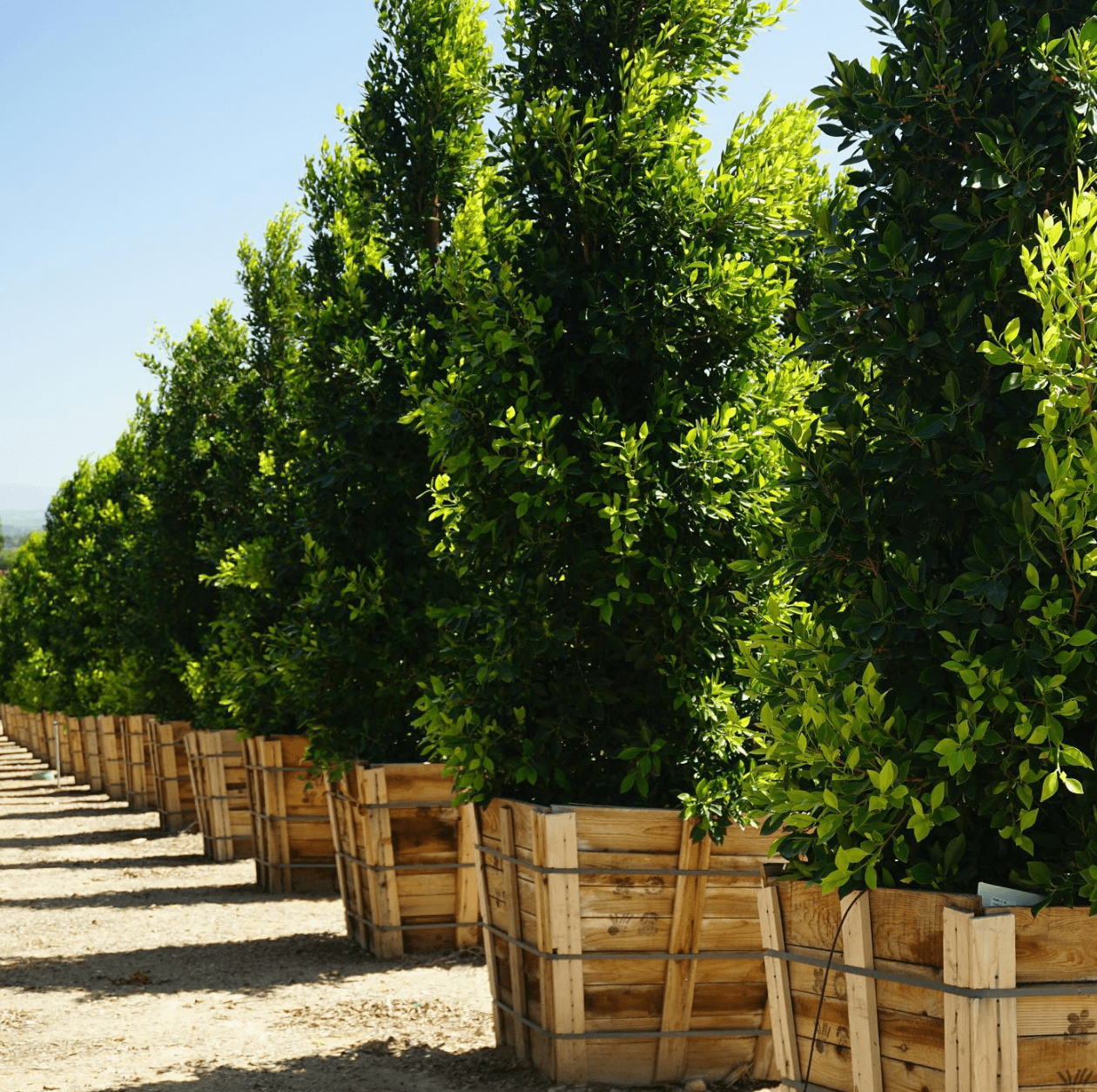
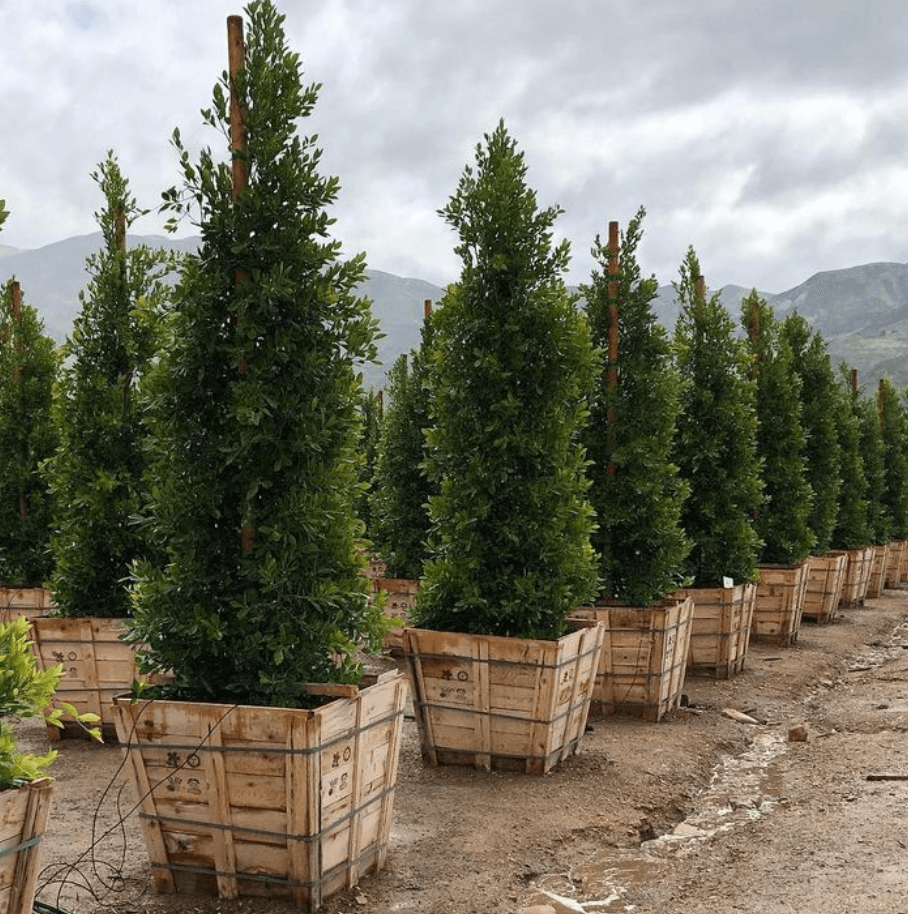
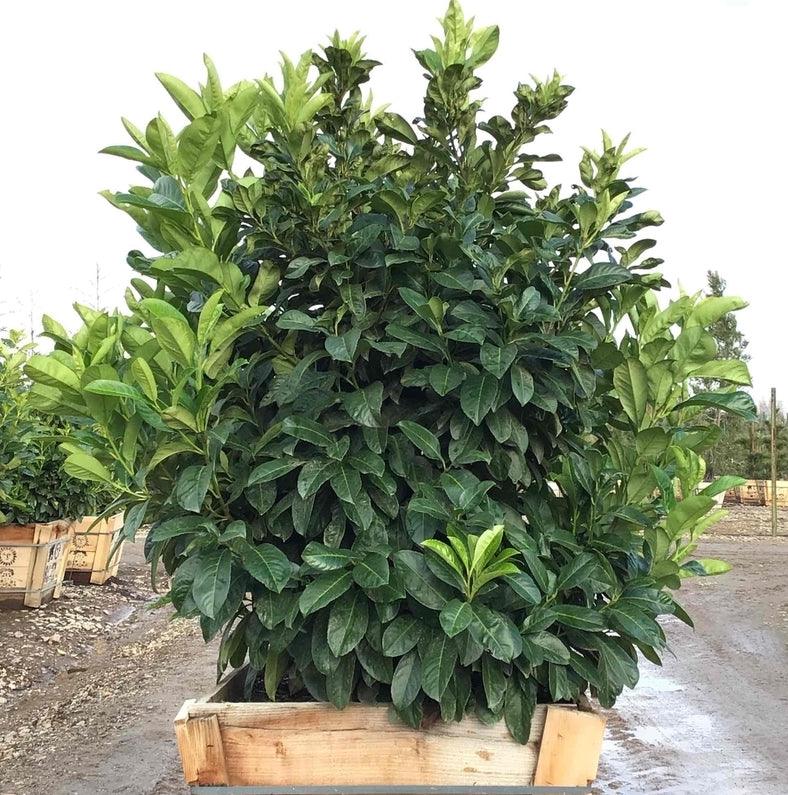
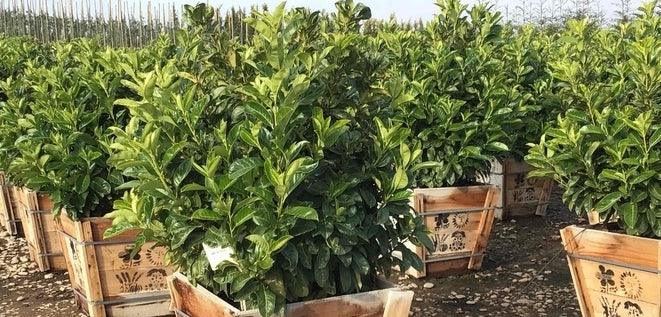
Looking for laurel hedging that creates reliable privacy fast? Choose from English, Schip and Portuguese laurel plants for dense evergreen coverage, wind protection and smart garden zoning. These hardy shrubs are valued for their glossy foliage, strong growth rate and ability to perform in many growing conditions.
In landscaping, laurel usually refers to evergreen shrubs from the Prunus genus, especially cherry laurel, Prunus laurocerasus, and Portuguese laurel, Prunus lusitanica. They are not true laurels like bay laurel (Laurus nobilis), but they deliver the lush, dark green structure most gardens need.
Find your perfect hedge solution and transform your garden today.
Laurel Hedging for Every Garden Need
Whether you’re creating privacy or enhancing your landscape, there’s a laurel hedge for every purpose.
Privacy Screen Hedging
Laurel hedges provide excellent privacy screens, effectively blocking views and creating secluded outdoor spaces. Their dense evergreen foliage stays in leaf through all seasons, giving year-round visual privacy instead of leaving gaps in winter.
Fast growing options such as English laurel hedges and schip laurel are ideal for privacy hedges, with English laurels and Schip laurels increasing by 1-2 feet per year under optimal conditions. English laurel can grow 2 to 3 feet per year, especially during the first several growing seasons, and can reach heights of 15 to 30 feet if unpruned.
The dense foliage of laurel hedges also helps to muffle noise, making them a practical choice for urban gardens or properties near busy roads.
Windbreak & Shelter Hedging
Laurel hedging is effective for creating natural barriers for privacy, windbreaks and garden zoning. Robust laurel plants form a dense branching structure that filters wind while keeping the garden attractive and green, similar to many evergreen trees for privacy.
Portuguese laurel is especially suited to coastal areas because of its salt tolerance and drought tolerant nature once established. This makes it a strong option for seaside gardens, exposed boundaries and sites where wind and sun can be demanding.
For best shelter, maintain the hedge with regular pruning so the top does not become too heavy or exposed. A well-shaped laurel hedge will protect delicate plants, seating areas and garden borders without looking harsh.
Decorative Garden Borders
Compact laurel varieties work well for defining garden spaces, driveways and property boundaries. Their glossy dark green leaves create a formal, polished look, while the evergreen shrub habit keeps borders structured throughout the year.
Laurel responds well when pruned, making it suitable for neat hedges, clipped forms and more natural borders. Smaller or slower varieties such as Carolina cherry laurel hedging are particularly useful where you want a dense hedge without excessive height.
In spring, many laurel species produce flowers or blooms that can attract bees and other pollinators. Berries may appear later in summer or late summer, adding seasonal interest, though certain laurel varieties produce seeds and berries that are toxic to pets and humans if ingested.
Choose the Right Laurel Variety for Your Garden
The right variety ensures optimal growth and meets your specific garden requirements.
English Laurel (Prunus laurocerasus)
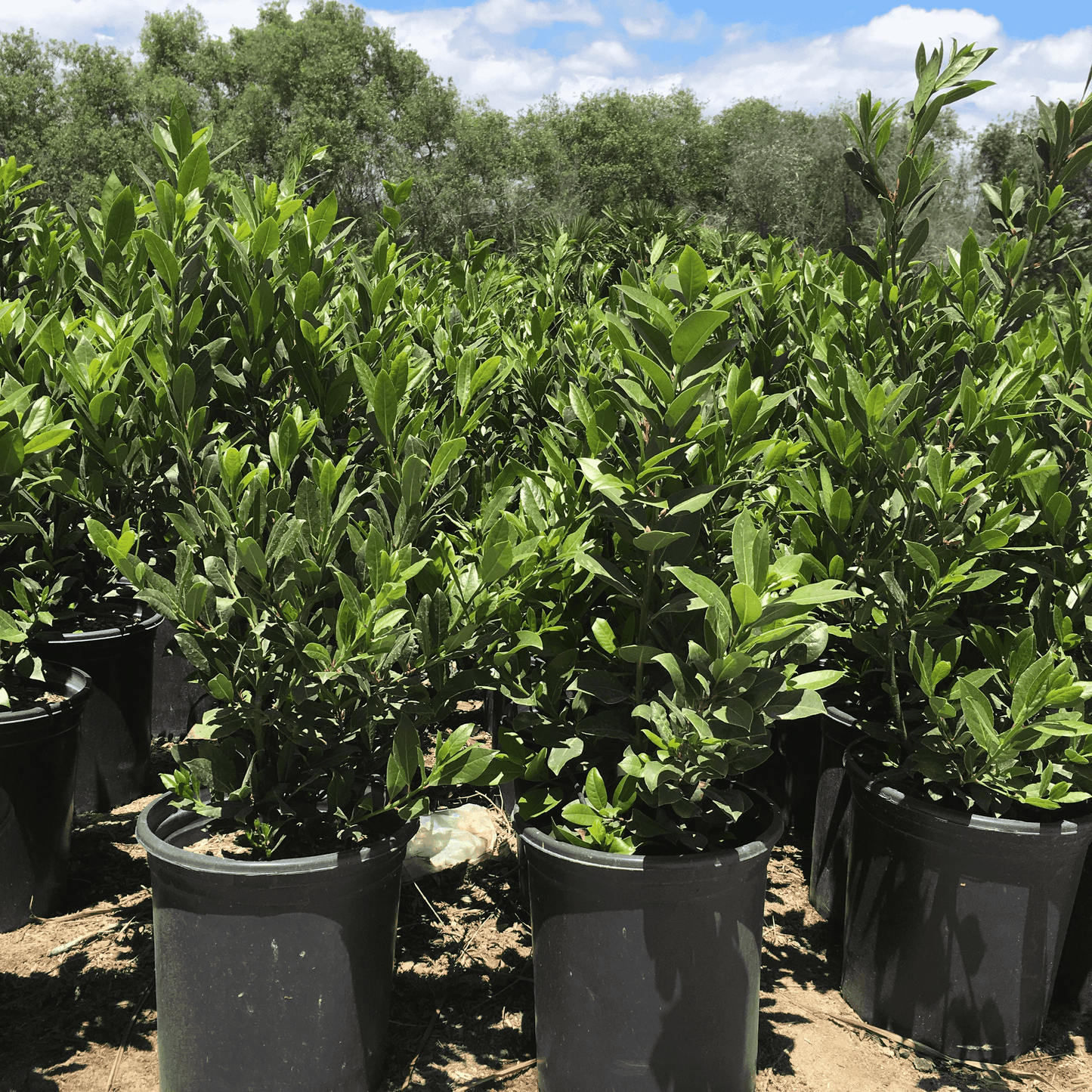
English laurel, also known as cherry laurel or Prunus laurocerasus, is a vigorous, fast growing choice for large privacy hedges. It is native to southeastern Europe and Asia Minor, and it is known for wide, glossy, bright-green leaves that form a lush, dense screen, and is widely available as English laurel plants for sale.
English laurel can grow to heights of 15 to 30 feet if unpruned, and English laurel can grow 2 to 3 feet per year under ideal conditions. Regular pruning is essential to manage its size and prevent it from becoming invasive or overwhelming smaller garden spaces.
This variety is tolerant of both full sun and partial shade, demonstrating versatility in different light conditions. It also adapts to many soil types when drainage is good, making it efficient for large hedging projects where quick coverage is the main point.
Schip Laurel (Prunus laurocerasus ‘Schipkaensis’)
Schip laurel, or Prunus laurocerasus ‘Schipkaensis’, is a hardy winter-resistant form of cherry laurel that is often suitable down to USDA zone 5, depending on local growing conditions. It grows narrower and taller than broad English laurel, making it useful where space is limited but height is needed.
This variety features long, glossy, dark-green leaves and excellent shade tolerance. Schip laurel can tolerate almost full shade, making it suitable for planting in areas with limited sunlight, including side gardens, woodland edges and shaded boundaries.
Schip laurel is a strong option when you need a tall, dense hedge without too much outward spread. Under optimal conditions, Schip laurels can increase by 1-2 feet per year, helping create a privacy screen without a long waiting period.
Portuguese Laurel (Prunus lusitanica)
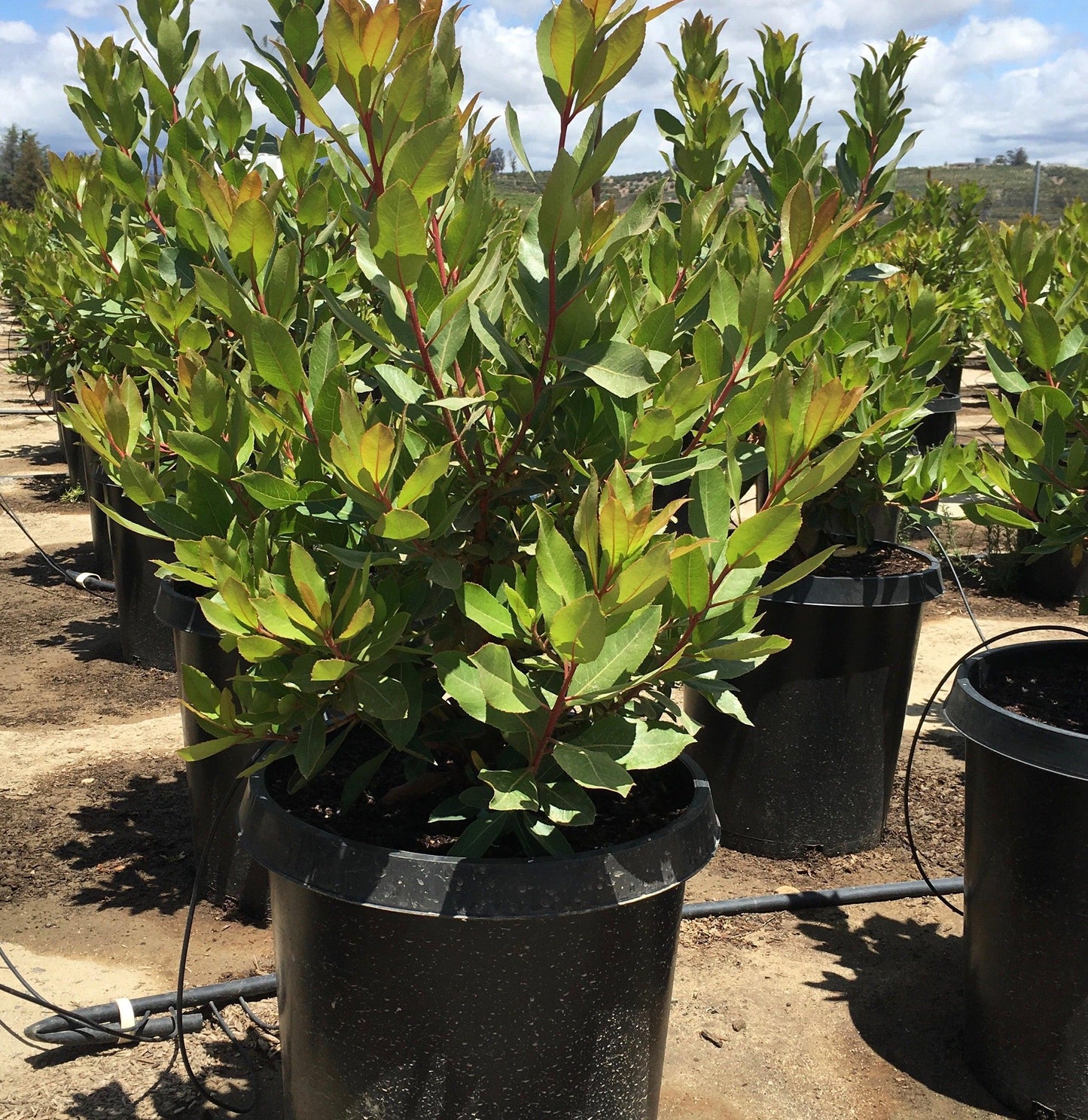
Portuguese laurel, or Prunus lusitanica, is a refined evergreen shrub with pointed, glossy, dark green leaves and bright red stems. It has a naturally elegant form and is often chosen for formal hedges, garden entrances and smart landscape designs.
Portuguese laurel is well-suited for coastal areas due to its salt tolerance. It also handles heat, wind and drier periods better than many alternatives once established, making it a reliable choice for exposed gardens and warmer sites.
Portuguese laurels also grow quickly, typically adding about 1 foot of growth per year in the right conditions, making them suitable for privacy hedges. The growth rate is slower than vigorous English laurel, but the denser, more controlled habit makes Portuguese laurel easy to maintain.
Premium Plant Qualities That Last
Quality laurel hedging should provide years of reliable performance and beauty.
Fast Growth & Quick Establishment
Laurel plants can grow rapidly, with some varieties growing up to 2 feet per year. Laurel hedges generally grow very quickly, making them ideal for fast-growing screens where privacy is needed without years of waiting.
English laurel is the most vigorous option and can reach 15 to 30 feet if left unpruned. Schip laurel gives strong upright growth, while Portuguese laurel offers a more measured pace of about 1 foot per year in suitable conditions.
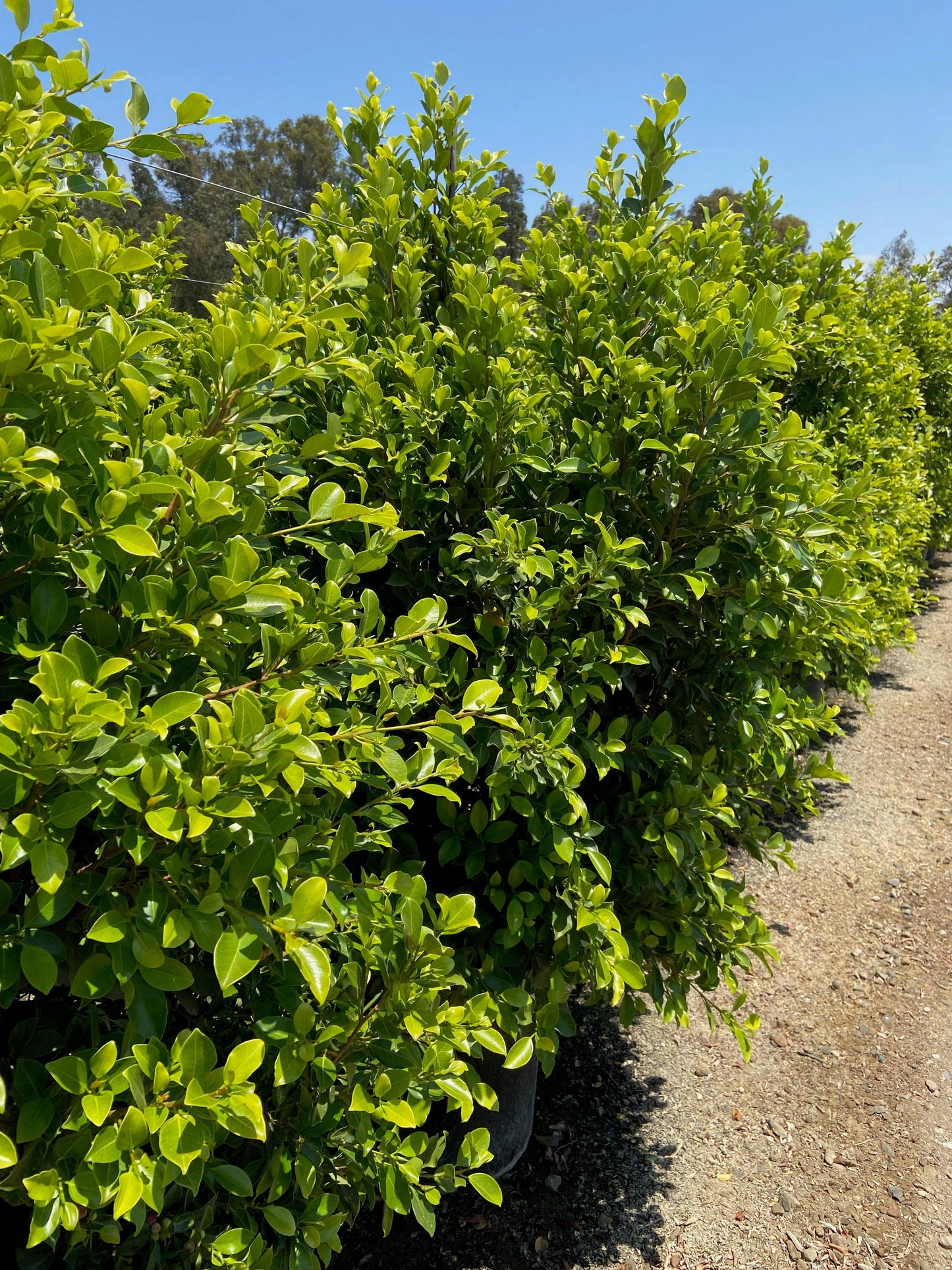
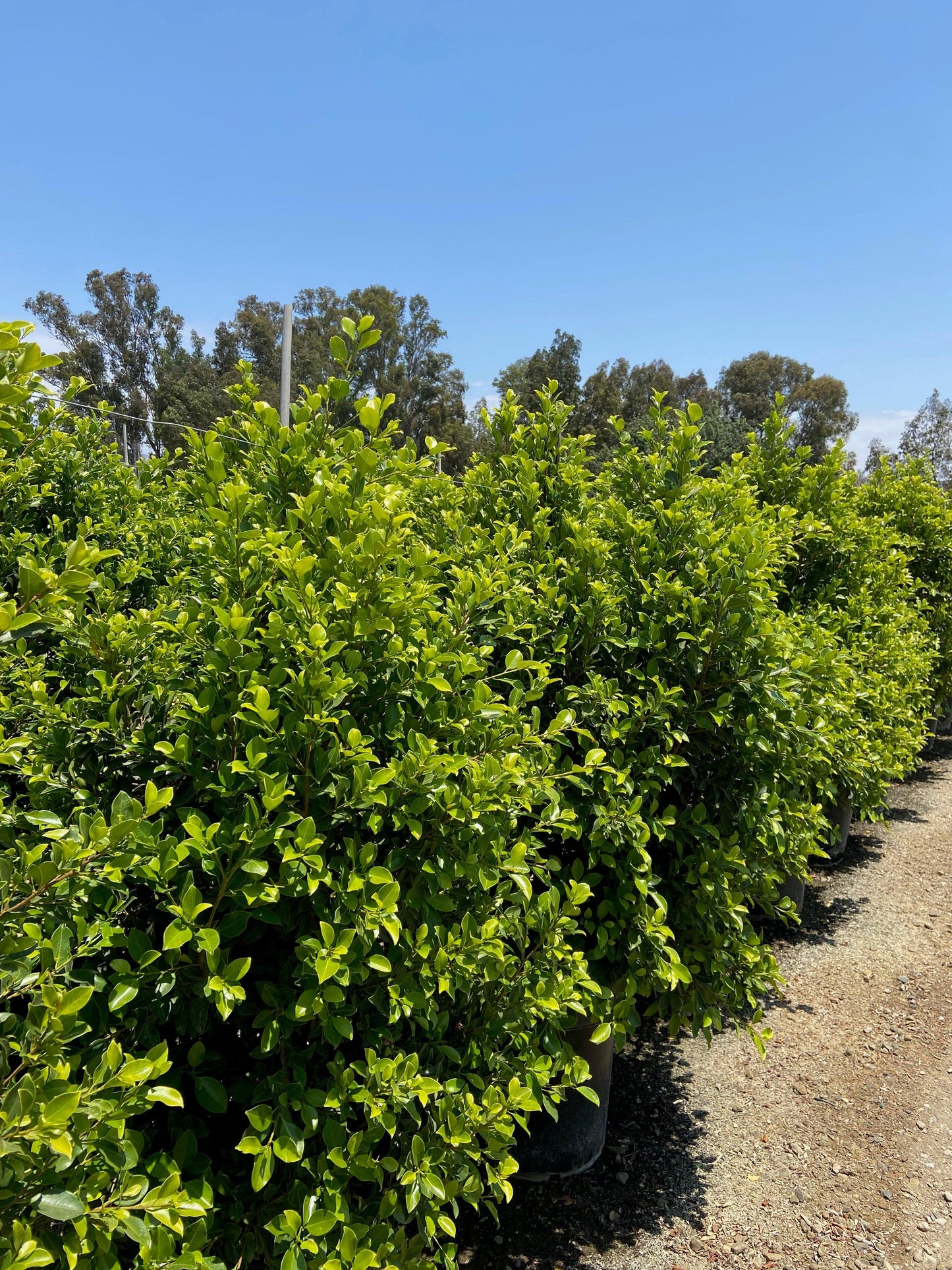
Strong roots help laurel plants establish well in prepared ground. Deep hydration is essential for newly planted laurels to establish a strong root network, but they dislike waterlogged soil, so drainage matters from the start, just as it does for Indian laurel ficus privacy hedges.
Evergreen Foliage & Year-Round Appeal
Laurel hedges are evergreen, providing year-round coverage and visual privacy, which is particularly beneficial in all seasons. Their glossy leaves keep the garden looking structured even in winter, when deciduous shrubs are bare, and they pair well with fragrant evergreens such as English lavender border shrubs.
English laurel is known for its wide, glossy, bright-green leaves, while Schip laurel features long, glossy dark green leaves, and Portuguese laurel has pointed, glossy dark green leaves with bright red stems. This makes it easy to choose the right foliage style for your garden.
In spring, laurel plants may produce flowers that support pollinators such as bees. Berries can follow in summer, but these cherries are ornamental only and should not be treated as food, because seeds and berries from certain laurel varieties, and even unrelated species like Indian laurel trees, are toxic to pets, dogs and humans if ingested.
Adaptability & Low Maintenance
Laurels are highly tolerant of a wide variety of soils and can thrive in both full sun and deep shade. Laurel hedges can thrive in a variety of soil types, including sandy, loamy and clay soils, making them adaptable to different growing conditions.
Laurel hedges are drought-tolerant once established, which allows them to survive in areas with limited water availability. Regular moisture is still important during the first season, but mature plants usually need less watering once the roots are established.
Common issues with laurels include powdery mildew and shot-hole fungus, which can be managed with proper care. Good airflow, suitable spacing, sensible watering and annual pruning help keep foliage clean, dark green and healthy, and many of the same principles apply when choosing other privacy trees and shrubs from a nursery.
How to Plant and Maintain Laurel Hedging
Proper installation and care ensure your laurel hedge thrives for decades.
Planting Your Laurel Hedge
Plant spacing depends on the effect you want. Use closer spacing of around 3-6 feet for dense screens, or wider spacing for more natural borders. English laurel needs more room because of its vigorous growth, while schip laurel is useful for narrow spaces and Portuguese laurel works well for formal, manageable hedges.
Prepare the soil with compost or other organic matter, and make sure it drains freely. Laurel plants tolerate many soils, from sandy to clay, but they do not like waterlogged ground. Plant at soil level, keeping the root flare close to the surface rather than buried.
Water deeply 2-3 times weekly during the first summer, adjusting for rain, heat and soil moisture. Mulching with organic materials helps to retain soil moisture, suppress weeds and provide nutrients as it breaks down, but keep mulch clear of the trunk base to protect the stems, as you would when establishing Indian laurel trees used as screens.
Ongoing Maintenance & Pruning
Pruning should occur in late winter or early spring before new growth appears, or after flowering in early summer. Laurel hedges should be pruned at least once a year to maintain their desired height and shape, with some varieties requiring more frequent pruning due to their vigorous growth.
When pruning laurel hedges, shape the top half to be slightly narrower than the bottom half to prevent lower foliage from being shaded out. This helps the hedge stay dense from top to bottom and avoids bare lower branches.
Applying a balanced, slow-release fertilizer in early spring can promote vigorous new growth in laurels. Monitor for powdery mildew, shot-hole fungus and scale insects, and maintain good airflow by removing dead, damaged or crossing branches when needed.
Shop Laurel Hedging Plants Online
Explore our collection of premium laurel hedging plants in various sizes, from young plants to mature specimens. Choose English laurel, Schip laurel or Portuguese laurel by height, growth rate, spacing and garden purpose.
Order through our website for efficient delivery and create a dense, glossy, evergreen hedge that protects your space, improves privacy and adds lasting structure to your garden.
Your ideal laurel hedge is just a few clicks away.