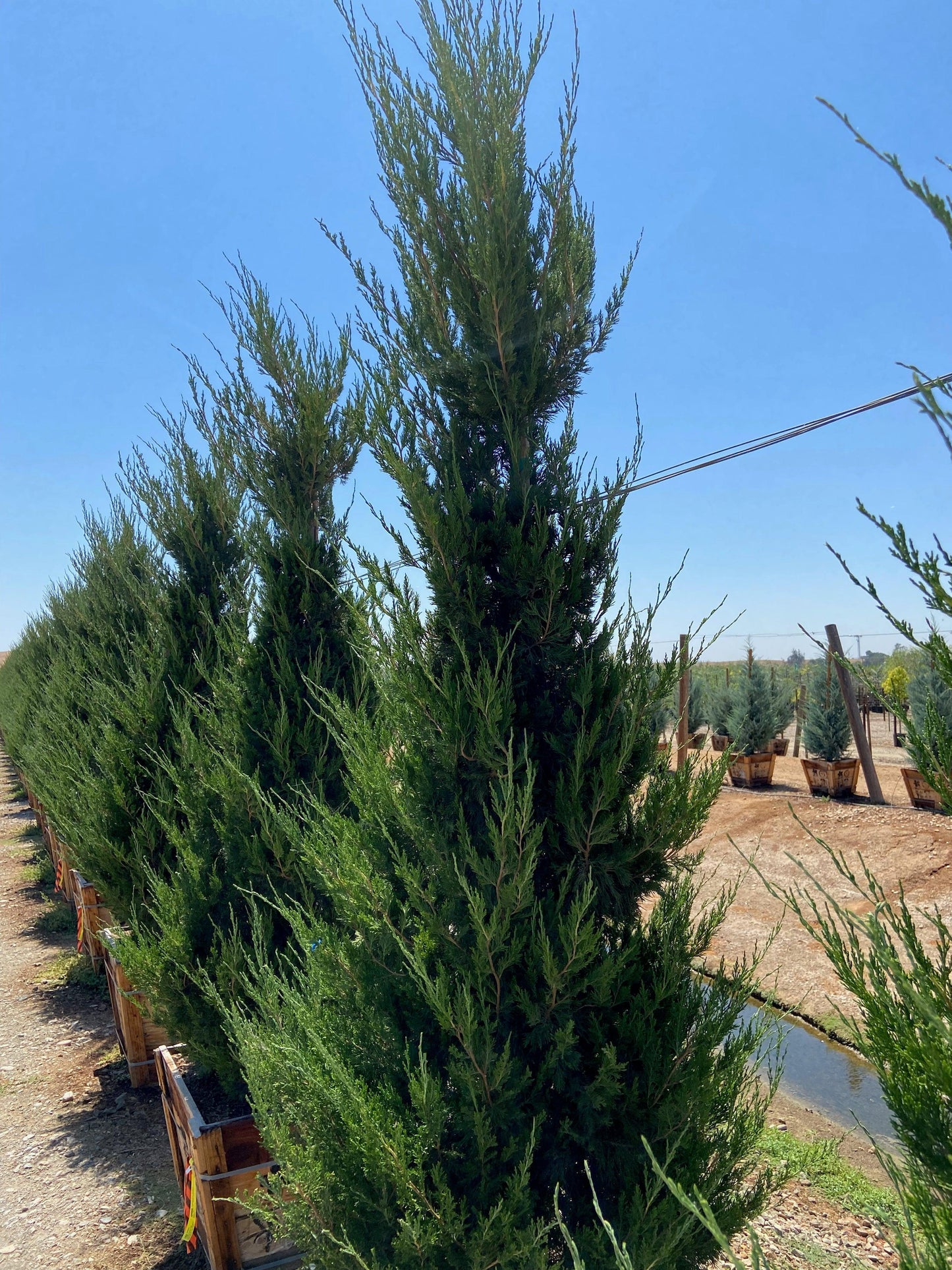
Juniper trees are evergreen conifers known for their needle-like leaves, exceptional drought tolerance, and year-round color that make them one of the most versatile choices for California landscapes. Whether you need a tall columnar screen for privacy or a low spreading ground cover for a hillside, the genus Juniperus - part of the cypress family - includes 50 to 70 species worldwide and dozens of cultivars suited to nearly every landscape challenge.
Types of Juniper Trees
Juniper plants range from towering trees that can grow up to 130 feet tall in the wild to creeping shrubs barely a foot off the ground. For landscape purposes, they break into three practical categories based on growth habit.
Upright Juniper Trees
Upright varieties deliver height and density in a narrow footprint, making them the go-to choice for privacy screens and windbreaks. Spartan Juniper (Juniperus chinensis 'Spartan') is one of the most popular columnar selections, growing 12 to 18 inches per year and reaching 15–20 feet tall with only about 5 feet of spread. Taylor Juniper (Juniperus virginiana'Taylor') is even narrower - roughly 4 feet wide at maturity and 20–25 feet tall - ideal for tight side yards. Juniper Wichita Blue (Juniperus scopulorum) typically reaches 10 to 15 feet tall and is often used as a privacy screen thanks to its striking silver-blue foliage. Eastern Red Cedar (Juniperus virginiana) is worth noting as one of the largest native juniper species, capable of reaching up to 130 feet tall in ideal conditions, though most landscape cultivars stay well under 30 feet. These upright forms work well as tall skinny trees for privacy where space is limited.
Spreading Juniper Trees
Spreading juniper varieties grow wider than they are tall, making them perfect for filling large landscape areas, stabilizing slopes, and providing dense ground cover. Hollywood Juniper (Juniperus chinensis 'Torulosa') is a dramatic exception in this group - it can reach heights of 10 to 15 feet with an artistic, twisted growth habit that works as a sculptural specimen. Creeping Juniper (Juniperus horizontalis) is a true low-growing groundcover, with cultivars like 'Blue Rug' staying under 6 inches tall while spreading 6–8 feet wide. These spreading types excel at erosion control on banks and hillsides, where their strong lateral root systems hold surrounding soil in place. They also suppress weeds effectively, reducing maintenance around other plants in the landscape.
Dwarf Juniper Varieties
Compact juniper forms stay under 10 feet at mature growth, offering manageable scale for foundation plantings, borders, and small gardens. Blue Point Juniper develops a dense teardrop shape reaching roughly 7–10 feet tall and 4–5 feet wide - a handsome small tree or large shrub for accent planting. Aquavita™ Juniper features aqua-blue foliage and a pyramidal shape that adds distinctive color contrast to mixed beds. Common Juniper (Juniperus communis) has silvery blue-green berries and is among the most widely distributed juniper species across the northern hemisphere. Most garden varieties grow at a moderate rate, so expect a few years before dwarf selections reach their full visual impact, but the tradeoff is minimal pruning and shaping once they fill in.
What to Look For in Juniper Trees
Not all junipers perform equally in every setting. These are the characteristics that separate a thriving juniper from a struggling one.
Foliage Color and Texture
Juniper foliage spans a wide spectrum - deep green, blue green, silver-blue, golden-yellow, and even variegated. The blue or bluish-purple cones are key identifying features of the juniper genus, and many female plants produce berry-like cones that add visual interest and ecological value. Some cultivars shift color seasonally: winter bronzing or purplish hues under cold stress can be desirable or distracting depending on your aesthetic goals. Foliage texture matters too. Scale-like adult leaves create a smoother, denser appearance, while needle-like juvenile growth is coarser and pricklier. Some juniper species retain juvenile foliage throughout life; others transition fully to scale foliage. This distinction affects both the look and feel of the plant - particularly relevant if junipers are planted near walkways or play areas.
Growth Rate and Mature Size
Understanding how fast junipers grow and how large they get prevents the most common landscaping mistake: planting too close to structures. Upright cultivars like Spartan Juniper add roughly 12–18 inches per year, reaching substantial screening height within 8–12 years. Spreading groundcovers may increase width by 6–18 inches per year horizontally but add very little height. Always plan for the full mature dimensions. A Skyrocket Juniper that looks slender at the nursery will still need adequate root space and air circulation at maturity. Crowding juniper bushes too tightly restricts airflow and invites fungal disease on inner foliage.
Climate Adaptability
Junipers are adapted to dry, rocky, and cold environments, making them outstanding performers across California's diverse growing zones. Most cultivars thrive in USDA Hardiness Zones 3–9 and handle full sun exposure with ease - in fact, shade tends to thin foliage and reduce vigor significantly. Heat and drought tolerance are hallmarks of the genus: California Juniper (Juniperus californica) survives on under 12 inches of annual rainfall in its native range, while tolerating summer highs above 100°F. Wind resistance is another strength, with many juniper species handling exposed, windy sites and even coastal salt spray. The critical vulnerability is poor drainage - junipers prefer well draining soil and are highly susceptible to root rot (Phytophthora) when roots sit in waterlogged conditions.
How to Choose the Right Juniper Tree
Selecting the best juniper comes down to matching the plant's characteristics to your specific site and goals.
- Purpose and Location - If you need privacy screens, upright varieties like Spartan or Wichita Blue are the clear choice. For ground cover on slopes or large open areas, spreading juniper and creeping juniper types provide excellent coverage. Accent plantings and small gardens call for dwarf forms like Blue Point.
- Available Space - Measure the mature width and height against your planting area before you plant juniper trees. Account for proximity to structures, utilities, walkways, and other plants. Upright types need as little as 3–5 feet of lateral space; spreading types may require 10–15 feet.
- Maintenance Preference - Fast growing trees like Spartan may need occasional shaping to maintain a formal look. Slower-growing dwarf cultivars require minimal pruning but take longer to establish visual impact. Junipers need little or no supplemental fertilizer regardless of type - a light balanced application in early spring is sufficient if new growth seems slow.
- Aesthetic Goals - Consider foliage color against your existing landscape palette. Blue green and silver-blue cultivars create cool-toned contrast, while deep green varieties blend naturally with surrounding plantings. Some juniper trees have berry-like cones that are used as a spice in some cuisines - the same berry-like cones that famously flavor gin - adding both ornamental and cultural interest.
Frequently Asked Questions
How fast do juniper trees grow in California?
Growth rates vary by variety, but most juniper plants add 6–18 inches annually in California's climate. Spartan Juniper grows 12 to 18 inches per year and can reach 15 feet within roughly 8–10 years. Spreading groundcovers grow faster horizontally - up to 18 inches of width per year - but add minimal height. Most garden varieties grow at a moderate rate overall, so patience during the first few years pays off with decades of low-maintenance performance.
Do juniper trees need special soil preparation?
Junipers can grow in poor soils, making them suitable for challenging sites and rocky areas where other species struggle. The key requirement is drainage: avoid planting in heavy clay or low spots where water pools. If your soil has poor drainage, amend it with coarse material or create raised beds to improve drainage before planting. When you plant juniper, ensure the root ball sits at grade level and backfill with surrounding soil rather than heavily amended mix. Mulch with 3–4 inches of organic material to retain moisture, but keep mulch pulled away from the trunk to avoid overwatering the base and prevent root rot.
Are juniper trees good for privacy screening?
Upright juniper varieties provide excellent year-round privacy. Their dense evergreen foliage blocks views effectively through all seasons without the bare-branch gaps of deciduous trees. Juniper Wichita Blue is often used as a privacy screen, while Spartan Juniper's tight columnar form works well in rows. Juniper trees can provide shade and privacy barriers simultaneously. For the best results, space upright junipers so their mature widths just overlap - close enough to form a solid screen but with enough airflow to keep foliage healthy.
How much water do established juniper trees need?
Juniper trees are drought tolerant and require minimal care once their root systems are established. Water junipers once per week for the first year to help roots develop, then taper significantly. Established plants handle extended dry spells with little to no supplemental irrigation - California Juniper can survive on natural rainfall alone in arid climates. When you do water junipers, deep infrequent soaking is far better than frequent shallow irrigation. Avoid overwatering, especially in winter months, as excess moisture is the fastest way to kill an otherwise resilient juniper. Well draining soil is essential to prevent waterlogged roots.
Do juniper trees benefit wildlife?
Juniper trees hold high value for wildlife habitats. They provide food and shelter for birds and small animals - various songbirds feed on the fleshy berry like cones produced by female cones on separate plants, and dense juniper foliage offers year-round nesting cover. Juniper is also the exclusive food plant for certain moth larvae. Some species of junipers can live for over 1,000 years, making established specimens irreplaceable ecological anchors. It's worth noting that junipers are highly allergenic, with an OPALS rating of 9 out of 10, so male cones produce significant pollen - a consideration if allergy sensitivity is a concern in your household.
Explore Our Juniper Tree Collection
Junipers are valued for their durability and year-round color, offering California homeowners an evergreen conifer that thrives in full sun, tolerates heat and drought, and adapts to a range of soil types with minimal fuss. With lifespans of 30–70 years or more in landscape settings, a well-chosen juniper is a long-term investment in your property's beauty and function. Browse our evergreen trees to find the right juniper variety for your landscape - or explore our best privacy trees for small California yards for personalized guidance on making the most of your space.