Iceberg Rose For Sale
Shop Premium Varieties Online
Iceberg roses are one of the best choices for gardeners who want repeat flowers, strong disease resistance, and a clean white look that works in almost any landscape. Known for pure white flowers, shiny mid green foliage, and dependable growth, the Iceberg rose delivers months of blooms with less fuss than many traditional roses.
Iceberg was bred by Reimer Kordes in 1958 by crossing the red hybrid musk rose ‘Robin Hood’ with the white hybrid tea rose ‘Virgo’. The Iceberg rose is widely considered the most popular and commercially successful white rose in the history of rose breeding, and Iceberg roses received the “World’s Favorite Rose” award by the World Federation of Rose Societies in 1983.
Iceberg Roses for Every Garden Setting
Iceberg roses are globally celebrated for their extreme resilience, low-maintenance nature, and prolific, non-stop blooming capacity. These roses are characterized by their continuous blooming throughout the growing season, providing beautiful flowers for months, while their remarkable disease resistance makes them a preferred choice for gardeners seeking low-maintenance plants.
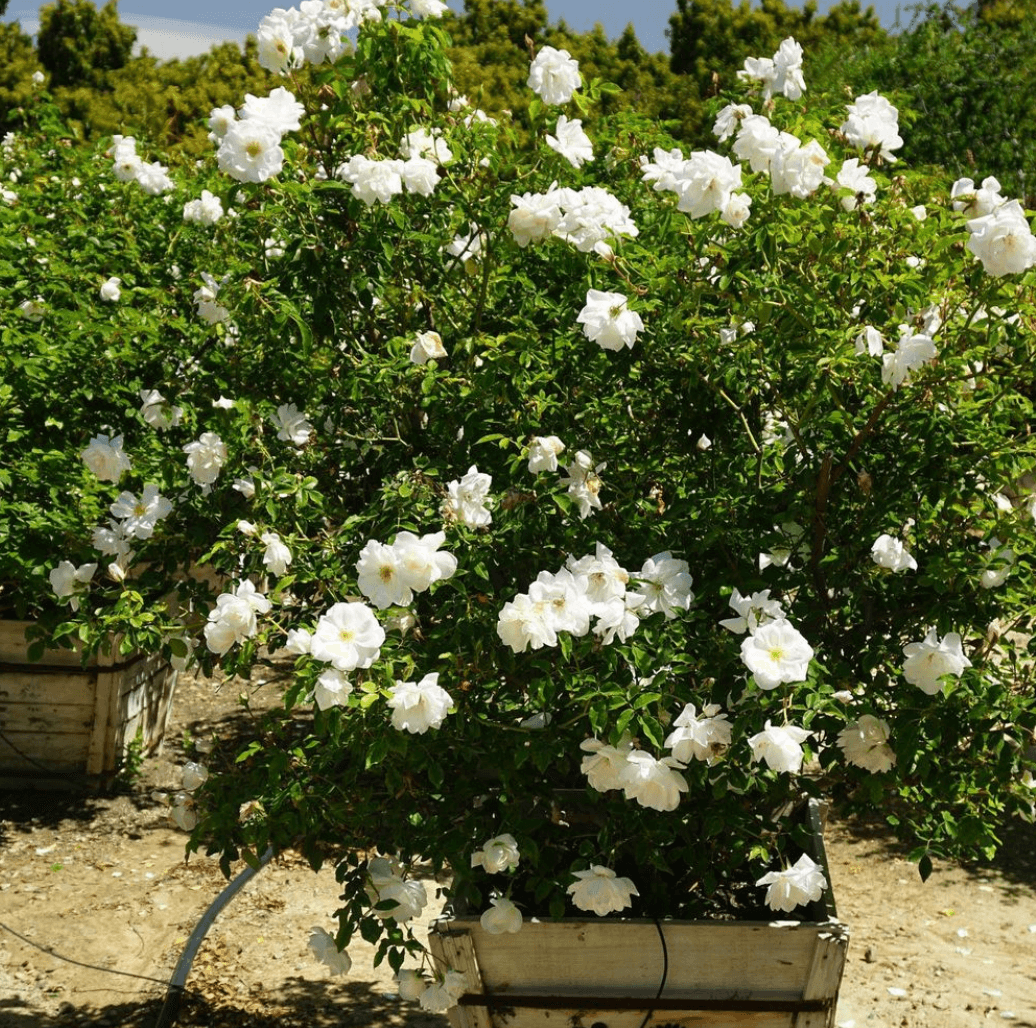
From a compact shrub rose to a climbing rose bush, iceberg varieties can create borders, hedges, pathways, formal features, and cottage gardens with absolute abandon. Iceberg roses are widely utilized for privacy hedges, mass plantings, pathways, and container gardening due to their adaptability.
Border and Foundation Plantings
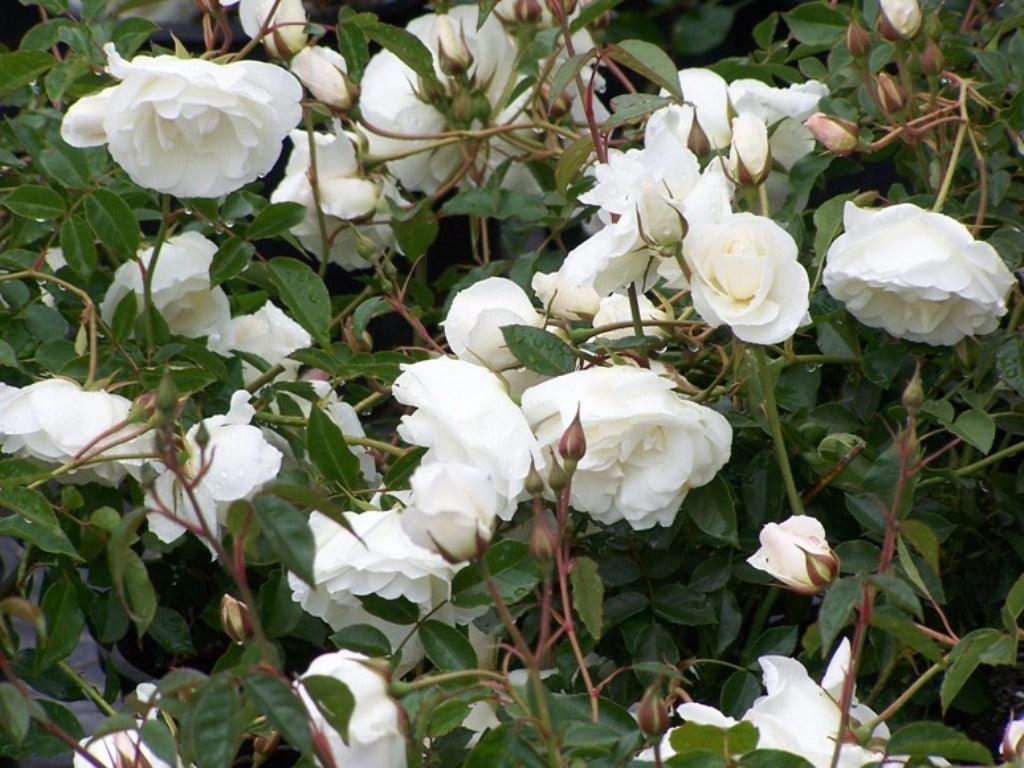
The Iceberg Floribunda Rose is the original Iceberg Rose, known for its beautiful white color and hardiness, making it a favorite among rose lovers. As part of the floribunda class, this strong growing bush produces clusters of white blooms against green foliage, giving front yard borders and foundation beds a bright, refined look.
Most shrub forms reach about 3 to 5 feet tall, with spacing that allows air movement and healthy growth. Plant roses with enough room between each rose plant so stems, roots, and foliage can stay healthy through the growing season. Pair them with evergreen shrubs, lavender, rosemary, ornamental grasses, or low perennials for year-round structure.
Privacy Screens and Hedges
Iceberg roses can grow as either a shrub or a climber, reaching heights between 3 to 12 feet, depending on how they are trained and pruned. For privacy planning, shrub varieties can be planted in rows to form a natural hedge, while climbing iceberg roses offer more room vertically for fence lines, arbors, and garden screens.
The Iceberg Climbing Rose features long, flexible canes that can be trained to grow up structures, producing fragrant clusters of white blooms. With support, the climber develops long stems and generous flowering canes that cover fences beautifully, especially when placed where the plant receives full sunlight and good airflow.
Formal Garden and Landscape Features
For a polished look, standard tree-form iceberg roses create elegant focal points near entries, courtyards, patios, and containers. Mass plantings deliver a dramatic effect when the white blooms appear summer long, especially against dark hedges, stonework, or Mediterranean-style planting schemes.
Iceberg Shrub Roses are compact, bushy plants that produce abundant white blooms throughout the growing season, ideal for mixed borders or as focal points in gardens. Their clean color also blends well with drought-tolerant landscapes, where silver foliage, rosemary, salvia, ornamental grasses, and carefully chosen flowering trees create contrast without overwhelming the roses.
Choose the Right Iceberg Rose Variety for Your Climate
These roses are highly adaptable to various climates and soil conditions, making them suitable for a wide range of gardening environments. Iceberg roses are generally hardy and thrive in USDA Hardiness Zones 4 through 9, though local care should vary depending on frost, heat, soil, and sun exposure.
In California, the best variety depends on whether your garden is coastal, inland, mountain, or northern. Full sun is ideal, and Iceberg roses thrive in full sun and require at least six hours of direct sunlight daily to grow optimally.
For Coastal California Gardens
Classic floribunda iceberg roses thrive in mild coastal temperatures, where cool nights help preserve white flowers and pink tones in colored sports. Coastal fog and salt influence can be handled well when the soil is well drained and the planting site has good air circulation.
For zones 9-10, choose classic Iceberg floribunda roses, shrub forms, or colored Iceberg selections. Colored Iceberg Roses, a type of hybrid tea rose, are available in various colors and are popular for both cut flowers and garden planting. Pink and burgundy forms can show richer color in cooler coastal conditions.
For Inland California Heat
Iceberg roses are known for their heat tolerance and can thrive in warm climates, but they need consistent moisture during periods of intense heat. In Central Valley and desert regions, morning sun with afternoon shade is often better than a hot west facing exposure, especially during late summer.
Mulch the ground to keep roots cooler, water deeply, and use drip irrigation instead of overhead watering to reduce powdery mildew and black spot risk. Water-wise results come from deep, consistent watering rather than frequent shallow watering, especially when growth begins in spring and heat builds through summer.
For Mountain and Northern California
For mountain and northern California gardens, choose cold-hardy iceberg varieties and protect them from extreme cold, drying winds, and hard frost. USDA Hardiness Zone 4 through 9 suitability makes Iceberg useful across many regions, but mountain gardens may need extra mulch around the root zone in winter.
Plant after the worst frost risk has passed in spring, and avoid heavy pruning too early. In colder areas, late winter or early spring pruning should wait until new growth begins, so gardeners can see which stems stayed healthy and which canes were damaged by winter conditions.
Premium Growth Characteristics That Deliver
Iceberg roses are among the finest roses for gardeners who want reliable performance without complicated care. They are extremely disease resistant compared with many older roses, yet they still produce elegant flowers that suit formal landscapes, cottage gardens, and modern California yards.
Their appeal comes from the balance of beauty and toughness. While David Austin roses and hybrid tea varieties are loved for fragrance and form, Iceberg roses stand out for repeat blooms, adaptability, and dependable disease resistant growth.
Continuous Blooming Power
These roses are characterized by their continuous blooming throughout the growing season, providing beautiful flowers for months. In many California gardens, bloom cycles begin in late spring, continue through summer, and often extend into fall when plants receive full sun, regular water, and proper feeding.
Deadheading spent blooms helps the rose bush produce new flowers and keeps the plant in a healthy condition. Iceberg commonly forms clusters of blooms rather than single flowers, giving each shrub a full, luminous appearance throughout the growing season.
Disease Resistance and Low Maintenance
Iceberg roses are known for their remarkable disease resistance, making them a preferred choice for gardeners seeking low-maintenance plants. They are especially valued for resistance to black spot, powdery mildew, and rust when grown with at least six hours of sunlight, good spacing, and well draining soil.
Although they are disease resistant, no rose is completely immune to disease. To help plants stay healthy, avoid late-day overhead watering, clear fallen leaves, and prune crowded stems. This reduces the need for chemical spraying and supports healthy growth in a more eco-conscious garden.
Mature Size and Growth Habits
Iceberg roses can grow as either a shrub or a climber, reaching heights between 3 to 12 feet, depending on how they are trained and pruned. Shrub forms stay compact and bushy, while climbing forms need support and more room to develop long canes.
Growth rates vary depending on climate, planting conditions, water, and pruning. Own root roses may establish differently from grafted plants, but both need enough soil volume for roots to spread, especially in containers or tight foundation beds.
How to Successfully Plant and Care for Iceberg Roses
Iceberg roses are exceptionally tough and can tolerate poorer soils, sandy loam, or clay if drainage is improved with organic compost, and many gardeners pair them with versatile landscape trees such as North Indian Rosewood (Dalbergia sissoo). Even so, the best results come from careful planting, consistent watering, seasonal feeding, and correct pruning.
These roses prefer well-draining soil and can tolerate a variety of soil types, but they do not tolerate standing water. If the ground stays wet, roots may decline, and the rose plant can become vulnerable to root rot.
Soil Preparation and Planting
Iceberg roses prefer rich, fertile, well-draining garden loam with an ideal pH between 6.0 and 7.2. Before planting, test the soil so you can understand pH, nutrients, and drainage, then amend heavy clay or sandy soil with compost to create a well drained root zone.
Set each plant at the correct depth, firm soil around the roots, and water deeply after planting. Space shrub roses with enough airflow between plants, especially in hedges and mass plantings, so foliage dries quickly after fog, dew, or irrigation.
Watering and Fertilizing Schedule
Iceberg roses require regular watering, especially during dry spells, to keep the soil moist but not waterlogged, as this can lead to root rot. In California, drip irrigation is usually the best choice because it delivers moisture to the ground without wetting leaves.
Fertilizing Iceberg roses in early spring when new growth appears and again about two months later with a high-nitrogen fertilizer is essential for their health, but overfertilizing should be avoided to prevent excessive foliage growth and fewer blooms. A balanced granular fertilizer, compost, or organic rose food can support strong growth when applied according to label directions.
Pruning and Seasonal Maintenance
Pruning Iceberg roses is recommended annually in late winter or early spring to maintain their health, shape, and vigor while promoting abundant flowering. Remove dead, weak, or crossing stems, then shape the shrub to encourage outward growth and better airflow.
Climbing Iceberg should be pruned more carefully because flowering depends on trained canes and seasonal growth. Remove finished flower clusters, tie in flexible stems, and avoid cutting away too much productive wood if you want strong white blooms the following season.
Shop Premium Iceberg Roses From Yardwork
Explore our curated selection of premium Iceberg roses for borders, hedges, pathways, containers, formal features, and climbing displays. Choose from classic floribunda roses, compact shrub forms, climbing roses, and colored varieties in white, pink, and deeper tones.
We also offer expert consultation for landscape planning with Iceberg roses, including spacing guidance for mass plantings, privacy hedges, and foundation beds. Soil testing services are available to help ensure optimal planting conditions.