




English Laurel - Prunus Laurocerasus
Regular price
$295.00
Size
Create Instant Privacy and Year-Round Beauty
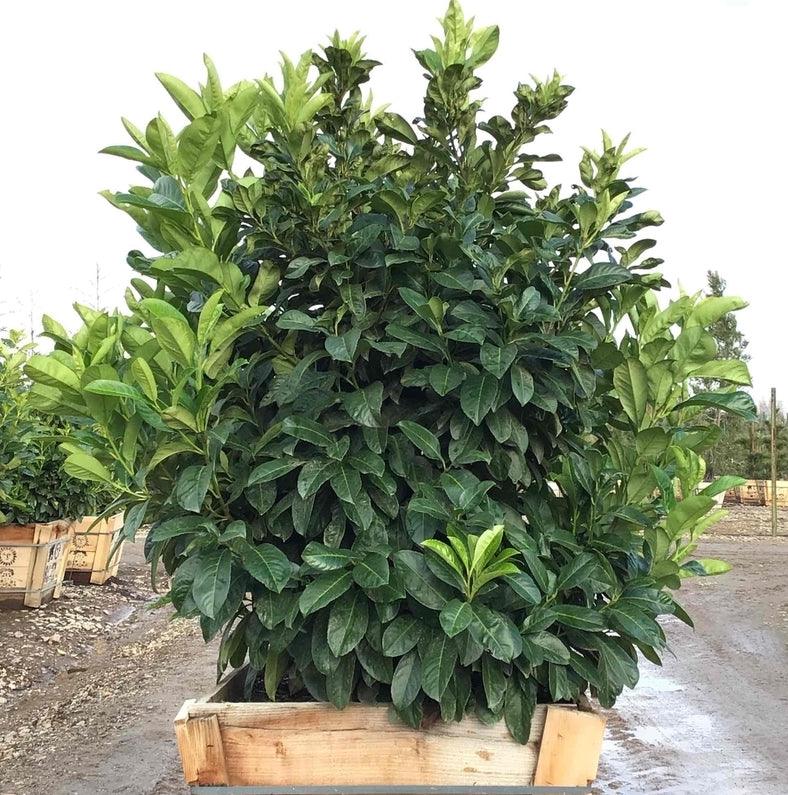
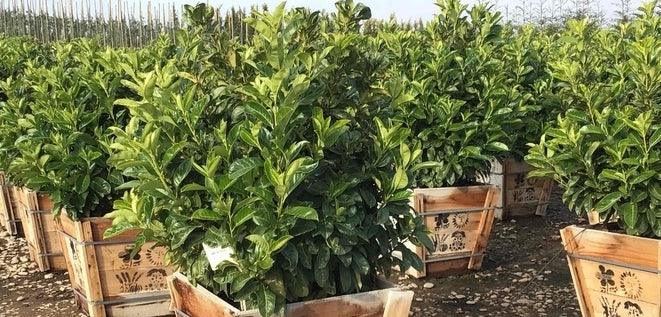
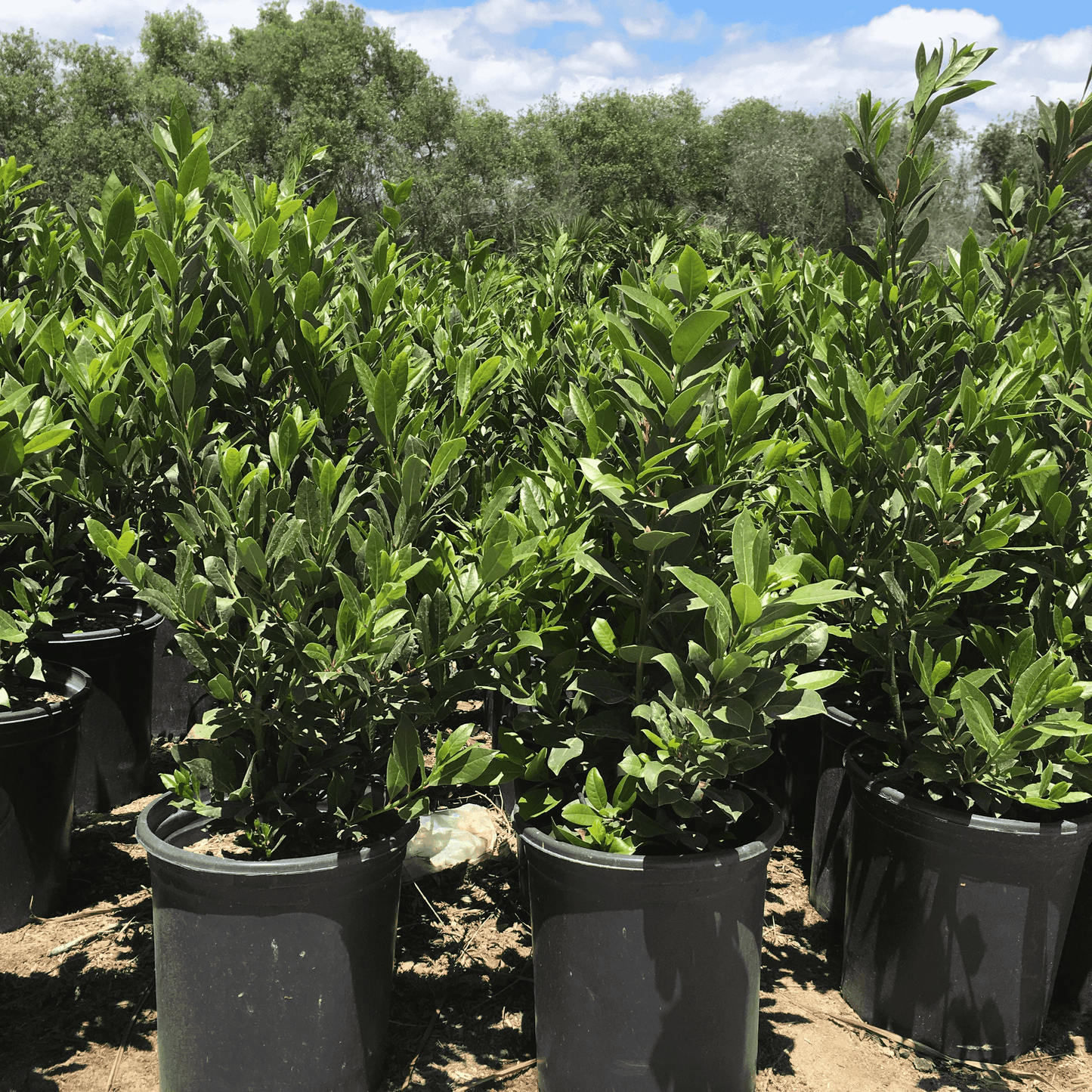
English laurel (Prunus laurocerasus) is one of the fastest and most reliable ways to build a living privacy wall in your landscape. This glossy evergreen shrub grows 2 to 3 feet per year under ideal conditions, producing dense, dark green foliage that screens views, buffers noise, and looks stunning in every season. Also known as cherry laurel, this member of the rose family and genus Prunus is native to eastern Europe and Asia Minor, where it thrives as both a large shrub and small tree. For homeowners who want excellent privacy without waiting years, English laurel delivers like few other evergreen options can.
Why You'll Love It
-
Fast Privacy – English laurel grows 2 to 3 feet per year, forming a thick, impenetrable screen in just a few growing seasons. It is commonly used for privacy hedges and noise barriers across California.
-
Evergreen Beauty – Leathery, glossy leaves measuring 4 to 7 inches long stay rich and dark green year-round. In spring, the plant produces fragrant white flower spikes that attract pollinators, followed by dark purple or black cherry-like fruits in late summer that attract birds.
-
Low Maintenance – Mature plants are drought-tolerant but benefit from deep watering during dry spells, making this fast growing shrub far easier to care for than thirstier alternatives. It is more drought-resistant than many other shrub varieties.
-
Versatile Uses – The plant can be shaped into formal hedges or topiary, planted as a backdrop, or used in mass for landscaping. It works equally well as a tall hedge or a standalone specimen.
-
California Proven – English laurel thrives in diverse climates from foggy coastal settings to warm inland valleys. English laurel is salt-resistant, ideal for coastal areas exposed to salt spray, and handles the range of soil types found across the state.
What Makes It Different
Most privacy plants either grow too slowly, drop their leaves in winter, or lack the density to truly block sightlines. Bamboo becomes invasive. Fencing feels sterile. Slower evergreen species like boxwood or portuguese laurel take years to fill in.
English laurel offers:
-
Rapid Establishment – Cherry laurel can grow 2 feet per year under ideal conditions, creating a functional privacy screen far faster than privet, boxwood, or bay laurel (Laurus nobilis). While these closely related and commonly planted alternatives have their merits, none match English laurel's combination of speed and coverage.
-
Superior Density – Dense foliage makes it effective for filtering wind and noise. English laurel provides excellent noise buffering and privacy that no fence or bamboo barrier can replicate, thanks to layers of thick evergreen leaves that absorb sound.
-
Climate Adaptability – English laurel adapts well to a range of lighting conditions from full sun to shade. Whether your property sits in direct sunlight along the coast or in dry shade beneath established trees, this evergreen species handles the transition between cooler climates and sunnier climates with remarkable ease.
How To Grow It Successfully
-
Strategic Placement Space English laurel plants 3 to 6 feet apart for hedges, depending on how quickly you want the canopy to close. Choose a site with well-draining soil - English laurel prefers free-draining soil for planting. In hotter inland California zones, afternoon shade helps prevent leaf scorch, while coastal and cooler areas support full sun exposure.
-
Proper Planting Plant in early spring or fall for best results. Dig the hole twice the width of the root ball, ensuring the root system sits level with the surrounding grade. Backfill with organic matter to improve soil structure, especially in heavy clay soils. Water deeply 2 to 3 times weekly during establishment, and apply a 2-to-3-inch layer of organic mulch after planting to conserve moisture and suppress weeds.
-
Smart Maintenance Regular pruning is needed to maintain desired size and shape. Prune English laurel 2 to 3 times annually for shape, ideally after spring flowering and again in early summer. Thin interior branches every 1–2 years to improve airflow and reduce risk of powdery mildew or shot hole disease. Maintain English laurel at 10 to 12 feet for privacy - a manageable height that provides screening without overwhelming your garden.
Plant Details
-
Botanical Name: Prunus laurocerasus (English laurel prunus laurocerasus)
-
Common Names: English laurel, cherry laurel
-
Type: Broadleaf glossy evergreen shrub / small tree
-
Mature Height: It can reach heights of 15 to 30 feet when mature. Unpruned English laurel can reach 40 feet tall.
-
Mature Width: 20–25 feet in unpruned form; narrower when maintained as a formal hedge
-
Growth Rate: English laurel grows 2 to 3 feet per year under ideal conditions
-
Hardiness: The shrub is hardy in USDA Zones 6–9
-
Light: Full sun to heavy shade
-
Soil: Adapts to most soil types including acid soil and clay soils; English laurel prefers well-draining soil for growth
-
Flowers: Creamy white fragrant racemes in spring; attracts pollinators
-
Fruit: Dark purple or black cherry-like drupes in late summer; attract birds
-
Foliage: The shrub's glossy leaves measure 4 to 7 inches long; evergreen leaves persist year-round
-
Available Sizes: Container options from 5-gallon to large specimen plants
-
Spacing: 3 to 6 feet apart for hedges; wider for specimen plantings
-
Notable Cultivars: Otto Luyken cherry laurel matures at 3 to 4 feet tall, perfect for low borders. Schipka cherry laurel is recommended for large hedges requiring cold hardiness.
Who It's For
Ideal for:
-
Homeowners seeking fast privacy from neighbors, streets, or unsightly views - especially in suburban California settings where density is increasing
-
Property owners wanting evergreen wind protection and year-round noise buffering along property lines
-
Gardeners needing low-maintenance screening that stays green through every season without seasonal leaf drop
-
Landscapers designing formal or informal hedge systems - from tightly clipped formal hedge rows to naturalistic mass plantings and tall privacy screens
English laurel is not ideal for very small yards without room for root system spread, or for households where pets or young children may access the foliage. It can also be planted as a backdrop or in mass for landscaping on larger properties.
Frequently Asked Questions
How fast does English laurel grow? English laurel grows 2 to 3 feet per year during establishment under good conditions - adequate water, well-draining soil, and appropriate sun exposure. Rapid growth slows somewhat as the plant matures. In heavy shade or poor soil, expect slower progress. Among fast growing hedging plants, it remains one of the fastest evergreen options available.
What size should I plant for instant impact? Larger container sizes (15-gallon or 24-inch box) provide immediate height and presence. Smaller 5-gallon plants are more affordable but require additional growing seasons to reach screening height. For the quickest results, combine larger specimens with proper spacing and soil preparation.
How often does it need pruning? Prune English laurel 2 to 3 times annually for shape. The first pruning should occur after spring flowering, with follow-up shaping in early summer and optionally in late winter before new growth begins. Regular pruning keeps hedges dense and prevents the plant from exceeding its intended size - remember, unpruned English laurel can reach 40 feet tall.
Is it safe for pets? All parts of English laurel are toxic if ingested by humans and pets. The plant contains cyanogenic glycosides in its evergreen leaves, seeds, fruit, and stems. While handling the foliage is generally safe, ingestion can cause serious symptoms. If you have pets that chew plants, consider alternative screening like Podocarpus or other non-toxic privacy screens.
Will it work in my soil? English laurel adapts to a wide range of soil types - from clay soils to sandy loam, and from acid soil to alkaline conditions. The critical factor is drainage: English laurel prefers free-draining soil for planting, as waterlogged conditions promote root rot. Amend heavy soils with organic matter to improve structure. It is also worth noting that English laurel is native to Europe and Asia Minor, where it evolved in diverse soil conditions, and it is considered invasive in some areas, like the Pacific Northwest, so check local regulations.
Does it grow in shade? Yes. English laurel is one of the few fast growing shrub options that performs well even in dry shade or heavy shade beneath established trees. Flowering may be reduced in deep shade, but the foliage remains dense and attractive. In cooler climates, full sun produces the most vigorous growth.
Ready to Create Your Privacy Paradise?
Stop waiting years for slow-growing alternatives to fill in. English laurel delivers the rapid growth, dense evergreen foliage, and California-proven performance you need to transform your yard now.
Our team at Yardwork specializes in helping homeowners find the right plants for their landscape. Whether you need help selecting between standard English laurel and compact cultivars like Otto Luyken, or you want expert advice on spacing and soil preparation, we're here to help.
Browse our English laurel hedge guide for in-depth planting advice, explore our full collection of hedging plants for sale, or reach out for a consultation that includes soil testing to ensure your laurels establish quickly and thrive for decades.
Create Instant Privacy and Year-Round Beauty
English laurel (Prunus laurocerasus) is one of the fastest and most reliable ways to build a living privacy wall in your landscape. This glossy evergreen shrub grows 2 to 3 feet per year under ideal conditions, producing dense, dark green foliage that screens views, buffers noise, and looks stunning in every season. Also known as cherry laurel, this member of the rose family and genus Prunus is native to eastern Europe and Asia Minor, where it thrives as both a large shrub and small tree. For homeowners who want excellent privacy without waiting years, English laurel delivers like few other evergreen options can.
Why You'll Love It
-
Fast Privacy – English laurel grows 2 to 3 feet per year, forming a thick, impenetrable screen in just a few growing seasons. It is commonly used for privacy hedges and noise barriers across California.
-
Evergreen Beauty – Leathery, glossy leaves measuring 4 to 7 inches long stay rich and dark green year-round. In spring, the plant produces fragrant white flower spikes that attract pollinators, followed by dark purple or black cherry-like fruits in late summer that attract birds.
-
Low Maintenance – Mature plants are drought-tolerant but benefit from deep watering during dry spells, making this fast growing shrub far easier to care for than thirstier alternatives. It is more drought-resistant than many other shrub varieties.
-
Versatile Uses – The plant can be shaped into formal hedges or topiary, planted as a backdrop, or used in mass for landscaping. It works equally well as a tall hedge or a standalone specimen.
-
California Proven – English laurel thrives in diverse climates from foggy coastal settings to warm inland valleys. English laurel is salt-resistant, ideal for coastal areas exposed to salt spray, and handles the range of soil types found across the state.
What Makes It Different
Most privacy plants either grow too slowly, drop their leaves in winter, or lack the density to truly block sightlines. Bamboo becomes invasive. Fencing feels sterile. Slower evergreen species like boxwood or portuguese laurel take years to fill in.
English laurel offers:
-
Rapid Establishment – Cherry laurel can grow 2 feet per year under ideal conditions, creating a functional privacy screen far faster than privet, boxwood, or bay laurel (Laurus nobilis). While these closely related and commonly planted alternatives have their merits, none match English laurel's combination of speed and coverage.
-
Superior Density – Dense foliage makes it effective for filtering wind and noise. English laurel provides excellent noise buffering and privacy that no fence or bamboo barrier can replicate, thanks to layers of thick evergreen leaves that absorb sound.
-
Climate Adaptability – English laurel adapts well to a range of lighting conditions from full sun to shade. Whether your property sits in direct sunlight along the coast or in dry shade beneath established trees, this evergreen species handles the transition between cooler climates and sunnier climates with remarkable ease.
How To Grow It Successfully
-
Strategic Placement Space English laurel plants 3 to 6 feet apart for hedges, depending on how quickly you want the canopy to close. Choose a site with well-draining soil - English laurel prefers free-draining soil for planting. In hotter inland California zones, afternoon shade helps prevent leaf scorch, while coastal and cooler areas support full sun exposure.
-
Proper Planting Plant in early spring or fall for best results. Dig the hole twice the width of the root ball, ensuring the root system sits level with the surrounding grade. Backfill with organic matter to improve soil structure, especially in heavy clay soils. Water deeply 2 to 3 times weekly during establishment, and apply a 2-to-3-inch layer of organic mulch after planting to conserve moisture and suppress weeds.
-
Smart Maintenance Regular pruning is needed to maintain desired size and shape. Prune English laurel 2 to 3 times annually for shape, ideally after spring flowering and again in early summer. Thin interior branches every 1–2 years to improve airflow and reduce risk of powdery mildew or shot hole disease. Maintain English laurel at 10 to 12 feet for privacy - a manageable height that provides screening without overwhelming your garden.
Plant Details
-
Botanical Name: Prunus laurocerasus (English laurel prunus laurocerasus)
-
Common Names: English laurel, cherry laurel
-
Type: Broadleaf glossy evergreen shrub / small tree
-
Mature Height: It can reach heights of 15 to 30 feet when mature. Unpruned English laurel can reach 40 feet tall.
-
Mature Width: 20–25 feet in unpruned form; narrower when maintained as a formal hedge
-
Growth Rate: English laurel grows 2 to 3 feet per year under ideal conditions
-
Hardiness: The shrub is hardy in USDA Zones 6–9
-
Light: Full sun to heavy shade
-
Soil: Adapts to most soil types including acid soil and clay soils; English laurel prefers well-draining soil for growth
-
Flowers: Creamy white fragrant racemes in spring; attracts pollinators
-
Fruit: Dark purple or black cherry-like drupes in late summer; attract birds
-
Foliage: The shrub's glossy leaves measure 4 to 7 inches long; evergreen leaves persist year-round
-
Available Sizes: Container options from 5-gallon to large specimen plants
-
Spacing: 3 to 6 feet apart for hedges; wider for specimen plantings
-
Notable Cultivars: Otto Luyken cherry laurel matures at 3 to 4 feet tall, perfect for low borders. Schipka cherry laurel is recommended for large hedges requiring cold hardiness.
Who It's For
Ideal for:
-
Homeowners seeking fast privacy from neighbors, streets, or unsightly views - especially in suburban California settings where density is increasing
-
Property owners wanting evergreen wind protection and year-round noise buffering along property lines
-
Gardeners needing low-maintenance screening that stays green through every season without seasonal leaf drop
-
Landscapers designing formal or informal hedge systems - from tightly clipped formal hedge rows to naturalistic mass plantings and tall privacy screens
English laurel is not ideal for very small yards without room for root system spread, or for households where pets or young children may access the foliage. It can also be planted as a backdrop or in mass for landscaping on larger properties.
Frequently Asked Questions
How fast does English laurel grow? English laurel grows 2 to 3 feet per year during establishment under good conditions - adequate water, well-draining soil, and appropriate sun exposure. Rapid growth slows somewhat as the plant matures. In heavy shade or poor soil, expect slower progress. Among fast growing hedging plants, it remains one of the fastest evergreen options available.
What size should I plant for instant impact? Larger container sizes (15-gallon or 24-inch box) provide immediate height and presence. Smaller 5-gallon plants are more affordable but require additional growing seasons to reach screening height. For the quickest results, combine larger specimens with proper spacing and soil preparation.
How often does it need pruning? Prune English laurel 2 to 3 times annually for shape. The first pruning should occur after spring flowering, with follow-up shaping in early summer and optionally in late winter before new growth begins. Regular pruning keeps hedges dense and prevents the plant from exceeding its intended size - remember, unpruned English laurel can reach 40 feet tall.
Is it safe for pets? All parts of English laurel are toxic if ingested by humans and pets. The plant contains cyanogenic glycosides in its evergreen leaves, seeds, fruit, and stems. While handling the foliage is generally safe, ingestion can cause serious symptoms. If you have pets that chew plants, consider alternative screening like Podocarpus or other non-toxic privacy screens.
Will it work in my soil? English laurel adapts to a wide range of soil types - from clay soils to sandy loam, and from acid soil to alkaline conditions. The critical factor is drainage: English laurel prefers free-draining soil for planting, as waterlogged conditions promote root rot. Amend heavy soils with organic matter to improve structure. It is also worth noting that English laurel is native to Europe and Asia Minor, where it evolved in diverse soil conditions, and it is considered invasive in some areas, like the Pacific Northwest, so check local regulations.
Does it grow in shade? Yes. English laurel is one of the few fast growing shrub options that performs well even in dry shade or heavy shade beneath established trees. Flowering may be reduced in deep shade, but the foliage remains dense and attractive. In cooler climates, full sun produces the most vigorous growth.
Ready to Create Your Privacy Paradise?
Stop waiting years for slow-growing alternatives to fill in. English laurel delivers the rapid growth, dense evergreen foliage, and California-proven performance you need to transform your yard now.
Our team at Yardwork specializes in helping homeowners find the right plants for their landscape. Whether you need help selecting between standard English laurel and compact cultivars like Otto Luyken, or you want expert advice on spacing and soil preparation, we're here to help.
Browse our English laurel hedge guide for in-depth planting advice, explore our full collection of hedging plants for sale, or reach out for a consultation that includes soil testing to ensure your laurels establish quickly and thrive for decades.
Plants vary greatly by type and no guarantees are made on sizing.
However here is a rough idea of sizes based on containers that are direct from our growing grounds.
15 Gallon Shrub 3-4 Ft. Tall
15 Gallon Tree 5-6 Ft. Tall
24" Box Shrub 5-6 Ft. Tall
24" Box Tree 6-7 Ft. Tall
36" Box Tree 8-10 Ft. Tall
48" Box Tree 10-12 Ft. Tall
Please note: Citrus and California Native plants such as Manzanita are smaller than traditional sizing.
Please contact us to confirm sizing of items before purchasing if this is a concern.
Plants vary greatly by type and no guarantees are made on sizing.
However here is a rough idea of sizes based on containers that are direct from our growing grounds.
15 Gallon Shrub 3-4 Ft. Tall
15 Gallon Tree 5-6 Ft. Tall
24" Box Shrub 5-6 Ft. Tall
24" Box Tree 6-7 Ft. Tall
36" Box Tree 8-10 Ft. Tall
48" Box Tree 10-12 Ft. Tall
Please note: Citrus and California Native plants such as Manzanita are smaller than traditional sizing.
Please contact us to confirm sizing of items before purchasing if this is a concern.
Delivery does not include unloading of trees and plants larger than a 24" box.
Trees and plants in smaller containers will be dropped curbside.
Delivery beyond a curbside drop will be charged extra.
Trees and plants that are sold in container sizes larger than a 24" box size will require equipment and an operator onsite to help unload from the truck.
Please reach out to our team PRIOR to placing your order to coordinate.
Our team can provide unloading assistance with equipment for an extra fee.
Delivery does not include unloading of trees and plants larger than a 24" box.
Trees and plants in smaller containers will be dropped curbside.
Delivery beyond a curbside drop will be charged extra.
Trees and plants that are sold in container sizes larger than a 24" box size will require equipment and an operator onsite to help unload from the truck.
Please reach out to our team PRIOR to placing your order to coordinate.
Our team can provide unloading assistance with equipment for an extra fee.
You may also like...


English Laurel - Prunus Laurocerasus
Regular price
$295.00
Size
Create Instant Privacy and Year-Round Beauty
English laurel (Prunus laurocerasus) is one of the fastest and most reliable ways to build a living privacy wall in your landscape. This glossy evergreen shrub grows 2 to 3 feet per year under ideal conditions, producing dense, dark green foliage that screens views, buffers noise, and looks stunning in every season. Also known as cherry laurel, this member of the rose family and genus Prunus is native to eastern Europe and Asia Minor, where it thrives as both a large shrub and small tree. For homeowners who want excellent privacy without waiting years, English laurel delivers like few other evergreen options can.
Why You'll Love It
-
Fast Privacy – English laurel grows 2 to 3 feet per year, forming a thick, impenetrable screen in just a few growing seasons. It is commonly used for privacy hedges and noise barriers across California.
-
Evergreen Beauty – Leathery, glossy leaves measuring 4 to 7 inches long stay rich and dark green year-round. In spring, the plant produces fragrant white flower spikes that attract pollinators, followed by dark purple or black cherry-like fruits in late summer that attract birds.
-
Low Maintenance – Mature plants are drought-tolerant but benefit from deep watering during dry spells, making this fast growing shrub far easier to care for than thirstier alternatives. It is more drought-resistant than many other shrub varieties.
-
Versatile Uses – The plant can be shaped into formal hedges or topiary, planted as a backdrop, or used in mass for landscaping. It works equally well as a tall hedge or a standalone specimen.
-
California Proven – English laurel thrives in diverse climates from foggy coastal settings to warm inland valleys. English laurel is salt-resistant, ideal for coastal areas exposed to salt spray, and handles the range of soil types found across the state.
What Makes It Different
Most privacy plants either grow too slowly, drop their leaves in winter, or lack the density to truly block sightlines. Bamboo becomes invasive. Fencing feels sterile. Slower evergreen species like boxwood or portuguese laurel take years to fill in.
English laurel offers:
-
Rapid Establishment – Cherry laurel can grow 2 feet per year under ideal conditions, creating a functional privacy screen far faster than privet, boxwood, or bay laurel (Laurus nobilis). While these closely related and commonly planted alternatives have their merits, none match English laurel's combination of speed and coverage.
-
Superior Density – Dense foliage makes it effective for filtering wind and noise. English laurel provides excellent noise buffering and privacy that no fence or bamboo barrier can replicate, thanks to layers of thick evergreen leaves that absorb sound.
-
Climate Adaptability – English laurel adapts well to a range of lighting conditions from full sun to shade. Whether your property sits in direct sunlight along the coast or in dry shade beneath established trees, this evergreen species handles the transition between cooler climates and sunnier climates with remarkable ease.
How To Grow It Successfully
-
Strategic Placement Space English laurel plants 3 to 6 feet apart for hedges, depending on how quickly you want the canopy to close. Choose a site with well-draining soil - English laurel prefers free-draining soil for planting. In hotter inland California zones, afternoon shade helps prevent leaf scorch, while coastal and cooler areas support full sun exposure.
-
Proper Planting Plant in early spring or fall for best results. Dig the hole twice the width of the root ball, ensuring the root system sits level with the surrounding grade. Backfill with organic matter to improve soil structure, especially in heavy clay soils. Water deeply 2 to 3 times weekly during establishment, and apply a 2-to-3-inch layer of organic mulch after planting to conserve moisture and suppress weeds.
-
Smart Maintenance Regular pruning is needed to maintain desired size and shape. Prune English laurel 2 to 3 times annually for shape, ideally after spring flowering and again in early summer. Thin interior branches every 1–2 years to improve airflow and reduce risk of powdery mildew or shot hole disease. Maintain English laurel at 10 to 12 feet for privacy - a manageable height that provides screening without overwhelming your garden.
Plant Details
-
Botanical Name: Prunus laurocerasus (English laurel prunus laurocerasus)
-
Common Names: English laurel, cherry laurel
-
Type: Broadleaf glossy evergreen shrub / small tree
-
Mature Height: It can reach heights of 15 to 30 feet when mature. Unpruned English laurel can reach 40 feet tall.
-
Mature Width: 20–25 feet in unpruned form; narrower when maintained as a formal hedge
-
Growth Rate: English laurel grows 2 to 3 feet per year under ideal conditions
-
Hardiness: The shrub is hardy in USDA Zones 6–9
-
Light: Full sun to heavy shade
-
Soil: Adapts to most soil types including acid soil and clay soils; English laurel prefers well-draining soil for growth
-
Flowers: Creamy white fragrant racemes in spring; attracts pollinators
-
Fruit: Dark purple or black cherry-like drupes in late summer; attract birds
-
Foliage: The shrub's glossy leaves measure 4 to 7 inches long; evergreen leaves persist year-round
-
Available Sizes: Container options from 5-gallon to large specimen plants
-
Spacing: 3 to 6 feet apart for hedges; wider for specimen plantings
-
Notable Cultivars: Otto Luyken cherry laurel matures at 3 to 4 feet tall, perfect for low borders. Schipka cherry laurel is recommended for large hedges requiring cold hardiness.
Who It's For
Ideal for:
-
Homeowners seeking fast privacy from neighbors, streets, or unsightly views - especially in suburban California settings where density is increasing
-
Property owners wanting evergreen wind protection and year-round noise buffering along property lines
-
Gardeners needing low-maintenance screening that stays green through every season without seasonal leaf drop
-
Landscapers designing formal or informal hedge systems - from tightly clipped formal hedge rows to naturalistic mass plantings and tall privacy screens
English laurel is not ideal for very small yards without room for root system spread, or for households where pets or young children may access the foliage. It can also be planted as a backdrop or in mass for landscaping on larger properties.
Frequently Asked Questions
How fast does English laurel grow? English laurel grows 2 to 3 feet per year during establishment under good conditions - adequate water, well-draining soil, and appropriate sun exposure. Rapid growth slows somewhat as the plant matures. In heavy shade or poor soil, expect slower progress. Among fast growing hedging plants, it remains one of the fastest evergreen options available.
What size should I plant for instant impact? Larger container sizes (15-gallon or 24-inch box) provide immediate height and presence. Smaller 5-gallon plants are more affordable but require additional growing seasons to reach screening height. For the quickest results, combine larger specimens with proper spacing and soil preparation.
How often does it need pruning? Prune English laurel 2 to 3 times annually for shape. The first pruning should occur after spring flowering, with follow-up shaping in early summer and optionally in late winter before new growth begins. Regular pruning keeps hedges dense and prevents the plant from exceeding its intended size - remember, unpruned English laurel can reach 40 feet tall.
Is it safe for pets? All parts of English laurel are toxic if ingested by humans and pets. The plant contains cyanogenic glycosides in its evergreen leaves, seeds, fruit, and stems. While handling the foliage is generally safe, ingestion can cause serious symptoms. If you have pets that chew plants, consider alternative screening like Podocarpus or other non-toxic privacy screens.
Will it work in my soil? English laurel adapts to a wide range of soil types - from clay soils to sandy loam, and from acid soil to alkaline conditions. The critical factor is drainage: English laurel prefers free-draining soil for planting, as waterlogged conditions promote root rot. Amend heavy soils with organic matter to improve structure. It is also worth noting that English laurel is native to Europe and Asia Minor, where it evolved in diverse soil conditions, and it is considered invasive in some areas, like the Pacific Northwest, so check local regulations.
Does it grow in shade? Yes. English laurel is one of the few fast growing shrub options that performs well even in dry shade or heavy shade beneath established trees. Flowering may be reduced in deep shade, but the foliage remains dense and attractive. In cooler climates, full sun produces the most vigorous growth.
Ready to Create Your Privacy Paradise?
Stop waiting years for slow-growing alternatives to fill in. English laurel delivers the rapid growth, dense evergreen foliage, and California-proven performance you need to transform your yard now.
Our team at Yardwork specializes in helping homeowners find the right plants for their landscape. Whether you need help selecting between standard English laurel and compact cultivars like Otto Luyken, or you want expert advice on spacing and soil preparation, we're here to help.
Browse our English laurel hedge guide for in-depth planting advice, explore our full collection of hedging plants for sale, or reach out for a consultation that includes soil testing to ensure your laurels establish quickly and thrive for decades.
Create Instant Privacy and Year-Round Beauty
English laurel (Prunus laurocerasus) is one of the fastest and most reliable ways to build a living privacy wall in your landscape. This glossy evergreen shrub grows 2 to 3 feet per year under ideal conditions, producing dense, dark green foliage that screens views, buffers noise, and looks stunning in every season. Also known as cherry laurel, this member of the rose family and genus Prunus is native to eastern Europe and Asia Minor, where it thrives as both a large shrub and small tree. For homeowners who want excellent privacy without waiting years, English laurel delivers like few other evergreen options can.
Why You'll Love It
-
Fast Privacy – English laurel grows 2 to 3 feet per year, forming a thick, impenetrable screen in just a few growing seasons. It is commonly used for privacy hedges and noise barriers across California.
-
Evergreen Beauty – Leathery, glossy leaves measuring 4 to 7 inches long stay rich and dark green year-round. In spring, the plant produces fragrant white flower spikes that attract pollinators, followed by dark purple or black cherry-like fruits in late summer that attract birds.
-
Low Maintenance – Mature plants are drought-tolerant but benefit from deep watering during dry spells, making this fast growing shrub far easier to care for than thirstier alternatives. It is more drought-resistant than many other shrub varieties.
-
Versatile Uses – The plant can be shaped into formal hedges or topiary, planted as a backdrop, or used in mass for landscaping. It works equally well as a tall hedge or a standalone specimen.
-
California Proven – English laurel thrives in diverse climates from foggy coastal settings to warm inland valleys. English laurel is salt-resistant, ideal for coastal areas exposed to salt spray, and handles the range of soil types found across the state.
What Makes It Different
Most privacy plants either grow too slowly, drop their leaves in winter, or lack the density to truly block sightlines. Bamboo becomes invasive. Fencing feels sterile. Slower evergreen species like boxwood or portuguese laurel take years to fill in.
English laurel offers:
-
Rapid Establishment – Cherry laurel can grow 2 feet per year under ideal conditions, creating a functional privacy screen far faster than privet, boxwood, or bay laurel (Laurus nobilis). While these closely related and commonly planted alternatives have their merits, none match English laurel's combination of speed and coverage.
-
Superior Density – Dense foliage makes it effective for filtering wind and noise. English laurel provides excellent noise buffering and privacy that no fence or bamboo barrier can replicate, thanks to layers of thick evergreen leaves that absorb sound.
-
Climate Adaptability – English laurel adapts well to a range of lighting conditions from full sun to shade. Whether your property sits in direct sunlight along the coast or in dry shade beneath established trees, this evergreen species handles the transition between cooler climates and sunnier climates with remarkable ease.
How To Grow It Successfully
-
Strategic Placement Space English laurel plants 3 to 6 feet apart for hedges, depending on how quickly you want the canopy to close. Choose a site with well-draining soil - English laurel prefers free-draining soil for planting. In hotter inland California zones, afternoon shade helps prevent leaf scorch, while coastal and cooler areas support full sun exposure.
-
Proper Planting Plant in early spring or fall for best results. Dig the hole twice the width of the root ball, ensuring the root system sits level with the surrounding grade. Backfill with organic matter to improve soil structure, especially in heavy clay soils. Water deeply 2 to 3 times weekly during establishment, and apply a 2-to-3-inch layer of organic mulch after planting to conserve moisture and suppress weeds.
-
Smart Maintenance Regular pruning is needed to maintain desired size and shape. Prune English laurel 2 to 3 times annually for shape, ideally after spring flowering and again in early summer. Thin interior branches every 1–2 years to improve airflow and reduce risk of powdery mildew or shot hole disease. Maintain English laurel at 10 to 12 feet for privacy - a manageable height that provides screening without overwhelming your garden.
Plant Details
-
Botanical Name: Prunus laurocerasus (English laurel prunus laurocerasus)
-
Common Names: English laurel, cherry laurel
-
Type: Broadleaf glossy evergreen shrub / small tree
-
Mature Height: It can reach heights of 15 to 30 feet when mature. Unpruned English laurel can reach 40 feet tall.
-
Mature Width: 20–25 feet in unpruned form; narrower when maintained as a formal hedge
-
Growth Rate: English laurel grows 2 to 3 feet per year under ideal conditions
-
Hardiness: The shrub is hardy in USDA Zones 6–9
-
Light: Full sun to heavy shade
-
Soil: Adapts to most soil types including acid soil and clay soils; English laurel prefers well-draining soil for growth
-
Flowers: Creamy white fragrant racemes in spring; attracts pollinators
-
Fruit: Dark purple or black cherry-like drupes in late summer; attract birds
-
Foliage: The shrub's glossy leaves measure 4 to 7 inches long; evergreen leaves persist year-round
-
Available Sizes: Container options from 5-gallon to large specimen plants
-
Spacing: 3 to 6 feet apart for hedges; wider for specimen plantings
-
Notable Cultivars: Otto Luyken cherry laurel matures at 3 to 4 feet tall, perfect for low borders. Schipka cherry laurel is recommended for large hedges requiring cold hardiness.
Who It's For
Ideal for:
-
Homeowners seeking fast privacy from neighbors, streets, or unsightly views - especially in suburban California settings where density is increasing
-
Property owners wanting evergreen wind protection and year-round noise buffering along property lines
-
Gardeners needing low-maintenance screening that stays green through every season without seasonal leaf drop
-
Landscapers designing formal or informal hedge systems - from tightly clipped formal hedge rows to naturalistic mass plantings and tall privacy screens
English laurel is not ideal for very small yards without room for root system spread, or for households where pets or young children may access the foliage. It can also be planted as a backdrop or in mass for landscaping on larger properties.
Frequently Asked Questions
How fast does English laurel grow? English laurel grows 2 to 3 feet per year during establishment under good conditions - adequate water, well-draining soil, and appropriate sun exposure. Rapid growth slows somewhat as the plant matures. In heavy shade or poor soil, expect slower progress. Among fast growing hedging plants, it remains one of the fastest evergreen options available.
What size should I plant for instant impact? Larger container sizes (15-gallon or 24-inch box) provide immediate height and presence. Smaller 5-gallon plants are more affordable but require additional growing seasons to reach screening height. For the quickest results, combine larger specimens with proper spacing and soil preparation.
How often does it need pruning? Prune English laurel 2 to 3 times annually for shape. The first pruning should occur after spring flowering, with follow-up shaping in early summer and optionally in late winter before new growth begins. Regular pruning keeps hedges dense and prevents the plant from exceeding its intended size - remember, unpruned English laurel can reach 40 feet tall.
Is it safe for pets? All parts of English laurel are toxic if ingested by humans and pets. The plant contains cyanogenic glycosides in its evergreen leaves, seeds, fruit, and stems. While handling the foliage is generally safe, ingestion can cause serious symptoms. If you have pets that chew plants, consider alternative screening like Podocarpus or other non-toxic privacy screens.
Will it work in my soil? English laurel adapts to a wide range of soil types - from clay soils to sandy loam, and from acid soil to alkaline conditions. The critical factor is drainage: English laurel prefers free-draining soil for planting, as waterlogged conditions promote root rot. Amend heavy soils with organic matter to improve structure. It is also worth noting that English laurel is native to Europe and Asia Minor, where it evolved in diverse soil conditions, and it is considered invasive in some areas, like the Pacific Northwest, so check local regulations.
Does it grow in shade? Yes. English laurel is one of the few fast growing shrub options that performs well even in dry shade or heavy shade beneath established trees. Flowering may be reduced in deep shade, but the foliage remains dense and attractive. In cooler climates, full sun produces the most vigorous growth.
Ready to Create Your Privacy Paradise?
Stop waiting years for slow-growing alternatives to fill in. English laurel delivers the rapid growth, dense evergreen foliage, and California-proven performance you need to transform your yard now.
Our team at Yardwork specializes in helping homeowners find the right plants for their landscape. Whether you need help selecting between standard English laurel and compact cultivars like Otto Luyken, or you want expert advice on spacing and soil preparation, we're here to help.
Browse our English laurel hedge guide for in-depth planting advice, explore our full collection of hedging plants for sale, or reach out for a consultation that includes soil testing to ensure your laurels establish quickly and thrive for decades.
Plants vary greatly by type and no guarantees are made on sizing.
However here is a rough idea of sizes based on containers that are direct from our growing grounds.
15 Gallon Shrub 3-4 Ft. Tall
15 Gallon Tree 5-6 Ft. Tall
24" Box Shrub 5-6 Ft. Tall
24" Box Tree 6-7 Ft. Tall
36" Box Tree 8-10 Ft. Tall
48" Box Tree 10-12 Ft. Tall
Please note: Citrus and California Native plants such as Manzanita are smaller than traditional sizing.
Please contact us to confirm sizing of items before purchasing if this is a concern.
Plants vary greatly by type and no guarantees are made on sizing.
However here is a rough idea of sizes based on containers that are direct from our growing grounds.
15 Gallon Shrub 3-4 Ft. Tall
15 Gallon Tree 5-6 Ft. Tall
24" Box Shrub 5-6 Ft. Tall
24" Box Tree 6-7 Ft. Tall
36" Box Tree 8-10 Ft. Tall
48" Box Tree 10-12 Ft. Tall
Please note: Citrus and California Native plants such as Manzanita are smaller than traditional sizing.
Please contact us to confirm sizing of items before purchasing if this is a concern.
Delivery does not include unloading of trees and plants larger than a 24" box.
Trees and plants in smaller containers will be dropped curbside.
Delivery beyond a curbside drop will be charged extra.
Trees and plants that are sold in container sizes larger than a 24" box size will require equipment and an operator onsite to help unload from the truck.
Please reach out to our team PRIOR to placing your order to coordinate.
Our team can provide unloading assistance with equipment for an extra fee.
Delivery does not include unloading of trees and plants larger than a 24" box.
Trees and plants in smaller containers will be dropped curbside.
Delivery beyond a curbside drop will be charged extra.
Trees and plants that are sold in container sizes larger than a 24" box size will require equipment and an operator onsite to help unload from the truck.
Please reach out to our team PRIOR to placing your order to coordinate.
Our team can provide unloading assistance with equipment for an extra fee.
Recommended For You















Pairs Well With













You May Also Like












Thousands of Healthy Plants Delivered

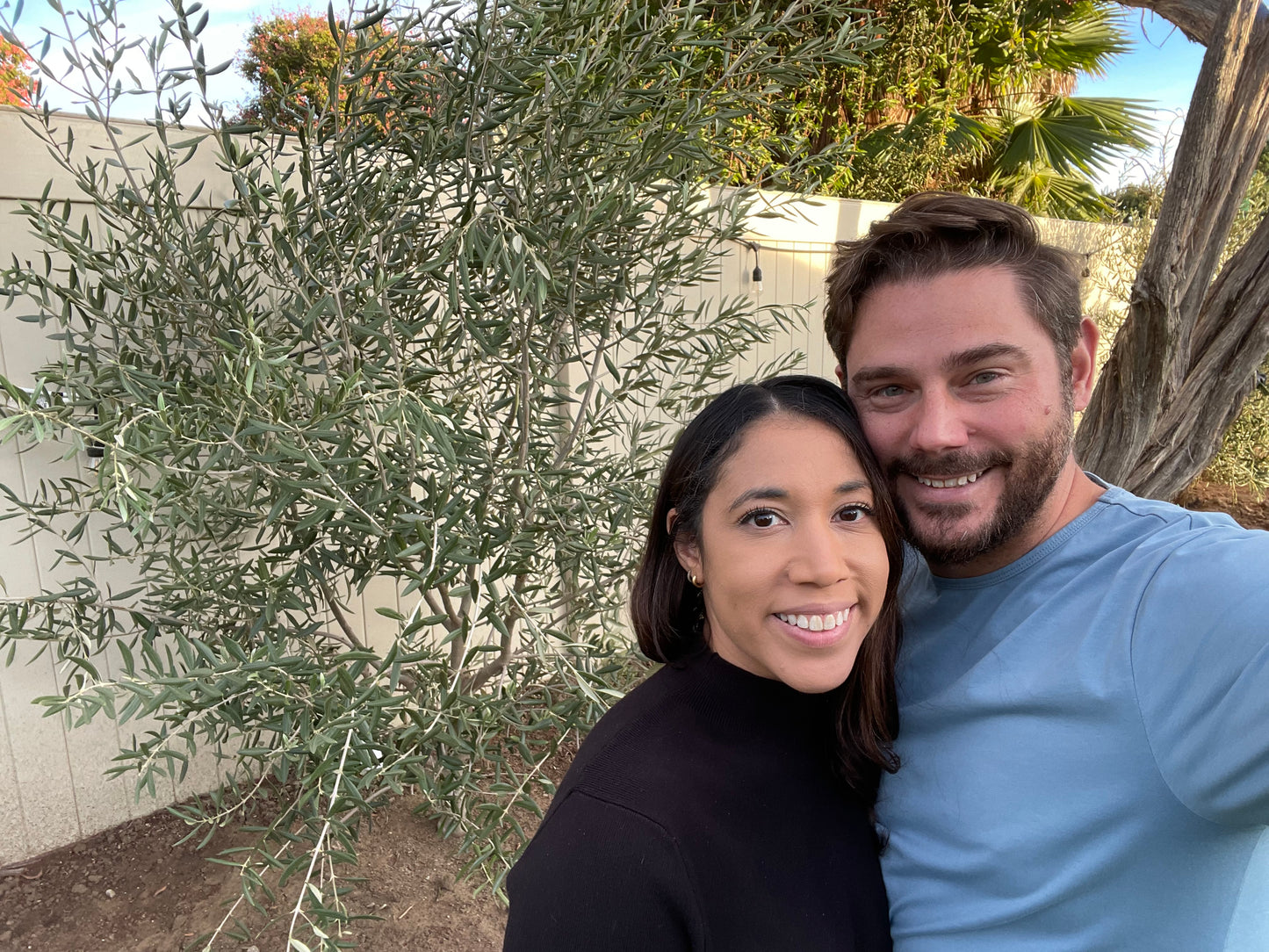
Yardwork was so great to work with. First they had the Swan Hill olive trees that we had been searching for, we had contacted several other nurseries without any luck previously. Then they answered all of our questions in a timely matter prior to ordering and finally delivered within a few days of placing it. Their staff is incredibly knowledgeable; they delivered and planted our trees with expertise to ensure that they would do well in our yard. We would definitely work with them again for future projects.











A Modern Experience
At Yardwork, we carefully curate thousands of plants, in all container sizes, to provide you with the best selection of the highest quality trees and plants at the best price, with the convenience of an online platform.
Uncompromised Quality
We choose only the finest specimens and hand select our plants just before delivery to ensure you receive the freshest and most robust specimens available for your landscape.
Industry Leading Warranties
Our 30, 90, and 365 extended warranties provide some of the best coverage to ensure our trees and plants thrive in your landscape.
Frequently Asked Questions
We're committed to changing everything about trees and plants - how they’re grown, how you shop for them, and how much they cost. We handle orders ourselves. No middlemen to get between us (or our prices) and you.
We're committed to changing everything about trees and plants - how they’re grown, how you shop for them, and how much they cost. We handle orders ourselves. No middlemen to get between us (or our prices) and you.
Delivery does not include unloading of trees and plants LARGER than a 24" box.
Trees and plants in smaller containers will be dropped curbside (usually on the driveway or near the front doorstep).
Delivery beyond a curbside drop will be charged extra.
Trees and plants that are sold in container sizes LARGER than a 24" box size will require equipment and/or enough manpower onsite to help unload from the truck.
Please reach out to our team PRIOR to placing your order to help coordinate.
Our team can provide unloading assistance with equipment for an extra fee as well.
Delivery does not include unloading of trees and plants LARGER than a 24" box.
Trees and plants in smaller containers will be dropped curbside (usually on the driveway or near the front doorstep).
Delivery beyond a curbside drop will be charged extra.
Trees and plants that are sold in container sizes LARGER than a 24" box size will require equipment and/or enough manpower onsite to help unload from the truck.
Please reach out to our team PRIOR to placing your order to help coordinate.
Our team can provide unloading assistance with equipment for an extra fee as well.
We ship locally within California within 7-10 days of your order being placed.
We ship nationally using carrier partners, based on order size.
Text or call 323-576-4159 for specific shipping details for your location.
We ship locally within California within 7-10 days of your order being placed.
We ship nationally using carrier partners, based on order size.
Text or call 323-576-4159 for specific shipping details for your location.
We are currently online only and don't have physical locations where you can view plants in person.
That's why we have photos direct from the growing grounds of the plants we will ship and we display pricing right in our store.
We do make sure to pick the very best trees and plants prior to shipping and make sure that they have gone through our multi-point inspection for health and structure.
We will always reach out prior to delivery if we find a quality issue or need to provide a substitute.
We are currently online only and don't have physical locations where you can view plants in person.
That's why we have photos direct from the growing grounds of the plants we will ship and we display pricing right in our store.
We do make sure to pick the very best trees and plants prior to shipping and make sure that they have gone through our multi-point inspection for health and structure.
We will always reach out prior to delivery if we find a quality issue or need to provide a substitute.
Plants vary greatly by type. Here is a rough idea of sizes based on containers that are direct from our growing grounds.
15 Gallon Shrub 3-4 Ft. Tall
15 Gallon Tree 5-6 Ft. Tall
24" Box Shrub 5-6 Ft. Tall
24" Box Tree 6-7 Ft. Tall
36" Box Shrub/Tree 7-9 Ft. Tall
48" Box Shrub/Tree 8-10 Ft. Tall
**Please note that we do not make guarantees of sizes. If you have questions or concerns, please call or text to request accurate sizing for the particular plant you're considering, prior to ordering.
Plants vary greatly by type. Here is a rough idea of sizes based on containers that are direct from our growing grounds.
15 Gallon Shrub 3-4 Ft. Tall
15 Gallon Tree 5-6 Ft. Tall
24" Box Shrub 5-6 Ft. Tall
24" Box Tree 6-7 Ft. Tall
36" Box Shrub/Tree 7-9 Ft. Tall
48" Box Shrub/Tree 8-10 Ft. Tall
**Please note that we do not make guarantees of sizes. If you have questions or concerns, please call or text to request accurate sizing for the particular plant you're considering, prior to ordering.
We offer a limited 30 day warranty for plants that are delivered and a 90 day warranty for plants that we plant.
The limited warranty covers plants that die as a result of disease or fungus which was derived from our growing grounds or from root balls that were root bound.
The warranty does not cover damage due to watering, fertilizer, soils, or any other conditions beyond our control. Additionally, the warranty does not cover certain plants that are shipped out of the state of California or shipped into California from other states. Custom plant orders are also not covered under warranty. Plants must be planted within 24 hours after delivery to qualify.
We can assist you in recommending the right soils and fertilizers to help your plant thrive after you plant it.
Text or call 323-576-4159 for further warranty information.
We offer a limited 30 day warranty for plants that are delivered and a 90 day warranty for plants that we plant.
The limited warranty covers plants that die as a result of disease or fungus which was derived from our growing grounds or from root balls that were root bound.
The warranty does not cover damage due to watering, fertilizer, soils, or any other conditions beyond our control. Additionally, the warranty does not cover certain plants that are shipped out of the state of California or shipped into California from other states. Custom plant orders are also not covered under warranty. Plants must be planted within 24 hours after delivery to qualify.
We can assist you in recommending the right soils and fertilizers to help your plant thrive after you plant it.
Text or call 323-576-4159 for further warranty information.
Our local delivery team covers most cities in California.
There are some exceptions, so please get in touch to confirm prior to ordering.
Additionally, we ship throughout the entire United States and even internationally. Each shipment is custom, so please reach out to our team to coordinate.
Our local delivery team covers most cities in California.
There are some exceptions, so please get in touch to confirm prior to ordering.
Additionally, we ship throughout the entire United States and even internationally. Each shipment is custom, so please reach out to our team to coordinate.