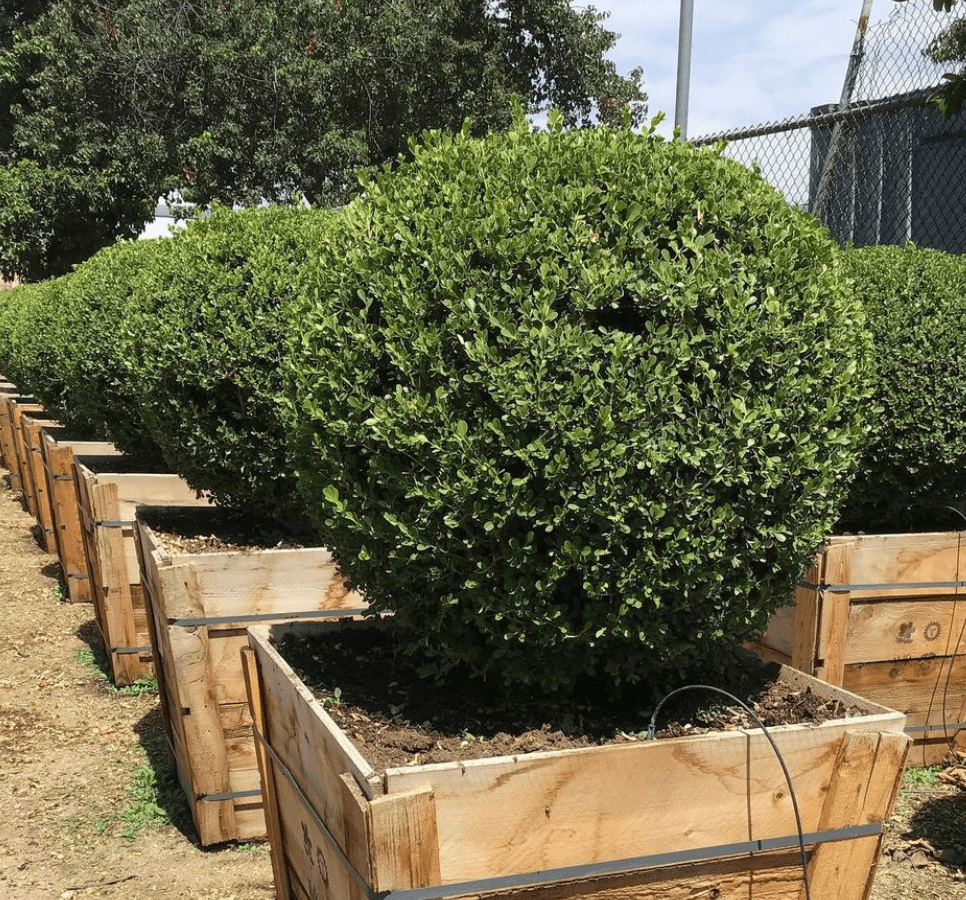
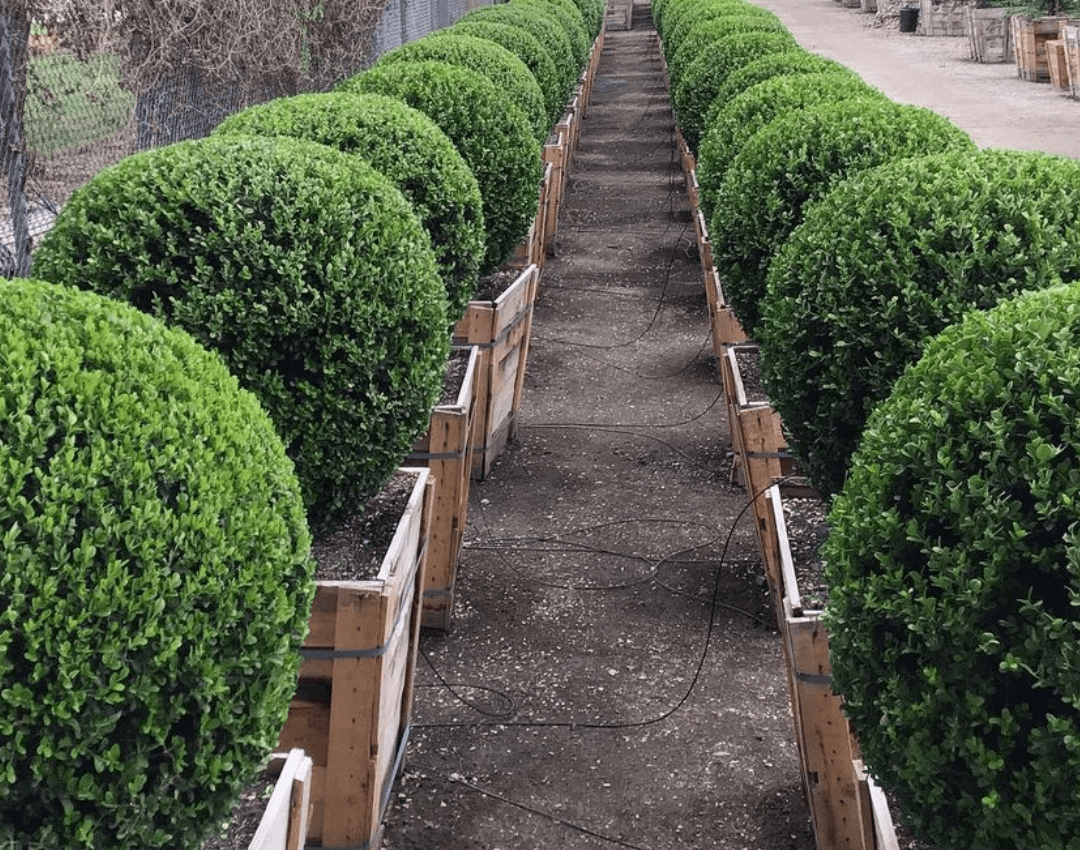
Shop the Perfect Evergreen Spheres From Yardwork
Globe boxwood is ideal when you want evergreen structure, a neat rounded shrub, and year-round green color without constant upkeep. Discover Winter Gem, Japanese, and English varieties designed for formal gardens, foundation planting, containers, edging, and modern landscape accents.
From classic borders to contemporary focal points, our globe boxwood selection combines dense foliage, natural globe form, and reliable performance for a polished outdoor space.
Find your perfect globe boxwood and transform your yard today.
Globe Boxwood for Every Garden Style
Whether you’re creating formal designs or casual landscapes, there’s a globe boxwood perfect for every garden vision. These boxwood shrubs naturally grow into neat, rounded mounds, which significantly reduces maintenance compared to upright varieties.
As an evergreen shrub, globe boxwoods retain their lush green color and dense shape through the winter, providing visual interest when other plants go dormant. Once established, globe boxwoods require minimal attention compared to flowering perennials.
Formal Garden Globe Boxwood
Choose Winter Gem, English boxwood, or common boxwood varieties for classic formal garden borders, parterre layouts, and traditional hedges. Globe boxwoods function well as formal pathway borders, structural anchors in foundation plantings, or low hedges dividing distinct garden areas.
Their natural sphere shape keeps the design clean with light pruning rather than constant shearing. Formally planted globe boxwoods can also be sheared into low walls that delineate pathways or divide garden areas, making them useful for edging, knot gardens, and symmetrical walkway plantings.
Contemporary Landscape Accents
Japanese boxwood globes bring a clean, architectural look to modern gardens. Their compact globe form pairs well with ornamental grasses, succulents, upright architectural plants, and native-style planting palettes where evergreen structure is needed at the center, corner, or front edge of a bed.
A boxwood globe can also fill visual gaps in minimalist designs without adding seasonal clutter. Use odd-number groupings for a relaxed contemporary effect, or place one dense, glossy green shrub in a container for a simple patio or entryway statement.
Foundation and Border Plantings
Compact globe boxwood varieties are excellent for foundation planting around homes and buildings because they provide structure in every season. Globe boxwoods provide structural interest and vibrant color to a garden throughout the year.
Use smaller boxwood plants along a foundation, medium globes to anchor mixed perennial borders, and larger specimens to frame a corner, entry, or garden transition. Globe boxwoods are versatile and can be used for formal hedges, topiaries, and container gardening on patios or entryways.
Choose the Right Globe Boxwood Variety
The right variety ensures optimal performance in your specific climate and design needs. There are over 100 species, hybrids, and cultivars of boxwood, varying in characteristics such as height, shape, growth rate, leaf size, heat tolerance, cold tolerance, lighting preferences, and resistance to pests and diseases.
Popular options include Buxus microphylla, Buxus microphylla var. japonica, Buxus sempervirens, Dwarf Korean boxwood, Green Mountain boxwood, Green Velvet, and Winter Gem. Some boxwoods grow as low rounded globes, while others mature into taller upright or oval forms.
Winter Gem Boxwood
Winter Gem Boxwood, or Buxus ‘Winter Gem’, is known for its cold hardiness and ability to maintain vibrant foliage through harsh winters, making it an excellent choice for northern climates. The Winter Gem Boxwood globe form is hardy in USDA zones 4-9 and can adapt to various light conditions, thriving in both partial shade and full sun.
This boxwood variety is characterized by its naturally spherical growth pattern, which requires minimal pruning and provides architectural structure in landscapes. Its dense, fine-textured foliage and smaller leaves make Winter Gem especially useful for formal applications, low hedges, and a polished globe shape.
Japanese Boxwood Globe
Globe Japanese boxwood, especially Buxus microphylla var. japonica, is heat-tolerant and suitable for southern climates, making it a good choice for warmer regions. It is a strong option for California gardens where heat tolerance, sun adaptability, and a compact habit matter.
A Japanese boxwood globe often reaches a practical medium size, making it suitable for smaller spaces, containers, and foundation areas. Compared with slower types, many Japanese boxwoods establish faster, helping gardeners create structure in the landscape without waiting years for visible growth.
English Boxwood (Common Boxwood)
Common boxwood, or Buxus sempervirens, is a popular choice for landscaping due to its slow growth rate and suitability for hedges, providing good height for privacy. English boxwood has a traditional dark green look, fine foliage, and a refined presence that suits formal gardens.
Because common boxwood is a slow grower, it is ideal where a stable, long-lasting shape is preferred. It can be maintained as a rounded shrub, clipped hedge, or topiary, though it may need more careful siting in hot sun or disease-prone areas.
Green Mountain boxwood, also sold as Buxus Green Mountain, and Green Velvet boxwood are useful alternatives when you want a hardy, disease resistant look with a more upright or naturally rounded habit. Green Gem boxwood cubes offer a similar hardy, geometric option where a crisp architectural outline is desired. Dwarf Korean boxwood, Buxus sinica var. insularis ‘Nana’, is known for its extra cold hardiness and is often used for small hedges in formal landscape designs.
Growing Conditions That Support Healthy Growth
Proper site selection and care ensure your globe boxwood thrives for decades. Globe boxwoods require well-draining soil, protection from harsh afternoon sun, and light annual pruning to thrive.
The ideal time for planting boxwood shrubs is during the mild temperatures of spring or fall, as this allows the shrub to establish its root system before winter or settle while the soil is still warm.
Soil Requirements
Boxwoods prefer well-drained soil and can tolerate a pH ranging from mildly acidic to mildly alkaline, making them adaptable to various soil conditions. Boxwood shrubs prefer evenly moist, well-drained soil and can tolerate a soil pH ranging from mildly acidic to mildly alkaline.
For best performance, globe boxwoods thrive in exceptionally well-draining loamy soil with a neutral to slightly alkaline pH between 6.5 and 7.5. They are highly prone to root rot if planted in waterlogged soil, so soil testing and drainage improvement are smart steps before planting.
Variety
Ideal Soil
Preferred pH
Best Use
Winter Gem
Rich, well drained soil with organic matter
6.5-7.5
Globes, hedges, foundation planting
Japanese boxwood
Loamy, fast-draining soil
Mildly acidic to mildly alkaline
Warm climates, containers, borders
English boxwood
Evenly moist, well-drained soil
Neutral to slightly alkaline
Formal gardens, edging, privacy hedges
Dwarf Korean boxwood
Cool, well-drained ground
Mildly acidic to mildly alkaline
Small hedges, cold-climate formal designs
Light and Climate Needs
Globe boxwoods prefer partial shade with ideally 4 to 6 hours of morning sun. Many varieties tolerate full sun, especially Winter Gem and Japanese boxwood, but protection from harsh afternoon sun is recommended in hot climates to reduce scorch and winter bronzing. In hotter regions, pairing globe boxwoods with taller privacy trees and shrubs from a full-service nursery can also provide helpful afternoon shade.
Winter Gem offers strong cold tolerance, Japanese boxwood offers strong heat tolerance, and English boxwood performs best with shade protection and steady moisture. In colder USDA zones, mulch and wind protection help protect shallow roots and foliage through winter.
Watering and Maintenance
When planting boxwoods, it is important to avoid overwatering, especially during the first year, to prevent transplant shock and ensure healthy growth. Overwatering is a common problem when caring for boxwoods; it is important to keep the soil evenly moist without making it soggy or soaked.
Once established, globe boxwoods are quite drought-tolerant but appreciate deep watering during extreme summer dry spells. For broader structure and screening, consider complementing them with evergreen privacy trees that offer taller, low-maintenance coverage. A 2- to 3-inch layer of organic mulch should be applied over the root zone to insulate shallow roots and retain moisture, while keeping mulch away from the trunk to prevent rot and keep roots cool.
Pruning boxwoods is best done in late spring after the new growth has hardened off, which helps maintain their shape and health. Light annual pruning in late spring or early summer is usually enough because globe boxwoods naturally hold their neat form.
Globe boxwoods are highly resistant to deer and rabbit browsing. Boxwood foliage contains alkaloids that make it unpalatable to deer and rabbits, making it suitable for gardens facing heavy wildlife pressure.
How to Design with Globe Boxwood
Globe boxwood offers endless design possibilities for creating structure and visual interest. Its dense evergreen foliage, low maintenance habit, and clean shape make it one of the most useful plants for organized garden layouts.
Use it as a single focal shrub, repeat it along a path, or combine different boxwoods for varied height, spread, and texture. To quickly balance these low shrubs, you can introduce mature landscape trees that provide instant canopy and vertical interest. For healthier long-term growth, leave enough airflow around each cultivar to reduce boxwood blight risk.
Formal Design Applications
For traditional landscapes, plant globe boxwoods in symmetrical patterns along walkways, around a fountain, or at the entrance to a garden room. Their dark green foliage and rounded shape create order without relying on flowers.
Globe boxwoods work beautifully in knot gardens, parterre designs, clipped hedges, and low walls. Use matched plants for consistency, or combine slow growing English boxwood with Winter Gem for areas that need both classic character and stronger winter performance.
Contemporary Landscape Integration
For modern landscapes, place boxwood globes asymmetrically in groups of three or five. Their geometric form contrasts well with soft grasses, gravel, succulents, and upright plants. Compact flowering trees such as Little Gem dwarf Southern magnolia also pair beautifully with globe boxwoods, adding height and seasonal blooms above their evergreen structure.
In containers, globe boxwood brings structure to patios, decks, balconies, and entryways. For additional interest in nearby beds, consider pairing them with container-friendly ornamentals such as New Zealand Christmas tree and other specialty shrubs or cheesewood (Pittosporum) and related screening plants. Choose a pot with drainage, use rich but fast-draining soil, and position the plant where it receives morning sun and afternoon shade in hotter regions.
Shop Globe Boxwood Online at Yardwork
Explore our premium collection of globe boxwood varieties, carefully selected for California growing conditions and long-term landscape performance. Choose from Winter Gem, Japanese boxwood, English boxwood, Green Mountain, Green Velvet, and other boxwood plants in sizes suited for containers, edging, hedges, foundation planting, and focal points.
If your garden faces heat, deer pressure, limited space, or year-round design needs, globe boxwood is a dependable evergreen choice. Ask Yardwork for help selecting the right cultivar, spacing, soil preparation, and care plan for your specific outdoor space.
Your perfect globe boxwood is ready for delivery. Request a consultation to ensure optimal variety selection for your site conditions.