

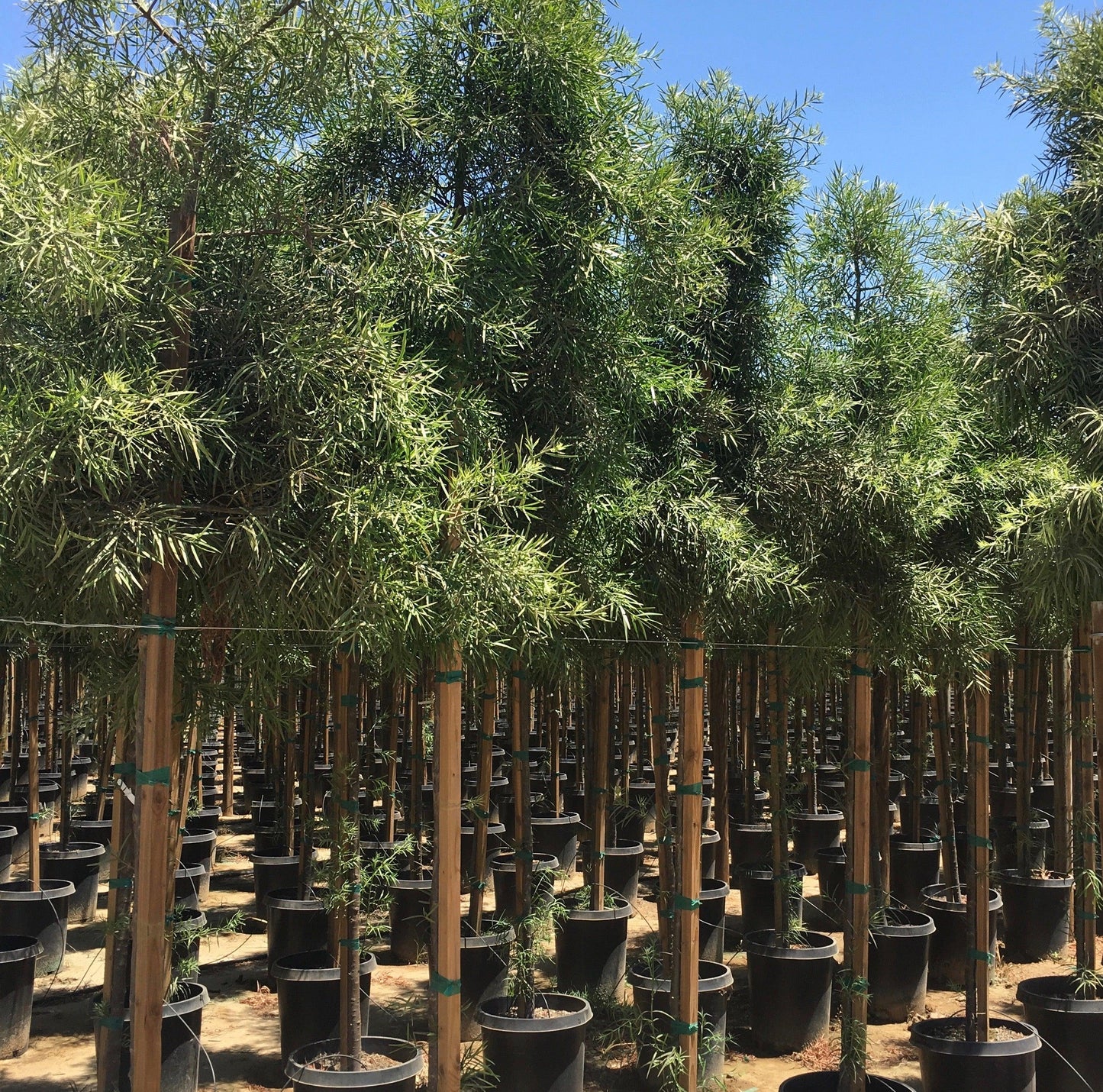
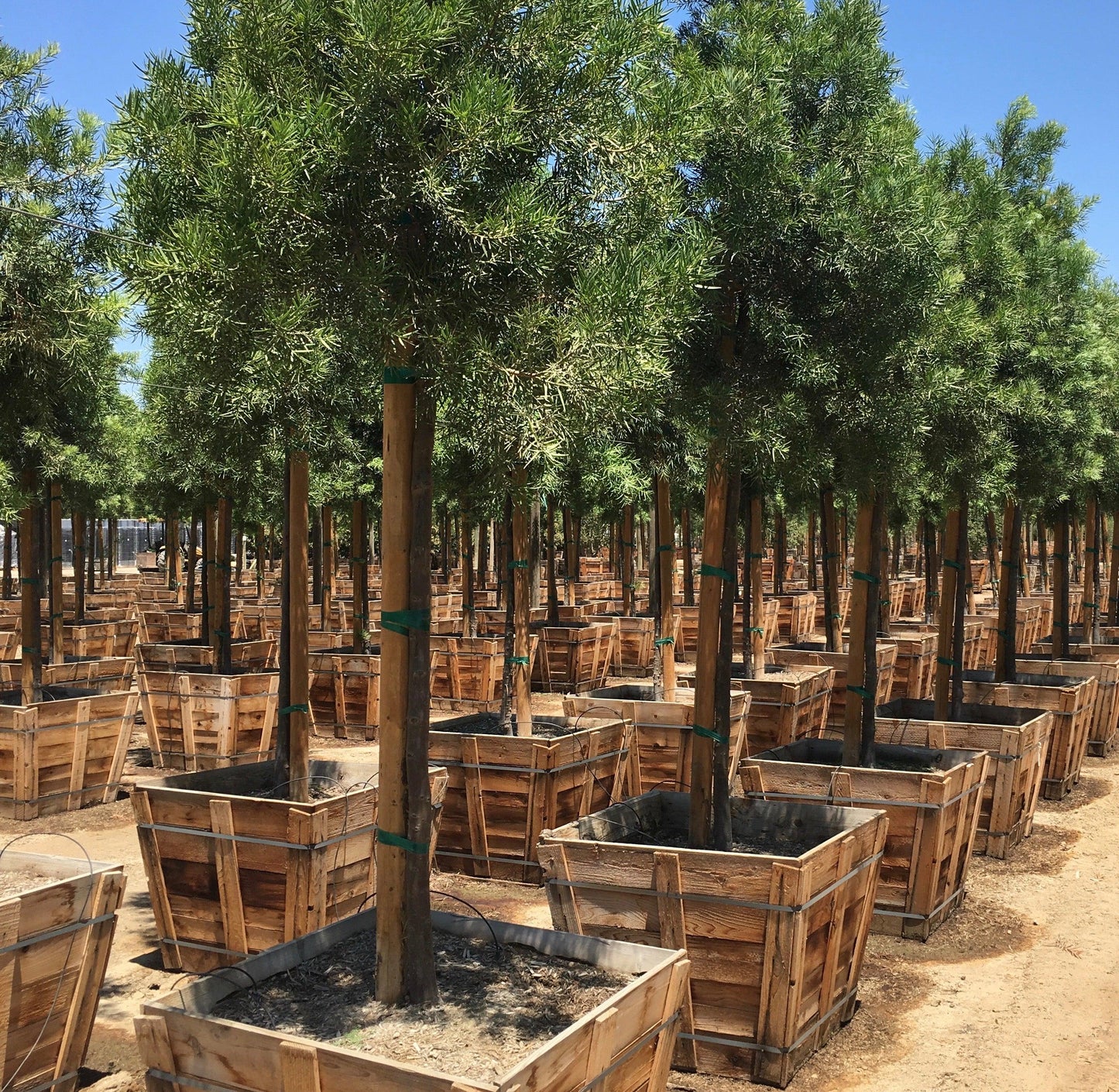


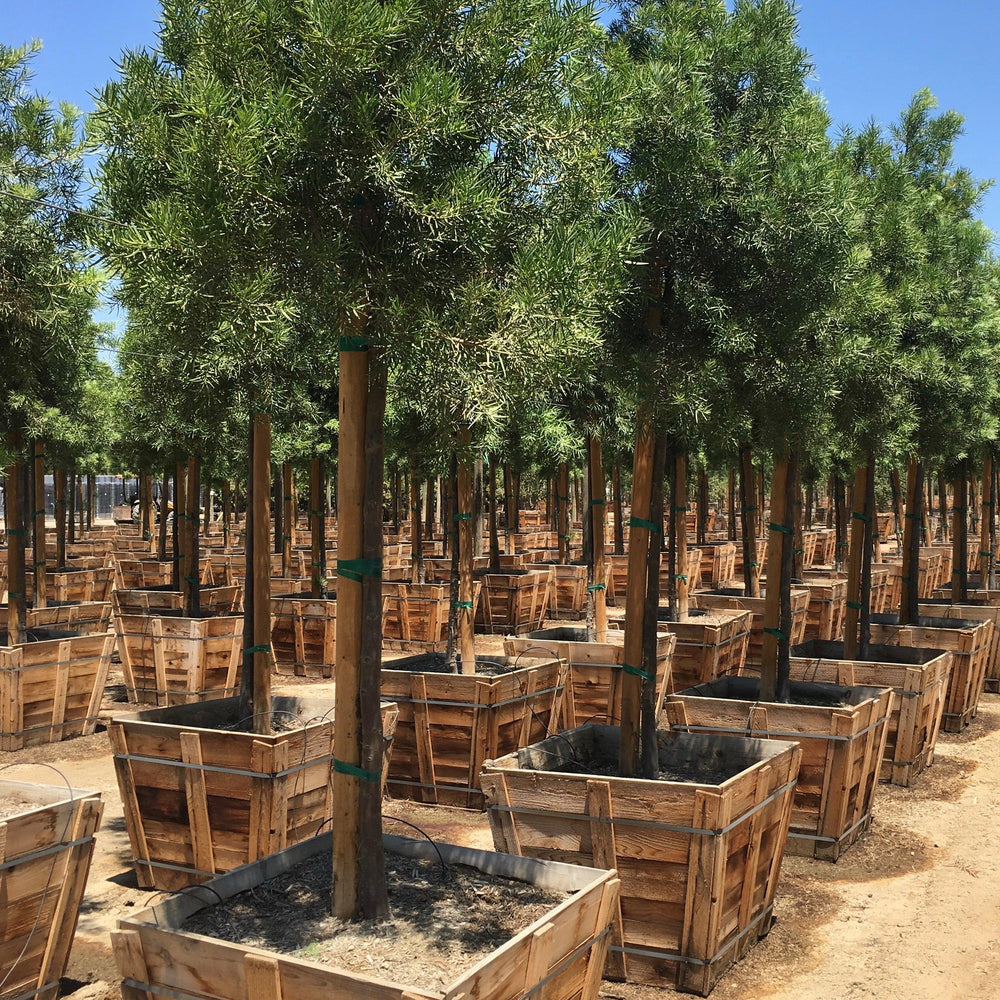
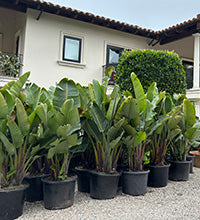
Podocarpus Tree - Podocarpus gracilior
Regular price
$895.00
Size
The Perfect Evergreen for Year-Round Privacy and Beauty
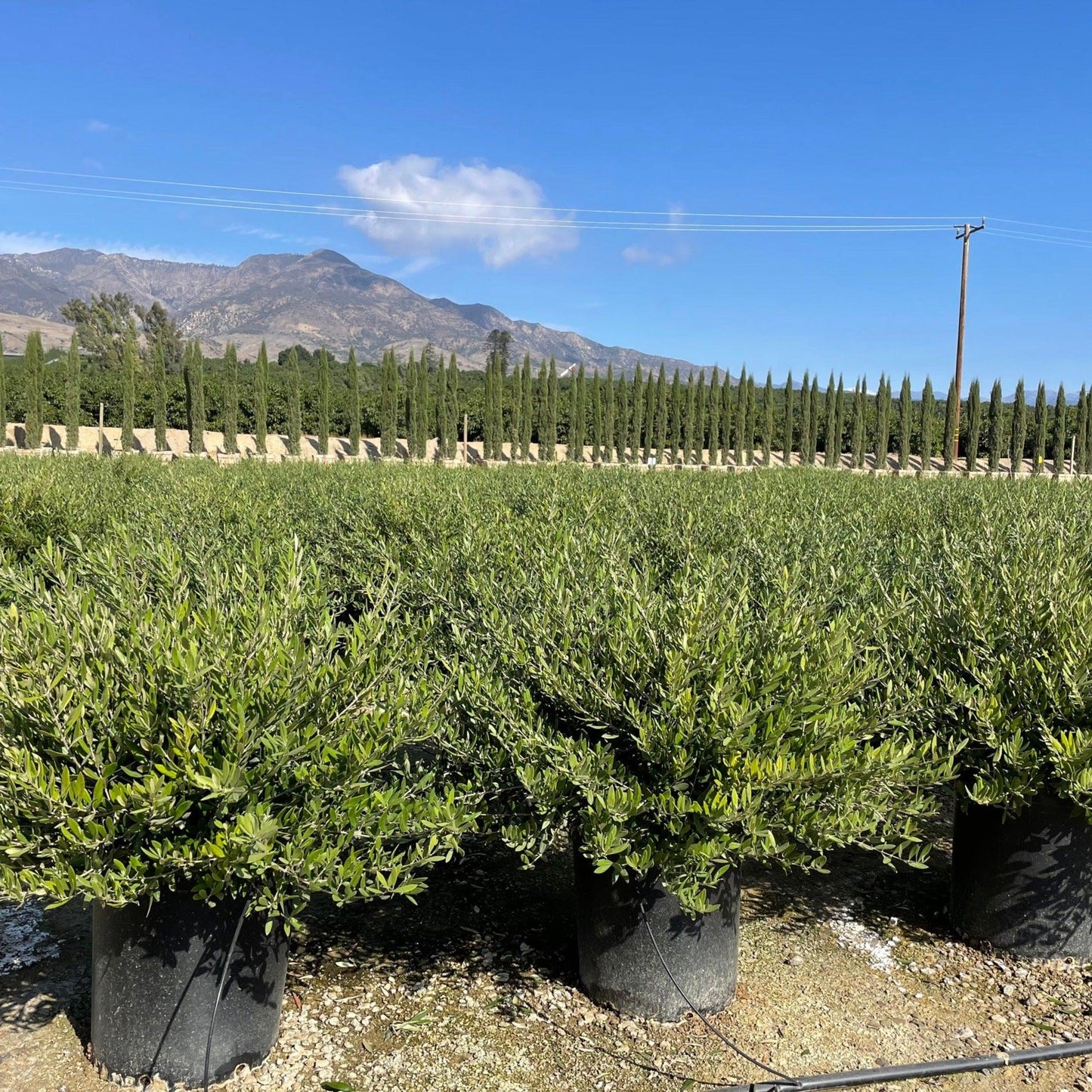
Podocarpus gives you a dense, evergreen privacy screen with soft dark green foliage that stays attractive year-round, without the seasonal leaf drop of many landscape trees. Whether you want a formal hedge, a narrow tree form, or a clean backdrop for showier plants, this low maintenance plant delivers reliable structure and beauty with minimal maintenance once established.
Also known as yew pine, podocarpus yew pine, buddhist pine, plum pine, and sometimes fern pine depending on the species, podocarpus is valued for adaptable growth in full sun to partial shade. It is a smart choice for California landscapes, coastal properties, urban yards, and narrow planting areas where homeowners want privacy screens that look polished without constant upkeep.
Why You’ll Love It
-
Dense Privacy Screen – Creates a tall, natural barrier that blocks views year-round with soft, dark green, needle-like foliage.
-
Drought Tolerant – When first planted, podocarpus trees need regular watering to establish, but once established, they are drought-tolerant and require little additional watering except during prolonged dry periods.
-
Adaptable Growth – Podocarpus prefers bright, indirect light indoors or full sun to partial shade outdoors, and podocarpus trees thrive in full sun to partial shade, with more sunlight encouraging better growth.
-
Pollution Resistant – Podocarpus thrives in pollution-heavy environments and can handle salt spray, making it suitable for coastal landscapes and city planting sites.
-
Easy to Shape – Podocarpus can handle hard pruning well, making it suitable for dense privacy hedges, clean topiary specimens, or a more natural large shrub.
-
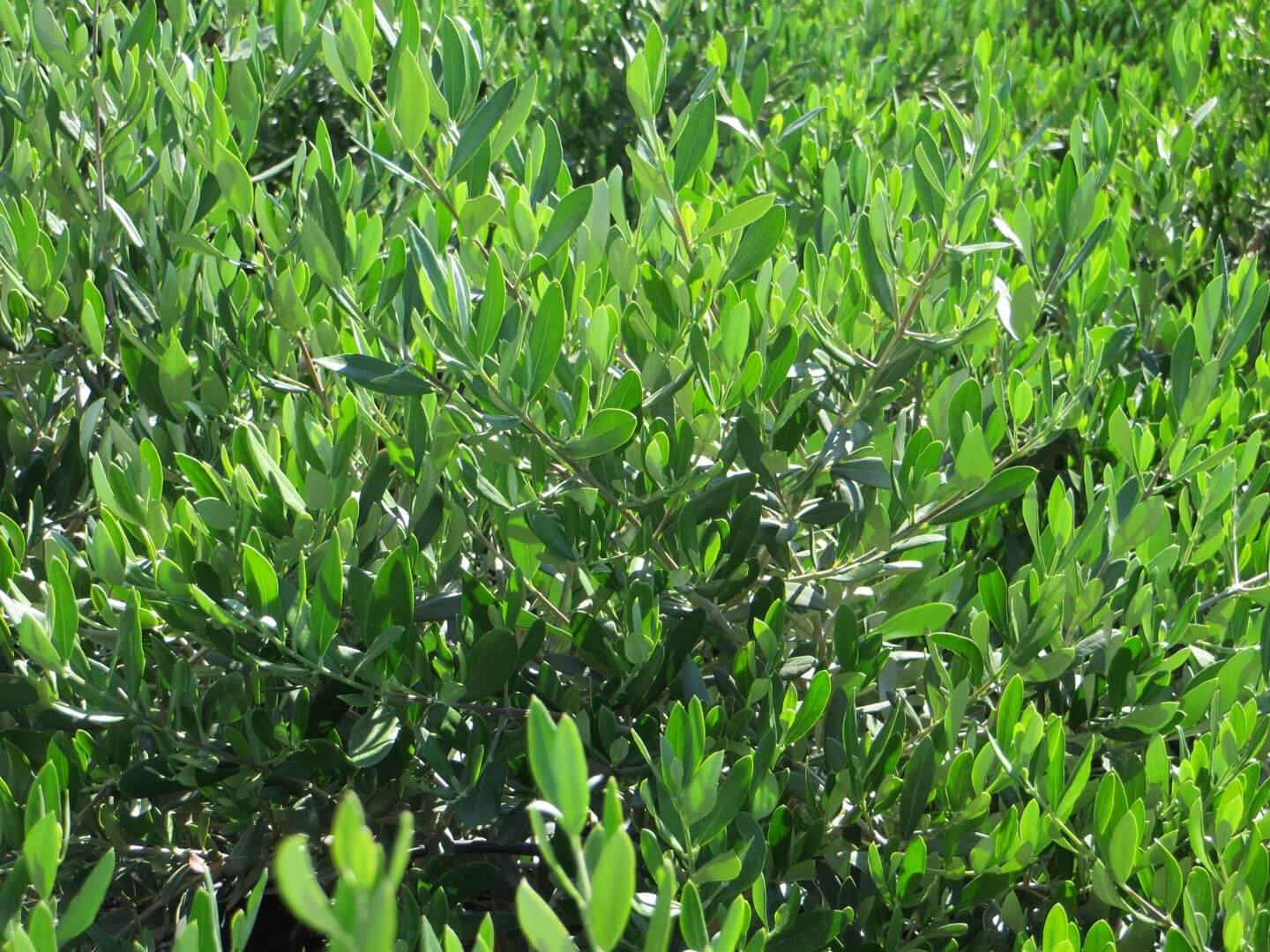
Year-Round Color – Podocarpus features soft, dark green, needle-like foliage that provides year-round color and a polished evergreen look.
Podocarpus trees are low-maintenance evergreen plants, which makes them especially useful for homeowners who want dependable privacy without replacing seasonal evergreen trees and shrubs or dealing with heavy leaf cleanup. Their upright growth habit also helps them fit into narrow spaces where wider trees can feel crowded.
What Makes It Different
Most privacy trees force a tradeoff: bamboo can spread aggressively, deciduous trees lose coverage in winter, and some hedge plants struggle with coastal salt, drought, pests, or cold weather, which is why many homeowners compare multiple privacy trees and shrubs options before choosing a solution. Podocarpus is different because it combines dense green foliage, flexible pruning, and strong landscape performance in one plant.
-
Year-Round Foliage – This evergreen never goes dormant like deciduous alternatives, so your hedge wall keeps its coverage through every season.
-
Salt Tolerance – Podocarpus thrives in pollution-heavy environments and can handle salt spray, making it a stronger option than many coastal competitors.
-
Flexible Sizing – Podocarpus trees naturally grow into an upright, columnar shape, making them ideal for narrow spaces; they can be maintained as shrubs, trained into topiary, or grown into a tree form.
-
Non-Invasive Roots – Podocarpus has a non-invasive root system that rarely damages nearby foundations or sidewalks.
-
Landscape Versatility – Podocarpus can be used as a hedge wall for privacy, providing a tall and narrow barrier that works well in various landscape settings, similar to a Fern Pine hedge (Podocarpus gracilior) in more specialized designs.
The podocarpus genus belongs to the podocarp family and includes many species used in gardens around the world. Podocarpus macrophyllus is often called podocarpus yew pine, yew pine, buddhist pine, or plum pine, while Podocarpus gracilior fern pine trees are commonly called fern pine and are associated with eastern Africa. Some podocarpus species and relatives are also connected with regions such as southern China. Despite the common names, podocarpus is not a true pine, and it should not be confused with a Japanese yew botanical plant.
The Best Success Starts With The Right Preparation
-
Plant in Well-Draining Soil
Choose a location with well draining soil, good air movement, and full sun to partial shade. Podocarpus prefers rich, organic soil that is moist and drains well, and it tolerates a variety of well-draining soils, including sandy soil. For best results, set the root ball at the same depth it was growing in the nursery container. -
Water Regularly First Year
Keep the soil moist but not saturated while the roots establish. Brown leaves on a podocarpus tree may indicate a lack of water, suggesting that the plant needs a deep soaking, but care should be taken not to saturate the soil to avoid other issues. Gray leaves on podocarpus trees often signal overwatering, which can lead to fungal diseases and root rot; reducing watering and improving soil drainage can help resolve this issue. -
Prune to Shape
Use pruning to guide the plant into a hedge, large shrub, topiary specimen, or upright tree form, much like you would shape a Brush Cherry privacy hedge shrub in a formal landscape. Podocarpus can handle hard pruning well, making it suitable for dense privacy hedges, and annual trimming encourages dense new growth, similar to how a Carolina Cherry Laurel hedge responds to regular shaping. -
Feed Lightly in Spring
Fertilization is not strictly necessary for podocarpus, but applying a slow-release fertilizer in the spring can promote lush growth. This is especially helpful when you want faster coverage, more sunshine exposure, or a refined formal hedge.
For containers, start with a small pot when growing young plants or cuttings, then shift to a larger pot as roots fill the container. A pot that is about 2 inches larger is usually enough for a gradual step up, and keeping the plant at the same depth helps prevent trunk and root problems, especially when transitioning young specimens of trees like Carrotwood and other landscape trees into larger containers or beds.
Product Details
-
Plant Type: Low maintenance evergreen tree, large shrub, hedge, or topiary plant
-
Common Names: Podocarpus yew pine, yew pine, buddhist pine, plum pine, fern pine
-
Botanical Group: Podocarpus genus, podocarp family
-
Popular Species: Podocarpus macrophyllus and podocarpus gracilior
-
Mature Size: Commonly maintained at 15–25 feet tall and 8–12 feet wide; podocarpus trees can grow to heights of up to 40 feet, depending on the variety and growing conditions
-
Growth Rate: Moderate growth rate; the growth rate of podocarpus can vary, with some varieties growing as much as two feet per year under optimal conditions
-
Hardiness: Podocarpus thrives in warmer climates, specifically USDA Zones 9–11; California plantings are especially well suited where cold temperatures are limited
-
Light Needs: Bright, indirect light indoors or full sun to partial shade outdoors
-
Soil Requirements: Podocarpus prefers well-draining soil and can tolerate a variety of soil types, thriving best in sandy soils with a pH between 4.5 and 7.5
-
Water Needs: Regular water during establishment; drought resistant and drought tolerant once established
-
Fertilizer: Slow release fertilizer in spring is optional but helpful for lush foliage
-
Flowering / Cones: Male cones, also called pollen cones, may appear on male plants; female plants produce edible fleshy seed cones resembling purplish/red berries that attract birds
-
Pet Safety: The leaves, stems, and unripe seeds of Podocarpus contain mild toxins that can be poisonous to cats and dogs if ingested
-
Included: Healthy root system, planting guide, care instructions, and support for soil podocarpus placement questions
Who It’s For
Ideal for:
-
Homeowners who want permanent privacy screens without seasonal gaps
-
Property owners with coastal wind, salt spray, pollution, or urban planting conditions
-
Gardeners who want low maintenance evergreen shrubs or trees with reliable green foliage, such as John Edwards Italian Buckthorn privacy shrubs for fast, dense screening
-
Designers creating formal hedge lines, topiary features, or a clean backdrop for showier plants
-
Narrow yards, side yards, patios, and entryways where an upright, columnar shape is useful, similar to how Silver Sheen Pittosporum hedges are used in compact spaces
-
Indoor plant lovers who can provide bright, indirect light and consistent care
If you want to grow podocarpus as a privacy hedge, specimen tree, or decorative landscape feature, this plant fits your needs. It can be kept compact with pruning, allowed to mature into a taller tree form, or used as a dense evergreen screen where dependable coverage matters most.
Podocarpus is also a strong choice for landscapes where roots are a concern. Its non-invasive root system rarely damages nearby foundations or sidewalks, making it more practical near hardscape than many larger trees.
Frequently Asked Questions
How fast does podocarpus grow?
Podocarpus has a moderate growth rate, and the growth rate of podocarpus can vary, with some varieties growing as much as two feet per year under optimal conditions. More sunshine, good soil, spring feeding, and consistent establishment watering can help encourage stronger new growth.
Can it handle California drought conditions?
Yes. When first planted, podocarpus trees need regular watering to establish, but once established, they are drought-tolerant and require little additional watering except during prolonged dry periods. Deep watering is better than frequent shallow watering because it supports stronger roots.
Will it work for my climate zone?
Podocarpus thrives in warmer climates, specifically USDA Zones 9–11. It performs best where cold temperatures and hard freezes are uncommon, though protected microclimates can help reduce cold weather stress.
What soil does podocarpus prefer?
Podocarpus prefers rich, organic soil that is moist and drains well, and it tolerates a variety of well-draining soils, including sandy soil. Podocarpus prefers well-draining soil and can tolerate a variety of soil types, thriving best in sandy soils with a pH between 4.5 and 7.5.
What are common pests and plant diseases podocarpus owners should watch for?
Podocarpus trees are generally not prone to many pests or diseases, but they may attract aphids, mites, scale insects, and sawflies, which can be treated with insecticidal soap or horticultural oil. The most common problems usually come from stress, overwatering, poor drainage, or fungal diseases such as root rot.
Why are the leaves turning brown or gray?
Brown leaves on a podocarpus tree may indicate a lack of water, suggesting that the plant needs a deep soaking, but care should be taken not to saturate the soil to avoid other issues. Gray leaves on podocarpus trees often signal overwatering, which can lead to fungal diseases and root rot; reducing watering and improving soil drainage can help resolve this issue.
Can podocarpus be grown from cuttings or seeds?
Yes. Podocarpus can be propagated through stem cuttings or by planting seeds, although some patented varieties cannot be propagated. To propagate podocarpus from stem cuttings, use clean pruning shears, rich well-draining soil, a small pot, and rooting hormone. Growing podocarpus from seed requires gathering seeds, sphagnum moss, organic soil, a resealable plastic bag, and small pots.
Is podocarpus safe around pets?
Use caution around pets. The leaves, stems, and unripe seeds of Podocarpus contain mild toxins that can be poisonous to cats and dogs if ingested.
What if the tree doesn’t establish?
Yardwork supports your purchase with expert guidance, care recommendations, and a plant guarantee policy designed to give you confidence from planting through establishment.
Ready to Create Your Privacy Paradise?
Stop waiting for privacy from slow-growing, seasonal, or high-maintenance alternatives. Choose Podocarpus and enjoy a dense, evergreen screen with soft dark green foliage, adaptable growth, and a clean landscape shape that works in formal and natural designs.
From full sun coastal landscapes to partial shade urban yards, Yardwork helps you plant with confidence and maintain lasting privacy with satisfaction-backed support.
The Perfect Evergreen for Year-Round Privacy and Beauty
Podocarpus gives you a dense, evergreen privacy screen with soft dark green foliage that stays attractive year-round, without the seasonal leaf drop of many landscape trees. Whether you want a formal hedge, a narrow tree form, or a clean backdrop for showier plants, this low maintenance plant delivers reliable structure and beauty with minimal maintenance once established.
Also known as yew pine, podocarpus yew pine, buddhist pine, plum pine, and sometimes fern pine depending on the species, podocarpus is valued for adaptable growth in full sun to partial shade. It is a smart choice for California landscapes, coastal properties, urban yards, and narrow planting areas where homeowners want privacy screens that look polished without constant upkeep.
Why You’ll Love It
-
Dense Privacy Screen – Creates a tall, natural barrier that blocks views year-round with soft, dark green, needle-like foliage.
-
Drought Tolerant – When first planted, podocarpus trees need regular watering to establish, but once established, they are drought-tolerant and require little additional watering except during prolonged dry periods.
-
Adaptable Growth – Podocarpus prefers bright, indirect light indoors or full sun to partial shade outdoors, and podocarpus trees thrive in full sun to partial shade, with more sunlight encouraging better growth.
-
Pollution Resistant – Podocarpus thrives in pollution-heavy environments and can handle salt spray, making it suitable for coastal landscapes and city planting sites.
-
Easy to Shape – Podocarpus can handle hard pruning well, making it suitable for dense privacy hedges, clean topiary specimens, or a more natural large shrub.
-
Year-Round Color – Podocarpus features soft, dark green, needle-like foliage that provides year-round color and a polished evergreen look.
Podocarpus trees are low-maintenance evergreen plants, which makes them especially useful for homeowners who want dependable privacy without replacing seasonal evergreen trees and shrubs or dealing with heavy leaf cleanup. Their upright growth habit also helps them fit into narrow spaces where wider trees can feel crowded.
What Makes It Different
Most privacy trees force a tradeoff: bamboo can spread aggressively, deciduous trees lose coverage in winter, and some hedge plants struggle with coastal salt, drought, pests, or cold weather, which is why many homeowners compare multiple privacy trees and shrubs options before choosing a solution. Podocarpus is different because it combines dense green foliage, flexible pruning, and strong landscape performance in one plant.
-
Year-Round Foliage – This evergreen never goes dormant like deciduous alternatives, so your hedge wall keeps its coverage through every season.
-
Salt Tolerance – Podocarpus thrives in pollution-heavy environments and can handle salt spray, making it a stronger option than many coastal competitors.
-
Flexible Sizing – Podocarpus trees naturally grow into an upright, columnar shape, making them ideal for narrow spaces; they can be maintained as shrubs, trained into topiary, or grown into a tree form.
-
Non-Invasive Roots – Podocarpus has a non-invasive root system that rarely damages nearby foundations or sidewalks.
-
Landscape Versatility – Podocarpus can be used as a hedge wall for privacy, providing a tall and narrow barrier that works well in various landscape settings, similar to a Fern Pine hedge (Podocarpus gracilior) in more specialized designs.
The podocarpus genus belongs to the podocarp family and includes many species used in gardens around the world. Podocarpus macrophyllus is often called podocarpus yew pine, yew pine, buddhist pine, or plum pine, while Podocarpus gracilior fern pine trees are commonly called fern pine and are associated with eastern Africa. Some podocarpus species and relatives are also connected with regions such as southern China. Despite the common names, podocarpus is not a true pine, and it should not be confused with a Japanese yew botanical plant.
The Best Success Starts With The Right Preparation
-
Plant in Well-Draining Soil
Choose a location with well draining soil, good air movement, and full sun to partial shade. Podocarpus prefers rich, organic soil that is moist and drains well, and it tolerates a variety of well-draining soils, including sandy soil. For best results, set the root ball at the same depth it was growing in the nursery container. -
Water Regularly First Year
Keep the soil moist but not saturated while the roots establish. Brown leaves on a podocarpus tree may indicate a lack of water, suggesting that the plant needs a deep soaking, but care should be taken not to saturate the soil to avoid other issues. Gray leaves on podocarpus trees often signal overwatering, which can lead to fungal diseases and root rot; reducing watering and improving soil drainage can help resolve this issue. -
Prune to Shape
Use pruning to guide the plant into a hedge, large shrub, topiary specimen, or upright tree form, much like you would shape a Brush Cherry privacy hedge shrub in a formal landscape. Podocarpus can handle hard pruning well, making it suitable for dense privacy hedges, and annual trimming encourages dense new growth, similar to how a Carolina Cherry Laurel hedge responds to regular shaping. -
Feed Lightly in Spring
Fertilization is not strictly necessary for podocarpus, but applying a slow-release fertilizer in the spring can promote lush growth. This is especially helpful when you want faster coverage, more sunshine exposure, or a refined formal hedge.
For containers, start with a small pot when growing young plants or cuttings, then shift to a larger pot as roots fill the container. A pot that is about 2 inches larger is usually enough for a gradual step up, and keeping the plant at the same depth helps prevent trunk and root problems, especially when transitioning young specimens of trees like Carrotwood and other landscape trees into larger containers or beds.
Product Details
-
Plant Type: Low maintenance evergreen tree, large shrub, hedge, or topiary plant
-
Common Names: Podocarpus yew pine, yew pine, buddhist pine, plum pine, fern pine
-
Botanical Group: Podocarpus genus, podocarp family
-
Popular Species: Podocarpus macrophyllus and podocarpus gracilior
-
Mature Size: Commonly maintained at 15–25 feet tall and 8–12 feet wide; podocarpus trees can grow to heights of up to 40 feet, depending on the variety and growing conditions
-
Growth Rate: Moderate growth rate; the growth rate of podocarpus can vary, with some varieties growing as much as two feet per year under optimal conditions
-
Hardiness: Podocarpus thrives in warmer climates, specifically USDA Zones 9–11; California plantings are especially well suited where cold temperatures are limited
-
Light Needs: Bright, indirect light indoors or full sun to partial shade outdoors
-
Soil Requirements: Podocarpus prefers well-draining soil and can tolerate a variety of soil types, thriving best in sandy soils with a pH between 4.5 and 7.5
-
Water Needs: Regular water during establishment; drought resistant and drought tolerant once established
-
Fertilizer: Slow release fertilizer in spring is optional but helpful for lush foliage
-
Flowering / Cones: Male cones, also called pollen cones, may appear on male plants; female plants produce edible fleshy seed cones resembling purplish/red berries that attract birds
-
Pet Safety: The leaves, stems, and unripe seeds of Podocarpus contain mild toxins that can be poisonous to cats and dogs if ingested
-
Included: Healthy root system, planting guide, care instructions, and support for soil podocarpus placement questions
Who It’s For
Ideal for:
-
Homeowners who want permanent privacy screens without seasonal gaps
-
Property owners with coastal wind, salt spray, pollution, or urban planting conditions
-
Gardeners who want low maintenance evergreen shrubs or trees with reliable green foliage, such as John Edwards Italian Buckthorn privacy shrubs for fast, dense screening
-
Designers creating formal hedge lines, topiary features, or a clean backdrop for showier plants
-
Narrow yards, side yards, patios, and entryways where an upright, columnar shape is useful, similar to how Silver Sheen Pittosporum hedges are used in compact spaces
-
Indoor plant lovers who can provide bright, indirect light and consistent care
If you want to grow podocarpus as a privacy hedge, specimen tree, or decorative landscape feature, this plant fits your needs. It can be kept compact with pruning, allowed to mature into a taller tree form, or used as a dense evergreen screen where dependable coverage matters most.
Podocarpus is also a strong choice for landscapes where roots are a concern. Its non-invasive root system rarely damages nearby foundations or sidewalks, making it more practical near hardscape than many larger trees.
Frequently Asked Questions
How fast does podocarpus grow?
Podocarpus has a moderate growth rate, and the growth rate of podocarpus can vary, with some varieties growing as much as two feet per year under optimal conditions. More sunshine, good soil, spring feeding, and consistent establishment watering can help encourage stronger new growth.
Can it handle California drought conditions?
Yes. When first planted, podocarpus trees need regular watering to establish, but once established, they are drought-tolerant and require little additional watering except during prolonged dry periods. Deep watering is better than frequent shallow watering because it supports stronger roots.
Will it work for my climate zone?
Podocarpus thrives in warmer climates, specifically USDA Zones 9–11. It performs best where cold temperatures and hard freezes are uncommon, though protected microclimates can help reduce cold weather stress.
What soil does podocarpus prefer?
Podocarpus prefers rich, organic soil that is moist and drains well, and it tolerates a variety of well-draining soils, including sandy soil. Podocarpus prefers well-draining soil and can tolerate a variety of soil types, thriving best in sandy soils with a pH between 4.5 and 7.5.
What are common pests and plant diseases podocarpus owners should watch for?
Podocarpus trees are generally not prone to many pests or diseases, but they may attract aphids, mites, scale insects, and sawflies, which can be treated with insecticidal soap or horticultural oil. The most common problems usually come from stress, overwatering, poor drainage, or fungal diseases such as root rot.
Why are the leaves turning brown or gray?
Brown leaves on a podocarpus tree may indicate a lack of water, suggesting that the plant needs a deep soaking, but care should be taken not to saturate the soil to avoid other issues. Gray leaves on podocarpus trees often signal overwatering, which can lead to fungal diseases and root rot; reducing watering and improving soil drainage can help resolve this issue.
Can podocarpus be grown from cuttings or seeds?
Yes. Podocarpus can be propagated through stem cuttings or by planting seeds, although some patented varieties cannot be propagated. To propagate podocarpus from stem cuttings, use clean pruning shears, rich well-draining soil, a small pot, and rooting hormone. Growing podocarpus from seed requires gathering seeds, sphagnum moss, organic soil, a resealable plastic bag, and small pots.
Is podocarpus safe around pets?
Use caution around pets. The leaves, stems, and unripe seeds of Podocarpus contain mild toxins that can be poisonous to cats and dogs if ingested.
What if the tree doesn’t establish?
Yardwork supports your purchase with expert guidance, care recommendations, and a plant guarantee policy designed to give you confidence from planting through establishment.
Ready to Create Your Privacy Paradise?
Stop waiting for privacy from slow-growing, seasonal, or high-maintenance alternatives. Choose Podocarpus and enjoy a dense, evergreen screen with soft dark green foliage, adaptable growth, and a clean landscape shape that works in formal and natural designs.
From full sun coastal landscapes to partial shade urban yards, Yardwork helps you plant with confidence and maintain lasting privacy with satisfaction-backed support.
Plants vary greatly by type and no guarantees are made on sizing.
However here is a rough idea of sizes based on containers that are direct from our growing grounds.
15 Gallon Shrub 3-4 Ft. Tall
15 Gallon Tree 5-6 Ft. Tall
24" Box Shrub 5-6 Ft. Tall
24" Box Tree 6-7 Ft. Tall
36" Box Tree 8-10 Ft. Tall
48" Box Tree 10-12 Ft. Tall
Please note: Citrus and California Native plants such as Manzanita are smaller than traditional sizing.
Please contact us to confirm sizing of items before purchasing if this is a concern.
Plants vary greatly by type and no guarantees are made on sizing.
However here is a rough idea of sizes based on containers that are direct from our growing grounds.
15 Gallon Shrub 3-4 Ft. Tall
15 Gallon Tree 5-6 Ft. Tall
24" Box Shrub 5-6 Ft. Tall
24" Box Tree 6-7 Ft. Tall
36" Box Tree 8-10 Ft. Tall
48" Box Tree 10-12 Ft. Tall
Please note: Citrus and California Native plants such as Manzanita are smaller than traditional sizing.
Please contact us to confirm sizing of items before purchasing if this is a concern.
Delivery does not include unloading of trees and plants larger than a 24" box.
Trees and plants in smaller containers will be dropped curbside.
Delivery beyond a curbside drop will be charged extra.
Trees and plants that are sold in container sizes larger than a 24" box size will require equipment and an operator onsite to help unload from the truck.
Please reach out to our team PRIOR to placing your order to coordinate.
Our team can provide unloading assistance with equipment for an extra fee.
Delivery does not include unloading of trees and plants larger than a 24" box.
Trees and plants in smaller containers will be dropped curbside.
Delivery beyond a curbside drop will be charged extra.
Trees and plants that are sold in container sizes larger than a 24" box size will require equipment and an operator onsite to help unload from the truck.
Please reach out to our team PRIOR to placing your order to coordinate.
Our team can provide unloading assistance with equipment for an extra fee.
You may also like...


Podocarpus Tree - Podocarpus gracilior
Regular price
$895.00
Size
The Perfect Evergreen for Year-Round Privacy and Beauty
Podocarpus gives you a dense, evergreen privacy screen with soft dark green foliage that stays attractive year-round, without the seasonal leaf drop of many landscape trees. Whether you want a formal hedge, a narrow tree form, or a clean backdrop for showier plants, this low maintenance plant delivers reliable structure and beauty with minimal maintenance once established.
Also known as yew pine, podocarpus yew pine, buddhist pine, plum pine, and sometimes fern pine depending on the species, podocarpus is valued for adaptable growth in full sun to partial shade. It is a smart choice for California landscapes, coastal properties, urban yards, and narrow planting areas where homeowners want privacy screens that look polished without constant upkeep.
Why You’ll Love It
-
Dense Privacy Screen – Creates a tall, natural barrier that blocks views year-round with soft, dark green, needle-like foliage.
-
Drought Tolerant – When first planted, podocarpus trees need regular watering to establish, but once established, they are drought-tolerant and require little additional watering except during prolonged dry periods.
-
Adaptable Growth – Podocarpus prefers bright, indirect light indoors or full sun to partial shade outdoors, and podocarpus trees thrive in full sun to partial shade, with more sunlight encouraging better growth.
-
Pollution Resistant – Podocarpus thrives in pollution-heavy environments and can handle salt spray, making it suitable for coastal landscapes and city planting sites.
-
Easy to Shape – Podocarpus can handle hard pruning well, making it suitable for dense privacy hedges, clean topiary specimens, or a more natural large shrub.
-
Year-Round Color – Podocarpus features soft, dark green, needle-like foliage that provides year-round color and a polished evergreen look.
Podocarpus trees are low-maintenance evergreen plants, which makes them especially useful for homeowners who want dependable privacy without replacing seasonal evergreen trees and shrubs or dealing with heavy leaf cleanup. Their upright growth habit also helps them fit into narrow spaces where wider trees can feel crowded.
What Makes It Different
Most privacy trees force a tradeoff: bamboo can spread aggressively, deciduous trees lose coverage in winter, and some hedge plants struggle with coastal salt, drought, pests, or cold weather, which is why many homeowners compare multiple privacy trees and shrubs options before choosing a solution. Podocarpus is different because it combines dense green foliage, flexible pruning, and strong landscape performance in one plant.
-
Year-Round Foliage – This evergreen never goes dormant like deciduous alternatives, so your hedge wall keeps its coverage through every season.
-
Salt Tolerance – Podocarpus thrives in pollution-heavy environments and can handle salt spray, making it a stronger option than many coastal competitors.
-
Flexible Sizing – Podocarpus trees naturally grow into an upright, columnar shape, making them ideal for narrow spaces; they can be maintained as shrubs, trained into topiary, or grown into a tree form.
-
Non-Invasive Roots – Podocarpus has a non-invasive root system that rarely damages nearby foundations or sidewalks.
-
Landscape Versatility – Podocarpus can be used as a hedge wall for privacy, providing a tall and narrow barrier that works well in various landscape settings, similar to a Fern Pine hedge (Podocarpus gracilior) in more specialized designs.
The podocarpus genus belongs to the podocarp family and includes many species used in gardens around the world. Podocarpus macrophyllus is often called podocarpus yew pine, yew pine, buddhist pine, or plum pine, while Podocarpus gracilior fern pine trees are commonly called fern pine and are associated with eastern Africa. Some podocarpus species and relatives are also connected with regions such as southern China. Despite the common names, podocarpus is not a true pine, and it should not be confused with a Japanese yew botanical plant.
The Best Success Starts With The Right Preparation
-
Plant in Well-Draining Soil
Choose a location with well draining soil, good air movement, and full sun to partial shade. Podocarpus prefers rich, organic soil that is moist and drains well, and it tolerates a variety of well-draining soils, including sandy soil. For best results, set the root ball at the same depth it was growing in the nursery container. -
Water Regularly First Year
Keep the soil moist but not saturated while the roots establish. Brown leaves on a podocarpus tree may indicate a lack of water, suggesting that the plant needs a deep soaking, but care should be taken not to saturate the soil to avoid other issues. Gray leaves on podocarpus trees often signal overwatering, which can lead to fungal diseases and root rot; reducing watering and improving soil drainage can help resolve this issue. -
Prune to Shape
Use pruning to guide the plant into a hedge, large shrub, topiary specimen, or upright tree form, much like you would shape a Brush Cherry privacy hedge shrub in a formal landscape. Podocarpus can handle hard pruning well, making it suitable for dense privacy hedges, and annual trimming encourages dense new growth, similar to how a Carolina Cherry Laurel hedge responds to regular shaping. -
Feed Lightly in Spring
Fertilization is not strictly necessary for podocarpus, but applying a slow-release fertilizer in the spring can promote lush growth. This is especially helpful when you want faster coverage, more sunshine exposure, or a refined formal hedge.
For containers, start with a small pot when growing young plants or cuttings, then shift to a larger pot as roots fill the container. A pot that is about 2 inches larger is usually enough for a gradual step up, and keeping the plant at the same depth helps prevent trunk and root problems, especially when transitioning young specimens of trees like Carrotwood and other landscape trees into larger containers or beds.
Product Details
-
Plant Type: Low maintenance evergreen tree, large shrub, hedge, or topiary plant
-
Common Names: Podocarpus yew pine, yew pine, buddhist pine, plum pine, fern pine
-
Botanical Group: Podocarpus genus, podocarp family
-
Popular Species: Podocarpus macrophyllus and podocarpus gracilior
-
Mature Size: Commonly maintained at 15–25 feet tall and 8–12 feet wide; podocarpus trees can grow to heights of up to 40 feet, depending on the variety and growing conditions
-
Growth Rate: Moderate growth rate; the growth rate of podocarpus can vary, with some varieties growing as much as two feet per year under optimal conditions
-
Hardiness: Podocarpus thrives in warmer climates, specifically USDA Zones 9–11; California plantings are especially well suited where cold temperatures are limited
-
Light Needs: Bright, indirect light indoors or full sun to partial shade outdoors
-
Soil Requirements: Podocarpus prefers well-draining soil and can tolerate a variety of soil types, thriving best in sandy soils with a pH between 4.5 and 7.5
-
Water Needs: Regular water during establishment; drought resistant and drought tolerant once established
-
Fertilizer: Slow release fertilizer in spring is optional but helpful for lush foliage
-
Flowering / Cones: Male cones, also called pollen cones, may appear on male plants; female plants produce edible fleshy seed cones resembling purplish/red berries that attract birds
-
Pet Safety: The leaves, stems, and unripe seeds of Podocarpus contain mild toxins that can be poisonous to cats and dogs if ingested
-
Included: Healthy root system, planting guide, care instructions, and support for soil podocarpus placement questions
Who It’s For
Ideal for:
-
Homeowners who want permanent privacy screens without seasonal gaps
-
Property owners with coastal wind, salt spray, pollution, or urban planting conditions
-
Gardeners who want low maintenance evergreen shrubs or trees with reliable green foliage, such as John Edwards Italian Buckthorn privacy shrubs for fast, dense screening
-
Designers creating formal hedge lines, topiary features, or a clean backdrop for showier plants
-
Narrow yards, side yards, patios, and entryways where an upright, columnar shape is useful, similar to how Silver Sheen Pittosporum hedges are used in compact spaces
-
Indoor plant lovers who can provide bright, indirect light and consistent care
If you want to grow podocarpus as a privacy hedge, specimen tree, or decorative landscape feature, this plant fits your needs. It can be kept compact with pruning, allowed to mature into a taller tree form, or used as a dense evergreen screen where dependable coverage matters most.
Podocarpus is also a strong choice for landscapes where roots are a concern. Its non-invasive root system rarely damages nearby foundations or sidewalks, making it more practical near hardscape than many larger trees.
Frequently Asked Questions
How fast does podocarpus grow?
Podocarpus has a moderate growth rate, and the growth rate of podocarpus can vary, with some varieties growing as much as two feet per year under optimal conditions. More sunshine, good soil, spring feeding, and consistent establishment watering can help encourage stronger new growth.
Can it handle California drought conditions?
Yes. When first planted, podocarpus trees need regular watering to establish, but once established, they are drought-tolerant and require little additional watering except during prolonged dry periods. Deep watering is better than frequent shallow watering because it supports stronger roots.
Will it work for my climate zone?
Podocarpus thrives in warmer climates, specifically USDA Zones 9–11. It performs best where cold temperatures and hard freezes are uncommon, though protected microclimates can help reduce cold weather stress.
What soil does podocarpus prefer?
Podocarpus prefers rich, organic soil that is moist and drains well, and it tolerates a variety of well-draining soils, including sandy soil. Podocarpus prefers well-draining soil and can tolerate a variety of soil types, thriving best in sandy soils with a pH between 4.5 and 7.5.
What are common pests and plant diseases podocarpus owners should watch for?
Podocarpus trees are generally not prone to many pests or diseases, but they may attract aphids, mites, scale insects, and sawflies, which can be treated with insecticidal soap or horticultural oil. The most common problems usually come from stress, overwatering, poor drainage, or fungal diseases such as root rot.
Why are the leaves turning brown or gray?
Brown leaves on a podocarpus tree may indicate a lack of water, suggesting that the plant needs a deep soaking, but care should be taken not to saturate the soil to avoid other issues. Gray leaves on podocarpus trees often signal overwatering, which can lead to fungal diseases and root rot; reducing watering and improving soil drainage can help resolve this issue.
Can podocarpus be grown from cuttings or seeds?
Yes. Podocarpus can be propagated through stem cuttings or by planting seeds, although some patented varieties cannot be propagated. To propagate podocarpus from stem cuttings, use clean pruning shears, rich well-draining soil, a small pot, and rooting hormone. Growing podocarpus from seed requires gathering seeds, sphagnum moss, organic soil, a resealable plastic bag, and small pots.
Is podocarpus safe around pets?
Use caution around pets. The leaves, stems, and unripe seeds of Podocarpus contain mild toxins that can be poisonous to cats and dogs if ingested.
What if the tree doesn’t establish?
Yardwork supports your purchase with expert guidance, care recommendations, and a plant guarantee policy designed to give you confidence from planting through establishment.
Ready to Create Your Privacy Paradise?
Stop waiting for privacy from slow-growing, seasonal, or high-maintenance alternatives. Choose Podocarpus and enjoy a dense, evergreen screen with soft dark green foliage, adaptable growth, and a clean landscape shape that works in formal and natural designs.
From full sun coastal landscapes to partial shade urban yards, Yardwork helps you plant with confidence and maintain lasting privacy with satisfaction-backed support.
The Perfect Evergreen for Year-Round Privacy and Beauty
Podocarpus gives you a dense, evergreen privacy screen with soft dark green foliage that stays attractive year-round, without the seasonal leaf drop of many landscape trees. Whether you want a formal hedge, a narrow tree form, or a clean backdrop for showier plants, this low maintenance plant delivers reliable structure and beauty with minimal maintenance once established.
Also known as yew pine, podocarpus yew pine, buddhist pine, plum pine, and sometimes fern pine depending on the species, podocarpus is valued for adaptable growth in full sun to partial shade. It is a smart choice for California landscapes, coastal properties, urban yards, and narrow planting areas where homeowners want privacy screens that look polished without constant upkeep.
Why You’ll Love It
-
Dense Privacy Screen – Creates a tall, natural barrier that blocks views year-round with soft, dark green, needle-like foliage.
-
Drought Tolerant – When first planted, podocarpus trees need regular watering to establish, but once established, they are drought-tolerant and require little additional watering except during prolonged dry periods.
-
Adaptable Growth – Podocarpus prefers bright, indirect light indoors or full sun to partial shade outdoors, and podocarpus trees thrive in full sun to partial shade, with more sunlight encouraging better growth.
-
Pollution Resistant – Podocarpus thrives in pollution-heavy environments and can handle salt spray, making it suitable for coastal landscapes and city planting sites.
-
Easy to Shape – Podocarpus can handle hard pruning well, making it suitable for dense privacy hedges, clean topiary specimens, or a more natural large shrub.
-
Year-Round Color – Podocarpus features soft, dark green, needle-like foliage that provides year-round color and a polished evergreen look.
Podocarpus trees are low-maintenance evergreen plants, which makes them especially useful for homeowners who want dependable privacy without replacing seasonal evergreen trees and shrubs or dealing with heavy leaf cleanup. Their upright growth habit also helps them fit into narrow spaces where wider trees can feel crowded.
What Makes It Different
Most privacy trees force a tradeoff: bamboo can spread aggressively, deciduous trees lose coverage in winter, and some hedge plants struggle with coastal salt, drought, pests, or cold weather, which is why many homeowners compare multiple privacy trees and shrubs options before choosing a solution. Podocarpus is different because it combines dense green foliage, flexible pruning, and strong landscape performance in one plant.
-
Year-Round Foliage – This evergreen never goes dormant like deciduous alternatives, so your hedge wall keeps its coverage through every season.
-
Salt Tolerance – Podocarpus thrives in pollution-heavy environments and can handle salt spray, making it a stronger option than many coastal competitors.
-
Flexible Sizing – Podocarpus trees naturally grow into an upright, columnar shape, making them ideal for narrow spaces; they can be maintained as shrubs, trained into topiary, or grown into a tree form.
-
Non-Invasive Roots – Podocarpus has a non-invasive root system that rarely damages nearby foundations or sidewalks.
-
Landscape Versatility – Podocarpus can be used as a hedge wall for privacy, providing a tall and narrow barrier that works well in various landscape settings, similar to a Fern Pine hedge (Podocarpus gracilior) in more specialized designs.
The podocarpus genus belongs to the podocarp family and includes many species used in gardens around the world. Podocarpus macrophyllus is often called podocarpus yew pine, yew pine, buddhist pine, or plum pine, while Podocarpus gracilior fern pine trees are commonly called fern pine and are associated with eastern Africa. Some podocarpus species and relatives are also connected with regions such as southern China. Despite the common names, podocarpus is not a true pine, and it should not be confused with a Japanese yew botanical plant.
The Best Success Starts With The Right Preparation
-
Plant in Well-Draining Soil
Choose a location with well draining soil, good air movement, and full sun to partial shade. Podocarpus prefers rich, organic soil that is moist and drains well, and it tolerates a variety of well-draining soils, including sandy soil. For best results, set the root ball at the same depth it was growing in the nursery container. -
Water Regularly First Year
Keep the soil moist but not saturated while the roots establish. Brown leaves on a podocarpus tree may indicate a lack of water, suggesting that the plant needs a deep soaking, but care should be taken not to saturate the soil to avoid other issues. Gray leaves on podocarpus trees often signal overwatering, which can lead to fungal diseases and root rot; reducing watering and improving soil drainage can help resolve this issue. -
Prune to Shape
Use pruning to guide the plant into a hedge, large shrub, topiary specimen, or upright tree form, much like you would shape a Brush Cherry privacy hedge shrub in a formal landscape. Podocarpus can handle hard pruning well, making it suitable for dense privacy hedges, and annual trimming encourages dense new growth, similar to how a Carolina Cherry Laurel hedge responds to regular shaping. -
Feed Lightly in Spring
Fertilization is not strictly necessary for podocarpus, but applying a slow-release fertilizer in the spring can promote lush growth. This is especially helpful when you want faster coverage, more sunshine exposure, or a refined formal hedge.
For containers, start with a small pot when growing young plants or cuttings, then shift to a larger pot as roots fill the container. A pot that is about 2 inches larger is usually enough for a gradual step up, and keeping the plant at the same depth helps prevent trunk and root problems, especially when transitioning young specimens of trees like Carrotwood and other landscape trees into larger containers or beds.
Product Details
-
Plant Type: Low maintenance evergreen tree, large shrub, hedge, or topiary plant
-
Common Names: Podocarpus yew pine, yew pine, buddhist pine, plum pine, fern pine
-
Botanical Group: Podocarpus genus, podocarp family
-
Popular Species: Podocarpus macrophyllus and podocarpus gracilior
-
Mature Size: Commonly maintained at 15–25 feet tall and 8–12 feet wide; podocarpus trees can grow to heights of up to 40 feet, depending on the variety and growing conditions
-
Growth Rate: Moderate growth rate; the growth rate of podocarpus can vary, with some varieties growing as much as two feet per year under optimal conditions
-
Hardiness: Podocarpus thrives in warmer climates, specifically USDA Zones 9–11; California plantings are especially well suited where cold temperatures are limited
-
Light Needs: Bright, indirect light indoors or full sun to partial shade outdoors
-
Soil Requirements: Podocarpus prefers well-draining soil and can tolerate a variety of soil types, thriving best in sandy soils with a pH between 4.5 and 7.5
-
Water Needs: Regular water during establishment; drought resistant and drought tolerant once established
-
Fertilizer: Slow release fertilizer in spring is optional but helpful for lush foliage
-
Flowering / Cones: Male cones, also called pollen cones, may appear on male plants; female plants produce edible fleshy seed cones resembling purplish/red berries that attract birds
-
Pet Safety: The leaves, stems, and unripe seeds of Podocarpus contain mild toxins that can be poisonous to cats and dogs if ingested
-
Included: Healthy root system, planting guide, care instructions, and support for soil podocarpus placement questions
Who It’s For
Ideal for:
-
Homeowners who want permanent privacy screens without seasonal gaps
-
Property owners with coastal wind, salt spray, pollution, or urban planting conditions
-
Gardeners who want low maintenance evergreen shrubs or trees with reliable green foliage, such as John Edwards Italian Buckthorn privacy shrubs for fast, dense screening
-
Designers creating formal hedge lines, topiary features, or a clean backdrop for showier plants
-
Narrow yards, side yards, patios, and entryways where an upright, columnar shape is useful, similar to how Silver Sheen Pittosporum hedges are used in compact spaces
-
Indoor plant lovers who can provide bright, indirect light and consistent care
If you want to grow podocarpus as a privacy hedge, specimen tree, or decorative landscape feature, this plant fits your needs. It can be kept compact with pruning, allowed to mature into a taller tree form, or used as a dense evergreen screen where dependable coverage matters most.
Podocarpus is also a strong choice for landscapes where roots are a concern. Its non-invasive root system rarely damages nearby foundations or sidewalks, making it more practical near hardscape than many larger trees.
Frequently Asked Questions
How fast does podocarpus grow?
Podocarpus has a moderate growth rate, and the growth rate of podocarpus can vary, with some varieties growing as much as two feet per year under optimal conditions. More sunshine, good soil, spring feeding, and consistent establishment watering can help encourage stronger new growth.
Can it handle California drought conditions?
Yes. When first planted, podocarpus trees need regular watering to establish, but once established, they are drought-tolerant and require little additional watering except during prolonged dry periods. Deep watering is better than frequent shallow watering because it supports stronger roots.
Will it work for my climate zone?
Podocarpus thrives in warmer climates, specifically USDA Zones 9–11. It performs best where cold temperatures and hard freezes are uncommon, though protected microclimates can help reduce cold weather stress.
What soil does podocarpus prefer?
Podocarpus prefers rich, organic soil that is moist and drains well, and it tolerates a variety of well-draining soils, including sandy soil. Podocarpus prefers well-draining soil and can tolerate a variety of soil types, thriving best in sandy soils with a pH between 4.5 and 7.5.
What are common pests and plant diseases podocarpus owners should watch for?
Podocarpus trees are generally not prone to many pests or diseases, but they may attract aphids, mites, scale insects, and sawflies, which can be treated with insecticidal soap or horticultural oil. The most common problems usually come from stress, overwatering, poor drainage, or fungal diseases such as root rot.
Why are the leaves turning brown or gray?
Brown leaves on a podocarpus tree may indicate a lack of water, suggesting that the plant needs a deep soaking, but care should be taken not to saturate the soil to avoid other issues. Gray leaves on podocarpus trees often signal overwatering, which can lead to fungal diseases and root rot; reducing watering and improving soil drainage can help resolve this issue.
Can podocarpus be grown from cuttings or seeds?
Yes. Podocarpus can be propagated through stem cuttings or by planting seeds, although some patented varieties cannot be propagated. To propagate podocarpus from stem cuttings, use clean pruning shears, rich well-draining soil, a small pot, and rooting hormone. Growing podocarpus from seed requires gathering seeds, sphagnum moss, organic soil, a resealable plastic bag, and small pots.
Is podocarpus safe around pets?
Use caution around pets. The leaves, stems, and unripe seeds of Podocarpus contain mild toxins that can be poisonous to cats and dogs if ingested.
What if the tree doesn’t establish?
Yardwork supports your purchase with expert guidance, care recommendations, and a plant guarantee policy designed to give you confidence from planting through establishment.
Ready to Create Your Privacy Paradise?
Stop waiting for privacy from slow-growing, seasonal, or high-maintenance alternatives. Choose Podocarpus and enjoy a dense, evergreen screen with soft dark green foliage, adaptable growth, and a clean landscape shape that works in formal and natural designs.
From full sun coastal landscapes to partial shade urban yards, Yardwork helps you plant with confidence and maintain lasting privacy with satisfaction-backed support.
Plants vary greatly by type and no guarantees are made on sizing.
However here is a rough idea of sizes based on containers that are direct from our growing grounds.
15 Gallon Shrub 3-4 Ft. Tall
15 Gallon Tree 5-6 Ft. Tall
24" Box Shrub 5-6 Ft. Tall
24" Box Tree 6-7 Ft. Tall
36" Box Tree 8-10 Ft. Tall
48" Box Tree 10-12 Ft. Tall
Please note: Citrus and California Native plants such as Manzanita are smaller than traditional sizing.
Please contact us to confirm sizing of items before purchasing if this is a concern.
Plants vary greatly by type and no guarantees are made on sizing.
However here is a rough idea of sizes based on containers that are direct from our growing grounds.
15 Gallon Shrub 3-4 Ft. Tall
15 Gallon Tree 5-6 Ft. Tall
24" Box Shrub 5-6 Ft. Tall
24" Box Tree 6-7 Ft. Tall
36" Box Tree 8-10 Ft. Tall
48" Box Tree 10-12 Ft. Tall
Please note: Citrus and California Native plants such as Manzanita are smaller than traditional sizing.
Please contact us to confirm sizing of items before purchasing if this is a concern.
Delivery does not include unloading of trees and plants larger than a 24" box.
Trees and plants in smaller containers will be dropped curbside.
Delivery beyond a curbside drop will be charged extra.
Trees and plants that are sold in container sizes larger than a 24" box size will require equipment and an operator onsite to help unload from the truck.
Please reach out to our team PRIOR to placing your order to coordinate.
Our team can provide unloading assistance with equipment for an extra fee.
Delivery does not include unloading of trees and plants larger than a 24" box.
Trees and plants in smaller containers will be dropped curbside.
Delivery beyond a curbside drop will be charged extra.
Trees and plants that are sold in container sizes larger than a 24" box size will require equipment and an operator onsite to help unload from the truck.
Please reach out to our team PRIOR to placing your order to coordinate.
Our team can provide unloading assistance with equipment for an extra fee.
Recommended For You















Pairs Well With



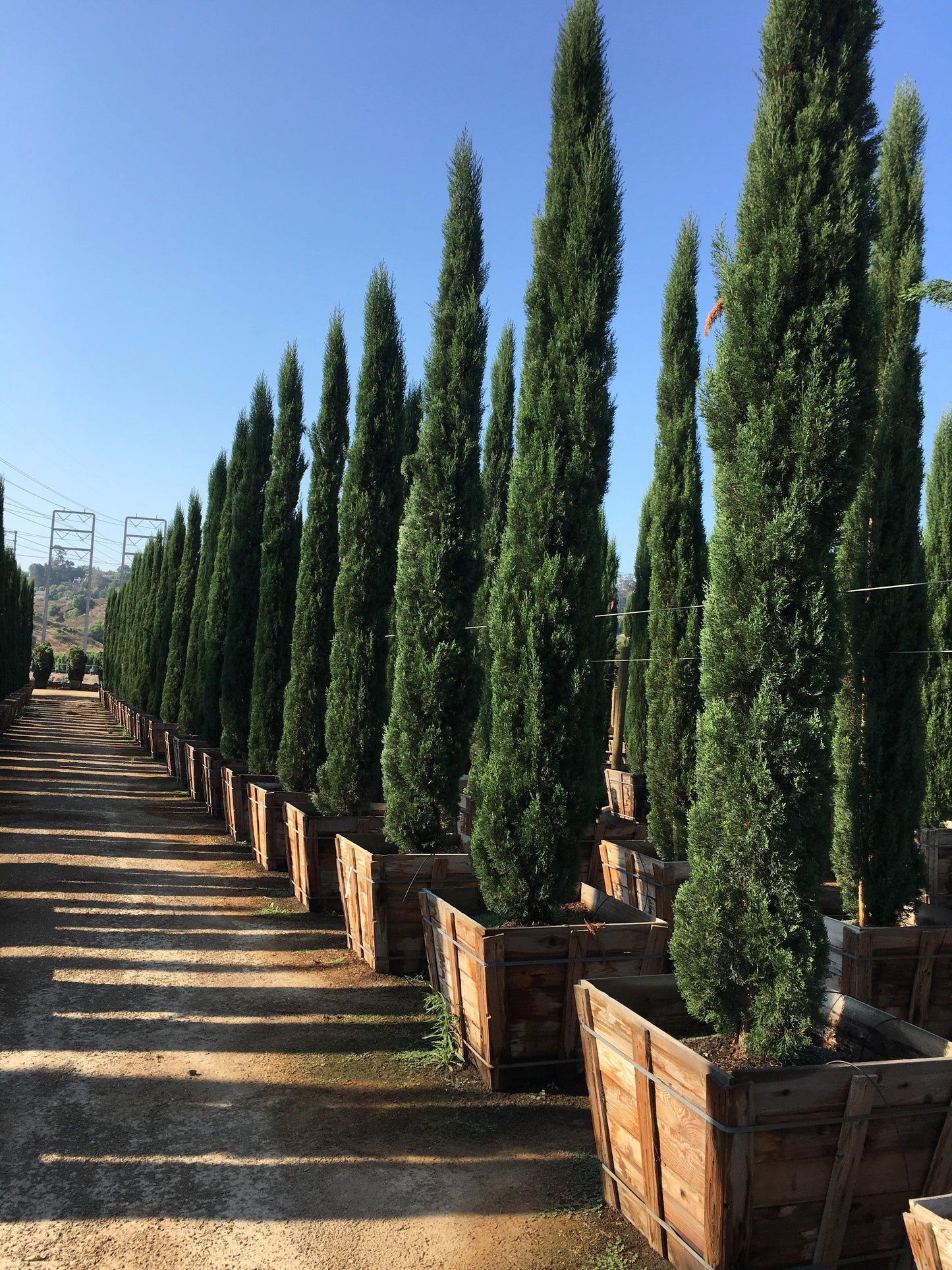

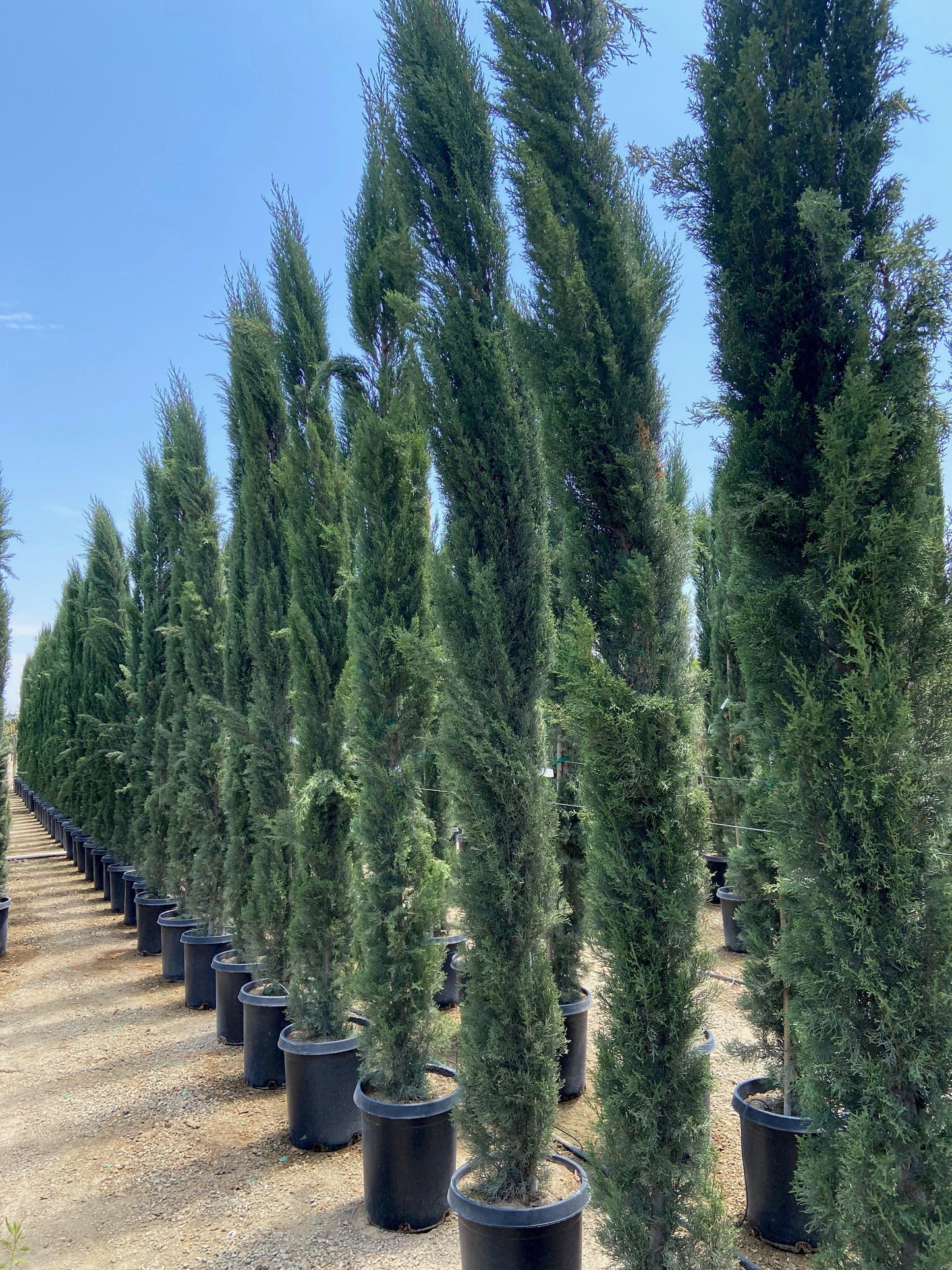

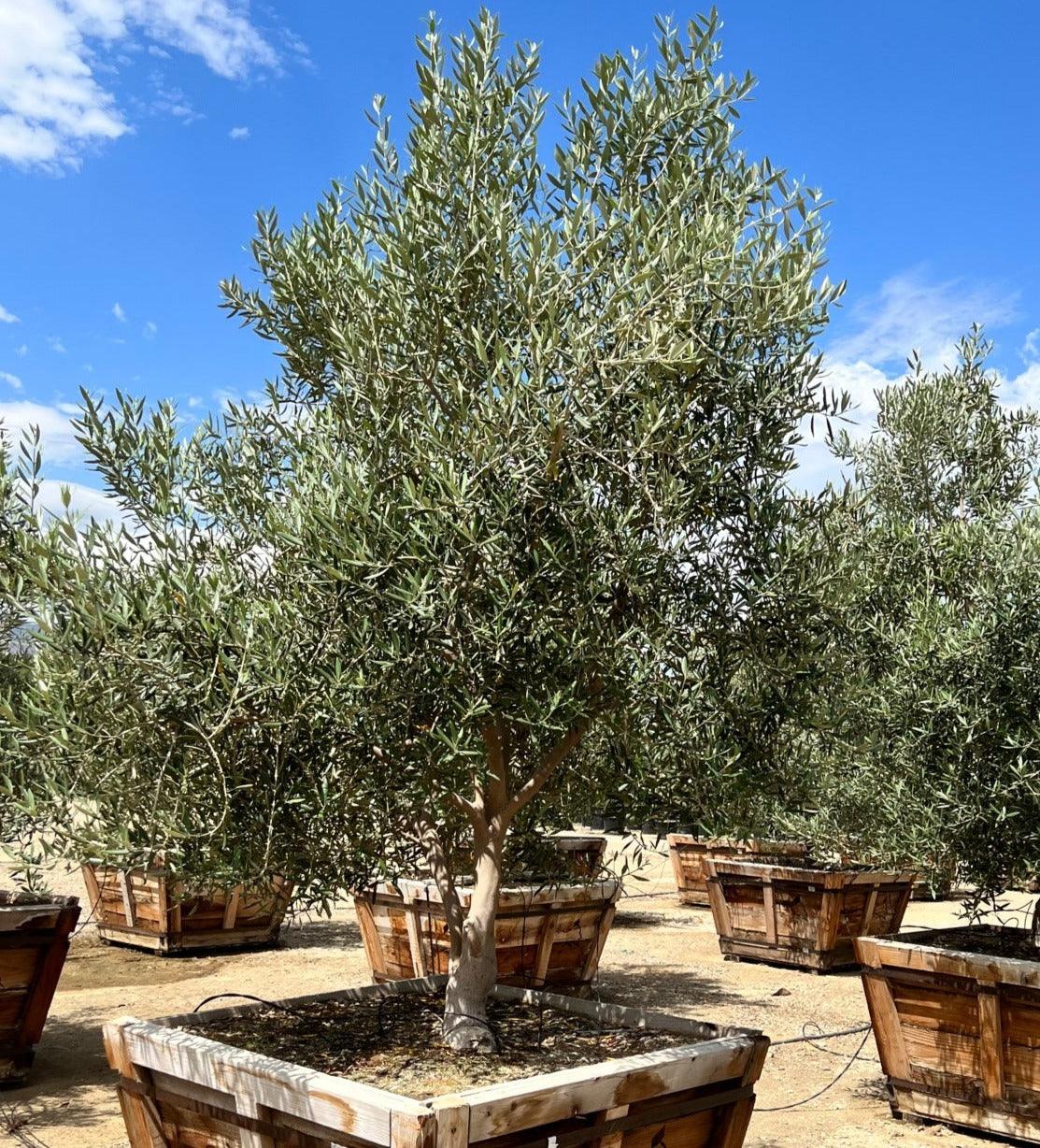

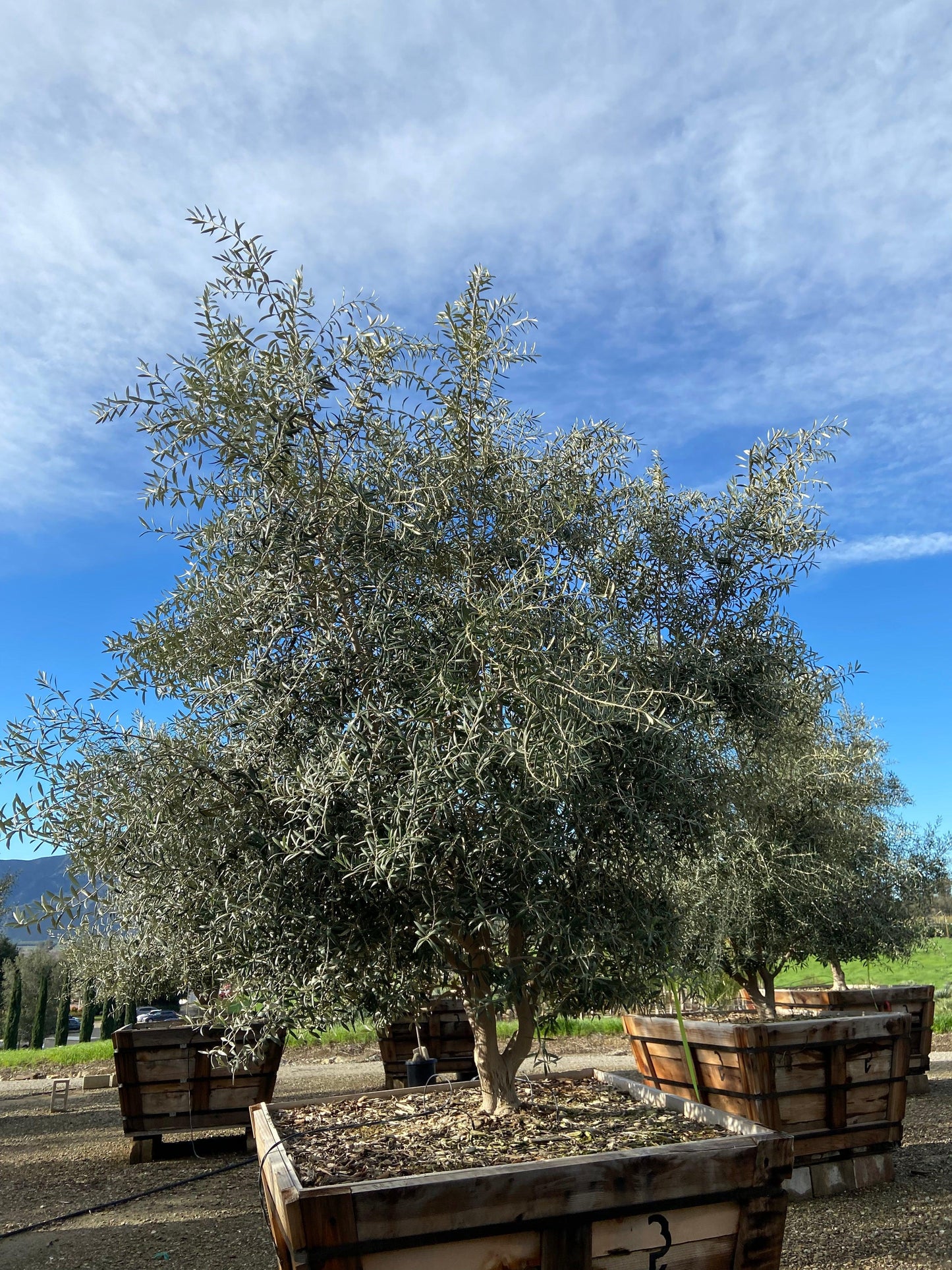






You May Also Like












Thousands of Healthy Plants Delivered


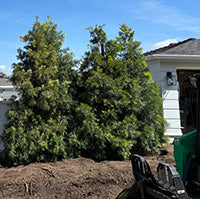
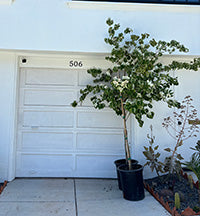
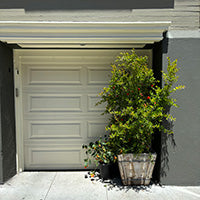
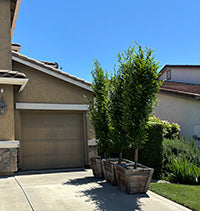
Yardwork was so great to work with. First they had the Swan Hill olive trees that we had been searching for, we had contacted several other nurseries without any luck previously. Then they answered all of our questions in a timely matter prior to ordering and finally delivered within a few days of placing it. Their staff is incredibly knowledgeable; they delivered and planted our trees with expertise to ensure that they would do well in our yard. We would definitely work with them again for future projects.











A Modern Experience
At Yardwork, we carefully curate thousands of plants, in all container sizes, to provide you with the best selection of the highest quality trees and plants at the best price, with the convenience of an online platform.
Uncompromised Quality
We choose only the finest specimens and hand select our plants just before delivery to ensure you receive the freshest and most robust specimens available for your landscape.
Industry Leading Warranties
Our 30, 90, and 365 extended warranties provide some of the best coverage to ensure our trees and plants thrive in your landscape.
Frequently Asked Questions
We're committed to changing everything about trees and plants - how they’re grown, how you shop for them, and how much they cost. We handle orders ourselves. No middlemen to get between us (or our prices) and you.
We're committed to changing everything about trees and plants - how they’re grown, how you shop for them, and how much they cost. We handle orders ourselves. No middlemen to get between us (or our prices) and you.
Delivery does not include unloading of trees and plants LARGER than a 24" box.
Trees and plants in smaller containers will be dropped curbside (usually on the driveway or near the front doorstep).
Delivery beyond a curbside drop will be charged extra.
Trees and plants that are sold in container sizes LARGER than a 24" box size will require equipment and/or enough manpower onsite to help unload from the truck.
Please reach out to our team PRIOR to placing your order to help coordinate.
Our team can provide unloading assistance with equipment for an extra fee as well.
Delivery does not include unloading of trees and plants LARGER than a 24" box.
Trees and plants in smaller containers will be dropped curbside (usually on the driveway or near the front doorstep).
Delivery beyond a curbside drop will be charged extra.
Trees and plants that are sold in container sizes LARGER than a 24" box size will require equipment and/or enough manpower onsite to help unload from the truck.
Please reach out to our team PRIOR to placing your order to help coordinate.
Our team can provide unloading assistance with equipment for an extra fee as well.
We ship locally within California within 7-10 days of your order being placed.
We ship nationally using carrier partners, based on order size. Our common order minimums for out of state shipping is $5,000.
Text or call 323-576-4159 for specific shipping details for your location.
We ship locally within California within 7-10 days of your order being placed.
We ship nationally using carrier partners, based on order size. Our common order minimums for out of state shipping is $5,000.
Text or call 323-576-4159 for specific shipping details for your location.
We are currently online only and don't have physical locations where you can view plants in person.
That's why we have photos direct from the growing grounds of the plants we will ship and we display pricing right in our store.
We do make sure to pick the very best trees and plants prior to shipping and make sure that they have gone through our multi-point inspection for health and structure.
We will always reach out prior to delivery if we find a quality issue or need to provide a substitute.
We are currently online only and don't have physical locations where you can view plants in person.
That's why we have photos direct from the growing grounds of the plants we will ship and we display pricing right in our store.
We do make sure to pick the very best trees and plants prior to shipping and make sure that they have gone through our multi-point inspection for health and structure.
We will always reach out prior to delivery if we find a quality issue or need to provide a substitute.
Plants vary greatly by type. Here is a rough idea of sizes based on containers that are direct from our growing grounds.
15 Gallon Shrub 3-4 Ft. Tall
15 Gallon Tree 5-6 Ft. Tall
24" Box Shrub 5-6 Ft. Tall
24" Box Tree 6-7 Ft. Tall
36" Box Shrub/Tree 7-9 Ft. Tall
48" Box Shrub/Tree 8-10 Ft. Tall
**Please note that we do not make guarantees of sizes. If you have questions or concerns, please call or text to request accurate sizing for the particular plant you're considering, prior to ordering.
Plants vary greatly by type. Here is a rough idea of sizes based on containers that are direct from our growing grounds.
15 Gallon Shrub 3-4 Ft. Tall
15 Gallon Tree 5-6 Ft. Tall
24" Box Shrub 5-6 Ft. Tall
24" Box Tree 6-7 Ft. Tall
36" Box Shrub/Tree 7-9 Ft. Tall
48" Box Shrub/Tree 8-10 Ft. Tall
**Please note that we do not make guarantees of sizes. If you have questions or concerns, please call or text to request accurate sizing for the particular plant you're considering, prior to ordering.
We offer a limited 30 day warranty for plants that are delivered and planted by someone else and a 90 day warranty for plants that we plant.
The limited warranty covers plants that die as a result of disease or fungus which was derived from our growing grounds or from root balls that were root bound.
The warranty does not cover damage due to watering, fertilizer, soils, or any other conditions beyond our control. Additionally, the warranty does not cover plants that are shipped out of the state of California or shipped into California from other states. Custom plant orders are also not covered under warranty. Plants must be planted within 24 hours after delivery to qualify.
We can assist you in recommending the right soils and fertilizers to help your plant thrive after you plant it.
Text or call 323-576-4159 for further warranty information.
We offer a limited 30 day warranty for plants that are delivered and planted by someone else and a 90 day warranty for plants that we plant.
The limited warranty covers plants that die as a result of disease or fungus which was derived from our growing grounds or from root balls that were root bound.
The warranty does not cover damage due to watering, fertilizer, soils, or any other conditions beyond our control. Additionally, the warranty does not cover plants that are shipped out of the state of California or shipped into California from other states. Custom plant orders are also not covered under warranty. Plants must be planted within 24 hours after delivery to qualify.
We can assist you in recommending the right soils and fertilizers to help your plant thrive after you plant it.
Text or call 323-576-4159 for further warranty information.
Our local delivery team covers most cities in California.
There are some exceptions, so please get in touch to confirm prior to ordering.
Additionally, we ship using semi trucks and trailers throughout the entire United States and even abroad for large orders over $5,000. Each shipment is custom, so please reach out to our team to coordinate.
Our local delivery team covers most cities in California.
There are some exceptions, so please get in touch to confirm prior to ordering.
Additionally, we ship using semi trucks and trailers throughout the entire United States and even abroad for large orders over $5,000. Each shipment is custom, so please reach out to our team to coordinate.