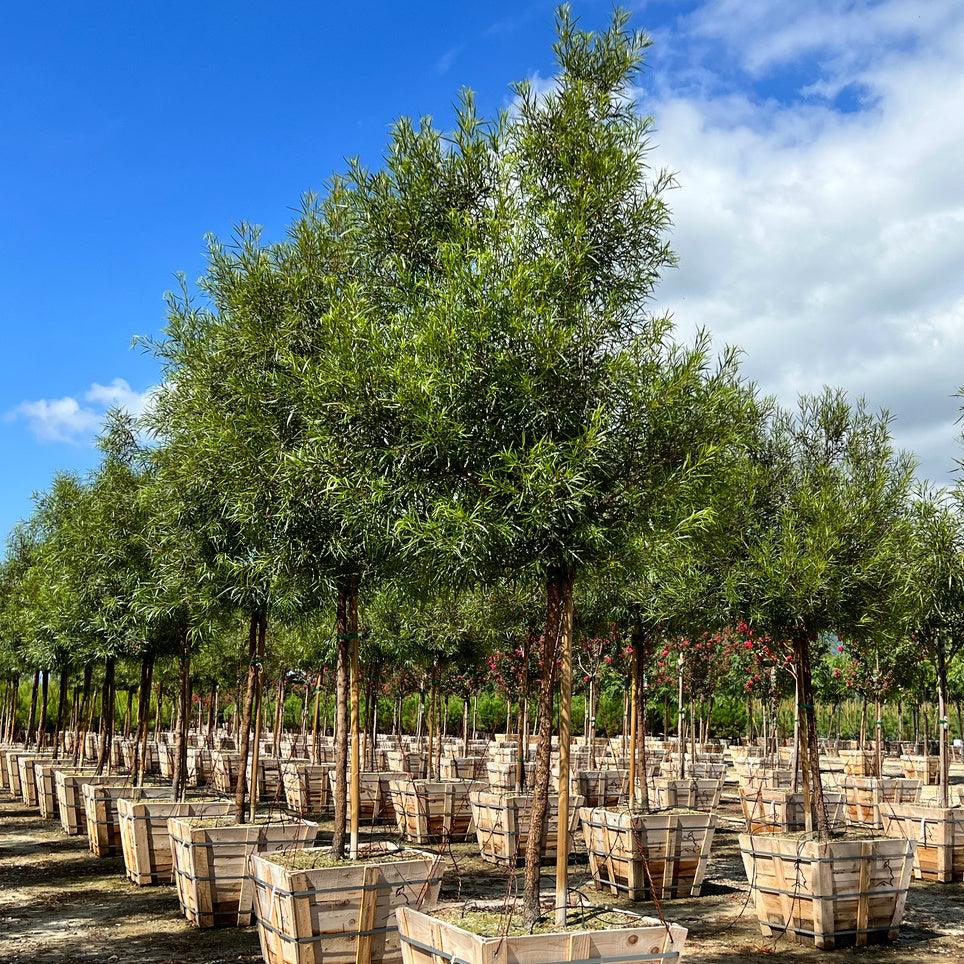
Fast Growing Shade Trees – Find the Perfect Tree for Quick Shade
Fast growing shade trees can start cooling your yard, patio, or front yard in just a few growing seasons, with many reliable varieties adding 2–5+ feet per year under the right soil conditions. The best shade trees balance fast growth with strong wood, healthy roots, mature height, and suitability for your local climate.
At Yardwork, you can compare shade trees for compact spaces, large landscapes, privacy screens, wet soil, drought-prone yards, and full sun exposure - so you plant the right tree the first time.
Transform your outdoor space and start enjoying natural shade sooner.
Fast Growing Shade Trees for Every Property
Whether you have a small backyard, a narrow side yard, or acreage to fill, there is a fast growing shade tree that can provide shade without overwhelming your landscape design.
Small Yard Shade Trees
For tighter spaces, choose growing shade trees with a manageable rounded crown, predictable mature height, and roots that are less likely to interfere with paving or foundations. River birch and Japanese zelkova are strong choices for urban settings, especially where you want fast growth without planting trees that quickly become oversized.
River birch is valued for its attractive bark, green leaves, and tolerance of moist soil, while Japanese zelkova offers a refined canopy and good adaptability. The Japanese Zelkova (Zelkova serrata) is adaptable to various soil types and is hardy in Zones 5 to 8, reaching heights of up to 80 feet, making it a great urban shade tree. In small yards, placement matters: even a great shade tree needs enough room for its ultimate height, canopy spread, and root ball development.
If you need a shade tree near a home, driveway, or property line, look for varieties that mature around 30–50 feet or that respond well to structural pruning. Young trees are easier to train, and choosing the right tree early prevents expensive correction later.
Large Property Shade Trees
Large landscapes can support dramatic fast growing trees with broad canopies, deep shade, and long-term presence. Tulip poplar, American sycamore, northern red oak, California white oak, and dawn redwood are excellent options where there is generous overhead clearance and plenty of space for roots.
The Tulip Poplar (Liriodendron tulipifera) is a large shade tree that can grow up to 120 feet tall and is suitable for USDA Hardiness Zones 4 to 9, requiring ample space for its growth. The tulip poplar can grow 3 to 5 feet per year and is known for its large size, reaching heights of up to 120 feet. American sycamore is another fast grower for open sites, especially where a massive canopy is desired.
For western landscapes, oak trees deserve special attention. The California White Oak (Quercus lobata) is a fast-growing shade tree that can reach up to 70 feet in height and is hardy in Zones 7 to 11, making it ideal for western landscapes. Large property trees are perfect for creating natural cooling zones, reducing heat around outdoor living areas, and forming partial windbreaks over time.
Privacy and Windbreak Trees
For quick screening, evergreen fast growing shade trees and conifers create year-round structure. Green Giant Arborvitae is a popular disease resistant choice for privacy, while Murray Cypress can work where a fast vertical screen is needed and site conditions are appropriate.
Plant shade trees for privacy with spacing in mind. Dense evergreen screens often need trees planted about 5–6 feet apart, depending on mature spread and desired coverage. Deciduous trees such as Nuttall oak, willow oak, red maple cultivars, and Freeman maple can provide seasonal privacy, summer shade, spring blossoms and fall color, and filtered winter light.
For a balanced windbreak, combine evergreen trees with deciduous trees. Evergreens deliver constant screening, while deciduous shade trees add canopy, brilliant fall color, and seasonal interest.
Choose the Right Tree for Your Growing Conditions
Matching a tree to your usda growing zone, sunlight, drainage, and soil type is the fastest way to get healthy growth. A fast grower planted in the wrong spot may struggle, while a moderate fast tree in ideal conditions can outperform it.
Full Sun Locations
Full sun sites receive at least 6 hours of direct sunlight daily, and many fast growing shade trees achieve their best growth rate in these conditions. Northern red oak, autumn blaze maple, Freeman maple, tulip poplar, and many oak trees develop denser canopies and stronger branching when planted in open sun.
Certain trees require full sun and deep, rich, well-drained soil, along with regular watering during their establishment phase and in prolonged dry periods. Autumn Blaze Maple is especially popular for fast growing shade, brilliant red fall color, and a rounded crown. Red oak is slower than ultra-fast trees, but it offers strong wood and long life.
In southern climates, heat-tolerant options such as California white oak, Japanese zelkova, and selected pistache varieties can be better long-term choices than moisture-hungry species. Always match the tree to your local climate before buying shade trees online.
Partial Shade Areas
Partial shade sites usually receive 4–6 hours of sunlight or filtered light through nearby trees or buildings. Red maple, paper birch, river birch, American hornbeam, and some red maple cultivars can maintain good growth in these conditions, especially when soil moisture is consistent.
The Red Maple (Acer rubrum) thrives in USDA Hardiness Zones 3 to 9, reaching heights of 40 to 70 feet and providing brilliant fall color with its leaves. Red maple is a strong option where you want shade, seasonal color, and adaptability, though it performs best when not exposed to extreme drought.
Paper birch adds white bark and light canopy texture, while river birch handles wetter ground better than many ornamental trees. In deeper shade, expect slower fast growth, thinner branching, and a more open canopy.
Wet or Poorly Drained Soil
Wet sites call for trees that tolerate saturated soil, clay, or seasonal standing water. Weeping willow, river birch, dawn redwood, American sycamore, cottonwood, and selected red maple cultivars are useful options for difficult low areas.
Some trees tolerate wet soils well and thrive in full sun to partial shade, needing moist, acidic, and fertile soil for optimal growth. Dawn redwood is especially valuable where you want a large, graceful canopy and reliable performance in moist, well drained soil. River birch is often chosen for erosion-prone areas because its roots help stabilize soil.
The weeping willow is one of the fastest-growing shade trees, adding about 10 feet to its height each year, reaching a mature height of approximately 40 feet. However, weeping willow roots can be aggressive, so avoid planting near septic systems, pipes, foundations, or tight spaces.
Drought-Prone Areas
In dry regions, the right tree is not always the fastest tree on paper. Drought-tolerant shade trees such as California white oak, northern catalpa, selected oak trees, Japanese zelkova, and some silver maple alternatives can offer better survival with less irrigation once established.
Northern catalpa can provide bold green leaves, fragrant white flowers in late spring, and a broad canopy, while some species may produce female flowers, small fruits, or seed pods that add seasonal litter. Silver maple grows quickly, but it is not always the best shade tree for drought-prone yards unless soil moisture is reliable.
For xeriscaping and water-wise landscapes, prioritize deep rooting, low summer water needs, and mature size. Even drought-adapted young trees need consistent water while roots establish.
Growth Rates and Mature Characteristics
Understanding growth rate, mature height, canopy spread, and structural strength helps you choose a tree that fits your timeline and your property.
Ultra-Fast Growers (5+ feet per year)
Ultra-fast growing trees can create visible shade quickly, often in 1–3 years when planted in full sun with consistently moist, well-draining soil. Fast-growing trees can grow up to 5+ feet per year and require full sun and consistently moist, well-draining soil.
Top performers include weeping willow, hybrid poplar, silver maple, American sycamore, and Lombardy poplar. The American sycamore, lombardy poplar, silver maple, and weeping willow can all grow more than 5 feet in one year, especially when they are young trees.
Fast shade comes with trade-offs. Fast-growing shade trees often have weaker wood and invasive root systems. Fast-growing trees have shallow, invasive roots that can damage pipes or foundations, and a shorter lifespan of 15–30 years. Many fast-growing shade trees, such as silver maple, Callery pear, and poplars, are known for their weak wood and tendency to drop branches during storms, making them potentially dangerous.
Moderate Fast Growers (2-4 feet per year)
Moderate fast growers are often the best balance of speed, strength, and long-term performance. Nuttall oak, Freeman maple, autumn blaze, red maple, northern red oak, Japanese zelkova, and American elm cultivars bred for dutch elm disease resistance can all provide dependable growing shade without the same level of structural risk as ultra-fast species.
The Freeman Maple (Acer x freemanii) is suitable for USDA Hardiness Zones 3 to 8 and can grow to a height of 40 to 55 feet, making it a versatile shade tree option. Freeman maple is a good fast-growing shade tree option, combining the desirable traits of its parent species, the strong-wooded red maple and the less desirable silver maple.
American sweetgum can offer excellent fall color, but mess should be considered. Sweet gums are considered messy shade trees due to the numerous “gum balls” they drop, although certain cultivars like “Rotundiloba” do not produce these fruits.
Tree species with an open, airy canopy allow grass to grow underneath and are hardy, tolerant of urban pollution and drought. This makes them useful for lawns, parks, and front yard planting where filtered shade is preferred over dense darkness.
Planting and Care for Maximum Growth
Proper tree planting is what turns a fast grower into a healthy, long-lasting shade tree. The first few years determine root strength, canopy structure, and future maintenance needs.
Optimal Planting Timing
The best time to plant shade trees is in spring or fall when the ground is not frozen, allowing for strong root establishment. Fall planting is often ideal in mild climates because roots can grow before summer heat arrives.
Early spring is also a strong planting window, especially before buds break and active top growth begins. Avoid planting trees during extreme heat unless you can water deeply and monitor soil moisture closely.
In California and other warm regions, late winter through early spring or fall generally gives young trees the best start. Summer planting requires extra care, bark mulch, and consistent irrigation.
Planting Technique for Fast Growth
Start with the planting hole. When planting a shade tree, dig a hole that is three times as wide as the root ball and the same depth to ensure proper root growth. A wide hole encourages roots to move into surrounding soil, while planting too deep can suffocate the trunk flare.
Set the root ball on firm soil, backfill gradually, and remove air pockets by watering as you fill. Use compost sparingly if needed, but avoid creating a soft amended pocket that discourages roots from expanding outward.
Apply 2–3 inches of bark mulch around the new tree, keeping mulch away from the trunk. Stake only when necessary, and allow enough movement for the trunk to strengthen naturally.
First Year Care and Fertilization
After planting, water your newly planted tree deeply and regularly for the first few months to help establish its roots, aiming for 1 to 3 times per week depending on conditions. Fast-growing trees require 1 to 2 inches of water per week, especially in their first few years and during the heat of summer.
Applying a slow-release, balanced tree fertilizer in early spring can boost canopy growth in nutrient-deficient soils. Avoid overusing nitrogen, which can push soft, weak growth at the expense of strong wood.
Regular pruning and adequate watering are essential to maintain the structural integrity of fast-growing trees. Structural pruning is critical for fast-growing trees to address weak, crowded branching and should be done in late winter or early spring while dormant. Monitor for pests, broken limbs, soil compaction, and drought stress throughout each growing season.
Shop Fast Growing Shade Trees From Yardwork
Browse Yardwork’s carefully selected collection of fast growing shade trees, chosen for proven performance, rapid establishment, and suitability for real landscape conditions. Each tree is professionally grown and ships ready to plant.
- Choose climate-appropriate varieties selected for California yards, western landscapes, and a wide range of usda growing zone needs.
- Get professional consultation to match the right tree to your space, soil conditions, water availability, and landscape design goals.
- Use soil testing services to confirm drainage, fertility, alkaline soil concerns, and nutrient needs before planting trees.
- Enjoy free shipping options for California customers buying shade trees online.
- Plant with confidence through Yardwork’s quality guarantee and expert growing advice, making it easier than ever to work with a local-style plant nursery.
Fast-growing shade trees provide rapid landscape coverage and can lower summer cooling costs while increasing property value. Start creating your shaded retreat today with trees that deliver results in just a few growing seasons.