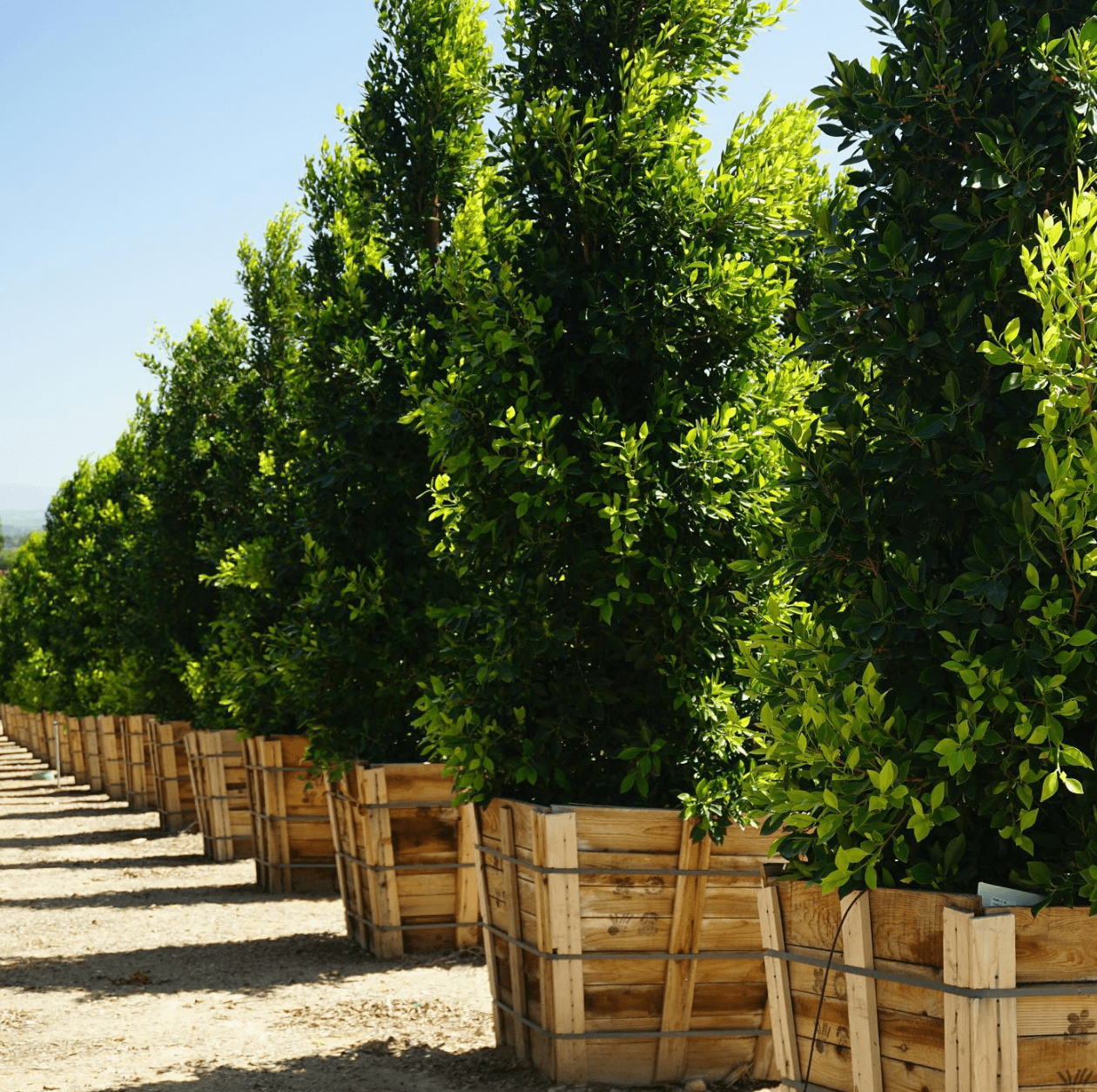
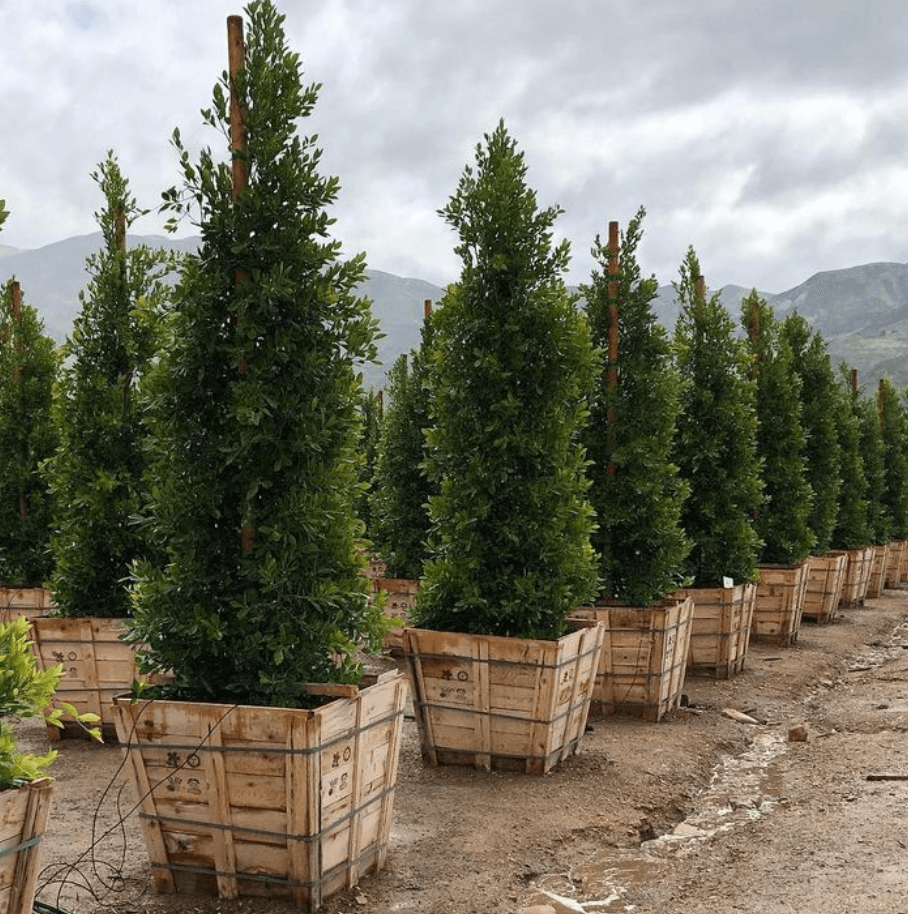
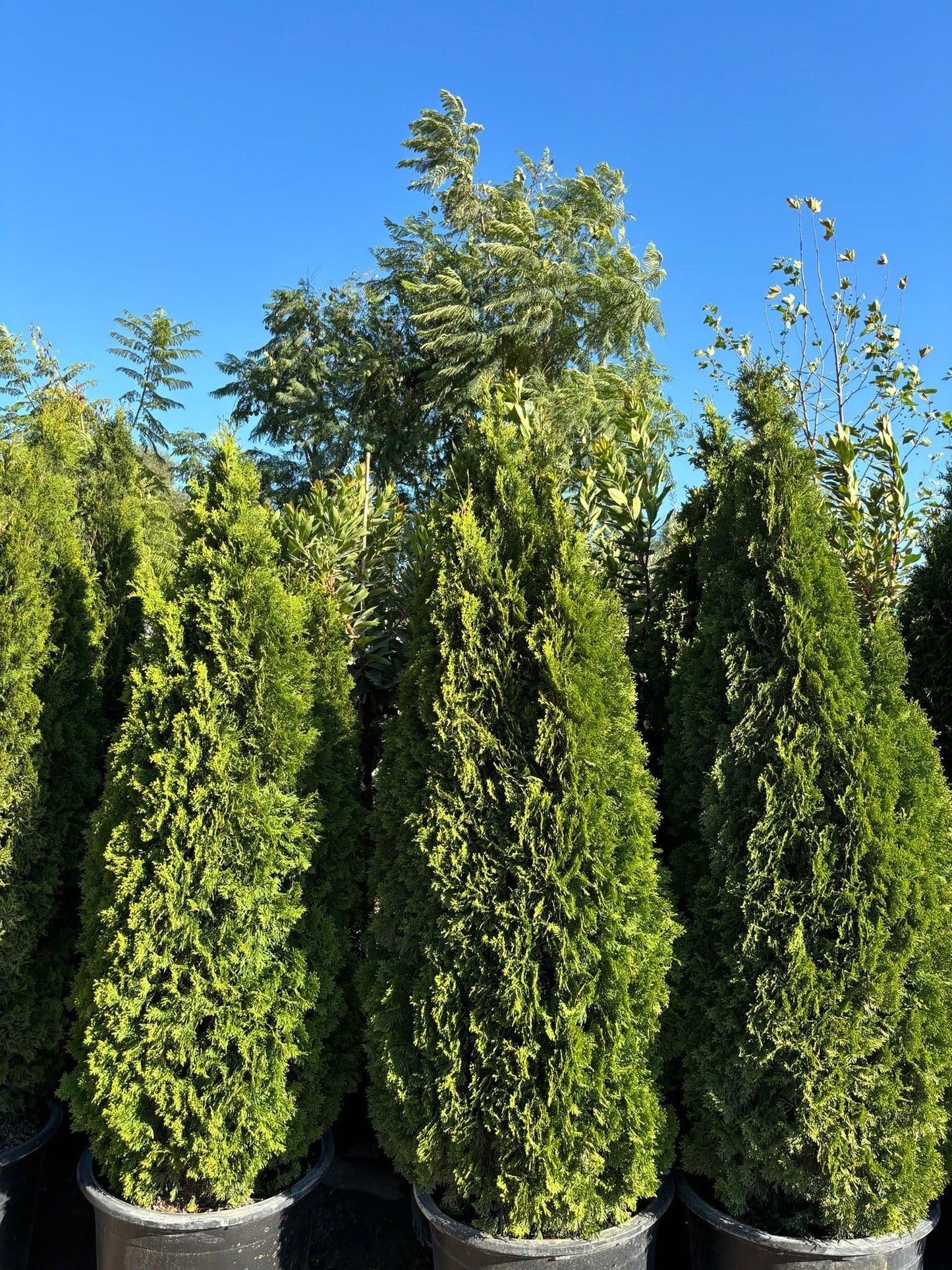
Fast Growing Evergreen Trees – Transform Your Landscape Quickly
Fast growing evergreen trees give you privacy, wind protection, structure, and year round color without waiting decades. Many fast growing evergreens add 2-4 feet of height annually, with top performers like Thuja Green Giant and Leyland Cypress capable of even faster growth in the right soil, sun, and climate.
From towering Thuja Green Giants to elegant Italian Cypress, our collection features proven evergreen trees that establish quickly and perform well across California’s diverse hardiness zones, from coastal landscapes to hot inland yards.
Create the landscape you want today with evergreens that deliver visible results in just a few growing seasons.
Fast Growing Evergreen Trees for Every Purpose
Whether you need instant privacy, an excellent windbreak, or a striking focal point, there is a fast growing evergreen for every landscape goal. Fast-growing evergreen trees provide rapid, year-round foliage that transforms property borders, while fast-growing evergreen trees add immediate structure, year-round color, and seasonal interest to yards.
Homeowners commonly use fast-growing evergreen trees to establish instant privacy screens, windbreaks, and structural definition in landscapes. Unlike a deciduous tree, evergreens retain thick branches through winter for privacy screening, and evergreens maintain lush color throughout winter, preventing barren landscapes unlike deciduous trees that shed their leaves in fall.
Privacy Screens and Living Fences
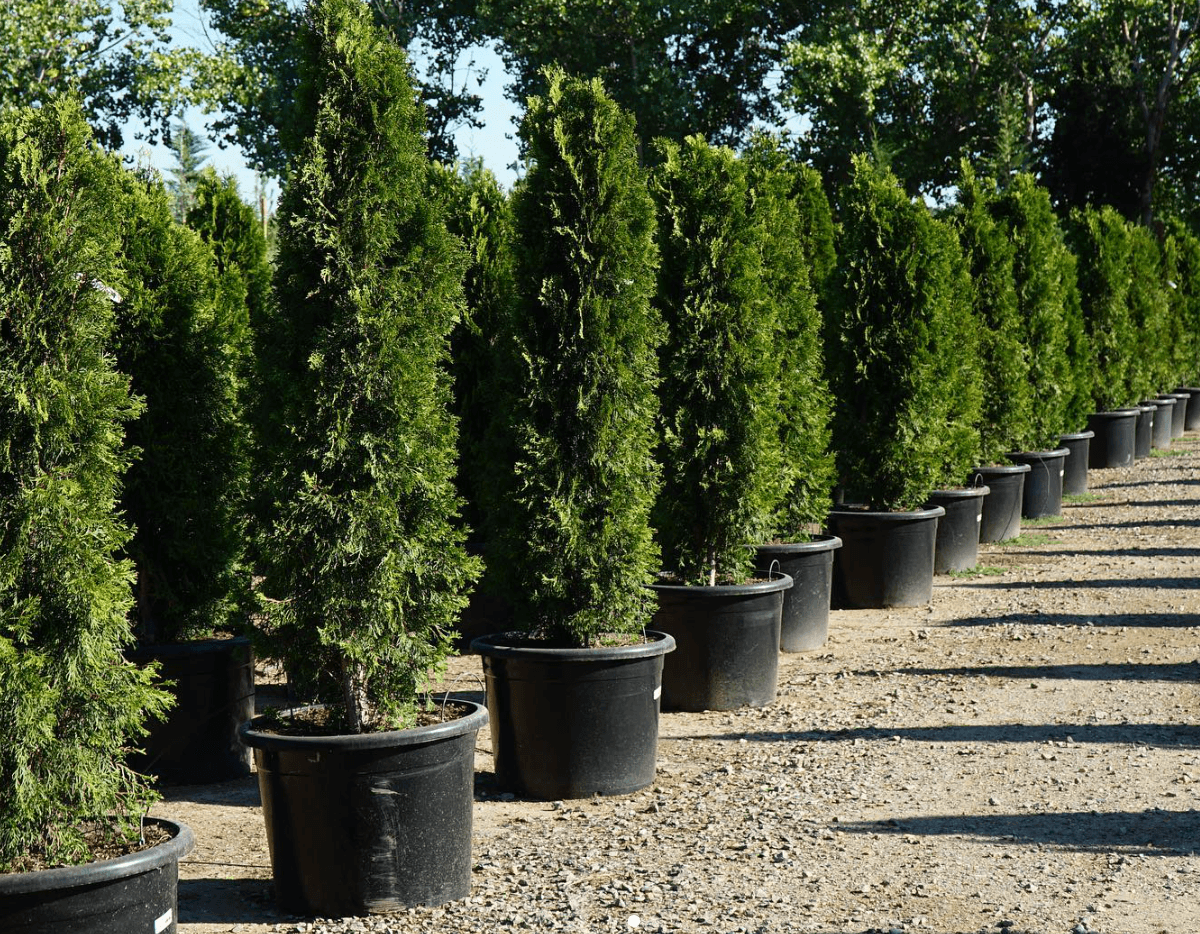
For a fast privacy screen, Thuja Green Giant is one of the most reliable choices. Thuja Green Giant is one of the fastest growing evergreens, reaching heights of up to 50 feet in just 10 years, making it ideal for screens and barriers. Thuja Green Giant is one of the fastest growing evergreens, reaching heights of up to 50 feet in just 10 years, making it ideal for privacy screens and barriers.
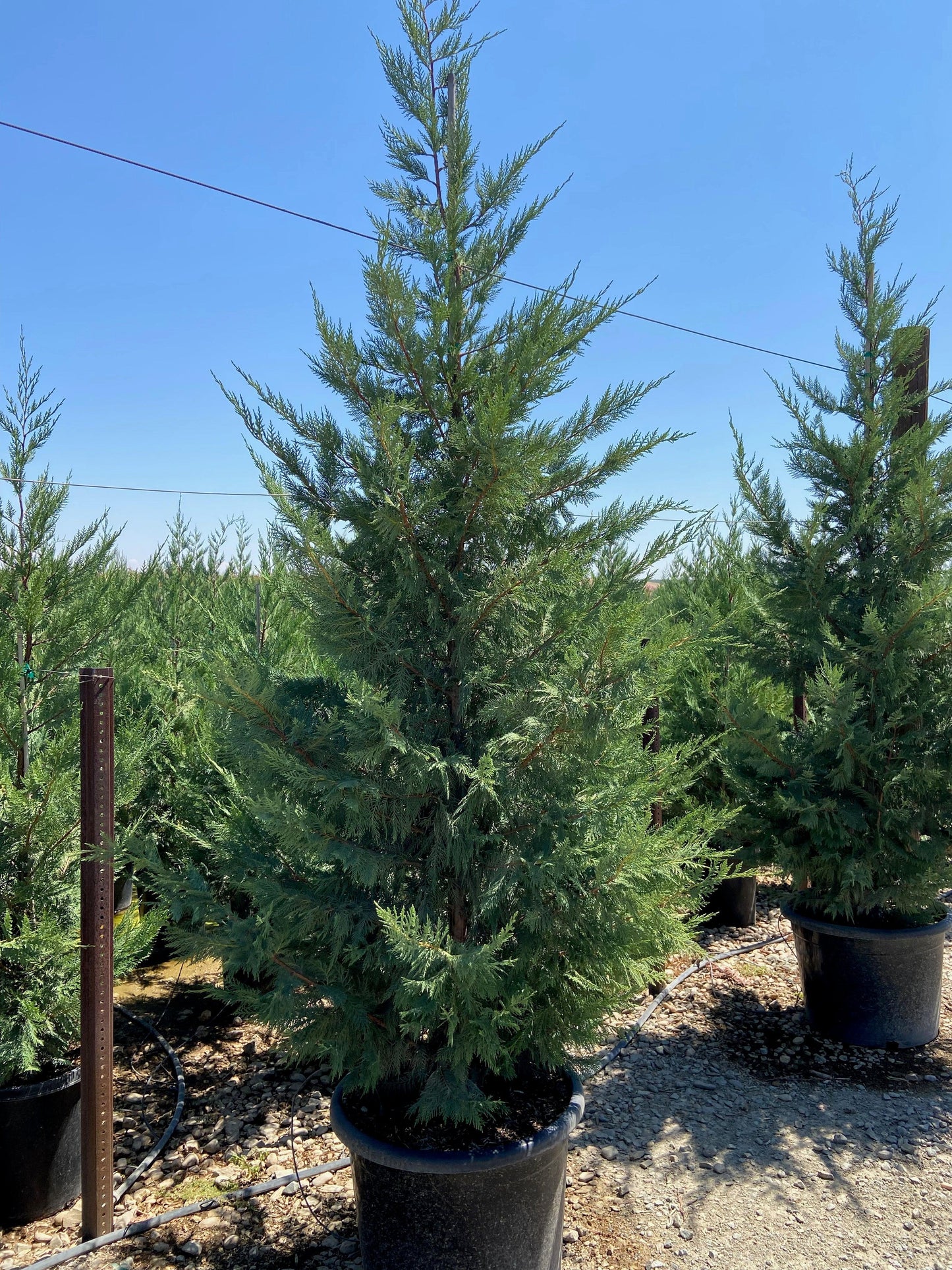
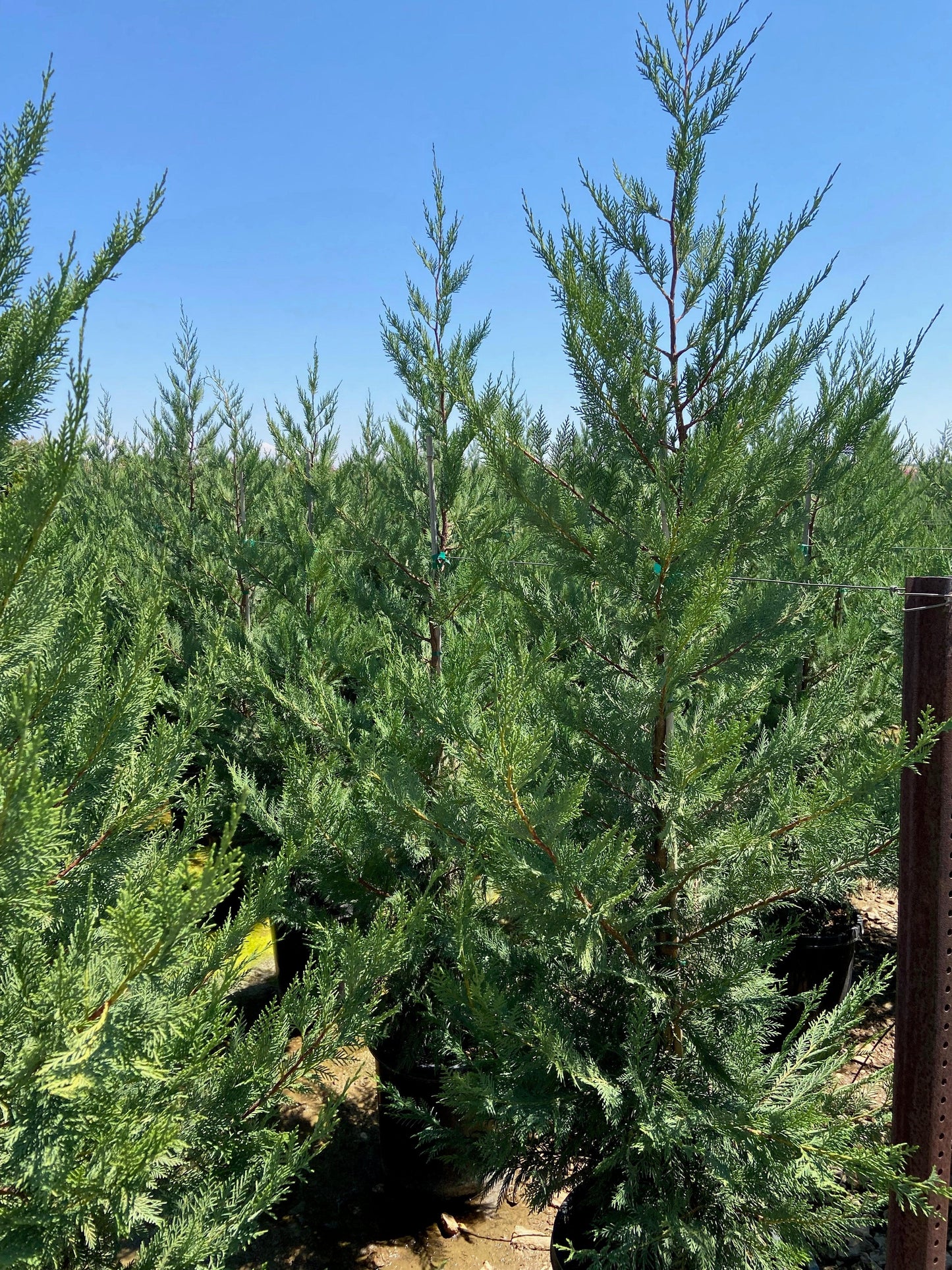
Thuja Green Giant, also known as green giant arborvitae, has rich green foliage, a strong pyramidal shape, and a rapid growth habit once established. This hybrid, Thuja standishii x plicata, combines Thuja standishii and Thuja plicata genetics for strong landscape performance. In good soil conditions, this growing evergreen can add 3-5 feet per year, especially in full sun with consistent moisture.
Leyland Cypress is another popular tree for fast growing privacy trees. Leyland Cypress can grow 20 to 30 feet tall within the first ten years, making it a popular choice for quick privacy and windbreaks. Leyland Cypress can grow 20 to 30 feet tall within the first ten years, making it a popular choice for quick privacy and landscape enhancement.
For tighter yards, American Pillar Arborvitae provides height without the broad footprint of larger trees. Space Thuja Green Giant, Leyland Cypress, and similar privacy trees about 5-8 feet apart for a dense living fence, adjusting spacing for mature size, airflow, and long-term maintenance.
Windbreaks and Shelter
Tall, dense evergreen borders act as natural windbreaks protecting gardens and buffering traffic noise. Thick conifer boughs act as excellent windbreaks and natural buffers to muffle street noise, making fast growing trees useful along roads, property lines, and exposed edges of the whole yard.
Eastern White Pine is a strong option for spacious windbreaks. Eastern White Pine can grow from a 2-foot sapling to 12 feet in just five years, making it an excellent choice for windbreaks and aesthetic appeal. Eastern White Pine can grow from a 2-foot sapling to 12 feet in just five years, providing a majestic option for windbreaks and landscape aesthetics. Known botanically as Pinus strobus, it offers soft green foliage and a tall, graceful form where climate and space allow.
Norway Spruce, or Picea abies, is valued for its conical form, drooping branches, and ability to deflect strong winds. Western Red Cedar performs especially well in parts of the Pacific Northwest and can be useful for coastal windbreak protection where soil types and moisture are suitable. Planting dense evergreens on the north or northwest side of a house helps lower indoor heating costs by blocking winter winds.
Specimen Trees and Focal Points
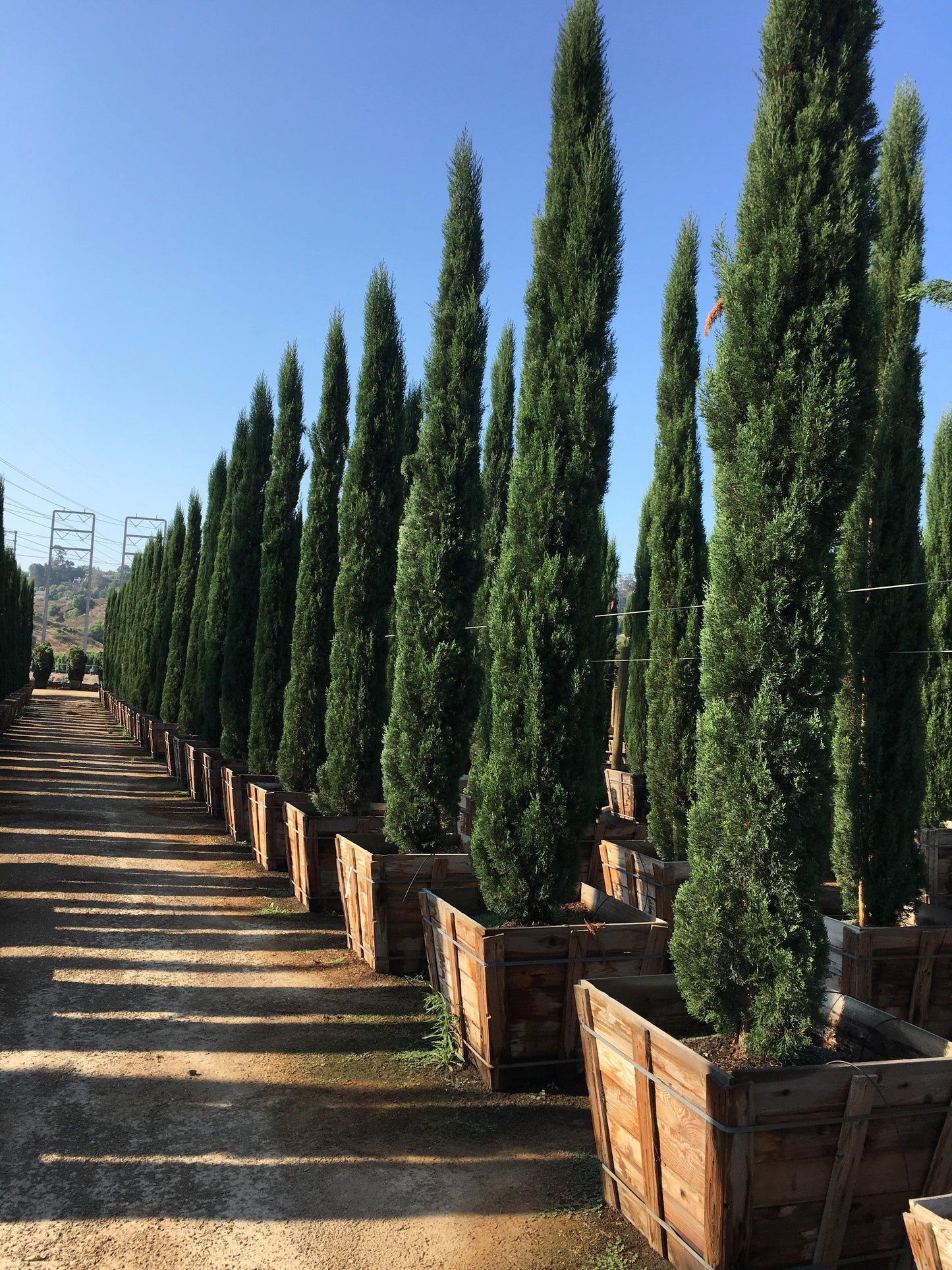
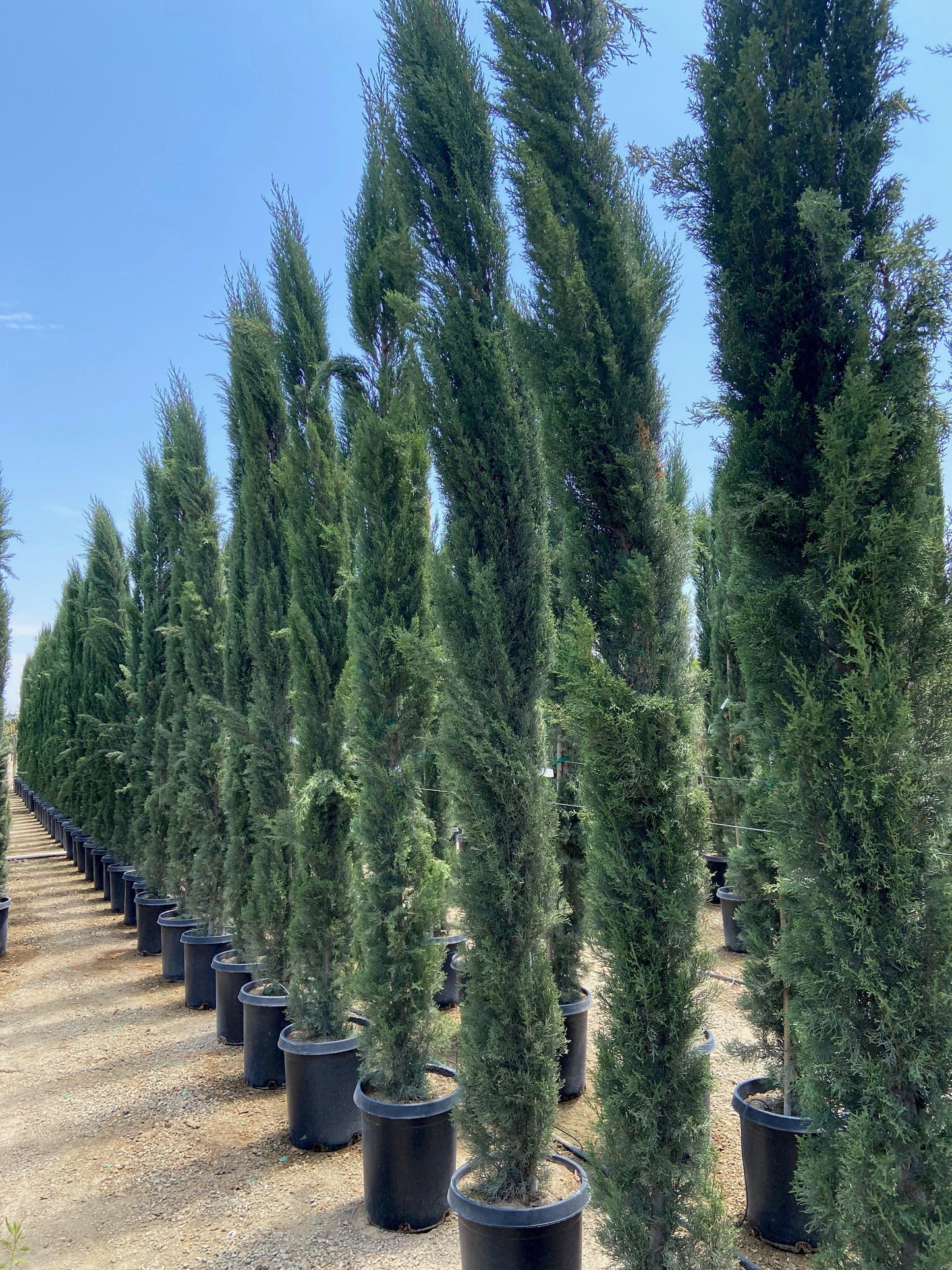
Fast growing evergreen trees are not only for screening. Italian Cypress trees are known for their tall, narrow form and can grow 35 to 40 feet in height within 10 years, making them a striking addition to landscapes. Its columnar shape makes it ideal beside entries, long drives, courtyards, and formal garden axes.
Italian Cypress is a classic columnar tree for dry climates and Central Valley conditions, with upright branches and a narrow footprint. It brings strong vertical structure without taking over small planting beds. For the best performance, plant it in full sun, avoid soggy soil, and water deeply during establishment.
Japanese Black Pine adds character with rugged branching and sculptural form, while Grand Fir can become a dramatic specimen with smooth bark, dark needles, and a tall silhouette. In larger landscapes, a single evergreen with dark green foliage or blue green foliage can create a focal point that anchors the entire yard.
Choose the Right Fast Growing Evergreen for Your Space
The right tree depends on climate, mature size, soil, water, and the amount of room available above and around the planting site. Choosing the right fast-growing privacy tree depends on factors such as climate, space availability, and soil conditions, ensuring optimal growth and privacy coverage.
Before you plant, compare each growth rate with the tree’s mature height and spread. A rapidly growing tree can solve a privacy problem quickly, but it can also outgrow a narrow side yard if the mature size is ignored.
Small Yards and Tight Spaces
Small yards need fast growing evergreens with compact size, upright branches, and controlled spread. Dwarf selections like Tiny Tower Italian Cypress can provide strong vertical accents, while Taylor Juniper can grow about 20 feet tall while staying near 3 feet wide, making it useful where height matters but width is limited.
Blue Arrow Juniper offers a similar solution, often reaching 15-20 feet with a 3-4 foot spread. Skyrocket Juniper, Juniperus scopulorum Skyrocket, is another narrow evergreen with an upright habit and blue green foliage. These columnar trees maximize height while minimizing footprint.
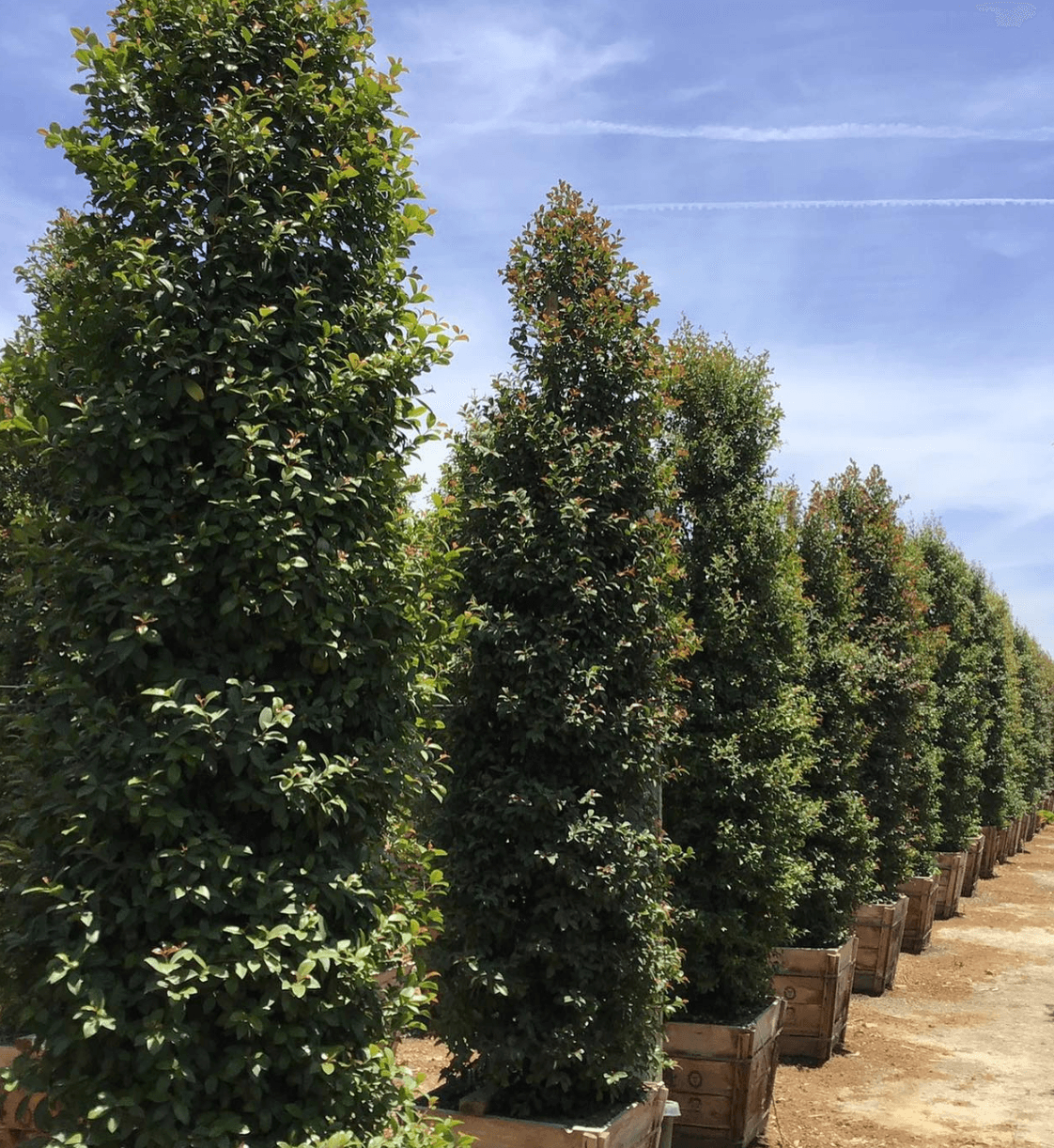
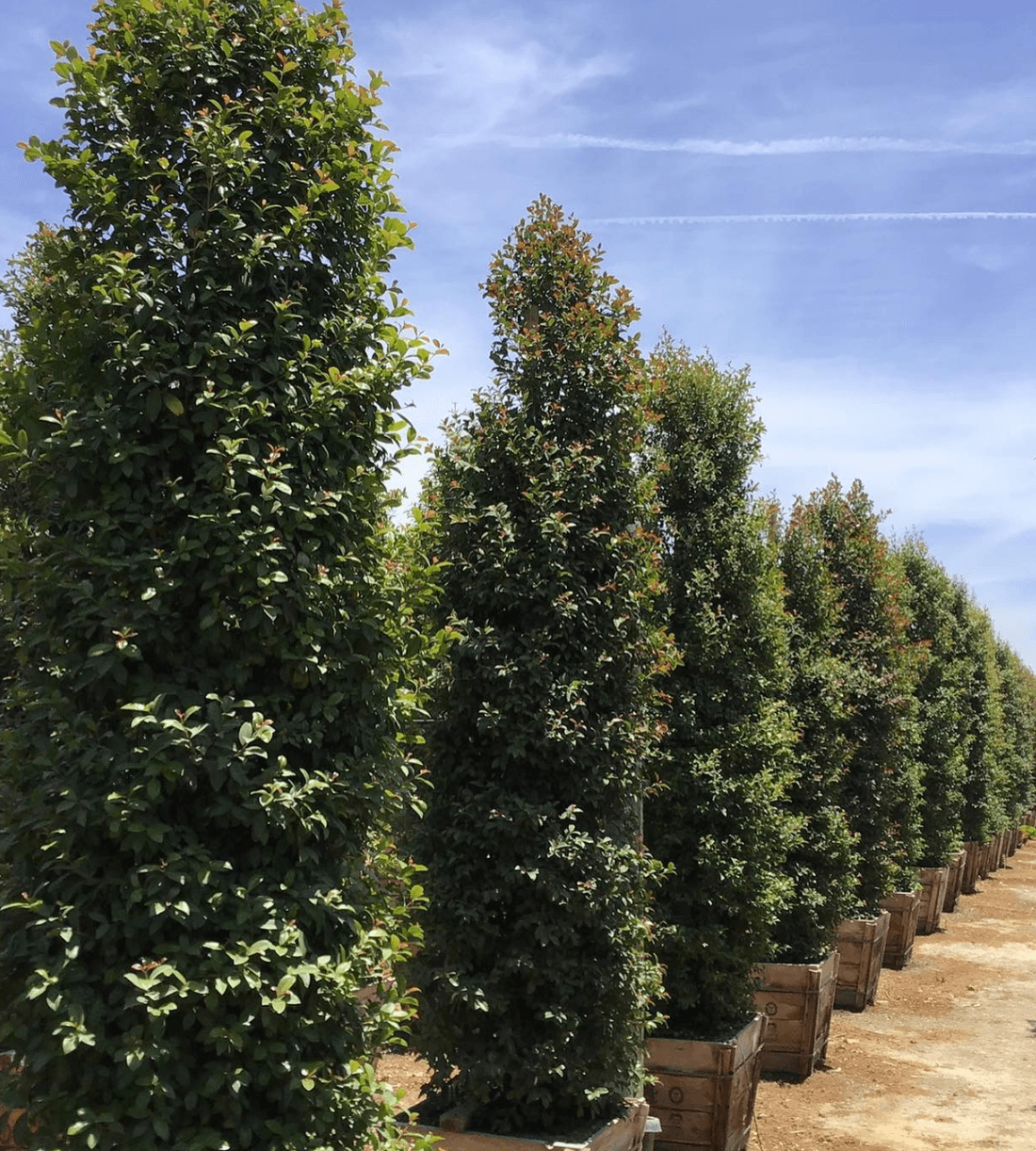
Dwarf varieties of fast growers can also work in compact gardens, especially when a full-size Thuja Green Giant or Leyland Cypress would become too large. If you want broader options, explore evergreen trees for year-round privacythat fit your space and maintenance goals. For a small tree with broadleaf evergreen character, Nellie Stevens Holly and Cherry Laurel can be useful, though both need enough room for healthy branching and airflow.
Large Properties and Acreage
Large properties allow you to use bigger fast growing evergreen trees at their proper scale and to combine them with other landscape trees for structure and shade. Monterey Pine can reach about 53 feet in 15 years in suitable coastal California regions, making it a strong option for open landscapes rather than tight suburban lots.
Douglas Fir can eventually become a dominant skyline tree, especially in spacious, cooler sites with adequate moisture. Mass planting strategies work well for groves, natural screens, and informal borders where trees can mature into layered wind and privacy protection.
For naturalistic arrangements, vary spacing and mix textures such as dark green foliage, emerald green needles, and softer blue green foliage. For formal screens, use even spacing and repeat one species for a clean visual line.
California Climate Considerations
California yards require careful plant selection because coastal fog, inland heat, mountain cold, and dry climates all create different growing conditions. Popular choices like the California Pepper Tree and other climate-adapted trees can complement evergreens in mixed plantings. USDA hardiness zones 8-10 cover many California landscapes, but local microclimates, soil types, drainage, and irrigation access matter just as much.
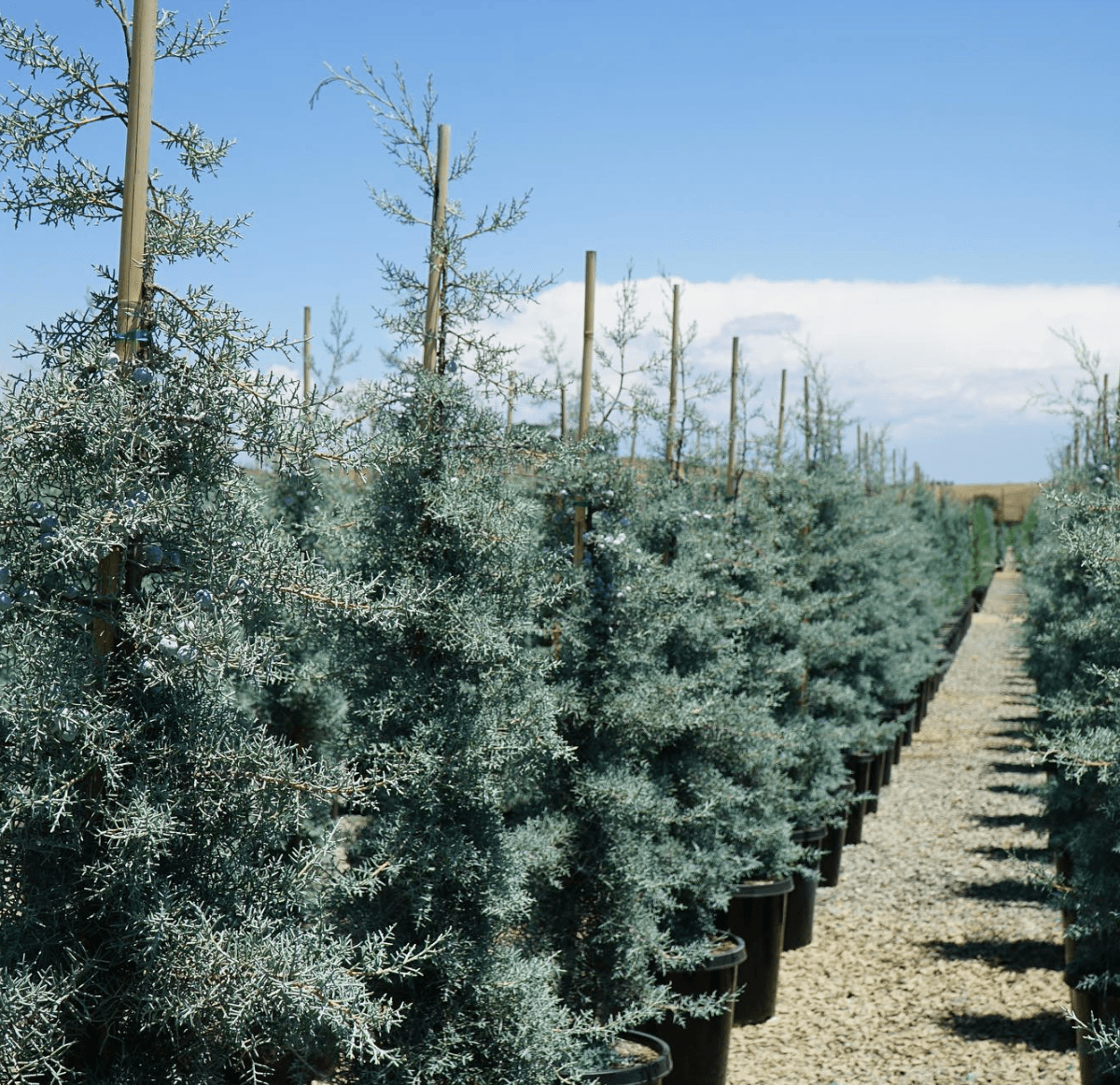
Carolina Sapphire Cypress is a drought-tolerant option for hot, dry areas, with aromatic blue green foliage and fast growth once established. Monterey Pine is better suited to California coastal regions than hot inland valleys, while Italian Cypress handles heat and dry climates well after establishment.
Salt tolerant choices are important near the coast, where wind and spray can damage sensitive evergreen trees. Wax Myrtle, Eastern Red Cedar, and certain junipers can be useful in specific sites, while Eastern Hemlock is generally better suited to cooler, moister climates than hot California interiors. Dawn Redwood is often compared with conifers, but it behaves more like a deciduous tree because it drops its foliage in winter.
Cold Hardy Options
For mountain areas and colder sites, choose evergreens with proven hardiness zones or consider mature trees for instant impact and privacy where conditions allow transplanting. Eastern White Pine is hardy to USDA zone 3 and can perform well where soil and moisture are suitable. Norway Spruce also tolerates zone 3-7 conditions and is a dependable cold-region evergreen for windbreaks and large properties.
American Pillar Arborvitae fits zones 4-8 applications and offers a narrower alternative to larger arborvitae selections. Young trees in cold or windy sites benefit from deep watering before winter, mulch over the root zone, and protection from drying winds during the establishment phase.
Cold-hardy evergreens still need thoughtful placement. Avoid exposed, dry slopes for young trees when possible, and match each species to realistic winter conditions rather than choosing on growth rate alone.
Growth Rates and Mature Characteristics
Understanding growth patterns helps set realistic expectations and plan for long-term landscape development. Fast-growing privacy trees can add several feet of height per year, making them an effective solution for creating secluded outdoor spaces quickly.
Some fast-growing privacy trees, like the Leyland Cypress and Thuja Green Giant, can grow up to 3 to 5 feet per year, making them popular choices for quick privacy solutions. However, fast growth depends on full sun, soil conditions, irrigation, spacing, and healthy roots.
Ultra-Fast Growers (3+ feet annually)
Thuja Green Giant is the standout ultra-fast growing evergreen for many privacy and barrier plantings. It can add 3-5 feet yearly in optimal conditions, with green giant trees eventually becoming tall, dense, and highly effective for screening.
Leyland Cypress can also achieve 3+ feet of annual growth when young, especially in full sun and well-drained soil. It grows quickly and creates dense dark green foliage, but it needs enough space and monitoring for disease pressure in humid or poorly ventilated sites.
Carolina Sapphire Cypress can grow over 3 feet per year in strong conditions, offering fast growth, blue green foliage, and drought tolerance. Maximum growth rates depend on soil, water, fertilizer, sunlight, and the health of young trees during the first few seasons.
Fast Growers (2-3 feet annually)
Eastern White Pine can add 2+ feet yearly after establishment and provides soft texture, height, and movement in the landscape. It is best used where there is enough space for a tall tree with a broad natural habit.
Nellie Stevens Holly is a broadleaf evergreen that grows rapidly at a rate of about 3 feet per year, making it suitable for hedges and small trees. Nellie Stevens Holly is a broadleaf evergreen that grows rapidly at a rate of about 3 feet per year, making it suitable for hedges and small trees. Female plants can produce berries, and the red berries add seasonal interest against dark green leaves.
Italian Cypress can achieve 2-3 feet of annual height gain in favorable sites, though growth may slow in very dry soil without irrigation. Its columnar shape, dark green foliage, and upright branches make it one of the best choices for tall accents in narrow spaces.
Reliable Medium-Fast Growers (1-2 feet annually)
Taylor Juniper and Blue Arrow Juniper usually make steady 1-2 foot gains, offering reliable vertical structure without the oversized spread of larger evergreens. Their steady growth often provides better long-term structure in compact yards.
Cherry Laurel can reach 10 feet in 4-5 years and works well where broadleaf evergreens are desired for dense screening. It has dark green leaves, a lush texture, and a softer look than many conifers.
Western Red Cedar can grow 12+ feet in 10 years in suitable climates and soil conditions, especially where moisture is consistent. Medium-fast evergreens may not deliver instant height like Thuja Green Giant, but they often create stronger long-term form with less aggressive pruning.
How to Plant and Establish Fast Growing Evergreens
Plant fast growing evergreen trees in the right season, with fall and early spring often ideal in many California regions. Cooler planting windows reduce heat stress and give roots time to establish before summer. For container or balled trees, dig a hole about twice the width of the root ball and no deeper than the root ball itself.
Loosen surrounding soil, set the tree with the root flare slightly above grade, and backfill with native soil unless a soil test shows a clear need for amendment. Broad, fast-spreading root networks of evergreens stabilize soil and catch heavy sediment runoff, so good root establishment is essential for both growth and erosion control.
Water deeply after planting, then maintain consistent moisture through the first growing season. Young trees need steady irrigation while roots expand, even if the mature tree is drought tolerant. Mulch 2-3 inches deep around the root zone, keeping mulch away from the trunk to reduce rot and pest problems, and consider working with a local plant nursery and landscape team if you need help with proper installation and care.
Dense branches of evergreens provide critical nesting sites and winter shelter for birds and beneficial predatory insects. Evergreen trees provide reliable shelter and foraging ground for local birds and wildlife during harsh winter months, so planting and caring for evergreens also supports habitat in the yard.
For best results, use Yardwork’s soil testing service before planting. A soil test helps match the right tree to your soil pH, drainage, and nutrient profile, whether you want a privacy screen, an excellent windbreak, quick shade, or year round color across the whole yard, and a specialized nursery for privacy and evergreen trees can recommend the best varieties for your site.
Shop Fast Growing Evergreen Trees
Explore Yardwork’s curated selection of proven fast growing evergreen trees for privacy, wind protection, focal points, and year round landscape structure, and consider pairing them with flowering trees for seasonal color. Choose from customer favorites like Thuja Green Giant, Leyland Cypress, Italian Cypress, Eastern White Pine, Norway Spruce, Nellie Stevens Holly, Carolina Sapphire Cypress, Cherry Laurel, and narrow junipers for tight spaces.
Our team can help you choose the right tree for your hardiness zones, soil conditions, water availability, and design goals. Whether you want the southern charm of broadleaf evergreens, the formal look of a columnar tree, or the dense coverage of fast growing privacy trees, Yardwork makes selection easier with expert consultation and yard design support.
California customers can take advantage of delivery, including free shipping over $600. You can also add other evergreens such as Monterey Cypress and companion plants to round out your design. Pair your plant order with soil testing and landscape planning for a complete solution that supports healthy roots, rapid growth, and long-term performance.
Browse the plant catalog or request a consultation to find fast growing evergreens that fit your space, climate, and privacy goals.