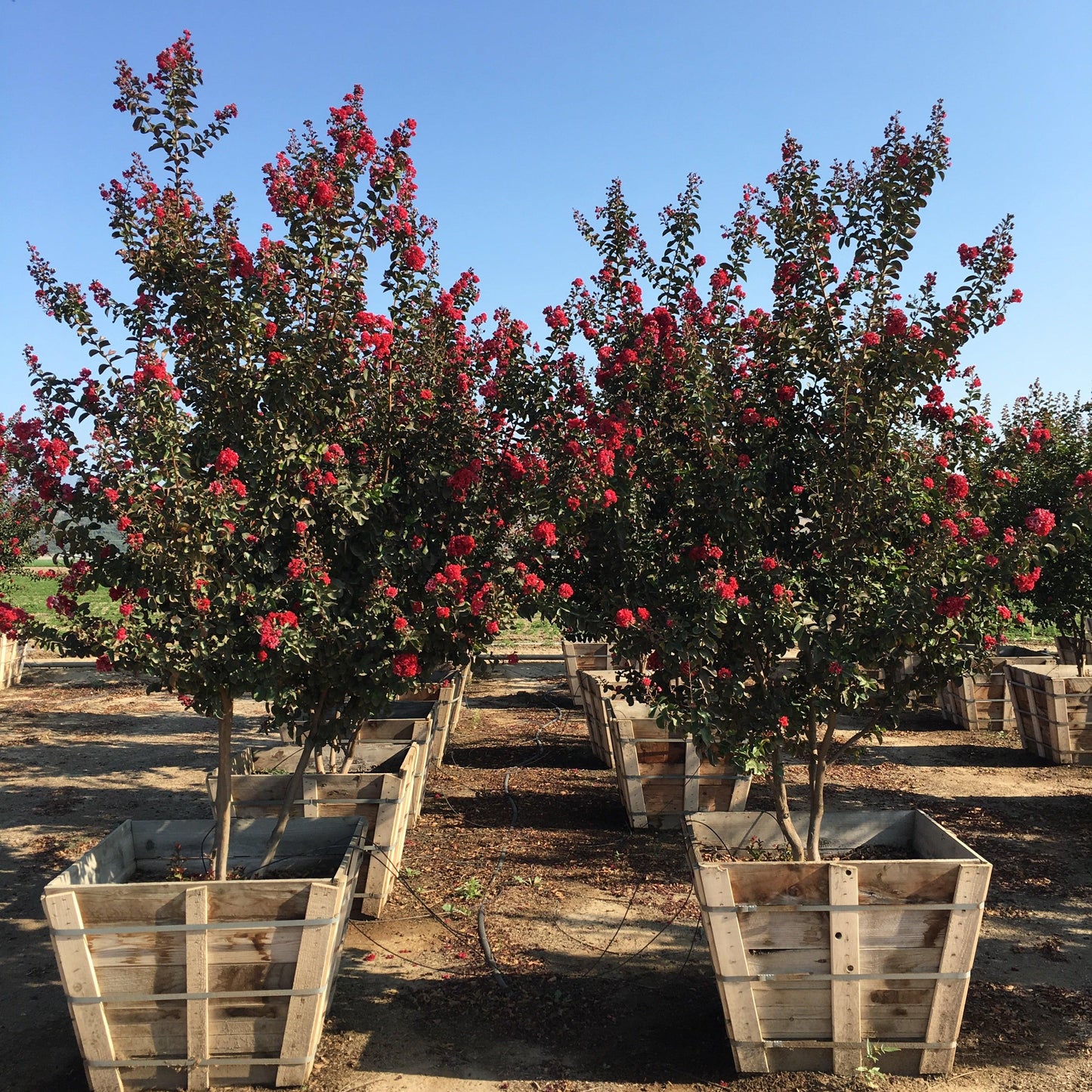
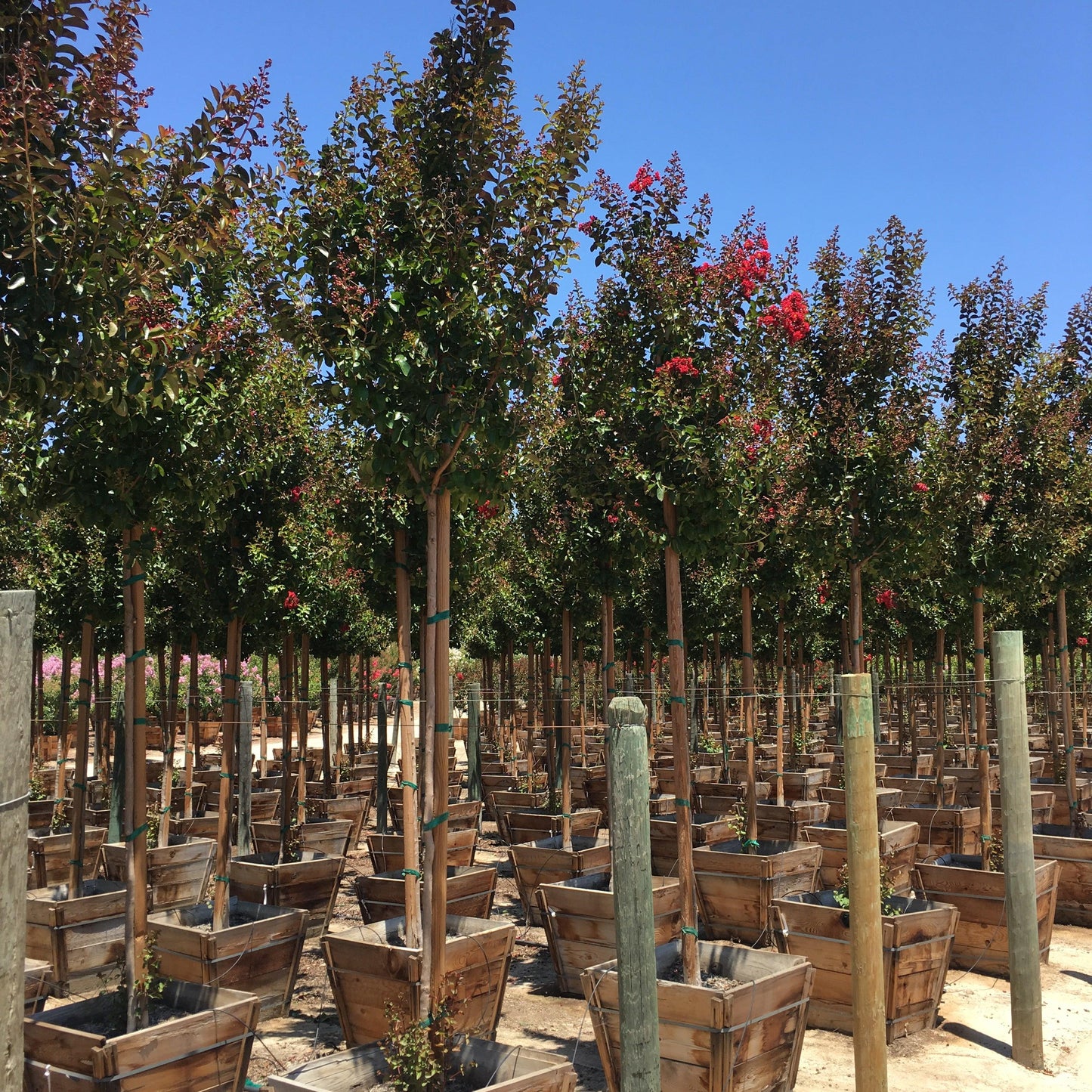
Crepe Myrtle Trees – Find the Perfect Variety for Your Landscape
Crepe myrtle trees are ideal if you want a flowering tree with bold summer color, attractive bark, drought tolerance, and year round interest. From compact patio plants to large statement trees, these versatile crape myrtle varieties bring long lasting flowers, fall foliage color, and sculptural winter structure to the landscape.
Looking for stunning flowering trees that deliver year-round beauty? Discover dwarf, standard, and large crepe myrtle varieties designed for every landscape need. From vibrant summer blooms to attractive winter bark, our collection combines exceptional colors, proven hardiness, and reliable performance.
Transform your outdoor space with the perfect crepe myrtle today.
Crepe Myrtle Trees for Every Landscape
Whether you’re creating focal points or adding privacy, there’s a crepe myrtle variety for every garden vision.
Small Space & Container Crepe Myrtles
For patios, courtyards, borders, and compact yards, choose a dwarf variety or small tree form that stays manageable without heavy pruning. Dwarf crape myrtles can range from about 4 feet tall, while many compact landscape selections mature around 4-8 feet, making them useful near walkways, foundations, decks, and containers.
Magic series crepe myrtle, Petite types, and other compact crape myrtle trees work especially well where you want summer flowers without overwhelming other plants. In containers, start with well drained soil, leave the top of the root ball level with the surrounding mix, water carefully during dry spells, and avoid air pockets when planting.
Most crape myrtles thrive in USDA Hardiness Zones 7 through 10, while selected cold hardy varieties can perform in zone 6 climates with proper placement and winter protection. In cooler zones, expect late spring emergence and fresh new growth before the main summer bloom.
Statement & Shade Tree Varieties
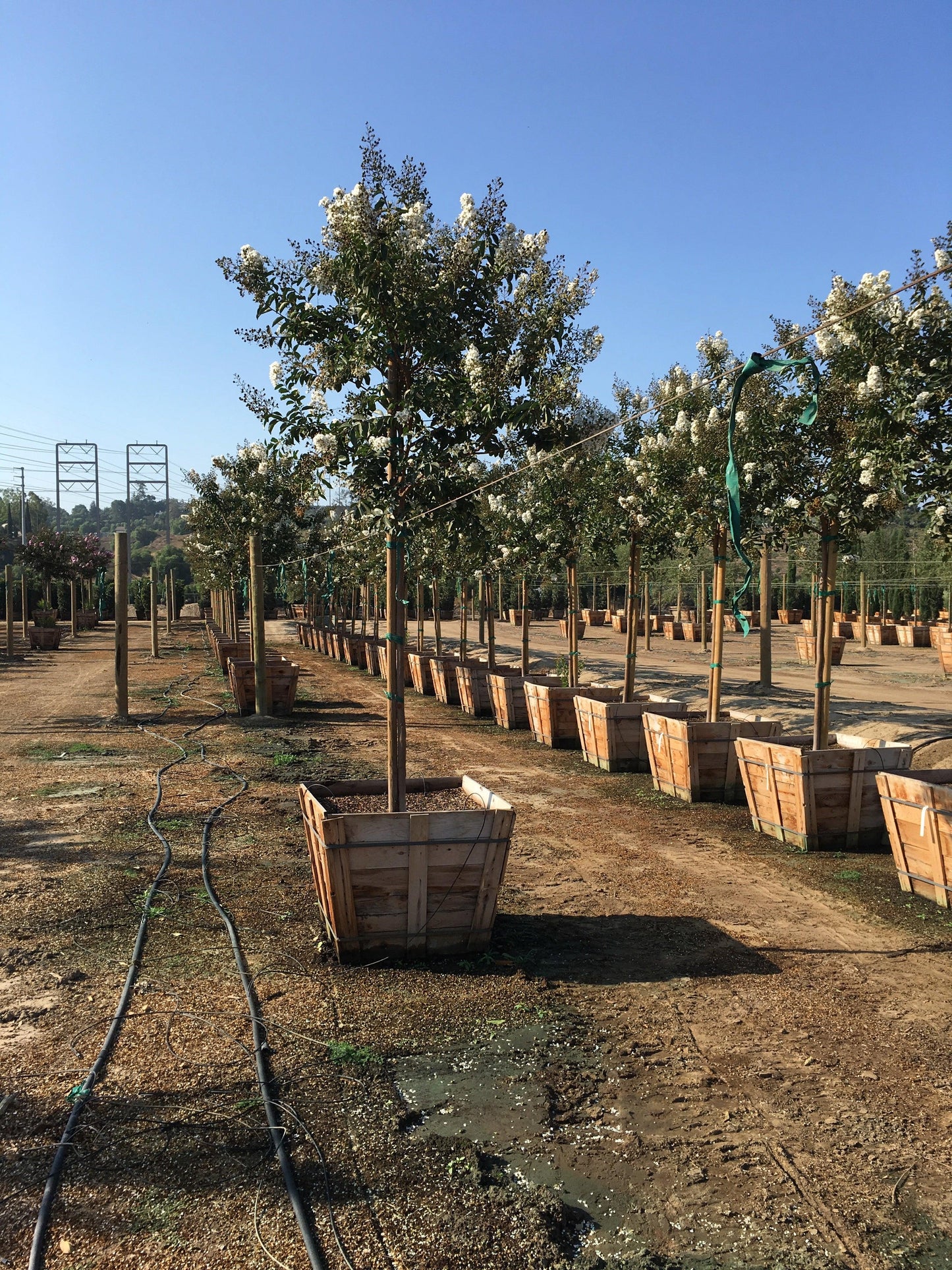
Large crepe myrtle varieties such as Muskogee crape myrtle and Natchez are excellent choices when you want a focal point, light shade, and strong seasonal impact. These trees can mature 20-30 feet tall, and larger varieties can reach heights of 25 to 30 feet, giving open lawns, driveways, and entry areas a refined specimen look.
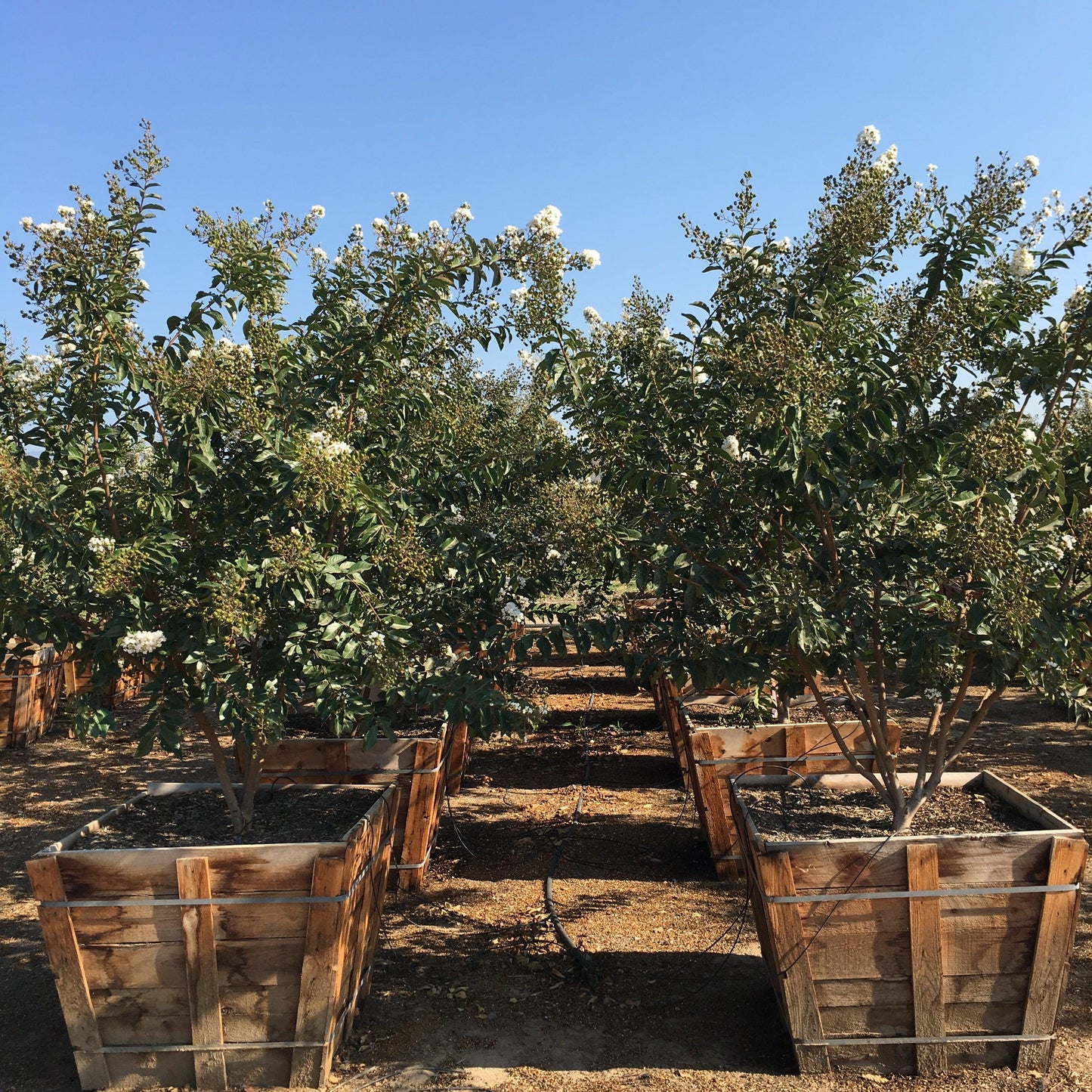
The crepe myrtle tree can be trained as a single trunk or allowed to develop multiple trunks for a natural tree form. Multi trunked plants often show off the trunk and bark beautifully in winter, especially when lower branches are selectively removed rather than topped.
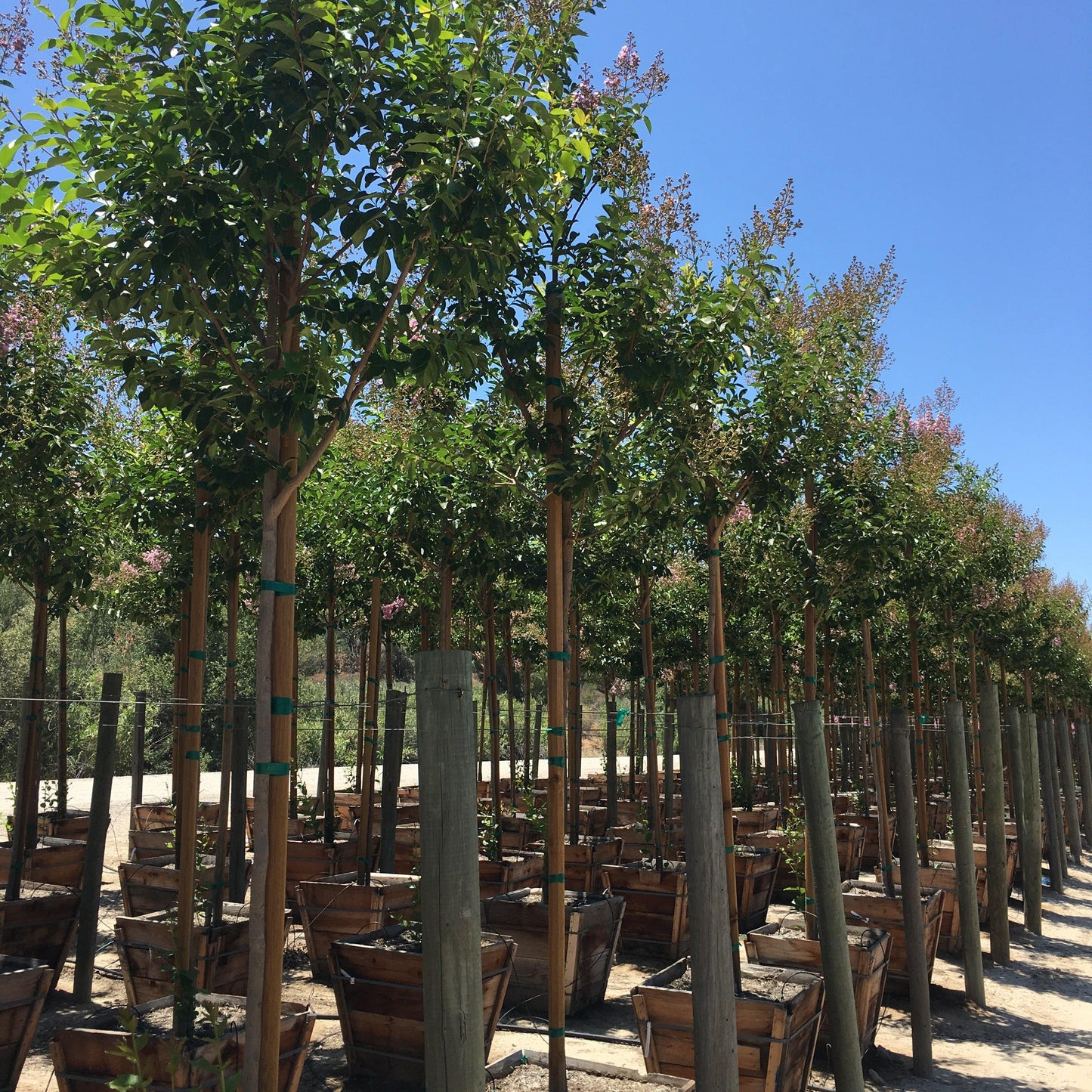
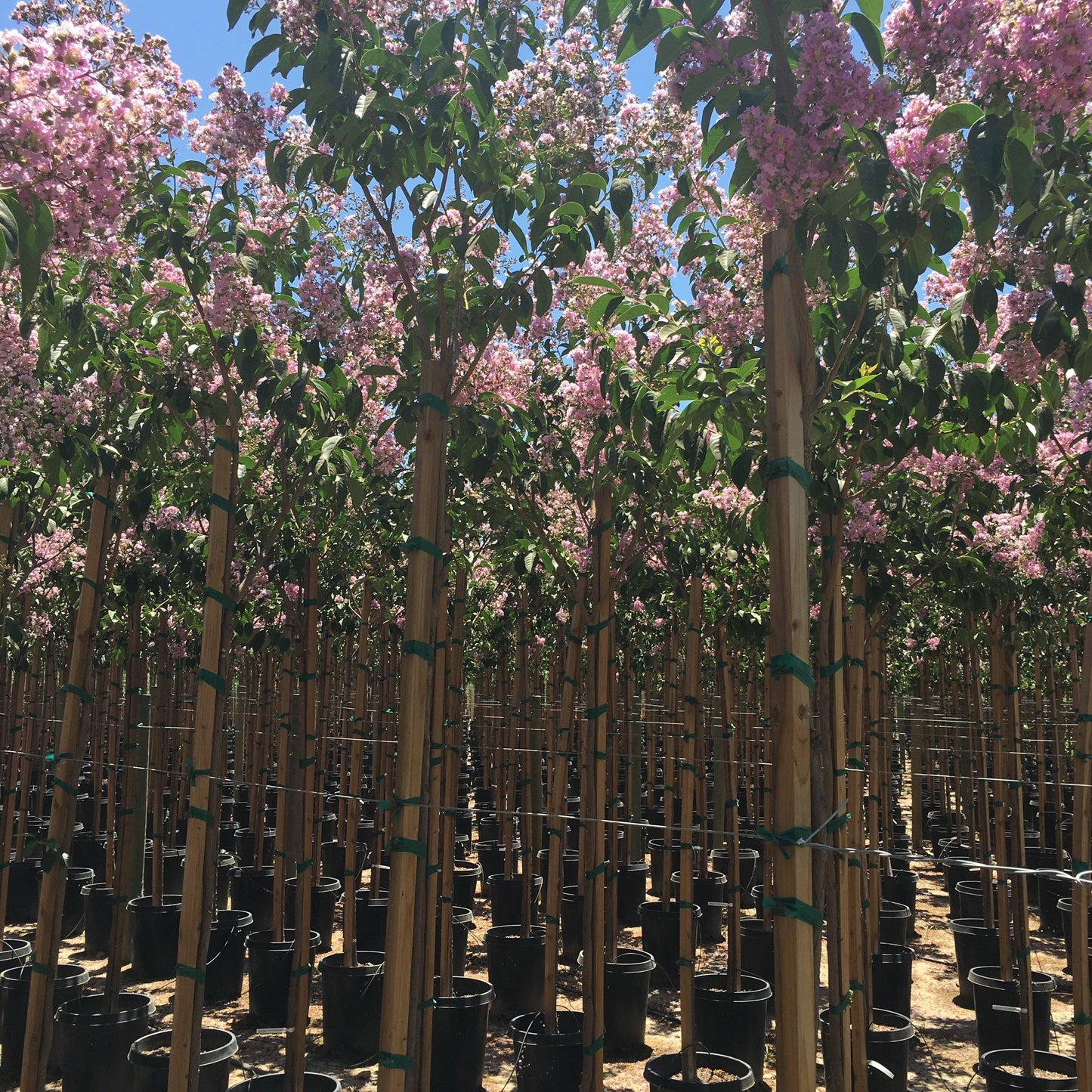
Crape myrtles are available in a variety of colors including red, purple, white, and pink, and they bloom from July through September, providing vibrant summer displays. The crepe myrtle (Lagerstroemia indica) is celebrated for its vibrant summer blooms and striking peeling bark, so a large myrtle tree delivers both flowers and winter texture.
Privacy & Screening Applications
Medium crape myrtle varieties are well suited for privacy screens, property lines, and layered planting designs, and pairing them with Pacific Wax Myrtle for evergreen privacy can create year-round screening. Selections in the 10-15 feet range create coverage without the scale of a full shade tree, making them practical for suburban yards and side gardens.
For a natural screen, plant crape myrtles in odd-numbered groups or consistent spacing, depending on whether you want an informal grove or a more structured hedge effect. Their branches, seed heads, and exfoliating bark keep the planting interesting even after the flowers fade in late fall.
Crepe myrtles can grow rapidly, adding up to 2 feet or more of height per year. With good sun, enough space, and proper care during the first growing season, crape myrtles grow into reliable screens that combine privacy, bloom color, and year round interest.
Choose the Right Crepe Myrtle for Your Growing Conditions
The right variety thrives in your specific climate and soil while delivering the colors and size you want.
For Hot, Dry California Climates
Crepe myrtle is a strong fit for many California landscapes because it handles sun, heat, and dry summers once established. Drought tolerant varieties like Dynamite and Red Rocket are especially useful where bold red flowers, heat resistance, and minimal water needs matter.
Crape myrtles thrive in full sun and require at least 6 hours of direct sunlight each day for optimal blooming. When planting crape myrtles, choose a location that receives at least 6 hours of direct sunlight per day to ensure optimal blooming, especially in warmer climates and inland California yards.
In the first year after planting, crape myrtles need to be watered once a week, but if there has been sufficient rainfall, additional watering may not be necessary. After establishment, their drought tolerance improves, and most crape myrtles need only deep watering during extended dry spells.
For Cooler Northern Zones
In cooler zones, choose cold hardy crape myrtle varieties bred for winter resilience and reliable bloom. While crape myrtles thrive in USDA Hardiness Zones 7 through 10, cold hardy varieties such as Hopi, Zuni, Tonto, and other improved selections can extend planting options into zone 6-7 climates.
Late spring growth is normal in colder areas, so avoid assuming a tree is dead too early in the season. If winter damage occurs, remove dead branches once new growth appears, and let the plant recover from healthy wood.
Crape myrtles do not require frequent pruning; however, if significant pruning is needed, it should be done in late winter to avoid disrupting the growing season. Avoid over pruning, cutting large branches unnecessarily, or topping the tree, because severe pruning damages the natural form and reduces winter bark value.
For Challenging Soil Conditions
Crape myrtles prefer well-drained soil and can tolerate a variety of soil types, but they do not thrive in soggy conditions. Sandy, loamy, or clay soils can work as long as drainage is good and the root zone does not stay waterlogged.
To plant a crape myrtle, dig a hole that is two to three times wider than the root ball but not deeper than the root ball itself, and ensure the top of the root ball is level with the surrounding soil. Backfill carefully, firm the soil lightly, and water deeply to settle the plant without burying the trunk.
Crape myrtles can be planted at any time of year in mild climates, but it’s best to avoid planting during extreme temperatures in cold or tropical climates. Fertilizing crape myrtles is not essential, but using a slow-release fertilizer with balanced nutrients can help if the soil is poor; a common ratio is 10-10-10 or 20-20-20.
Premium Varieties That Deliver Year-Round Beauty
Quality crepe myrtle varieties provide decades of reliable performance and stunning seasonal interest.
Disease-Resistant Selections
Disease resistance is one of the most important traits when choosing crape myrtle trees, especially where humidity, shade, or limited airflow can increase disease pressure. Crape myrtles are susceptible to fungal diseases such as powdery mildew and leaf spot, particularly in humid conditions.
While crape myrtles can grow in partial shade, insufficient sunlight can lead to poor blooming and increased susceptibility to diseases like powdery mildew. Planting in full sun, spacing for airflow, and choosing improved genetics helps reduce the need for chemical treatments.
The Crape Myrtle Asian Bark Scale can severely affect the health of the tree, turning trunks black and requiring both systemic and topical treatments. To manage pests and diseases in crape myrtles, gardeners can use treatments such as soapy water sprays, horticultural oil, or neem oil.
Outstanding Flower Colors
Crepe myrtle flowers are one of the main reasons gardeners choose this plant. Crape myrtles are available in a variety of colors including red, purple, white, and pink, and they bloom from July through September, providing vibrant summer displays.
For bold color, choose red selections like Red Rocket, Dynamite, Tonto, red crape myrtle trees, or Pink Velour for vivid impact in the summer landscape. For elegant contrast, Natchez white crape myrtle offers pure white flowers, while Muskogee, Zuni, Catawba, and deep purple selections bring lavender and purple tones to mixed borders.
There are many different varieties of crape myrtles, such as Japanese crepe myrtle and Pink Velour, each with unique characteristics including flower color and height. Some modern selections also offer black foliage, coral blooms, or strong color retention in direct sun.
Exceptional Winter Interest
Crepe myrtles are not just summer plants. In the autumn, crepe myrtles’ dark green leaves turn brilliant shades of yellow, orange, and red, adding another layer of seasonal color before winter.
Crepe myrtles have smooth, thin gray bark that peels to reveal cinnamon, brown, and tan under-bark. This exfoliating bark is especially attractive on mature trees like Natchez, where the trunk and large branches become a key winter feature.
Seed heads, branching structure, and bark texture give a dormant crape myrtle strong presence when many other plants are quiet. Crepe myrtles provide critical nectar for bees and shelter for small birds despite being non-native, adding ecological value as well as ornamental beauty, and they pair well with a range of evergreen and fast-growing privacy trees in layered plantings.
How to Design with Crepe Myrtle Trees
Strategic placement maximizes visual impact and creates cohesive landscape designs.
Creating Focal Points
Use large crape myrtle trees as specimen plants in open lawn areas, entry gardens, or wide planting beds where their mature height and spread can develop naturally. A well-placed tree creates shade, flowers, fall color, and attractive bark from a single plant.
For stronger contrast, position white Natchez or red Dynamite against evergreen backgrounds, stone walls, or darker foliage. Purple, pink, and coral varieties can soften patios, seating areas, and poolside landscapes while keeping the design colorful through summer.
Consider sight lines from indoor living spaces before planting. A multi trunked crepe myrtle near a window or patio can be enjoyed during bloom, while its winter trunk pattern and exfoliating bark remain visible after leaves drop.
Grouping and Mass Plantings
Plant crape myrtles in odd-numbered groups for a relaxed, natural appearance, or use even spacing for a hedge or screen, just as you would when selecting other flowering trees for your landscape. Combining different crape myrtle varieties can extend the bloom sequence and layer colors from early summer into fall.
Medium varieties work well along property lines, while dwarf varieties fit in front of taller shrubs, perennials, and other plants. For a cohesive look, repeat flower colors or pair contrasting tones such as white and deep purple.
Keep maintenance simple by preserving the natural form. Remove suckers, thin crossing branches, and prune selectively in late winter, but avoid topping or unnecessary cutting of large branches, which weakens structure and reduces the beauty of the bark.
Shop Crepe Myrtle Trees at Yardwork
Explore our curated collection of premium crepe myrtle varieties, selected for California growing conditions and exceptional performance. Choose from dwarf container varieties to mature statement trees.
Whether you need a compact shrub for containers, a small tree for a courtyard, or a large flowering tree for shade and impact, Yardwork helps you select the right crepe myrtle for your yard, sun exposure, soil, and design goals through its Los Angeles-based plant nursery services and broader online plant nursery selection.
- Browse our expert-selected varieties with detailed growing guides
- Request personalized consultation for variety selection and placement
- Take advantage of free shipping on orders over $600 for most areas in California with our broader online nursery for trees and shrubs
- Access soil testing services to ensure optimal planting conditions